Renewables Meet the Grid:
Technical Pathways and Solutions
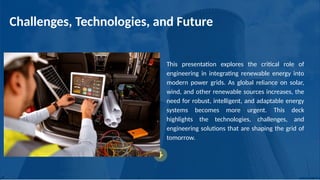
Challenges, Technologies, and Future
This presentation explores the critical role of
engineering in integrating renewable energy into
modern power grids. As global reliance on solar,
wind, and other renewable sources increases, the
need for robust, intelligent, and adaptable energy
systems becomes more urgent. This deck
highlights the technologies, challenges, and
engineering solutions that are shaping the grid of
tomorrow.
The shift to renewable energy is vital to address
climate change and reduce dependence on fossil
fuels. However, integrating intermittent energy
sources like solar and wind into existing grid
infrastructure presents technical challenges.
Engineers are essential in ensuring a reliable and
resilient power supply while transitioning to cleaner
energy. Australia’s renewable energy transition
offers a powerful real-world example of these
innovations in action.
Why Integration Matters
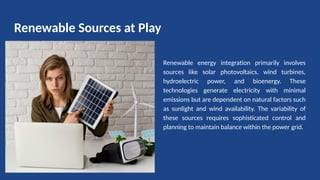
Renewable Sources at Play
Renewable energy integration primarily involves
sources like solar photovoltaics, wind turbines,
hydroelectric power, and bioenergy. These
technologies generate electricity with minimal
emissions but are dependent on natural factors such
as sunlight and wind availability. The variability of
these sources requires sophisticated control and
planning to maintain balance within the power grid.
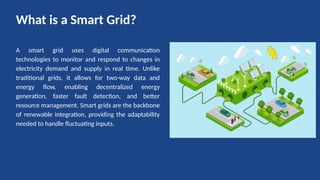
What is a Smart Grid?
A smart grid uses digital communication
technologies to monitor and respond to changes in
electricity demand and supply in real time. Unlike
traditional grids, it allows for two-way data and
energy flow, enabling decentralized energy
generation, faster fault detection, and better
resource management. Smart grids are the backbone
of renewable integration, providing the adaptability
needed to handle fluctuating inputs.
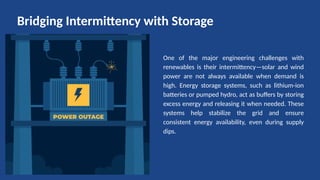
One of the major engineering challenges with
renewables is their intermittency—solar and wind
power are not always available when demand is
high. Energy storage systems, such as lithium-ion
batteries or pumped hydro, act as buffers by storing
excess energy and releasing it when needed. These
systems help stabilize the grid and ensure
consistent energy availability, even during supply
dips.
Bridging Intermittency with Storage
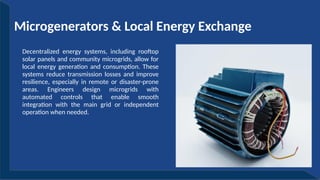
Microgenerators & Local Energy Exchange
Decentralized energy systems, including rooftop
solar panels and community microgrids, allow for
local energy generation and consumption. These
systems reduce transmission losses and improve
resilience, especially in remote or disaster-prone
areas. Engineers design microgrids with
automated controls that enable smooth
integration with the main grid or independent
operation when needed.
Advanced technologies are enhancing renewable
integration. Artificial intelligence helps forecast
energy production and demand more accurately.
Predictive maintenance systems reduce grid
downtime, while smart meters and sensors
enable real-time energy tracking. Additionally,
government policies like feed-in tariffs encourage
small-scale generators to feed power back into
the grid, making the ecosystem more dynamic
and participatory.
Supporting Technologies & Tools
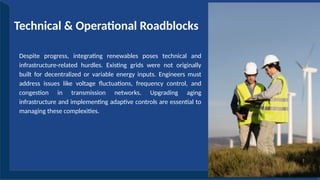
Despite progress, integrating renewables poses technical and
infrastructure-related hurdles. Existing grids were not originally
built for decentralized or variable energy inputs. Engineers must
address issues like voltage fluctuations, frequency control, and
congestion in transmission networks. Upgrading aging
infrastructure and implementing adaptive controls are essential to
managing these complexities.
Technical & Operational Roadblocks
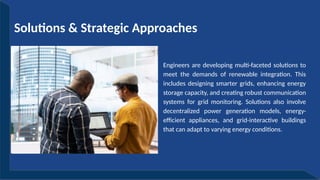
Engineers are developing multi-faceted solutions to
meet the demands of renewable integration. This
includes designing smarter grids, enhancing energy
storage capacity, and creating robust communication
systems for grid monitoring. Solutions also involve
decentralized power generation models, energy-
efficient appliances, and grid-interactive buildings
that can adapt to varying energy conditions.
Solutions & Strategic Approaches
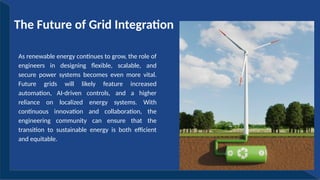
As renewable energy continues to grow, the role of
engineers in designing flexible, scalable, and
secure power systems becomes even more vital.
Future grids will likely feature increased
automation, AI-driven controls, and a higher
reliance on localized energy systems. With
continuous innovation and collaboration, the
engineering community can ensure that the
transition to sustainable energy is both efficient
and equitable.
The Future of Grid Integration

Renewables Meet the Grid_ Technical Pathways and Solutions.pptx

  • 1.
    Renewables Meet theGrid: Technical Pathways and Solutions
  • 2.
    Challenges, Technologies, andFuture This presentation explores the critical role of engineering in integrating renewable energy into modern power grids. As global reliance on solar, wind, and other renewable sources increases, the need for robust, intelligent, and adaptable energy systems becomes more urgent. This deck highlights the technologies, challenges, and engineering solutions that are shaping the grid of tomorrow.
  • 3.
    The shift torenewable energy is vital to address climate change and reduce dependence on fossil fuels. However, integrating intermittent energy sources like solar and wind into existing grid infrastructure presents technical challenges. Engineers are essential in ensuring a reliable and resilient power supply while transitioning to cleaner energy. Australia’s renewable energy transition offers a powerful real-world example of these innovations in action. Why Integration Matters
  • 4.
    Renewable Sources atPlay Renewable energy integration primarily involves sources like solar photovoltaics, wind turbines, hydroelectric power, and bioenergy. These technologies generate electricity with minimal emissions but are dependent on natural factors such as sunlight and wind availability. The variability of these sources requires sophisticated control and planning to maintain balance within the power grid.
  • 5.
    What is aSmart Grid? A smart grid uses digital communication technologies to monitor and respond to changes in electricity demand and supply in real time. Unlike traditional grids, it allows for two-way data and energy flow, enabling decentralized energy generation, faster fault detection, and better resource management. Smart grids are the backbone of renewable integration, providing the adaptability needed to handle fluctuating inputs.
  • 6.
    One of themajor engineering challenges with renewables is their intermittency—solar and wind power are not always available when demand is high. Energy storage systems, such as lithium-ion batteries or pumped hydro, act as buffers by storing excess energy and releasing it when needed. These systems help stabilize the grid and ensure consistent energy availability, even during supply dips. Bridging Intermittency with Storage
  • 7.
    Microgenerators & LocalEnergy Exchange Decentralized energy systems, including rooftop solar panels and community microgrids, allow for local energy generation and consumption. These systems reduce transmission losses and improve resilience, especially in remote or disaster-prone areas. Engineers design microgrids with automated controls that enable smooth integration with the main grid or independent operation when needed.
  • 8.
    Advanced technologies areenhancing renewable integration. Artificial intelligence helps forecast energy production and demand more accurately. Predictive maintenance systems reduce grid downtime, while smart meters and sensors enable real-time energy tracking. Additionally, government policies like feed-in tariffs encourage small-scale generators to feed power back into the grid, making the ecosystem more dynamic and participatory. Supporting Technologies & Tools
  • 9.
    Despite progress, integratingrenewables poses technical and infrastructure-related hurdles. Existing grids were not originally built for decentralized or variable energy inputs. Engineers must address issues like voltage fluctuations, frequency control, and congestion in transmission networks. Upgrading aging infrastructure and implementing adaptive controls are essential to managing these complexities. Technical & Operational Roadblocks
  • 10.
    Engineers are developingmulti-faceted solutions to meet the demands of renewable integration. This includes designing smarter grids, enhancing energy storage capacity, and creating robust communication systems for grid monitoring. Solutions also involve decentralized power generation models, energy- efficient appliances, and grid-interactive buildings that can adapt to varying energy conditions. Solutions & Strategic Approaches
  • 11.
    As renewable energycontinues to grow, the role of engineers in designing flexible, scalable, and secure power systems becomes even more vital. Future grids will likely feature increased automation, AI-driven controls, and a higher reliance on localized energy systems. With continuous innovation and collaboration, the engineering community can ensure that the transition to sustainable energy is both efficient and equitable. The Future of Grid Integration