Take notes as you view the slides.
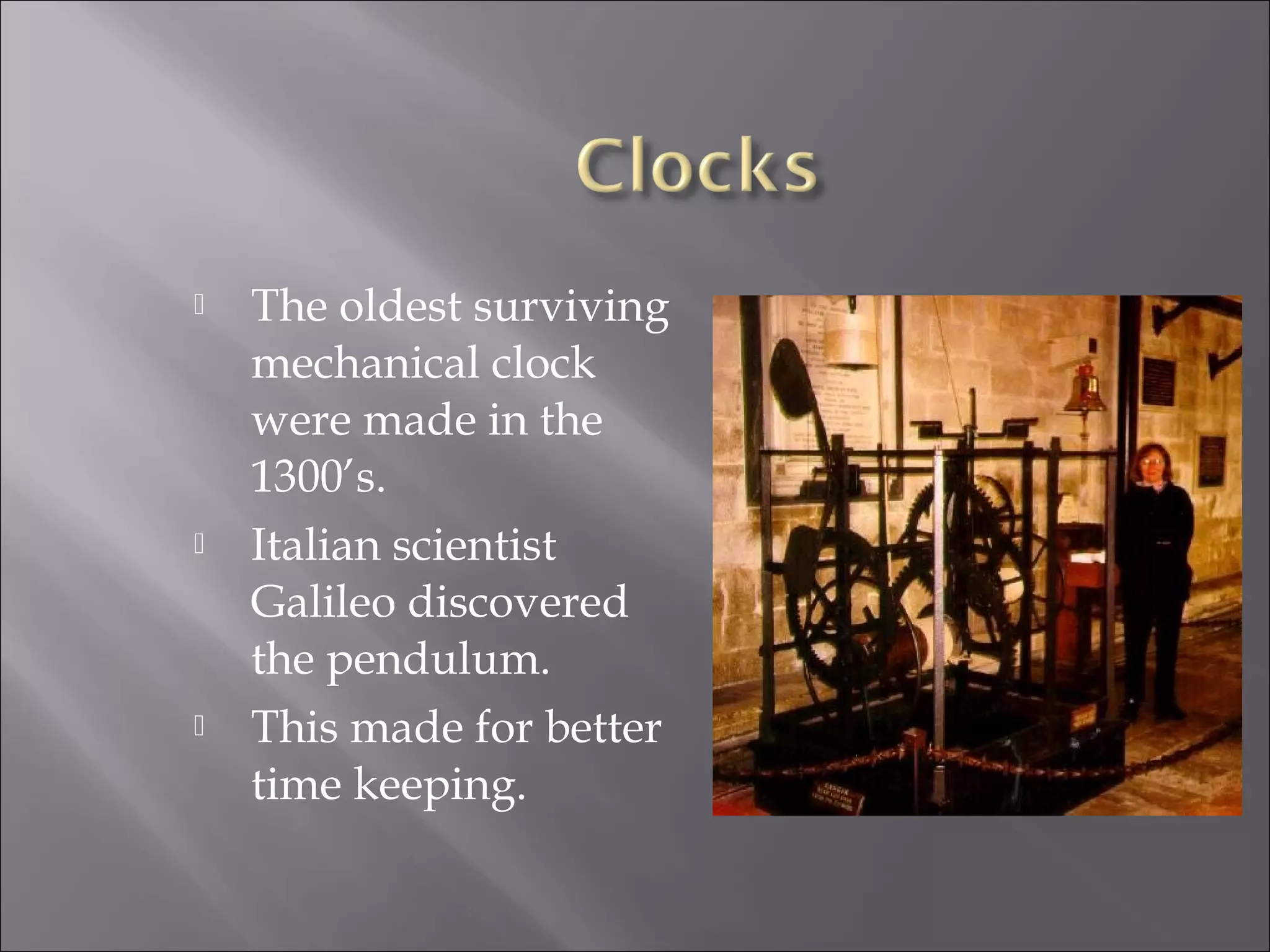
 The oldest surviving
mechanical clock
were made in the
1300’s.
 Italian scientist
Galileo discovered
the pendulum.
 This made for better
time keeping.
 Water clocks and
hourglasses were
widely using in the
1500’s.
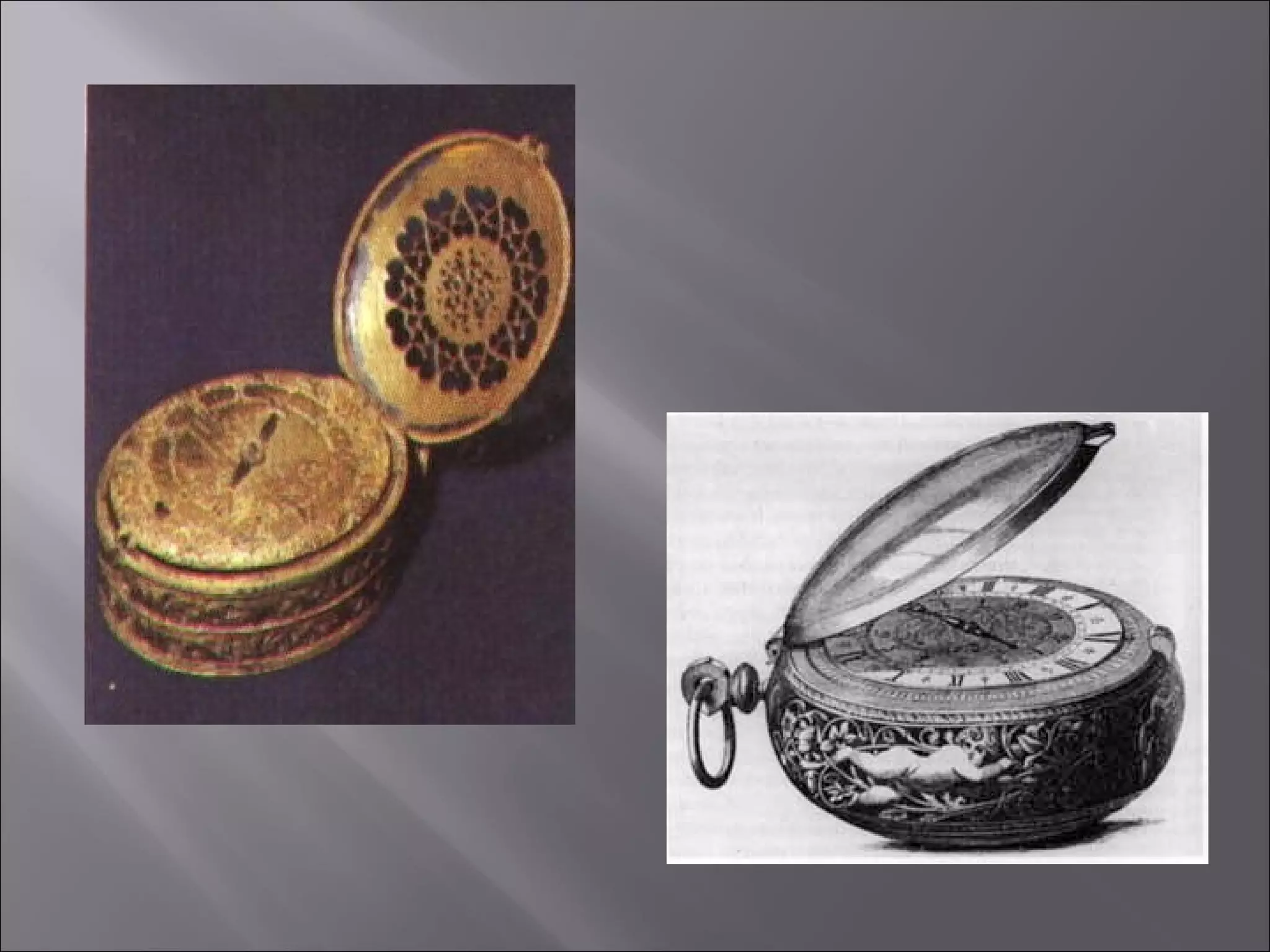
 The portable watch was invented by German
Peter Henlein in 1505
 He created his watch to be spring powered
making it much smaller.
 This watch was a pocket watch. The wrist
watch didn’t come into widespread use until the
1800’s.
 The Chinese were the first to invent printing in
868.
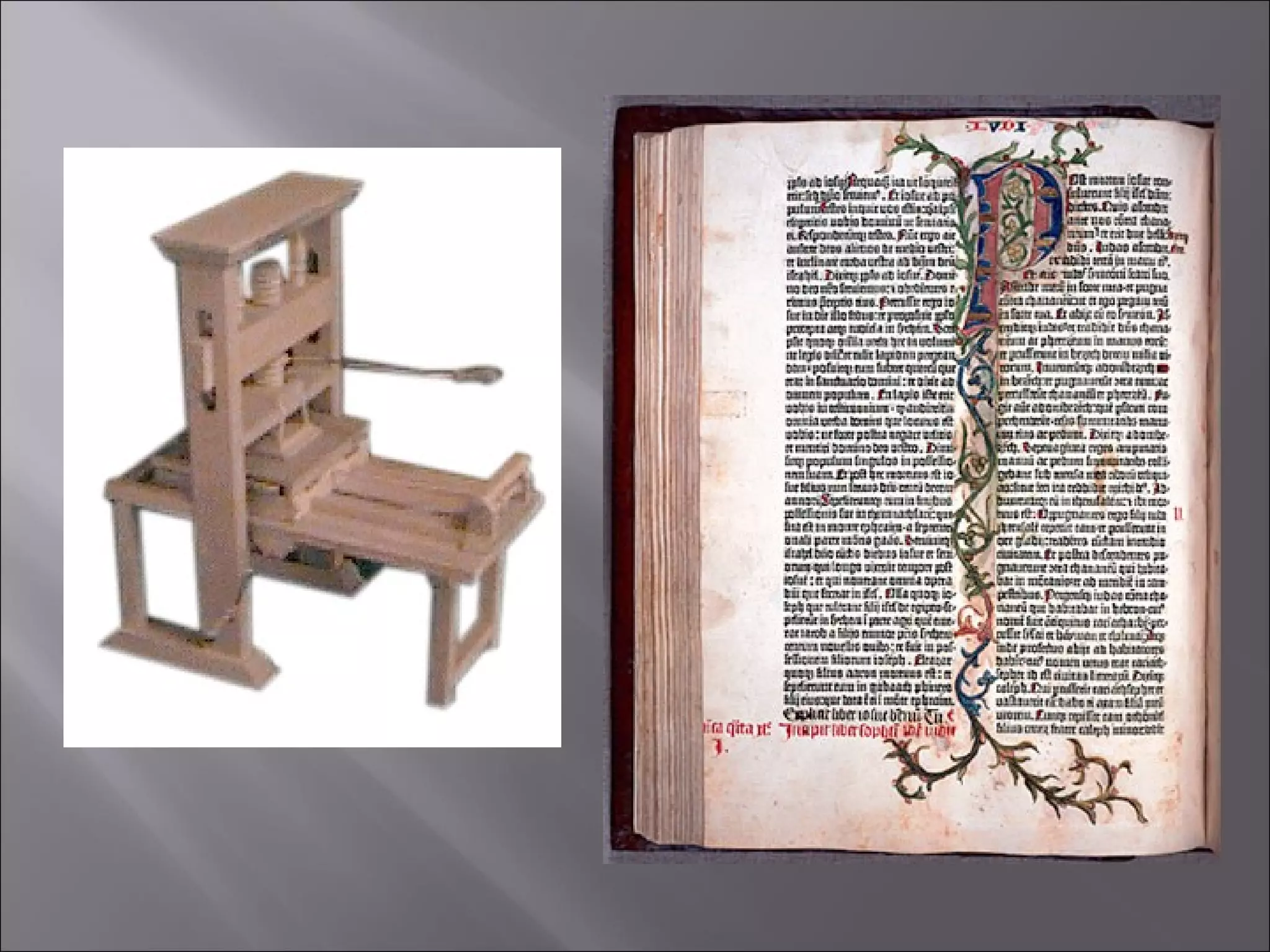
 In the mid-1400’s, Johan Gutenberg of
Germany invented a printing press using
moveable type.
 Now books could be printed with greater
speed and less effort.
 The Gutenberg Bible is considered one of the
first books ever printed.
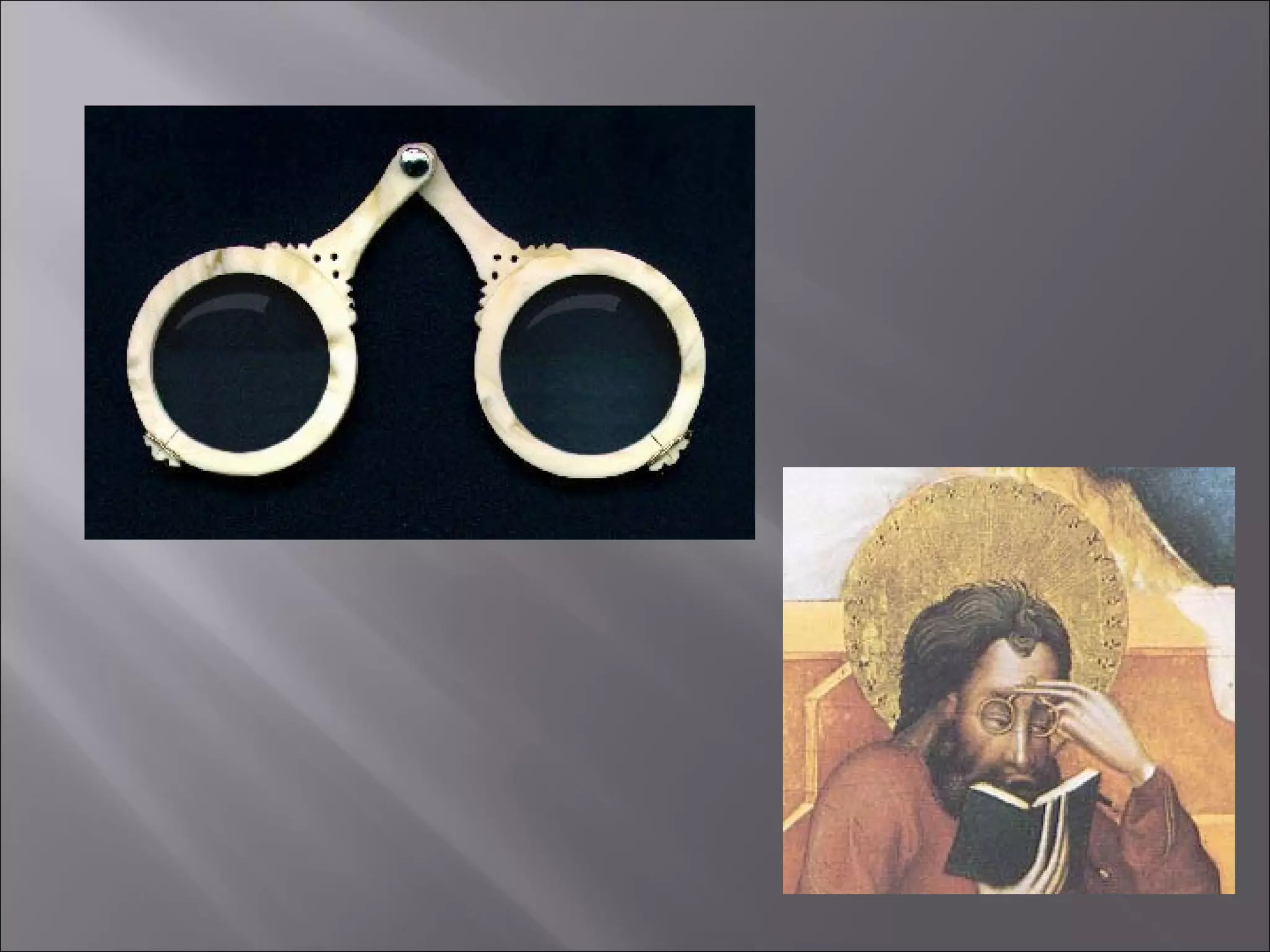
 Eyeglasses were invented in the 1300’s.
 With the invention of the printing press in the
1400’s, the demand for eyeglasses increased.
 Far-sighted glasses (for reading) were
developed first.
 Later on near-sightedness was able to be
corrected.
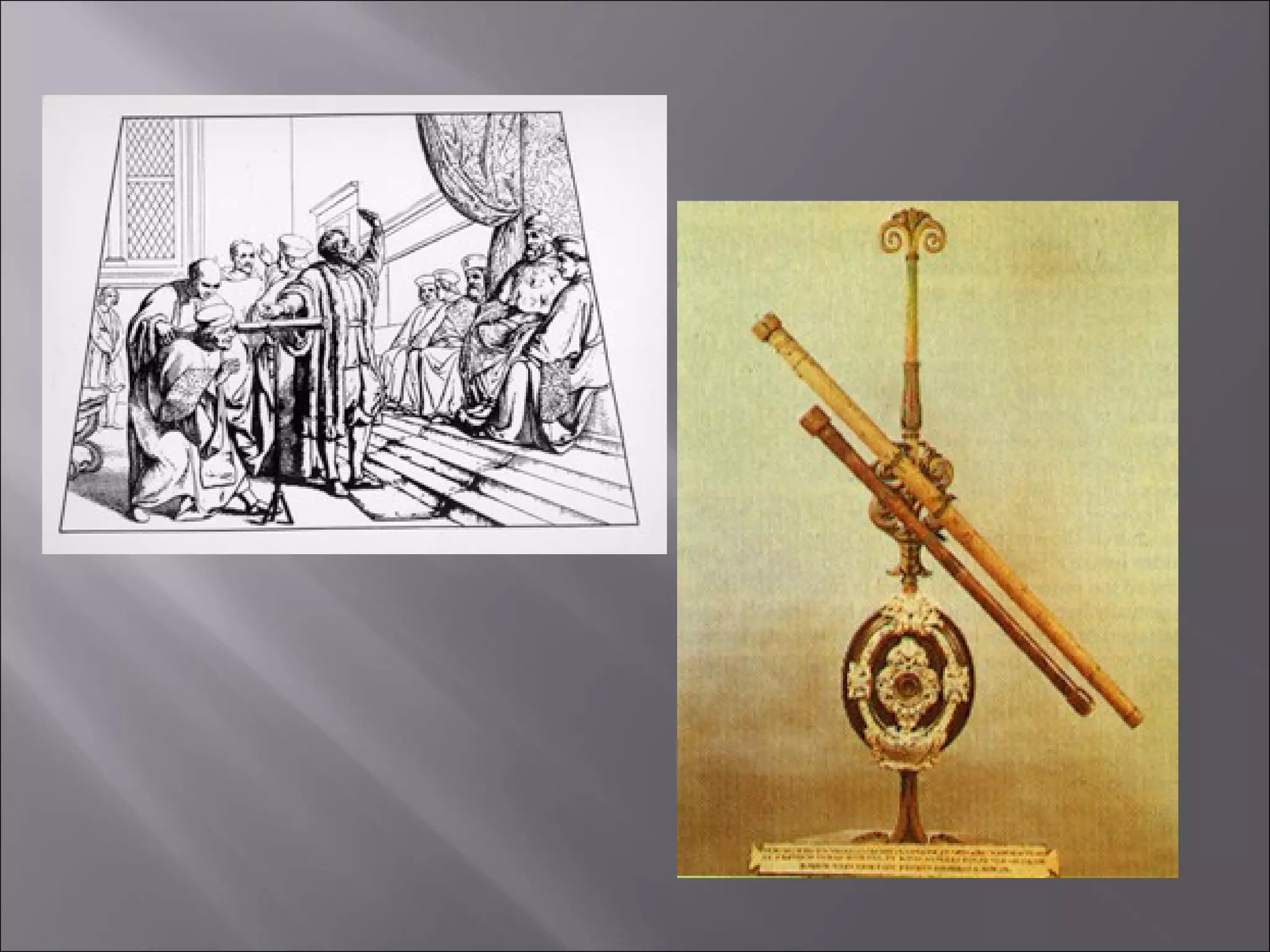
 Lenses were used for more than just eyeglasses.
 Galileo used lenses to make an astronomical
telescope to look at the stars and planets in
1606.
 Isaac Newton made the first reflecting
telescope in 1668.
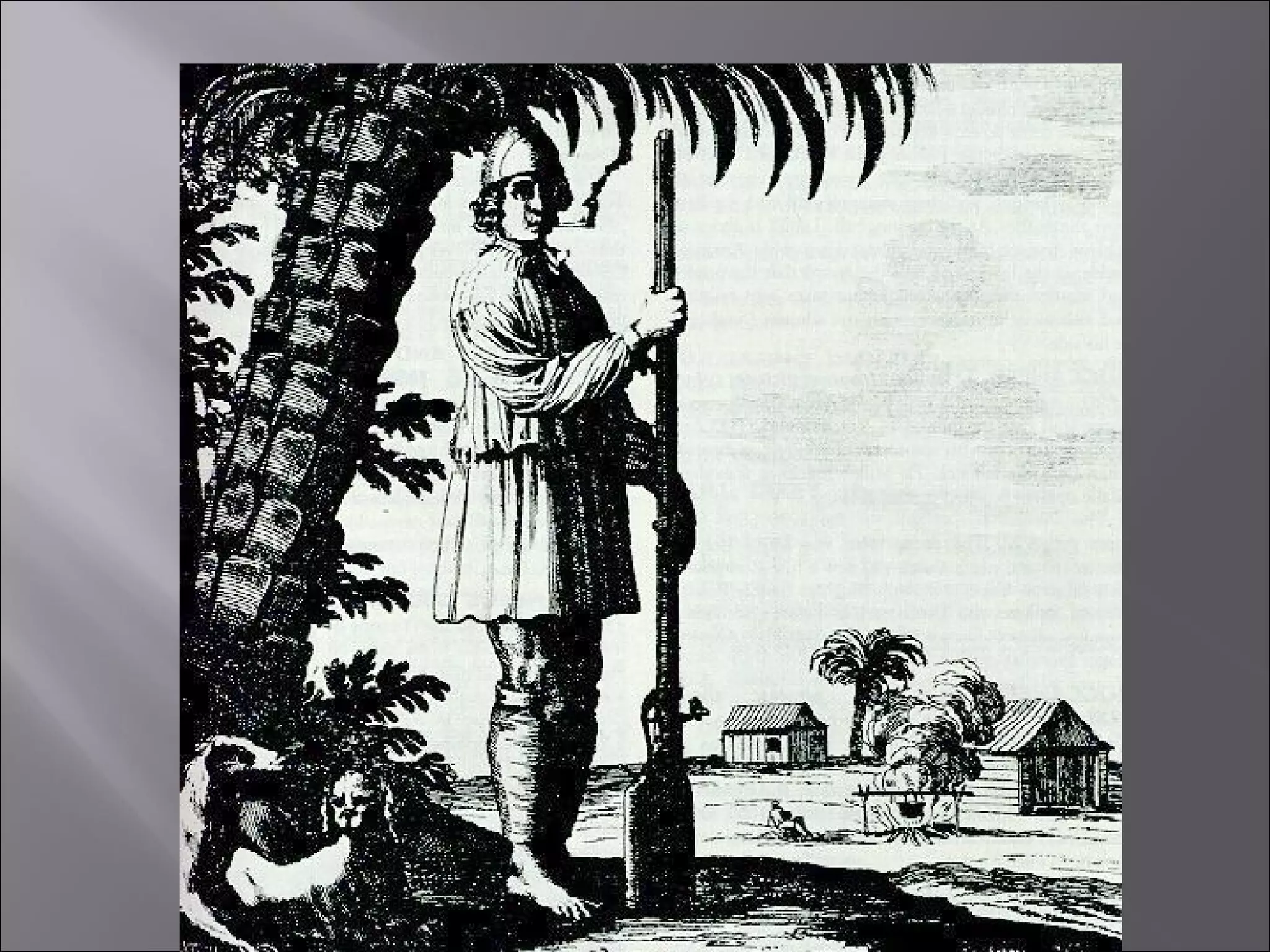
 The musket was the first usable rifle that
soldiers could carry into battle.
 It was developed in Spain in the 1500’s.
 It could fire a metal ball that could seriously
kill or hurt someone.
 The first muskets were very large weighing 40
pounds and being over 6 feet long.
 They were very hard to use.
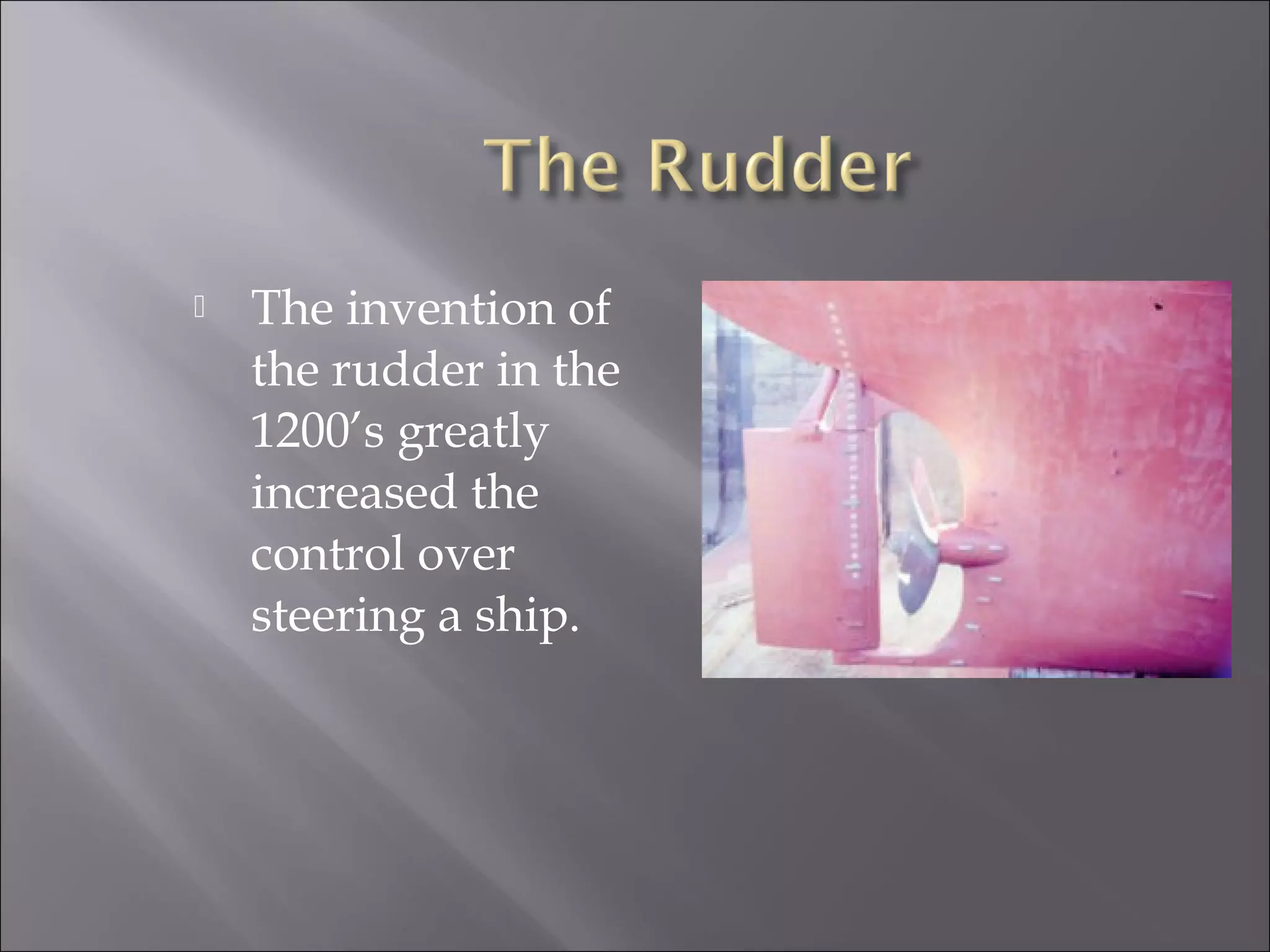
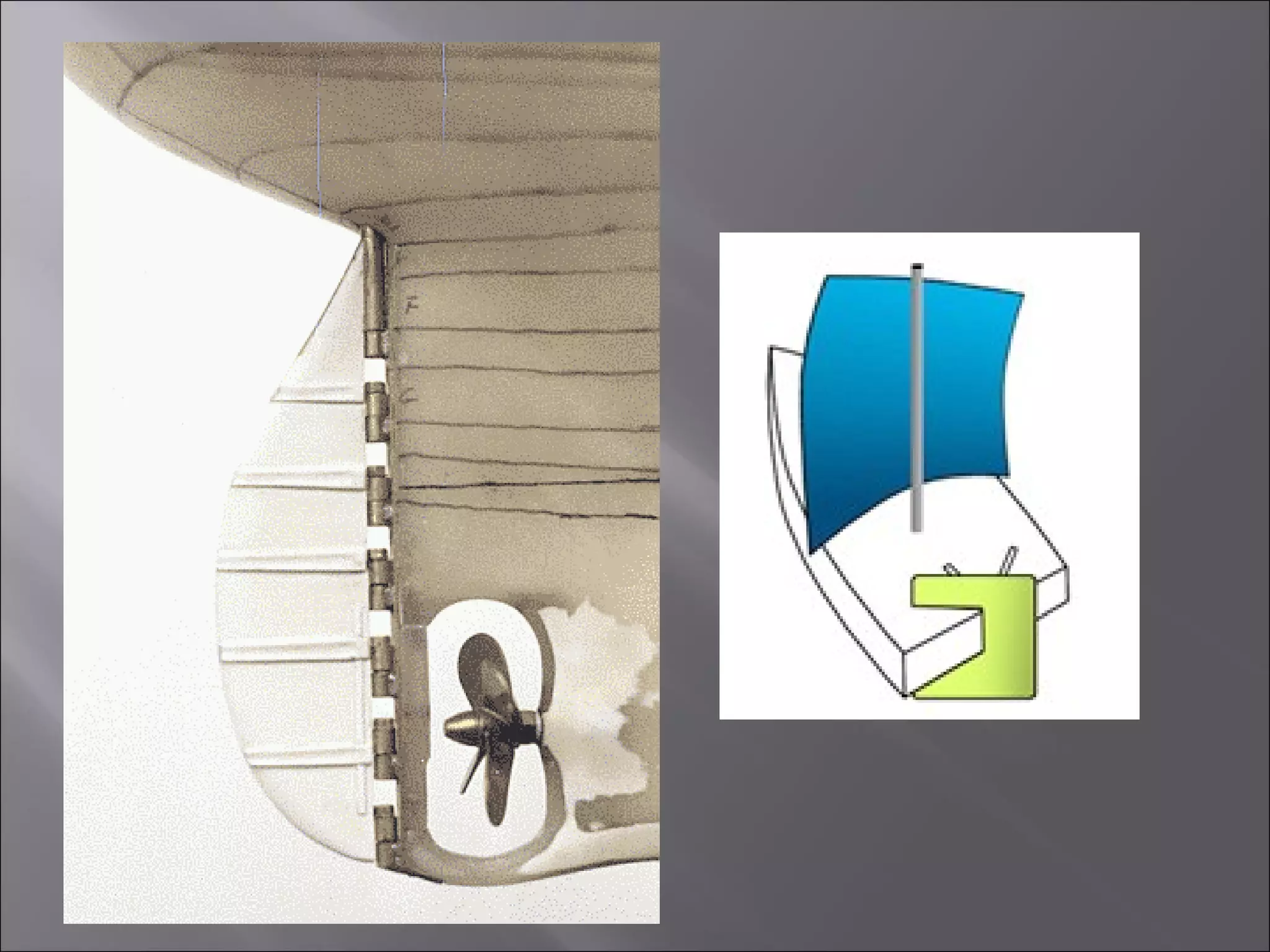
 The invention of
the rudder in the
1200’s greatly
increased the
control over
steering a ship.
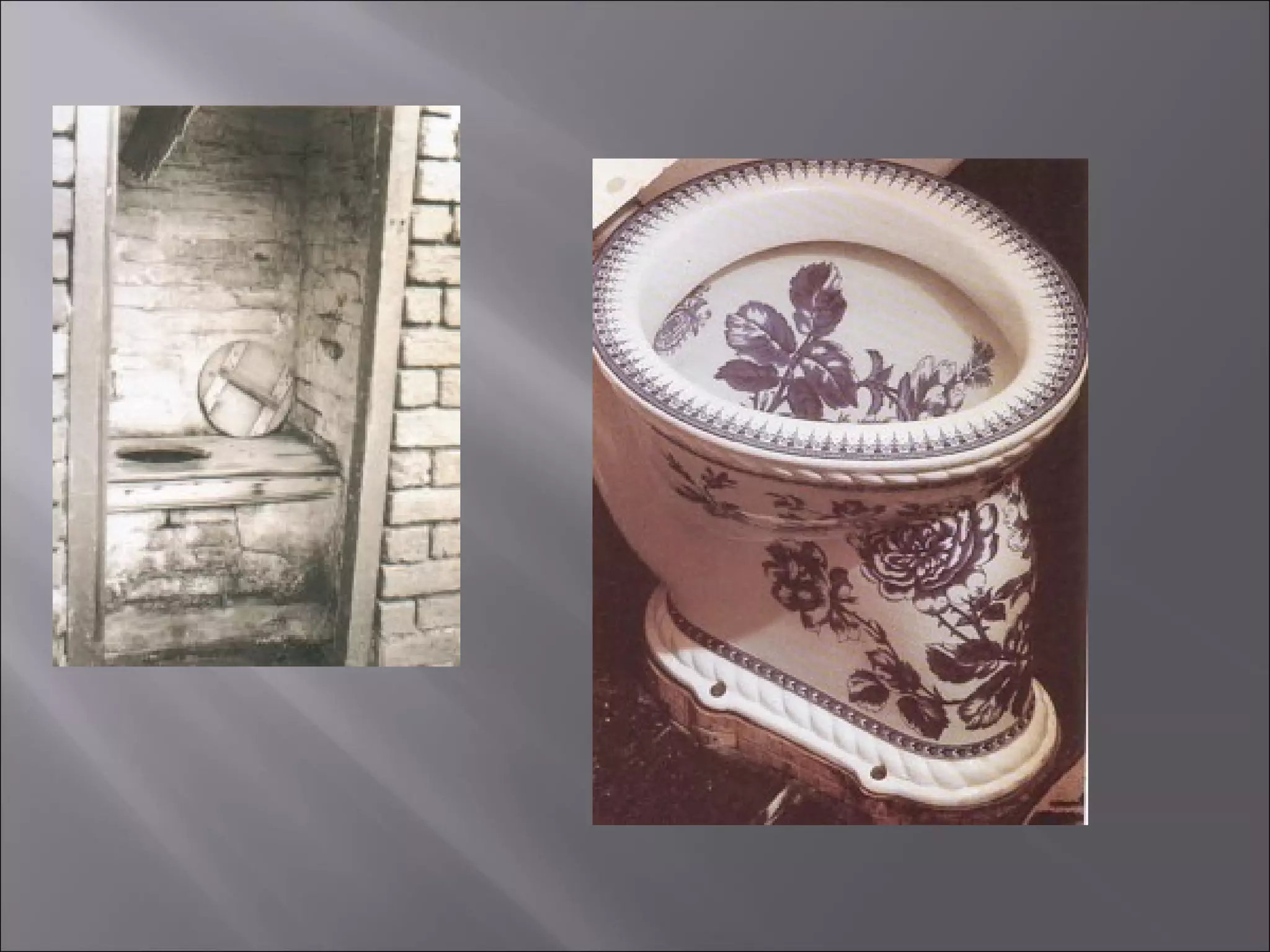
 The flush toilet, or water closet as it was called
dates back to 1589 when it was invented by Sir
John Harington.
 Harington invented a valve that when pulled
would release water from a water closet. Sir
John recommended flushing the toilet once or
twice a day, although with our modern
technology, we know that is probably not
sufficient. (Rumor has it that, in Robin Hood's
day, King Arthur - angry with how his brother
ruled the country while the King was gone,
named the toilet, 'the john' - aka as 'the jon' to
you folks.)
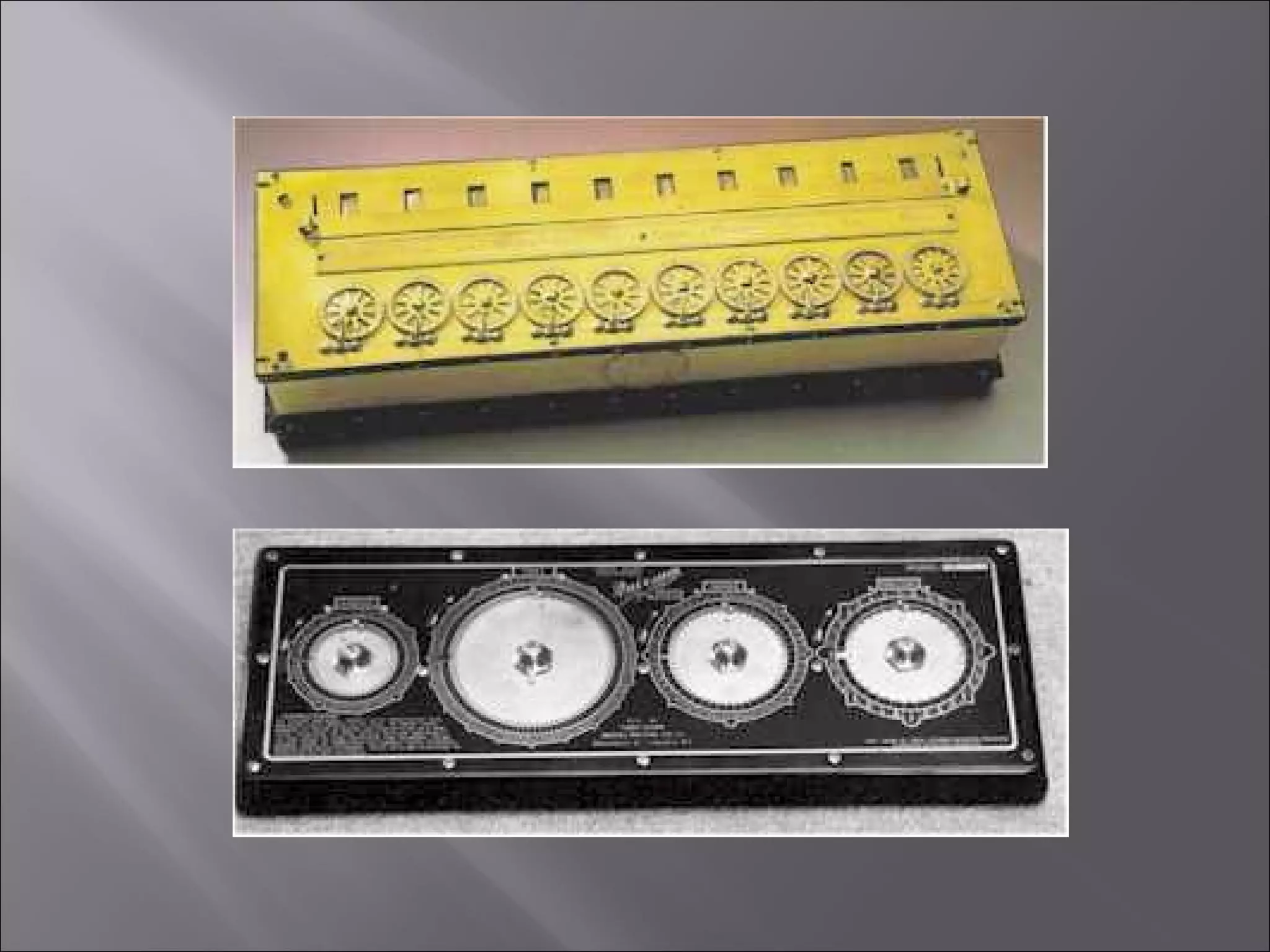
 The French scientist, Blaise Pascal has
been credited with inventing the very
first digital calculator. In 1642, the 18-
year-old Pascal, the son of a French tax
collector, invented his numerical wheel
calculator called the Pascaline, to help his
father count taxes.
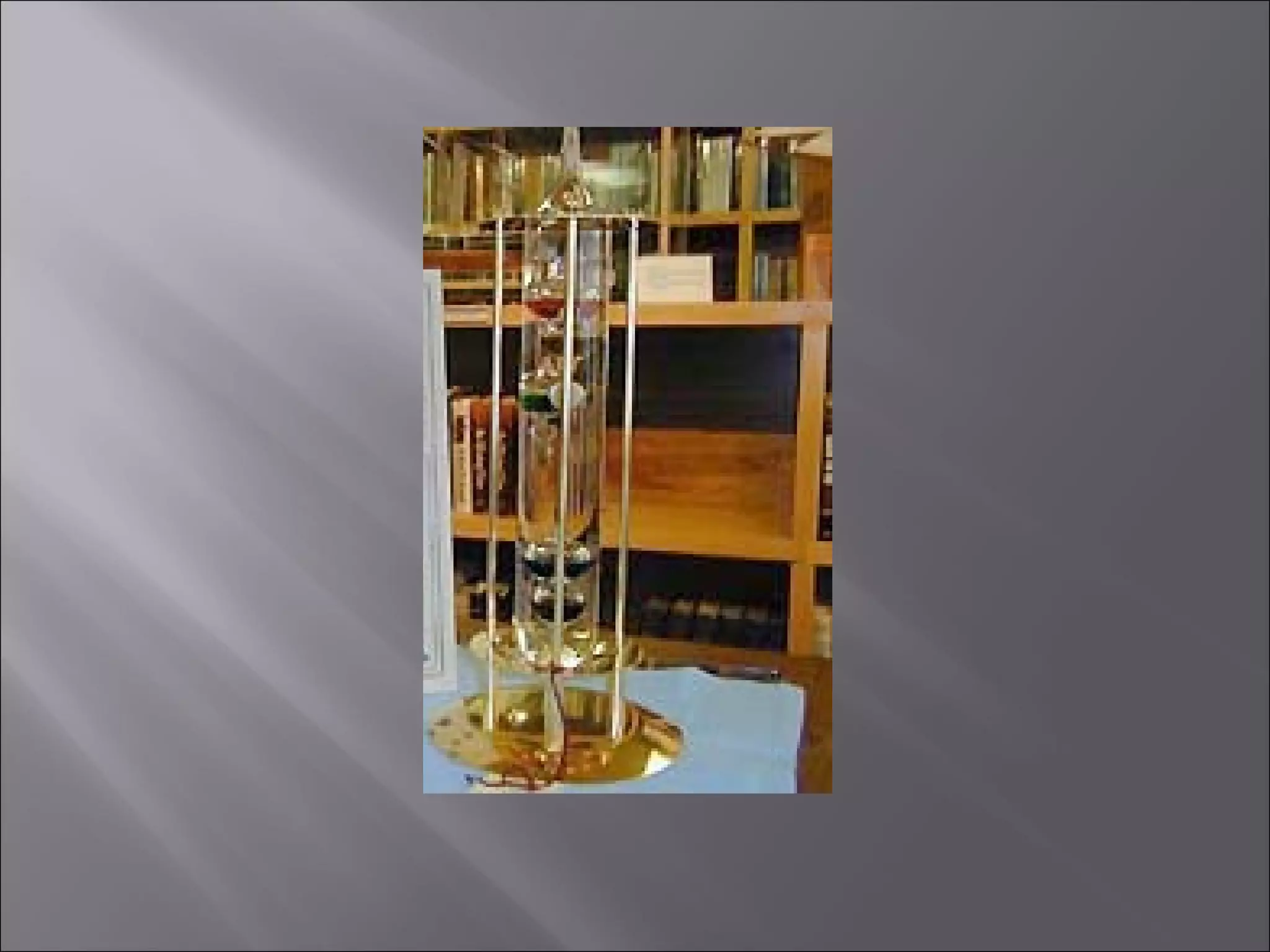
 The Thermometer was invented by Galileo in
1593 which, for the first time, allowed
temperature variations to be measured.
In 1714, Gabriel Fahrenheit invented the
first mercury thermometer, the modern
thermometer.
 Thermometers measure temperature, by
using materials that change in some way
when they are heated or cooled.
 The submarine was invented in 1624 by a man
named Cornelius van Drebbel.
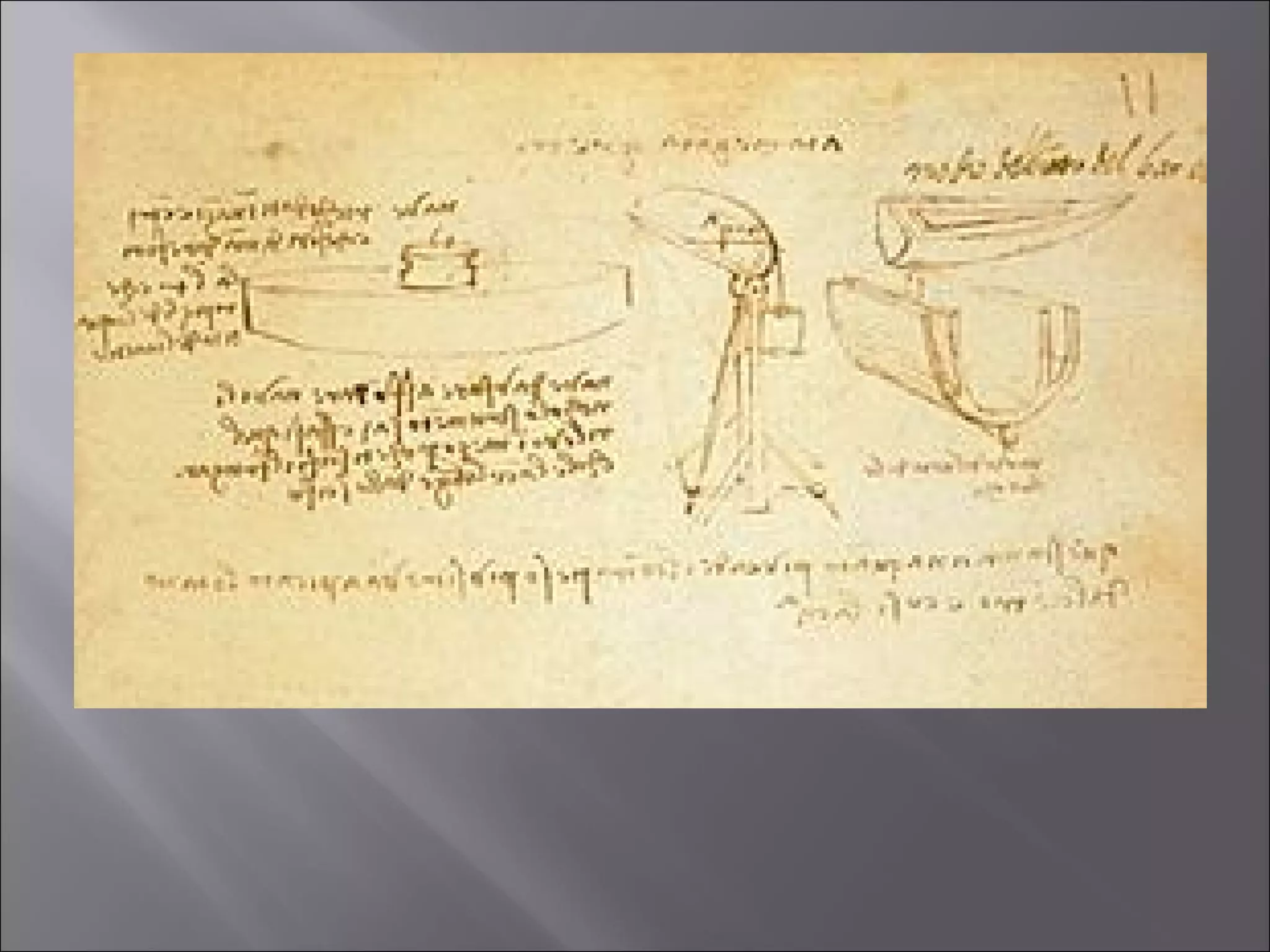
 Leonardo da Vinci drew out the basic concept
of a submarine over one hundred years before.
 Drebbel, a Dutch inventor and engineer
employed by the British navy constructed a
leather- covered rowboat from which oars
protruded through watertight seals.
 Drubbel's ship could stay underwater for a few
hours, but it only went about fifteen feet under
the surface.
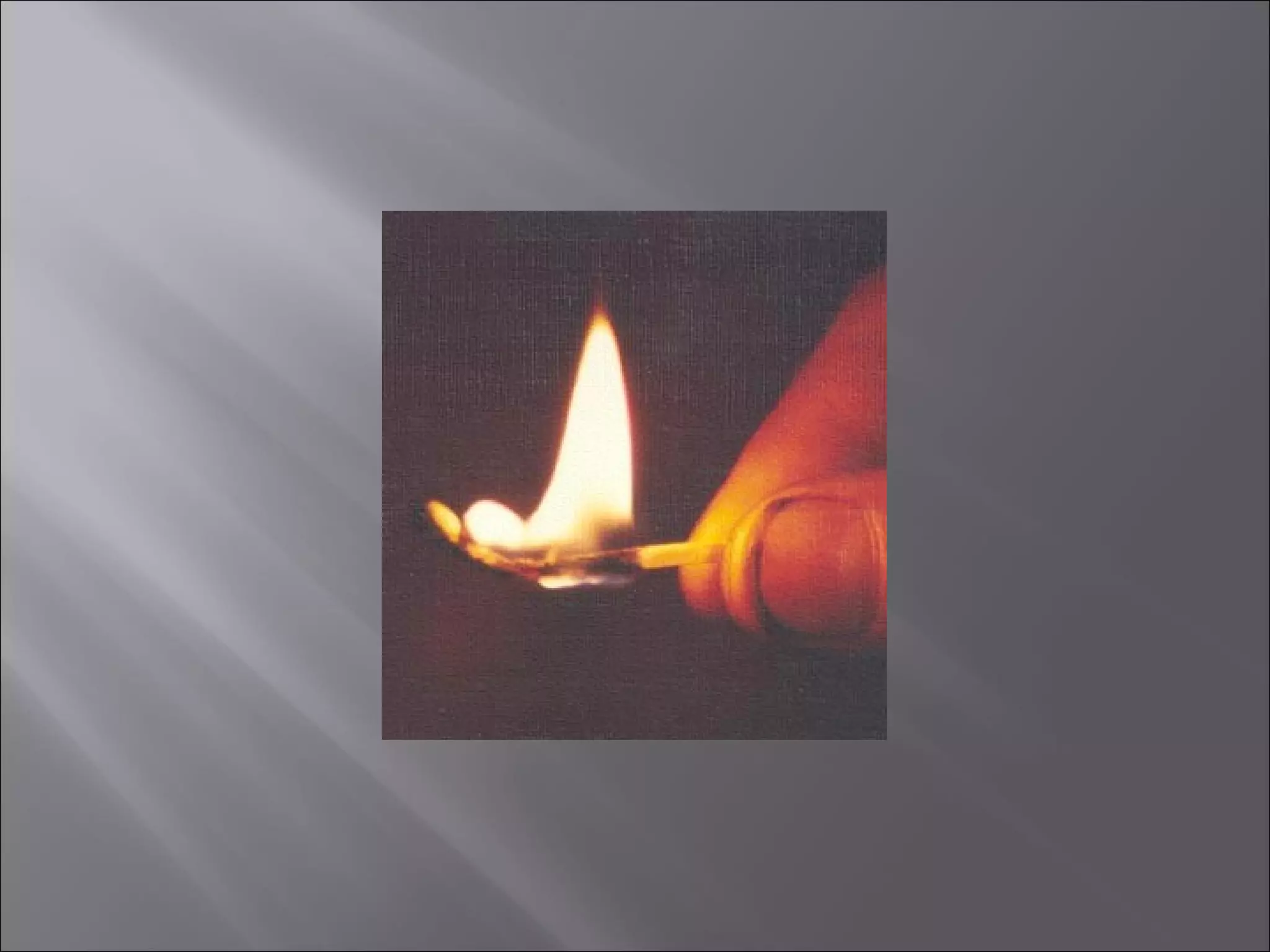
 Fire - our worst enemy, our best friend - was
difficult to create until Robert Boyle invented the
match in 1680.
 Although fire could be made by rubbing sticks
together or by striking flint to steel, this was a time
consuming process. Boyle discovered that when
phosphorus and sulfur were rubbed together, they
would burst into flame.
 Although convenient, Boyle's matches were not
very safe, because sometimes they accidentally
went up in flames while in a pocket. (Warm
surprise!)
 With some improvements and a little fine tuning,
this invention led to your modern safety match
many years later.
Renaissanceinventions

Renaissanceinventions

  • 1.
    Take notes asyou view the slides.
  • 2.
     The oldestsurviving mechanical clock were made in the 1300’s.  Italian scientist Galileo discovered the pendulum.  This made for better time keeping.
  • 3.
     Water clocksand hourglasses were widely using in the 1500’s.
  • 4.
     The portablewatch was invented by German Peter Henlein in 1505  He created his watch to be spring powered making it much smaller.  This watch was a pocket watch. The wrist watch didn’t come into widespread use until the 1800’s.
  • 6.
     The Chinesewere the first to invent printing in 868.  In the mid-1400’s, Johan Gutenberg of Germany invented a printing press using moveable type.  Now books could be printed with greater speed and less effort.  The Gutenberg Bible is considered one of the first books ever printed.
  • 8.
     Eyeglasses wereinvented in the 1300’s.  With the invention of the printing press in the 1400’s, the demand for eyeglasses increased.  Far-sighted glasses (for reading) were developed first.  Later on near-sightedness was able to be corrected.
  • 10.
     Lenses wereused for more than just eyeglasses.  Galileo used lenses to make an astronomical telescope to look at the stars and planets in 1606.  Isaac Newton made the first reflecting telescope in 1668.
  • 12.
     The musketwas the first usable rifle that soldiers could carry into battle.  It was developed in Spain in the 1500’s.  It could fire a metal ball that could seriously kill or hurt someone.  The first muskets were very large weighing 40 pounds and being over 6 feet long.  They were very hard to use.
  • 14.
     The inventionof the rudder in the 1200’s greatly increased the control over steering a ship.
  • 16.
     The flushtoilet, or water closet as it was called dates back to 1589 when it was invented by Sir John Harington.  Harington invented a valve that when pulled would release water from a water closet. Sir John recommended flushing the toilet once or twice a day, although with our modern technology, we know that is probably not sufficient. (Rumor has it that, in Robin Hood's day, King Arthur - angry with how his brother ruled the country while the King was gone, named the toilet, 'the john' - aka as 'the jon' to you folks.)
  • 18.
     The Frenchscientist, Blaise Pascal has been credited with inventing the very first digital calculator. In 1642, the 18- year-old Pascal, the son of a French tax collector, invented his numerical wheel calculator called the Pascaline, to help his father count taxes.
  • 20.
     The Thermometerwas invented by Galileo in 1593 which, for the first time, allowed temperature variations to be measured. In 1714, Gabriel Fahrenheit invented the first mercury thermometer, the modern thermometer.  Thermometers measure temperature, by using materials that change in some way when they are heated or cooled.
  • 22.
     The submarinewas invented in 1624 by a man named Cornelius van Drebbel.  Leonardo da Vinci drew out the basic concept of a submarine over one hundred years before.  Drebbel, a Dutch inventor and engineer employed by the British navy constructed a leather- covered rowboat from which oars protruded through watertight seals.  Drubbel's ship could stay underwater for a few hours, but it only went about fifteen feet under the surface.
  • 24.
     Fire -our worst enemy, our best friend - was difficult to create until Robert Boyle invented the match in 1680.  Although fire could be made by rubbing sticks together or by striking flint to steel, this was a time consuming process. Boyle discovered that when phosphorus and sulfur were rubbed together, they would burst into flame.  Although convenient, Boyle's matches were not very safe, because sometimes they accidentally went up in flames while in a pocket. (Warm surprise!)  With some improvements and a little fine tuning, this invention led to your modern safety match many years later.