http://2100.org Thierry Gaudin  Religions : from history to foresight
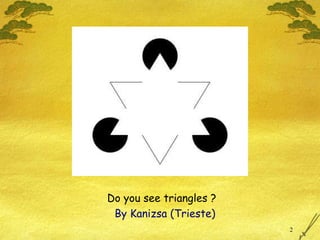
Do you see triangles ? By Kanizsa (Trieste)
We have not chosen our beliefs We give our agreement to the tale of the planet Don Miguel Ruiz, nagual
Look at religions through ethology : 1-beliefs are built by human mind 2-they are inspired by survival conditions, that change 3-practices are selected through darwinian processes.
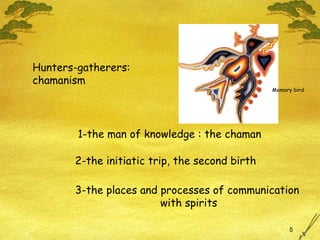
Hunters-gatherers: chamanism 1-the man of knowledge : the chaman 2-the initiatic trip, the second birth 3-the places and processes of communication  with spirits Memory bird
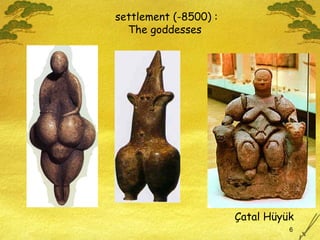
settlement (-8500) : The goddesses  Çatal Hüyük
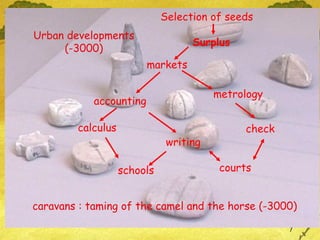
Urban developments (-3000) Selection of seeds Surplus markets accounting metrology writing schools check courts calculus caravans : taming of the camel and the horse (-3000)
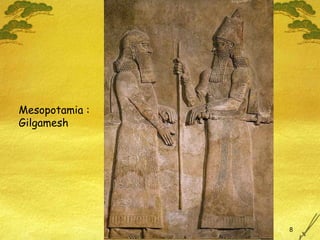
Mesopotamia : Gilgamesh
Likely scenario : -3000, camel and horse are domesticated massive urban development : trade is developing  caravans <- predators (from central asia…) protectors -> kingdoms Trade + conflicts -> Guiles, deceits Zarathustra : an upper level is needed  where truth is to be claimed
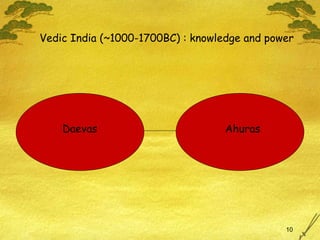
Daevas Ahuras Vedic India (~1000-1700BC) : knowledge and power
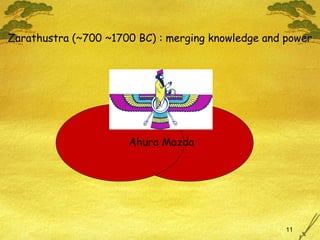
Ahura Mazda Zarathustra (~700 ~1700 BC) : merging knowledge and power
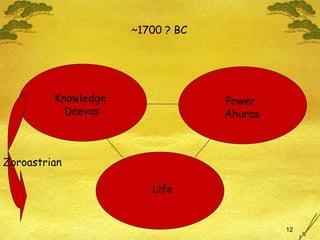
Knowledge  Daevas Power  Ahuras Life ~1700 ? BC Zoroastrian
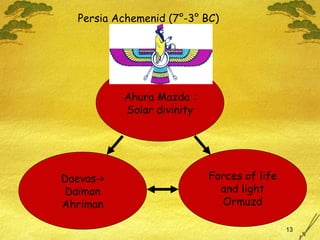
Persia Achemenid (7°-3° BC) Ahura Mazda : Solar divinity Forces of life and light Ormuzd Daevas-> Daïmon Ahriman
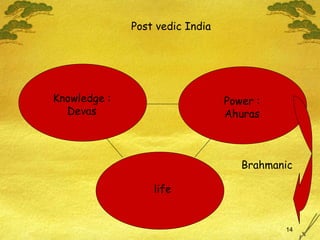
Knowledge : Devas Power : Ahuras life Post vedic India  Brahmanic
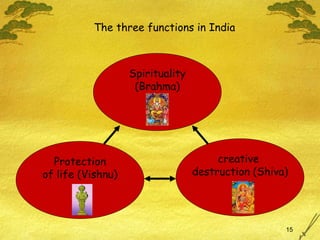
The three functions in India Spirituality (Brahma) creative  destruction (Shiva) Protection of life (Vishnu)
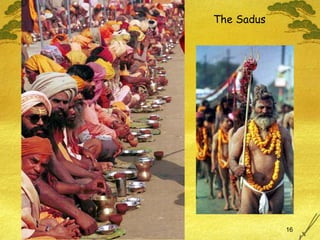
The Sadus
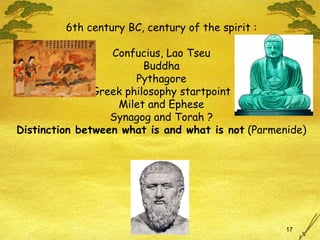
6th century BC, century of the spirit : Confucius, Lao Tseu Buddha Pythagore Greek philosophy startpoint Milet and Ephese Synagog and Torah ? Distinction between what is and what is not  (Parmenide)
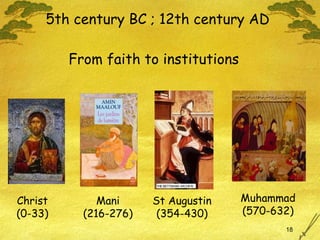
5th century BC ; 12th century AD From faith to institutions  Mani (216-276) St Augustin (354-430) Muhammad (570-632) Christ (0-33)
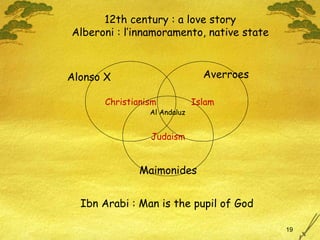
12th century : a love story Alberoni : l’innamoramento, native state Christianism Judaism Islam Al Andaluz Alonso X Averroes Maimonides Ibn Arabi : Man is the pupil of God
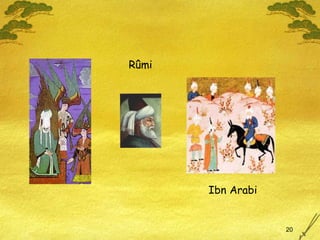
R ûmi Ibn Arabi
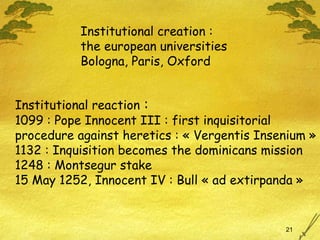
Institutional reaction  : 1099 : Pope Innocent III : first inquisitorial procedure against heretics : « Vergentis Insenium » 1132 : Inquisition becomes the dominicans mission 1248 :  Montsegur stake 15 May 1252, Innocent IV : Bull « ad extirpanda » Institutional creation :  the european universities Bologna, Paris, Oxford
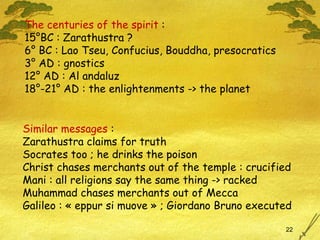
The centuries of the spirit  : 15°BC : Zarathustra ? 6° BC : Lao Tseu, Confucius, Bouddha, presocratics 3° AD : gnostics 12° AD : Al andaluz 18°-21° AD : the enlightenments -> the planet Similar messages  : Zarathustra claims for truth Socrates too ; he drinks the poison Christ chases merchants out of the temple : crucified Mani : all religions say the same thing -> racked Muhammad chases merchants out of Mecca Galileo : « eppur si muove » ; Giordano Bruno executed
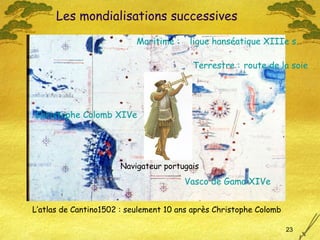
Terrestre :   Vasco de Gama XIVe Maritime :   Christophe Colomb XIVe Navigateur portugais ligue hanséatique XIIIe s. route de la soie Les mondialisations successives L’atlas de Cantino1502 : seulement 10 ans après Christophe Colomb
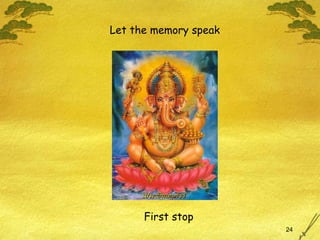
Let the memory speak First stop
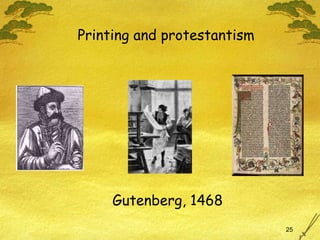
Printing and protestantism Gutenberg, 1468
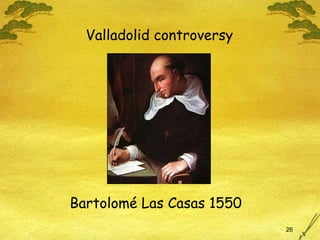
Valladolid controversy Bartolomé Las Casas 1550
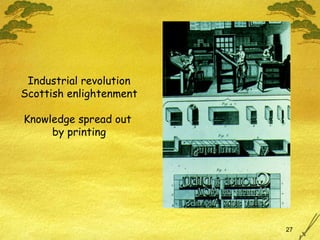
Industrial revolution Scottish enlightenment Knowledge spread out  by printing
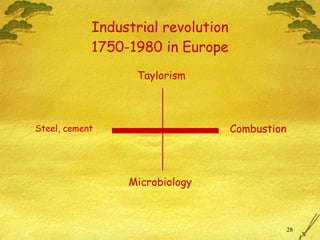
Industrial revolution 1750-1980 in Europe Steel, cement Combustion Taylorism Microbiology
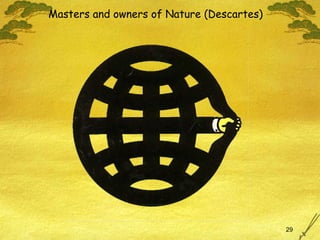
Masters and owners of  Nature (Descartes)
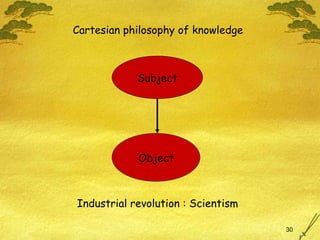
Cartesian philosophy of knowledge Subject Object Industrial revolution : Scientism
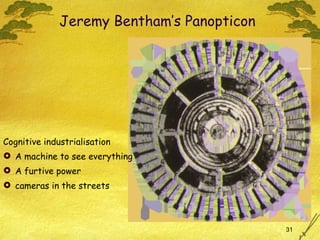
Jeremy Bentham’s Panopticon Cognitive industrialisation A machine to see everything A furtive power cameras in the streets
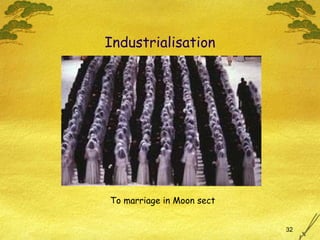
Industrialisation To marriage in Moon sect
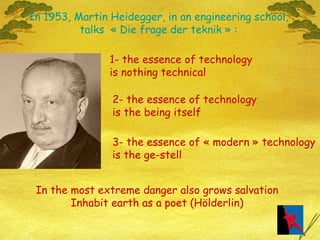
In 1953, Martin Heidegger, in an engineering school, talks  « Die frage der teknik » : 1- the essence of technology  is nothing technical 2- the essence of technology  is the being itself 3- the essence of « modern » technology is the ge-stell In the most extreme danger also grows salvation Inhabit earth as a poet (Hölderlin)
After the memory speach The third millenium
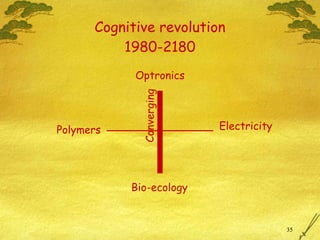
Cognitive revolution 1980-2180 Polymers Electricity Optronics Bio-ecology Converging
By land   Vasco de Gama XIVe By sea : digital : Internet hanseatic league XIIIe The silk road Globalisation since -3000 Cantino’s atlas 1502 : only 10 years after Christopher Columbus   Christopher Columbus 1492
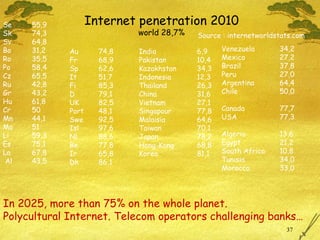
Internet penetration 2010 world 28,7% Au 74,8 Fr  68,9 Sp 62,6 It 51,7 Fi 85,3  D 79,1 UK  82,5 Port 48,1 Swe 92,5 Isl 97,6 Nl 88,6 Be 77,8 Ir 65,8 Dk 86,1 India  6,9 Pakistan 10,4 Kazakhstan 34,3 Indonesia 12,3 Thaïland 26,3 China 31,6 Vietnam 27,1 Singapour 77,8 Malaisia 64,6 Taiwan 70,1 Japan 78,2 Hong-Kong 68,8 Korea 81,1 Venezuela 34,2 Mexico 27,2 Brazil 37,8 Peru 27,0 Argentina 64,4 Chile 50,0 Canada 77,7 USA 77,3 Algeria  13,6 Egypt 21,2 South Africa 10,8 Tunisia 34,0 Morocco 33,0 Source : internetworldstats.com In 2025, more than 75% on the whole planet.  Polycultural Internet. Telecom operators challenging banks… Se 55,9 Sk 74,3 Sv 64,8 Bo 31,2 Ro 35,5 Po 58,4 Cz 65,5 Ru 42,8 Gr 43,2 Hu 61,8 Cr 50 Mn 44,1 Ma 51 Li 59,3 Es 75,1 La 67,8 Al 43,5
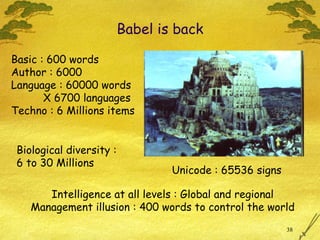
Babel is back Basic : 600 words Author : 6000 Language : 60000 words X 6700 languages Techno : 6 Millions items Unicode : 65536 signs Intelligence at all levels : Global and regional Management illusion : 400 words to control the world Biological diversity : 6 to 30 Millions
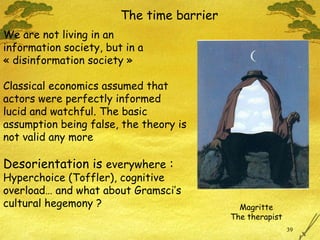
The time barrier We are not living in an  information society, but in a « disinformation society »  Classical economics assumed that  actors were perfectly informed  lucid and watchful. The basic assumption being false, the theory is not valid any more Desorientation is  everywhere  :   Hyperchoice (Toffler), cognitive overload… and what about Gramsci’s cultural hegemony ? Magritte The therapist
Mind your brain…
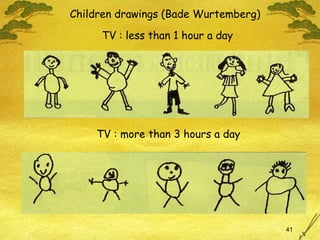
Children drawings (Bade Wurtemberg) TV : less than 1 hour a day TV : more than 3 hours a day
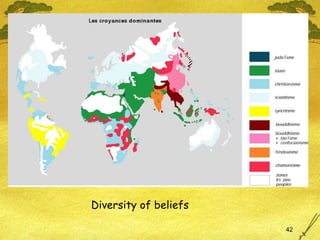
Diversity of beliefs
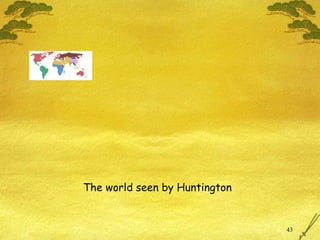
The world seen by Huntington
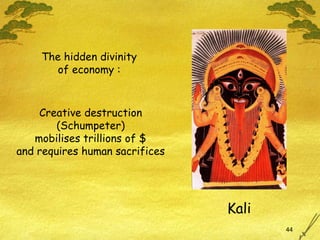
Kali The hidden divinity of economy : Creative destruction (Schumpeter) mobilises trillions of $ and requires human sacrifices
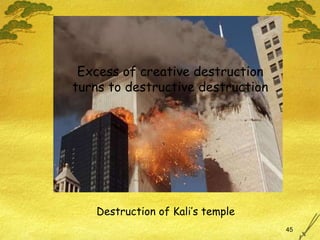
Destruction of Kali’s temple  Excess of creative destruction turns to destructive destruction
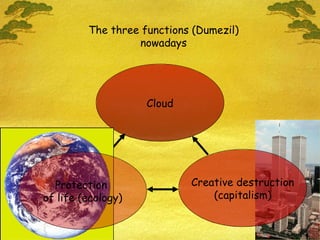
Cloud The three functions (Dumezil) nowadays Creative destruction (capitalism) Protection  of life (ecology)
The key question of foresight, which will be even more present in the coming decades, is the disruption of the equilibrium between nature and human species. The greenhouse effect, the reduction of biodiversity, the exhaustion of sea resources and the destruction of tropical rainforests impose behaviours opposite to the current watchwords of productivity, consumption and competition. If the Internet is intended to work as a planetary nervous system, is it able to become the base of a global consciousness of the whole human species, enough to reverse the regulations of its behaviours ?
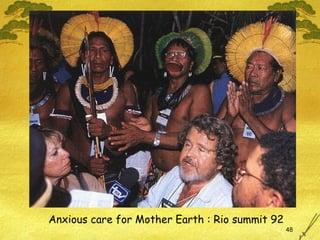
Anxious care for Mother Earth : Rio summit 92
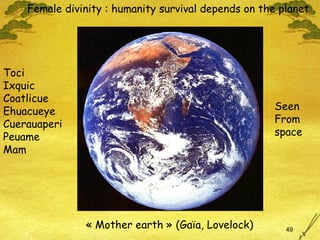
« Mother earth » (Gaïa, Lovelock)  Female divinity : humanity survival depends on the planet Toci Ixquic Coatlicue Ehuacueye Cuerauaperi Peuame Mam Seen  From space
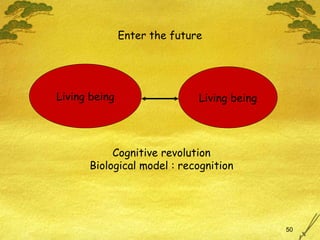
Cognitive revolution Biological model : recognition Living being Living being Enter the future
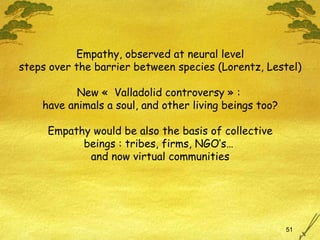
Empathy, observed at neural level steps over the barrier between species (Lorentz, Lestel) New «  Valladolid controversy » :  have animals a soul, and other living beings too? Empathy would be also the basis of collective beings  : tribes, firms, NGO’s…  and now virtual communities
Charles Darwin thinking path Beginning of life, 3,4 Billion years RNAs, the messengers 0,8 billion years : polycellulars appear mutual recognition, cooperation and specialisation
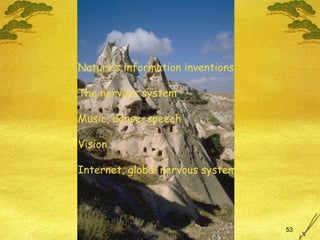
Nature’s information inventions : The nervous system Music, danse, speech Vision Internet, global nervous system
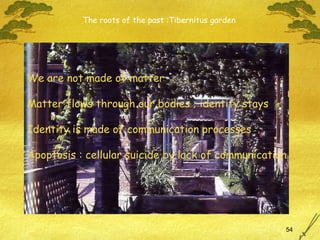
The roots of the past :Tibernitus garden We are not made of matter Matter flows through our bodies ; identity stays Identity is made of communication processes Apoptosis : cellular suicide by lack of communication
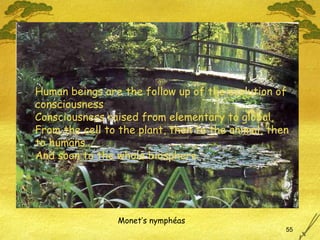
Monet’s nymphéas Human beings are the follow up of the evolution of  consciousness Consciousness raised from elementary to global, From the cell to the plant, then to the animal, then to humans… And soon to the whole biosphere
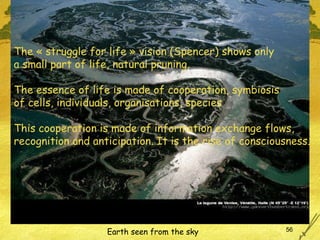
Earth seen from the sky The « struggle for life » vision (Spencer) shows only a small part of life, natural pruning. The essence of life is made of cooperation, symbiosis  of cells, individuals, organisations, species This cooperation is made of information exchange flows, recognition and anticipation. It is the rise of consciousness.
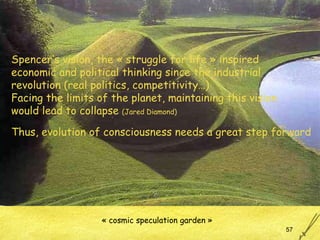
« cosmic speculation garden » Spencer’s vision, the « struggle for life » inspired economic and political thinking since the industrial  revolution (real politics, competitivity…) Facing the limits of the planet, maintaining this vision  would lead to collapse  (Jared Diamond) Thus, evolution of consciousness needs a great step forward
Declining : Rising : From heteronomia to autonomia : the values De Waal Simondon Cyrulnik Domination Conquest Performance Empathy Individuation Resilience Authors :
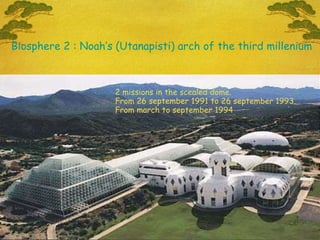
2 missions in the scealed dome.  From 26 september 1991 to 26 september 1993.  From march to september 1994 Biosphere 2 : Noah’s (Utanapisti) arch of the third millenium
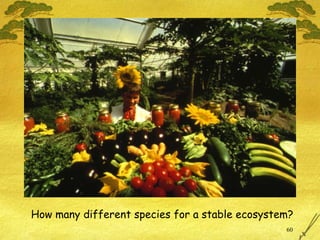
How many different species for a stable ecosystem?
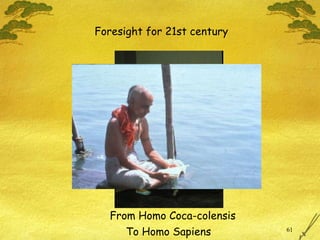
To Homo Sapiens Foresight for 21st century From Homo Coca-colensis
http://2100. org   Thanks for your attention Time has come To dream  another future

Religions ethology04 11

  • 1.
    http://2100.org Thierry Gaudin Religions : from history to foresight
  • 2.
    Do you seetriangles ? By Kanizsa (Trieste)
  • 3.
    We have notchosen our beliefs We give our agreement to the tale of the planet Don Miguel Ruiz, nagual
  • 4.
    Look at religionsthrough ethology : 1-beliefs are built by human mind 2-they are inspired by survival conditions, that change 3-practices are selected through darwinian processes.
  • 5.
    Hunters-gatherers: chamanism 1-theman of knowledge : the chaman 2-the initiatic trip, the second birth 3-the places and processes of communication with spirits Memory bird
  • 6.
    settlement (-8500) :The goddesses Çatal Hüyük
  • 7.
    Urban developments (-3000)Selection of seeds Surplus markets accounting metrology writing schools check courts calculus caravans : taming of the camel and the horse (-3000)
  • 8.
  • 9.
    Likely scenario :-3000, camel and horse are domesticated massive urban development : trade is developing caravans <- predators (from central asia…) protectors -> kingdoms Trade + conflicts -> Guiles, deceits Zarathustra : an upper level is needed where truth is to be claimed
  • 10.
    Daevas Ahuras VedicIndia (~1000-1700BC) : knowledge and power
  • 11.
    Ahura Mazda Zarathustra(~700 ~1700 BC) : merging knowledge and power
  • 12.
    Knowledge DaevasPower Ahuras Life ~1700 ? BC Zoroastrian
  • 13.
    Persia Achemenid (7°-3°BC) Ahura Mazda : Solar divinity Forces of life and light Ormuzd Daevas-> Daïmon Ahriman
  • 14.
    Knowledge : DevasPower : Ahuras life Post vedic India Brahmanic
  • 15.
    The three functionsin India Spirituality (Brahma) creative destruction (Shiva) Protection of life (Vishnu)
  • 16.
  • 17.
    6th century BC,century of the spirit : Confucius, Lao Tseu Buddha Pythagore Greek philosophy startpoint Milet and Ephese Synagog and Torah ? Distinction between what is and what is not (Parmenide)
  • 18.
    5th century BC; 12th century AD From faith to institutions Mani (216-276) St Augustin (354-430) Muhammad (570-632) Christ (0-33)
  • 19.
    12th century :a love story Alberoni : l’innamoramento, native state Christianism Judaism Islam Al Andaluz Alonso X Averroes Maimonides Ibn Arabi : Man is the pupil of God
  • 20.
  • 21.
    Institutional reaction : 1099 : Pope Innocent III : first inquisitorial procedure against heretics : « Vergentis Insenium » 1132 : Inquisition becomes the dominicans mission 1248 : Montsegur stake 15 May 1252, Innocent IV : Bull « ad extirpanda » Institutional creation : the european universities Bologna, Paris, Oxford
  • 22.
    The centuries ofthe spirit : 15°BC : Zarathustra ? 6° BC : Lao Tseu, Confucius, Bouddha, presocratics 3° AD : gnostics 12° AD : Al andaluz 18°-21° AD : the enlightenments -> the planet Similar messages : Zarathustra claims for truth Socrates too ; he drinks the poison Christ chases merchants out of the temple : crucified Mani : all religions say the same thing -> racked Muhammad chases merchants out of Mecca Galileo : « eppur si muove » ; Giordano Bruno executed
  • 23.
    Terrestre : Vasco de Gama XIVe Maritime : Christophe Colomb XIVe Navigateur portugais ligue hanséatique XIIIe s. route de la soie Les mondialisations successives L’atlas de Cantino1502 : seulement 10 ans après Christophe Colomb
  • 24.
    Let the memoryspeak First stop
  • 25.
  • 26.
  • 27.
    Industrial revolution Scottishenlightenment Knowledge spread out by printing
  • 28.
    Industrial revolution 1750-1980in Europe Steel, cement Combustion Taylorism Microbiology
  • 29.
    Masters and ownersof Nature (Descartes)
  • 30.
    Cartesian philosophy ofknowledge Subject Object Industrial revolution : Scientism
  • 31.
    Jeremy Bentham’s PanopticonCognitive industrialisation A machine to see everything A furtive power cameras in the streets
  • 32.
  • 33.
    In 1953, MartinHeidegger, in an engineering school, talks « Die frage der teknik » : 1- the essence of technology is nothing technical 2- the essence of technology is the being itself 3- the essence of « modern » technology is the ge-stell In the most extreme danger also grows salvation Inhabit earth as a poet (Hölderlin)
  • 34.
    After the memoryspeach The third millenium
  • 35.
    Cognitive revolution 1980-2180Polymers Electricity Optronics Bio-ecology Converging
  • 36.
    By land Vasco de Gama XIVe By sea : digital : Internet hanseatic league XIIIe The silk road Globalisation since -3000 Cantino’s atlas 1502 : only 10 years after Christopher Columbus Christopher Columbus 1492
  • 37.
    Internet penetration 2010world 28,7% Au 74,8 Fr 68,9 Sp 62,6 It 51,7 Fi 85,3 D 79,1 UK 82,5 Port 48,1 Swe 92,5 Isl 97,6 Nl 88,6 Be 77,8 Ir 65,8 Dk 86,1 India 6,9 Pakistan 10,4 Kazakhstan 34,3 Indonesia 12,3 Thaïland 26,3 China 31,6 Vietnam 27,1 Singapour 77,8 Malaisia 64,6 Taiwan 70,1 Japan 78,2 Hong-Kong 68,8 Korea 81,1 Venezuela 34,2 Mexico 27,2 Brazil 37,8 Peru 27,0 Argentina 64,4 Chile 50,0 Canada 77,7 USA 77,3 Algeria 13,6 Egypt 21,2 South Africa 10,8 Tunisia 34,0 Morocco 33,0 Source : internetworldstats.com In 2025, more than 75% on the whole planet. Polycultural Internet. Telecom operators challenging banks… Se 55,9 Sk 74,3 Sv 64,8 Bo 31,2 Ro 35,5 Po 58,4 Cz 65,5 Ru 42,8 Gr 43,2 Hu 61,8 Cr 50 Mn 44,1 Ma 51 Li 59,3 Es 75,1 La 67,8 Al 43,5
  • 38.
    Babel is backBasic : 600 words Author : 6000 Language : 60000 words X 6700 languages Techno : 6 Millions items Unicode : 65536 signs Intelligence at all levels : Global and regional Management illusion : 400 words to control the world Biological diversity : 6 to 30 Millions
  • 39.
    The time barrierWe are not living in an information society, but in a « disinformation society » Classical economics assumed that actors were perfectly informed lucid and watchful. The basic assumption being false, the theory is not valid any more Desorientation is everywhere : Hyperchoice (Toffler), cognitive overload… and what about Gramsci’s cultural hegemony ? Magritte The therapist
  • 40.
  • 41.
    Children drawings (BadeWurtemberg) TV : less than 1 hour a day TV : more than 3 hours a day
  • 42.
  • 43.
    The world seenby Huntington
  • 44.
    Kali The hiddendivinity of economy : Creative destruction (Schumpeter) mobilises trillions of $ and requires human sacrifices
  • 45.
    Destruction of Kali’stemple Excess of creative destruction turns to destructive destruction
  • 46.
    Cloud The threefunctions (Dumezil) nowadays Creative destruction (capitalism) Protection of life (ecology)
  • 47.
    The key questionof foresight, which will be even more present in the coming decades, is the disruption of the equilibrium between nature and human species. The greenhouse effect, the reduction of biodiversity, the exhaustion of sea resources and the destruction of tropical rainforests impose behaviours opposite to the current watchwords of productivity, consumption and competition. If the Internet is intended to work as a planetary nervous system, is it able to become the base of a global consciousness of the whole human species, enough to reverse the regulations of its behaviours ?
  • 48.
    Anxious care forMother Earth : Rio summit 92
  • 49.
    « Mother earth » (Gaïa,Lovelock) Female divinity : humanity survival depends on the planet Toci Ixquic Coatlicue Ehuacueye Cuerauaperi Peuame Mam Seen From space
  • 50.
    Cognitive revolution Biologicalmodel : recognition Living being Living being Enter the future
  • 51.
    Empathy, observed atneural level steps over the barrier between species (Lorentz, Lestel) New «  Valladolid controversy » : have animals a soul, and other living beings too? Empathy would be also the basis of collective beings : tribes, firms, NGO’s… and now virtual communities
  • 52.
    Charles Darwin thinkingpath Beginning of life, 3,4 Billion years RNAs, the messengers 0,8 billion years : polycellulars appear mutual recognition, cooperation and specialisation
  • 53.
    Nature’s information inventions: The nervous system Music, danse, speech Vision Internet, global nervous system
  • 54.
    The roots ofthe past :Tibernitus garden We are not made of matter Matter flows through our bodies ; identity stays Identity is made of communication processes Apoptosis : cellular suicide by lack of communication
  • 55.
    Monet’s nymphéas Humanbeings are the follow up of the evolution of consciousness Consciousness raised from elementary to global, From the cell to the plant, then to the animal, then to humans… And soon to the whole biosphere
  • 56.
    Earth seen fromthe sky The « struggle for life » vision (Spencer) shows only a small part of life, natural pruning. The essence of life is made of cooperation, symbiosis of cells, individuals, organisations, species This cooperation is made of information exchange flows, recognition and anticipation. It is the rise of consciousness.
  • 57.
    « cosmic speculation garden »Spencer’s vision, the « struggle for life » inspired economic and political thinking since the industrial revolution (real politics, competitivity…) Facing the limits of the planet, maintaining this vision would lead to collapse (Jared Diamond) Thus, evolution of consciousness needs a great step forward
  • 58.
    Declining : Rising: From heteronomia to autonomia : the values De Waal Simondon Cyrulnik Domination Conquest Performance Empathy Individuation Resilience Authors :
  • 59.
    2 missions inthe scealed dome. From 26 september 1991 to 26 september 1993. From march to september 1994 Biosphere 2 : Noah’s (Utanapisti) arch of the third millenium
  • 60.
    How many differentspecies for a stable ecosystem?
  • 61.
    To Homo SapiensForesight for 21st century From Homo Coca-colensis
  • 62.
    http://2100. org Thanks for your attention Time has come To dream another future

Editor's Notes

  • #8 Yolin a écrit que l’Internet était une révolution technique comparable à l’écriture. L’écriture, elle, a été inventée en Mésopotamie pour les besoins de l’échange marchand (Jean Bottéro), en même temps que la comptabilité, la métrologie, l’école et les tribunaux. Internet est né d’une initiative militaire visant à favoriser une communication rapide entre équipes de recherche distantes. Après quoi, il a été récupéré pour des échanges, la plupart désintéressés et non marchands.
  • #24 La mondialisation est un phénomène ancien : La « route de la soie » se constitue progressivement, dès le 6ème siècle avJC. Après l’échec des croisades, dont un des objectifs était de déverrouiller l’emprise musulmane sur cette route, les européens font la seconde mondialisation, maritime, aux 14 et 15èmes siècles. Aujourd’hui, nous assistons à la troisième, digitale et instantanée.
  • #37 La mondialisation est un phénomène ancien : La « route de la soie » se constitue progressivement, dès le 6ème siècle avJC. Après l’échec des croisades, dont un des objectifs était de déverrouiller l’emprise musulmane sur cette route, les européens font la seconde mondialisation, maritime, aux 14 et 15èmes siècles. Aujourd’hui, nous assistons à la troisième, digitale et instantanée.
  • #40 Derrière le masque d’une information toujours plus abondante et accessible, se cache une société de désinformation, dont les acteurs cherchent à occuper le mental du public par des messages conformes à leurs intérêts. Le spam n’est pas une « bavure ». Il est au contraire un des aspects essentiels (heureusement pas le seul) du système qui se construit actuellement. Par voie de conséquence, la désorientation, qui autrefois concernait surtout les personnes âgées ou les malades mentaux, devient un phénomène général touchant toutes sortes de personnes en difficulté.
  • #41 Some universities, in an attempt to maintain quality, focus on the media-based delivery of “star” faculty and researchers, leading to the “Hollywood-ization” of education, and “edutainment,” touting the excellence of its production values.