“Religion is the socially defined 
patterns of beliefs concerning 
the ultimate meaning of life; it 
assumes the existence of the 
supernatural.” 
- Rodney Stark
Religion may be defined as any set of coherent answers to the 
dilemmas of human existence that makes the world meaningful. 
- Is also defined in terms of its social function. 
- Is a set of beliefs and practices that pertain to a sacred or 
supernatural realm that guides human behaviour and gives 
meaning to a life among a community of believers. 
Travers and Rebore (1990) define religion as that which involves: 
• a belief about the meaning of life 
• a commitment by the individual and the group to this belief 
• a system of moral practices resulting from a commitment to this 
belief 
• a recognition by the proponents of this belief that is supreme or 
absolute.
Characteristics of Religion 
Most of the leading religions throughout history have shared 
characteristics. The chief characteristics include: 
1. belief in a deity or in a power beyond the individual 
2. a doctrine (accepted teaching) of salvation 
3. a code of conduct 
4. the use of sacred stories, and 
5. religious rituals (acts and ceremonies)
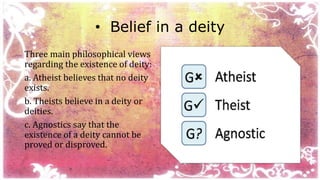
• Belief in a deity 
Three main philosophical views 
regarding the existence of deity: 
a. Atheist believes that no deity 
exists. 
b. Theists believe in a deity or 
deities. 
c. Agnostics say that the 
existence of a deity cannot be 
proved or disproved.
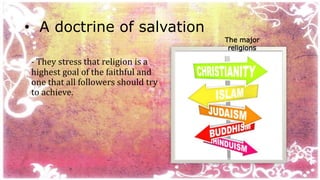
• A doctrine of salvation 
- They stress that religion is a 
highest goal of the faithful and 
one that all followers should try 
to achieve. 
The major 
religions
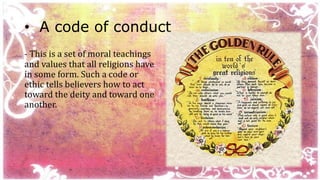
• A code of conduct 
- This is a set of moral teachings 
and values that all religions have 
in some form. Such a code or 
ethic tells believers how to act 
toward the deity and toward one 
another.
• Religious rituals 
- They include the acts and 
ceremonies by which believers 
appeal to and serve God, deities, 
or other sacred powers.
Functions of Religion 
1. Religion serves as a means of social control 
2. It exerts a great influence upon personality development 
3. Religion allays fear of the unknown 
4. Religion explains events or situations which are beyond the 
comprehension of man. 
5. It gives man comfort, strength and hope in times of crisis and despair 
6. It preserves and transmits knowledge, skills, spiritual and cultural 
values and practices 
7. It serves as an instrument of change 
8. It promotes closeness, love, cooperation, friendliness and helpfulness 
9. Religion alleviates sufferings from major calamities 
10. It provides hope for blissful life after death
What is the difference among 
churches, sects, and cults? 
• Church tends to be large, with inclusive membership, 
in a low tension with surrounding society. Church 
toward greater intellectual examination and 
interpretation of the tenants of religion. 
• Sect has a small, exclusive membership, high tension 
with society. It tends toward the emotional mystic, 
faith, feeling, and conversation experience, to be "born 
again". Fundamental, literal in teaching -- biblical 
passages are the literal words of God -- mean literally 
what they say, people are to do what the passage say.
• Cults are referred to by Stark 
and Bainbridge (1985) as the 
more innovative institutions 
and are formed when people 
create new religious beliefs 
and practices. 
3 types of Cults are described, 
namely: 
1. Audience cults 
2. Client cults 
3. Cult movements
The Elements of Religion 
1. Sacred refers to phenomena that are regarded as extraordinary, 
transcendent, and outside the everyday course of events -- that is, 
supernatural. 
2. Legitimation of Norms 
• Religious sanctions and beliefs reinforce the legitimacy of many rules 
and norms in the community. 
3. Rituals are formal patterns of activity that express symbolically a set of 
shared meanings, in the case of rituals such as baptism or communion, 
the shared meanings are sacred. 
4. Religious Community 
• Religion establishes a code of behaviour for the member, who belongs 
and who does not.

Religion

  • 2.
    “Religion is thesocially defined patterns of beliefs concerning the ultimate meaning of life; it assumes the existence of the supernatural.” - Rodney Stark
  • 3.
    Religion may bedefined as any set of coherent answers to the dilemmas of human existence that makes the world meaningful. - Is also defined in terms of its social function. - Is a set of beliefs and practices that pertain to a sacred or supernatural realm that guides human behaviour and gives meaning to a life among a community of believers. Travers and Rebore (1990) define religion as that which involves: • a belief about the meaning of life • a commitment by the individual and the group to this belief • a system of moral practices resulting from a commitment to this belief • a recognition by the proponents of this belief that is supreme or absolute.
  • 4.
    Characteristics of Religion Most of the leading religions throughout history have shared characteristics. The chief characteristics include: 1. belief in a deity or in a power beyond the individual 2. a doctrine (accepted teaching) of salvation 3. a code of conduct 4. the use of sacred stories, and 5. religious rituals (acts and ceremonies)
  • 5.
    • Belief ina deity Three main philosophical views regarding the existence of deity: a. Atheist believes that no deity exists. b. Theists believe in a deity or deities. c. Agnostics say that the existence of a deity cannot be proved or disproved.
  • 6.
    • A doctrineof salvation - They stress that religion is a highest goal of the faithful and one that all followers should try to achieve. The major religions
  • 7.
    • A codeof conduct - This is a set of moral teachings and values that all religions have in some form. Such a code or ethic tells believers how to act toward the deity and toward one another.
  • 8.
    • Religious rituals - They include the acts and ceremonies by which believers appeal to and serve God, deities, or other sacred powers.
  • 9.
    Functions of Religion 1. Religion serves as a means of social control 2. It exerts a great influence upon personality development 3. Religion allays fear of the unknown 4. Religion explains events or situations which are beyond the comprehension of man. 5. It gives man comfort, strength and hope in times of crisis and despair 6. It preserves and transmits knowledge, skills, spiritual and cultural values and practices 7. It serves as an instrument of change 8. It promotes closeness, love, cooperation, friendliness and helpfulness 9. Religion alleviates sufferings from major calamities 10. It provides hope for blissful life after death
  • 10.
    What is thedifference among churches, sects, and cults? • Church tends to be large, with inclusive membership, in a low tension with surrounding society. Church toward greater intellectual examination and interpretation of the tenants of religion. • Sect has a small, exclusive membership, high tension with society. It tends toward the emotional mystic, faith, feeling, and conversation experience, to be "born again". Fundamental, literal in teaching -- biblical passages are the literal words of God -- mean literally what they say, people are to do what the passage say.
  • 11.
    • Cults arereferred to by Stark and Bainbridge (1985) as the more innovative institutions and are formed when people create new religious beliefs and practices. 3 types of Cults are described, namely: 1. Audience cults 2. Client cults 3. Cult movements
  • 12.
    The Elements ofReligion 1. Sacred refers to phenomena that are regarded as extraordinary, transcendent, and outside the everyday course of events -- that is, supernatural. 2. Legitimation of Norms • Religious sanctions and beliefs reinforce the legitimacy of many rules and norms in the community. 3. Rituals are formal patterns of activity that express symbolically a set of shared meanings, in the case of rituals such as baptism or communion, the shared meanings are sacred. 4. Religious Community • Religion establishes a code of behaviour for the member, who belongs and who does not.