Relationship Management
Presented by: Anisha Chudal
Relationship Management
Relationship management is the process of building and maintaining strong,
positive connections with individuals or groups, focusing on communication,
trust, and mutual benefit. It involves nurturing connections that ensure both
parties feel valued and respected, leading to long-term success.
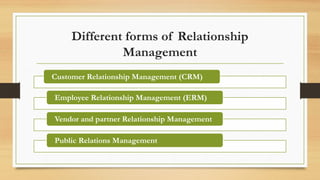
Different forms of Relationship
Management
Customer Relationship Management (CRM)
Employee Relationship Management (ERM)
Vendor and partner Relationship Management
Public Relations Management
Customer Relationship Management (CRM) is about building strong
connections with customers by understanding their needs and preferences.
Key points:
• Understand customer needs
• Build trust and reliability
• Provide personalized services
Employee Relationship Management (ERM) focuses on creating a positive
and supportive work environment for employees.
Key points:
• Open communication
• Motivation& Recognition
• Training & Development
Vendor and Partner Relationship Management involves maintaining
relations with suppliers and business to ensure smooth operation.
Key points:
• Clear expectations and agreements
• Collaboration and mutual support
• Timely payments and trust building.
Public Relations (PR) Management involves the organization’s image and
relationship with the public and media.
Key points:
• Positive media coverage
• Community engagement
Importance of Relationship Management
• Builds Trust and Loyalty
• Improves Communication
• Conflict Resolution
• Adaptability to Change
• Positive word-of-mouth referrals
Builds Trust and Loyalty
Effective relationship management builds trust. When people feel valued and
respected, they are more likely to remain loyal. In business, customer loyalty
leads to repeat sales, while employees who trust their managers are more engaged
and productive.
Improves Communication
Strong relationships rely on clear, open communication. It helps avoid
misunderstandings, encourages feedback, and creates a transparent environment
where issues are quickly addressed, fostering smoother operations and
collaboration.
Conflict resolution
Conflicts are uncertain, but strong relationships make resolution easier. Trust
and respect help address issues constructively without damaging the
relationship, which is especially important in the workplace to maintain morale
and performance.
Adaptability to change
Strong relationships help us to adapt changes more easily. Trust and clear
communication make it easier to navigate shifts in market conditions, team
dynamics, or personal situations successfully.
Positive word-of-mouth referrals
Positive word-of-mouth referrals happen when satisfied customers recommend
a business to others, helping build trust, attract new customers, and boost sales.
Best Practices of Relationship Management
• Active Listening: Pay attention, ask questions, and truly understand the other
person's needs and concerns.
• Clear Communication: Be open, transparent, and consistent in your
communication to avoid misunderstandings.
• Be Empathetic: Understand and respond to the emotions and needs of others with
compassion.
• Be Responsive: Respond to queries or concerns as quickly as possible. A timely
response can make a big difference.
In the end, relationship management is all about building trust, communicating openly, and showing
respect for one another. When these things are prioritized, both individuals and organizations can
strengthen their connections, work better together, and reach long-term success. By managing
relationships well, it encourage loyalty, improve results, and create a positive environment where
everyone can grow and succeed.


Relationship Management.pptx MBA first semester

  • 1.
  • 2.
    Relationship Management Relationship managementis the process of building and maintaining strong, positive connections with individuals or groups, focusing on communication, trust, and mutual benefit. It involves nurturing connections that ensure both parties feel valued and respected, leading to long-term success.
  • 3.
    Different forms ofRelationship Management Customer Relationship Management (CRM) Employee Relationship Management (ERM) Vendor and partner Relationship Management Public Relations Management
  • 4.
    Customer Relationship Management(CRM) is about building strong connections with customers by understanding their needs and preferences. Key points: • Understand customer needs • Build trust and reliability • Provide personalized services Employee Relationship Management (ERM) focuses on creating a positive and supportive work environment for employees. Key points: • Open communication • Motivation& Recognition • Training & Development
  • 5.
    Vendor and PartnerRelationship Management involves maintaining relations with suppliers and business to ensure smooth operation. Key points: • Clear expectations and agreements • Collaboration and mutual support • Timely payments and trust building. Public Relations (PR) Management involves the organization’s image and relationship with the public and media. Key points: • Positive media coverage • Community engagement
  • 6.
    Importance of RelationshipManagement • Builds Trust and Loyalty • Improves Communication • Conflict Resolution • Adaptability to Change • Positive word-of-mouth referrals
  • 7.
    Builds Trust andLoyalty Effective relationship management builds trust. When people feel valued and respected, they are more likely to remain loyal. In business, customer loyalty leads to repeat sales, while employees who trust their managers are more engaged and productive. Improves Communication Strong relationships rely on clear, open communication. It helps avoid misunderstandings, encourages feedback, and creates a transparent environment where issues are quickly addressed, fostering smoother operations and collaboration.
  • 8.
    Conflict resolution Conflicts areuncertain, but strong relationships make resolution easier. Trust and respect help address issues constructively without damaging the relationship, which is especially important in the workplace to maintain morale and performance. Adaptability to change Strong relationships help us to adapt changes more easily. Trust and clear communication make it easier to navigate shifts in market conditions, team dynamics, or personal situations successfully.
  • 9.
    Positive word-of-mouth referrals Positiveword-of-mouth referrals happen when satisfied customers recommend a business to others, helping build trust, attract new customers, and boost sales.
  • 10.
    Best Practices ofRelationship Management • Active Listening: Pay attention, ask questions, and truly understand the other person's needs and concerns. • Clear Communication: Be open, transparent, and consistent in your communication to avoid misunderstandings. • Be Empathetic: Understand and respond to the emotions and needs of others with compassion. • Be Responsive: Respond to queries or concerns as quickly as possible. A timely response can make a big difference.
  • 11.
    In the end,relationship management is all about building trust, communicating openly, and showing respect for one another. When these things are prioritized, both individuals and organizations can strengthen their connections, work better together, and reach long-term success. By managing relationships well, it encourage loyalty, improve results, and create a positive environment where everyone can grow and succeed.
Editor's Notes

  • #1 Presented by: Anisha Chudal