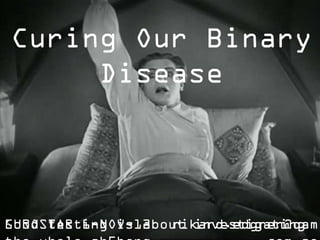
Curing Our Binary Disease 
Rikard Edgren, Qamcom Research & Technology 
www.eurostarconferences.com 
@esconfs 
#esconfs
Curing Our Binary 
Disease 
EUROSTAR 6-NOV-12 rikard.edgren@qam 
Good testing is about investigating 
the whole shEbang 
com.se
A SITUATION 
I was sitting with the test management software on the screen, 
and a scribbled requirements document in his hand. 
“Verify that…” 
“Pass/Fail” 
Many testers don’t provide useful information, 
because they aren’t allowed to. 
The binary disease limits our thinking.
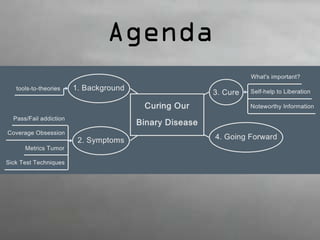
Agenda
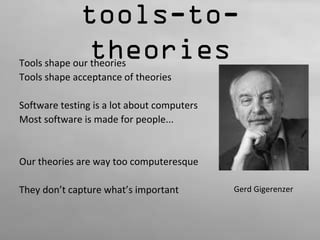
tools-to-theories 
Tools shape our theories 
Tools shape acceptance of theories 
Software testing is a lot about computers 
Most software is made for people... 
Our theories are way too computeresque 
They don’t capture what’s important Gerd Gigerenzer
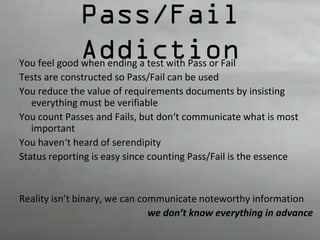
Pass/Fail 
Addiction You feel good when ending a test with Pass or Fail 
Tests are constructed so Pass/Fail can be used 
You reduce the value of requirements documents by insisting 
everything must be verifiable 
You count Passes and Fails, but don‘t communicate what is most 
important 
You haven‘t heard of serendipity 
Status reporting is easy since counting Pass/Fail is the essence 
Reality isn’t binary, we can communicate noteworthy information 
we don’t know everything in advance
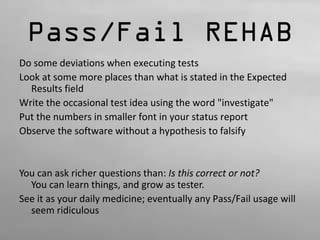
Pass/Fail REHAB 
Do some deviations when executing tests 
Look at some more places than what is stated in the Expected 
Results field 
Write the occasional test idea using the word "investigate" 
Put the numbers in smaller font in your status report 
Observe the software without a hypothesis to falsify 
You can ask richer questions than: Is this correct or not? 
You can learn things, and grow as tester. 
See it as your daily medicine; eventually any Pass/Fail usage will 
seem ridiculous
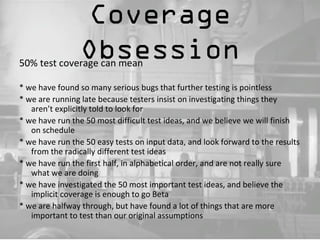
Coverage 
Obsession 50% test coverage can mean 
* we have found so many serious bugs that further testing is pointless 
* we are running late because testers insist on investigating things they 
aren’t explicitly told to look for 
* we have run the 50 most difficult test ideas, and we believe we will finish 
on schedule 
* we have run the 50 easy tests on input data, and look forward to the results 
from the radically different test ideas 
* we have run the first half, in alphabetical order, and are not really sure 
what we are doing 
* we have investigated the 50 most important test ideas, and believe the 
implicit coverage is enough to go Beta 
* we are halfway through, but have found a lot of things that are more 
important to test than our original assumptions
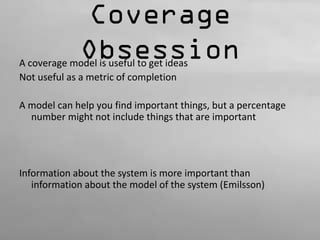
Coverage 
Obsession A coverage model is useful to get ideas 
Not useful as a metric of completion 
A model can help you find important things, but a percentage 
number might not include things that are important 
Information about the system is more important than 
information about the model of the system (Emilsson)
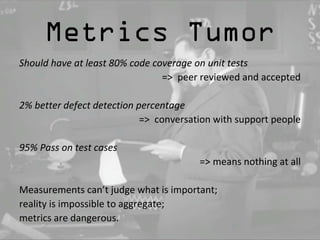
Metrics Tumor 
Should have at least 80% code coverage on unit tests 
=> peer reviewed and accepted 
2% better defect detection percentage 
=> conversation with support people 
95% Pass on test cases 
=> means nothing at all 
Measurements can’t judge what is important; 
reality is impossible to aggregate; 
metrics are dangerous.
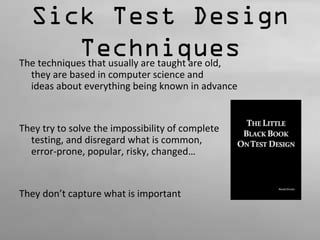
Sick Test Design 
Techniques 
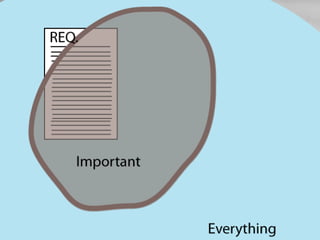
The techniques that usually are taught are old, 
they are based in computer science and 
ideas about everything being known in advance 
They try to solve the impossibility of complete 
testing, and disregard what is common, 
error-prone, popular, risky, changed… 
They don’t capture what is important
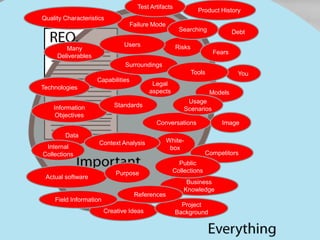
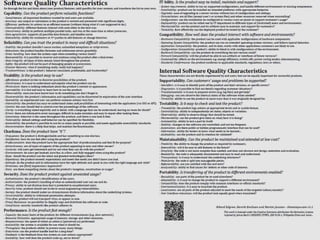
Failure Mode 
Capabilities 
Models 
Technologies 
Data 
Surroundings 
White-box 
Product History 
Actual software 
Competitors 
Purpose 
Image 
Business 
Knowledge 
Legal 
aspects 
Creative Ideas 
Internal 
Collections 
You 
Project 
Background 
Information 
Objectives 
Risks 
Test Artifacts 
Debt 
Conversations 
Context Analysis 
Many 
Deliverables 
Tools 
Quality Characteristics 
Fears 
Usage 
Scenarios 
Field Information 
Users 
Public 
Collections 
Standards 
References 
Searching
We are humans 
It’s not only that software is made for humans, by humans 
We are making new, unique things; providing value 
Humans are superior to machines at: 
* understanding what’s important 
* judgment 
* separating right from wrong 
* dealing with the inevitable unknown 
Do your best, collaborate, learn to understand 
what is important
Liberation 
To set all testers free, you should start with yourself 
First step is acknowledgement 
Next steps are your own, but will include thinking in new ways 
Might involve helping others trusting testers 
Ask stakeholders: What do you really want to know? 
– three or four times if necessary.
Noteworthy 
information We should communicate 
– benefits 
– problems 
– tips and suggestions 
– opportunities 
– risks and fears 
– killed rumors 
We should establish confidence 
This is difficult to aggregate!
Communication 
Do we know how to communicate the essence fast? 
We must train analyzing and communication (for testing!) 
We need more words, and better metaphors 
– serendipity 
– saturation 
– quality has many faces 
– things connected to life, not machines 
– your appropriate words that build confidence and trust 
A shared customized quality model can help
GOING FORWARD 
My steps are lighter since I cured myself 
Testing isn’t easy 
If you make it easy, you lose the best parts 
The next generation’s thinking testers 
Life isn’t about ticking off check boxes 
It is much richer…
Questions 
??? 
References: 
– Adaptive Thinking (Gigerenzer) 
– Software Testing is a Social Science (Kaner) 
– The Little Black Book on Test Design (Edgren) 
rikard.edgren@qamcom.se 
http://thetesteye.com/blog/ 
This work is licensed under the Creative Commons Attribution-No Derivative License

Rekard Edgren - Curing Our Binary Disease - EuroSTAR 2012

  • 1.
    Curing Our BinaryDisease Rikard Edgren, Qamcom Research & Technology www.eurostarconferences.com @esconfs #esconfs
  • 2.
    Curing Our Binary Disease EUROSTAR 6-NOV-12 rikard.edgren@qam Good testing is about investigating the whole shEbang com.se
  • 3.
    A SITUATION Iwas sitting with the test management software on the screen, and a scribbled requirements document in his hand. “Verify that…” “Pass/Fail” Many testers don’t provide useful information, because they aren’t allowed to. The binary disease limits our thinking.
  • 4.
  • 5.
    tools-to-theories Tools shapeour theories Tools shape acceptance of theories Software testing is a lot about computers Most software is made for people... Our theories are way too computeresque They don’t capture what’s important Gerd Gigerenzer
  • 6.
    Pass/Fail Addiction Youfeel good when ending a test with Pass or Fail Tests are constructed so Pass/Fail can be used You reduce the value of requirements documents by insisting everything must be verifiable You count Passes and Fails, but don‘t communicate what is most important You haven‘t heard of serendipity Status reporting is easy since counting Pass/Fail is the essence Reality isn’t binary, we can communicate noteworthy information we don’t know everything in advance
  • 7.
    Pass/Fail REHAB Dosome deviations when executing tests Look at some more places than what is stated in the Expected Results field Write the occasional test idea using the word "investigate" Put the numbers in smaller font in your status report Observe the software without a hypothesis to falsify You can ask richer questions than: Is this correct or not? You can learn things, and grow as tester. See it as your daily medicine; eventually any Pass/Fail usage will seem ridiculous
  • 8.
    Coverage Obsession 50%test coverage can mean * we have found so many serious bugs that further testing is pointless * we are running late because testers insist on investigating things they aren’t explicitly told to look for * we have run the 50 most difficult test ideas, and we believe we will finish on schedule * we have run the 50 easy tests on input data, and look forward to the results from the radically different test ideas * we have run the first half, in alphabetical order, and are not really sure what we are doing * we have investigated the 50 most important test ideas, and believe the implicit coverage is enough to go Beta * we are halfway through, but have found a lot of things that are more important to test than our original assumptions
  • 9.
    Coverage Obsession Acoverage model is useful to get ideas Not useful as a metric of completion A model can help you find important things, but a percentage number might not include things that are important Information about the system is more important than information about the model of the system (Emilsson)
  • 10.
    Metrics Tumor Shouldhave at least 80% code coverage on unit tests => peer reviewed and accepted 2% better defect detection percentage => conversation with support people 95% Pass on test cases => means nothing at all Measurements can’t judge what is important; reality is impossible to aggregate; metrics are dangerous.
  • 11.
    Sick Test Design Techniques The techniques that usually are taught are old, they are based in computer science and ideas about everything being known in advance They try to solve the impossibility of complete testing, and disregard what is common, error-prone, popular, risky, changed… They don’t capture what is important
  • 13.
    Failure Mode Capabilities Models Technologies Data Surroundings White-box Product History Actual software Competitors Purpose Image Business Knowledge Legal aspects Creative Ideas Internal Collections You Project Background Information Objectives Risks Test Artifacts Debt Conversations Context Analysis Many Deliverables Tools Quality Characteristics Fears Usage Scenarios Field Information Users Public Collections Standards References Searching
  • 14.
    We are humans It’s not only that software is made for humans, by humans We are making new, unique things; providing value Humans are superior to machines at: * understanding what’s important * judgment * separating right from wrong * dealing with the inevitable unknown Do your best, collaborate, learn to understand what is important
  • 15.
    Liberation To setall testers free, you should start with yourself First step is acknowledgement Next steps are your own, but will include thinking in new ways Might involve helping others trusting testers Ask stakeholders: What do you really want to know? – three or four times if necessary.
  • 16.
    Noteworthy information Weshould communicate – benefits – problems – tips and suggestions – opportunities – risks and fears – killed rumors We should establish confidence This is difficult to aggregate!
  • 17.
    Communication Do weknow how to communicate the essence fast? We must train analyzing and communication (for testing!) We need more words, and better metaphors – serendipity – saturation – quality has many faces – things connected to life, not machines – your appropriate words that build confidence and trust A shared customized quality model can help
  • 19.
    GOING FORWARD Mysteps are lighter since I cured myself Testing isn’t easy If you make it easy, you lose the best parts The next generation’s thinking testers Life isn’t about ticking off check boxes It is much richer…
  • 20.
    Questions ??? References: – Adaptive Thinking (Gigerenzer) – Software Testing is a Social Science (Kaner) – The Little Black Book on Test Design (Edgren) rikard.edgren@qamcom.se http://thetesteye.com/blog/ This work is licensed under the Creative Commons Attribution-No Derivative License