







REGULATORY INTELLIGENCE
– Role In Pharmaceutical
Industry
BY SHRUTI KARGUTKAR
INTRODUCTION
“Regulatory Intelligence is the act of
processing targeted information and data from
multiple sources, analyzing the data in its
relevant context and generating a meaningful
output.
Why Regulatory Intelligence?
- Pharmaceutical Industry Heavily Regulated
- Companies Operating Globally And Need To Be
Compliant
- Influence Future Regulatory Framework
Key responsibility of RI function
Identify and communicate significant changes in the regulatory
environment
Conduct and deliver analyses that facilitate strategic decision-making
Serve as internal regulatory consultants and respond to adhoc
intelligence requests
Facilitate access to high-value regulatory intelligence sources
Enable effective advocacy work
Sources and resources-
Benefits of RI activities
Identifying regulatory opportunities
Reduced time to market
Reduced development costs
Increased compliance
Challenges for RI professional include
Ever increasing growth of information
Regulatory Authority transparency initiatives
Regional differences
Information flow
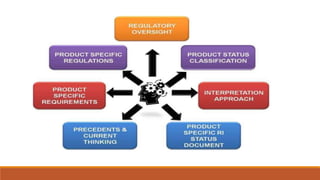
COMPONENTS OF REGULATORY
INTELLIGENCE
1. COMPETITOR INFORMATION
2. REGULATORY ENVIRONMENT
3. LEGAL REQUIREMENTS
4. REGULATORY STRATEGY
BENEFITS
1. Identifying regulatory opportunities
2. Reduced time to market
3. Reduced development costs
4. Increased compliance
COMPETITOR INFORMATION
Status Of Competitive Drug –
1. Pre-clinical
2. Clinical
3. Launched
4. Where Launched
5. Post-approval Commitments
Regulatory Environment
 Agency Benchmarks
 Regulatory Guidance Documents & Changes
 Trade Associations
 Regulatory Associations (ICH & WHO)
Legal Environment
 General requirements
 Specific Populations
 Orphan drug designation
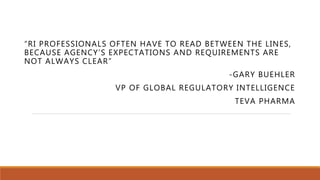
“RI PROFESSIONALS OFTEN HAVE TO READ BETWEEN THE LINES,
BECAUSE AGENCY’S EXPECTATIONS AND REQUIREMENTS ARE
NOT ALWAYS CLEAR”
-GARY BUEHLER
VP OF GLOBAL REGULATORY INTELLIGENCE
TEVA PHARMA
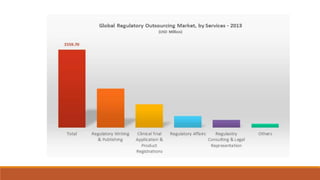
Going Beyond Traditional Outsourcing Services
Even though companies have started opting for regulatory
outsourcing partners, the trends in services dynamically change
every now and then. The year 2013-2014 witnessed a
commendable growth of more than 40% in just the regulatory
publishing and writing services out of the entire regulatory
outsourcing market. However earlier the main focus persisted
the functional tasks such as dossier management and
& submissions, now we see new doors unlocked for companies
for new regulatory undertakings like Regulatory Intelligence,
CMC and labelling and regulatory data management
REFERENCES
1. Why Regulatory Intelligence Is More Important
Than Ever- By Cathy Yarbrough
2. European Industrial Pharmacists Group –Guide to
Good Regulatory Practice
3. www.europeanregulatory.com/regulatory-
intelligence/
4. TOPRA
5. “The company regulatory intelligence (RI)
function”The Regulatory Affairs Journal-pharma”,
October 2007
Thank You
Questions?

Regulatory Intelligence

  • 1.
    REGULATORY INTELLIGENCE – RoleIn Pharmaceutical Industry BY SHRUTI KARGUTKAR
  • 2.
    INTRODUCTION “Regulatory Intelligence isthe act of processing targeted information and data from multiple sources, analyzing the data in its relevant context and generating a meaningful output.
  • 3.
    Why Regulatory Intelligence? -Pharmaceutical Industry Heavily Regulated - Companies Operating Globally And Need To Be Compliant - Influence Future Regulatory Framework
  • 4.
    Key responsibility ofRI function Identify and communicate significant changes in the regulatory environment Conduct and deliver analyses that facilitate strategic decision-making Serve as internal regulatory consultants and respond to adhoc intelligence requests Facilitate access to high-value regulatory intelligence sources Enable effective advocacy work
  • 5.
  • 6.
    Benefits of RIactivities Identifying regulatory opportunities Reduced time to market Reduced development costs Increased compliance
  • 8.
    Challenges for RIprofessional include Ever increasing growth of information Regulatory Authority transparency initiatives Regional differences Information flow
  • 9.
    COMPONENTS OF REGULATORY INTELLIGENCE 1.COMPETITOR INFORMATION 2. REGULATORY ENVIRONMENT 3. LEGAL REQUIREMENTS 4. REGULATORY STRATEGY
  • 10.
    BENEFITS 1. Identifying regulatoryopportunities 2. Reduced time to market 3. Reduced development costs 4. Increased compliance
  • 11.
    COMPETITOR INFORMATION Status OfCompetitive Drug – 1. Pre-clinical 2. Clinical 3. Launched 4. Where Launched 5. Post-approval Commitments
  • 12.
    Regulatory Environment  AgencyBenchmarks  Regulatory Guidance Documents & Changes  Trade Associations  Regulatory Associations (ICH & WHO)
  • 13.
    Legal Environment  Generalrequirements  Specific Populations  Orphan drug designation
  • 15.
    “RI PROFESSIONALS OFTENHAVE TO READ BETWEEN THE LINES, BECAUSE AGENCY’S EXPECTATIONS AND REQUIREMENTS ARE NOT ALWAYS CLEAR” -GARY BUEHLER VP OF GLOBAL REGULATORY INTELLIGENCE TEVA PHARMA
  • 16.
    Going Beyond TraditionalOutsourcing Services Even though companies have started opting for regulatory outsourcing partners, the trends in services dynamically change every now and then. The year 2013-2014 witnessed a commendable growth of more than 40% in just the regulatory publishing and writing services out of the entire regulatory outsourcing market. However earlier the main focus persisted the functional tasks such as dossier management and & submissions, now we see new doors unlocked for companies for new regulatory undertakings like Regulatory Intelligence, CMC and labelling and regulatory data management
  • 17.
    REFERENCES 1. Why RegulatoryIntelligence Is More Important Than Ever- By Cathy Yarbrough 2. European Industrial Pharmacists Group –Guide to Good Regulatory Practice 3. www.europeanregulatory.com/regulatory- intelligence/ 4. TOPRA 5. “The company regulatory intelligence (RI) function”The Regulatory Affairs Journal-pharma”, October 2007
  • 18.
  • 19.