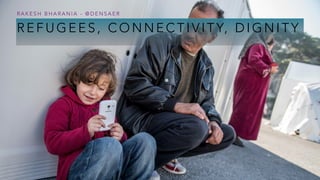
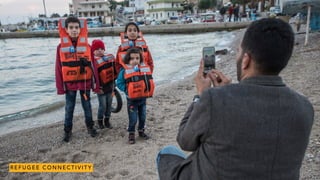
R E F U G E E S , C O N N E C T I V I T Y, D I G N I T Y
R A K E S H B H A R A N I A - @ D E N S A E R
AGENDA
• The Hastily Formed Network
• Refugee Connectivity
• Cybersecurity for Vulnerable 

People
• Emerging Challenges
• Digital Dignity
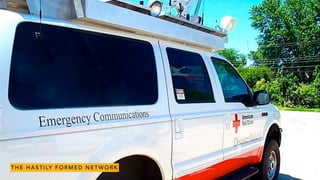
T H E H A S T I LY F O R M E D N E T W O R K
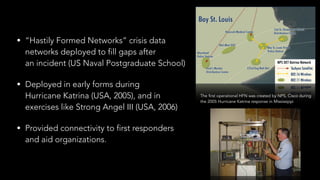
• “Hastily Formed Networks” crisis data 

networks deployed to fill gaps after

an incident (US Naval Postgraduate School)
• Deployed in early forms during 

Hurricane Katrina (USA, 2005), and in 

exercises like Strong Angel III (USA, 2006)
• Provided connectivity to first responders 

and aid organizations.
The first operational HFN was created by NPS, Cisco during

the 2005 Hurricane Katrina response in Mississippi
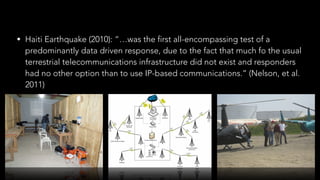
• Haiti Earthquake (2010): “…was the first all-encompassing test of a
predominantly data driven response, due to the fact that much fo the usual
terrestrial telecommunications infrastructure did not exist and responders
had no other option than to use IP-based communications.” (Nelson, et al.
2011)
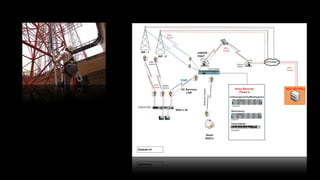
• DadaabNet (Kenya, 2012) - Network deployed in Dadaab Refugee Camp
to connect UNHCR, UNICEF, WFP + 6 NGOs to deal with increased
demand after 2011 Horn of Africa famine.
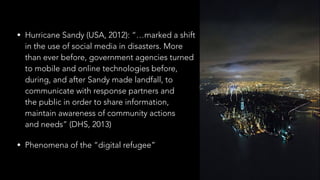
• Hurricane Sandy (USA, 2012): “…marked a shift

in the use of social media in disasters. More 

than ever before, government agencies turned

to mobile and online technologies before, 

during, and after Sandy made landfall, to

communicate with response partners and 

the public in order to share information, 

maintain awareness of community actions

and needs” (DHS, 2013)
• Phenomena of the “digital refugee”
R E F U G E E C O N N E C T I V I T Y
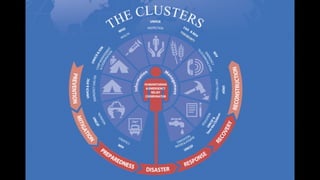
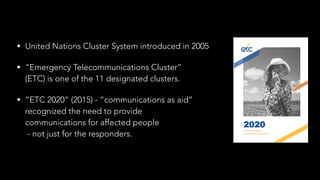
• United Nations Cluster System introduced in 2005
• “Emergency Telecommunications Cluster” 

(ETC) is one of the 11 designated clusters.
• “ETC 2020” (2015) - “communications as aid” 

recognized the need to provide

communications for affected people

- not just for the responders.
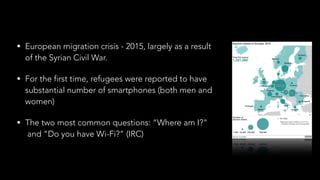
• European migration crisis - 2015, largely as a result

of the Syrian Civil War.
• For the first time, refugees were reported to have

substantial number of smartphones (both men and

women)
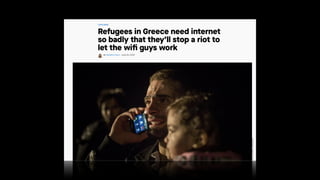
• The two most common questions: “Where am I?”

and “Do you have Wi-Fi?” (IRC)
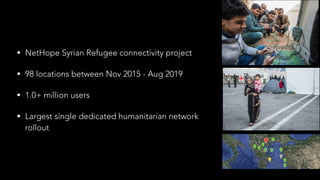
• NetHope Syrian Refugee connectivity project
• 98 locations between Nov 2015 - Aug 2019
• 1.0+ million users
• Largest single dedicated humanitarian network

rollout
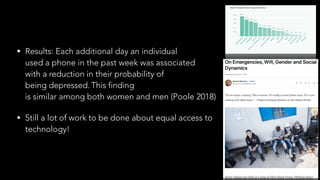
• Results: Each additional day an individual 

used a phone in the past week was associated

with a reduction in their probability of 

being depressed.27
This finding

is similar among both women and men (Poole 2018)
• Still a lot of work to be done about equal access to

technology!
C Y B E R S E C U R I T Y F O R V U L N E R A B L E P E O P L E
• “Do no harm” principle requires us to protect people and protect the
integrity of humanitarian action.
• Aid workers and beneficiaries are inherently vulnerable populations.
• Who is looking out for digital threats that can complicate offline response
and recovery?
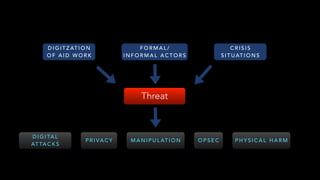
D I G I T Z AT I O N 

O F A I D W O R K
F O R M A L /
I N F O R M A L A C T O R S
C R I S I S
S I T U AT I O N S
Threat
D I G I TA L
AT TA C K S
P R I VA C Y M A N I P U L AT I O N O P S E C P H Y S I C A L H A R M
• Examples:
• Ebola Virus Crisis (2014-15)
• Denial of Service conditions on satellite links
• Nepal Earthquake (2015)
• State-sponsored malware detection on responder laptops
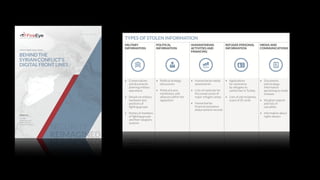
“The ongoing threat [to humanitarian operations related to Syria] is
advanced, persistent, and unlike anything most NetHope NGO members
have dealt with to date.”
(Bharania, 2015)
• x
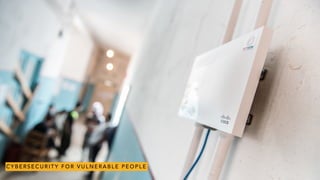
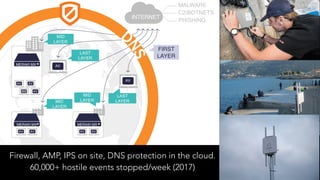
Firewall, AMP, IPS on site, DNS protection in the cloud.
60,000+ hostile events stopped/week (2017)
• Scalable architecture that enables mass communications for affected
communities.
• Integrated protection at multiple levels which is invisible to the end user
and requires no end-user device intervention.
• Standardized as default NetHope emergency

response architecture - deployed during Hurricane 

Maria (Puerto Rico, 2017), Northern Uganda 

(2018), Venezuelan Refugee Crisis (2019) - 86+

sites, 100+ planned.
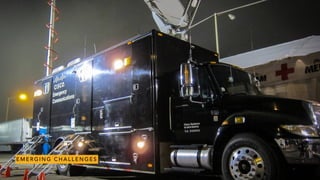
E M E R G I N G C H A L L E N G E S
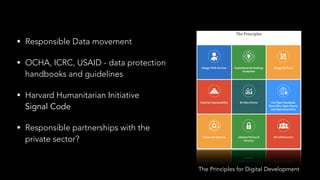
• Responsible Data movement
• OCHA, ICRC, USAID - data protection

handbooks and guidelines
• Harvard Humanitarian Initiative

Signal Code
• Responsible partnerships with the

private sector?
The Principles for Digital Development
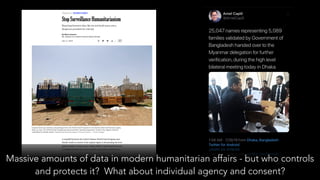
Massive amounts of data in modern humanitarian affairs - but who controls
and protects it? What about individual agency and consent?
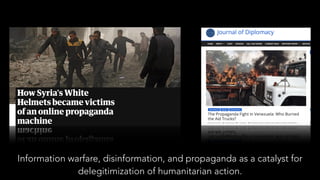
Information warfare, disinformation, and propaganda as a catalyst for
delegitimization of humanitarian action.
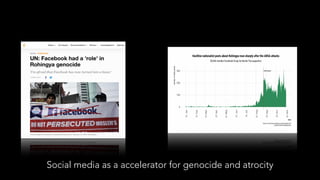
Social media as a accelerator for genocide and atrocity
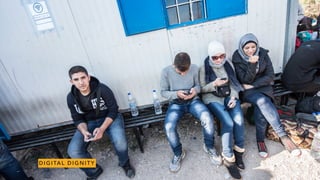
D I G I TA L D I G N I T Y
No one shall be subjected to arbitrary interference with his privacy, family,
home or correspondence, nor to attacks upon his honour and reputation. 

- Article 12, Universal Declaration of Human Rights
• Communications is a form of humanitarian aid co-equal to food, shelter,
medical care and other essential human needs.
• We have an obligation to provision technology to be inclusive, safe, and
protective. It must not act in a manner contrary to the needs of the
individual.
• Humanitarian innovation must seek to continually identify potential harms
and minimize them.
• The goal is human dignity.
Q U E S T I O N S ?

Refugees, connectivity, dignity

  • 1.
    R E FU G E E S , C O N N E C T I V I T Y, D I G N I T Y R A K E S H B H A R A N I A - @ D E N S A E R
  • 2.
    AGENDA • The HastilyFormed Network • Refugee Connectivity • Cybersecurity for Vulnerable 
 People • Emerging Challenges • Digital Dignity
  • 3.
    T H EH A S T I LY F O R M E D N E T W O R K
  • 4.
    • “Hastily FormedNetworks” crisis data 
 networks deployed to fill gaps after
 an incident (US Naval Postgraduate School) • Deployed in early forms during 
 Hurricane Katrina (USA, 2005), and in 
 exercises like Strong Angel III (USA, 2006) • Provided connectivity to first responders 
 and aid organizations. The first operational HFN was created by NPS, Cisco during
 the 2005 Hurricane Katrina response in Mississippi
  • 5.
    • Haiti Earthquake(2010): “…was the first all-encompassing test of a predominantly data driven response, due to the fact that much fo the usual terrestrial telecommunications infrastructure did not exist and responders had no other option than to use IP-based communications.” (Nelson, et al. 2011)
  • 6.
    • DadaabNet (Kenya,2012) - Network deployed in Dadaab Refugee Camp to connect UNHCR, UNICEF, WFP + 6 NGOs to deal with increased demand after 2011 Horn of Africa famine.
  • 8.
    • Hurricane Sandy(USA, 2012): “…marked a shift
 in the use of social media in disasters. More 
 than ever before, government agencies turned
 to mobile and online technologies before, 
 during, and after Sandy made landfall, to
 communicate with response partners and 
 the public in order to share information, 
 maintain awareness of community actions
 and needs” (DHS, 2013) • Phenomena of the “digital refugee”
  • 9.
    R E FU G E E C O N N E C T I V I T Y
  • 11.
    • United NationsCluster System introduced in 2005 • “Emergency Telecommunications Cluster” 
 (ETC) is one of the 11 designated clusters. • “ETC 2020” (2015) - “communications as aid” 
 recognized the need to provide
 communications for affected people
 - not just for the responders.
  • 12.
    • European migrationcrisis - 2015, largely as a result
 of the Syrian Civil War. • For the first time, refugees were reported to have
 substantial number of smartphones (both men and
 women) • The two most common questions: “Where am I?”
 and “Do you have Wi-Fi?” (IRC)
  • 13.
    • NetHope SyrianRefugee connectivity project • 98 locations between Nov 2015 - Aug 2019 • 1.0+ million users • Largest single dedicated humanitarian network
 rollout
  • 15.
    • Results: Eachadditional day an individual 
 used a phone in the past week was associated
 with a reduction in their probability of 
 being depressed.27 This finding
 is similar among both women and men (Poole 2018) • Still a lot of work to be done about equal access to
 technology!
  • 16.
    C Y BE R S E C U R I T Y F O R V U L N E R A B L E P E O P L E
  • 17.
    • “Do noharm” principle requires us to protect people and protect the integrity of humanitarian action. • Aid workers and beneficiaries are inherently vulnerable populations. • Who is looking out for digital threats that can complicate offline response and recovery?
  • 18.
    D I GI T Z AT I O N 
 O F A I D W O R K F O R M A L / I N F O R M A L A C T O R S C R I S I S S I T U AT I O N S Threat D I G I TA L AT TA C K S P R I VA C Y M A N I P U L AT I O N O P S E C P H Y S I C A L H A R M
  • 19.
    • Examples: • EbolaVirus Crisis (2014-15) • Denial of Service conditions on satellite links • Nepal Earthquake (2015) • State-sponsored malware detection on responder laptops
  • 21.
    “The ongoing threat[to humanitarian operations related to Syria] is advanced, persistent, and unlike anything most NetHope NGO members have dealt with to date.” (Bharania, 2015)
  • 22.
    • x Firewall, AMP,IPS on site, DNS protection in the cloud. 60,000+ hostile events stopped/week (2017)
  • 23.
    • Scalable architecturethat enables mass communications for affected communities. • Integrated protection at multiple levels which is invisible to the end user and requires no end-user device intervention. • Standardized as default NetHope emergency
 response architecture - deployed during Hurricane 
 Maria (Puerto Rico, 2017), Northern Uganda 
 (2018), Venezuelan Refugee Crisis (2019) - 86+
 sites, 100+ planned.
  • 24.
    E M ER G I N G C H A L L E N G E S
  • 25.
    • Responsible Datamovement • OCHA, ICRC, USAID - data protection
 handbooks and guidelines • Harvard Humanitarian Initiative
 Signal Code • Responsible partnerships with the
 private sector? The Principles for Digital Development
  • 26.
    Massive amounts ofdata in modern humanitarian affairs - but who controls and protects it? What about individual agency and consent?
  • 27.
    Information warfare, disinformation,and propaganda as a catalyst for delegitimization of humanitarian action.
  • 28.
    Social media asa accelerator for genocide and atrocity
  • 29.
    D I GI TA L D I G N I T Y
  • 30.
    No one shallbe subjected to arbitrary interference with his privacy, family, home or correspondence, nor to attacks upon his honour and reputation. 
 - Article 12, Universal Declaration of Human Rights
  • 31.
    • Communications isa form of humanitarian aid co-equal to food, shelter, medical care and other essential human needs. • We have an obligation to provision technology to be inclusive, safe, and protective. It must not act in a manner contrary to the needs of the individual. • Humanitarian innovation must seek to continually identify potential harms and minimize them.
  • 32.
    • The goalis human dignity.
  • 33.
    Q U ES T I O N S ?