Refractive error-Myopia by dr.
jyoti pankaj,M.D.(hom.)
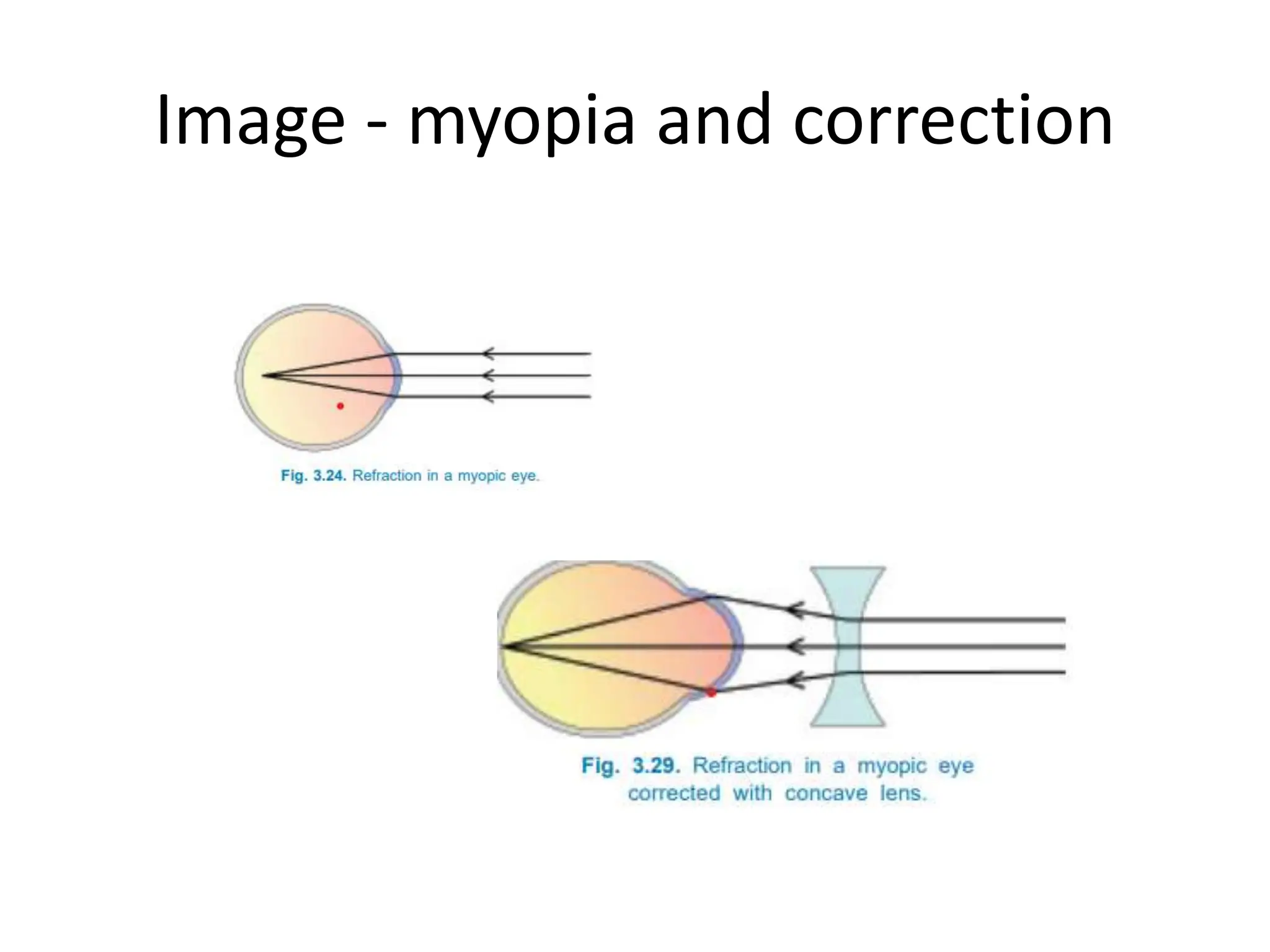
Myopia-Shortsightedness-Rays of
light focus anterior to retina
Image - myopia and correction
Etiology
• Disturbance of growth-degenerative
change(anterior to eqator part-normal)
• Axial and curvature of cornea,lens
• increased refractive index of the nucleus-in
senile nuclear cataract
• Dislocation forward of lens
Types of myopia
• 1-congenital-uni or bilateral,stationary,fundus
may lack pigmentation,may be associated with
convergent squint
• 2-simple-common,no degeneration fundus,-5,-6D
• 3-pathological-degenrative,progressive,begins at
age 5-10,increases steadily to -15to -20 in early
adult life(25 yr or
beyond),women,jews,japanes,convergence in
near work
4- acquired type myopia
• Nuclear sclerosis
• Curvatural
• Positional
• Corrected hypermetropia
• Pseudo-spasm
Symptoms of myopia
• Indistinct distant vision-common-unable to
see blackboard
• Black spots
• Discomfort after near vision
• Flashes of light
• Night blindness in high myopias
signs
• Large pupil,prominent eye,deep anterior
chamber
• Apparent squint
• Fundus cheque-sclera may bulge out,retinal
damage or tear,choroid degeneration
Complication
• Vitreous
liquifaction(degeneration),haemorrhage,opaci
ties,detachment-common
• Retianal damage
• Complicated cataract-lens nutritional
disturbance
• High myopia due to glucoma
Prognosis
• Good in simple-does not progress beyond6-
8,stabilizes by 21 yrs
• Pathological-guarded-in close work
occupation
• Prophylaxis-two with progressive should
marriage
treatment
• Spectacles-sherical concave lens
• Hygiene-illumination,correct distance of
reading book(25cm.)
• Operative-cornea surgery-cuts keratotomy
• Lasik
• Contact lens
• Homoeopathic remedies

Refractive error-Myopia, by dr.jyoti pankaj.pptx

  • 1.
    Refractive error-Myopia bydr. jyoti pankaj,M.D.(hom.) Myopia-Shortsightedness-Rays of light focus anterior to retina
  • 2.
    Image - myopiaand correction
  • 3.
    Etiology • Disturbance ofgrowth-degenerative change(anterior to eqator part-normal) • Axial and curvature of cornea,lens • increased refractive index of the nucleus-in senile nuclear cataract • Dislocation forward of lens
  • 4.
    Types of myopia •1-congenital-uni or bilateral,stationary,fundus may lack pigmentation,may be associated with convergent squint • 2-simple-common,no degeneration fundus,-5,-6D • 3-pathological-degenrative,progressive,begins at age 5-10,increases steadily to -15to -20 in early adult life(25 yr or beyond),women,jews,japanes,convergence in near work
  • 5.
    4- acquired typemyopia • Nuclear sclerosis • Curvatural • Positional • Corrected hypermetropia • Pseudo-spasm
  • 6.
    Symptoms of myopia •Indistinct distant vision-common-unable to see blackboard • Black spots • Discomfort after near vision • Flashes of light • Night blindness in high myopias
  • 7.
    signs • Large pupil,prominenteye,deep anterior chamber • Apparent squint • Fundus cheque-sclera may bulge out,retinal damage or tear,choroid degeneration
  • 8.
    Complication • Vitreous liquifaction(degeneration),haemorrhage,opaci ties,detachment-common • Retianaldamage • Complicated cataract-lens nutritional disturbance • High myopia due to glucoma
  • 9.
    Prognosis • Good insimple-does not progress beyond6- 8,stabilizes by 21 yrs • Pathological-guarded-in close work occupation • Prophylaxis-two with progressive should marriage
  • 10.
    treatment • Spectacles-sherical concavelens • Hygiene-illumination,correct distance of reading book(25cm.) • Operative-cornea surgery-cuts keratotomy • Lasik • Contact lens • Homoeopathic remedies