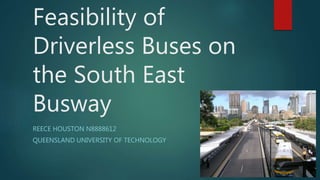
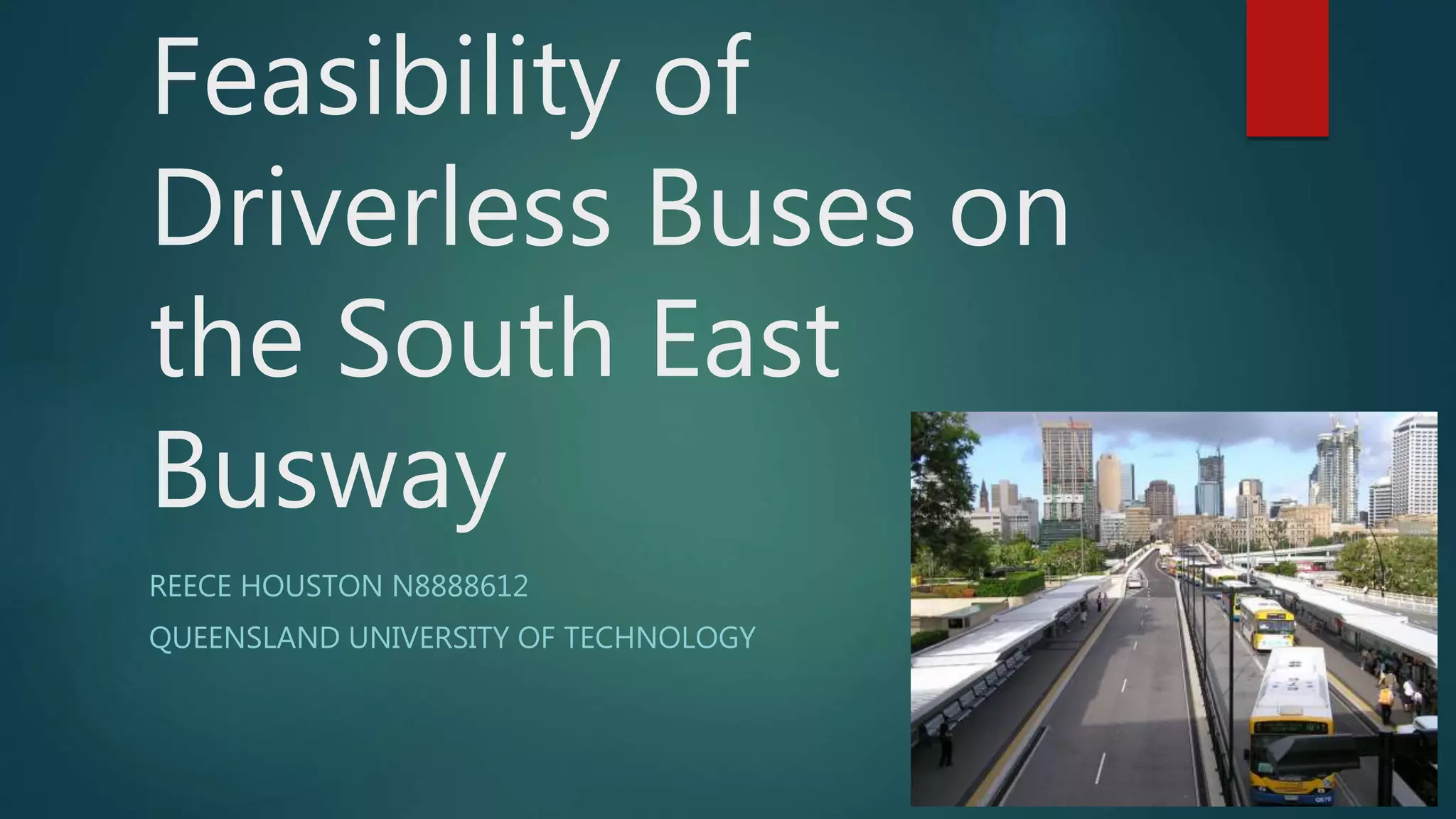
Feasibility of
Driverless Buses on
the South East
Busway
REECE HOUSTON N8888612
QUEENSLAND UNIVERSITY OF TECHNOLOGY
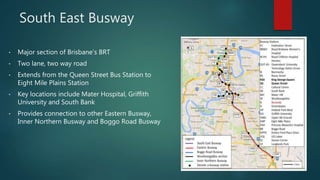
South East Busway
• Major section of Brisbane’s BRT
• Two lane, two way road
• Extends from the Queen Street Bus Station to
Eight Mile Plains Station
• Key locations include Mater Hospital, Griffith
University and South Bank
• Provides connection to other Eastern Busway,
Inner Northern Busway and Boggo Road Busway
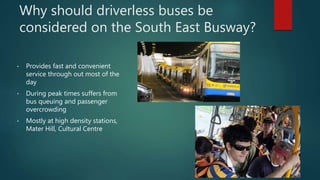
Why should driverless buses be
considered on the South East Busway?
• Provides fast and convenient
service through out most of the
day
• During peak times suffers from
bus queuing and passenger
overcrowding
• Mostly at high density stations,
Mater Hill, Cultural Centre
Current driverless bus technology
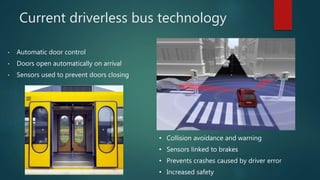
• Automatic door control
• Doors open automatically on arrival
• Sensors used to prevent doors closing
• Collision avoidance and warning
• Sensors linked to brakes
• Prevents crashes caused by driver error
• Increased safety
Current driverless bus technology
• Autonomous guidance
• Replaces actions of a conductor
• Information obtained through
sensors and position reference
technology (GPS, optic,
magnetic markings
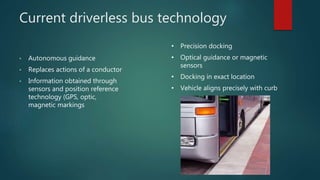
• Precision docking
• Optical guidance or magnetic
sensors
• Docking in exact location
• Vehicle aligns precisely with curb
Successful driverless bus trials
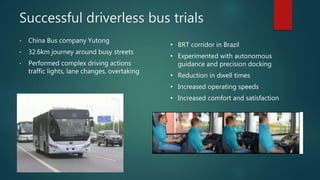
• China Bus company Yutong
• 32.6km journey around busy streets
• Performed complex driving actions
traffic lights, lane changes, overtaking
• BRT corridor in Brazil
• Experimented with autonomous
guidance and precision docking
• Reduction in dwell times
• Increased operating speeds
• Increased comfort and satisfaction
Benefits of a driverless bus service of
the South East Busway
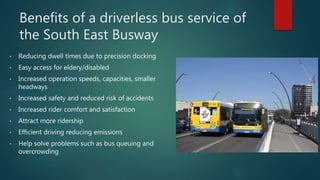
• Reducing dwell times due to precision docking
• Easy access for eldery/disabled
• Increased operation speeds, capacities, smaller
headways
• Increased safety and reduced risk of accidents
• Increased rider comfort and satisfaction
• Attract more ridership
• Efficient driving reducing emissions
• Help solve problems such as bus queuing and
overcrowding
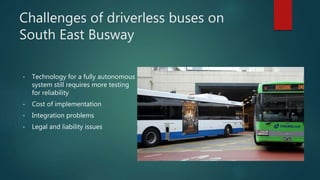
Challenges of driverless buses on
South East Busway
• Technology for a fully autonomous
system still requires more testing
for reliability
• Cost of implementation
• Integration problems
• Legal and liability issues
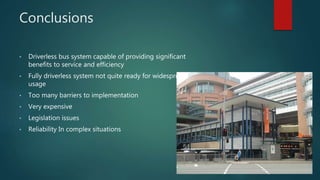
Conclusions
• Driverless bus system capable of providing significant
benefits to service and efficiency
• Fully driverless system not quite ready for widespread
usage
• Too many barriers to implementation
• Very expensive
• Legislation issues
• Reliability In complex situations
Recommendations
• Fully autonomous driverless service not available at this point in time
• Driverless possible in the near future
• Semi-autonomous systems could still provide benefits to the busway
• Precision docking would allow for lower dwell times and increased
accessibility
• Collision avoidance help reduce the possibility of accidents

Reece houston driverless bus thesis presentation

  • 1.
    Feasibility of Driverless Buseson the South East Busway REECE HOUSTON N8888612 QUEENSLAND UNIVERSITY OF TECHNOLOGY
  • 2.
    South East Busway •Major section of Brisbane’s BRT • Two lane, two way road • Extends from the Queen Street Bus Station to Eight Mile Plains Station • Key locations include Mater Hospital, Griffith University and South Bank • Provides connection to other Eastern Busway, Inner Northern Busway and Boggo Road Busway
  • 3.
    Why should driverlessbuses be considered on the South East Busway? • Provides fast and convenient service through out most of the day • During peak times suffers from bus queuing and passenger overcrowding • Mostly at high density stations, Mater Hill, Cultural Centre
  • 4.
    Current driverless bustechnology • Automatic door control • Doors open automatically on arrival • Sensors used to prevent doors closing • Collision avoidance and warning • Sensors linked to brakes • Prevents crashes caused by driver error • Increased safety
  • 5.
    Current driverless bustechnology • Autonomous guidance • Replaces actions of a conductor • Information obtained through sensors and position reference technology (GPS, optic, magnetic markings • Precision docking • Optical guidance or magnetic sensors • Docking in exact location • Vehicle aligns precisely with curb
  • 6.
    Successful driverless bustrials • China Bus company Yutong • 32.6km journey around busy streets • Performed complex driving actions traffic lights, lane changes, overtaking • BRT corridor in Brazil • Experimented with autonomous guidance and precision docking • Reduction in dwell times • Increased operating speeds • Increased comfort and satisfaction
  • 7.
    Benefits of adriverless bus service of the South East Busway • Reducing dwell times due to precision docking • Easy access for eldery/disabled • Increased operation speeds, capacities, smaller headways • Increased safety and reduced risk of accidents • Increased rider comfort and satisfaction • Attract more ridership • Efficient driving reducing emissions • Help solve problems such as bus queuing and overcrowding
  • 8.
    Challenges of driverlessbuses on South East Busway • Technology for a fully autonomous system still requires more testing for reliability • Cost of implementation • Integration problems • Legal and liability issues
  • 9.
    Conclusions • Driverless bussystem capable of providing significant benefits to service and efficiency • Fully driverless system not quite ready for widespread usage • Too many barriers to implementation • Very expensive • Legislation issues • Reliability In complex situations
  • 10.
    Recommendations • Fully autonomousdriverless service not available at this point in time • Driverless possible in the near future • Semi-autonomous systems could still provide benefits to the busway • Precision docking would allow for lower dwell times and increased accessibility • Collision avoidance help reduce the possibility of accidents