Reducing Complexity of Large EPCs Artem Polyvyanyy Sergey Smirnov Mathias Weske EPK 2008     27 November 2008
Motivation Research project with AOK   Brandenburg Goal:   detailed process models  abstract process models ≈  4 000 EPCs graph-structured process models model elements have annotations: connections  ->  probabilities functions  ->  average execution time average execution time of a process  must be preserved
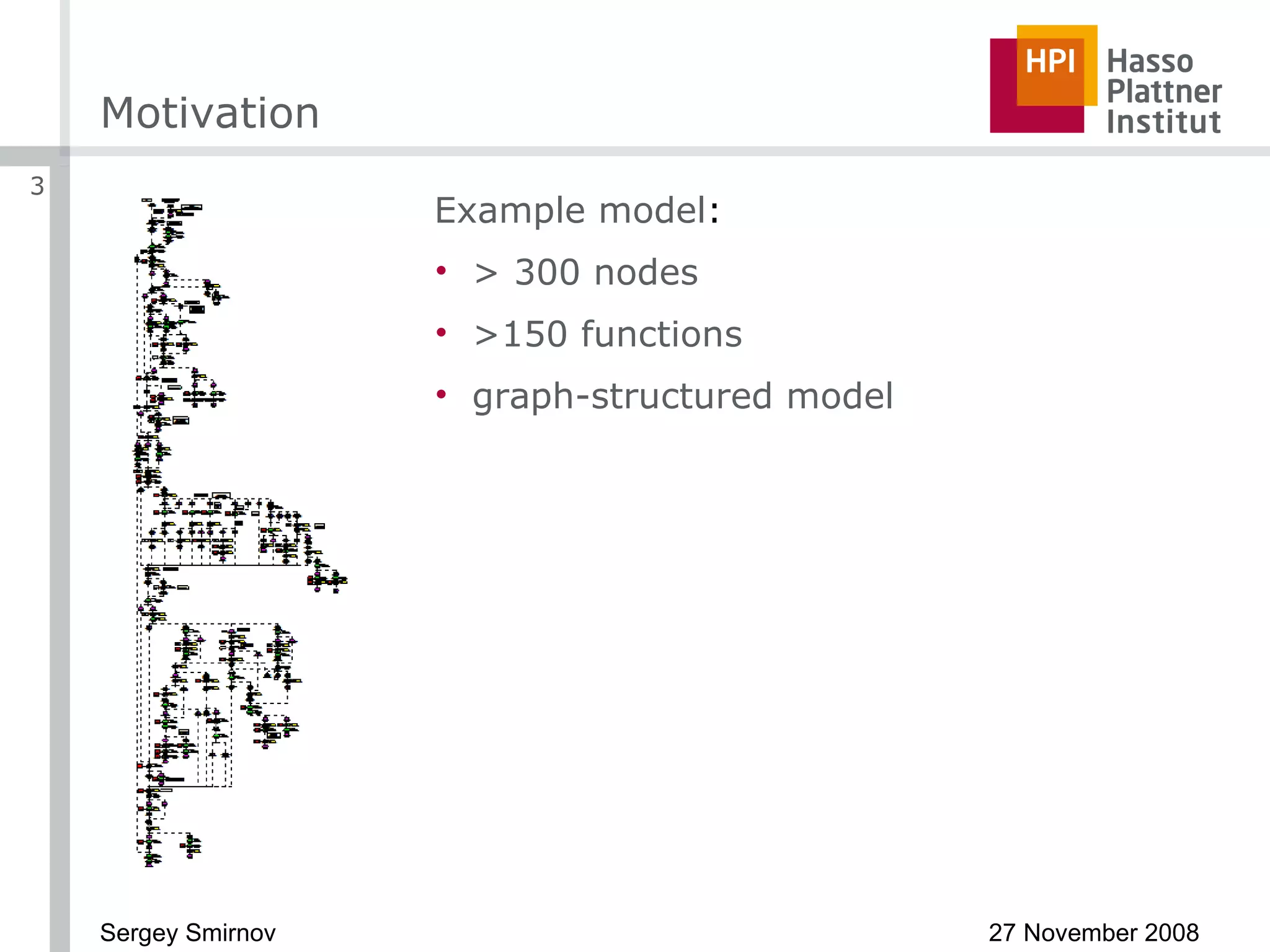
Motivation Example model : > 300 nodes >150 functions  graph-structured model
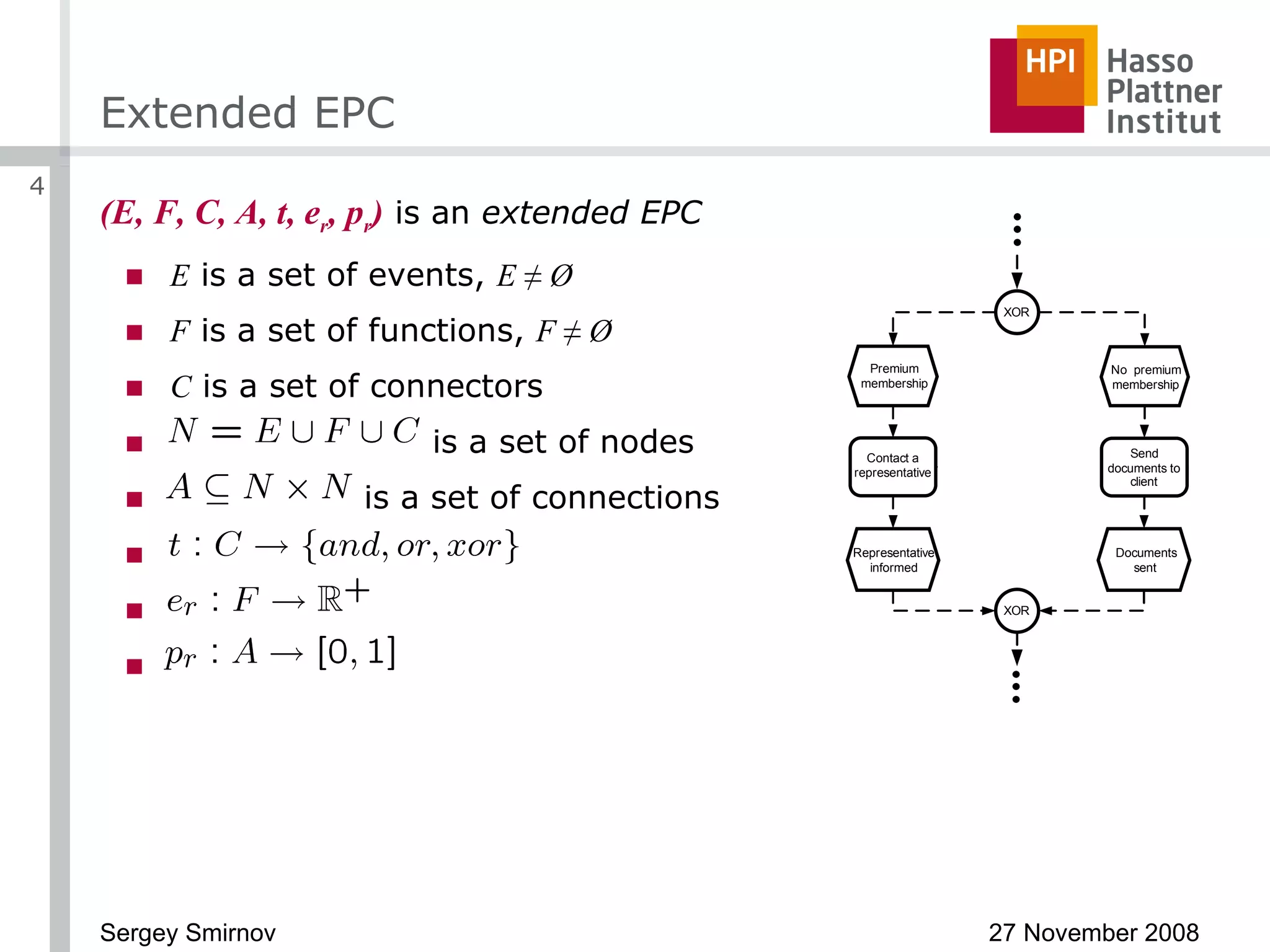
Extended EPC (E, F, C, A, t, e r , p r )  is an  extended EPC E  is a set of events,  E ≠ Ø F  is a set of functions,  F ≠ Ø C  is a set of connectors   is a set of nodes is a set of connections
Auxiliary Concepts Mean occurrence number of a node the mean number of node occurrence in a process instance Absolute effort of a function  e a the mean effort contributed to the execution of the function in a process instance Process absolute effort  e p a the mean effort required to execute a process instance
Example 0.92 0.08 10 minutes 9.2 minutes 20 minutes 1.6 minutes transition probability relative effort absolute effort
Business Process Model Abstraction What model elements are insignificant? absolute effort of a function  e a elementary abstractions transformation of a fragment abstraction strategy organization of elementary abstractions How to abstract insignificant elements?
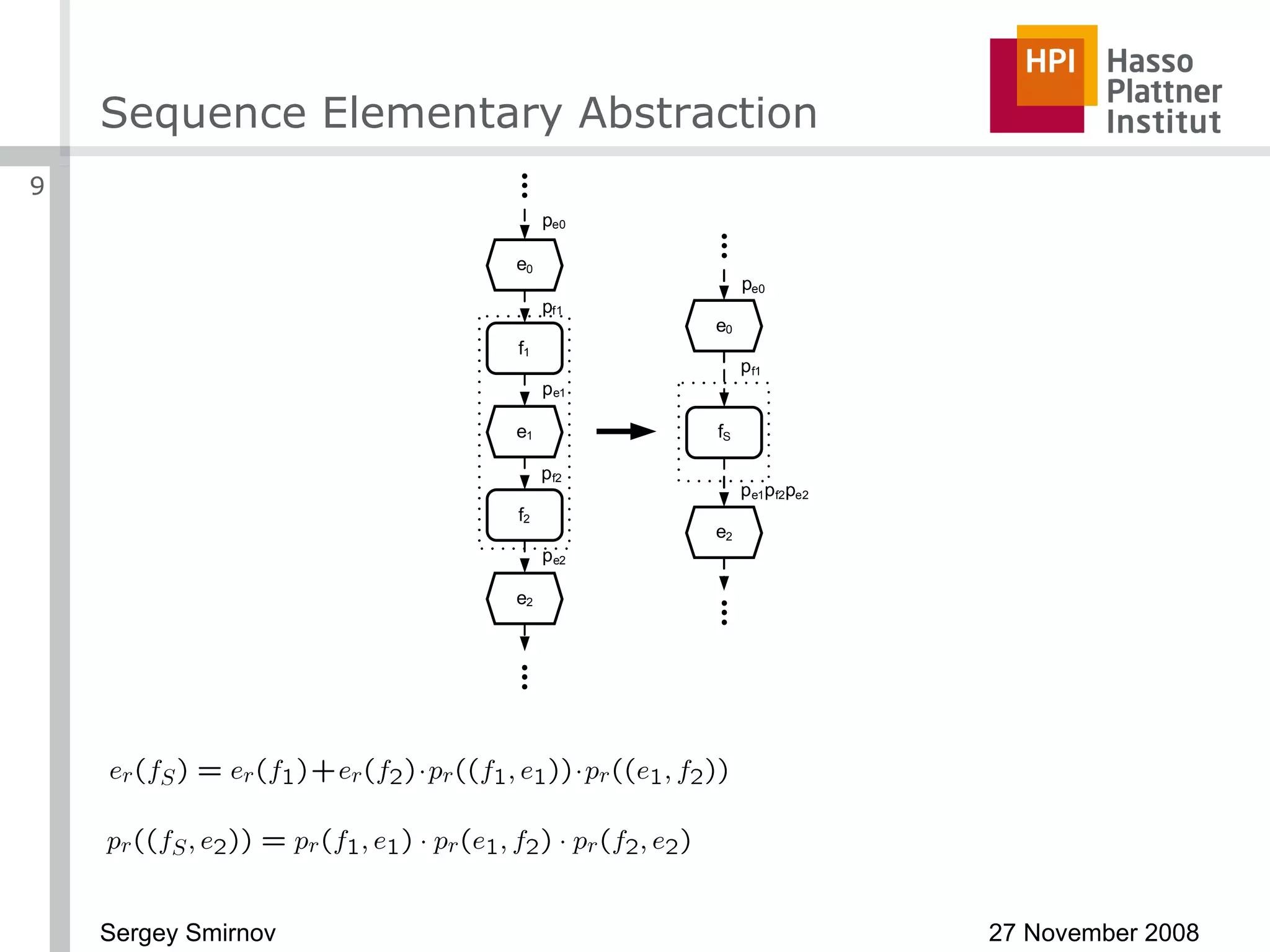
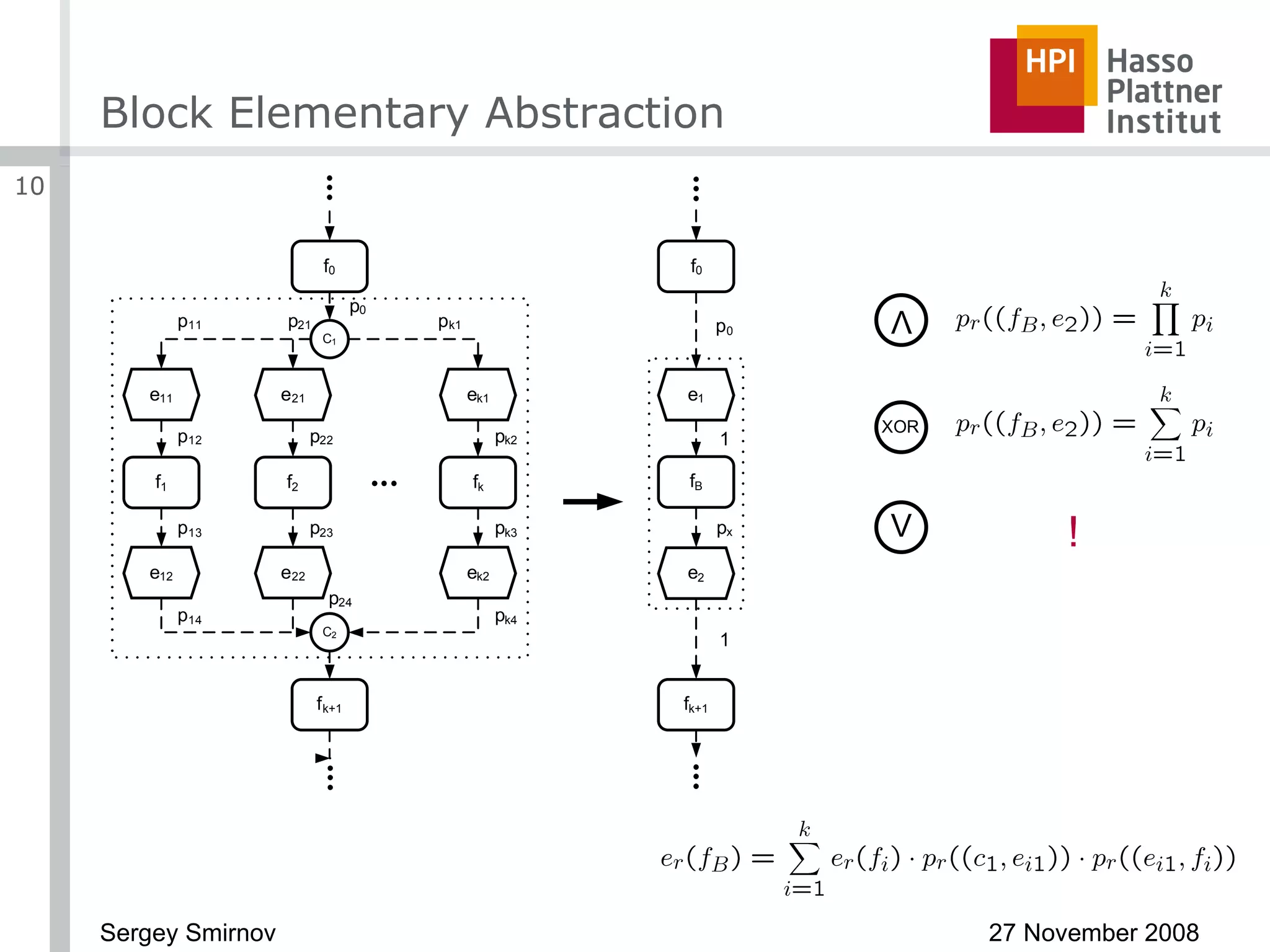
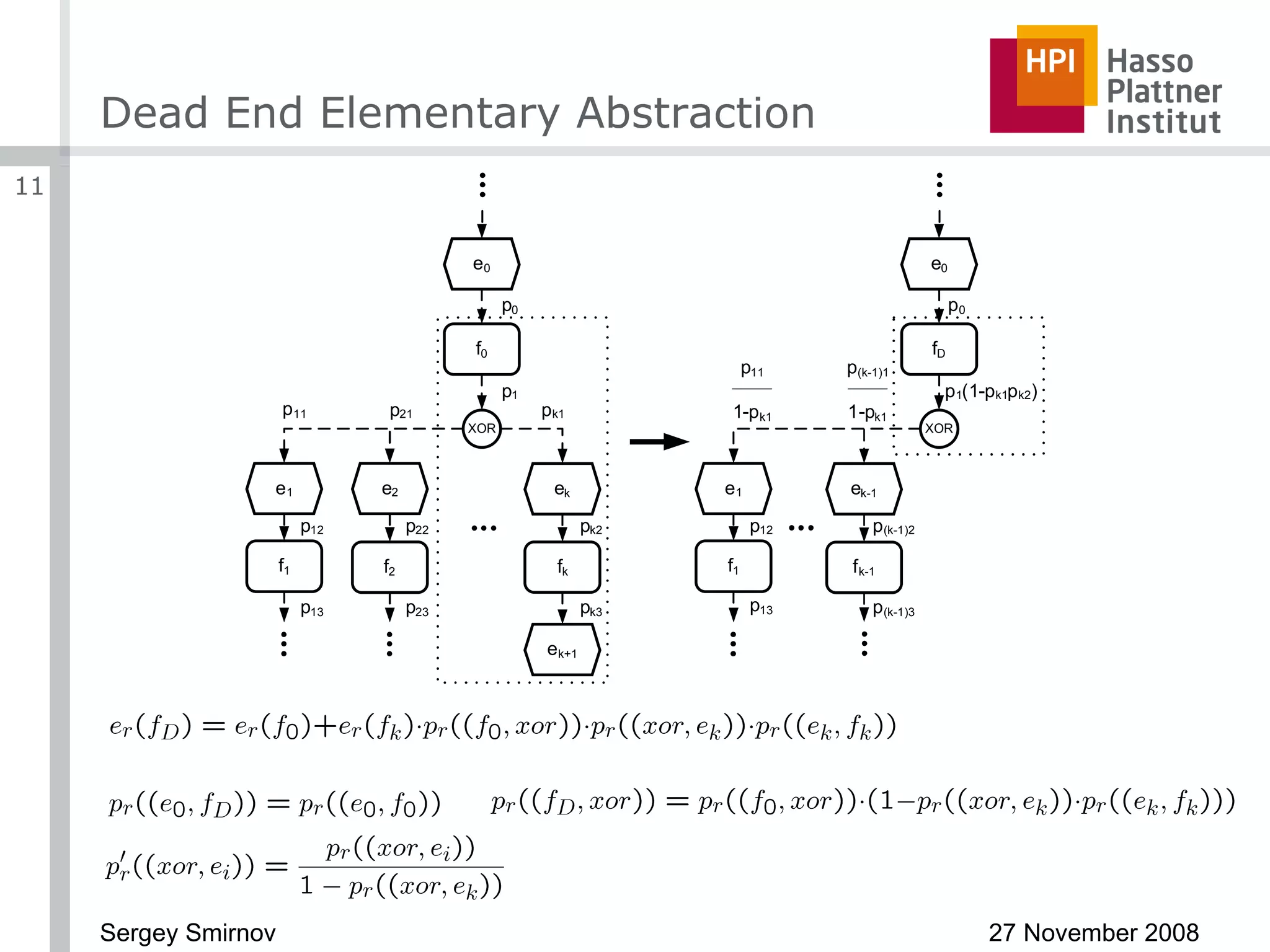
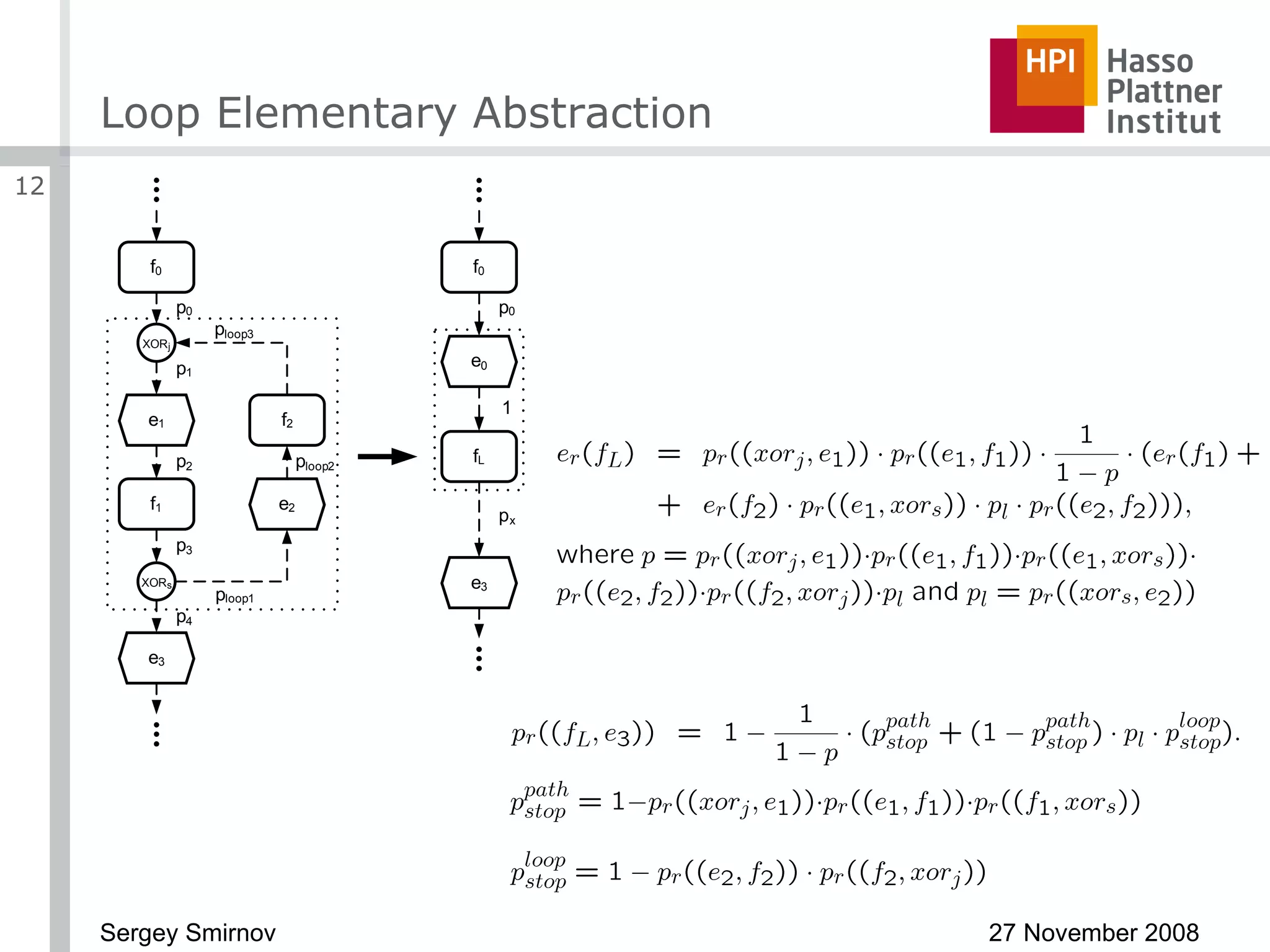
Elementary Abstractions Block Dead end Sequence Loop
Sequence Elementary Abstraction
Block Elementary Abstraction !
Dead End Elementary Abstraction
Loop Elementary Abstraction
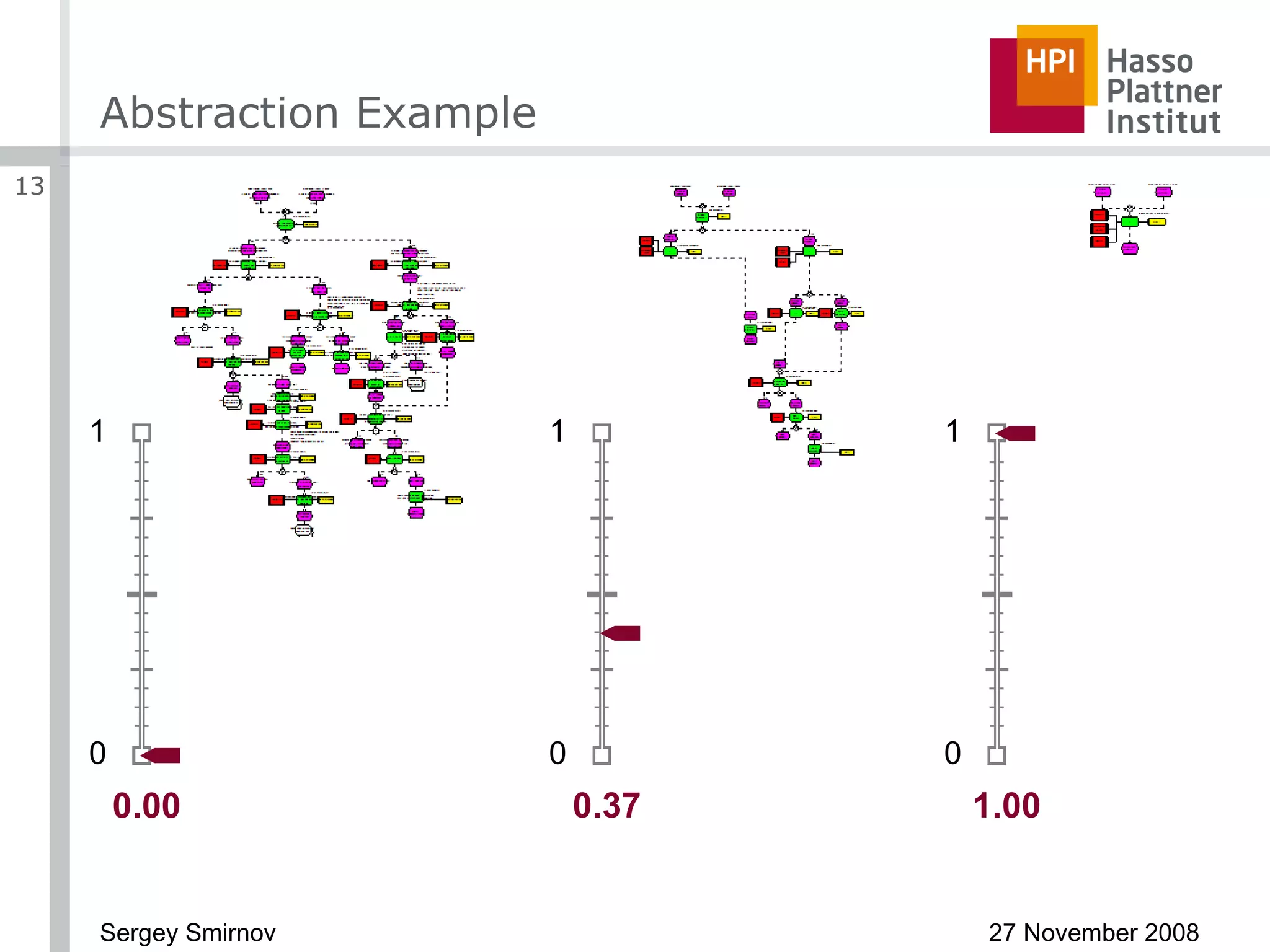
Abstraction Example 0.00 0.37 1.00
Conclusions Conceptualized the problem of business process model abstraction Proposed the abstraction approach based on rules describing structural transformations dependencies between elements non-functional properties Developed the implementation of the approach

Reducing Complexity Of Large EPCs

  • 1.
    Reducing Complexity ofLarge EPCs Artem Polyvyanyy Sergey Smirnov Mathias Weske EPK 2008 27 November 2008
  • 2.
    Motivation Research projectwith AOK Brandenburg Goal: detailed process models abstract process models ≈ 4 000 EPCs graph-structured process models model elements have annotations: connections -> probabilities functions -> average execution time average execution time of a process must be preserved
  • 3.
    Motivation Example model: > 300 nodes >150 functions graph-structured model
  • 4.
    Extended EPC (E,F, C, A, t, e r , p r ) is an extended EPC E is a set of events, E ≠ Ø F is a set of functions, F ≠ Ø C is a set of connectors is a set of nodes is a set of connections
  • 5.
    Auxiliary Concepts Meanoccurrence number of a node the mean number of node occurrence in a process instance Absolute effort of a function e a the mean effort contributed to the execution of the function in a process instance Process absolute effort e p a the mean effort required to execute a process instance
  • 6.
    Example 0.92 0.0810 minutes 9.2 minutes 20 minutes 1.6 minutes transition probability relative effort absolute effort
  • 7.
    Business Process ModelAbstraction What model elements are insignificant? absolute effort of a function e a elementary abstractions transformation of a fragment abstraction strategy organization of elementary abstractions How to abstract insignificant elements?
  • 8.
    Elementary Abstractions BlockDead end Sequence Loop
  • 9.
  • 10.
  • 11.
  • 12.
  • 13.
  • 14.
    Conclusions Conceptualized theproblem of business process model abstraction Proposed the abstraction approach based on rules describing structural transformations dependencies between elements non-functional properties Developed the implementation of the approach