WHAT IS CARBON FOOTPRINT IN ARCHITECTURE?
A carbon footprint in architecture refers to the total
greenhouse gas (GHG) emissions, particularly carbon
dioxide (CO₂), associated with the lifecycle of a building or
construction project. It encompasses emissions from
various phases, including material production,
construction, operation, and eventual demolition or
disposal.
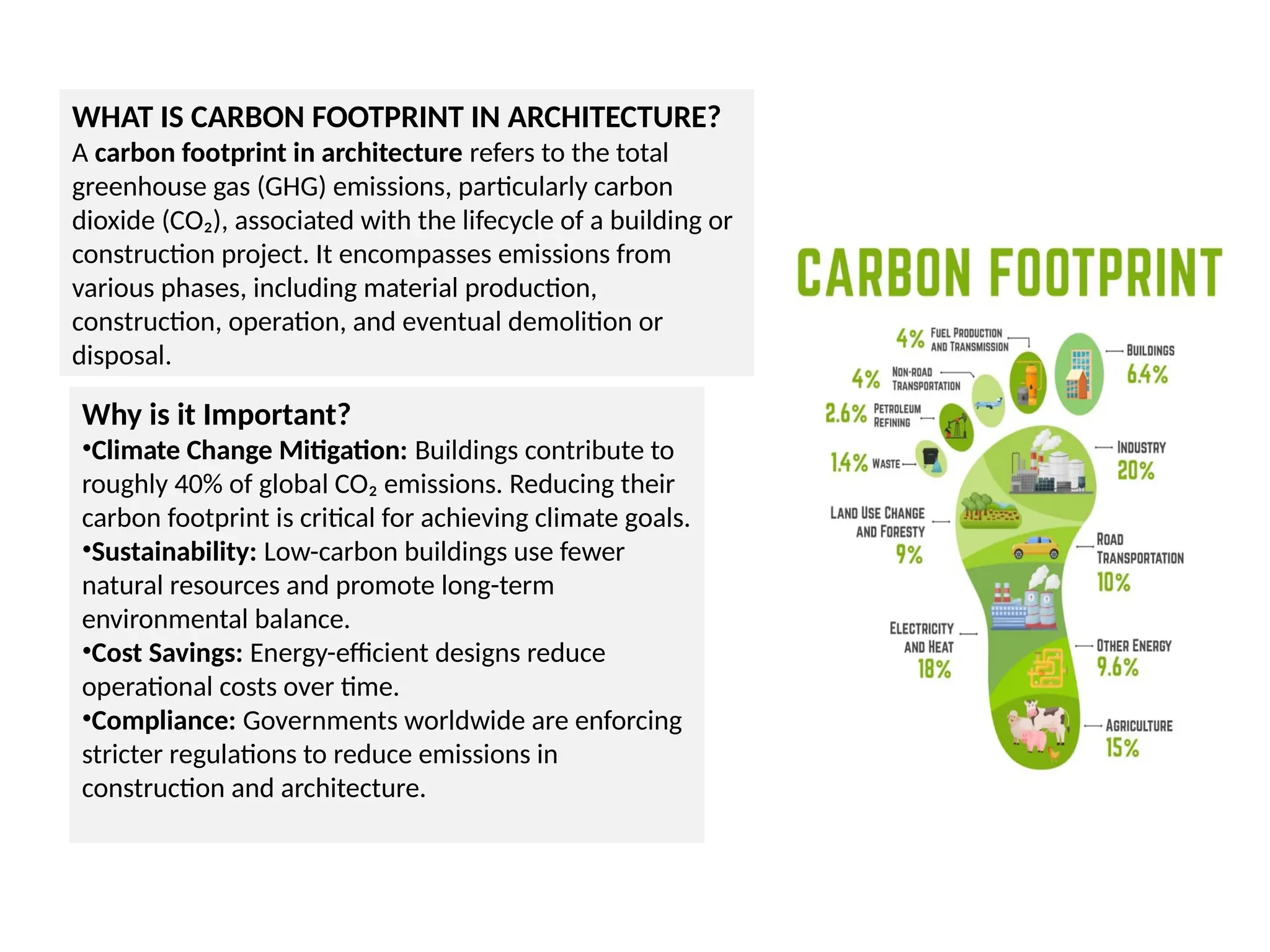
Why is it Important?
•Climate Change Mitigation: Buildings contribute to
roughly 40% of global CO₂ emissions. Reducing their
carbon footprint is critical for achieving climate goals.
•Sustainability: Low-carbon buildings use fewer
natural resources and promote long-term
environmental balance.
•Cost Savings: Energy-efficient designs reduce
operational costs over time.
•Compliance: Governments worldwide are enforcing
stricter regulations to reduce emissions in
construction and architecture.
GLOBAL EFFORTS TO REDUCE CARBON EMMISSION
1. Green Building Standards and Certifications
•LEED (Leadership in Energy and Environmental Design):
A widely recognized certification promoting energy-efficient and environmentally friendly
construction practices.
•BREEAM (Building Research Establishment Environmental Assessment Method):
Focuses on sustainability across the building lifecycle.
•EDGE (Excellence in Design for Greater Efficiencies):
A certification for resource-efficient buildings, emphasizing energy, water, and material
efficiency.
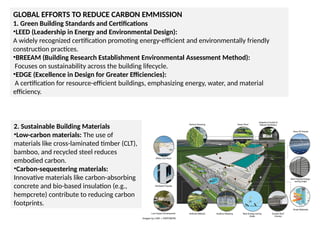
2. Sustainable Building Materials
•Low-carbon materials: The use of
materials like cross-laminated timber (CLT),
bamboo, and recycled steel reduces
embodied carbon.
•Carbon-sequestering materials:
Innovative materials like carbon-absorbing
concrete and bio-based insulation (e.g.,
hempcrete) contribute to reducing carbon
footprints.
3. Energy Efficiency in Design
•Passive design strategies: Architects focus on
optimizing natural ventilation, insulation, and lighting
to reduce reliance on mechanical systems.
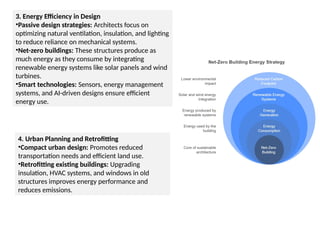
•Net-zero buildings: These structures produce as
much energy as they consume by integrating
renewable energy systems like solar panels and wind
turbines.
•Smart technologies: Sensors, energy management
systems, and AI-driven designs ensure efficient
energy use.
4. Urban Planning and Retrofitting
•Compact urban design: Promotes reduced
transportation needs and efficient land use.
•Retrofitting existing buildings: Upgrading
insulation, HVAC systems, and windows in old
structures improves energy performance and
reduces emissions.
5. Global Policies and Agreements
•Paris Agreement: Many countries have committed
to achieving net-zero carbon emissions by mid-
century. Architecture plays a significant role in
meeting these targets.
•EU Green Deal: Focuses on renovating existing
buildings to improve energy efficiency as part of the
goal to be climate-neutral by 2050.
•COP Conferences: Regular updates to guidelines
and frameworks for sustainable building practices.
6. Biophilic and Nature-Integrated Design
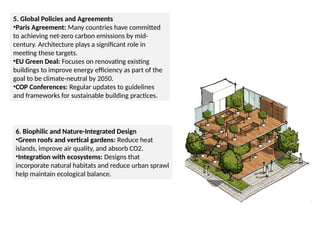
•Green roofs and vertical gardens: Reduce heat
islands, improve air quality, and absorb CO2.
•Integration with ecosystems: Designs that
incorporate natural habitats and reduce urban sprawl
help maintain ecological balance.
7. Education and Awareness
•Architectural education: Integrates sustainability
into curricula to prepare architects for designing low-
carbon structures.
•Public awareness campaigns: Highlighting the
environmental impact of construction and promoting
sustainable living choices.
8. Innovative Architectural Approaches
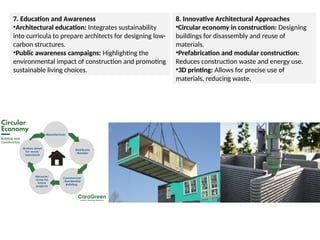
•Circular economy in construction: Designing
buildings for disassembly and reuse of
materials.
•Prefabrication and modular construction:
Reduces construction waste and energy use.
•3D printing: Allows for precise use of
materials, reducing waste.
Factors Influencing Carbon Footprint in Architecture
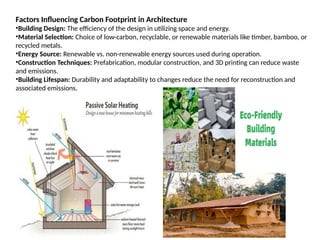
•Building Design: The efficiency of the design in utilizing space and energy.
•Material Selection: Choice of low-carbon, recyclable, or renewable materials like timber, bamboo, or
recycled metals.
•Energy Source: Renewable vs. non-renewable energy sources used during operation.
•Construction Techniques: Prefabrication, modular construction, and 3D printing can reduce waste
and emissions.
•Building Lifespan: Durability and adaptability to changes reduce the need for reconstruction and
associated emissions.
THANKS

Reducing CARBON FOOTPRINT Net zero carbon emission

  • 1.
    WHAT IS CARBONFOOTPRINT IN ARCHITECTURE? A carbon footprint in architecture refers to the total greenhouse gas (GHG) emissions, particularly carbon dioxide (CO₂), associated with the lifecycle of a building or construction project. It encompasses emissions from various phases, including material production, construction, operation, and eventual demolition or disposal. Why is it Important? •Climate Change Mitigation: Buildings contribute to roughly 40% of global CO₂ emissions. Reducing their carbon footprint is critical for achieving climate goals. •Sustainability: Low-carbon buildings use fewer natural resources and promote long-term environmental balance. •Cost Savings: Energy-efficient designs reduce operational costs over time. •Compliance: Governments worldwide are enforcing stricter regulations to reduce emissions in construction and architecture.
  • 2.
    GLOBAL EFFORTS TOREDUCE CARBON EMMISSION 1. Green Building Standards and Certifications •LEED (Leadership in Energy and Environmental Design): A widely recognized certification promoting energy-efficient and environmentally friendly construction practices. •BREEAM (Building Research Establishment Environmental Assessment Method): Focuses on sustainability across the building lifecycle. •EDGE (Excellence in Design for Greater Efficiencies): A certification for resource-efficient buildings, emphasizing energy, water, and material efficiency. 2. Sustainable Building Materials •Low-carbon materials: The use of materials like cross-laminated timber (CLT), bamboo, and recycled steel reduces embodied carbon. •Carbon-sequestering materials: Innovative materials like carbon-absorbing concrete and bio-based insulation (e.g., hempcrete) contribute to reducing carbon footprints.
  • 3.
    3. Energy Efficiencyin Design •Passive design strategies: Architects focus on optimizing natural ventilation, insulation, and lighting to reduce reliance on mechanical systems. •Net-zero buildings: These structures produce as much energy as they consume by integrating renewable energy systems like solar panels and wind turbines. •Smart technologies: Sensors, energy management systems, and AI-driven designs ensure efficient energy use. 4. Urban Planning and Retrofitting •Compact urban design: Promotes reduced transportation needs and efficient land use. •Retrofitting existing buildings: Upgrading insulation, HVAC systems, and windows in old structures improves energy performance and reduces emissions.
  • 4.
    5. Global Policiesand Agreements •Paris Agreement: Many countries have committed to achieving net-zero carbon emissions by mid- century. Architecture plays a significant role in meeting these targets. •EU Green Deal: Focuses on renovating existing buildings to improve energy efficiency as part of the goal to be climate-neutral by 2050. •COP Conferences: Regular updates to guidelines and frameworks for sustainable building practices. 6. Biophilic and Nature-Integrated Design •Green roofs and vertical gardens: Reduce heat islands, improve air quality, and absorb CO2. •Integration with ecosystems: Designs that incorporate natural habitats and reduce urban sprawl help maintain ecological balance.
  • 5.
    7. Education andAwareness •Architectural education: Integrates sustainability into curricula to prepare architects for designing low- carbon structures. •Public awareness campaigns: Highlighting the environmental impact of construction and promoting sustainable living choices. 8. Innovative Architectural Approaches •Circular economy in construction: Designing buildings for disassembly and reuse of materials. •Prefabrication and modular construction: Reduces construction waste and energy use. •3D printing: Allows for precise use of materials, reducing waste.
  • 6.
    Factors Influencing CarbonFootprint in Architecture •Building Design: The efficiency of the design in utilizing space and energy. •Material Selection: Choice of low-carbon, recyclable, or renewable materials like timber, bamboo, or recycled metals. •Energy Source: Renewable vs. non-renewable energy sources used during operation. •Construction Techniques: Prefabrication, modular construction, and 3D printing can reduce waste and emissions. •Building Lifespan: Durability and adaptability to changes reduce the need for reconstruction and associated emissions.
  • 7.