BEHAVIOR GUIDANCE:
REDIRECTING BEHAVIOR
FALL 2012
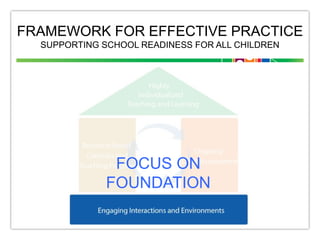
FRAMEWORK FOR EFFECTIVE PRACTICE
SUPPORTING SCHOOL READINESS FOR ALL CHILDREN
FOCUS ON
FOUNDATION
OBJECTIVES
• To understand what redirecting behavior is
• To understand the benefits of using redirection
• To learn the different types of redirection
• To illustrate how redirection can maximize
children’s engagement in learning
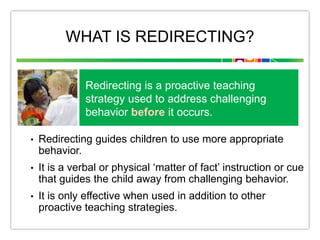
WHAT IS REDIRECTING?
Redirecting is a proactive teaching
strategy used to address challenging
behavior before it occurs.
• Redirecting guides children to use more appropriate
behavior.
• It is a verbal or physical ‘matter of fact’ instruction or cue
that guides the child away from challenging behavior.
• It is only effective when used in addition to other
proactive teaching strategies.
WHY USE REDIRECTING?
• Redirecting prevents a challenging
behavior from repeating or escalating.
• Redirecting re-engages the child
with appropriate activities.
• Redirecting maximizes learning time.
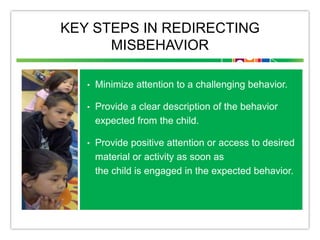
KEY STEPS IN REDIRECTING
MISBEHAVIOR
• Minimize attention to a challenging behavior.
• Provide a clear description of the behavior
expected from the child.
• Provide positive attention or access to desired
material or activity as soon as
the child is engaged in the expected behavior.
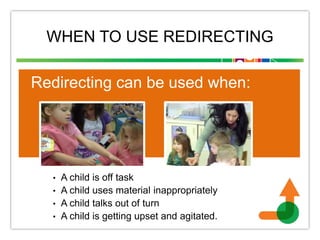
WHEN TO USE REDIRECTING
Redirecting can be used when:
• A child is off task
• A child uses material inappropriately
• A child talks out of turn
• A child is getting upset and agitated.
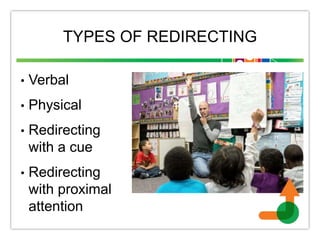
TYPES OF REDIRECTING
• Verbal
• Physical
• Redirecting
with a cue
• Redirecting
with proximal
attention
IMPORTANT NOTE
If you find yourself using a lot of
redirection, this could mean that you
need to increase…
• Time and attention to appropriate behavior
• Stating behavioral expectations in advance
• Establishing rules and routines
• Using visual cues of expected behavior
• Teaching social skills
• Providing high interest materials and activities.
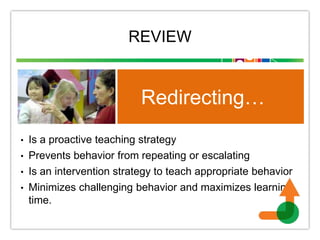
Redirecting…
REVIEW
• Is a proactive teaching strategy
• Prevents behavior from repeating or escalating
• Is an intervention strategy to teach appropriate behavior
• Minimizes challenging behavior and maximizes learning
time.
FALL 2012

Redirecting behavior presentation for childcare centers

  • 1.
  • 2.
    FRAMEWORK FOR EFFECTIVEPRACTICE SUPPORTING SCHOOL READINESS FOR ALL CHILDREN FOCUS ON FOUNDATION
  • 3.
    OBJECTIVES • To understandwhat redirecting behavior is • To understand the benefits of using redirection • To learn the different types of redirection • To illustrate how redirection can maximize children’s engagement in learning
  • 4.
    WHAT IS REDIRECTING? Redirectingis a proactive teaching strategy used to address challenging behavior before it occurs. • Redirecting guides children to use more appropriate behavior. • It is a verbal or physical ‘matter of fact’ instruction or cue that guides the child away from challenging behavior. • It is only effective when used in addition to other proactive teaching strategies.
  • 5.
    WHY USE REDIRECTING? •Redirecting prevents a challenging behavior from repeating or escalating. • Redirecting re-engages the child with appropriate activities. • Redirecting maximizes learning time.
  • 6.
    KEY STEPS INREDIRECTING MISBEHAVIOR • Minimize attention to a challenging behavior. • Provide a clear description of the behavior expected from the child. • Provide positive attention or access to desired material or activity as soon as the child is engaged in the expected behavior.
  • 7.
    WHEN TO USEREDIRECTING Redirecting can be used when: • A child is off task • A child uses material inappropriately • A child talks out of turn • A child is getting upset and agitated.
  • 8.
    TYPES OF REDIRECTING •Verbal • Physical • Redirecting with a cue • Redirecting with proximal attention
  • 15.
    IMPORTANT NOTE If youfind yourself using a lot of redirection, this could mean that you need to increase… • Time and attention to appropriate behavior • Stating behavioral expectations in advance • Establishing rules and routines • Using visual cues of expected behavior • Teaching social skills • Providing high interest materials and activities.
  • 16.
    Redirecting… REVIEW • Is aproactive teaching strategy • Prevents behavior from repeating or escalating • Is an intervention strategy to teach appropriate behavior • Minimizes challenging behavior and maximizes learning time.
  • 17.