REDESIGN FOR
CASTINGS
Presented by:
20A220 – Nitheesh V G
20A221 - Parthiban M
20A229 - Sanjay Kumar E
20A237 - Vipul Krishna Tammineedi
What is Sand Casting?
● Sand casting is a manufacturing process in which
liquid metal is poured into a sand mold, which
contains a hollow cavity of the desired shape and
then allowed to solidify.
Components of a Sand Casting Mold
Base Sand
The base sand is the sand that is utilized to create the mold in its purest form. A
binding agent is necessary to keep it together. The core is also made of base
sand. The following are the most prevalent varieties of base sand:
● Silica sand
● Olivine sand
● Chromite sand
● Zircon sand
● Chamotte sand
Binders or Binding Agents
The binding agents are the glue that holds the sand particles together. The
following are the most frequent types of :
● Clay and water
● Oil
● Resin
● Sodium silicate
Improvement Through Additives
Additives are used to improve the mold surface finish,
its strength,
refractoriness,
Cushioning.
Methods of Making Sand Castings
● Bedding-in Method
● False Cope Method
● Flat Back Method
Types of Casting Sand
● Green Sand
● Dry Sand
● Facing Sand
● Core Sand
● Loam Sand
● Parting Sand
● Backing and Floor Sand
● System Sand
● Molasses Sand
Green Sand
● These varieties of molding sand are made from natural sand that has been
moistened. It comprises roughly 15 to 30 percent clay, 8 percent water, and
silica.
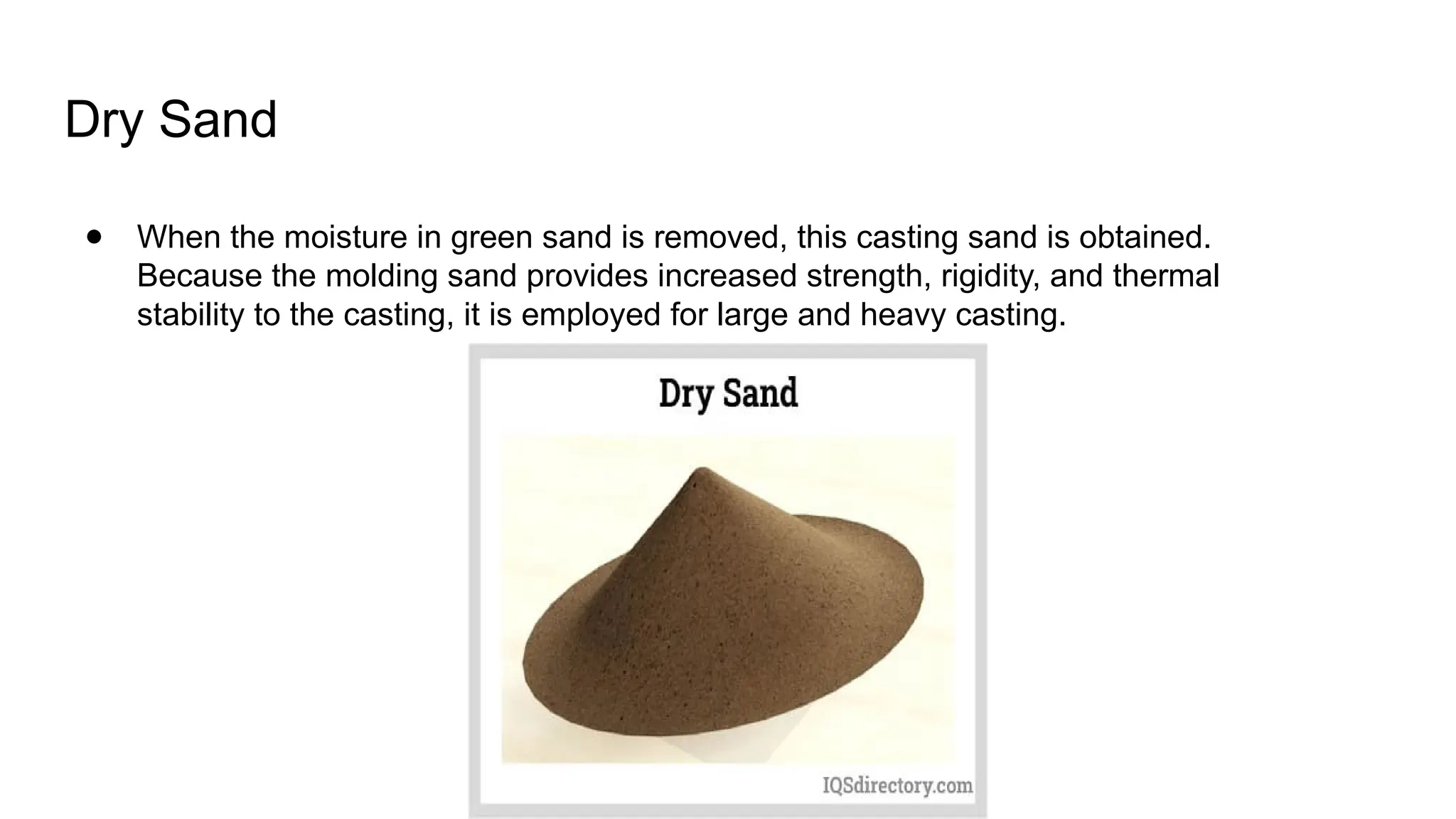
Dry Sand
● When the moisture in green sand is removed, this casting sand is obtained.
Because the molding sand provides increased strength, rigidity, and thermal
stability to the casting, it is employed for large and heavy casting.
Facing Sand
● Face sand is used to face the mold, as the name implies. Silica sand and
clay are typically used to make face sand.
Core Sand
● Silica sand is blended with core oil (linseed oil, resin, and mineral oil) and other binding
elements including dextrin, cornflour, and sodium silicate in core molding sand.
SAND CASTING PARTS AND PROCEDURES
There are 6 types of different Parts of sand Mold - Features:
● Cope and drag in Sand Mold
● Gating system
● Riser
● Core
● Chaplets
● Chills
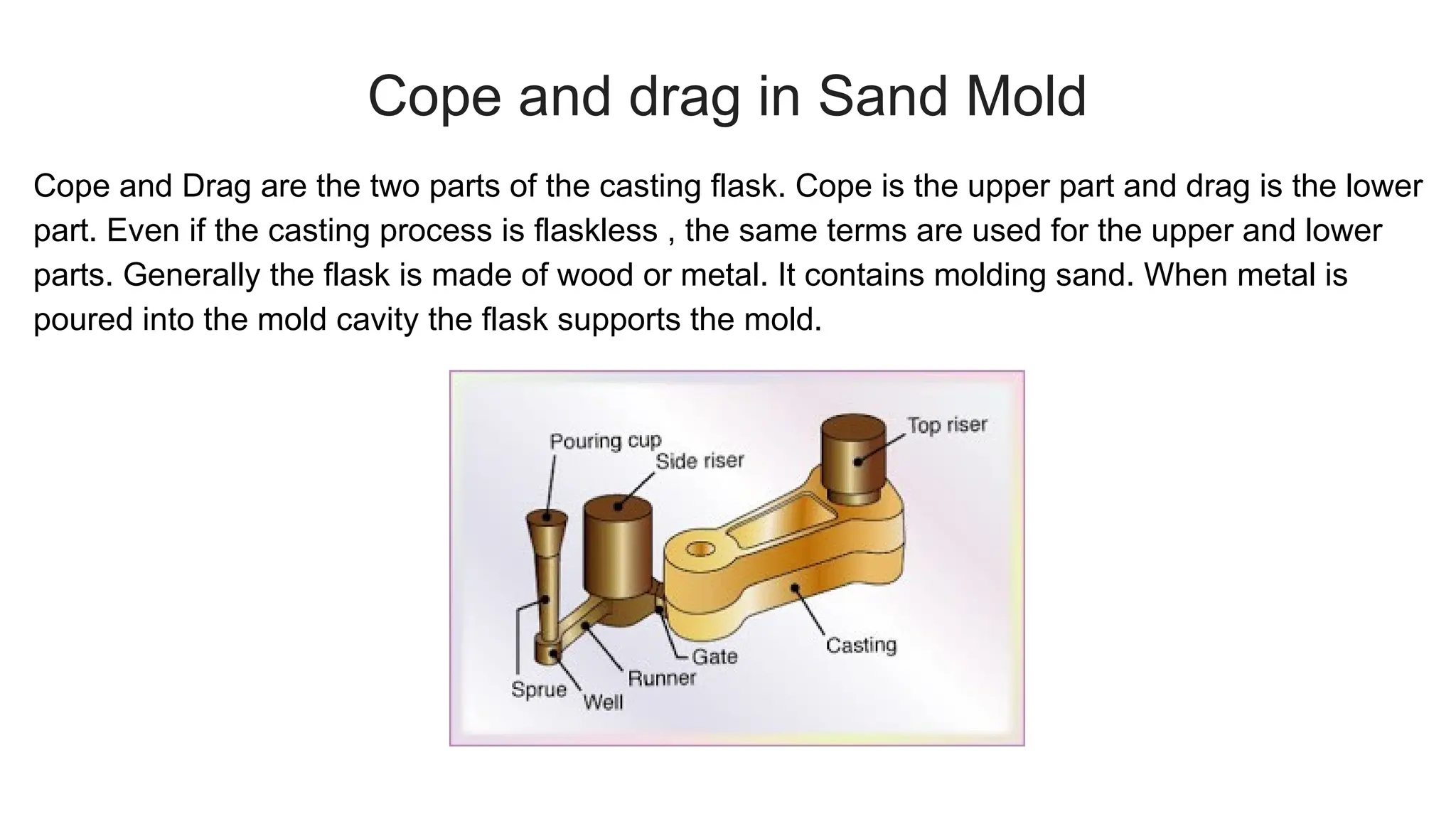
Cope and drag in Sand Mold
Cope and Drag are the two parts of the casting flask. Cope is the upper part and drag is the lower
part. Even if the casting process is flaskless , the same terms are used for the upper and lower
parts. Generally the flask is made of wood or metal. It contains molding sand. When metal is
poured into the mold cavity the flask supports the mold.
Gating System
If the molten metal is poured directly from the ladle , it will erode the bottom of the
mould cavity. So molten metal is poured from the ladle to the cavity through a gating
system. The gating system in casting creates a series of channels through which
molten metal reaches the cavity. Gating system has
● Pouring Basin : It receives the molten metal from the liquid metal container.
● Pouring Basin : It receives the molten metal from the liquid metal container
● Sprue Base : It’s the base of the sprue
● Runner : It is the horizontal part of the gating system. It connects the spues with
the gates.
● The next part is the choke.
● Then comes the skim bob
● Gates and ingates : It controls the movement of the metal from the runners into the
cavity.
● Riser
Riser
The risers are also known as feed heads. When the metal solidifies it starts to shrink.
And then risers comes into play. These feeder supply metals to the cavity when shrinking
of the metal starts.
Core
A core is a sand shape inserted into the mold to shape the casting interior, including
features such as holes or passages. Cores are usually made out of molding sand so
they can be shaken out of the casting. A core print is a region added to the pattern, core,
or mold to locate and support the core within the mold.
Cores are required to create the castings with holes. It can be made of refractory
materials. Most often core sand is used to make it. Metal cores are also available but
less frequently used.
Chaplets
Chaplets are the supports for the cores. These are needed particularly when the
cores are very big. Usually metal pieces are used to support the core. Without
chaplets the core can be displaced and the casting can be spoiled. These chaplets
are set-up between the core and mold surface. Caution should be taken while placing
chaplets. Clean, oil and moisture free pieces should be used as chaplets.
In order to maintain that support, the chaplets must be composed of a metal with a
same or higher melting temperature than that of the metal being cast. After
solidification, the chaplets will have been encased inside the casting.
Chills
These are huge metal pieces used to reduce the effect of shrinkage. These increases
the thermal conductivity and heat capacity. It helps in speeding up the cooling process.
So thick metal parts are cooled quickly. They can be used along with the risers.
The entire sand mold is contained in a box called the flask. In a two-part mold, which is
typical of sand castings, the upper half (containing the top half of the pattern, flask, and
core) is called the cope. The lower half is called the drag. The parting line is the line or
surface that separates the cope and drag.
Problem:
A cast iron bearing bracket is shown in fig. Indicate the preferred parting line and
any necessary sand cores. Offer a design modification that will reduce or eliminate
the need for sand cores.
Solution:
With the parting line as shown in Fig. 1, then do diameter H8 hole can be cast to
the required allowance for machining by mould sand; the relief in the base
requires a sand core.
By rotating the base relief feature 90° this can als be cast by the mould
sand; Fig. 2 shows the modified design
Problem 2:
Indicate the parting line for the steel forked lever casting seen in Fig. and also the
necessary sand cores. Maintaining as nearly as possible , the existing weight of
the casting, offer a design modification that will alleviate the design core
requirements.
Solution 2:
The parting line for the forked lever is as shown in Fig., necessitating sand cores
for the three holes and two external sand cores for the U-section arms.
Changing the arms from U-section to H-section eliminates the need for
the external sand ores whilst maintaining the strength of the casting with the
minimum of change in the weight. Sand cores are still required for the holes.
Problem 3:
For the pedestal housing shown in fig. Indicate probable parting line and any
necessary sand cores accepting that the probable parting line is the one involving
the minimum sand cores.
Show a design modification to reduce or eliminate the need for sand
cores; maintain approximately the same weight of casting in the modified design.
Solution 3:
Minimum number and size of sand ores for pedestal housing is achieved by using
the parting line shown in Fig.
A modified web design, shown in Fig., makes it possible to use a parting
line transverse to the hole axis and therefore to “cast” the required shape - no
sand cores required.
Redesign for casting Design for manufacturing and assembly

Redesign for casting Design for manufacturing and assembly

  • 1.
    REDESIGN FOR CASTINGS Presented by: 20A220– Nitheesh V G 20A221 - Parthiban M 20A229 - Sanjay Kumar E 20A237 - Vipul Krishna Tammineedi
  • 2.
    What is SandCasting? ● Sand casting is a manufacturing process in which liquid metal is poured into a sand mold, which contains a hollow cavity of the desired shape and then allowed to solidify.
  • 5.
    Components of aSand Casting Mold Base Sand The base sand is the sand that is utilized to create the mold in its purest form. A binding agent is necessary to keep it together. The core is also made of base sand. The following are the most prevalent varieties of base sand: ● Silica sand ● Olivine sand ● Chromite sand ● Zircon sand ● Chamotte sand
  • 7.
    Binders or BindingAgents The binding agents are the glue that holds the sand particles together. The following are the most frequent types of : ● Clay and water ● Oil ● Resin ● Sodium silicate
  • 9.
    Improvement Through Additives Additivesare used to improve the mold surface finish, its strength, refractoriness, Cushioning.
  • 11.
    Methods of MakingSand Castings ● Bedding-in Method ● False Cope Method ● Flat Back Method
  • 12.
    Types of CastingSand ● Green Sand ● Dry Sand ● Facing Sand ● Core Sand ● Loam Sand ● Parting Sand ● Backing and Floor Sand ● System Sand ● Molasses Sand
  • 13.
    Green Sand ● Thesevarieties of molding sand are made from natural sand that has been moistened. It comprises roughly 15 to 30 percent clay, 8 percent water, and silica.
  • 14.
    Dry Sand ● Whenthe moisture in green sand is removed, this casting sand is obtained. Because the molding sand provides increased strength, rigidity, and thermal stability to the casting, it is employed for large and heavy casting.
  • 15.
    Facing Sand ● Facesand is used to face the mold, as the name implies. Silica sand and clay are typically used to make face sand.
  • 16.
    Core Sand ● Silicasand is blended with core oil (linseed oil, resin, and mineral oil) and other binding elements including dextrin, cornflour, and sodium silicate in core molding sand.
  • 17.
    SAND CASTING PARTSAND PROCEDURES There are 6 types of different Parts of sand Mold - Features: ● Cope and drag in Sand Mold ● Gating system ● Riser ● Core ● Chaplets ● Chills
  • 18.
    Cope and dragin Sand Mold Cope and Drag are the two parts of the casting flask. Cope is the upper part and drag is the lower part. Even if the casting process is flaskless , the same terms are used for the upper and lower parts. Generally the flask is made of wood or metal. It contains molding sand. When metal is poured into the mold cavity the flask supports the mold.
  • 19.
    Gating System If themolten metal is poured directly from the ladle , it will erode the bottom of the mould cavity. So molten metal is poured from the ladle to the cavity through a gating system. The gating system in casting creates a series of channels through which molten metal reaches the cavity. Gating system has ● Pouring Basin : It receives the molten metal from the liquid metal container. ● Pouring Basin : It receives the molten metal from the liquid metal container ● Sprue Base : It’s the base of the sprue ● Runner : It is the horizontal part of the gating system. It connects the spues with the gates. ● The next part is the choke.
  • 20.
    ● Then comesthe skim bob ● Gates and ingates : It controls the movement of the metal from the runners into the cavity. ● Riser
  • 21.
    Riser The risers arealso known as feed heads. When the metal solidifies it starts to shrink. And then risers comes into play. These feeder supply metals to the cavity when shrinking of the metal starts.
  • 22.
    Core A core isa sand shape inserted into the mold to shape the casting interior, including features such as holes or passages. Cores are usually made out of molding sand so they can be shaken out of the casting. A core print is a region added to the pattern, core, or mold to locate and support the core within the mold. Cores are required to create the castings with holes. It can be made of refractory materials. Most often core sand is used to make it. Metal cores are also available but less frequently used.
  • 23.
    Chaplets Chaplets are thesupports for the cores. These are needed particularly when the cores are very big. Usually metal pieces are used to support the core. Without chaplets the core can be displaced and the casting can be spoiled. These chaplets are set-up between the core and mold surface. Caution should be taken while placing chaplets. Clean, oil and moisture free pieces should be used as chaplets. In order to maintain that support, the chaplets must be composed of a metal with a same or higher melting temperature than that of the metal being cast. After solidification, the chaplets will have been encased inside the casting.
  • 24.
    Chills These are hugemetal pieces used to reduce the effect of shrinkage. These increases the thermal conductivity and heat capacity. It helps in speeding up the cooling process. So thick metal parts are cooled quickly. They can be used along with the risers. The entire sand mold is contained in a box called the flask. In a two-part mold, which is typical of sand castings, the upper half (containing the top half of the pattern, flask, and core) is called the cope. The lower half is called the drag. The parting line is the line or surface that separates the cope and drag.
  • 26.
    Problem: A cast ironbearing bracket is shown in fig. Indicate the preferred parting line and any necessary sand cores. Offer a design modification that will reduce or eliminate the need for sand cores.
  • 28.
    Solution: With the partingline as shown in Fig. 1, then do diameter H8 hole can be cast to the required allowance for machining by mould sand; the relief in the base requires a sand core. By rotating the base relief feature 90° this can als be cast by the mould sand; Fig. 2 shows the modified design
  • 31.
    Problem 2: Indicate theparting line for the steel forked lever casting seen in Fig. and also the necessary sand cores. Maintaining as nearly as possible , the existing weight of the casting, offer a design modification that will alleviate the design core requirements.
  • 33.
    Solution 2: The partingline for the forked lever is as shown in Fig., necessitating sand cores for the three holes and two external sand cores for the U-section arms. Changing the arms from U-section to H-section eliminates the need for the external sand ores whilst maintaining the strength of the casting with the minimum of change in the weight. Sand cores are still required for the holes.
  • 36.
    Problem 3: For thepedestal housing shown in fig. Indicate probable parting line and any necessary sand cores accepting that the probable parting line is the one involving the minimum sand cores. Show a design modification to reduce or eliminate the need for sand cores; maintain approximately the same weight of casting in the modified design.
  • 38.
    Solution 3: Minimum numberand size of sand ores for pedestal housing is achieved by using the parting line shown in Fig. A modified web design, shown in Fig., makes it possible to use a parting line transverse to the hole axis and therefore to “cast” the required shape - no sand cores required.