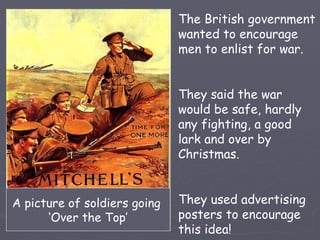
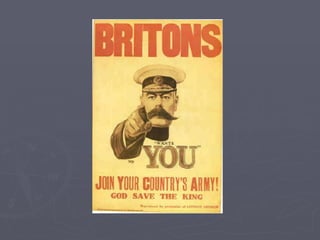
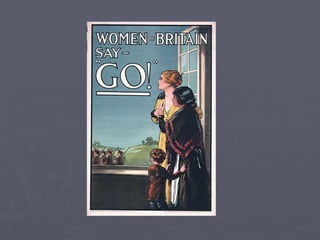
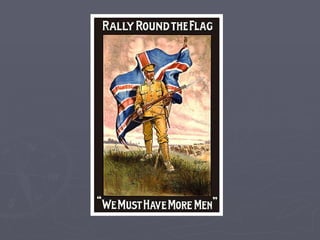
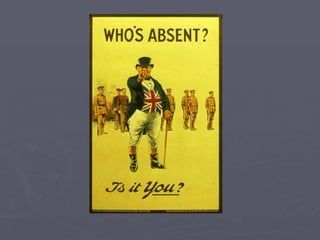
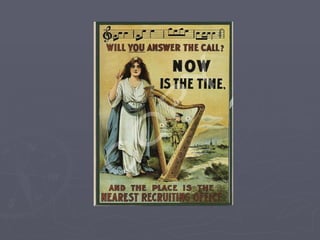
The British government wanted to encourage men to enlist for war. They said the war would be safe, hardly any fighting, a good lark and over by Christmas. They used advertising posters to encourage this idea! A picture of soldiers going  ‘ Over the Top’
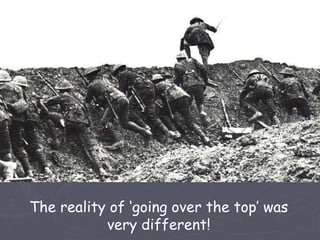
The reality of ‘going over the top’ was very different!
Soldiers were expected to carry all of their equipment with them at all times. They were supposed to keep it clean and in good condition – they were British after all.
Propogada Almost immediately after war broke out,  David Lloyd George  was charged with setting up a War Propaganda Bureau. The WPB had a big task ahead - Britain needed recruits for the army and navy. Lloyd George also understood that propaganda could be used for a number of purposes:
To keep  morale  up at the Home Front and encourage people to give their time and money to the war effort  To portray the enemy as an evil that needs to be fought  To recruit more soldiers  To stop information from being published which might help the enemy  To psychologically dishearten the enemy troops  To give civilians a government-approved version of the War
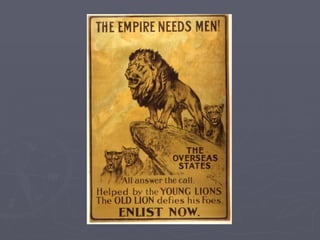
It was this final use that the British government felt the work of the WPB should be top secret. Some of the best writers in Britain (Rudyard Kipling, Arthur Conan Doyle, H.G. Wells, among others) were asked to participate in a conference on how written propaganda should be used. They wrote stories and leaflets to persuade the public to join the war effort. Propaganda also took the form of posters, paintings, photographs, films, postcards, newspaper articles, medallions and books.


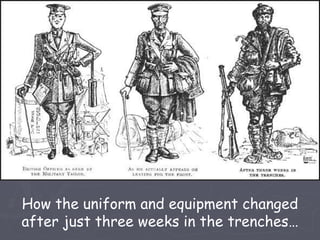
How the uniform and equipment changed after just three weeks in the trenches…
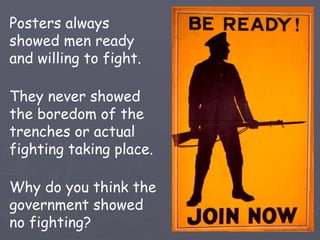
Posters always showed men ready and willing to fight. They never showed the boredom of the trenches or actual fighting taking place. Why do you think the government showed no fighting?
 
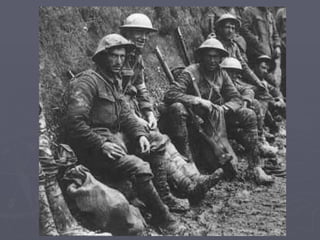
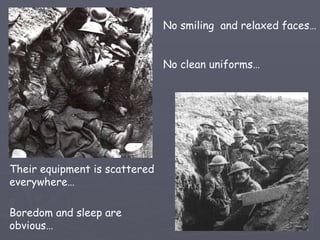
No smiling  and relaxed faces… No clean uniforms… Their equipment is scattered everywhere… Boredom and sleep are obvious…
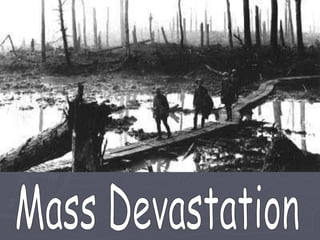
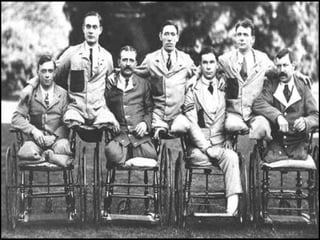
Mass Devastation
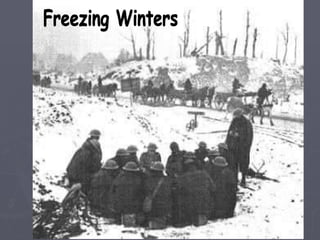
Freezing Winters
 
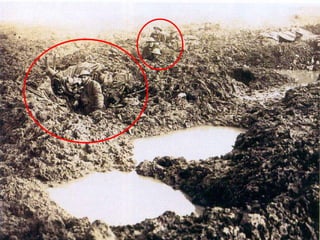
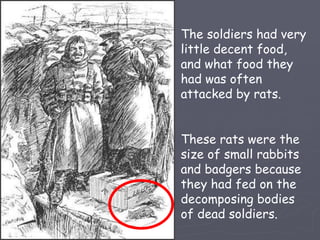
The soldiers had very little decent food, and what food they had was often attacked by rats. These rats were the size of small rabbits and badgers because they had fed on the decomposing bodies of dead soldiers.
 

Realityofwar

  • 1.
  • 2.
    The British governmentwanted to encourage men to enlist for war. They said the war would be safe, hardly any fighting, a good lark and over by Christmas. They used advertising posters to encourage this idea! A picture of soldiers going ‘ Over the Top’
  • 3.
    The reality of‘going over the top’ was very different!
  • 4.
    Soldiers were expectedto carry all of their equipment with them at all times. They were supposed to keep it clean and in good condition – they were British after all.
  • 5.
    Propogada Almost immediatelyafter war broke out, David Lloyd George was charged with setting up a War Propaganda Bureau. The WPB had a big task ahead - Britain needed recruits for the army and navy. Lloyd George also understood that propaganda could be used for a number of purposes:
  • 6.
    To keep morale up at the Home Front and encourage people to give their time and money to the war effort To portray the enemy as an evil that needs to be fought To recruit more soldiers To stop information from being published which might help the enemy To psychologically dishearten the enemy troops To give civilians a government-approved version of the War
  • 7.
    It was thisfinal use that the British government felt the work of the WPB should be top secret. Some of the best writers in Britain (Rudyard Kipling, Arthur Conan Doyle, H.G. Wells, among others) were asked to participate in a conference on how written propaganda should be used. They wrote stories and leaflets to persuade the public to join the war effort. Propaganda also took the form of posters, paintings, photographs, films, postcards, newspaper articles, medallions and books.
  • 8.
  • 9.
  • 10.
  • 11.
  • 12.
  • 13.
  • 14.
    How the uniformand equipment changed after just three weeks in the trenches…
  • 15.
    Posters always showedmen ready and willing to fight. They never showed the boredom of the trenches or actual fighting taking place. Why do you think the government showed no fighting?
  • 16.
  • 17.
    No smiling and relaxed faces… No clean uniforms… Their equipment is scattered everywhere… Boredom and sleep are obvious…
  • 18.
  • 19.
  • 20.
  • 21.
    The soldiers hadvery little decent food, and what food they had was often attacked by rats. These rats were the size of small rabbits and badgers because they had fed on the decomposing bodies of dead soldiers.
  • 22.