Theme 7:  Paul Revere's Ride   Dylan DeFatta
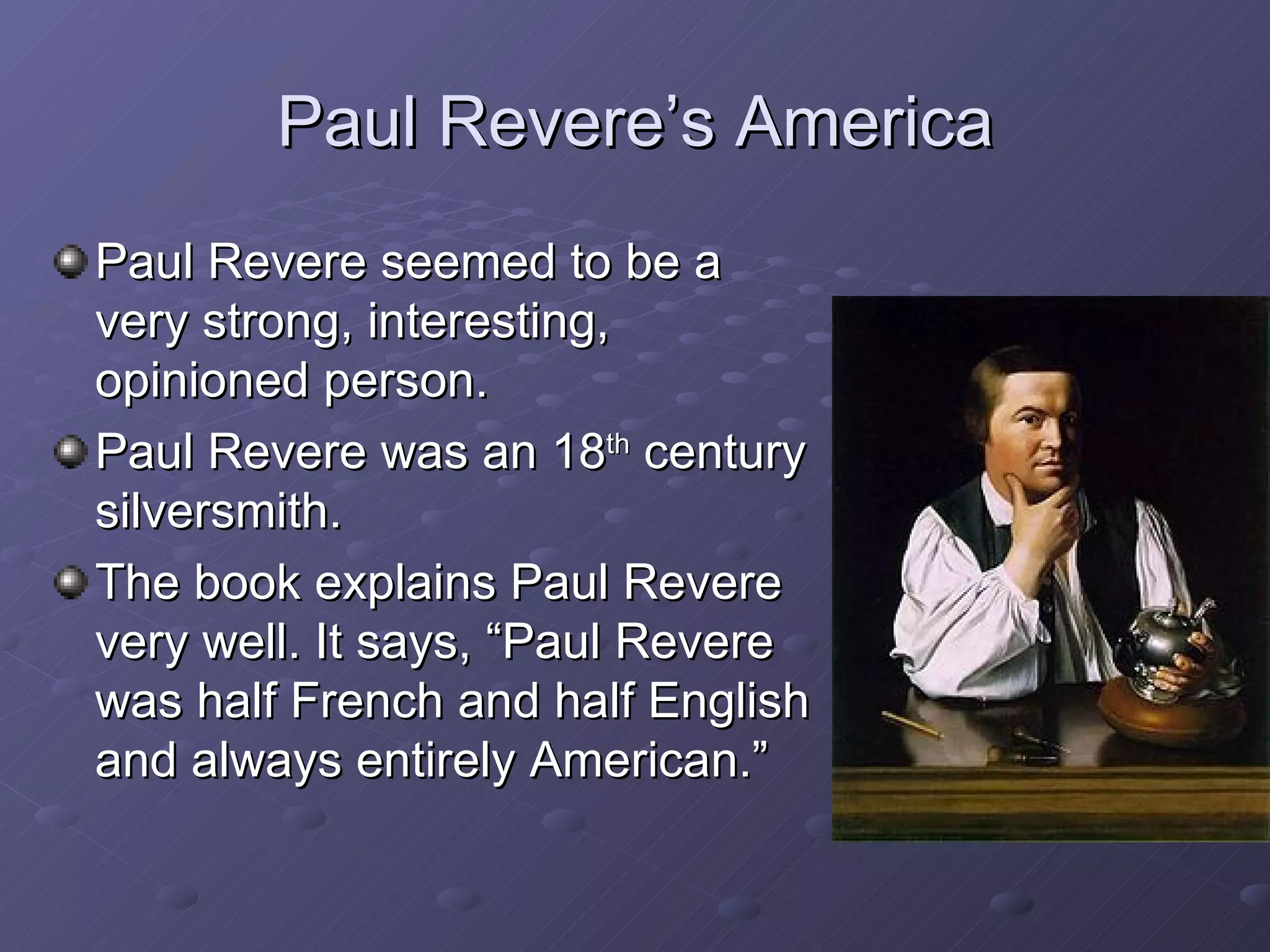
Paul Revere’s America Paul Revere seemed to be a very strong, interesting, opinioned person. Paul Revere was an 18 th  century silversmith. The book explains Paul Revere very well. It says, “Paul Revere was half French and half English and always entirely American.”
Paul Revere’s America Paul Revere and the Whigs often used violence when needed to get what they needed. Revere, even though keen on using violence, only did so when necessary. The Boston Massacre is a perfect example of the Whigs using violence to their advantage.
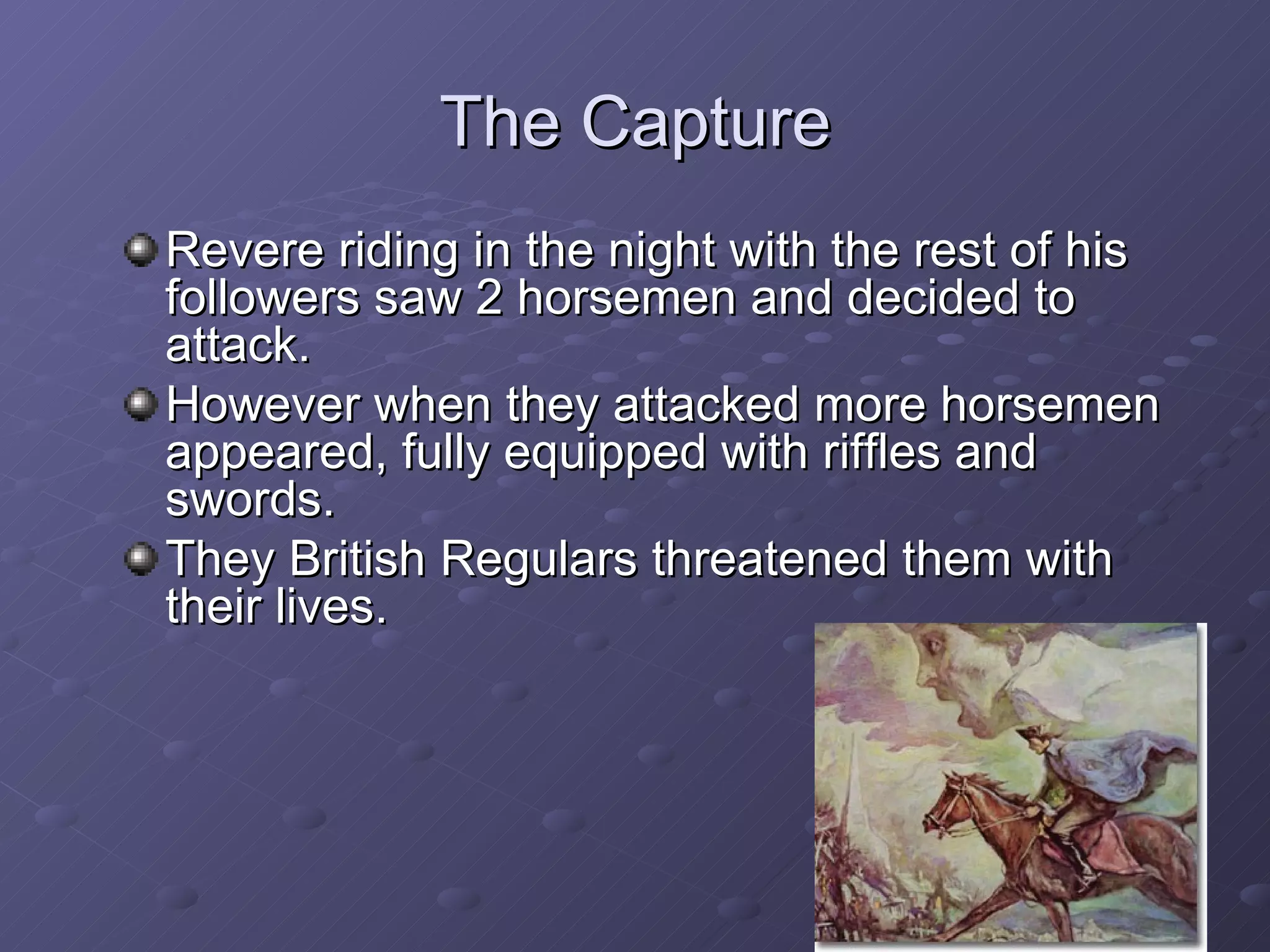
The Capture Revere riding in the night with the rest of his followers saw 2 horsemen and decided to attack. However when they attacked more horsemen appeared, fully equipped with riffles and swords. They British Regulars threatened them with their lives.
The Capture The British officers chased them at a distance where a shot would kill them. The doctor Revere was with was able to escape, but Revere was captured as 10 British Regulars surrounded him. Revere was captured and imprisoned.
The Alarm Other riders besides Revere spread the alarm of what had happened. People began to over romanticize what happened that night, picturing a mysterious rider in the night. Revere was not done however, he still had many midnight rides the planned to take.
The Alarm As Revere rode up to Tewksbury, a courier notified Captain Trull Revere was on his way. Captain Trull, being an English officer was ready for attack. As Revere continued to Medford, Captain Trull began the chase for Revere.
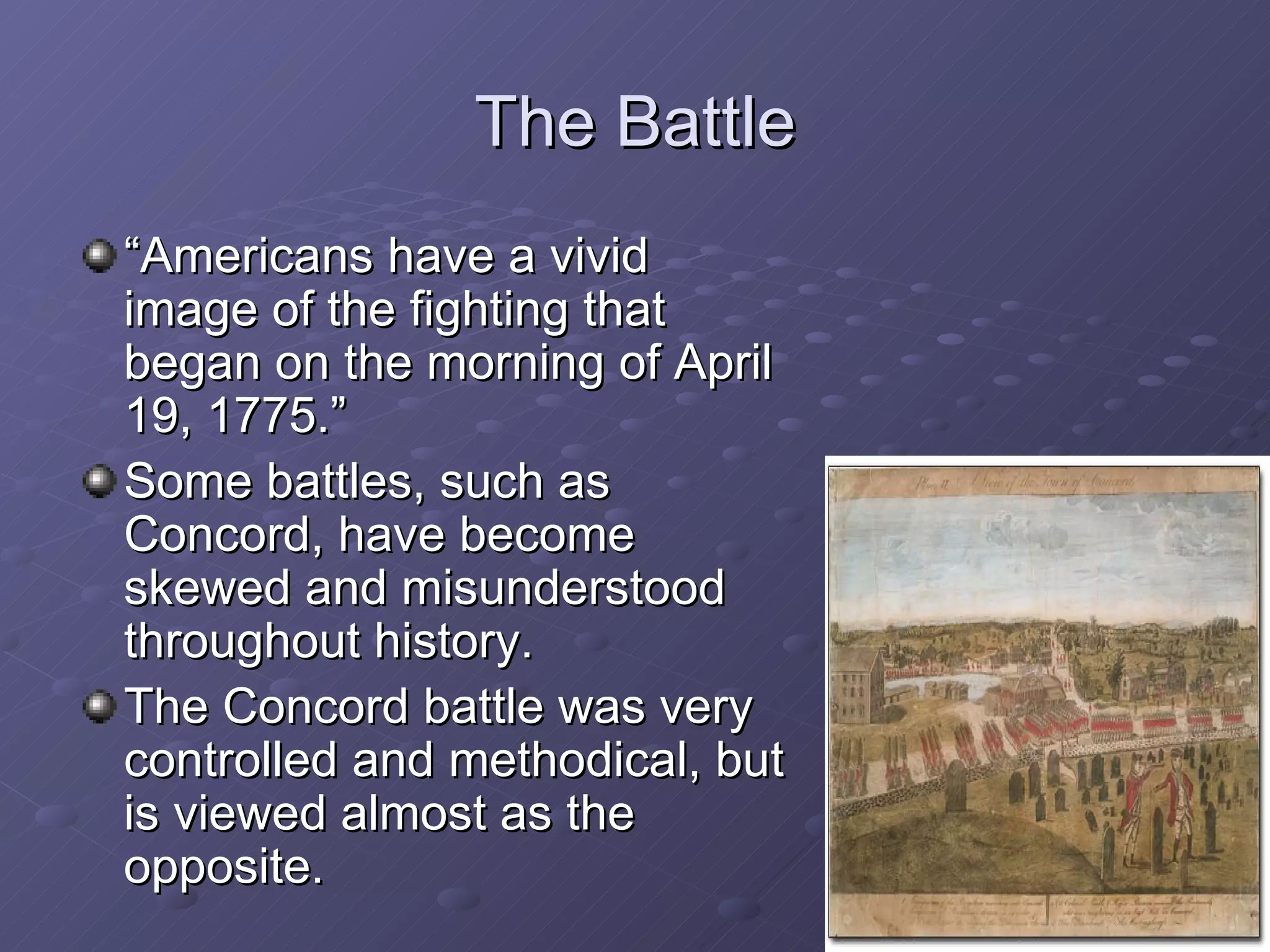
The Battle “ Americans have a vivid image of the fighting that began on the morning of April 19, 1775.” Some battles, such as Concord, have become skewed and misunderstood throughout history. The Concord battle was very controlled and methodical, but is viewed almost as the opposite.
The Battle The minutemen of Concord gracefully retreated as New England marched down the hill. However, some believe in this battle so much they verbally exclaimed, “If we die, let us die here!” Even though some felt strongly about this battle, conflicting interests showed that others didn’t feel as strongly as those willing to die that day for this battle.

Paul Revere's Ride

  • 1.
    Theme 7: Paul Revere's Ride Dylan DeFatta
  • 2.
    Paul Revere’s AmericaPaul Revere seemed to be a very strong, interesting, opinioned person. Paul Revere was an 18 th century silversmith. The book explains Paul Revere very well. It says, “Paul Revere was half French and half English and always entirely American.”
  • 3.
    Paul Revere’s AmericaPaul Revere and the Whigs often used violence when needed to get what they needed. Revere, even though keen on using violence, only did so when necessary. The Boston Massacre is a perfect example of the Whigs using violence to their advantage.
  • 4.
    The Capture Revereriding in the night with the rest of his followers saw 2 horsemen and decided to attack. However when they attacked more horsemen appeared, fully equipped with riffles and swords. They British Regulars threatened them with their lives.
  • 5.
    The Capture TheBritish officers chased them at a distance where a shot would kill them. The doctor Revere was with was able to escape, but Revere was captured as 10 British Regulars surrounded him. Revere was captured and imprisoned.
  • 6.
    The Alarm Otherriders besides Revere spread the alarm of what had happened. People began to over romanticize what happened that night, picturing a mysterious rider in the night. Revere was not done however, he still had many midnight rides the planned to take.
  • 7.
    The Alarm AsRevere rode up to Tewksbury, a courier notified Captain Trull Revere was on his way. Captain Trull, being an English officer was ready for attack. As Revere continued to Medford, Captain Trull began the chase for Revere.
  • 8.
    The Battle “Americans have a vivid image of the fighting that began on the morning of April 19, 1775.” Some battles, such as Concord, have become skewed and misunderstood throughout history. The Concord battle was very controlled and methodical, but is viewed almost as the opposite.
  • 9.
    The Battle Theminutemen of Concord gracefully retreated as New England marched down the hill. However, some believe in this battle so much they verbally exclaimed, “If we die, let us die here!” Even though some felt strongly about this battle, conflicting interests showed that others didn’t feel as strongly as those willing to die that day for this battle.