REAL TIME AIR
QUAILTY
PREDICTION
INTRODUCTION
• The Air Quality Index (AQI) is a standardized system used to
communicate the quality of air in a specific area and its
potential impact on public health.
• It provides a numerical score that reflects the concentration of
various air pollutants, including particulate matter (PM10 and
PM2.5), ground-level ozone (O3), nitrogen dioxide (NO2),
sulfur dioxide (SO2), and carbon monoxide (CO).
PROBLEM STATEMENT
India faces a severe air pollution crisis, with
hazardous AQI levels causing approximately 1.7
million premature deaths annually due to health
issues. This project aims to develop a real-time
air quality prediction system using Python to
forecast AQI levels, enabling proactive public
health measures and increased community
awareness.
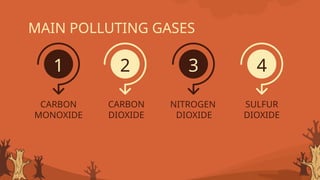
MAIN POLLUTING GASES
SULFUR
DIOXIDE
NITROGEN
DIOXIDE
CARBON
MONOXIDE
CARBON
DIOXIDE
1 2 4
3
OBJECTIVES
 Data Acquisition
 Data Processing
 Feature Development
 Model Development
 Real-Time Prediction
DATA SOURCES
 GOVERNMENT AND ENVIRONMENTAL AGENCIES
 WORLD AIR QUALITY INDEX
 OPEN DATA PLATFORMS
 OPENAQ
 DATA.GOV
 NASA EARTH DATA
MODEL IMPLEMENTATION
LINEAR REGRESSION
SARIMA (Seasonal ARIMA)
LOGISTIC REGRESSION
ANN (Artificial Neural Networks)
ADVANTAGES
PUBLIC HEALTH PROTECTION
DATA-DRIVEN DECISION MAKING
ENHANCED COMMUNITY AWARENESS
PROACTIVE MEASURES
RESOURCE OPTIMIZATION
LONG-TERM HEALTH BENEFITS
CHALLENGES FACED FOR
IMPLEMENTATION
 DATA QUALITY AND AVAILABILITY
 COMPLEXITY OF AIR QUALITY FACTORS
 MODEL SELECTION AND TUNING
 COMPUTATIONAL RESOURCES
 REAL-TIME PROCESSING
 INTEROPERABILITY
FEATURES
 REAL-TIME DATA MONITORING
 PREDICTIVE MODELING
 POLLUTANT TRACKING
 API INTEGRATION
 HISTORICAL DATA COMPARISON
 FORECAST VISUALIZATION
The development of a real-time air quality index
prediction system is a vital step toward addressing the
growing concerns of air pollution and its adverse
effects on public health. By leveraging historical data,
meteorological factors, and advanced machine
learning techniques, this system can provide accurate
forecasts of air quality levels, enabling proactive
measures to protect community health.
CONCLUSION
CREDITS: This presentation template was created by Slidesgo, and
includes icons by Flaticon, and infographics & images by Freepik
THANKS
PAVAN KUMAR 4AL22AI036
YASHWANTH 4AL22AI010
HEMANTH KUMAR 4AL22AI019
MADHUSUDHAN G 4AL22AI026
TEAM-06

REAL TIME AIR QUALITY PREDICTION using python.pptx

  • 1.
  • 2.
    INTRODUCTION • The AirQuality Index (AQI) is a standardized system used to communicate the quality of air in a specific area and its potential impact on public health. • It provides a numerical score that reflects the concentration of various air pollutants, including particulate matter (PM10 and PM2.5), ground-level ozone (O3), nitrogen dioxide (NO2), sulfur dioxide (SO2), and carbon monoxide (CO).
  • 3.
    PROBLEM STATEMENT India facesa severe air pollution crisis, with hazardous AQI levels causing approximately 1.7 million premature deaths annually due to health issues. This project aims to develop a real-time air quality prediction system using Python to forecast AQI levels, enabling proactive public health measures and increased community awareness.
  • 4.
  • 5.
    OBJECTIVES  Data Acquisition Data Processing  Feature Development  Model Development  Real-Time Prediction
  • 6.
    DATA SOURCES  GOVERNMENTAND ENVIRONMENTAL AGENCIES  WORLD AIR QUALITY INDEX  OPEN DATA PLATFORMS  OPENAQ  DATA.GOV  NASA EARTH DATA
  • 7.
    MODEL IMPLEMENTATION LINEAR REGRESSION SARIMA(Seasonal ARIMA) LOGISTIC REGRESSION ANN (Artificial Neural Networks)
  • 8.
    ADVANTAGES PUBLIC HEALTH PROTECTION DATA-DRIVENDECISION MAKING ENHANCED COMMUNITY AWARENESS PROACTIVE MEASURES RESOURCE OPTIMIZATION LONG-TERM HEALTH BENEFITS
  • 9.
    CHALLENGES FACED FOR IMPLEMENTATION DATA QUALITY AND AVAILABILITY  COMPLEXITY OF AIR QUALITY FACTORS  MODEL SELECTION AND TUNING  COMPUTATIONAL RESOURCES  REAL-TIME PROCESSING  INTEROPERABILITY
  • 10.
    FEATURES  REAL-TIME DATAMONITORING  PREDICTIVE MODELING  POLLUTANT TRACKING  API INTEGRATION  HISTORICAL DATA COMPARISON  FORECAST VISUALIZATION
  • 11.
    The development ofa real-time air quality index prediction system is a vital step toward addressing the growing concerns of air pollution and its adverse effects on public health. By leveraging historical data, meteorological factors, and advanced machine learning techniques, this system can provide accurate forecasts of air quality levels, enabling proactive measures to protect community health. CONCLUSION
  • 12.
    CREDITS: This presentationtemplate was created by Slidesgo, and includes icons by Flaticon, and infographics & images by Freepik THANKS PAVAN KUMAR 4AL22AI036 YASHWANTH 4AL22AI010 HEMANTH KUMAR 4AL22AI019 MADHUSUDHAN G 4AL22AI026 TEAM-06