NEXT STEPS TO REFINE PROPOSALS FOR 
IMPROVEMENTS TO THE ADAPTATION AND 
MITIGATION MARKERS 
OECD Task Team on Rio markers, 18 September 2014
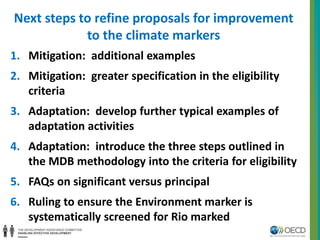
Next steps to refine proposals for improvement 
to the climate markers 
1. Mitigation: additional examples 
2. Mitigation: greater specification in the eligibility 
criteria 
3. Adaptation: develop further typical examples of 
adaptation activities 
4. Adaptation: introduce the three steps outlined in 
the MDB methodology into the criteria for eligibility 
5. FAQs on significant versus principal 
6. Ruling to ensure the Environment marker is 
systematically screened for Rio marked
Next steps to refine proposals for improvement 
to the climate markers 
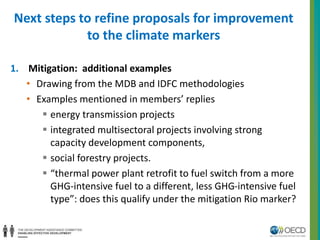
1. Mitigation: additional examples 
• Drawing from the MDB and IDFC methodologies 
• Examples mentioned in members’ replies 
 energy transmission projects 
 integrated multisectoral projects involving strong 
capacity development components, 
 social forestry projects. 
 “thermal power plant retrofit to fuel switch from a more 
GHG-intensive fuel to a different, less GHG-intensive fuel 
type”: does this qualify under the mitigation Rio marker?
Next steps to refine proposals for improvement 
to the climate markers 
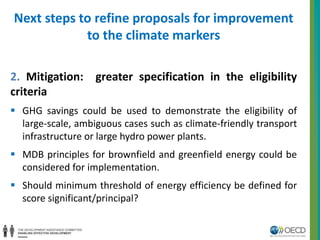
2. Mitigation: greater specification in the eligibility 
criteria 
 GHG savings could be used to demonstrate the eligibility of 
large-scale, ambiguous cases such as climate-friendly transport 
infrastructure or large hydro power plants. 
 MDB principles for brownfield and greenfield energy could be 
considered for implementation. 
 Should minimum threshold of energy efficiency be defined for 
score significant/principal?
Next steps to refine proposals for improvement 
to the climate markers 
3. Adaptation: develop further typical examples of 
adaptation activities 
 Study examples individually, and more specifically those that 
aim at making infrastructure more resilient and enabling 
private sector investment in adaptation.
Next steps to refine proposals for improvement 
to the climate markers 
4. Adaptation: use the three steps outlined in the MDB 
methodology in the criteria for eligibility 
 Good practice rather than eligibility criterion. 
 Should a minimum threshold of adaptation relevance 
in a project be defined for application of score 
significant or principal?
Next steps to refine proposals for improvement 
to the climate markers 
5. FAQs on significant versus principal 
• Add examples; 
• Add a note that an expected indirect side effect with 
regard to the objective is not sufficient to justify the 
“significant” score. 
• No consensus on the use of thresholds for 
determining scoring 
6. Rule to ensure the Environment marker is 
systematically screened for Rio marked
Next steps to refine proposals for 
improvement to the climate markers 
Next step: Secretariat to work with a group of 
interested members to develop the revised set 
of guidelines: 
• Examples 
• FAQs 
• Three-step approach

Next Steps to Refine Proposals for Improvements to the Adaptation and Mitigation Markers

  • 1.
    NEXT STEPS TOREFINE PROPOSALS FOR IMPROVEMENTS TO THE ADAPTATION AND MITIGATION MARKERS OECD Task Team on Rio markers, 18 September 2014
  • 2.
    Next steps torefine proposals for improvement to the climate markers 1. Mitigation: additional examples 2. Mitigation: greater specification in the eligibility criteria 3. Adaptation: develop further typical examples of adaptation activities 4. Adaptation: introduce the three steps outlined in the MDB methodology into the criteria for eligibility 5. FAQs on significant versus principal 6. Ruling to ensure the Environment marker is systematically screened for Rio marked
  • 3.
    Next steps torefine proposals for improvement to the climate markers 1. Mitigation: additional examples • Drawing from the MDB and IDFC methodologies • Examples mentioned in members’ replies  energy transmission projects  integrated multisectoral projects involving strong capacity development components,  social forestry projects.  “thermal power plant retrofit to fuel switch from a more GHG-intensive fuel to a different, less GHG-intensive fuel type”: does this qualify under the mitigation Rio marker?
  • 4.
    Next steps torefine proposals for improvement to the climate markers 2. Mitigation: greater specification in the eligibility criteria  GHG savings could be used to demonstrate the eligibility of large-scale, ambiguous cases such as climate-friendly transport infrastructure or large hydro power plants.  MDB principles for brownfield and greenfield energy could be considered for implementation.  Should minimum threshold of energy efficiency be defined for score significant/principal?
  • 5.
    Next steps torefine proposals for improvement to the climate markers 3. Adaptation: develop further typical examples of adaptation activities  Study examples individually, and more specifically those that aim at making infrastructure more resilient and enabling private sector investment in adaptation.
  • 6.
    Next steps torefine proposals for improvement to the climate markers 4. Adaptation: use the three steps outlined in the MDB methodology in the criteria for eligibility  Good practice rather than eligibility criterion.  Should a minimum threshold of adaptation relevance in a project be defined for application of score significant or principal?
  • 7.
    Next steps torefine proposals for improvement to the climate markers 5. FAQs on significant versus principal • Add examples; • Add a note that an expected indirect side effect with regard to the objective is not sufficient to justify the “significant” score. • No consensus on the use of thresholds for determining scoring 6. Rule to ensure the Environment marker is systematically screened for Rio marked
  • 8.
    Next steps torefine proposals for improvement to the climate markers Next step: Secretariat to work with a group of interested members to develop the revised set of guidelines: • Examples • FAQs • Three-step approach