Ecology Ecology is a special word to describe the system of living things in an environment  In this presentation you will learn about a Rainforest Ecology Look at the slides and find out what animals and plants are part of the rainforest ecology.
The canopy of rainforest  The canopy is the thick tops of trees. It  shelters the forest from sunlight and drying heat and shelters all the life-forms within the forest.
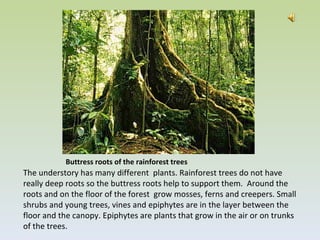
Buttress roots of the rainforest trees The understory has many different  plants. Rainforest trees do not have really deep roots so the buttress roots help to support them.  Around the roots and on the floor of the forest  grow mosses, ferns and creepers. Small shrubs and young trees, vines and epiphytes are in the layer between the floor and the canopy. Epiphytes are plants that grow in the air or on trunks of the trees.
Creeks and water ways Because of the thick understory often the most practical way to move about in rainforest is along the rivers and creeks. Many animals live on and around the water.
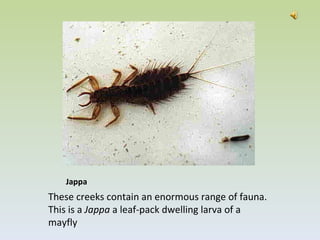
Jappa These creeks contain an enormous range of fauna. This is a  Jappa  a leaf-pack dwelling larva of a mayfly
Damselfly Along these creeks in sunlit areas below breaks in the canopy, male damselflies sit on rocks awaiting the arrival of females
Green tree frog Frogs feast on the adults of these aquatic insects
Birdwing butterflies The birdwing butterflies are a spectacular sight. They are camouflaged against the green leaves and show up brilliantly against the bright coloured flowers in a rainforest.
Spiders When a tree falls it creates a clearing and light. Spiders like to live in these places and weave their webs between the low plants and tree trunks.
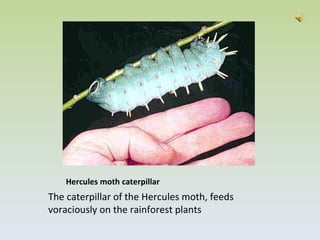
Hercules moth caterpillar The caterpillar of the Hercules moth, feeds voraciously on the rainforest plants
Hercules moth The Hercules moth is one of the world's largest  moths.
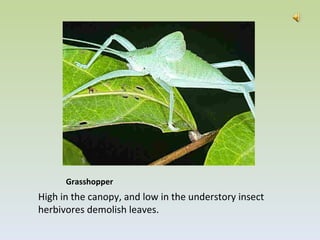
Grasshopper High in the canopy, and low in the understory insect herbivores demolish leaves.
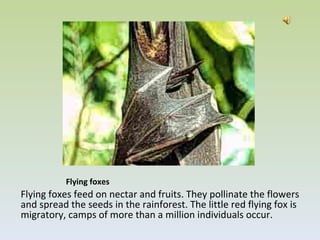
Flying foxes Flying foxes feed on nectar and fruits. They pollinate the flowers and spread the seeds in the rainforest. The little red flying fox is migratory, camps of more than a million individuals occur.
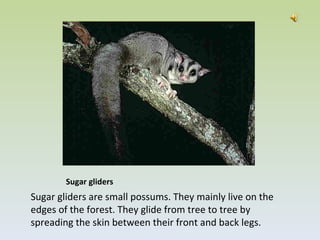
Sugar gliders Sugar gliders are small possums. They mainly live on the edges of the forest. They glide from tree to tree by spreading the skin between their front and back legs.
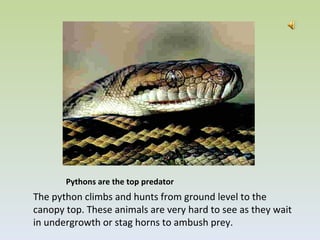
Pythons are the top predator The python climbs and hunts from ground level to the canopy top. These animals are very hard to see as they wait in undergrowth or stag horns to ambush prey.
Bird of Paradise High in the canopy brilliant birds fly between the high branches, picking off fruit from the trees.
Dung Beetles Dung beetles abound on the forest floor, eating any droppings left by other animals.
Centipede And centipedes recycle dung beetles.
As perhaps onychophorans do too .
But the crimson rosella flying into the high canopy knows nothing of that.
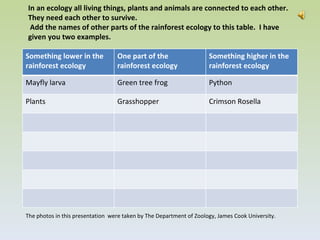
In an ecology all living things, plants and animals are connected to each other. They need each other to survive.   Add the names of other parts of the rainforest ecology to this table.  I have given you two examples. The photos in this presentation  were taken by The Department of Zoology, James Cook University. Something lower in the rainforest ecology One part of the rainforest ecology Something higher in the rainforest ecology Mayfly larva Green tree frog Python Plants Grasshopper Crimson Rosella
What sort of plants grow in the rainforest?  Draw a picture showing the floor, understory and canopy of the rainforest ecology. Label your picture to show the names of living parts of a rainforest ecology.

Rainforest Ecology

  • 1.
    Ecology Ecology isa special word to describe the system of living things in an environment In this presentation you will learn about a Rainforest Ecology Look at the slides and find out what animals and plants are part of the rainforest ecology.
  • 2.
    The canopy ofrainforest The canopy is the thick tops of trees. It shelters the forest from sunlight and drying heat and shelters all the life-forms within the forest.
  • 3.
    Buttress roots ofthe rainforest trees The understory has many different plants. Rainforest trees do not have really deep roots so the buttress roots help to support them. Around the roots and on the floor of the forest grow mosses, ferns and creepers. Small shrubs and young trees, vines and epiphytes are in the layer between the floor and the canopy. Epiphytes are plants that grow in the air or on trunks of the trees.
  • 4.
    Creeks and waterways Because of the thick understory often the most practical way to move about in rainforest is along the rivers and creeks. Many animals live on and around the water.
  • 5.
    Jappa These creekscontain an enormous range of fauna. This is a Jappa a leaf-pack dwelling larva of a mayfly
  • 6.
    Damselfly Along thesecreeks in sunlit areas below breaks in the canopy, male damselflies sit on rocks awaiting the arrival of females
  • 7.
    Green tree frogFrogs feast on the adults of these aquatic insects
  • 8.
    Birdwing butterflies Thebirdwing butterflies are a spectacular sight. They are camouflaged against the green leaves and show up brilliantly against the bright coloured flowers in a rainforest.
  • 9.
    Spiders When atree falls it creates a clearing and light. Spiders like to live in these places and weave their webs between the low plants and tree trunks.
  • 10.
    Hercules moth caterpillarThe caterpillar of the Hercules moth, feeds voraciously on the rainforest plants
  • 11.
    Hercules moth TheHercules moth is one of the world's largest moths.
  • 12.
    Grasshopper High inthe canopy, and low in the understory insect herbivores demolish leaves.
  • 13.
    Flying foxes Flyingfoxes feed on nectar and fruits. They pollinate the flowers and spread the seeds in the rainforest. The little red flying fox is migratory, camps of more than a million individuals occur.
  • 14.
    Sugar gliders Sugargliders are small possums. They mainly live on the edges of the forest. They glide from tree to tree by spreading the skin between their front and back legs.
  • 15.
    Pythons are thetop predator The python climbs and hunts from ground level to the canopy top. These animals are very hard to see as they wait in undergrowth or stag horns to ambush prey.
  • 16.
    Bird of ParadiseHigh in the canopy brilliant birds fly between the high branches, picking off fruit from the trees.
  • 17.
    Dung Beetles Dungbeetles abound on the forest floor, eating any droppings left by other animals.
  • 18.
    Centipede And centipedesrecycle dung beetles.
  • 19.
  • 20.
    But the crimsonrosella flying into the high canopy knows nothing of that.
  • 21.
    In an ecologyall living things, plants and animals are connected to each other. They need each other to survive. Add the names of other parts of the rainforest ecology to this table. I have given you two examples. The photos in this presentation were taken by The Department of Zoology, James Cook University. Something lower in the rainforest ecology One part of the rainforest ecology Something higher in the rainforest ecology Mayfly larva Green tree frog Python Plants Grasshopper Crimson Rosella
  • 22.
    What sort ofplants grow in the rainforest? Draw a picture showing the floor, understory and canopy of the rainforest ecology. Label your picture to show the names of living parts of a rainforest ecology.