Understanding Radio IndustriesBy Scott Glynn
……The radio industry is undergoing a major change as most media industries have since the introduction of the internet in the 1990’s.The internet has giving people worldwide to listen to radio stations live or podcasts at anytime of the day, anywhere.
Commercial RadioCommercial radio employs nearly 10,000 people which is nearly as much as the BBC, but is split up into large groups like GCap Global and smaller companies who own single stations.
Broadcasting FiguresIn 2009 OFCOM reported that over 46 million adults tuned into their favourite radio stations each week. Also figures from RAJAR (Radio Joint Audience Research) show that the number of listeners who own a DAB radio has increased by 13% year on year.More than 17million adults live in a household now with a DAB receiver.
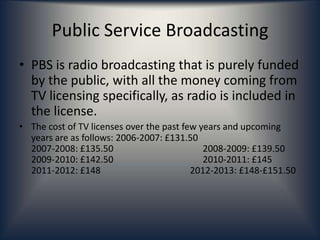
Public Service BroadcastingPBS is radio broadcasting that is purely funded by the public, with all the money coming from TV licensing specifically, as radio is included in the license.The cost of TV licenses over the past few years and upcoming years are as follows: 2006-2007: £131.50
                                     2007-2008: £135.50
                                     2008-2009: £139.50
                                     2009-2010: £142.50
                                     2010-2011: £145
                                     2011-2012: £148
                                     2012-2013: £148-£151.50
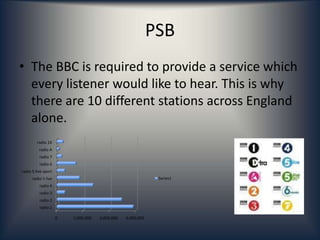
PSBThe BBC is required to provide a service which every listener would like to hear. This is why there are 10 different stations across England alone.
New TechnologyThe internetPodcastsComputers
Non for profitNon for profit radio is also more commonly known as community radio, as it is run by the people who live and work in that community.Example of this are: PGFM, Radio Poppler and Branch FM.
Employment in radioBreakdown of jobs Breakdown of Freelance jobs 

Radio production presentation

  • 1.
  • 2.
    ……The radio industryis undergoing a major change as most media industries have since the introduction of the internet in the 1990’s.The internet has giving people worldwide to listen to radio stations live or podcasts at anytime of the day, anywhere.
  • 3.
    Commercial RadioCommercial radioemploys nearly 10,000 people which is nearly as much as the BBC, but is split up into large groups like GCap Global and smaller companies who own single stations.
  • 4.
    Broadcasting FiguresIn 2009OFCOM reported that over 46 million adults tuned into their favourite radio stations each week. Also figures from RAJAR (Radio Joint Audience Research) show that the number of listeners who own a DAB radio has increased by 13% year on year.More than 17million adults live in a household now with a DAB receiver.
  • 5.
    Public Service BroadcastingPBSis radio broadcasting that is purely funded by the public, with all the money coming from TV licensing specifically, as radio is included in the license.The cost of TV licenses over the past few years and upcoming years are as follows: 2006-2007: £131.50
 2007-2008: £135.50
 2008-2009: £139.50
 2009-2010: £142.50
 2010-2011: £145
 2011-2012: £148
 2012-2013: £148-£151.50
  • 6.
    PSBThe BBC isrequired to provide a service which every listener would like to hear. This is why there are 10 different stations across England alone.
  • 7.
  • 8.
    Non for profitNonfor profit radio is also more commonly known as community radio, as it is run by the people who live and work in that community.Example of this are: PGFM, Radio Poppler and Branch FM.
  • 9.
    Employment in radioBreakdownof jobs Breakdown of Freelance jobs 