
An Update on RA21
Todd Carpenter (NISO)
ALA NISO Update
February 10, 2018
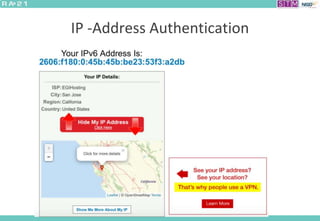
IP -Address Authentication
It worked well in this environment
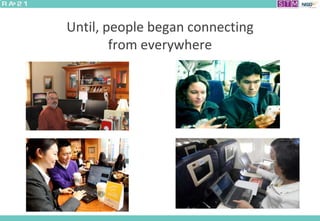
Until, people began connecting
from everywhere
IP Address Authentication
FAIL!!!
Librarians are smart!
Proxy
Server
These solutions worked well
Until they didn’t
Who had their proxy server
shut down when a content
provider notices unusual
activity
from that server?
Credit card processing
Excuse me. To process this payment you need to tell me: What is they
payment processing clearinghouse your bank uses?
Behind the scenes:
Does the user have
access rights?
Yes or No?
Do you have a login?
Yes or No?
Where are you from?
??????
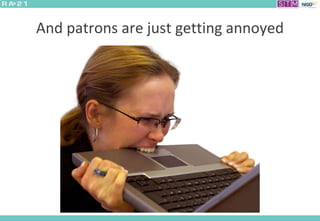
And patrons are just getting annoyed
All this and no data…
Who is using the content libraries acquire?
Are those user’s getting what they need?
Are they achieving their goals?
Successful in their outcomes?
Are they really secure?
Are they really private?
RA21 Principles: Improve User Experience
•From any location on any device
•Beginning from any entrance point
•Ending with the desired content
•With a consistent user interface
•With greater privacy, security and personalization
RA21 Principles: It must be open
•The solution can not be proprietary
•The solution should be (reasonably) easy to
implement
•The solution must be vendor neutral
•Should not create tremendous amounts of new
work, implementation cost, or ongoing
maintenance.
•Should allow for gradual implementation
RA21 Pilots
• Corporate Pilot (Universal Resrource Access “URA”)
• Two Academic Pilots
– Privacy Preserving Persistent WAYF Pilot
– WAYF Cloud Pilot
• All seek to address the User Experience for off-campus access
Privacy Preserving Persistent (P3) WAYF Pilot
•Pilot goals
– To improve current Shibboleth Identity Provider discovery process
• Incorporate additional “WAYF hints” such as email domain and IP address into
federation metadata
• Improve sign-in flow using those WAYF hints via a shared discovery service
• Populate shared discovery service hints from the Service Providers regarding
what Identity Providers are likely to work in an authorization scenario
• Enable cross-provider persistence of WAYF choice using browser local storage
•Pilot participants (confirmed so far)
Project Management
GÉANT
Educational Access Management Federations
Sunet & SWAMiD (Swedish Federation)
The samlbits.org project
eduGAIN
EduServ
Publishers
Elsevier
American Chemical Society
Subscribing institutions
MIT
University of California, Davis
University of Arizona (tbc)
University of Florida (tbc)
University of Denver (tbc)
Service Providers
ProQuest
Ping
LibLynx
Ebsco
Preserving Privacy
Built upon ”SAML-BITS”
technology in production
Technique Challenge
Only domain part of email
address needs to be
transmitted from browser
to publisher platform to
select IDP
Need to define and test a
standardized UI that
makes this clear to users
IdP preference is stored
locally in the browser,
retrieved using centrally
served javascript, not on a
central server
Need to adapt Account
Choose mechanism to
support SAML IdPs vs
OpenID Connect
Authorization Servers
WAYF Cloud Pilot
• Goal
– Seamless Access as close to IP Authentication as possible
– Eliminate steps which users have to repeat at every publisher
– Support for remote access
• Methodology
– Leverage existing organizational systems/protocols for user authentication
– Look to form a potential industry standard for WAYF data exchange
- Data Format
- Modern Interface Specification
– Create an infrastructure for sharing WAYF data amongst publishers. The WAYF Cloud
software
- embrace OpenSource Software development
- easy integration points with service provider platforms
– User Interface - Reference design
What is the WAYF Cloud?
What is it?
• Data Format Definition
• Data Access Interface Specification
• Software Component (Free/Opensource)
What does it do?
• Allows publishers to exchange information
with each other
publisher
platform
publisher
platform
publisher
platform
publisher
platform
publisher
platform
WAYF Cloud
5 Commonly Held Misconceptions About RA21
• https://scholarlykitchen.sspnet.org/2018/02/07/myth-busting-five-commonly-held-misconceptions-ra21/
MYTH 1:
IP AUTHENTICATION IS INHERENTLY
PRIVACY PRESERVING WHILE
FEDERATED AUTHENTICATION
TECHNOLOGIES ARE NOT
BUSTED
MYTH 2:
PROXY SERVERS WORK JUST FINE AS A
SOLUTION FOR OFF-CAMPUS ACCESS
BUSTED
MYTH 3:
RA21 JUST WANTS TO ENABLE
PUBLISHERS TO TRACK USERS ACROSS
EACH OTHER’S PLATFORMS
BUSTED
MYTH 4:
RA21 CREATES YET ANOTHER
USERNAME AND PASSWORD
BUSTED
MYTH 5:
RA21 IS PLACING CONTROL OF USERS’
IDENTITY IN THE HANDS OF
INSTITUTIONS AND NOT THE
INDIVIDUALS THEMSELVES
PLAUSIBLE
MYTH 6:
RA21 SEEKS TO ELIMINATE
IP-BASED ACCESS
CONFIRMED
Want to get involved?
•Visit: https://www.RA21.org
•Mailing lists:
–P3W community list: https://lists.refeds.org/sympa/subscribe/p3w-
community
–WAYF Cloud community list: TBD
•Everyone: Register your interest in participation by emailing:
Julie Wallace: Julia@RA21.org and
Heather Flanigan: Heather@RA21.org
Contact:
Todd Carpenter
Executive Director
National Information Standards Organization (NISO)
tcarpenter@niso.org
@TAC_NISO

RA21: An Update on RA21

  • 1.
    An Update onRA21 Todd Carpenter (NISO) ALA NISO Update February 10, 2018
  • 2.
  • 3.
    It worked wellin this environment
  • 4.
    Until, people beganconnecting from everywhere
  • 5.
  • 6.
  • 7.
  • 8.
    These solutions workedwell Until they didn’t
  • 9.
    Who had theirproxy server shut down when a content provider notices unusual activity from that server?
  • 10.
    Credit card processing Excuseme. To process this payment you need to tell me: What is they payment processing clearinghouse your bank uses?
  • 11.
    Behind the scenes: Doesthe user have access rights? Yes or No? Do you have a login? Yes or No? Where are you from? ??????
  • 12.
    And patrons arejust getting annoyed
  • 13.
    All this andno data… Who is using the content libraries acquire? Are those user’s getting what they need? Are they achieving their goals? Successful in their outcomes? Are they really secure? Are they really private?
  • 15.
    RA21 Principles: ImproveUser Experience •From any location on any device •Beginning from any entrance point •Ending with the desired content •With a consistent user interface •With greater privacy, security and personalization
  • 16.
    RA21 Principles: Itmust be open •The solution can not be proprietary •The solution should be (reasonably) easy to implement •The solution must be vendor neutral •Should not create tremendous amounts of new work, implementation cost, or ongoing maintenance. •Should allow for gradual implementation
  • 17.
    RA21 Pilots • CorporatePilot (Universal Resrource Access “URA”) • Two Academic Pilots – Privacy Preserving Persistent WAYF Pilot – WAYF Cloud Pilot • All seek to address the User Experience for off-campus access
  • 18.
    Privacy Preserving Persistent(P3) WAYF Pilot •Pilot goals – To improve current Shibboleth Identity Provider discovery process • Incorporate additional “WAYF hints” such as email domain and IP address into federation metadata • Improve sign-in flow using those WAYF hints via a shared discovery service • Populate shared discovery service hints from the Service Providers regarding what Identity Providers are likely to work in an authorization scenario • Enable cross-provider persistence of WAYF choice using browser local storage •Pilot participants (confirmed so far) Project Management GÉANT Educational Access Management Federations Sunet & SWAMiD (Swedish Federation) The samlbits.org project eduGAIN EduServ Publishers Elsevier American Chemical Society Subscribing institutions MIT University of California, Davis University of Arizona (tbc) University of Florida (tbc) University of Denver (tbc) Service Providers ProQuest Ping LibLynx Ebsco
  • 19.
    Preserving Privacy Built upon”SAML-BITS” technology in production Technique Challenge Only domain part of email address needs to be transmitted from browser to publisher platform to select IDP Need to define and test a standardized UI that makes this clear to users IdP preference is stored locally in the browser, retrieved using centrally served javascript, not on a central server Need to adapt Account Choose mechanism to support SAML IdPs vs OpenID Connect Authorization Servers
  • 20.
    WAYF Cloud Pilot •Goal – Seamless Access as close to IP Authentication as possible – Eliminate steps which users have to repeat at every publisher – Support for remote access • Methodology – Leverage existing organizational systems/protocols for user authentication – Look to form a potential industry standard for WAYF data exchange - Data Format - Modern Interface Specification – Create an infrastructure for sharing WAYF data amongst publishers. The WAYF Cloud software - embrace OpenSource Software development - easy integration points with service provider platforms – User Interface - Reference design
  • 21.
    What is theWAYF Cloud? What is it? • Data Format Definition • Data Access Interface Specification • Software Component (Free/Opensource) What does it do? • Allows publishers to exchange information with each other publisher platform publisher platform publisher platform publisher platform publisher platform WAYF Cloud
  • 22.
    5 Commonly HeldMisconceptions About RA21 • https://scholarlykitchen.sspnet.org/2018/02/07/myth-busting-five-commonly-held-misconceptions-ra21/
  • 23.
    MYTH 1: IP AUTHENTICATIONIS INHERENTLY PRIVACY PRESERVING WHILE FEDERATED AUTHENTICATION TECHNOLOGIES ARE NOT BUSTED
  • 24.
    MYTH 2: PROXY SERVERSWORK JUST FINE AS A SOLUTION FOR OFF-CAMPUS ACCESS BUSTED
  • 25.
    MYTH 3: RA21 JUSTWANTS TO ENABLE PUBLISHERS TO TRACK USERS ACROSS EACH OTHER’S PLATFORMS BUSTED
  • 26.
    MYTH 4: RA21 CREATESYET ANOTHER USERNAME AND PASSWORD BUSTED
  • 27.
    MYTH 5: RA21 ISPLACING CONTROL OF USERS’ IDENTITY IN THE HANDS OF INSTITUTIONS AND NOT THE INDIVIDUALS THEMSELVES PLAUSIBLE
  • 28.
    MYTH 6: RA21 SEEKSTO ELIMINATE IP-BASED ACCESS CONFIRMED
  • 29.
    Want to getinvolved? •Visit: https://www.RA21.org •Mailing lists: –P3W community list: https://lists.refeds.org/sympa/subscribe/p3w- community –WAYF Cloud community list: TBD •Everyone: Register your interest in participation by emailing: Julie Wallace: Julia@RA21.org and Heather Flanigan: Heather@RA21.org
  • 30.
    Contact: Todd Carpenter Executive Director NationalInformation Standards Organization (NISO) tcarpenter@niso.org @TAC_NISO

Editor's Notes

  • #10 Raise your hand if this happens at least once per year? Oncer per semester? Once per month? Anyone have this happen every week?
  • #18 So what are the pilots you ask? We have a Corporate Pilot as well as two academic pilots: The P3W pilot - Privacy Preserving Persistent WAYF Pilot - quite the tongue twister And the WAYF Cloud pilot All seek to address the experience of access outside an institute and to streamline the UX – the user experience – in order to have a similar experience throughout – users do not like to be confronted again and again with new interfaces to master. So following this bit of context for an introduction, we can now go into a bit of detail on the pilots themselves.
  • #19 So onto the first of the Academic pilots: the Privacy Preserving Persistent (P3) WAYF Pilot. There are several important things we are trying to investigate in this pilot: All pilots are addressing the UX in one way or another – If we don’t streamline the UX for authentication, we won’t get endusers to adopt the solution We want to make sure the identity provider discovery is consistent; we have a multiple of science providers participating – the idea is if an enduser selects your identity with one; they won’t have to repeat for the others; but this sharing of information creates a privacy problem, thus we aim for cross-provider persistence of WAYF choice using browser local storage. There is a rather large set of folks collaborating on this; originally two pilots combined. It is managed by Geant, and has participation of several access management Federations, Sunet, EduServ are two examples, as well as publishers and subscribing institutions MIT UC Davis, and many well known service providers: ProQuest, LibLynx, Ebsco
  • #20 So to recap – the P3WAYF pilot would like to make clear to users they only require the domain part of their email (some UX challenges there, but we will solve it), and that their IdP preference is stored locally in the browser, retrieved using centrally served javascript, not on central server.
  • #21 This pilot is actually similar to the PW3 Pilot, but the implementation is different. The goals are similar to the rest of the pilots: Seamless Access as close to IP Authentication as possible - go from 6 clicks to zero as much as possible Eliminate steps which users have to repeat for every publisher Support for remote access RA21 are hoping to create a shared infrastructure for sharing WAYF data amongst publishers. We hope to test out – if we build a shared open infrastructure – how would governance and data formats work?
  • #22 We have built an infrastructure not owned by anybody. The infrastructure will hold a hash key for each user which is mapped through cookies on the users device so users do not have to repeat, and the information gets carried which will allow publishers to exchange information with each other and get close to the IP authentication experience. So let look at a use case:
  • #30 Thank you for your kind attention. We would love to have you involved with any of the pilots. While we currently have a lot of active leadership and participation from the US and UK, we are actively seeking greater involvement from Europe and Australasia. There are a couple of ways you can register your interest: Through our mailing list, or emailing our project leaders directly. We are also happy to answer any questions off line, or connect with me directly Ann Gabriel a.gabriel@Elsevier.com