Supersedes and replaces products like Evernote
Introduction to QuickBrain
What it will do:
QuickBrain platform is designed to make the user quicker, smarter, more effective, and
more creative in everything they do. It does this by providing usng super-rapid ability to
create, capture, organize, reorganize work with, and share all of the information in the
users' life at lightning speed. The platform will also enhance the informational power of
its users by providing abity to buy from our ‘Bran Store’ newly-emerging programmable
hardware devices such as the Jibo family robot; the Meta augmented reality device; or
the Muse brainwave biofeedback headband. We will augment the power and usability of
these devices for Chinese people by adding our own unique programming.
As a personal knowledge management platform QuickBrain will powerfully support its’
users current work, information management needs, and projects. It will also serve as
a lifetime repository providing instant access to the users accumulated wealth of
personal, educational, professional, and business information. Powerful and unique
methods for sharing and collaborating – including integration with WeChat and similar
western world mobile systems- will also be included.
QuickBrain will have strong presence in both China and the English-speaking areas of
the world, as our international team bridges both worlds.
Who will use it:
Our initial users are expected to be largely professionals, students, and others with
substantial need to capture and organize significant amounts of information. But our
long-term target users are the literally hundreds of millions of people who need a quick,
easy way to archive, organize, manipulate, and share all of their information across all
platforms including notebooks, tablet, and phones. The need - and market - for this
kind of system is already proven by Evernote, which has 100 million users, and by
OneNote with tens of millions of users, and to a lesser extent by Google Apps, which
has millions of users.
How it will be different:
Programs like Evernote and OneNote claim to be able to serve users as frameworks for
managing their lives. They also claim to serve users as lifetime information
repositories for storing, accessing, and sharing all of the users personal, educational,
professional, and business-related information. But they cannot do it because they
have little or no significant ability to quickly hiearchialize, organize, and reorganize the
data. However, QuickBrain will provide what they cannot; The ability to super-rapidly
create, capture, organize, reorganize, work with, and share all the information in the
users' life and work at lightning speed.
QuickBote will differ from all of these forbearers by maintaining a simple user interface
but incorporating far more convenience and super-rapid organizing power lacking in the
other products.
A number of key areas in which QuickBrain will greatly exceed previous products like
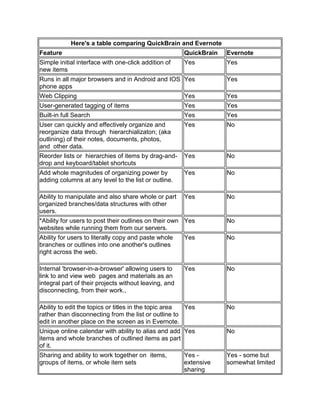
Evernote are delineated in the accompanying chart.
Why we can create this product:
To begin with, we should say - however immodest it may sound - that our CEO and
chief designer, Eric Sommer, is qualified to supervise this process because he is one of
a handful of people on Earth who have had primary responsibility for conceptualizing
and designing, in detail, a sophisticated personal knowledge management system akin
to but more powerful than products like Evernote and OneNote.
In his case, it was 'ADM: The Knowledge Management Desktop.', which, though not
effectively marketed, was arguably one of the most powerful and comprehensive
programs ever built for personal knowledge management on the local machine, It
includes internal management of all text and images, all data types; all file types; and all
web-based connections within a strong listing and outlining framework with appended
pages for rapidly organizing and reorganizing the information.
QuickBrain is not an API for ADM; nor is it just a copy of ADM to the web. ADM was
designed, well before Evernote, in the bygone age of desktop apps and its interface is
far too complex for the ordinary users What's more, our CEO has done considerable
research and new conceptualization since ADM development stopped about 2008. He
has, in fact, been involved with personal knowledge management as a user and
developer for several decades.
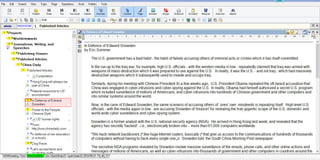
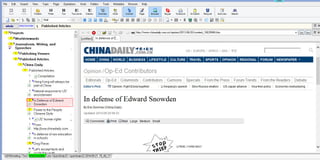
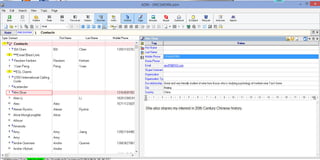
Just for fun we have included some screen shots of the old ADM program in this pdf.
Bear in mind that QuickBrain will have a simple interface and look nothing like these
screen shots.
Where will QuickBrain be used:
We anticipate world-wide use of QuickBrain and will ultimately make it available in - and
localized for - a substantial number of countries and language communities. Initially,
our focus is on China, where we have significant connections, and on countries where
English is widely used, where we also have connections.
Who has endorsed this project:
The QuickBrain approach to online information management was previously called
'ChinaDesk' and was endorsed by Dr. Ni Guangnam, the 'father' of Chinese computing
(cofounder and first CTO of Lenovo and co-inventor of the Chinese character keyboard
input system).
What is the current status of the QuickBrain project?
We are currently coding and expect to begin pre-Alpha or Alpha version testing with
selected outside users within a month or so.
We have mapped out relatively detailed specifications and plans for features, functions,
and interface which will take us through to version 1.5 or 2.0. We are seeking
additional programmers, designers, investors, and others to join our startup team.
What is the Business Model:
This is a tentative business model, subject to change through our experience and
research. The basic version of QuickBrain will be free forever. The envisioned revenue
sources include:
1. Our user-base will have access to our ‘Brain Store’ which will sell
newly-emerging programmable hardware devices such as the Jibo family robot;
the Meta augmented reality device; or the Muse brainwave biofeedback
headband. We will augment the power and usability of these devices by adding
our own unique programming. Our programming will be sold separately to
individuals who already own the devices. But it will be offered as a valuable
‘free bonus’ to those who buy the devices form us, thereby differentiating our
offerings from any others who may sell the devices in China. Experts believe
the market for such devices will explode worldwide over the next few years.
2. Our BrainStore will also sell both free and payment based apps. One of the first
apps will be a spreadsheet app which will enable users to incorporate
spreadsheets into their project outlines, an organizing capability lacking in all
competing products including Google Apps. We will definitely also have an API
and encourage third-party developers to contribute to the app store.
3. The basic QuickBrain version will be free but a premium version with additional
features and additional storage space which will cost just $5 per month per user
or $30 per year.
4. Specialized applications building on QuickBrains unique organizing and
information sharing capabilities can be built and marketed, including ones in the
education, business, and research and scientific fields.
Who is on our development team:
CEO and Chief-Designer: Eric Sommer is responsible for overall coordination of our
project and for the overall design and delineating the user functions for QuickBrain. He
is a former university teacher, software developer, social organizer, business person,
and social science theorist, originally from Canada. He was previously the chief
designer and leader of the small team that built ADM: The Knowledge Management
desktop. He is also a widely-published international journalist writing on social,
political, and information technology subjects in media such as ChinaDaily, China’s
leading English language newspaper; Russia Today global English language news
service; and Canadian Global Research news service. He has lived in China for the
past 12 years.
Front-end Development Manager: Jianxin Liu is responsible for front-end
development of QuickBrain. He holds a Master’s Degree in computer application
technology; has worked in both web development and software engineering uitilizing a
wide range of computer languages and frameworks; and has done research in system
integration and virtual reality systems at a key government lab in China. His most
recent position was in the Chinese headquarters of the giant U.S.-based online systems
security provider Symantec, and he has considerable expertise in the vital field of online
security. Jianxin is also fully English-Chinese bilingual and his current working
language is English. His background also includes work in robotics, and he looks
forward to also helping to custom program the hardware devices which will be sold from
the QuickBrain 'Brain Store'.
Back-end Development Manager: Li Bin is responsible for back-end development of
QuickBrain. He holds a Masters Degree in computer application technology and has
worked with a wide range of operating systems, hardware platforms, programming
languages, communication protocols, and databases. He also has experience in
working with storage systems and with cloud computing. His most recent position was
in the Chinese headquarters of the giant U.S.-based online systems security provider
Symantec, and he has considerable expertise in the vital field of online security. He
has good command of both oral and written English and his current working language is
English.
Hardware Programming Manager: Linjiarng Bao is responsible for managing the
custom programming of the hardware devices we will sell from the QuickBrain
'Brainstore'. He has a special interest in developing custom code for robotic devices
such as the Jibo family robot. He holds a Master’s Degree in software engineering and
is familiar with a wide range of operating systems, programming languages, algorithms,
and internet and web programming using html and related communication protocols.
Among his previous achievements is the development for use in Chinese power grids of
a power grid data management system and an expert system for economic operation of
power grids. His most recent position was in the Chinese headquarters of the giant
U.S.-based online systems security provider Symantec, where has has served as a
team leader and senior programmer. He has considerable expertise in the vital field of
online security. He is Chinese-English bilingual and his current working language is
English.
Here's a table comparing QuickBrain and Evernote
Feature QuickBrain Evernote
Simple initial interface with one-click addition of
new items
Yes Yes
Runs in all major browsers and in Android and IOS
phone apps
Yes Yes
Web Clipping Yes Yes
User-generated tagging of items Yes Yes
Built-in full Search Yes Yes
User can quickly and effectively organize and
reorganize data through hierarchializaton; (aka
outlining) of their notes, documents, photos,
and other data.
Yes No
Reorder lists or hierarchies of items by drag-and-
drop and keyboard/tablet shortcuts
Yes No
Add whole magnitudes of organizing power by
adding columns at any level to the list or outline.
Yes No
Ability to manipulate and also share whole or part
organized branches/data structures with other
users.
Yes No
*Ability for users to post their outlines on their own
websites while running them from our servers.
Yes No
Ability for users to literally copy and paste whole
branches or outlines into one another's outlines
right across the web.
Yes No
Internal 'browser-in-a-browser' allowing users to
link to and view web pages and materials as an
integral part of their projects without leaving, and
disconnecting, from their work.,
Yes No
Ability to edit the topics or titles in the topic area
rather than disconnecting from the list or outline to
edit in another place on the screen as in Evernote.
Yes No
Unique online calendar with ability to alias and add
items and whole branches of outlined items as part
of it.
Yes No
Sharing and ability to work together on items,
groups of items, or whole item sets
Yes -
extensive
sharing
Yes - some but
somewhat limited
Dramatically upgrade your ability to
manage/organize all of your educational,
professional, business, and personal activities
Yes No - it's claimed
but limited
management tools
make it impossible.
QuickBrainIntroduction

QuickBrainIntroduction

  • 1.
    Supersedes and replacesproducts like Evernote Introduction to QuickBrain What it will do: QuickBrain platform is designed to make the user quicker, smarter, more effective, and more creative in everything they do. It does this by providing usng super-rapid ability to create, capture, organize, reorganize work with, and share all of the information in the users' life at lightning speed. The platform will also enhance the informational power of its users by providing abity to buy from our ‘Bran Store’ newly-emerging programmable hardware devices such as the Jibo family robot; the Meta augmented reality device; or the Muse brainwave biofeedback headband. We will augment the power and usability of these devices for Chinese people by adding our own unique programming. As a personal knowledge management platform QuickBrain will powerfully support its’ users current work, information management needs, and projects. It will also serve as a lifetime repository providing instant access to the users accumulated wealth of personal, educational, professional, and business information. Powerful and unique methods for sharing and collaborating – including integration with WeChat and similar western world mobile systems- will also be included. QuickBrain will have strong presence in both China and the English-speaking areas of the world, as our international team bridges both worlds. Who will use it: Our initial users are expected to be largely professionals, students, and others with substantial need to capture and organize significant amounts of information. But our long-term target users are the literally hundreds of millions of people who need a quick, easy way to archive, organize, manipulate, and share all of their information across all platforms including notebooks, tablet, and phones. The need - and market - for this kind of system is already proven by Evernote, which has 100 million users, and by OneNote with tens of millions of users, and to a lesser extent by Google Apps, which has millions of users. How it will be different: Programs like Evernote and OneNote claim to be able to serve users as frameworks for managing their lives. They also claim to serve users as lifetime information repositories for storing, accessing, and sharing all of the users personal, educational, professional, and business-related information. But they cannot do it because they have little or no significant ability to quickly hiearchialize, organize, and reorganize the data. However, QuickBrain will provide what they cannot; The ability to super-rapidly create, capture, organize, reorganize, work with, and share all the information in the users' life and work at lightning speed.
  • 2.
    QuickBote will differfrom all of these forbearers by maintaining a simple user interface but incorporating far more convenience and super-rapid organizing power lacking in the other products. A number of key areas in which QuickBrain will greatly exceed previous products like Evernote are delineated in the accompanying chart. Why we can create this product: To begin with, we should say - however immodest it may sound - that our CEO and chief designer, Eric Sommer, is qualified to supervise this process because he is one of a handful of people on Earth who have had primary responsibility for conceptualizing and designing, in detail, a sophisticated personal knowledge management system akin to but more powerful than products like Evernote and OneNote. In his case, it was 'ADM: The Knowledge Management Desktop.', which, though not effectively marketed, was arguably one of the most powerful and comprehensive programs ever built for personal knowledge management on the local machine, It includes internal management of all text and images, all data types; all file types; and all web-based connections within a strong listing and outlining framework with appended pages for rapidly organizing and reorganizing the information. QuickBrain is not an API for ADM; nor is it just a copy of ADM to the web. ADM was designed, well before Evernote, in the bygone age of desktop apps and its interface is far too complex for the ordinary users What's more, our CEO has done considerable research and new conceptualization since ADM development stopped about 2008. He has, in fact, been involved with personal knowledge management as a user and developer for several decades. Just for fun we have included some screen shots of the old ADM program in this pdf. Bear in mind that QuickBrain will have a simple interface and look nothing like these screen shots. Where will QuickBrain be used: We anticipate world-wide use of QuickBrain and will ultimately make it available in - and localized for - a substantial number of countries and language communities. Initially, our focus is on China, where we have significant connections, and on countries where English is widely used, where we also have connections. Who has endorsed this project: The QuickBrain approach to online information management was previously called 'ChinaDesk' and was endorsed by Dr. Ni Guangnam, the 'father' of Chinese computing (cofounder and first CTO of Lenovo and co-inventor of the Chinese character keyboard input system).
  • 3.
    What is thecurrent status of the QuickBrain project? We are currently coding and expect to begin pre-Alpha or Alpha version testing with selected outside users within a month or so. We have mapped out relatively detailed specifications and plans for features, functions, and interface which will take us through to version 1.5 or 2.0. We are seeking additional programmers, designers, investors, and others to join our startup team. What is the Business Model: This is a tentative business model, subject to change through our experience and research. The basic version of QuickBrain will be free forever. The envisioned revenue sources include: 1. Our user-base will have access to our ‘Brain Store’ which will sell newly-emerging programmable hardware devices such as the Jibo family robot; the Meta augmented reality device; or the Muse brainwave biofeedback headband. We will augment the power and usability of these devices by adding our own unique programming. Our programming will be sold separately to individuals who already own the devices. But it will be offered as a valuable ‘free bonus’ to those who buy the devices form us, thereby differentiating our offerings from any others who may sell the devices in China. Experts believe the market for such devices will explode worldwide over the next few years. 2. Our BrainStore will also sell both free and payment based apps. One of the first apps will be a spreadsheet app which will enable users to incorporate spreadsheets into their project outlines, an organizing capability lacking in all competing products including Google Apps. We will definitely also have an API and encourage third-party developers to contribute to the app store. 3. The basic QuickBrain version will be free but a premium version with additional features and additional storage space which will cost just $5 per month per user or $30 per year. 4. Specialized applications building on QuickBrains unique organizing and information sharing capabilities can be built and marketed, including ones in the education, business, and research and scientific fields. Who is on our development team: CEO and Chief-Designer: Eric Sommer is responsible for overall coordination of our project and for the overall design and delineating the user functions for QuickBrain. He is a former university teacher, software developer, social organizer, business person,
  • 4.
    and social sciencetheorist, originally from Canada. He was previously the chief designer and leader of the small team that built ADM: The Knowledge Management desktop. He is also a widely-published international journalist writing on social, political, and information technology subjects in media such as ChinaDaily, China’s leading English language newspaper; Russia Today global English language news service; and Canadian Global Research news service. He has lived in China for the past 12 years. Front-end Development Manager: Jianxin Liu is responsible for front-end development of QuickBrain. He holds a Master’s Degree in computer application technology; has worked in both web development and software engineering uitilizing a wide range of computer languages and frameworks; and has done research in system integration and virtual reality systems at a key government lab in China. His most recent position was in the Chinese headquarters of the giant U.S.-based online systems security provider Symantec, and he has considerable expertise in the vital field of online security. Jianxin is also fully English-Chinese bilingual and his current working language is English. His background also includes work in robotics, and he looks forward to also helping to custom program the hardware devices which will be sold from the QuickBrain 'Brain Store'. Back-end Development Manager: Li Bin is responsible for back-end development of QuickBrain. He holds a Masters Degree in computer application technology and has worked with a wide range of operating systems, hardware platforms, programming languages, communication protocols, and databases. He also has experience in working with storage systems and with cloud computing. His most recent position was in the Chinese headquarters of the giant U.S.-based online systems security provider Symantec, and he has considerable expertise in the vital field of online security. He has good command of both oral and written English and his current working language is English. Hardware Programming Manager: Linjiarng Bao is responsible for managing the custom programming of the hardware devices we will sell from the QuickBrain 'Brainstore'. He has a special interest in developing custom code for robotic devices such as the Jibo family robot. He holds a Master’s Degree in software engineering and is familiar with a wide range of operating systems, programming languages, algorithms, and internet and web programming using html and related communication protocols. Among his previous achievements is the development for use in Chinese power grids of a power grid data management system and an expert system for economic operation of power grids. His most recent position was in the Chinese headquarters of the giant U.S.-based online systems security provider Symantec, where has has served as a team leader and senior programmer. He has considerable expertise in the vital field of online security. He is Chinese-English bilingual and his current working language is English.
  • 6.
    Here's a tablecomparing QuickBrain and Evernote Feature QuickBrain Evernote Simple initial interface with one-click addition of new items Yes Yes Runs in all major browsers and in Android and IOS phone apps Yes Yes Web Clipping Yes Yes User-generated tagging of items Yes Yes Built-in full Search Yes Yes User can quickly and effectively organize and reorganize data through hierarchializaton; (aka outlining) of their notes, documents, photos, and other data. Yes No Reorder lists or hierarchies of items by drag-and- drop and keyboard/tablet shortcuts Yes No Add whole magnitudes of organizing power by adding columns at any level to the list or outline. Yes No Ability to manipulate and also share whole or part organized branches/data structures with other users. Yes No *Ability for users to post their outlines on their own websites while running them from our servers. Yes No Ability for users to literally copy and paste whole branches or outlines into one another's outlines right across the web. Yes No Internal 'browser-in-a-browser' allowing users to link to and view web pages and materials as an integral part of their projects without leaving, and disconnecting, from their work., Yes No Ability to edit the topics or titles in the topic area rather than disconnecting from the list or outline to edit in another place on the screen as in Evernote. Yes No Unique online calendar with ability to alias and add items and whole branches of outlined items as part of it. Yes No Sharing and ability to work together on items, groups of items, or whole item sets Yes - extensive sharing Yes - some but somewhat limited
  • 7.
    Dramatically upgrade yourability to manage/organize all of your educational, professional, business, and personal activities Yes No - it's claimed but limited management tools make it impossible.