In what ways does your media
 product use, develop or challenge
forms and conventions of real media
            products?
My media product does not develop or
 challenge the forms and conventions of a
 real media product. The product follows
 these conventions in order to be at a
 professional standard.
For example, like most of the
        documentaries I have
analysed, before the construction of
     my own product, it is single
  stranded. This means it has only
   one narrative and is simple to
              follow.
Interviews

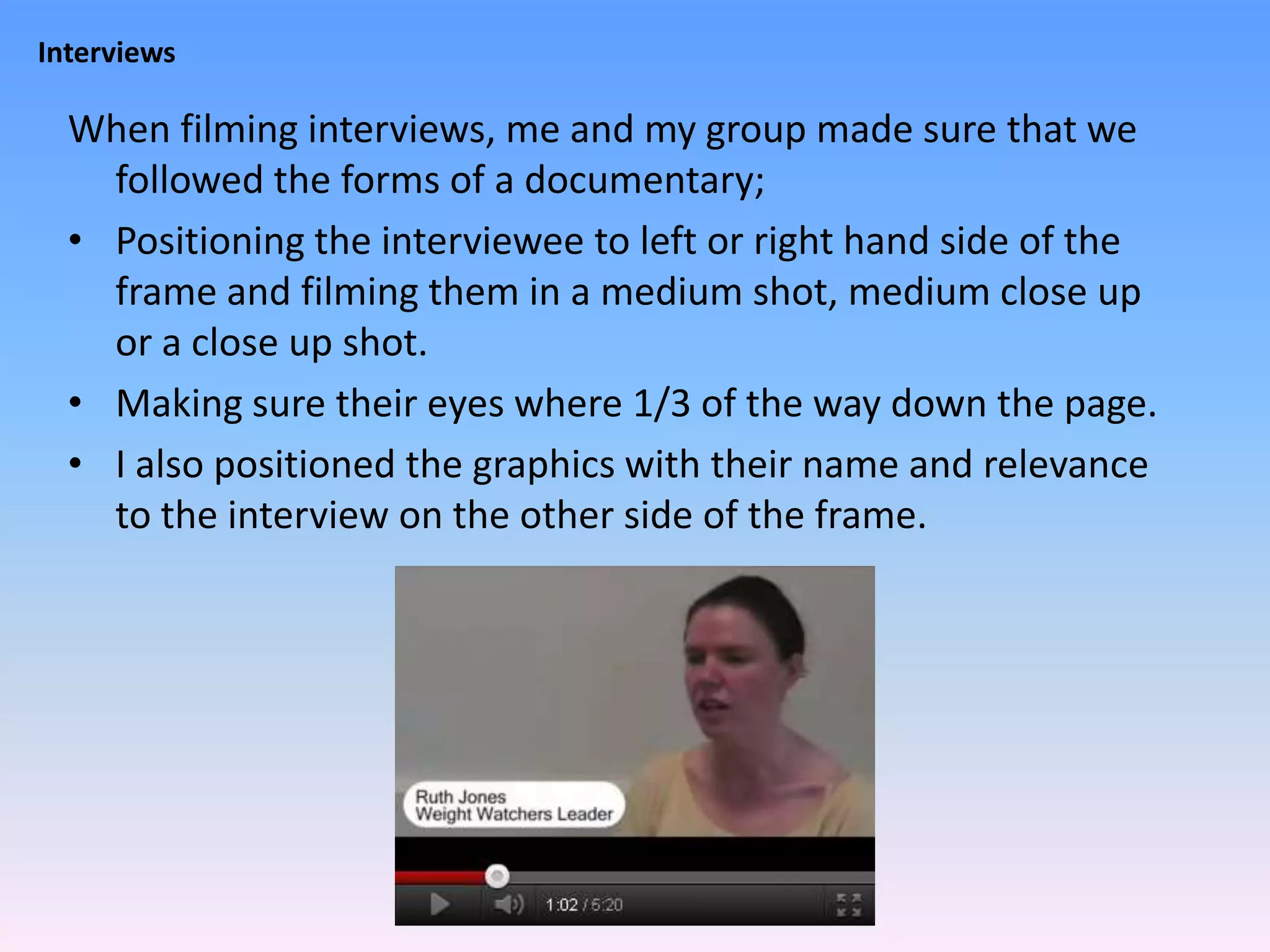
  When filming interviews, me and my group made sure that we
    followed the forms of a documentary;
  • Positioning the interviewee to left or right hand side of the
    frame and filming them in a medium shot, medium close up
    or a close up shot.
  • Making sure their eyes where 1/3 of the way down the page.
  • I also positioned the graphics with their name and relevance
    to the interview on the other side of the frame.
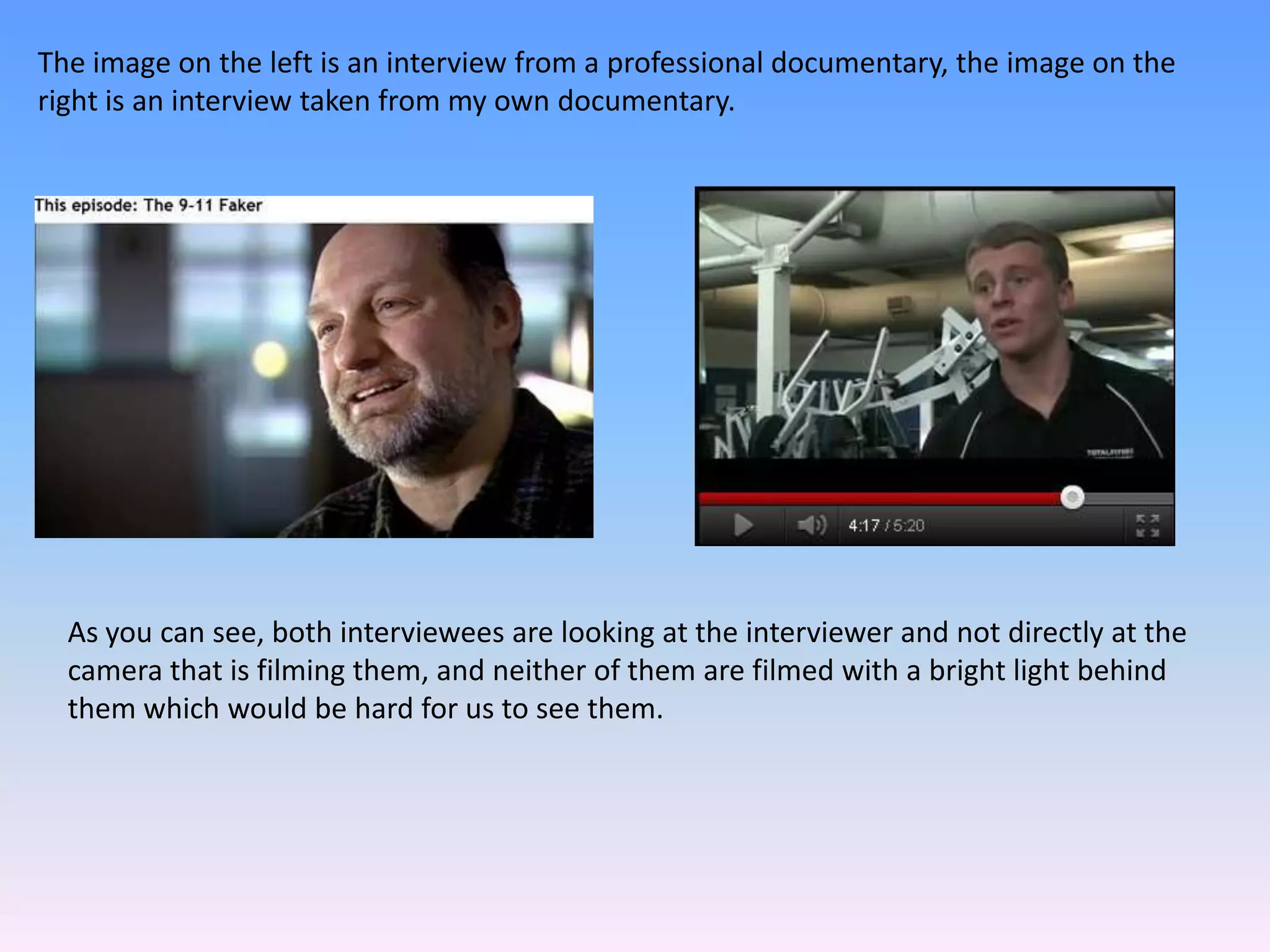
The image on the left is an interview from a professional documentary, the image on the
right is an interview taken from my own documentary.


  As you can see, both interviewees are looking at the interviewer and not directly at the
  camera that is filming them, and neither of them are filmed with a bright light behind
  them which would be hard for us to see them.
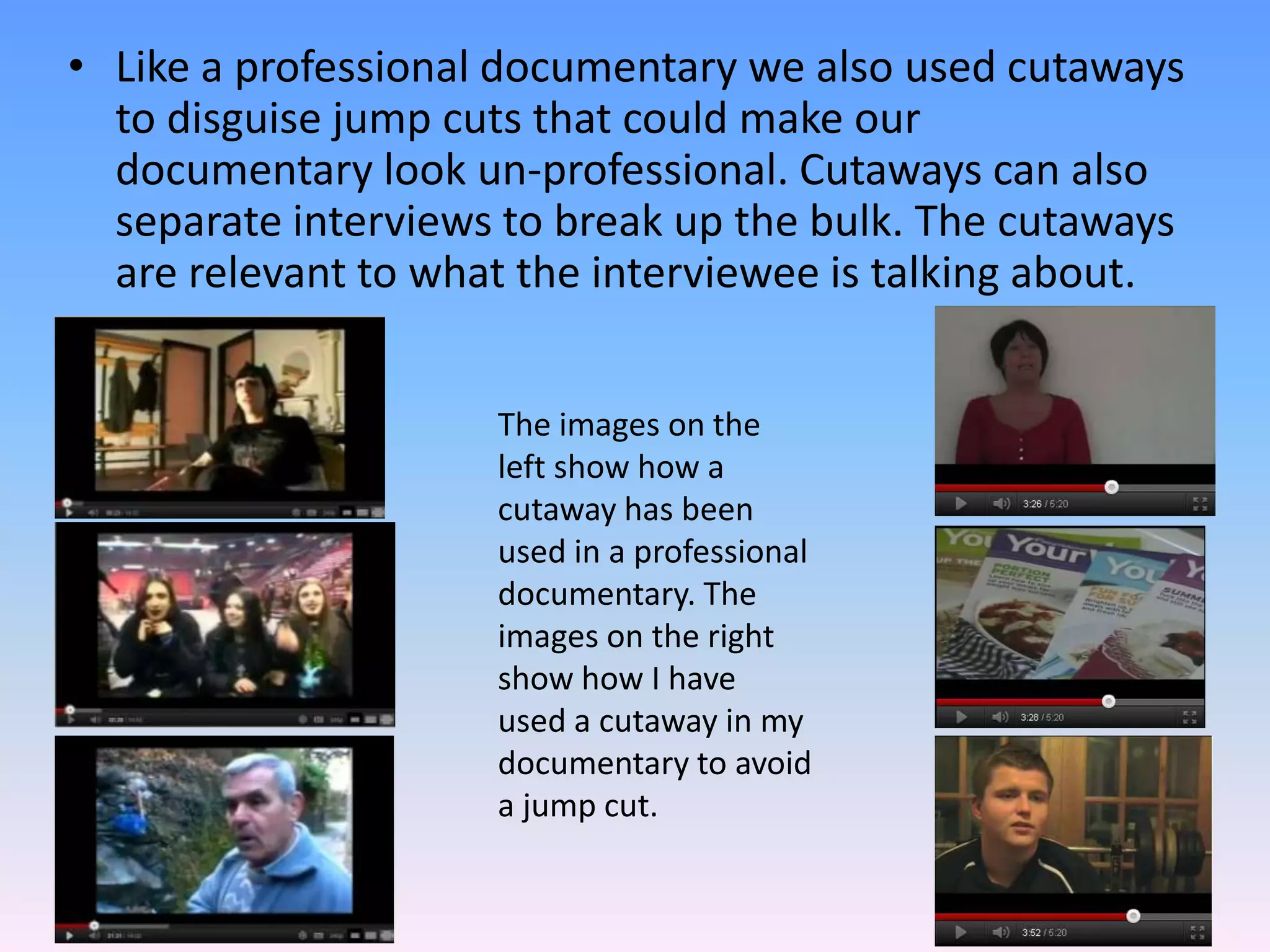
• Like a professional documentary we also used cutaways
  to disguise jump cuts that could make our
  documentary look un-professional. Cutaways can also
  separate interviews to break up the bulk. The cutaways
  are relevant to what the interviewee is talking about.


                     The images on the
                     left show how a
                     cutaway has been
                     used in a professional
                     documentary. The
                     images on the right
                     show how I have
                     used a cutaway in my
                     documentary to avoid
                     a jump cut.
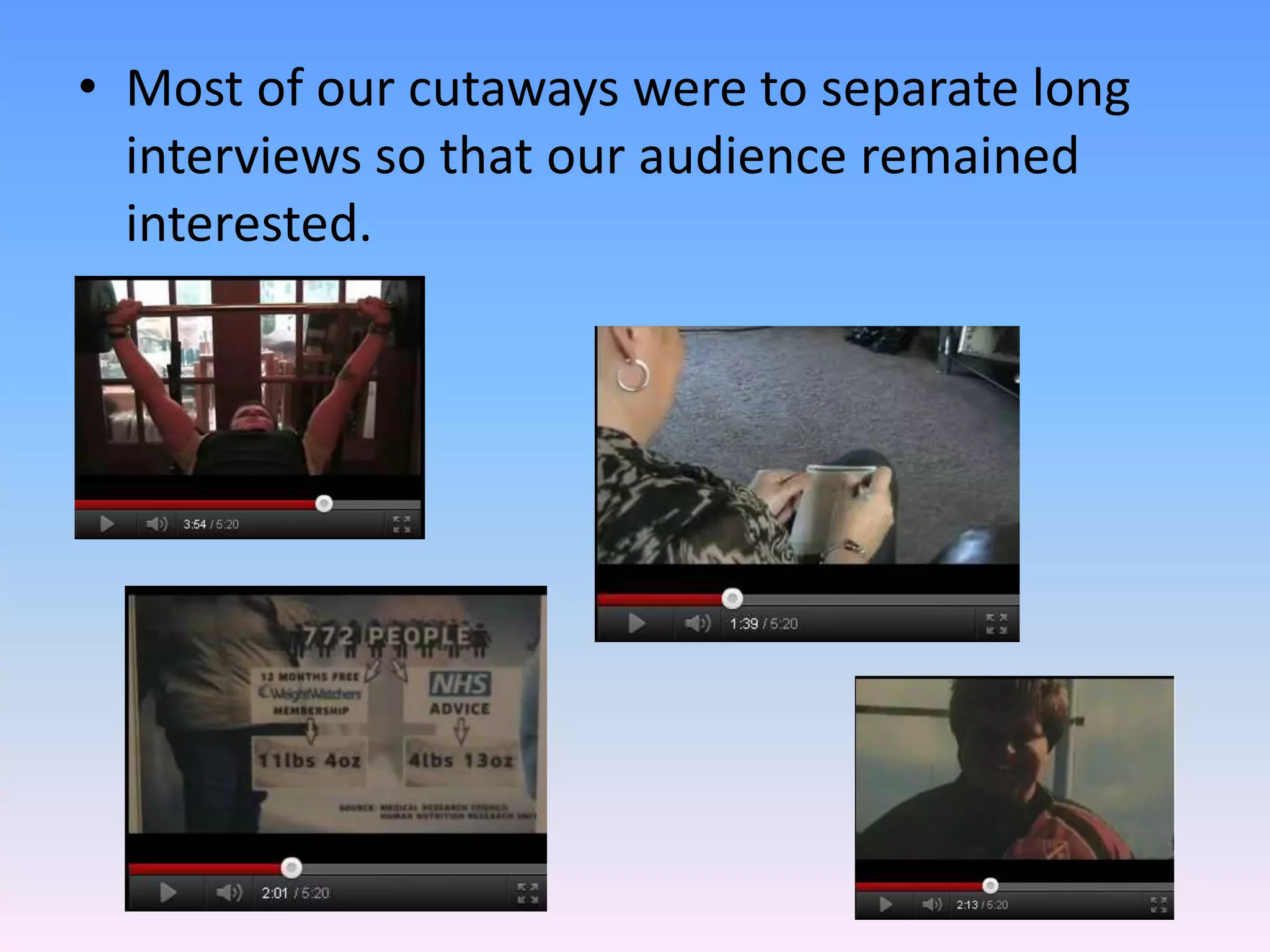
• Most of our cutaways were to separate long
  interviews so that our audience remained
  interested.
Editing


  Cut was the most common edit me and my
    group used when editing our
    documentary, we used cut to take out the
    questions from our interviews like
    professional products. The viewer could not
    see this edit unless it was used purposely for
    example, a montage effect.


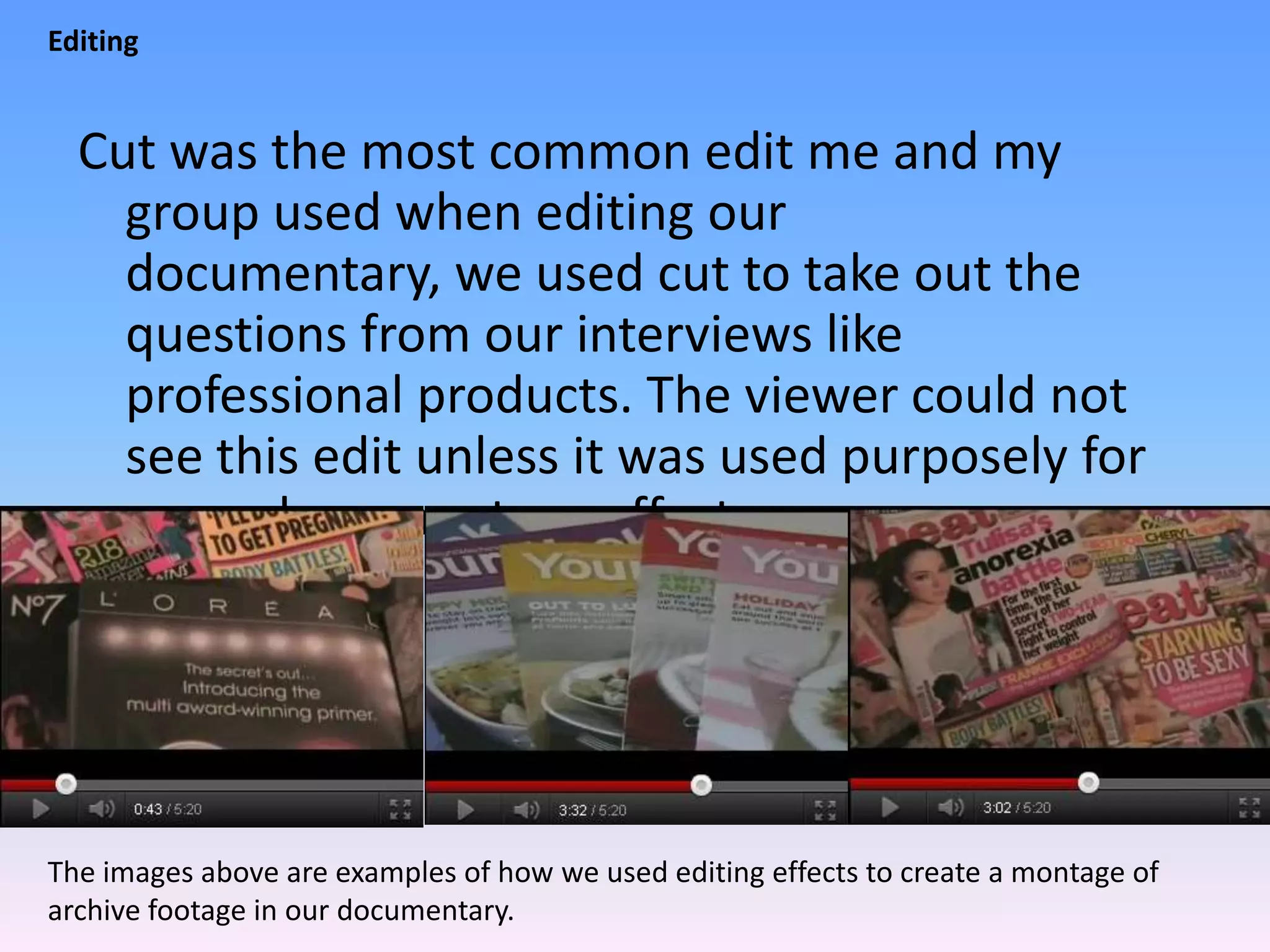
The images above are examples of how we used editing effects to create a montage of
archive footage in our documentary.
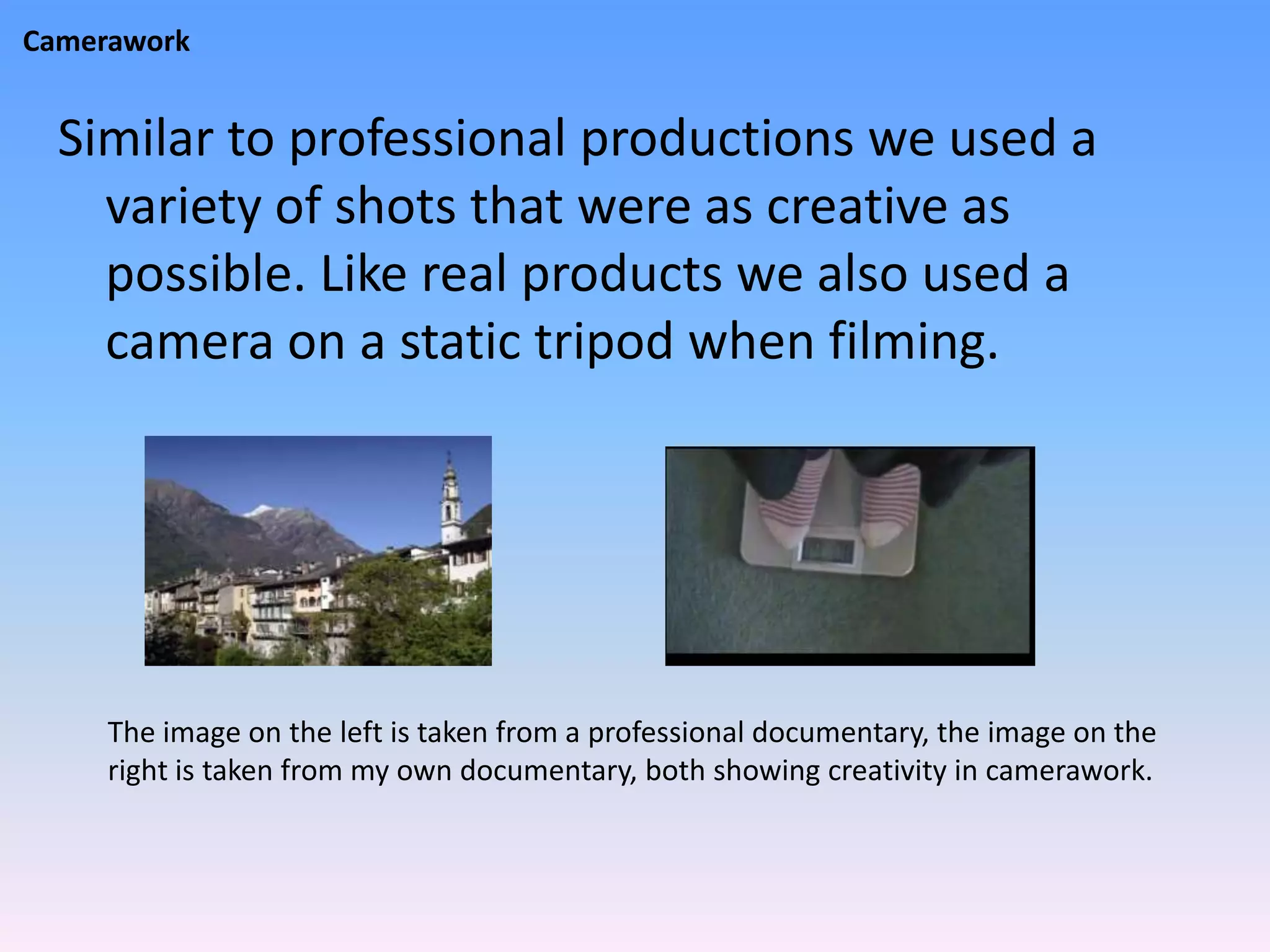
Camerawork


  Similar to professional productions we used a
    variety of shots that were as creative as
    possible. Like real products we also used a
    camera on a static tripod when filming.


     The image on the left is taken from a professional documentary, the image on the
     right is taken from my own documentary, both showing creativity in camerawork.
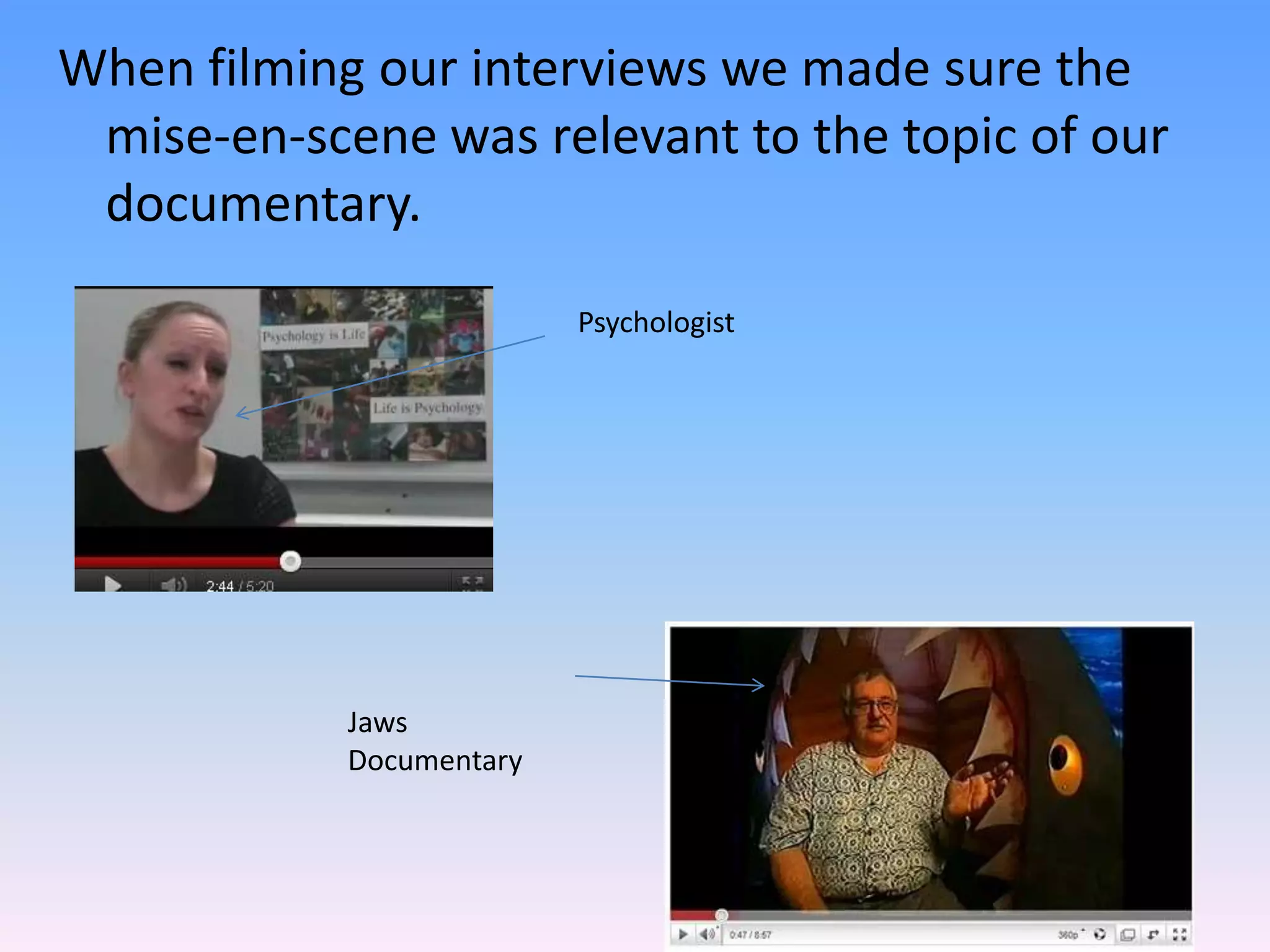
When filming our interviews we made sure the
 mise-en-scene was relevant to the topic of our
 documentary.
                          Psychologist


            Jaws
            Documentary
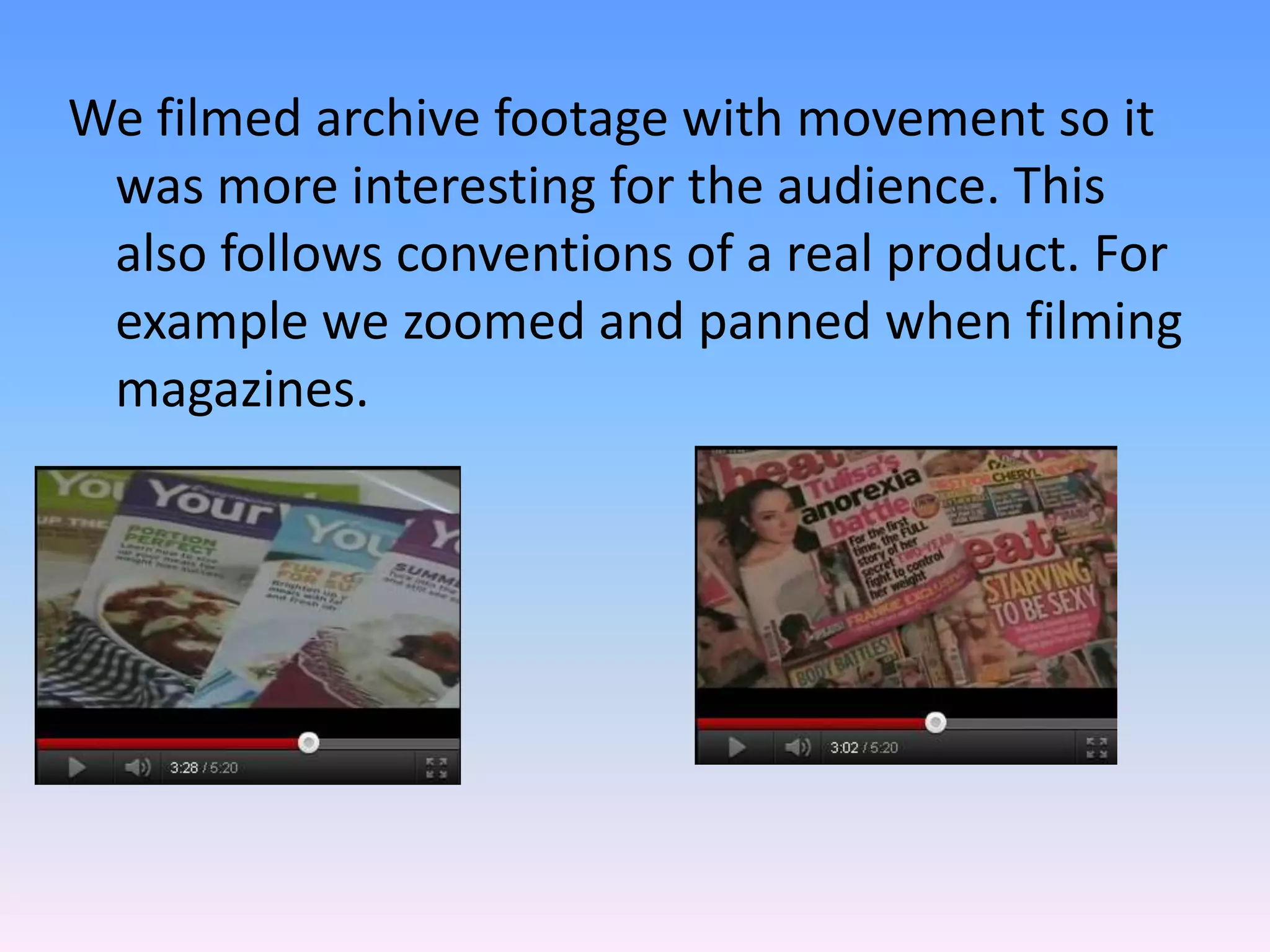
We filmed archive footage with movement so it
 was more interesting for the audience. This
 also follows conventions of a real product. For
 example we zoomed and panned when filming
 magazines.
My documentary also included the following
 conventions of a real product;

• It contained a voiceover which was standard
  English, which was clear and understandable and
  spoke with a calm tone like that in a professional
  documentary which held the narrative together.
• A relevant music bed which did not interfere with
  any dialogue in our documentary.
• Correct sound levels
• Used a variety of relevant material in the
  documentary.
Overall, these examples show how I have
 followed the forms and conventions of a real
 media product to produce a professional
 standard of work in my documentary I
 produced.
Print Advert
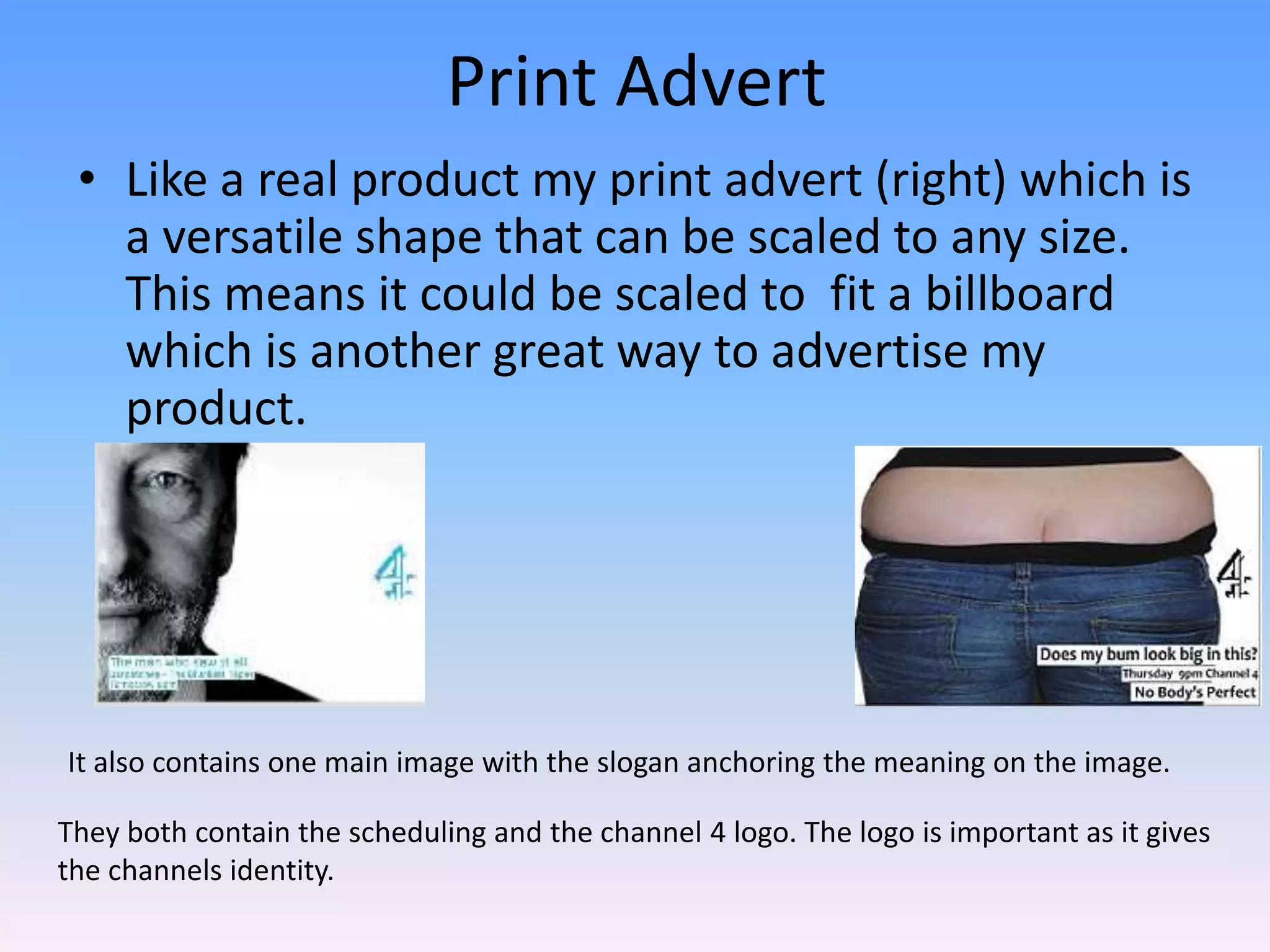
 • Like a real product my print advert (right) which is
   a versatile shape that can be scaled to any size.
   This means it could be scaled to fit a billboard
   which is another great way to advertise my
   product.


It also contains one main image with the slogan anchoring the meaning on the image.

They both contain the scheduling and the channel 4 logo. The logo is important as it gives
the channels identity.
Radio Advert
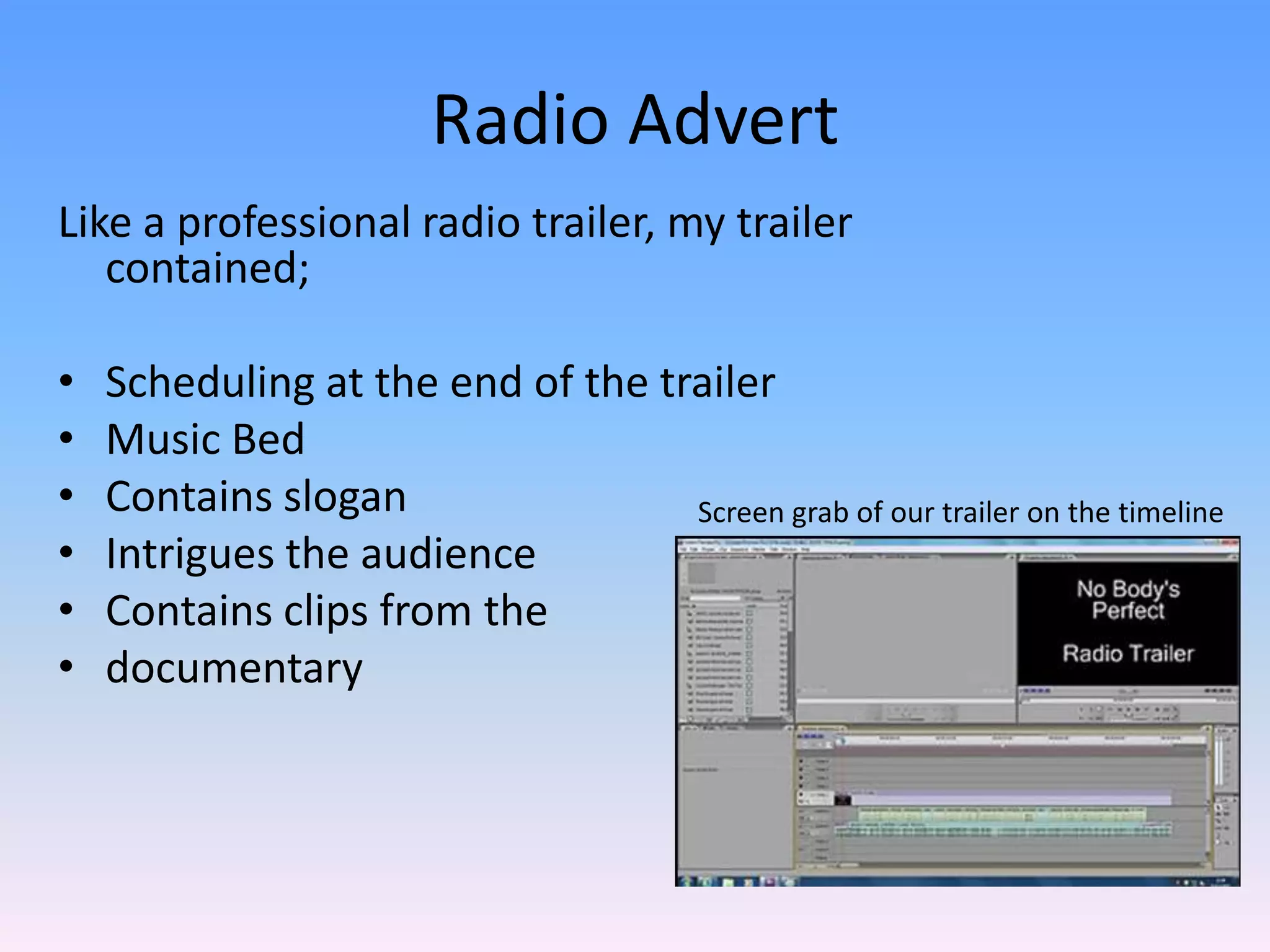
Like a professional radio trailer, my trailer
   contained;

•   Scheduling at the end of the trailer
•   Music Bed
•   Contains slogan                Screen grab of our trailer on the timeline
•   Intrigues the audience
•   Contains clips from the
•   documentary
Overall this shows how I have followed the
  codes and conventions of a professional
  product. I have referred back to the
  conventions throughout the production of my
  media products.
By doing this I feel that my documentary and
  ancillary texts are up to a professional
  standard.

Question 1

  • 1.
    In what waysdoes your media product use, develop or challenge forms and conventions of real media products?
  • 2.
    My media productdoes not develop or challenge the forms and conventions of a real media product. The product follows these conventions in order to be at a professional standard.
  • 3.
    For example, likemost of the documentaries I have analysed, before the construction of my own product, it is single stranded. This means it has only one narrative and is simple to follow.
  • 4.
    Interviews Whenfilming interviews, me and my group made sure that we followed the forms of a documentary; • Positioning the interviewee to left or right hand side of the frame and filming them in a medium shot, medium close up or a close up shot. • Making sure their eyes where 1/3 of the way down the page. • I also positioned the graphics with their name and relevance to the interview on the other side of the frame.
  • 5.
    The image onthe left is an interview from a professional documentary, the image on the right is an interview taken from my own documentary. As you can see, both interviewees are looking at the interviewer and not directly at the camera that is filming them, and neither of them are filmed with a bright light behind them which would be hard for us to see them.
  • 6.
    • Like aprofessional documentary we also used cutaways to disguise jump cuts that could make our documentary look un-professional. Cutaways can also separate interviews to break up the bulk. The cutaways are relevant to what the interviewee is talking about. The images on the left show how a cutaway has been used in a professional documentary. The images on the right show how I have used a cutaway in my documentary to avoid a jump cut.
  • 7.
    • Most ofour cutaways were to separate long interviews so that our audience remained interested.
  • 8.
    Editing Cutwas the most common edit me and my group used when editing our documentary, we used cut to take out the questions from our interviews like professional products. The viewer could not see this edit unless it was used purposely for example, a montage effect. The images above are examples of how we used editing effects to create a montage of archive footage in our documentary.
  • 9.
    Camerawork Similarto professional productions we used a variety of shots that were as creative as possible. Like real products we also used a camera on a static tripod when filming. The image on the left is taken from a professional documentary, the image on the right is taken from my own documentary, both showing creativity in camerawork.
  • 10.
    When filming ourinterviews we made sure the mise-en-scene was relevant to the topic of our documentary. Psychologist Jaws Documentary
  • 11.
    We filmed archivefootage with movement so it was more interesting for the audience. This also follows conventions of a real product. For example we zoomed and panned when filming magazines.
  • 12.
    My documentary alsoincluded the following conventions of a real product; • It contained a voiceover which was standard English, which was clear and understandable and spoke with a calm tone like that in a professional documentary which held the narrative together. • A relevant music bed which did not interfere with any dialogue in our documentary. • Correct sound levels • Used a variety of relevant material in the documentary.
  • 13.
    Overall, these examplesshow how I have followed the forms and conventions of a real media product to produce a professional standard of work in my documentary I produced.
  • 14.
    Print Advert •Like a real product my print advert (right) which is a versatile shape that can be scaled to any size. This means it could be scaled to fit a billboard which is another great way to advertise my product. It also contains one main image with the slogan anchoring the meaning on the image. They both contain the scheduling and the channel 4 logo. The logo is important as it gives the channels identity.
  • 15.
    Radio Advert Like aprofessional radio trailer, my trailer contained; • Scheduling at the end of the trailer • Music Bed • Contains slogan Screen grab of our trailer on the timeline • Intrigues the audience • Contains clips from the • documentary
  • 16.
    Overall this showshow I have followed the codes and conventions of a professional product. I have referred back to the conventions throughout the production of my media products. By doing this I feel that my documentary and ancillary texts are up to a professional standard.