210 Qualitative Research Methods
By Asst Prof Anil Sharma
7990189234
Unit 4
Projective Techniques: Principle of projection,
applications, association, construction, expression
based techniques, design and interpretation, Zaltman’s
Metaphor Elicitation Techniques
Projective Techniques
Projective techniques (or what are sometimes called as indirect
interviewing techniques) for the collection of data have been
developed by psychologists to use projections of respondents
for inferring about underlying motives, urges, or intentions
which are such that the respondent either resists to reveal
them or is unable to figure out himself. In projective techniques
the respondent in supplying information tends unconsciously to
project his own attitudes or feelings on the subject under
study. Projective techniques play an important role in
motivational researches or in attitude surveys.
Projective techniques, originally developed for use in psychology,
can be used in an evaluation to provide a prompt for interviews.
In psychology, a projective test is a personality test designed to let a
person respond to ambiguous stimuli, presumably revealing hidden
emotions and internal conflicts projected by the person into the test.
This is sometimes "objective test" or "self-report test" in which
responses are analyzed according to a presumed universal standard
(for example, a multiple choice exam), and are limited to the content
of the test.
Projective tests have their origins in psychoanalytic psychology,
which argues that humans have conscious and unconscious attitudes
and motivations that are beyond or hidden from conscious awareness.
Projection
• Psychological technique to get answers without asking a
direct question
• Participants project their unconscious beliefs into other
people or objects
• Reduces threat of personal vulnerability
• Consists of a stimulus and a response
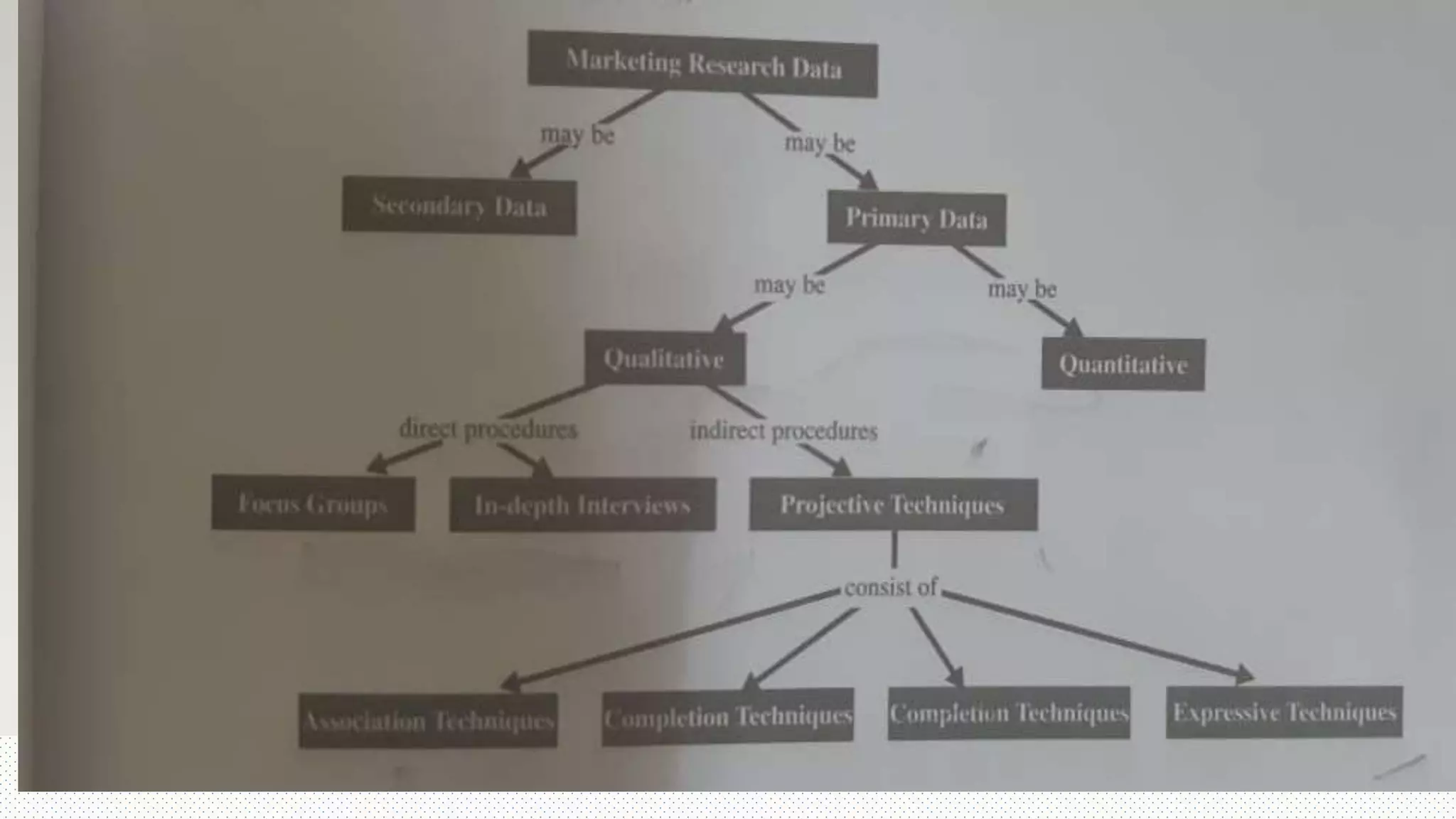
Projection Methods
Associations
Uncovers a brand’s identity or
product attributes
• Word association for a
product/brand
• Draw brands as people
Construction
Process allows participant to
construct meaning
• Participant constructs a story or
picture from a concept
• Collages are developed on a
topic
• Bubble drawings or cartoon tests
ask participant to construct a
dialog
Completion
For insight into participant’s
need-value system.
• Sentences, stories or
conversations are completed
• Ie “When I think of dog…..”
Expressive
For situations when participants
cannot describe their actions but
can demonstrate them.
• Participants role play or act out a
story
• Themes are developed based on
participants’ personal
interpretations of pictures
• House where brand lives
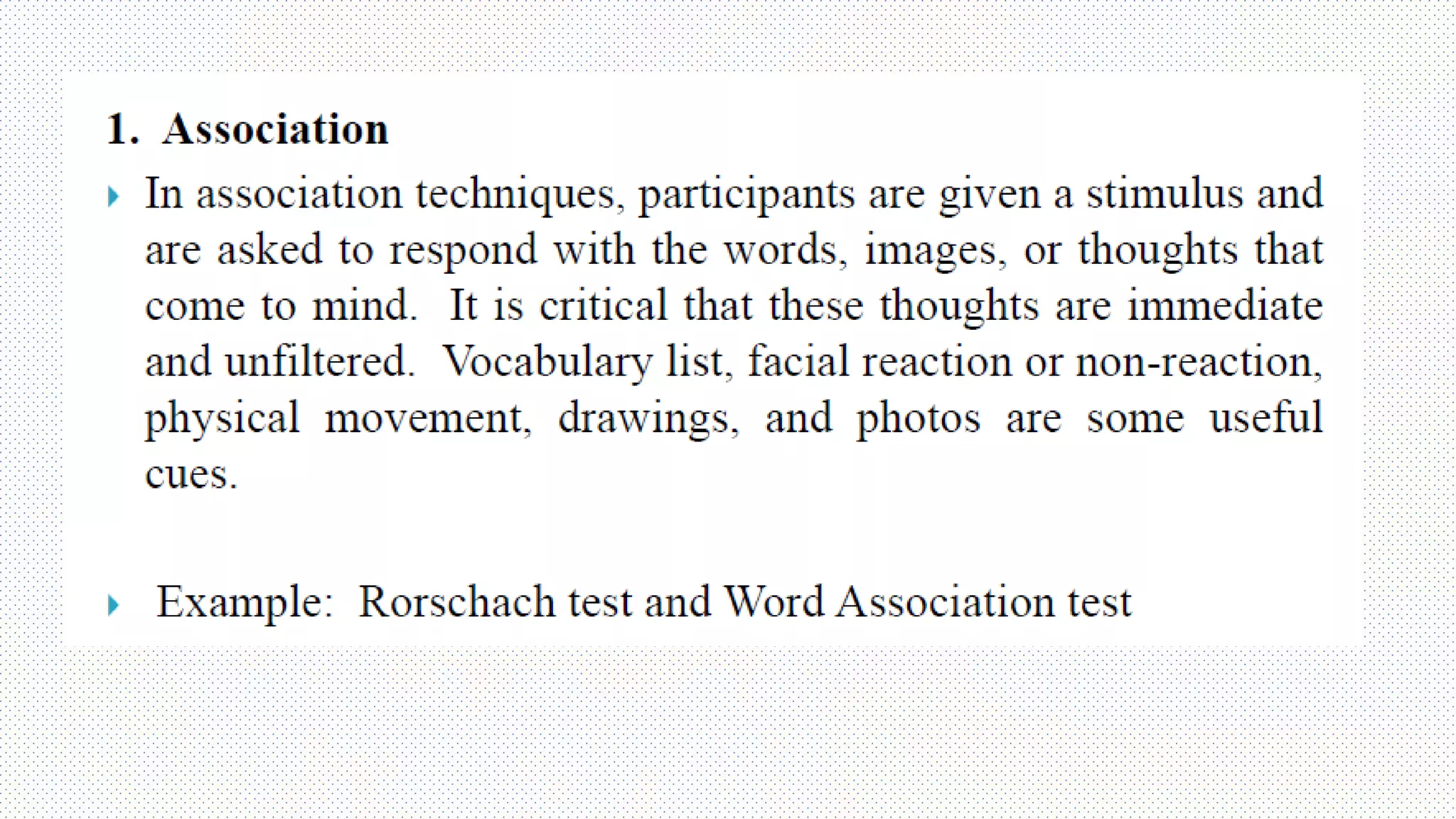
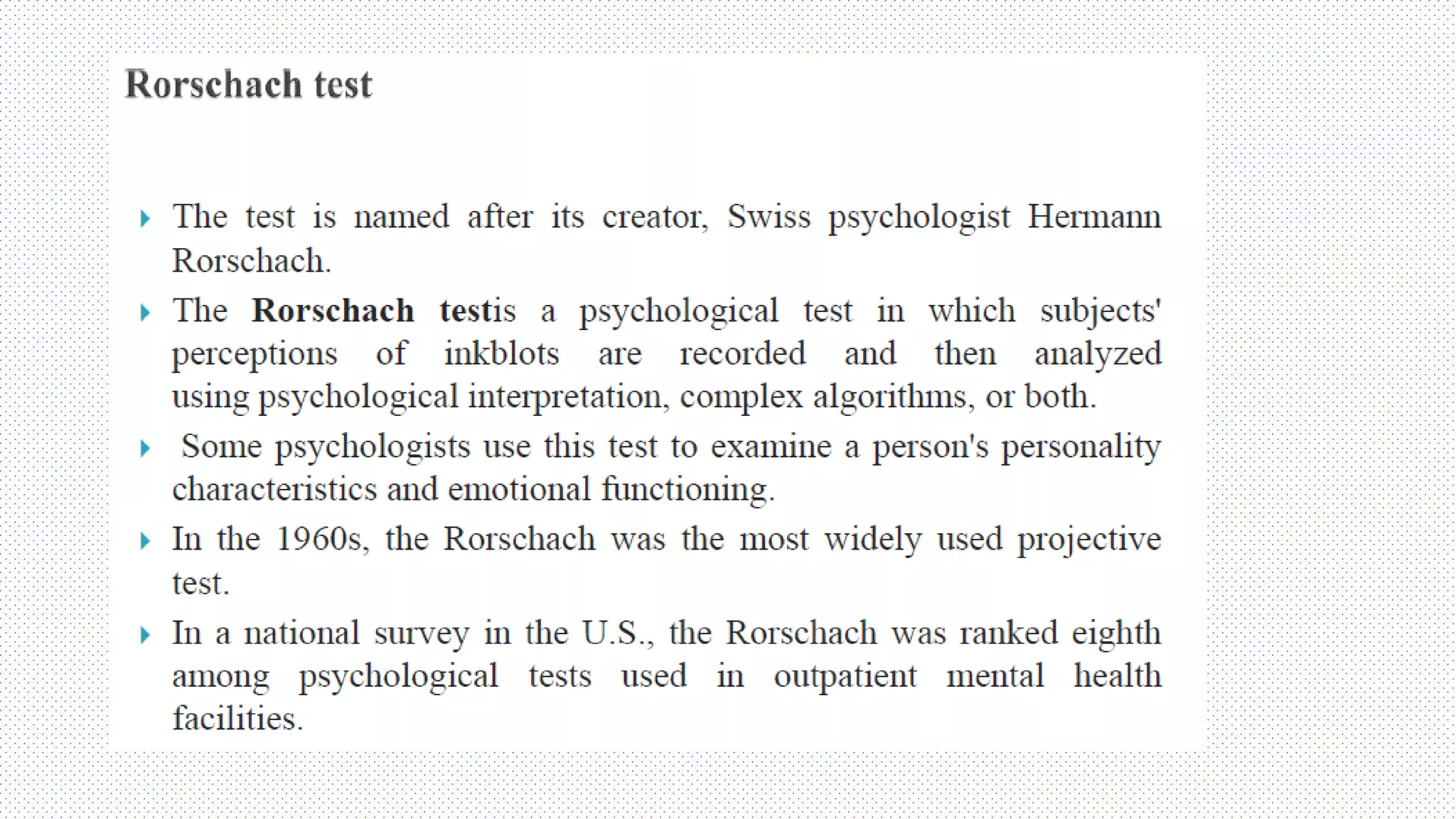
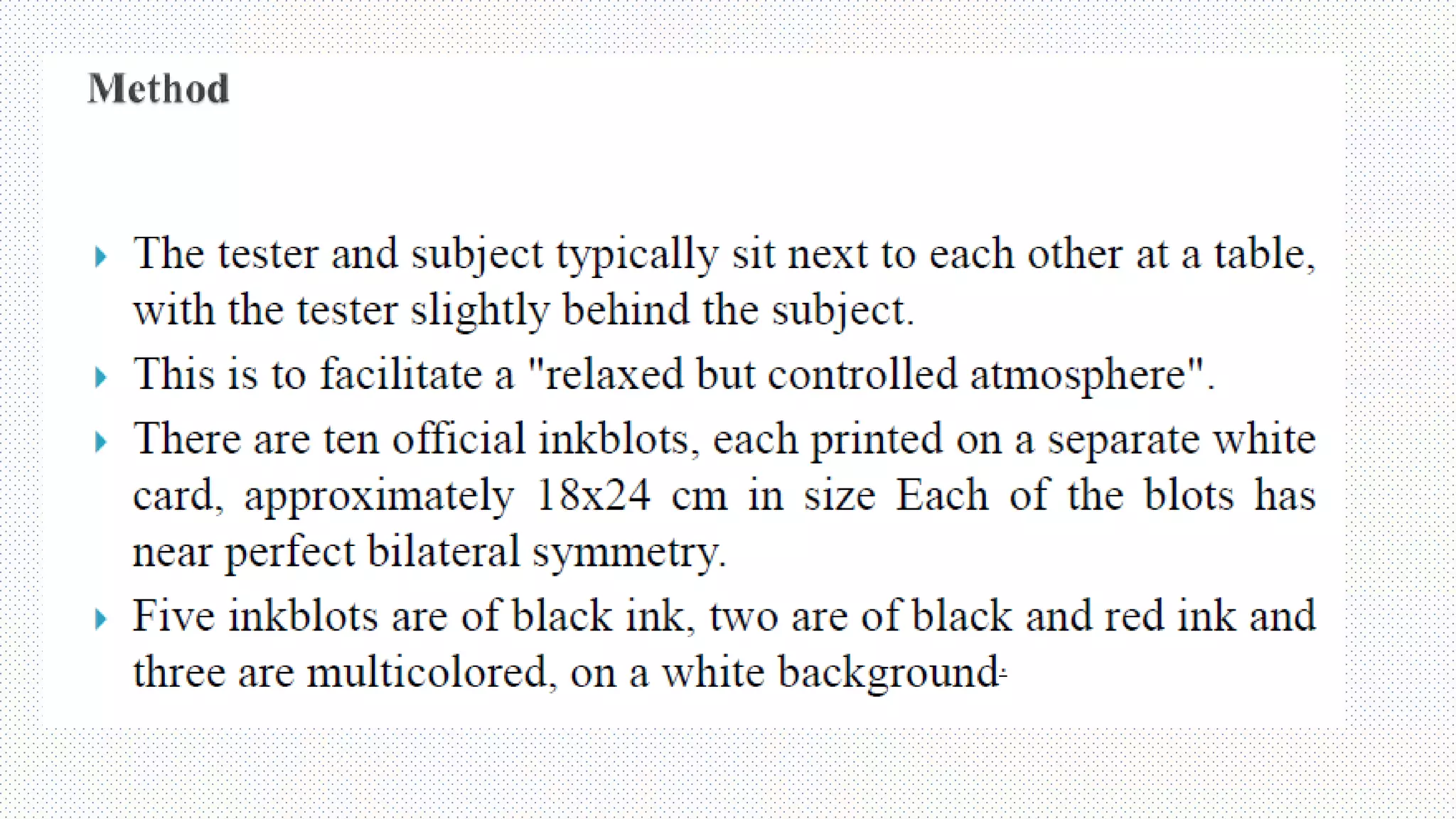
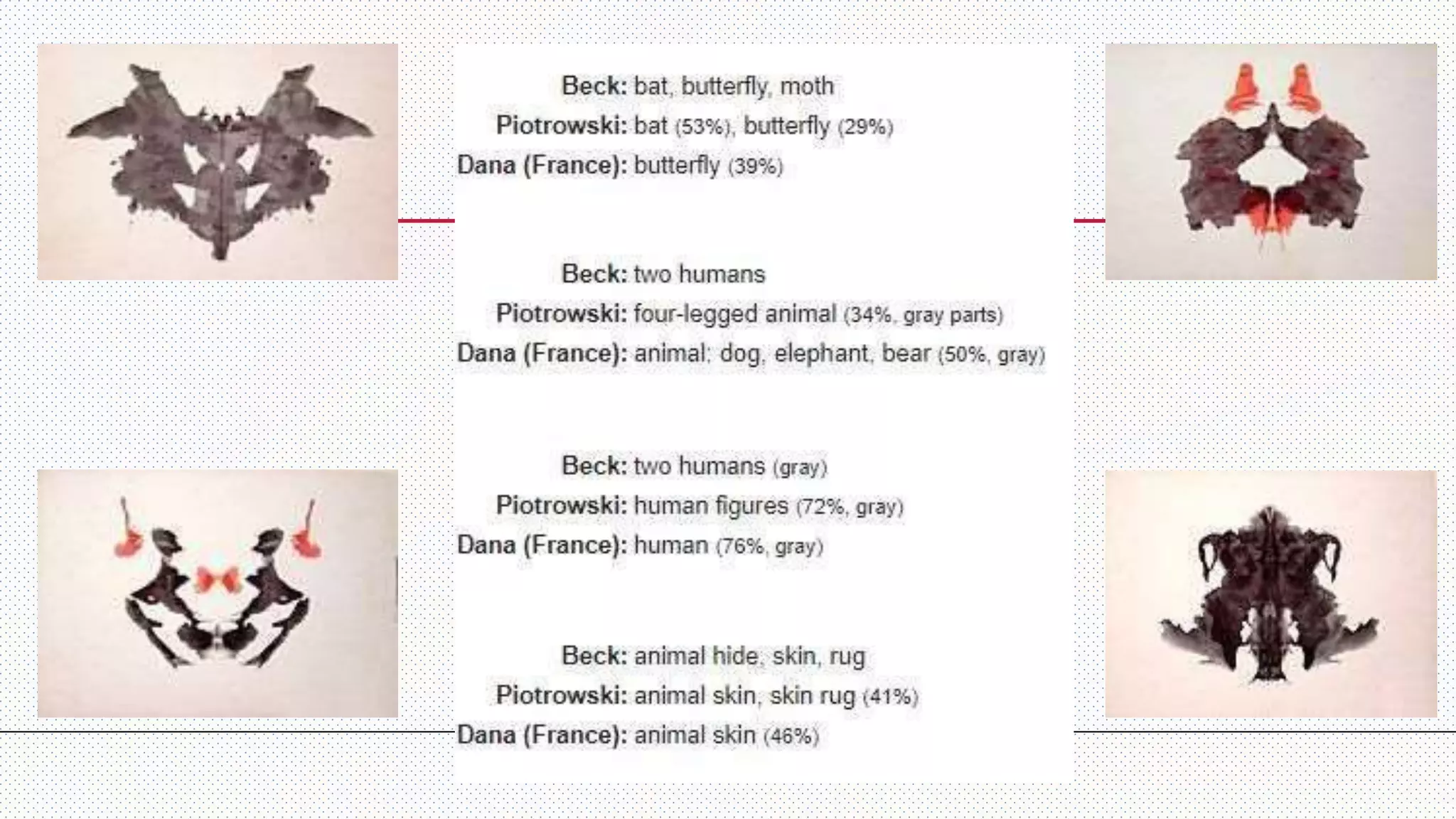
RORSCHACH
TEST
Quizzes, tests and examinations
This is also a technique of extracting information regarding
specific ability of candidates indirectly. In this procedure both long and
short questions are framed to test through them the memorising and
analytical ability of candidates
Sociometry
Sociometry is a technique for describing the social relationships among
individuals in a group. In an indirect way, sociometry attempts to
describe attractions or repulsions between individuals by asking them
to indicate whom they would choose or reject in various situations.
Thus, sociometry is a new technique of studying the underlying
motives of respondents. “Under this an attempt is made to trace the
flow of information amongst groups and then examine the ways in
which new ideas are diffused. Sociograms are constructed to identify
leaders and followers.”2 Sociograms are charts that depict the
sociometric choices There are many versions of the sociogram pattern
and the reader is suggested to consult specialised references on
sociometry for the purpose. This approach has been applied to the
diffusion of ideas on drugs amongst medical practitioners.
ZALTMAN METAPHOR
ELICITATION TECHNIQUE
(ZMET)
2019 GENERAL ELECTION FACE OFF
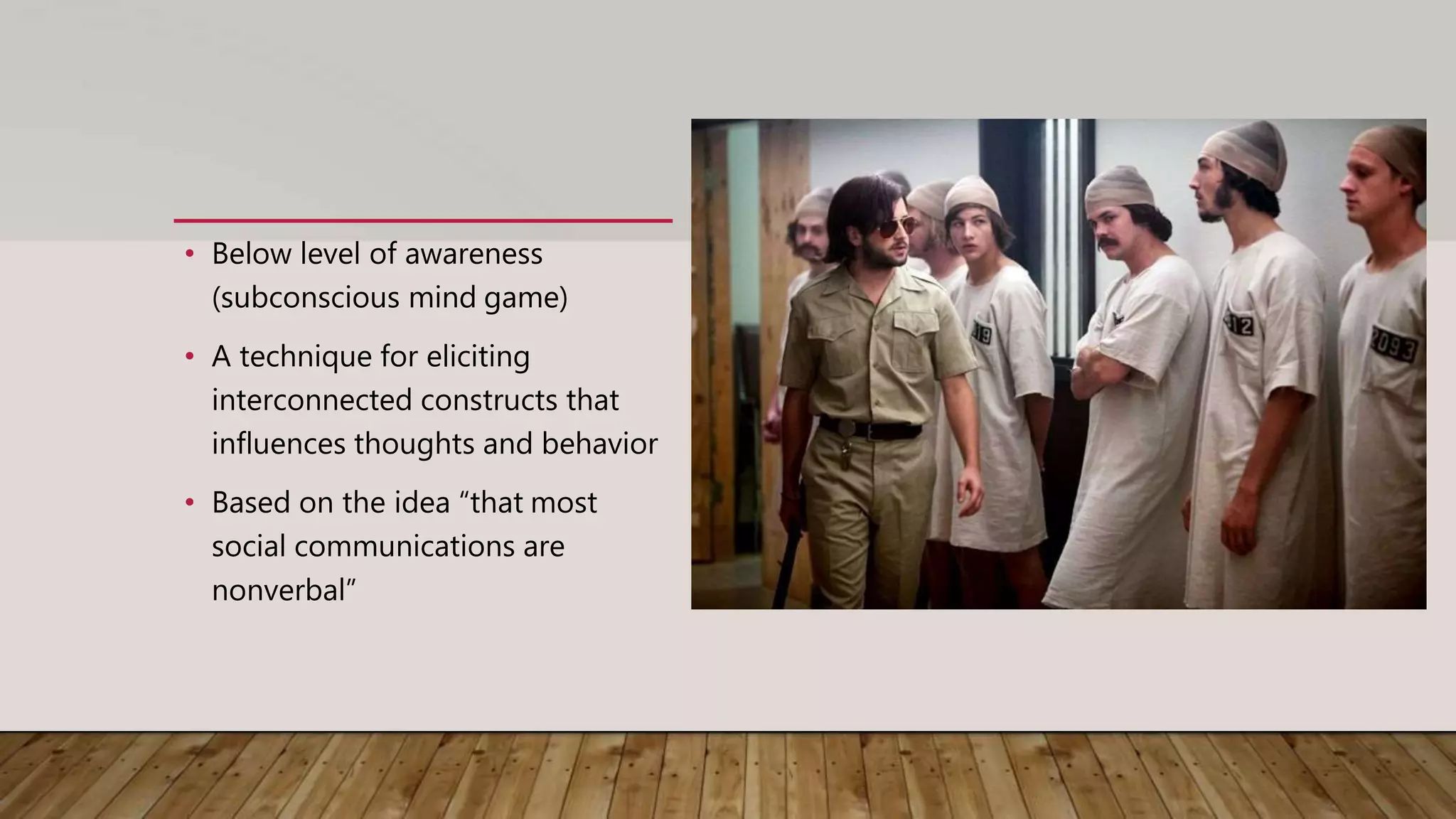
• Below level of awareness
(subconscious mind game)
• A technique for eliciting
interconnected constructs that
influences thoughts and behavior
• Based on the idea “that most
social communications are
nonverbal”
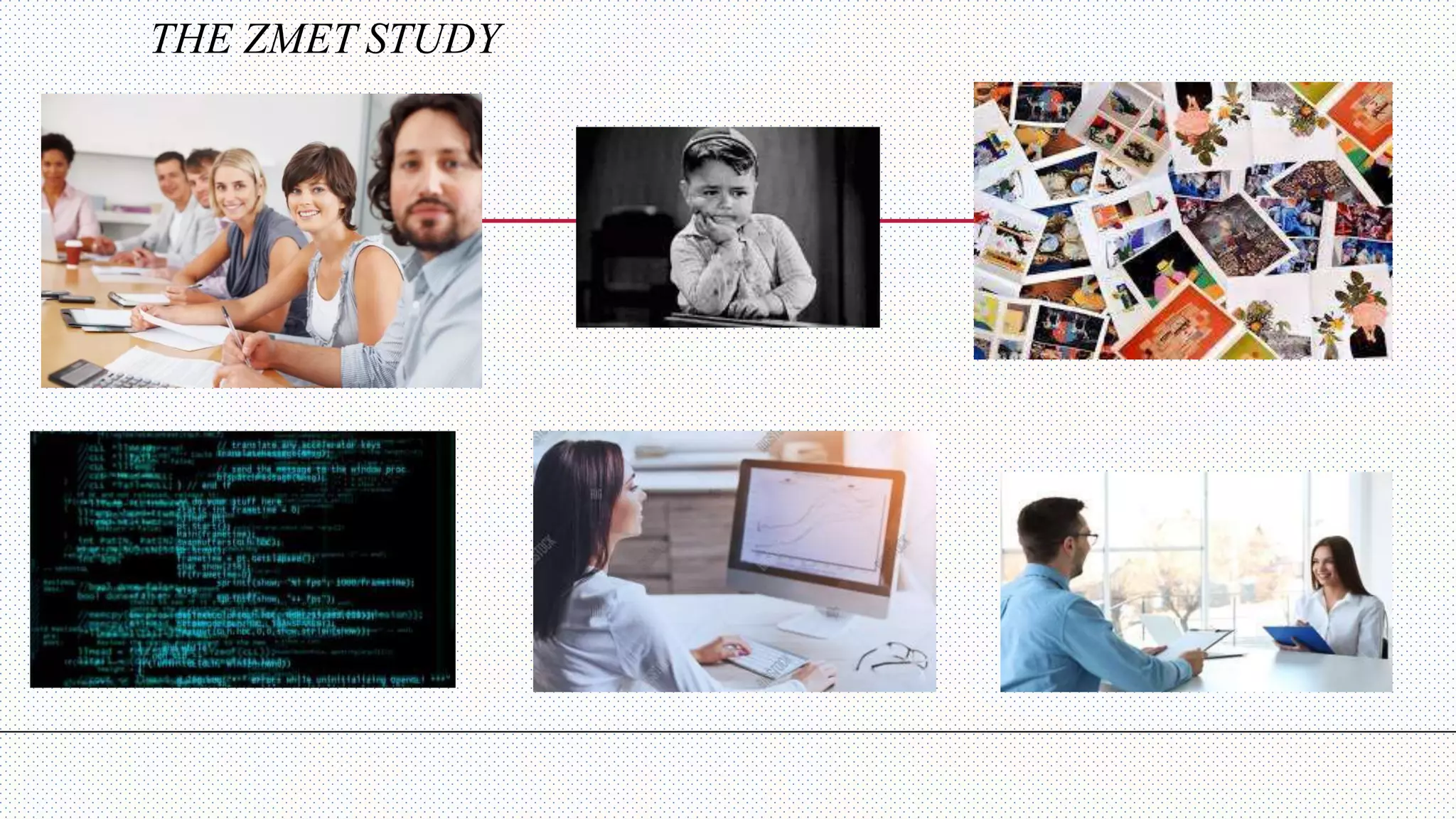
THE ZMET STUDY
THE ZMET
STUDY
STEPS OF ZMET
• Story telling : Participants describe the
content of each picture
• Missed images : Participants describe the
picture or pictures that they were unable to
obtain and explain their relevance
• Sorting tasks : participants sort pictures
into meaningful groups and provide a
label or description for each group
Construct elicitation: Participants reveal basic constructs and their
interconnection using images as stimuli through the kelly repertory
grid laddering technique
The most representative picture: Participants indicate which picture is
most representative
Opposite images: Participants indicate pictures that describe the
opposite of the brand or the task they were given
• Sensory images :
Participants indicate
what does and does not
describe the concept in
terms of color, emotion,
sound,
taste and touch
• Mental map : After reviewing all the
constructs discussed and asking
participants whether the constructs are
accurate representation of what they
and whether any important ideas are
missing, researchers ask them to create a
map or casual model connecting the
constructs
• Summary image: Participants create a summary image
or montage using their own images to express
important issues. Digital imaging technique may be
employed to facilitate the creation of the image.
• Vignette : Participants put together a vignette or
short video to help communicate important
ZMET
OUTCOME
Advantages of Projective Tests
 If the tests are unstructured it is easy for the
respondents to declare theirpersonality
 It is assumed that the projection is greater than
the stimulus which is almost same to the
respondent
 Each and every response given by the respondent
explains the benefits of personality
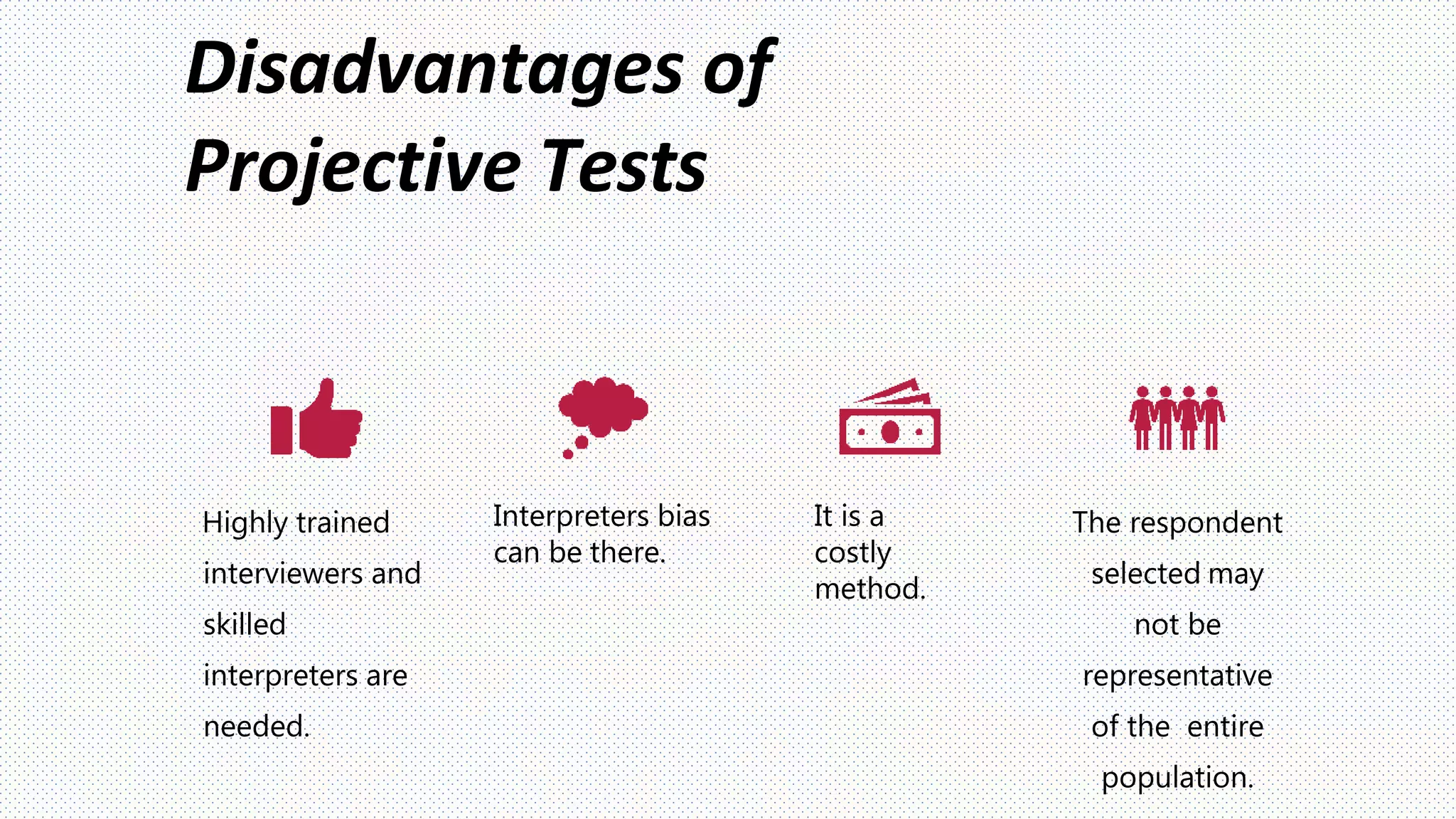
Disadvantages of
Projective Tests
Highly trained
interviewers and
skilled
interpreters are
needed.
Interpreters bias
can be there.
It is a
costly
method.
The respondent
selected may
not be
representative
of the entire
population.
Dove ZMET TEST
TARGET
AUDIENCES
Thank you

Qualitative Research Methods

  • 1.
    210 Qualitative ResearchMethods By Asst Prof Anil Sharma 7990189234
  • 2.
    Unit 4 Projective Techniques:Principle of projection, applications, association, construction, expression based techniques, design and interpretation, Zaltman’s Metaphor Elicitation Techniques
  • 3.
    Projective Techniques Projective techniques(or what are sometimes called as indirect interviewing techniques) for the collection of data have been developed by psychologists to use projections of respondents for inferring about underlying motives, urges, or intentions which are such that the respondent either resists to reveal them or is unable to figure out himself. In projective techniques the respondent in supplying information tends unconsciously to project his own attitudes or feelings on the subject under study. Projective techniques play an important role in motivational researches or in attitude surveys.
  • 5.
    Projective techniques, originallydeveloped for use in psychology, can be used in an evaluation to provide a prompt for interviews. In psychology, a projective test is a personality test designed to let a person respond to ambiguous stimuli, presumably revealing hidden emotions and internal conflicts projected by the person into the test. This is sometimes "objective test" or "self-report test" in which responses are analyzed according to a presumed universal standard (for example, a multiple choice exam), and are limited to the content of the test. Projective tests have their origins in psychoanalytic psychology, which argues that humans have conscious and unconscious attitudes and motivations that are beyond or hidden from conscious awareness.
  • 6.
    Projection • Psychological techniqueto get answers without asking a direct question • Participants project their unconscious beliefs into other people or objects • Reduces threat of personal vulnerability • Consists of a stimulus and a response
  • 7.
    Projection Methods Associations Uncovers abrand’s identity or product attributes • Word association for a product/brand • Draw brands as people Construction Process allows participant to construct meaning • Participant constructs a story or picture from a concept • Collages are developed on a topic • Bubble drawings or cartoon tests ask participant to construct a dialog
  • 8.
    Completion For insight intoparticipant’s need-value system. • Sentences, stories or conversations are completed • Ie “When I think of dog…..” Expressive For situations when participants cannot describe their actions but can demonstrate them. • Participants role play or act out a story • Themes are developed based on participants’ personal interpretations of pictures • House where brand lives
  • 12.
  • 23.
    Quizzes, tests andexaminations This is also a technique of extracting information regarding specific ability of candidates indirectly. In this procedure both long and short questions are framed to test through them the memorising and analytical ability of candidates
  • 24.
    Sociometry Sociometry is atechnique for describing the social relationships among individuals in a group. In an indirect way, sociometry attempts to describe attractions or repulsions between individuals by asking them to indicate whom they would choose or reject in various situations. Thus, sociometry is a new technique of studying the underlying motives of respondents. “Under this an attempt is made to trace the flow of information amongst groups and then examine the ways in which new ideas are diffused. Sociograms are constructed to identify leaders and followers.”2 Sociograms are charts that depict the sociometric choices There are many versions of the sociogram pattern and the reader is suggested to consult specialised references on sociometry for the purpose. This approach has been applied to the diffusion of ideas on drugs amongst medical practitioners.

  • 25.
  • 26.
  • 27.
    • Below levelof awareness (subconscious mind game) • A technique for eliciting interconnected constructs that influences thoughts and behavior • Based on the idea “that most social communications are nonverbal”
  • 28.
  • 29.
  • 30.
  • 31.
    • Story telling: Participants describe the content of each picture • Missed images : Participants describe the picture or pictures that they were unable to obtain and explain their relevance • Sorting tasks : participants sort pictures into meaningful groups and provide a label or description for each group
  • 32.
    Construct elicitation: Participantsreveal basic constructs and their interconnection using images as stimuli through the kelly repertory grid laddering technique The most representative picture: Participants indicate which picture is most representative Opposite images: Participants indicate pictures that describe the opposite of the brand or the task they were given
  • 33.
    • Sensory images: Participants indicate what does and does not describe the concept in terms of color, emotion, sound, taste and touch • Mental map : After reviewing all the constructs discussed and asking participants whether the constructs are accurate representation of what they and whether any important ideas are missing, researchers ask them to create a map or casual model connecting the constructs
  • 34.
    • Summary image:Participants create a summary image or montage using their own images to express important issues. Digital imaging technique may be employed to facilitate the creation of the image. • Vignette : Participants put together a vignette or short video to help communicate important
  • 35.
  • 36.
    Advantages of ProjectiveTests  If the tests are unstructured it is easy for the respondents to declare theirpersonality  It is assumed that the projection is greater than the stimulus which is almost same to the respondent  Each and every response given by the respondent explains the benefits of personality
  • 37.
    Disadvantages of Projective Tests Highlytrained interviewers and skilled interpreters are needed. Interpreters bias can be there. It is a costly method. The respondent selected may not be representative of the entire population.
  • 39.
  • 42.
  • 55.