Purpose of Communication
The act of sharing or
exchanging
information, ideas
or feelings.
Communication is
about understanding,
and how it is
mutually transmitted
between a sender and
a receiver.
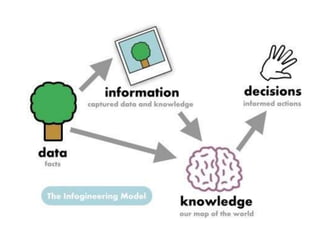
• Data
• Information
• knowledge
• A collection of text,
numbers or symbols
in raw or
unorganized form
• Data that has been
processed, e.g.
grouped, normally by
a computer, to give it
meaning and make it
interpretable
• The acquisition by a
person of information
such as facts, or the
understanding of
information such as
how to solve
problems
1. Flow of Information:
• The relevant information must
flow continuously from top to
bottom and vice versa.
• The staff at all levels must be
kept informed about the
organizational objectives and
other developments taking
place in the organization.
• A care should be taken that no
one should be misinformed.
The information should reach
the incumbent in the language
he or she can understand
better.
• The use of difficult words
should be avoided. The right
information should reach the
right person, at right time
through the right person.
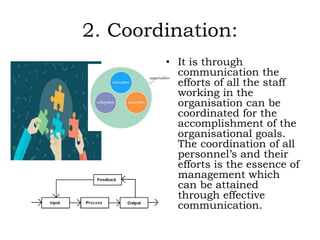
2. Coordination:
• It is through
communication the
efforts of all the staff
working in the
organisation can be
coordinated for the
accomplishment of the
organisational goals.
The coordination of all
personnel’s and their
efforts is the essence of
management which
can be attained
through effective
communication.
3. Learning Management Skills:
• The communication
facilitates flow of
information, ideas, beliefs,
perception, advice, opinion,
orders and instructions etc.
both ways which enable the
managers and other
supervisory staff to learn
managerial skills through
experience of others. The
experience of the sender of
the message gets reflected
in it which the person at
the receiving end can learn
by analyzing and
understanding it.
4. Preparing People to Accept
Change:
• The proper and
effective
communication is an
important tool in the
hands of management
of any organisation to
bring about overall
change in the
organisational policies,
procedures and work
style and make the
staff to accept and
respond positively.
5. Developing Good Human
Relations:
• Managers and workers
and other staff exchange
their ideas, thoughts and
perceptions with each
other through
communication. This
helps them to
understand each other
better. They realize the
difficulties faced by their
colleagues at the
workplace. This leads to
promotion of good
human relations in the
organisation.
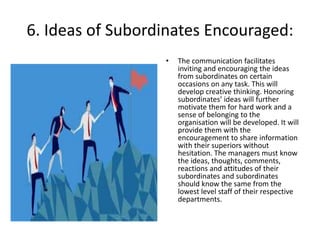
6. Ideas of Subordinates Encouraged:
• The communication facilitates
inviting and encouraging the ideas
from subordinates on certain
occasions on any task. This will
develop creative thinking. Honoring
subordinates’ ideas will further
motivate them for hard work and a
sense of belonging to the
organisation will be developed. It will
provide them with the
encouragement to share information
with their superiors without
hesitation. The managers must know
the ideas, thoughts, comments,
reactions and attitudes of their
subordinates and subordinates
should know the same from the
lowest level staff of their respective
departments.

purpose of communication.pptx

  • 1.
    Purpose of Communication Theact of sharing or exchanging information, ideas or feelings. Communication is about understanding, and how it is mutually transmitted between a sender and a receiver.
  • 2.
    • Data • Information •knowledge • A collection of text, numbers or symbols in raw or unorganized form • Data that has been processed, e.g. grouped, normally by a computer, to give it meaning and make it interpretable • The acquisition by a person of information such as facts, or the understanding of information such as how to solve problems
  • 4.
    1. Flow ofInformation: • The relevant information must flow continuously from top to bottom and vice versa. • The staff at all levels must be kept informed about the organizational objectives and other developments taking place in the organization. • A care should be taken that no one should be misinformed. The information should reach the incumbent in the language he or she can understand better. • The use of difficult words should be avoided. The right information should reach the right person, at right time through the right person.
  • 5.
    2. Coordination: • Itis through communication the efforts of all the staff working in the organisation can be coordinated for the accomplishment of the organisational goals. The coordination of all personnel’s and their efforts is the essence of management which can be attained through effective communication.
  • 6.
    3. Learning ManagementSkills: • The communication facilitates flow of information, ideas, beliefs, perception, advice, opinion, orders and instructions etc. both ways which enable the managers and other supervisory staff to learn managerial skills through experience of others. The experience of the sender of the message gets reflected in it which the person at the receiving end can learn by analyzing and understanding it.
  • 7.
    4. Preparing Peopleto Accept Change: • The proper and effective communication is an important tool in the hands of management of any organisation to bring about overall change in the organisational policies, procedures and work style and make the staff to accept and respond positively.
  • 9.
    5. Developing GoodHuman Relations: • Managers and workers and other staff exchange their ideas, thoughts and perceptions with each other through communication. This helps them to understand each other better. They realize the difficulties faced by their colleagues at the workplace. This leads to promotion of good human relations in the organisation.
  • 10.
    6. Ideas ofSubordinates Encouraged: • The communication facilitates inviting and encouraging the ideas from subordinates on certain occasions on any task. This will develop creative thinking. Honoring subordinates’ ideas will further motivate them for hard work and a sense of belonging to the organisation will be developed. It will provide them with the encouragement to share information with their superiors without hesitation. The managers must know the ideas, thoughts, comments, reactions and attitudes of their subordinates and subordinates should know the same from the lowest level staff of their respective departments.