MUSC 1800: Popular Music
Punk and New Wave
Dr. Matthew C. Saunders
Lakeland Community College
C-1078
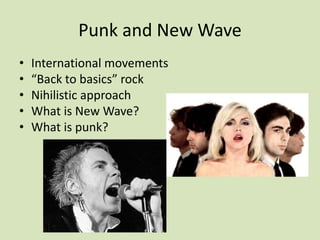
Punk and New Wave
• International movements
• “Back to basics” rock
• Nihilistic approach
• What is New Wave?
• What is punk?
Big Idea
• When a dominant style enters its “decadent”
phase, a possible reaction is to strip it to its
bones in search of meaning.
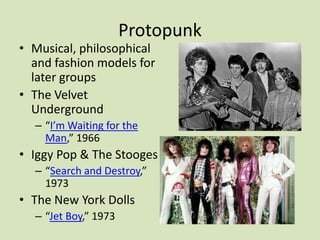
Protopunk
• Musical, philosophical
and fashion models for
later groups
• The Velvet
Underground
– “I’m Waiting for the
Man,” 1966
• Iggy Pop & The Stooges
– “Search and Destroy,”
1973
• The New York Dolls
– “Jet Boy,” 1973
Punk
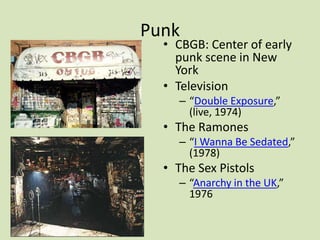
• CBGB: Center of early
punk scene in New
York
• Television
– “Double Exposure,”
(live, 1974)
• The Ramones
– “I Wanna Be Sedated,”
(1978)
• The Sex Pistols
– “Anarchy in the UK,”
1976
New Wave
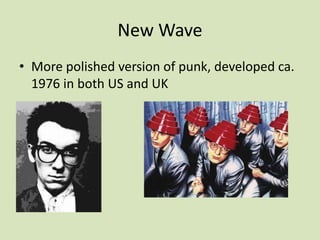
• More polished version of punk, developed ca.
1976 in both US and UK
New Wave Musicians
• Elvis Costello (b. 1954)
– “Radio, Radio,” BBC,
1978
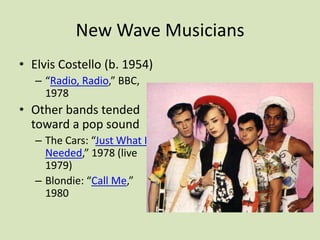
• Other bands tended
toward a pop sound
– The Cars: “Just What I
Needed,” 1978 (live
1979)
– Blondie: “Call Me,”
1980
The Music Video
• Song-length film with
images tied to the
music
• “soundies,” 1940s
• “promotional clips,”
late-1960s and 1970s
• New Wave bands were
early adopters in the
mid-1970s
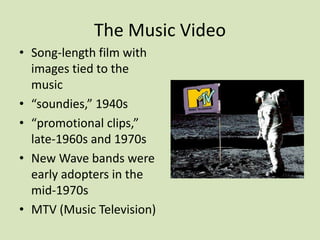
• MTV (Music Television)
Watching a Music Video: The Talking
Heads
• Things to consider:
– Diegetic vs. non-diegetic
– Representational vs. non-representational
– Visual techniques and composition
– Symbolism
– Performance, narrative, or conceptual?
– Postmodernism
• “Once in a Lifetime” (1981)
– Music and Lyrics by David Byrne and Brian Eno
– Played on MTV during its first day of programming

Punk and New Wave

  • 1.
    MUSC 1800: PopularMusic Punk and New Wave Dr. Matthew C. Saunders Lakeland Community College C-1078
  • 2.
    Punk and NewWave • International movements • “Back to basics” rock • Nihilistic approach • What is New Wave? • What is punk?
  • 3.
    Big Idea • Whena dominant style enters its “decadent” phase, a possible reaction is to strip it to its bones in search of meaning.
  • 4.
    Protopunk • Musical, philosophical andfashion models for later groups • The Velvet Underground – “I’m Waiting for the Man,” 1966 • Iggy Pop & The Stooges – “Search and Destroy,” 1973 • The New York Dolls – “Jet Boy,” 1973
  • 5.
    Punk • CBGB: Centerof early punk scene in New York • Television – “Double Exposure,” (live, 1974) • The Ramones – “I Wanna Be Sedated,” (1978) • The Sex Pistols – “Anarchy in the UK,” 1976
  • 6.
    New Wave • Morepolished version of punk, developed ca. 1976 in both US and UK
  • 7.
    New Wave Musicians •Elvis Costello (b. 1954) – “Radio, Radio,” BBC, 1978 • Other bands tended toward a pop sound – The Cars: “Just What I Needed,” 1978 (live 1979) – Blondie: “Call Me,” 1980
  • 8.
    The Music Video •Song-length film with images tied to the music • “soundies,” 1940s • “promotional clips,” late-1960s and 1970s • New Wave bands were early adopters in the mid-1970s • MTV (Music Television)
  • 9.
    Watching a MusicVideo: The Talking Heads • Things to consider: – Diegetic vs. non-diegetic – Representational vs. non-representational – Visual techniques and composition – Symbolism – Performance, narrative, or conceptual? – Postmodernism • “Once in a Lifetime” (1981) – Music and Lyrics by David Byrne and Brian Eno – Played on MTV during its first day of programming

Editor's Notes

  • #3 Two movements coming out of the New York scene in the mid-1970s Parallel international movements First example of a “back to basics” movement in rock Both styles a reaction to glam rock of the 1970s Nihilistic approach to culture and music New Wave—emphasis on electronic synthesis Punk—loud, deliberately unprofessional music; DIY approach to performance
  • #5 Musical, philosophical and fashion models for later groups The Velvet Underground Associations with visual artist Andy Warhol Lou Reed John Cale “I’m Waiting for the Man,” 1966 The Stooges Lead singer, Iggy Pop “Search and Destroy,” 1973 The New York Dolls “Jet Boy,” 1973
  • #6 CBGB: Center of early punk scene in New York Later important centers were Minneapolis, Seattle, Boston, Australia, UK College students central to early appeal Television Important to scene at CBGBs “Double Exposure,” (live, 1974) The Ramones Often regarded as the first punk band “I Wanna Be Sedated,” (1978) The Sex Pistols Foremost example of UK punk “Anarchy in the UK,” 1976
  • #7 More polished version of punk, developed ca. 1976 in both US and UK Wide array of stylistic characteristics, with punk’s essential ethos Critical to music of the early 1980s due to exposure on MTV Term created by the press and record company, Sire Records Much greater commercial success than punk Influence on pop artists during the early 80s
  • #9 Song-length film with images tied to the music Antecedents as early as the “soundies” of the 1940s Interest in “promotional clips” during the late-1960s and 1970s Short films created so that musicians could appear on television without having to be “live” Driven by The Beatles Increasingly common on television New Wave bands were early adopters in the mid-1970s MTV (Music Television) debuts all-music video format, August 1981