






Public Reporting as a Catalyst
for Better Consumer Decisions
Ben H ar der @ benharder
A T L A S C O N F E R E N C E | B O S T O N
O C T O B E R 2 8 , 2 0 1 5
2
LEAD INVESTIGATORS
Avery Comarow Geoff Dougherty, MPH
Murrey Olmsted, Ph.D. (RTI) Ben Harder
3
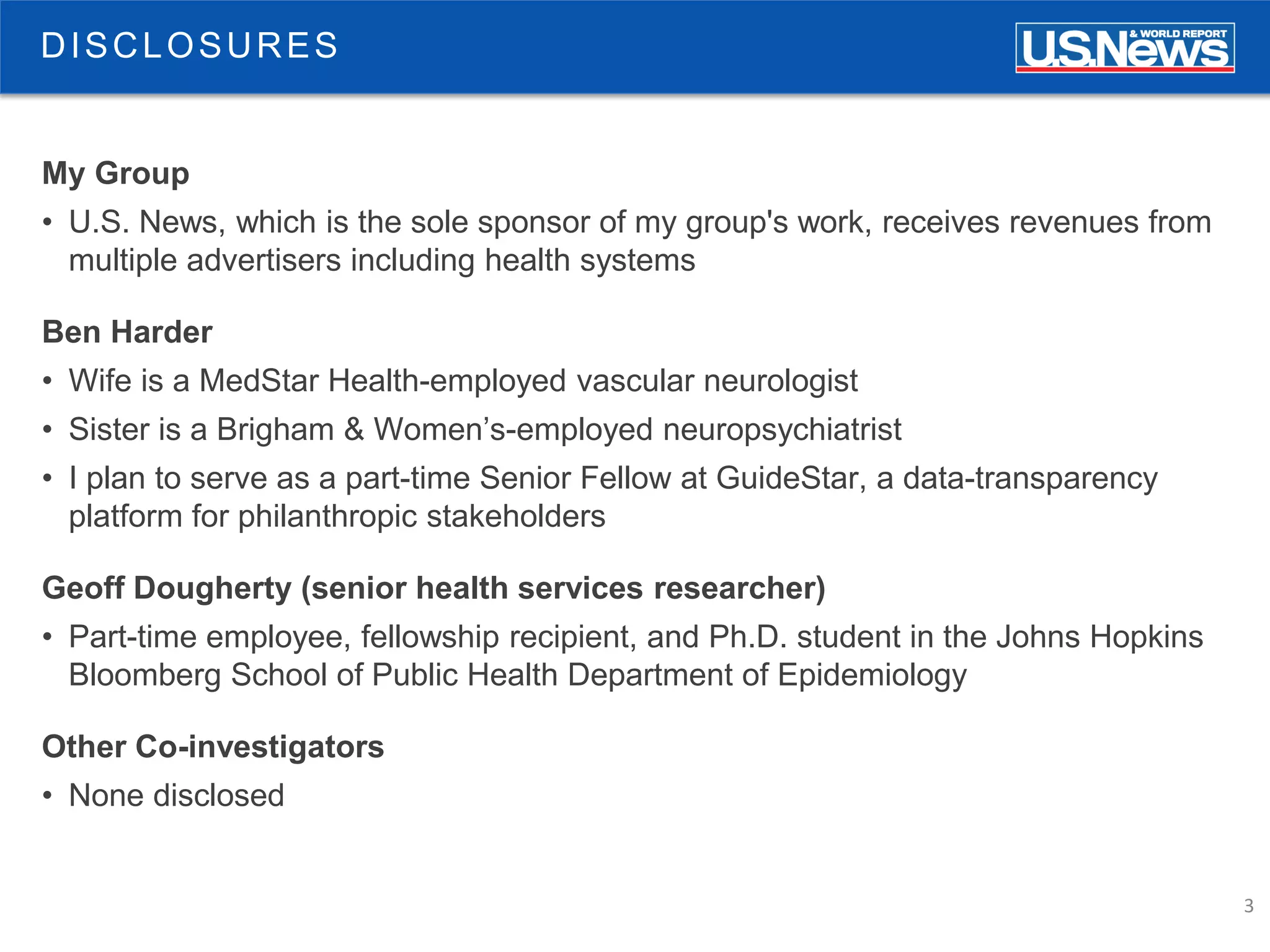
DISCLOSURES
My Group
• U.S. News, which is the sole sponsor of my group's work, receives revenues from
multiple advertisers including health systems
Ben Harder
• Wife is a MedStar Health-employed vascular neurologist
• Sister is a Brigham & Women’s-employed neuropsychiatrist
• I plan to serve as a part-time Senior Fellow at GuideStar, a data-transparency
platform for philanthropic stakeholders
Geoff Dougherty (senior health services researcher)
• Part-time employee, fellowship recipient, and Ph.D. student in the Johns Hopkins
Bloomberg School of Public Health Department of Epidemiology
Other Co-investigators
• None disclosed
4
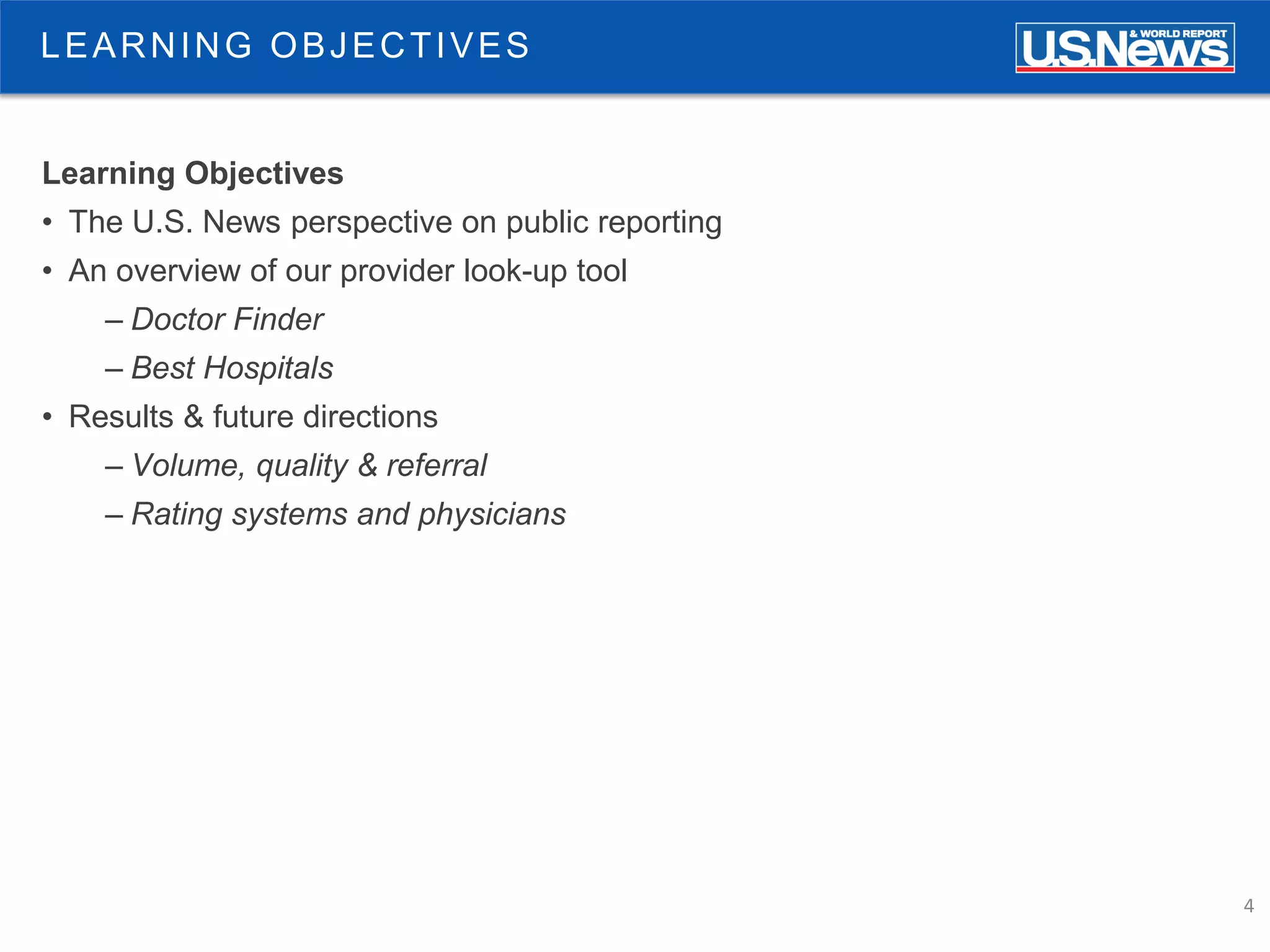
LEARNING OBJECTIVES
Learning Objectives
• The U.S. News perspective on public reporting
• An overview of our provider look-up tool
– Doctor Finder
– Best Hospitals
• Results & future directions
– Volume, quality & referral
– Rating systems and physicians
“WHERE ARE THE GOAL POSTS?”
THE
TRIPLE AIM
7
PERSPECTIVE ON PUBLIC REPORTING
Patient-Provider Matching and the Triple Aim
• The Triple Aim requires efficient matching of patients and providers:
• To maximize delivery of quality & value from providers to patients
• To serve the largest possible population per unit of clinical resources
• Availability of good data on provider quality & value is crucial to informed
patient decision-making.
• Ability to make meaningful comparisons among providers
• Ability to access the most-appropriate provider (must be actionable)
• Public-reporting tools – such as usnews.com – are venues for informed
patient decision-making.
• These tools are maturing rapidly
• Patient engagement with them is accelerating
• Will catalyze informed decision-making
8
PERSPECTIVE ON PUBLIC REPORTING
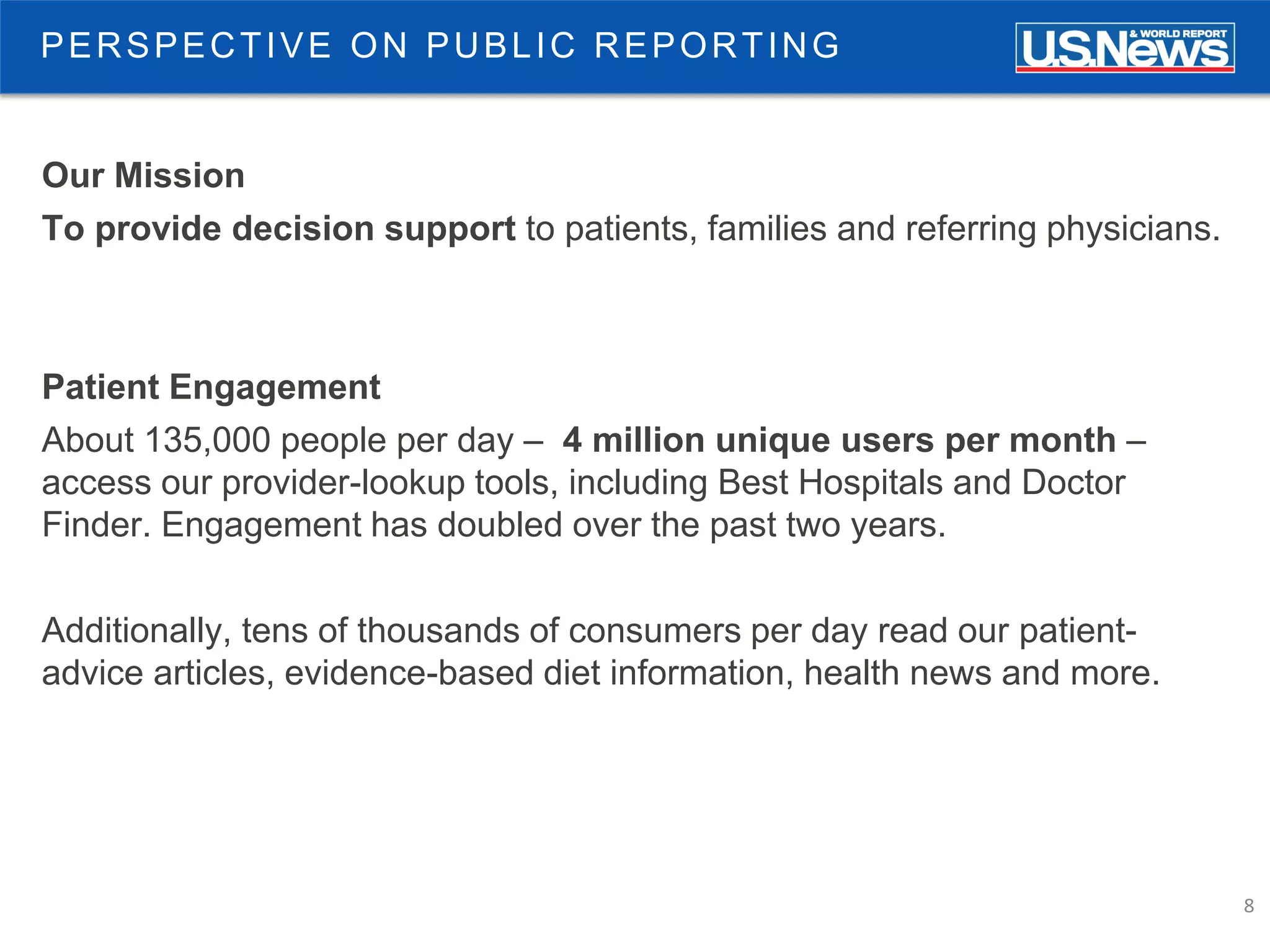
Our Mission
To provide decision support to patients, families and referring physicians.
Patient Engagement
About 135,000 people per day – 4 million unique users per month –
access our provider-lookup tools, including Best Hospitals and Doctor
Finder. Engagement has doubled over the past two years.
Additionally, tens of thousands of consumers per day read our patient-
advice articles, evidence-based diet information, health news and more.
PROVIDER LOOK-UP TOOLS: DOCTORS
10
HOW WE REPORT: PHYSICIANS
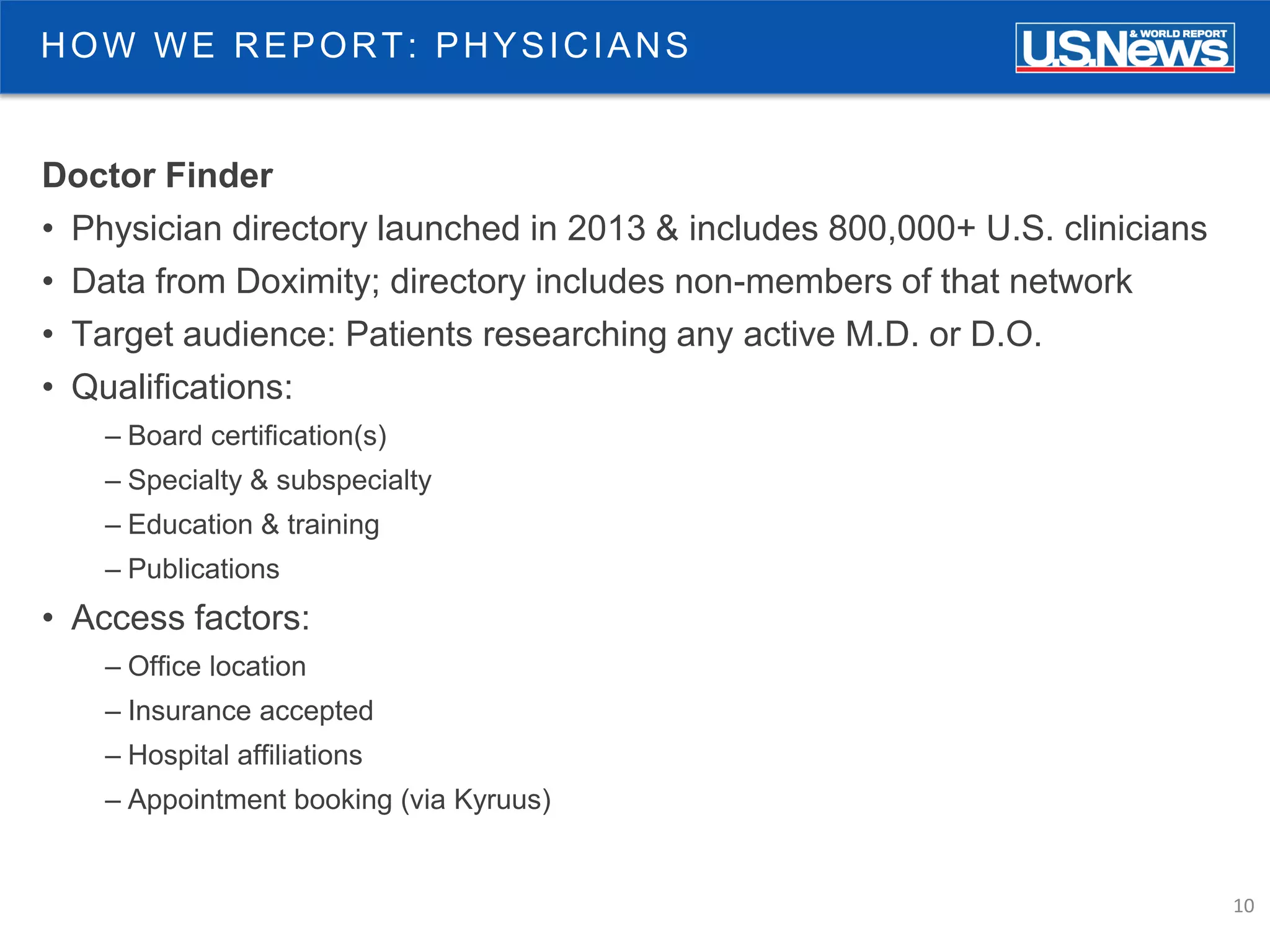
Doctor Finder
• Physician directory launched in 2013 & includes 800,000+ U.S. clinicians
• Data from Doximity; directory includes non-members of that network
• Target audience: Patients researching any active M.D. or D.O.
• Qualifications:
– Board certification(s)
– Specialty & subspecialty
– Education & training
– Publications
• Access factors:
– Office location
– Insurance accepted
– Hospital affiliations
– Appointment booking (via Kyruus)
15
15
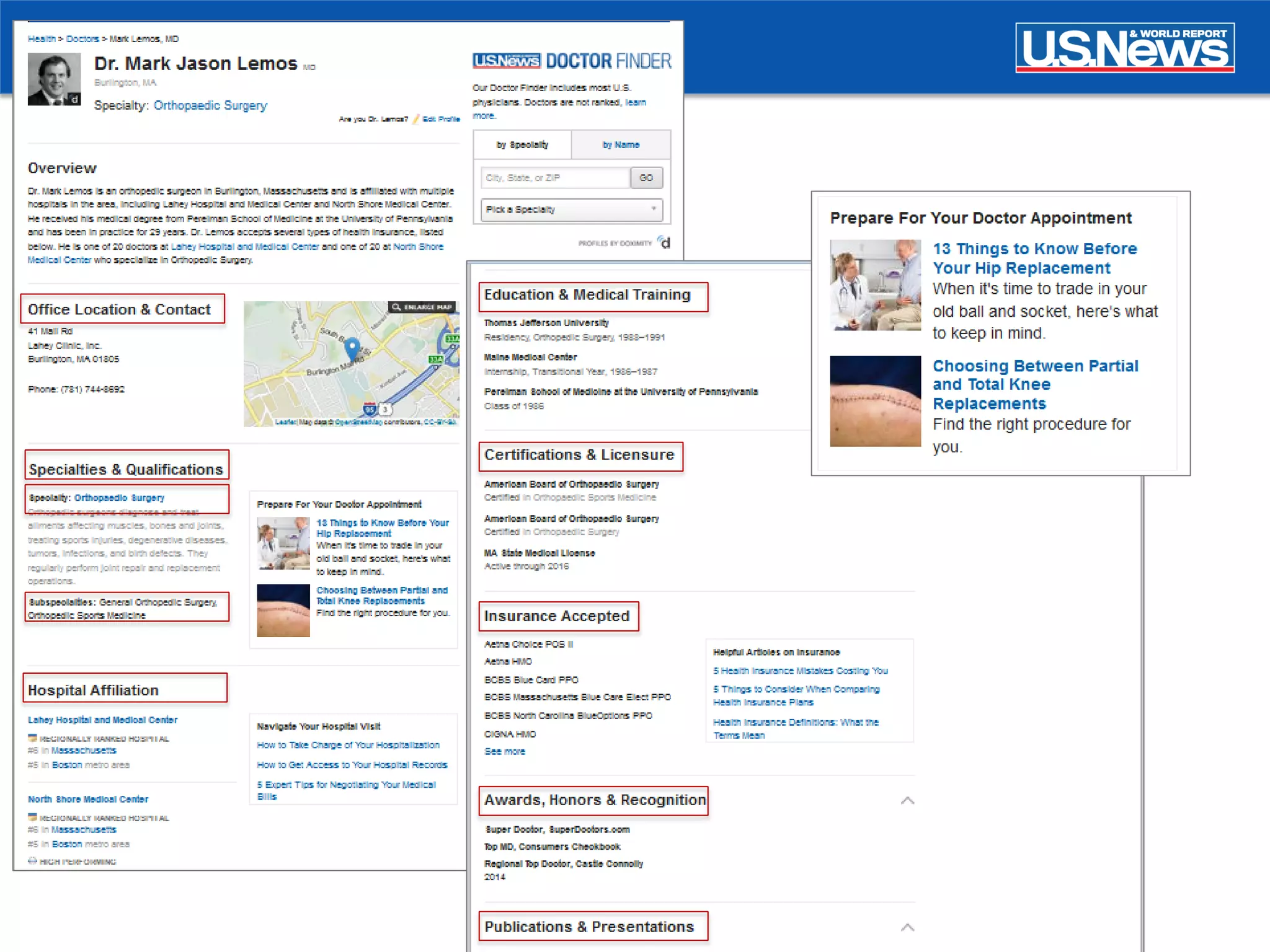
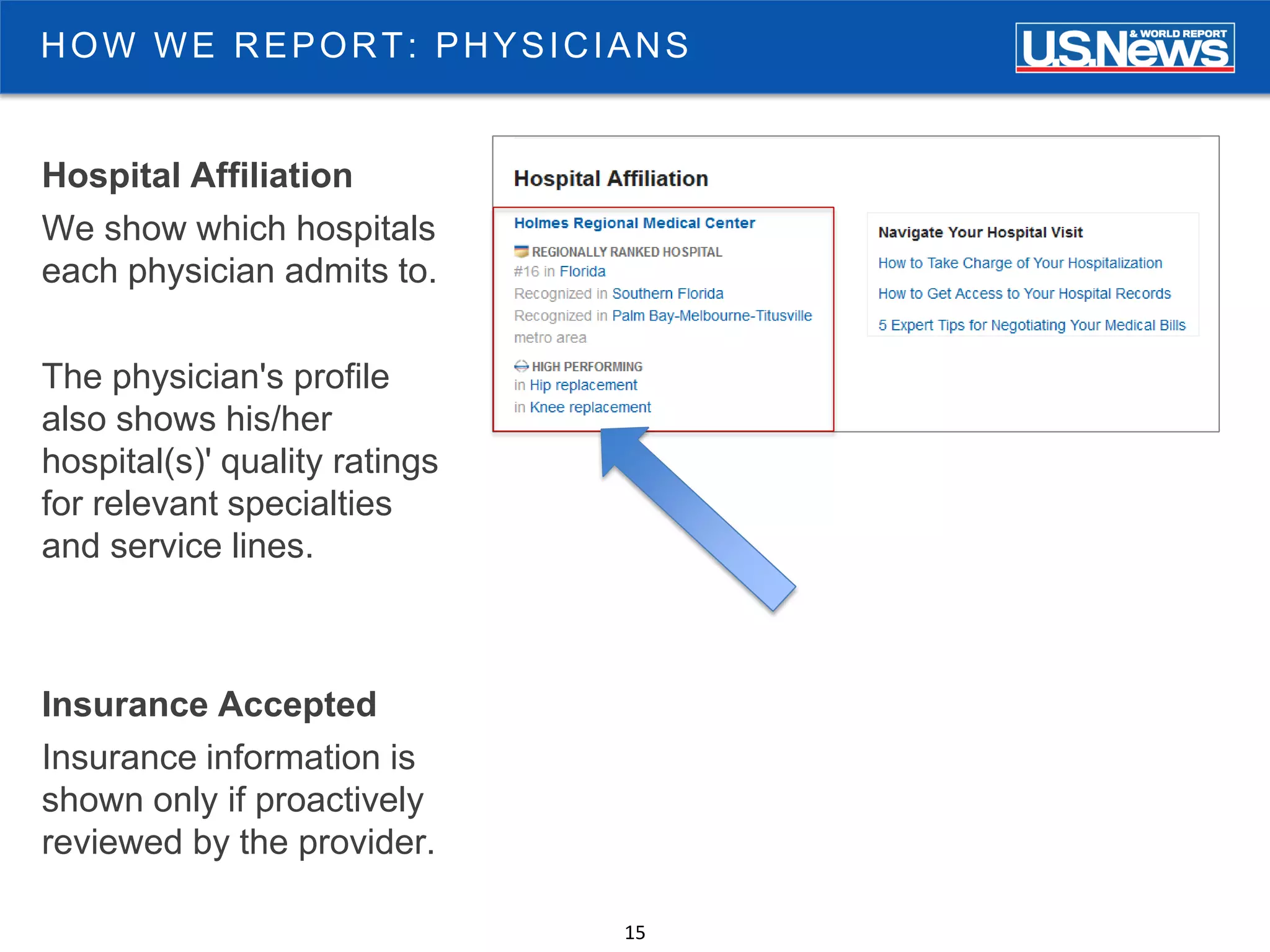
Hospital Affiliation
We show which hospitals
each physician admits to.
The physician's profile
also shows his/her
hospital(s)' quality ratings
for relevant specialties
and service lines.
Insurance Accepted
Insurance information is
shown only if proactively
reviewed by the provider.
HOW WE REPORT: PHYSICIANS
13
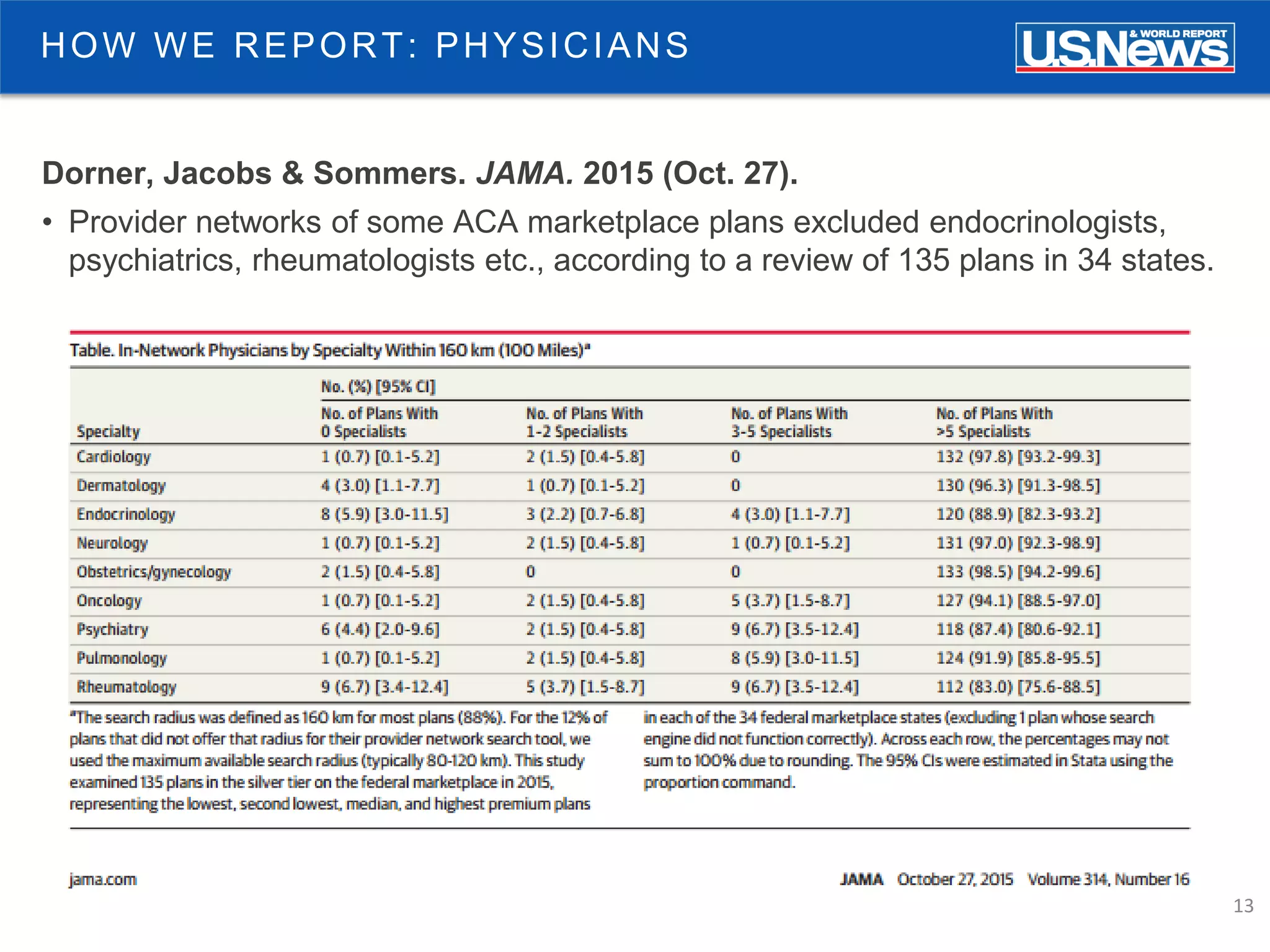
Dorner, Jacobs & Sommers. JAMA. 2015 (Oct. 27).
• Provider networks of some ACA marketplace plans excluded endocrinologists,
psychiatrics, rheumatologists etc., according to a review of 135 plans in 34 states.
HOW WE REPORT: PHYSICIANS
15
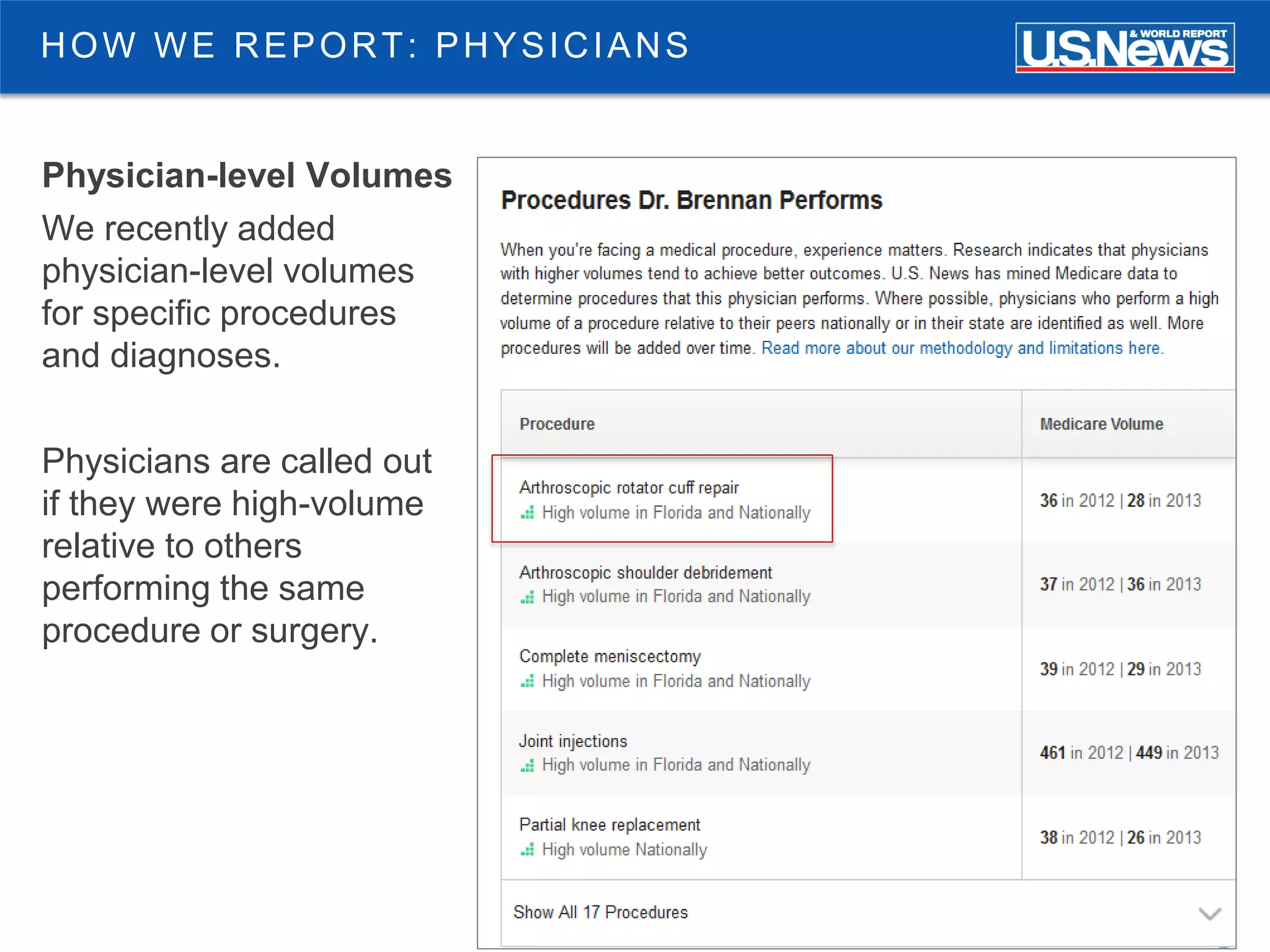
Physician-level Volumes
We recently added
physician-level volumes
for specific procedures
and diagnoses.
Physicians are called out
if they were high-volume
relative to others
performing the same
procedure or surgery.
HOW WE REPORT: PHYSICIANS
15
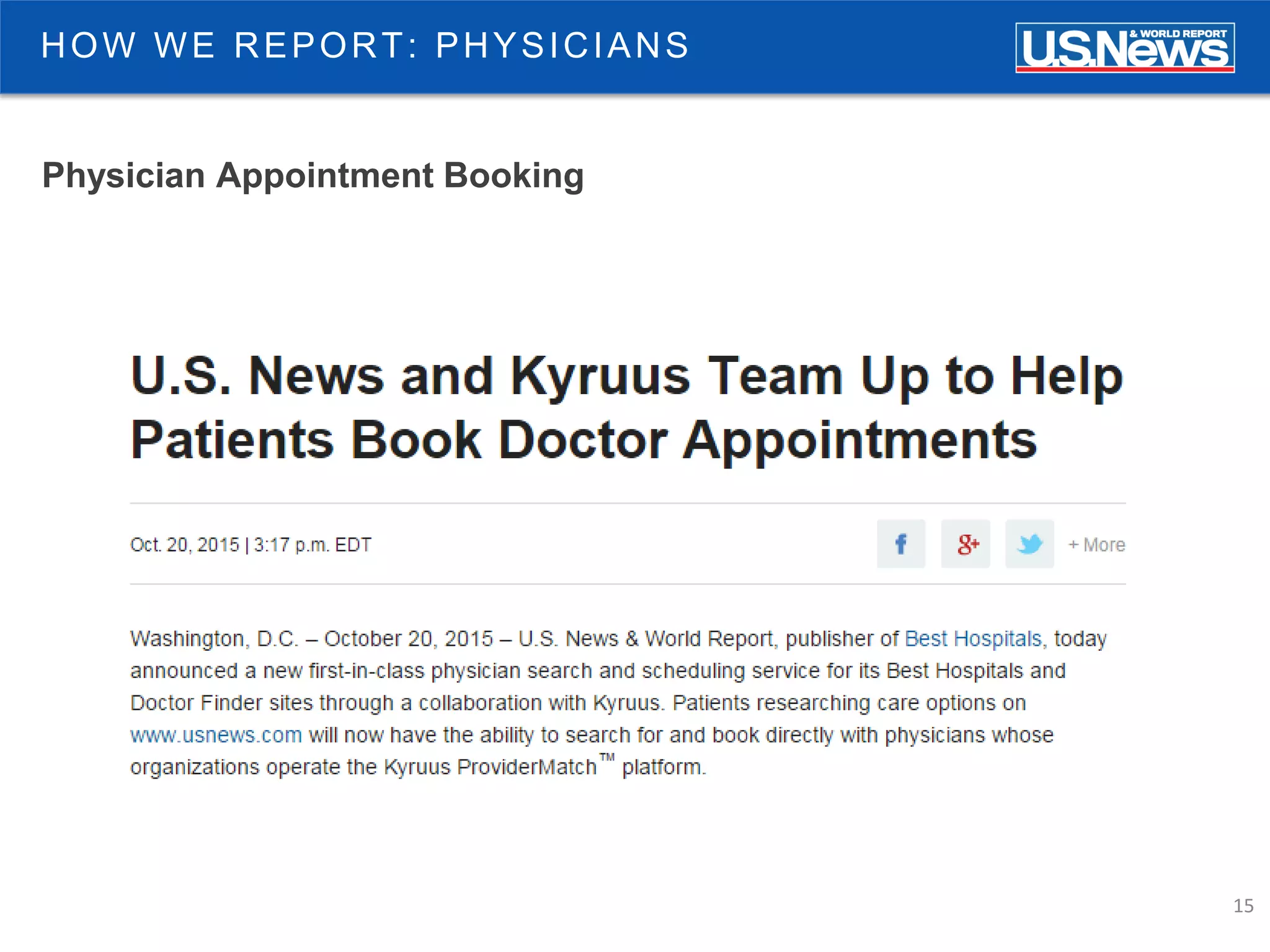
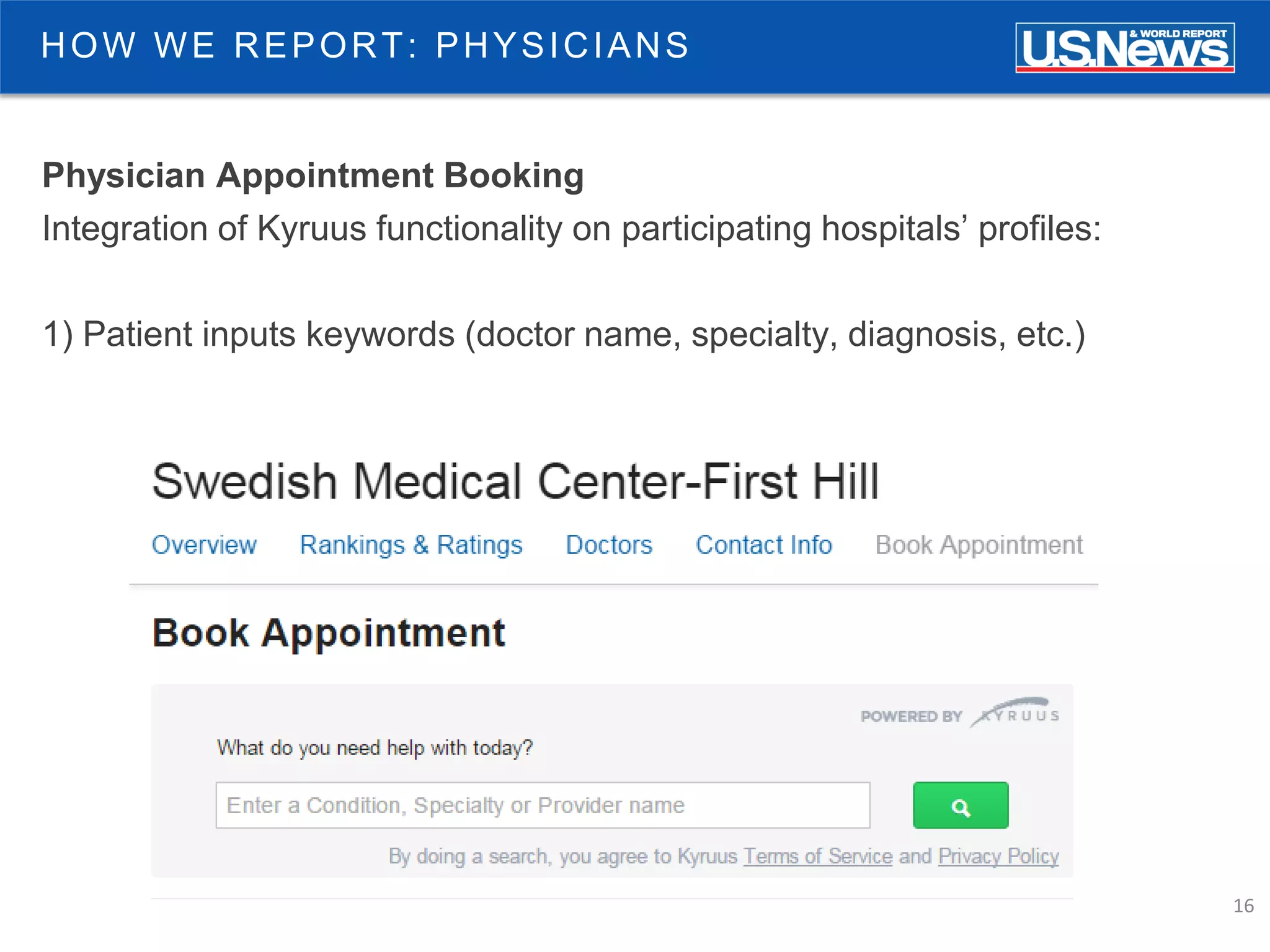
Physician Appointment Booking
HOW WE REPORT: PHYSICIANS
16
Physician Appointment Booking
Integration of Kyruus functionality on participating hospitals’ profiles:
1) Patient inputs keywords (doctor name, specialty, diagnosis, etc.)
HOW WE REPORT: PHYSICIANS
17
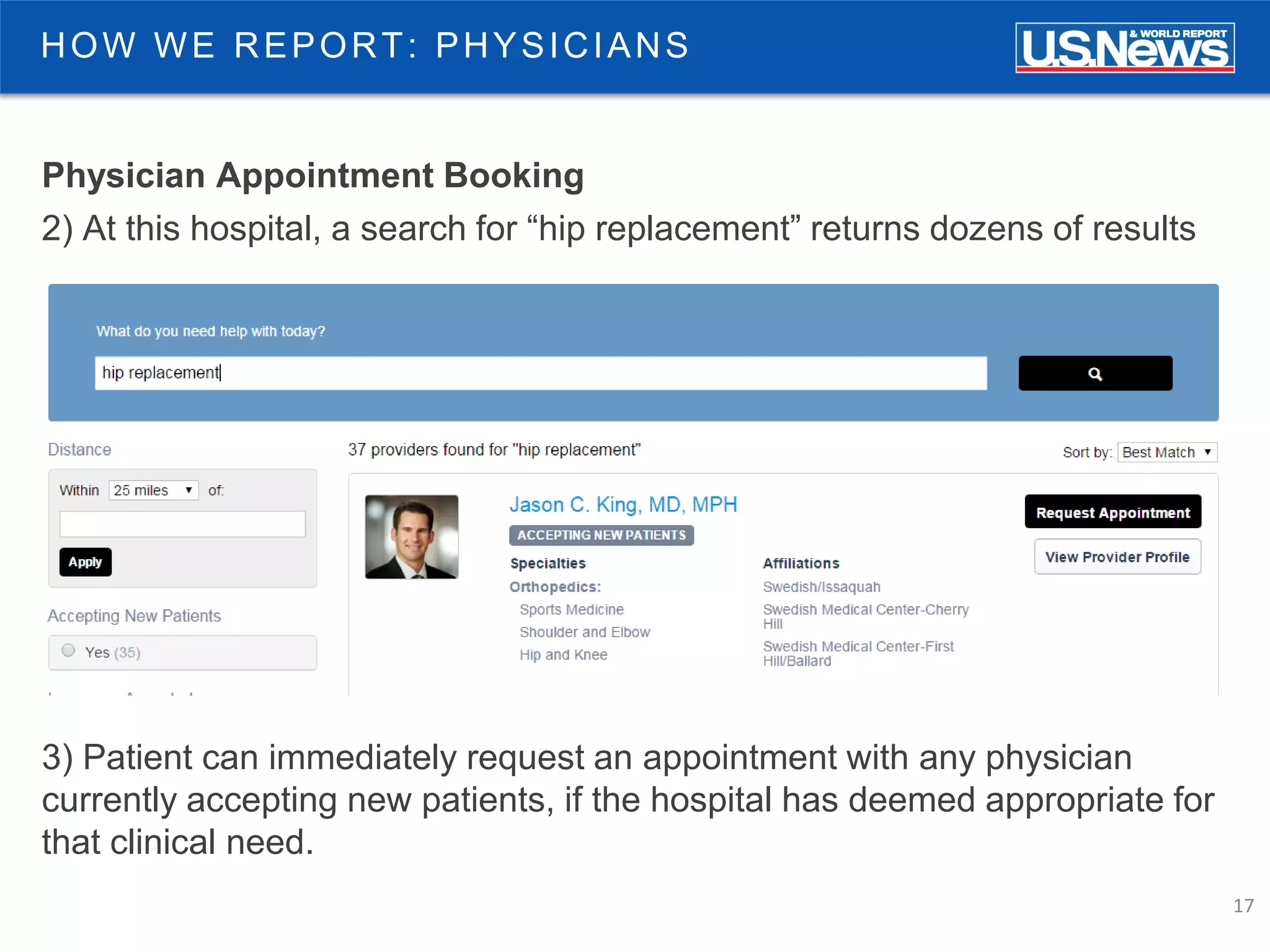
Physician Appointment Booking
2) At this hospital, a search for “hip replacement” returns dozens of results
3) Patient can immediately request an appointment with any physician
currently accepting new patients, if the hospital has deemed appropriate for
that clinical need.
HOW WE REPORT: PHYSICIANS
PROVIDER LOOK-UP TOOLS: HOSPITALS
19
HOW WE REPORT: COMPLEX CARE
Best Hospitals (complex specialty care)
• Published annually since 1990
• Target audience: Patients facing a complex dx or difficult procedure
• Covers 16 specialties, 12 of them data-driven
• Classifications:
– Ranked nationally #1 to #50
– High performing (top decile)
– Unranked (not a negative composite)
• Past methodology refinements:
– Replaced inpatient mortality with 30-day mortality (2007)
– Introduced select Patient Safety Indicators (2009)
– Reduced weight assigned to Reputation (2014)
– Expanded sample of surveyed physicians (2014)
20
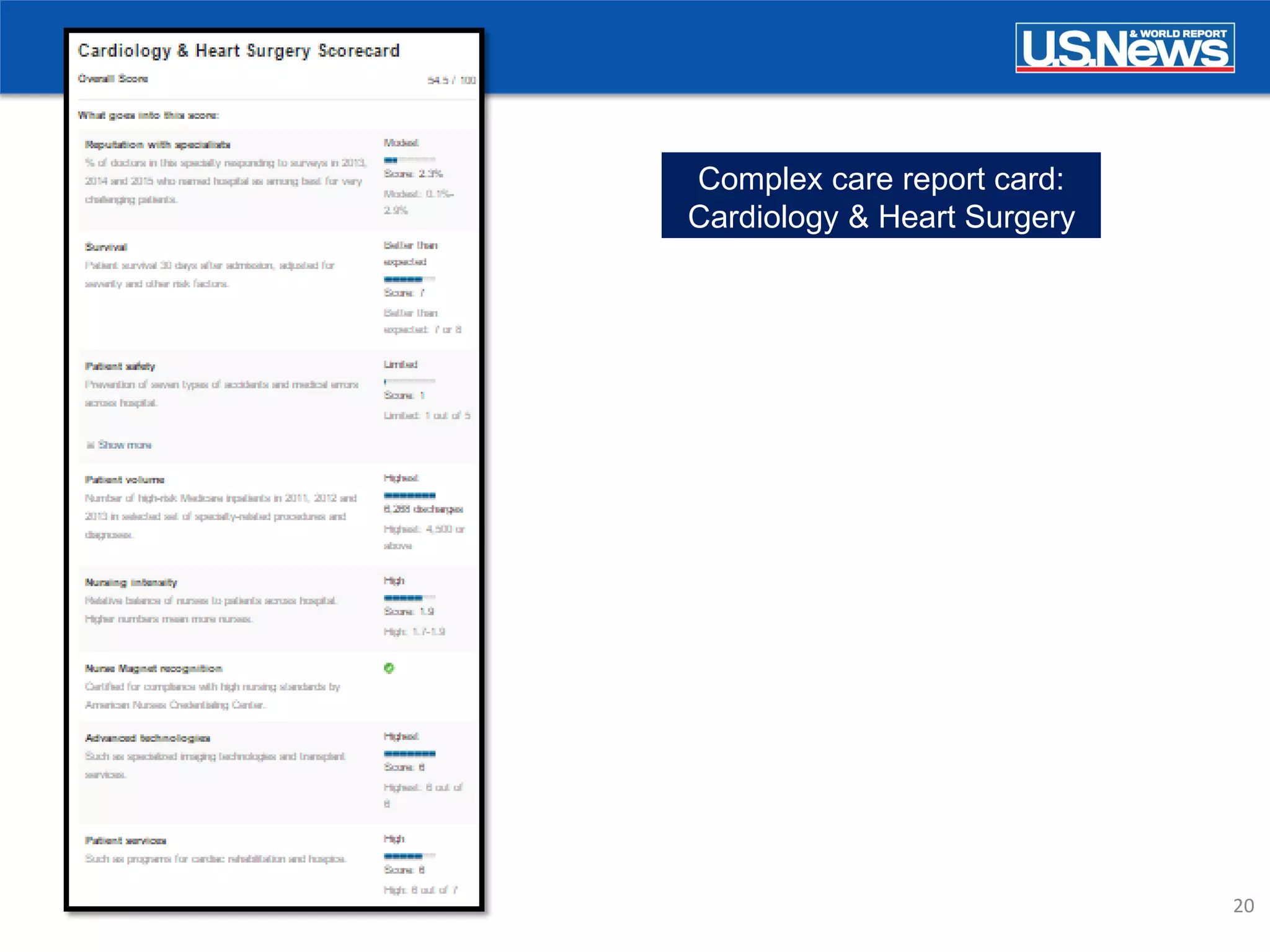
Complex care report card:
Cardiology & Heart Surgery
21
HOW WE REPORT: COMPLEX CARE
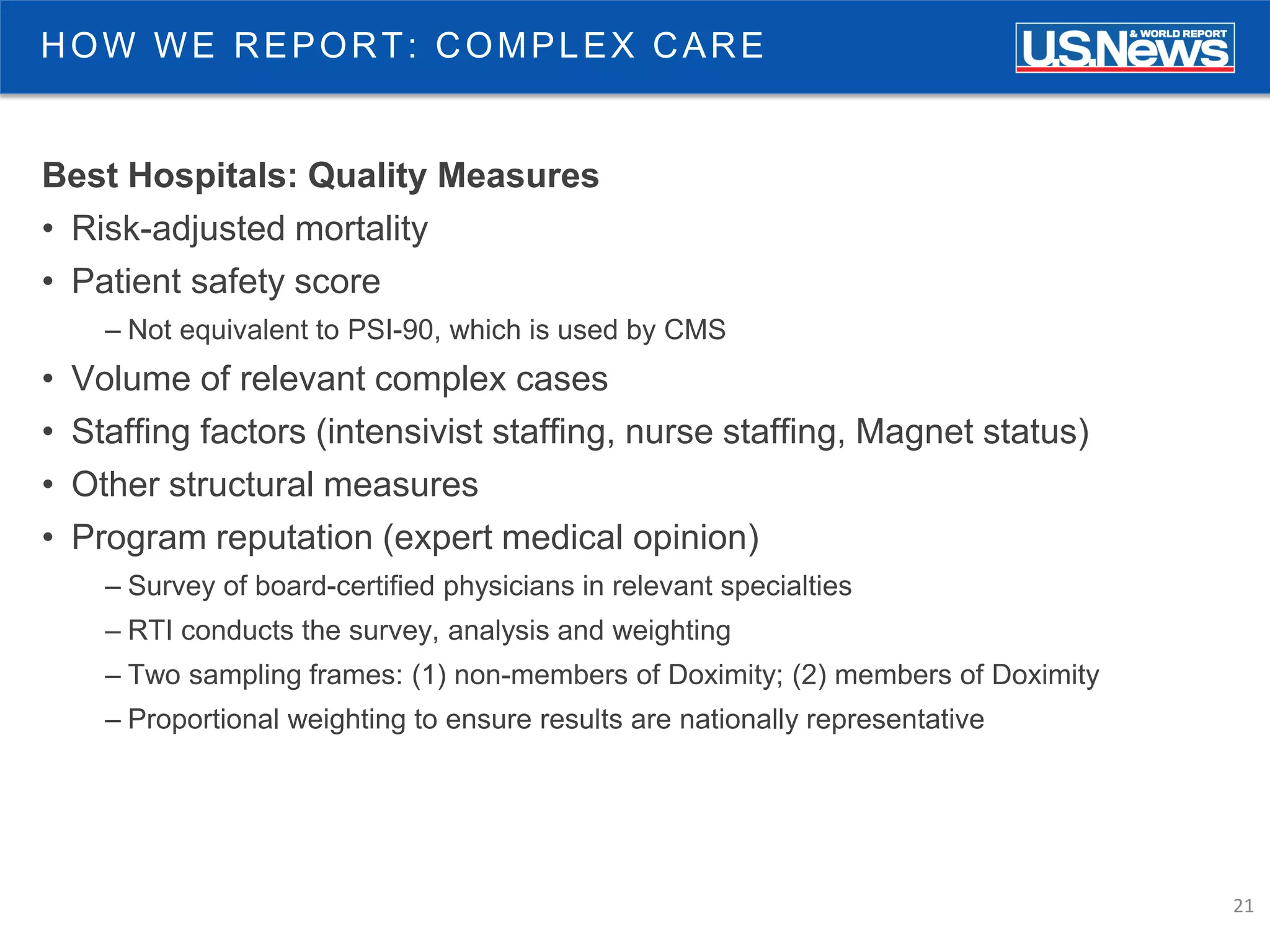
Best Hospitals: Quality Measures
• Risk-adjusted mortality
• Patient safety score
– Not equivalent to PSI-90, which is used by CMS
• Volume of relevant complex cases
• Staffing factors (intensivist staffing, nurse staffing, Magnet status)
• Other structural measures
• Program reputation (expert medical opinion)
– Survey of board-certified physicians in relevant specialties
– RTI conducts the survey, analysis and weighting
– Two sampling frames: (1) non-members of Doximity; (2) members of Doximity
– Proportional weighting to ensure results are nationally representative
22
HOW WE REPORT: COMPLEX CARE
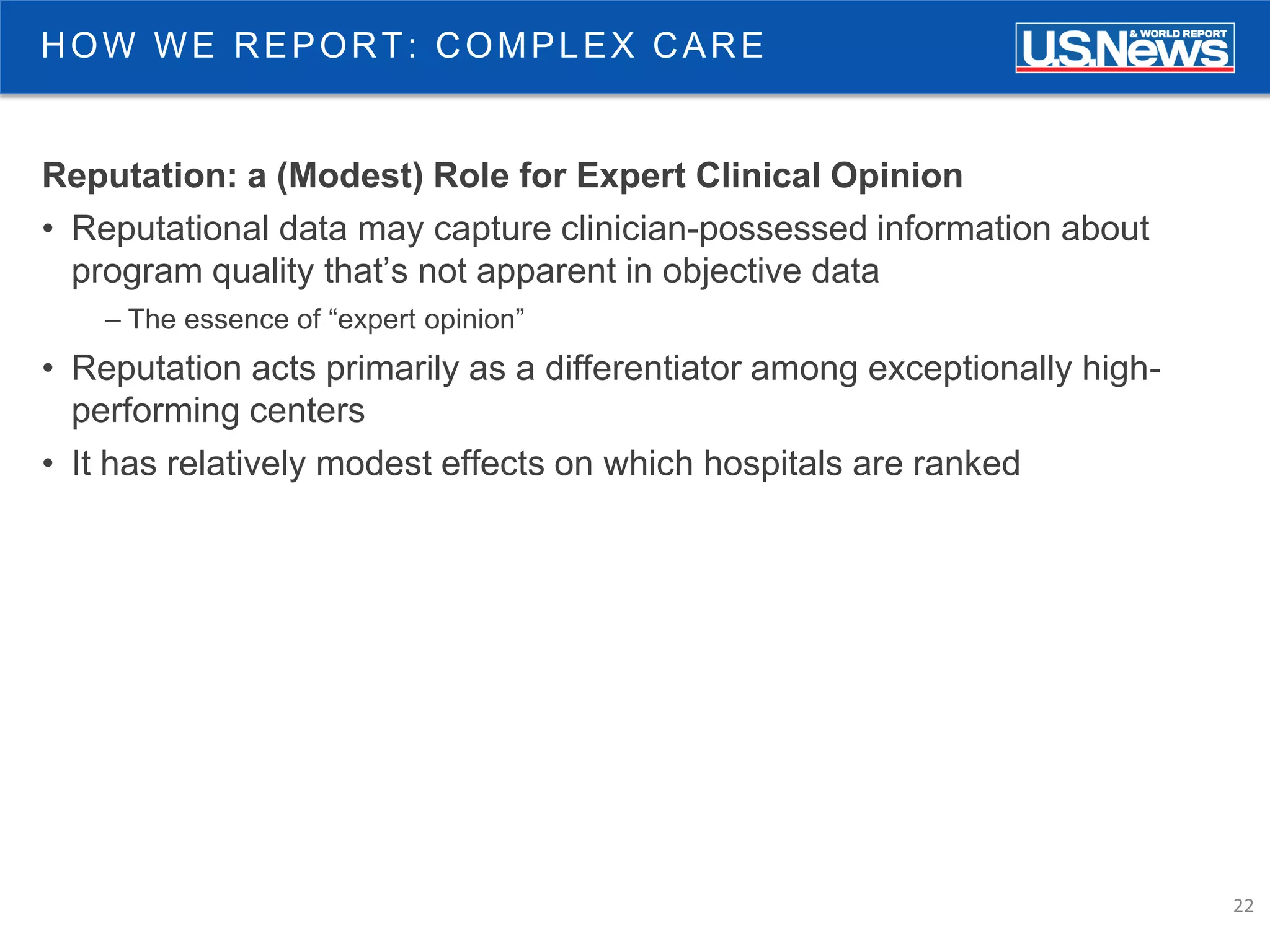
Reputation: a (Modest) Role for Expert Clinical Opinion
• Reputational data may capture clinician-possessed information about
program quality that’s not apparent in objective data
– The essence of “expert opinion”
• Reputation acts primarily as a differentiator among exceptionally high-
performing centers
• It has relatively modest effects on which hospitals are ranked
23
HOW WE REPORT: COMPLEX CARE
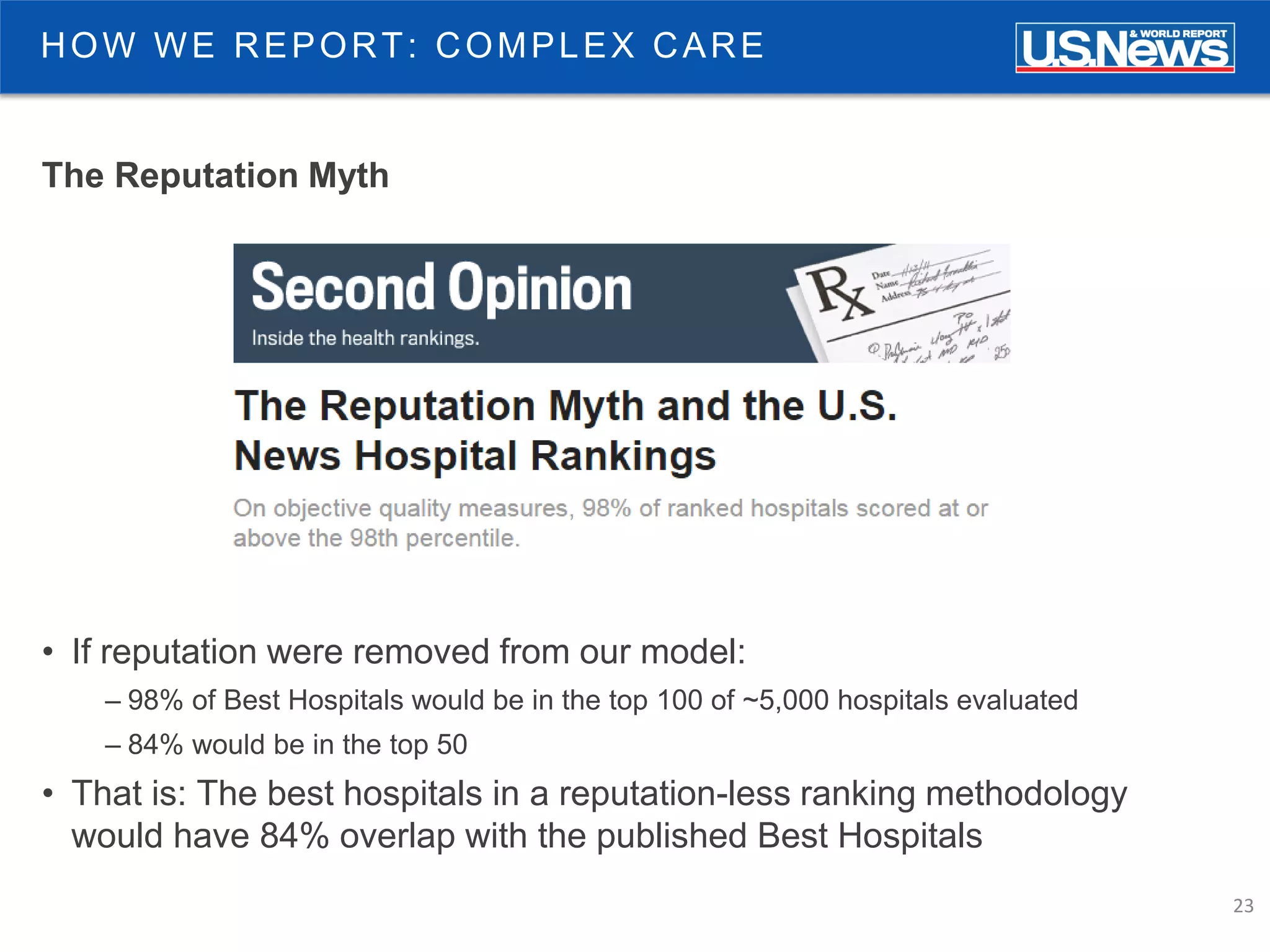
The Reputation Myth
• If reputation were removed from our model:
– 98% of Best Hospitals would be in the top 100 of ~5,000 hospitals evaluated
– 84% would be in the top 50
• That is: The best hospitals in a reputation-less ranking methodology
would have 84% overlap with the published Best Hospitals
24
HOW WE REPORT: PEDIATRIC CARE
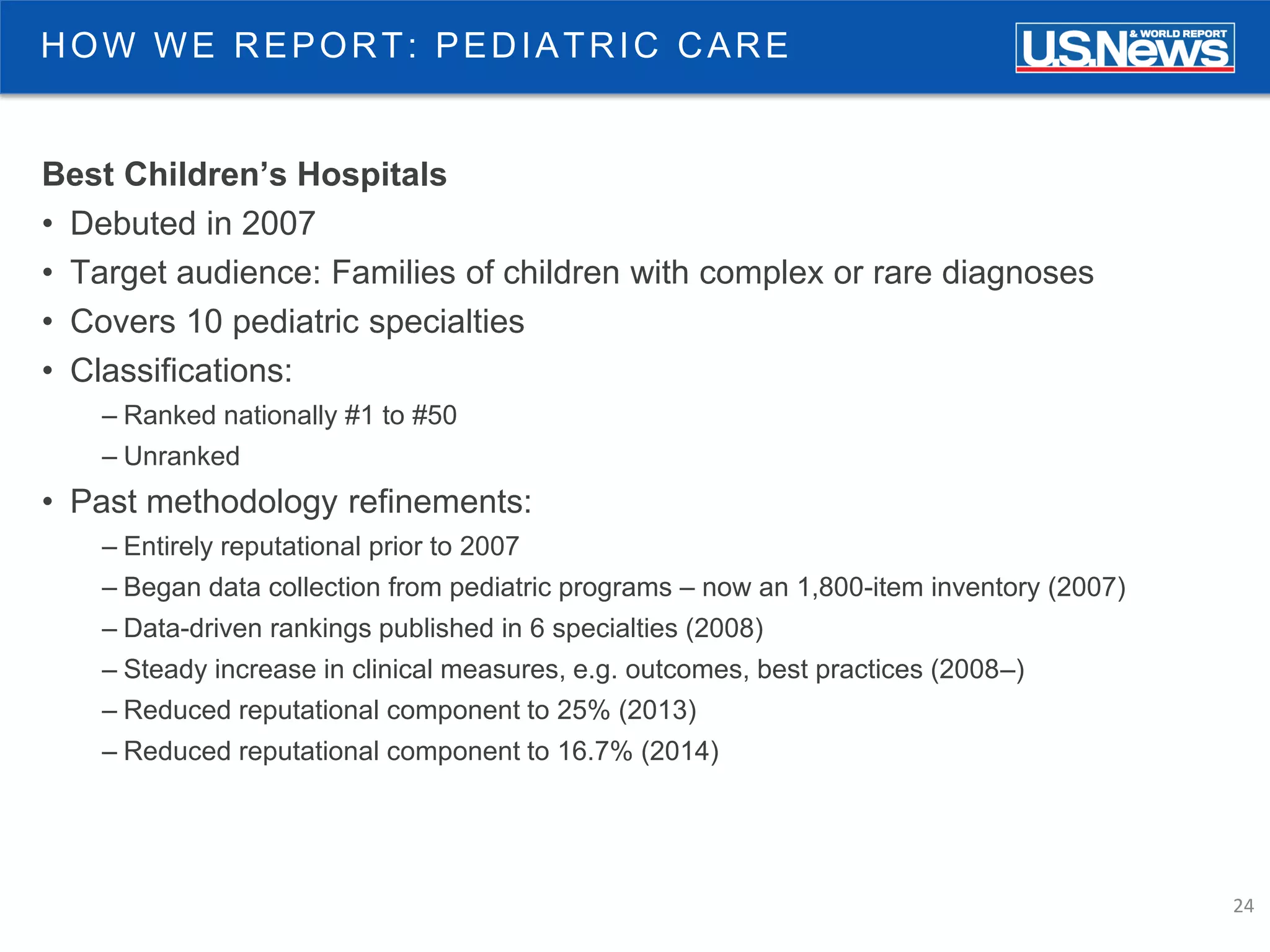
Best Children’s Hospitals
• Debuted in 2007
• Target audience: Families of children with complex or rare diagnoses
• Covers 10 pediatric specialties
• Classifications:
– Ranked nationally #1 to #50
– Unranked
• Past methodology refinements:
– Entirely reputational prior to 2007
– Began data collection from pediatric programs – now an 1,800-item inventory (2007)
– Data-driven rankings published in 6 specialties (2008)
– Steady increase in clinical measures, e.g. outcomes, best practices (2008–)
– Reduced reputational component to 25% (2013)
– Reduced reputational component to 16.7% (2014)
25
26
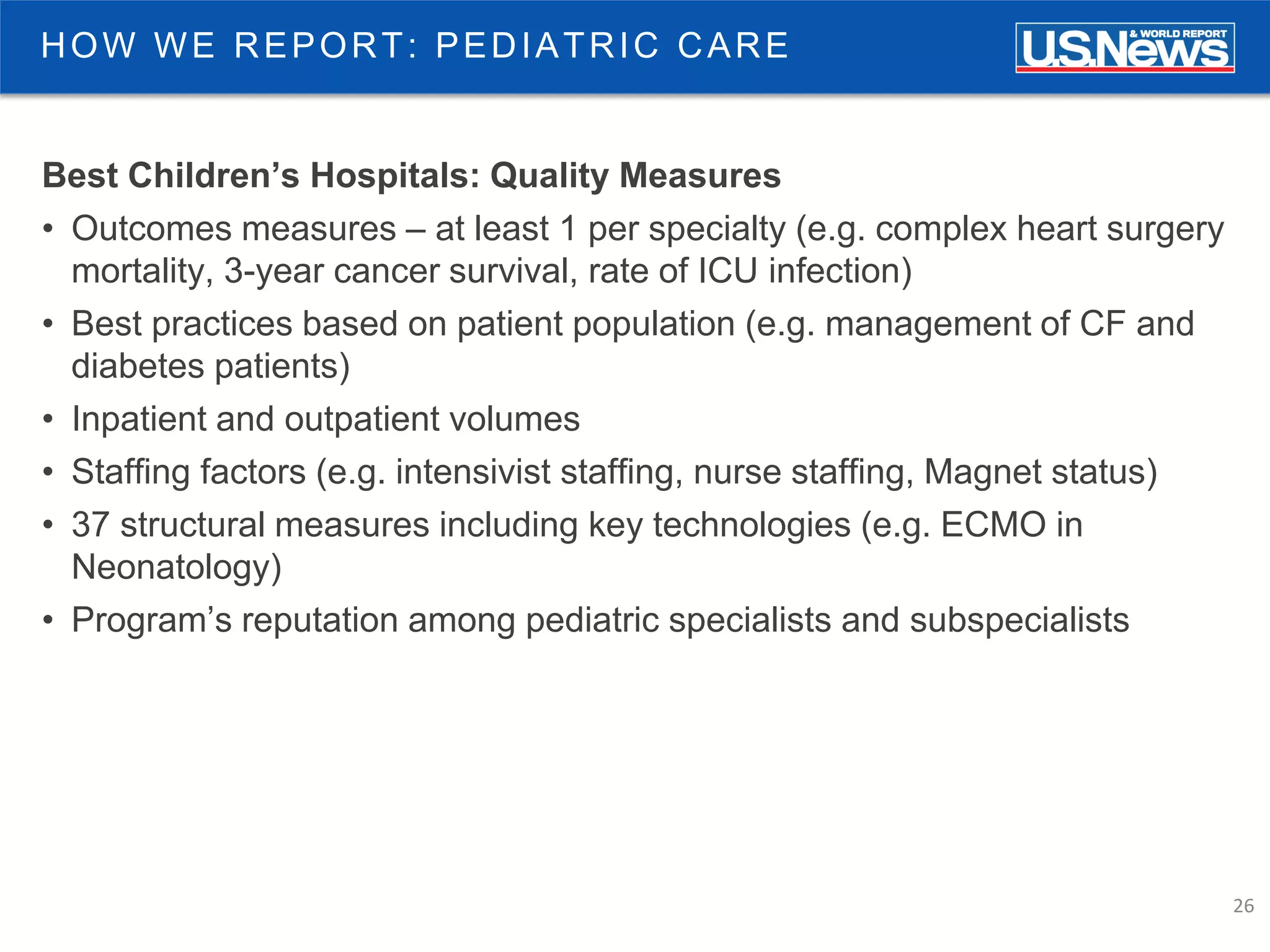
HOW WE REPORT: PEDIATRIC CARE
Best Children’s Hospitals: Quality Measures
• Outcomes measures – at least 1 per specialty (e.g. complex heart surgery
mortality, 3-year cancer survival, rate of ICU infection)
• Best practices based on patient population (e.g. management of CF and
diabetes patients)
• Inpatient and outpatient volumes
• Staffing factors (e.g. intensivist staffing, nurse staffing, Magnet status)
• 37 structural measures including key technologies (e.g. ECMO in
Neonatology)
• Program’s reputation among pediatric specialists and subspecialists
27
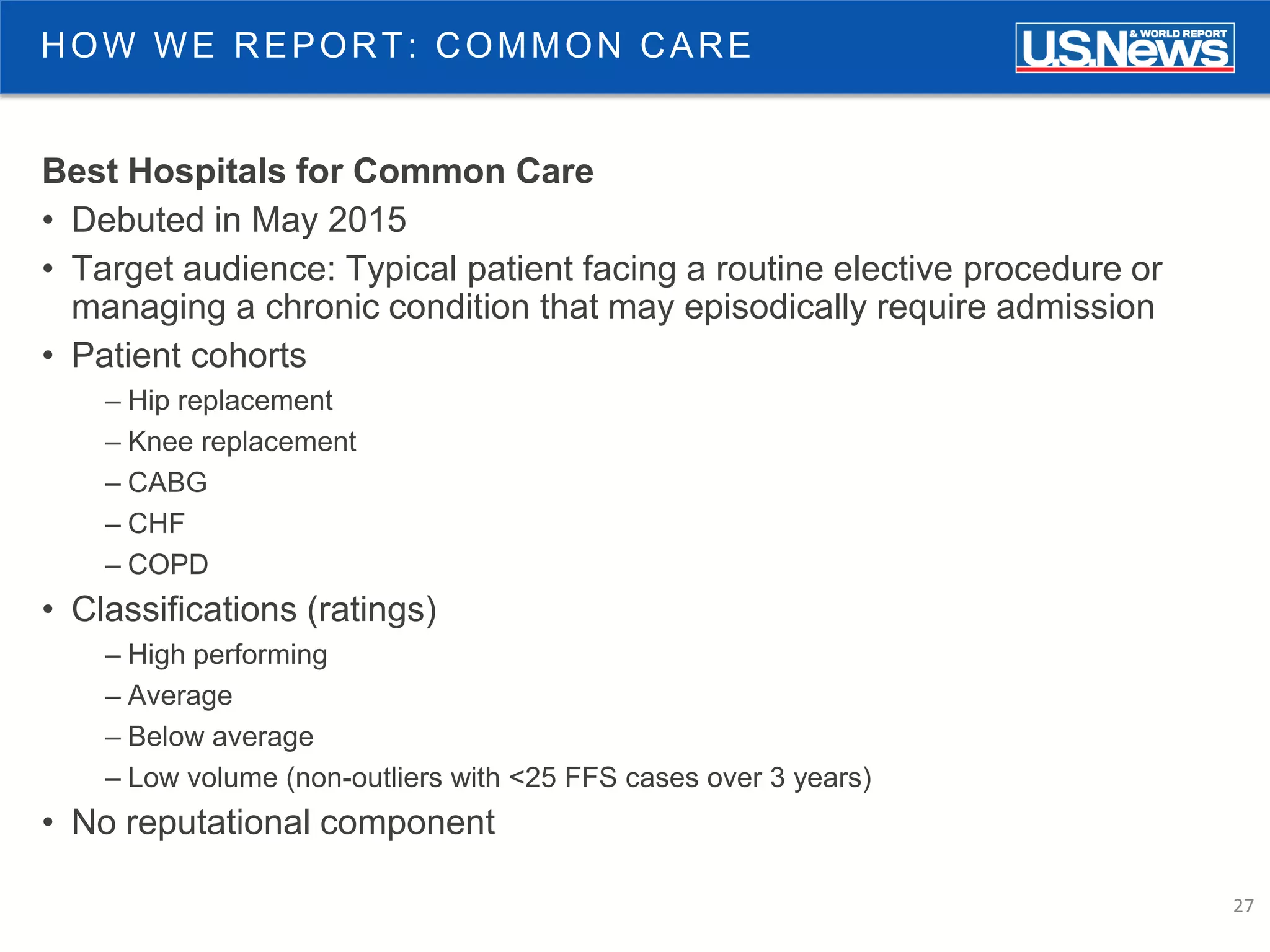
HOW WE REPORT: COMMON CARE
Best Hospitals for Common Care
• Debuted in May 2015
• Target audience: Typical patient facing a routine elective procedure or
managing a chronic condition that may episodically require admission
• Patient cohorts
– Hip replacement
– Knee replacement
– CABG
– CHF
– COPD
• Classifications (ratings)
– High performing
– Average
– Below average
– Low volume (non-outliers with <25 FFS cases over 3 years)
• No reputational component
28
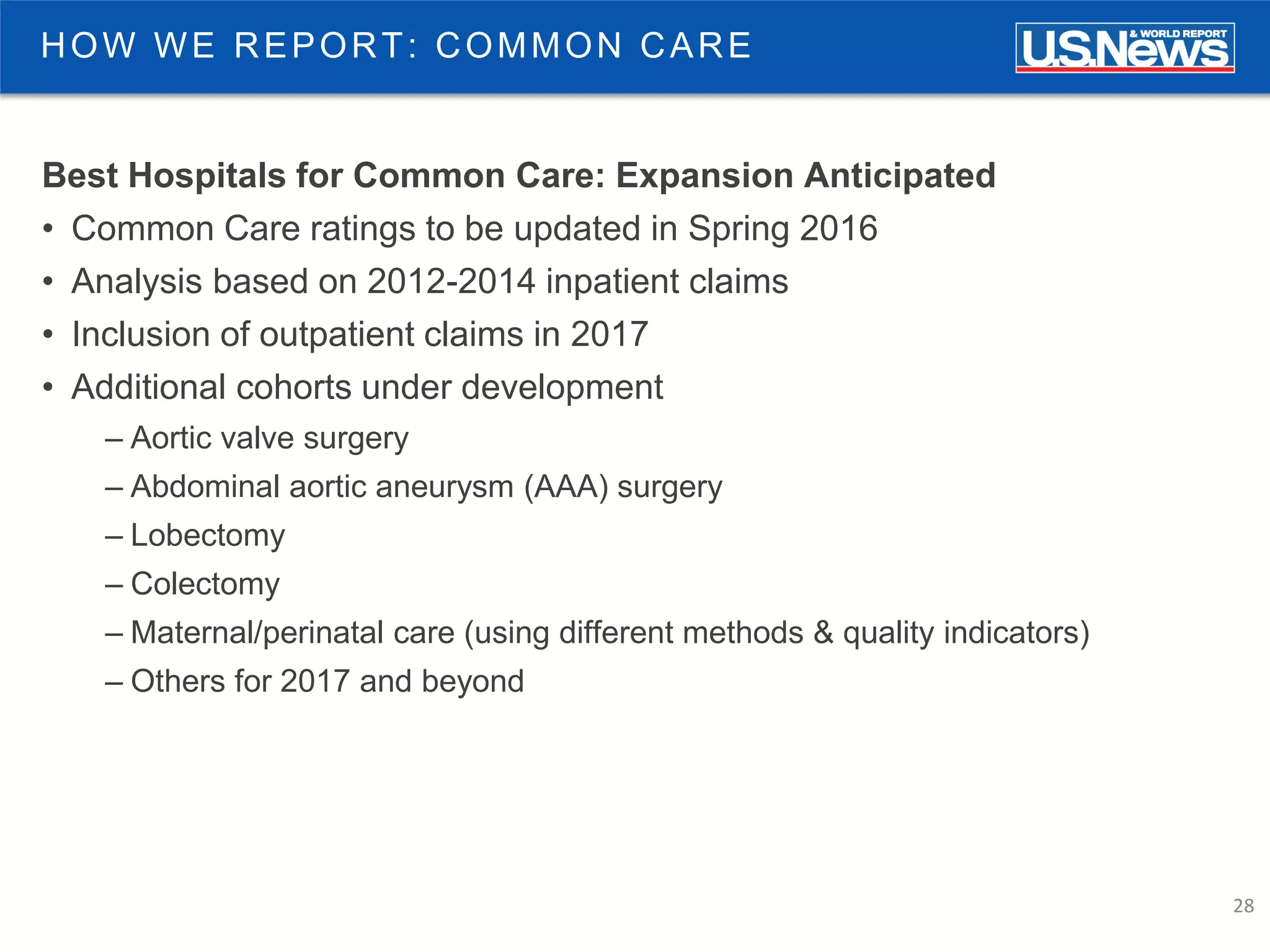
HOW WE REPORT: COMMON CARE
Best Hospitals for Common Care: Expansion Anticipated
• Common Care ratings to be updated in Spring 2016
• Analysis based on 2012-2014 inpatient claims
• Inclusion of outpatient claims in 2017
• Additional cohorts under development
– Aortic valve surgery
– Abdominal aortic aneurysm (AAA) surgery
– Lobectomy
– Colectomy
– Maternal/perinatal care (using different methods & quality indicators)
– Others for 2017 and beyond
29
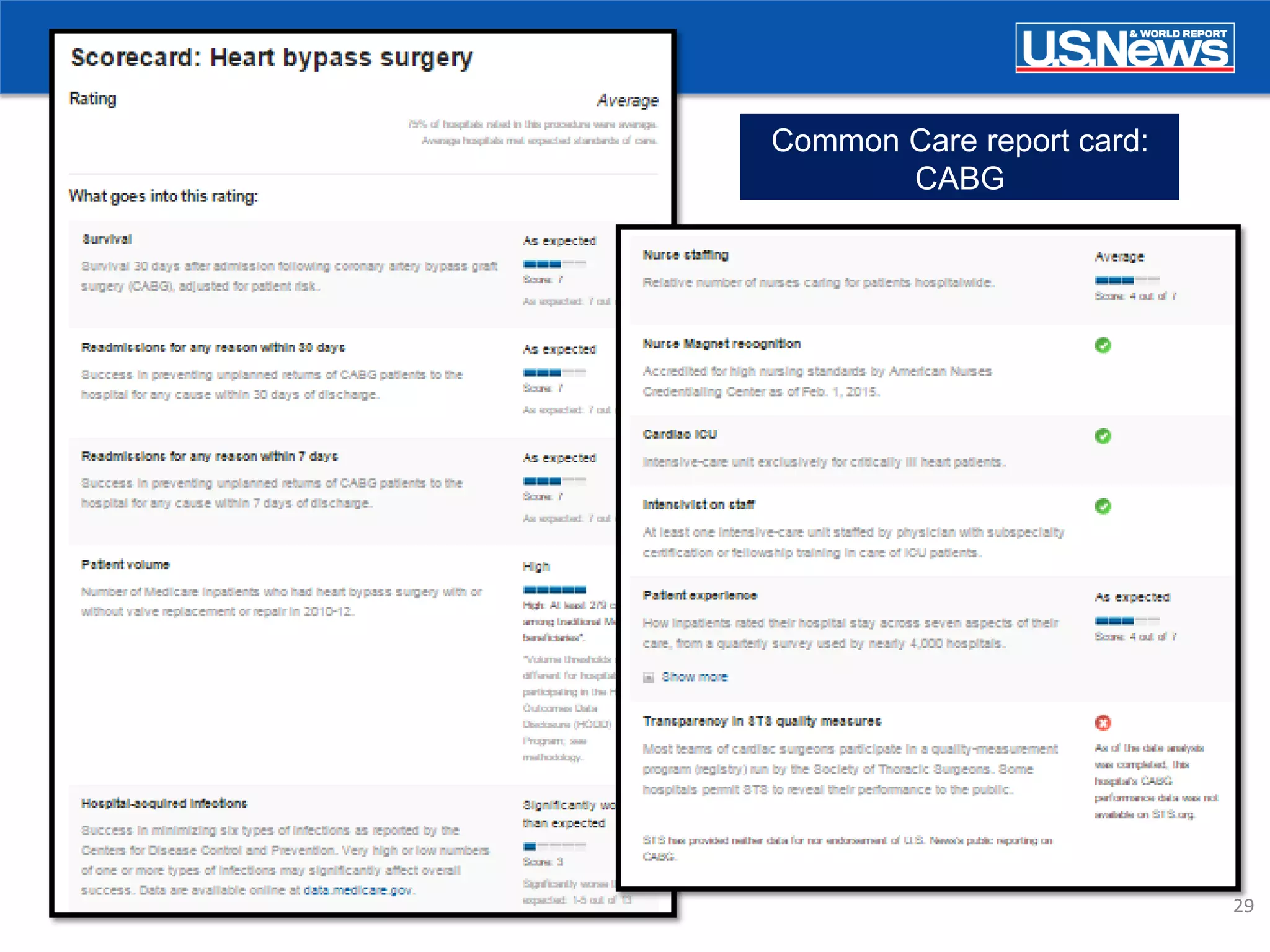
Common Care report card:
CABG
30
HOW WE REPORT: COMMON CARE
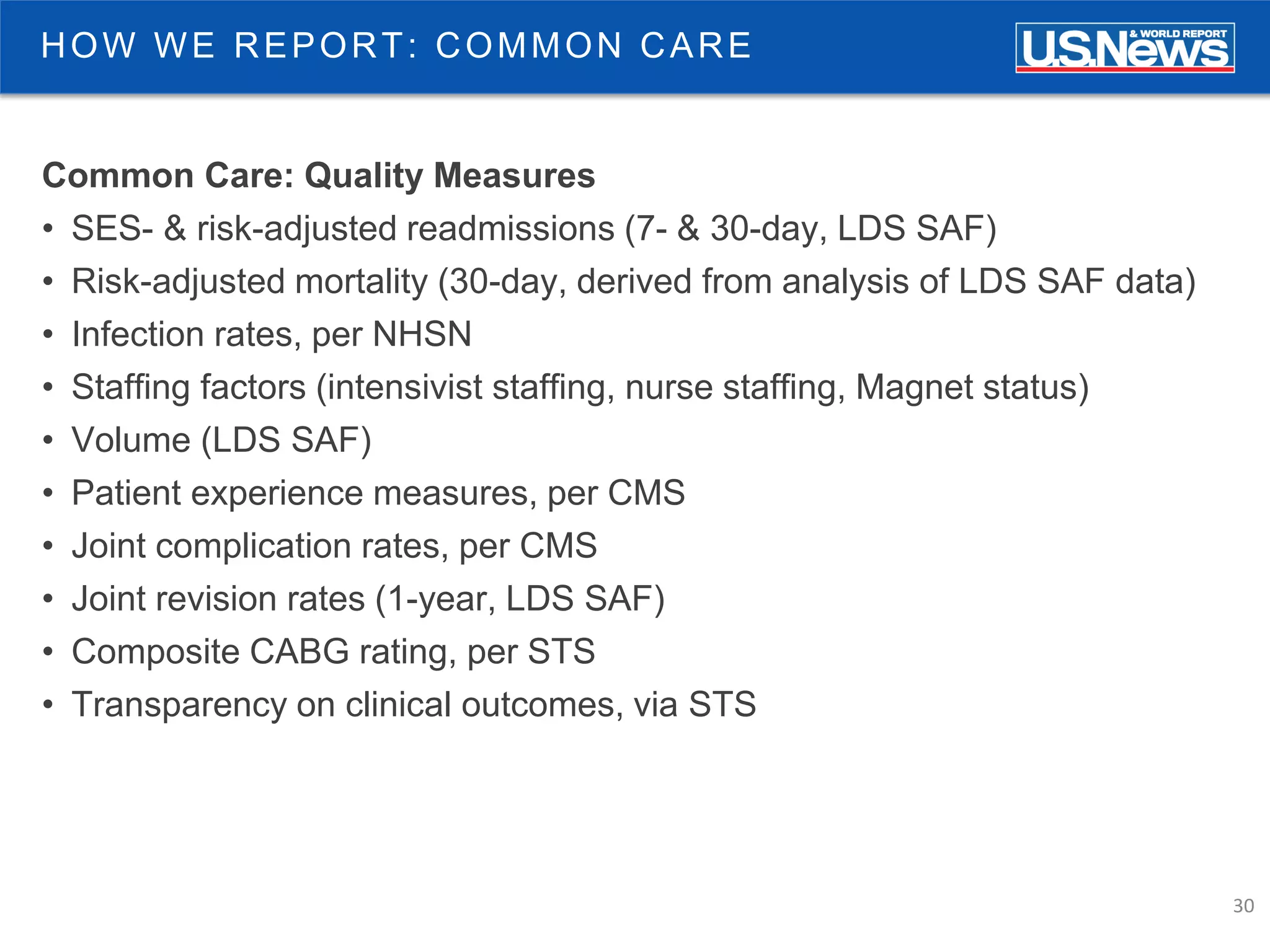
Common Care: Quality Measures
• SES- & risk-adjusted readmissions (7- & 30-day, LDS SAF)
• Risk-adjusted mortality (30-day, derived from analysis of LDS SAF data)
• Infection rates, per NHSN
• Staffing factors (intensivist staffing, nurse staffing, Magnet status)
• Volume (LDS SAF)
• Patient experience measures, per CMS
• Joint complication rates, per CMS
• Joint revision rates (1-year, LDS SAF)
• Composite CABG rating, per STS
• Transparency on clinical outcomes, via STS
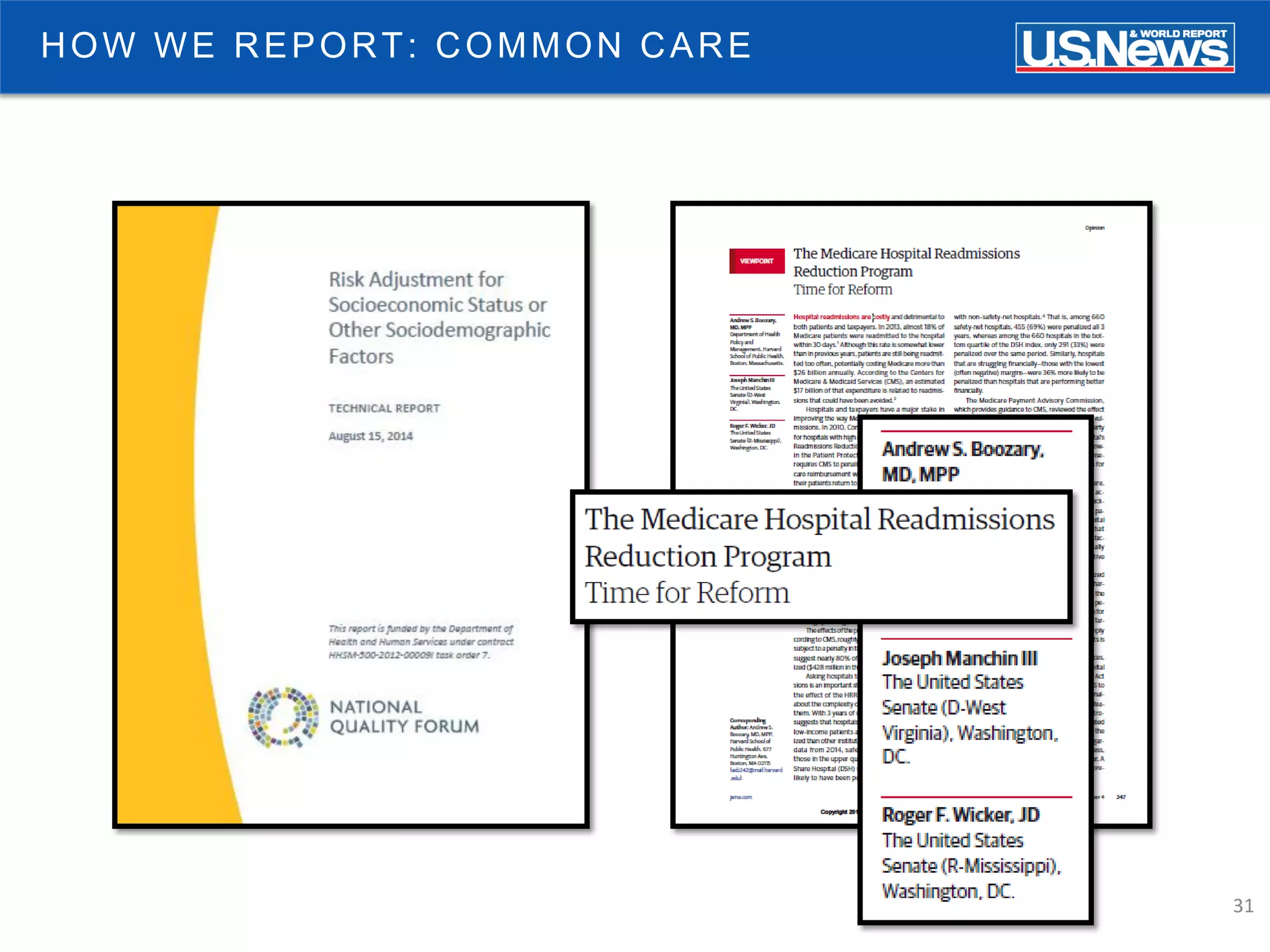
31
HOW WE REPORT: COMMON CARE
32
HOW WE REPORT
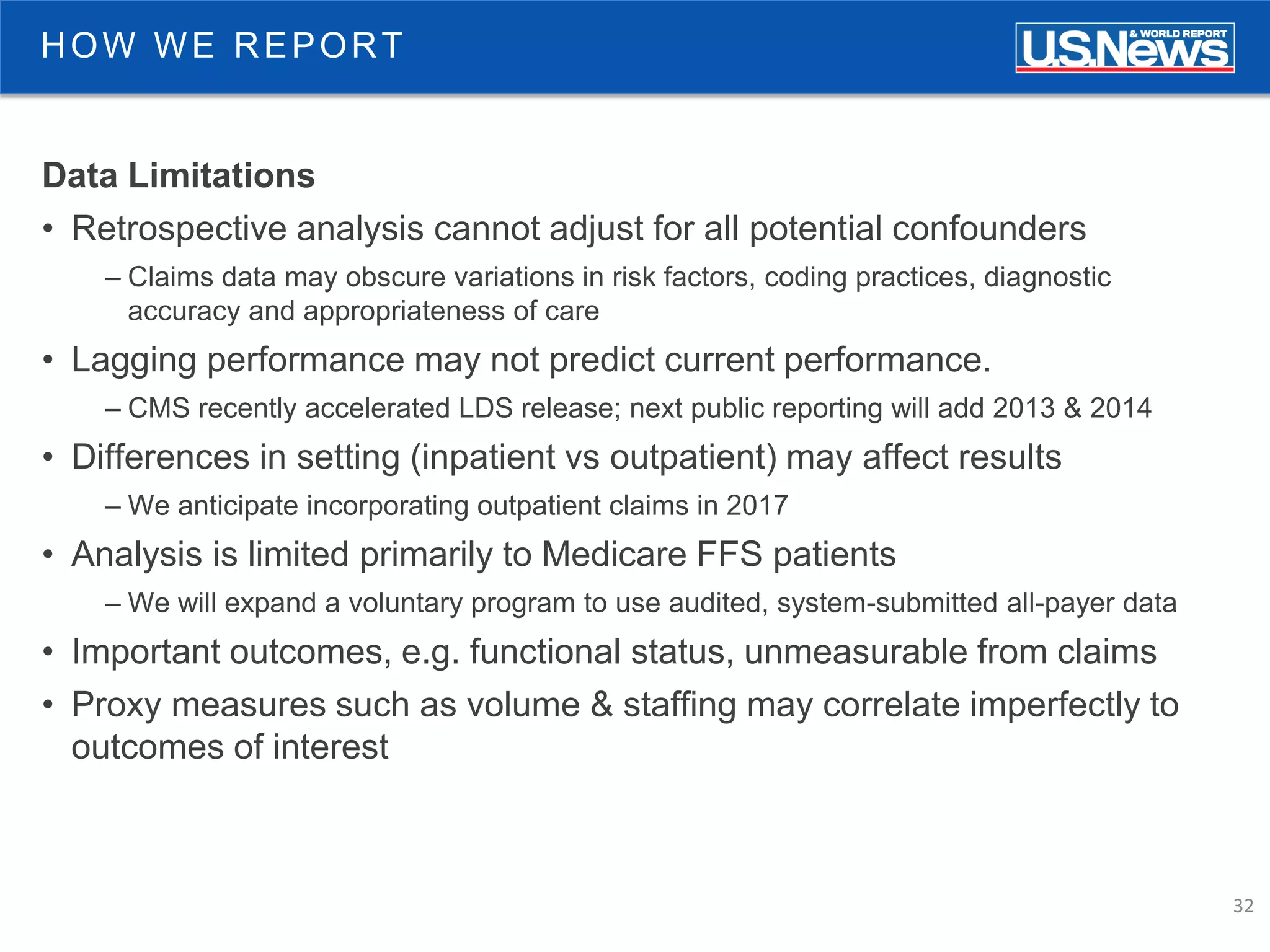
Data Limitations
• Retrospective analysis cannot adjust for all potential confounders
– Claims data may obscure variations in risk factors, coding practices, diagnostic
accuracy and appropriateness of care
• Lagging performance may not predict current performance.
– CMS recently accelerated LDS release; next public reporting will add 2013 & 2014
• Differences in setting (inpatient vs outpatient) may affect results
– We anticipate incorporating outpatient claims in 2017
• Analysis is limited primarily to Medicare FFS patients
– We will expand a voluntary program to use audited, system-submitted all-payer data
• Important outcomes, e.g. functional status, unmeasurable from claims
• Proxy measures such as volume & staffing may correlate imperfectly to
outcomes of interest
33
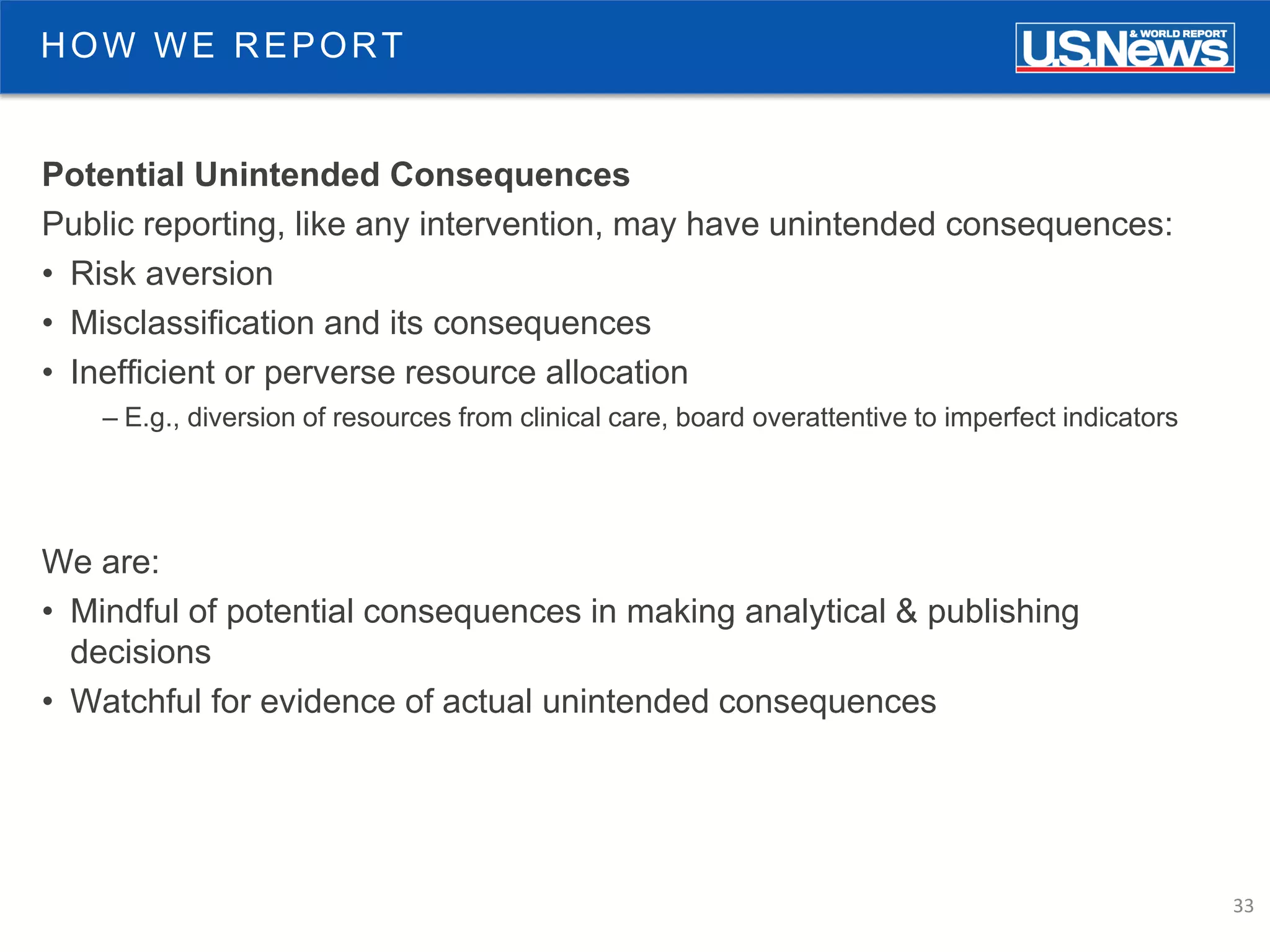
Potential Unintended Consequences
Public reporting, like any intervention, may have unintended consequences:
• Risk aversion
• Misclassification and its consequences
• Inefficient or perverse resource allocation
– E.g., diversion of resources from clinical care, board overattentive to imperfect indicators
We are:
• Mindful of potential consequences in making analytical & publishing
decisions
• Watchful for evidence of actual unintended consequences
HOW WE REPORT
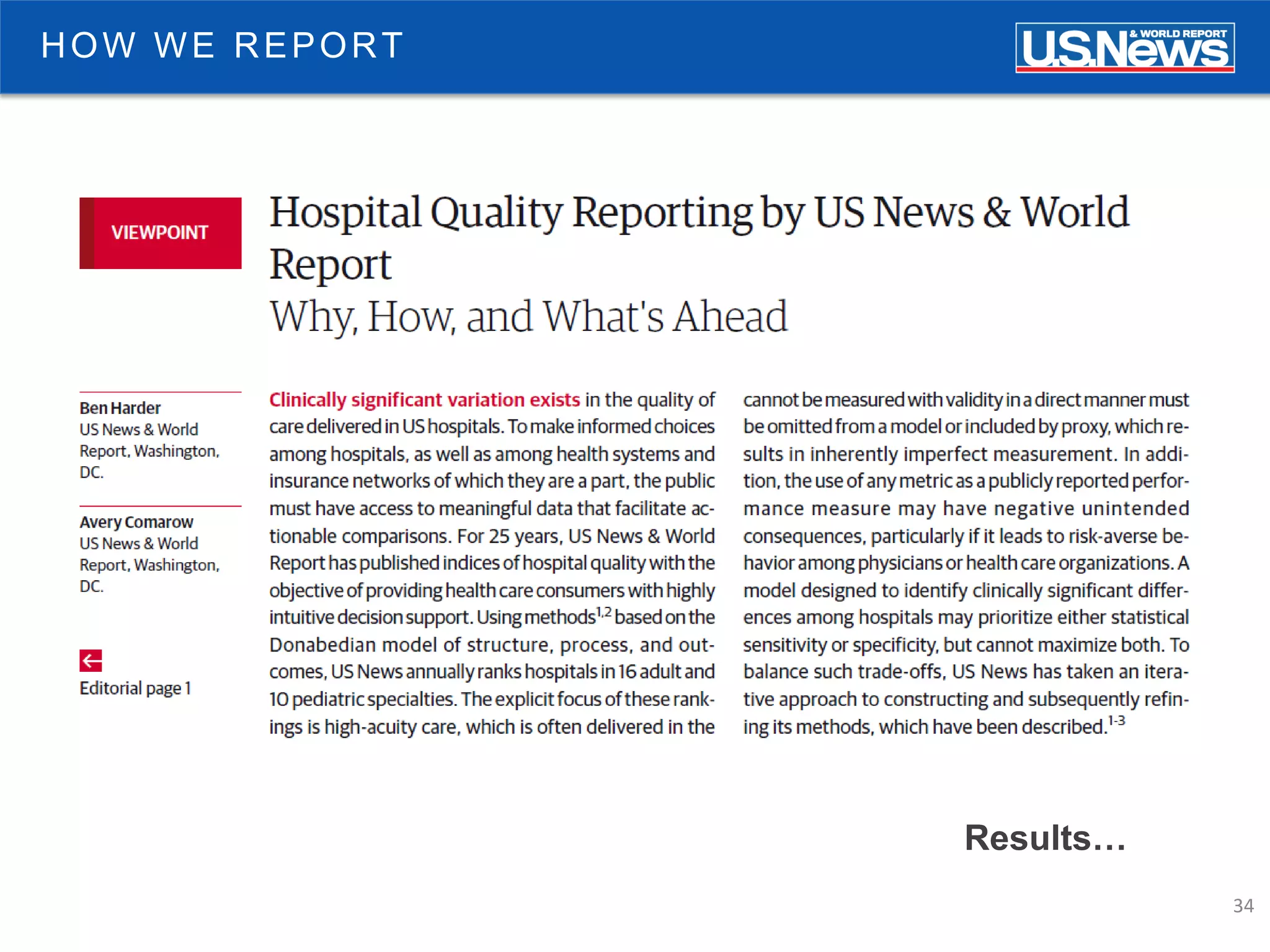
34
HOW WE REPORT
Results…
RESULTS & INTERPRETATION
36
RESULTS
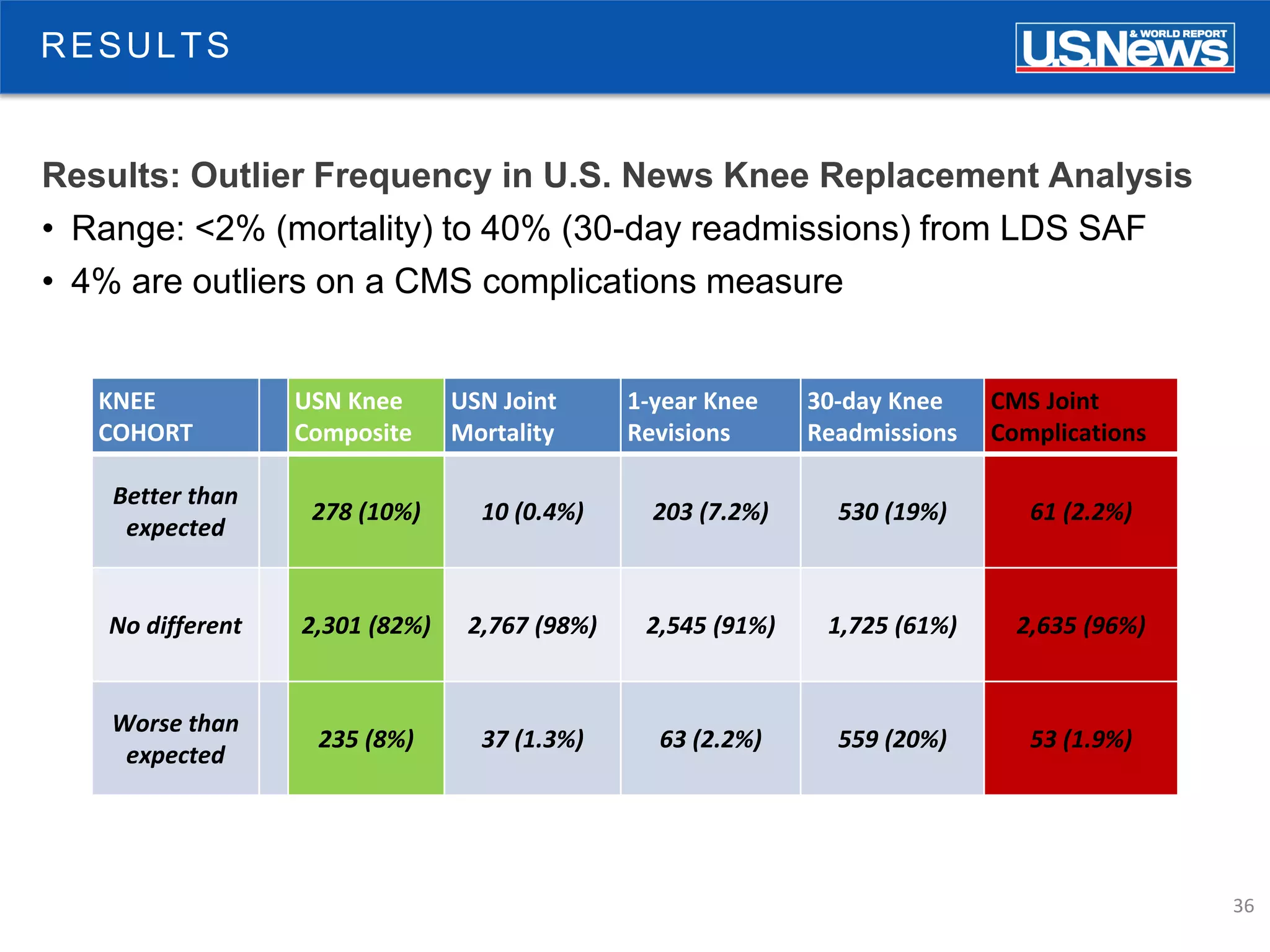
Results: Outlier Frequency in U.S. News Knee Replacement Analysis
• Range: <2% (mortality) to 40% (30-day readmissions) from LDS SAF
• 4% are outliers on a CMS complications measure
KNEE
COHORT
USN Knee
Composite
USN Joint
Mortality
1-year Knee
Revisions
30-day Knee
Readmissions
CMS Joint
Complications
Better than
expected
278 (10%) 10 (0.4%) 203 (7.2%) 530 (19%) 61 (2.2%)
No different 2,301 (82%) 2,767 (98%) 2,545 (91%) 1,725 (61%) 2,635 (96%)
Worse than
expected
235 (8%) 37 (1.3%) 63 (2.2%) 559 (20%) 53 (1.9%)
37
RESULTS
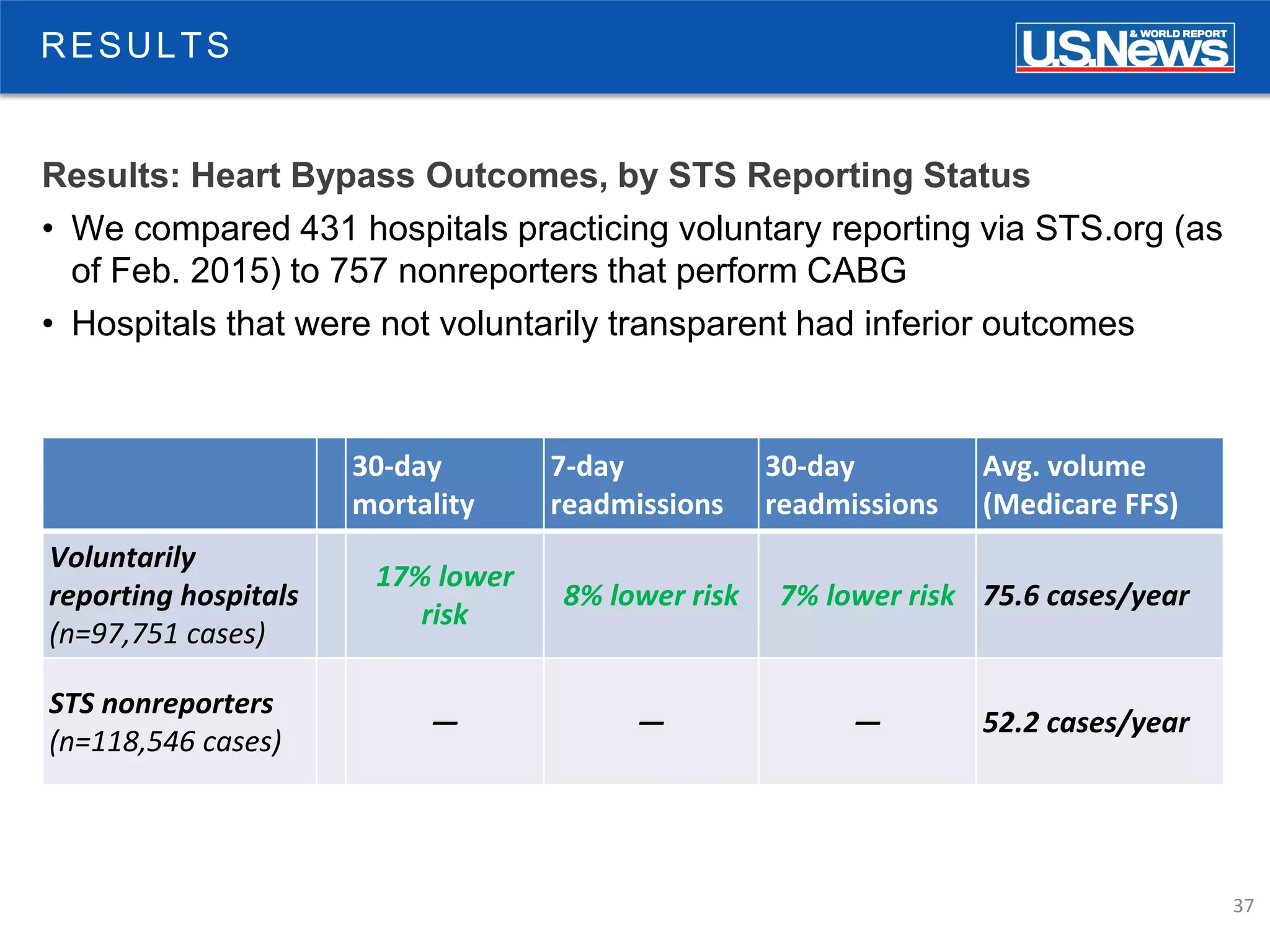
Results: Heart Bypass Outcomes, by STS Reporting Status
• We compared 431 hospitals practicing voluntary reporting via STS.org (as
of Feb. 2015) to 757 nonreporters that perform CABG
• Hospitals that were not voluntarily transparent had inferior outcomes
30-day
mortality
7-day
readmissions
30-day
readmissions
Avg. volume
(Medicare FFS)
Voluntarily
reporting hospitals
(n=97,751 cases)
17% lower
risk
8% lower risk 7% lower risk 75.6 cases/year
STS nonreporters
(n=118,546 cases)
— — — 52.2 cases/year
38
RESULTS
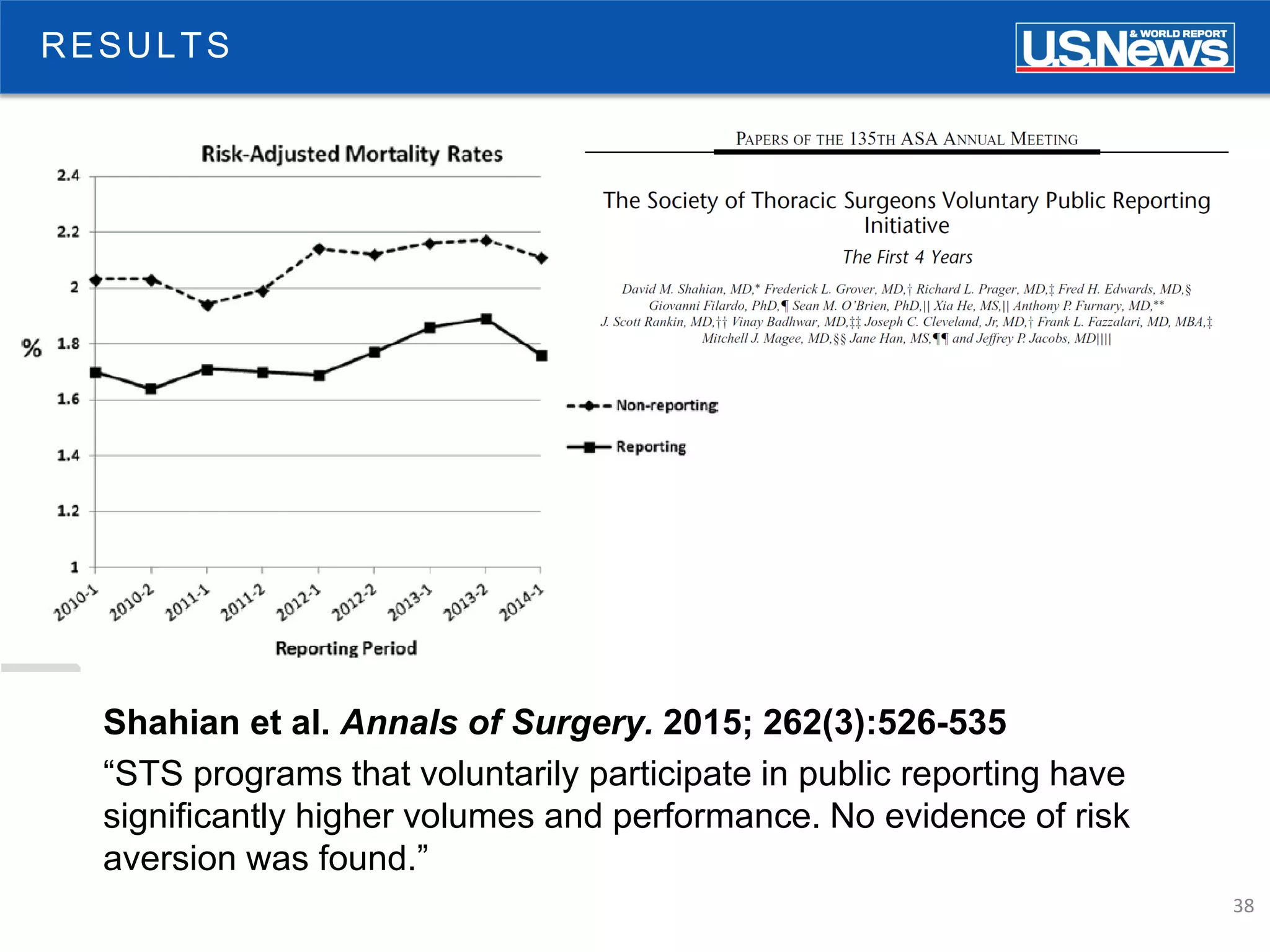
Shahian et al. Annals of Surgery. 2015; 262(3):526-535
“STS programs that voluntarily participate in public reporting have
significantly higher volumes and performance. No evidence of risk
aversion was found.”
39
RESULTS
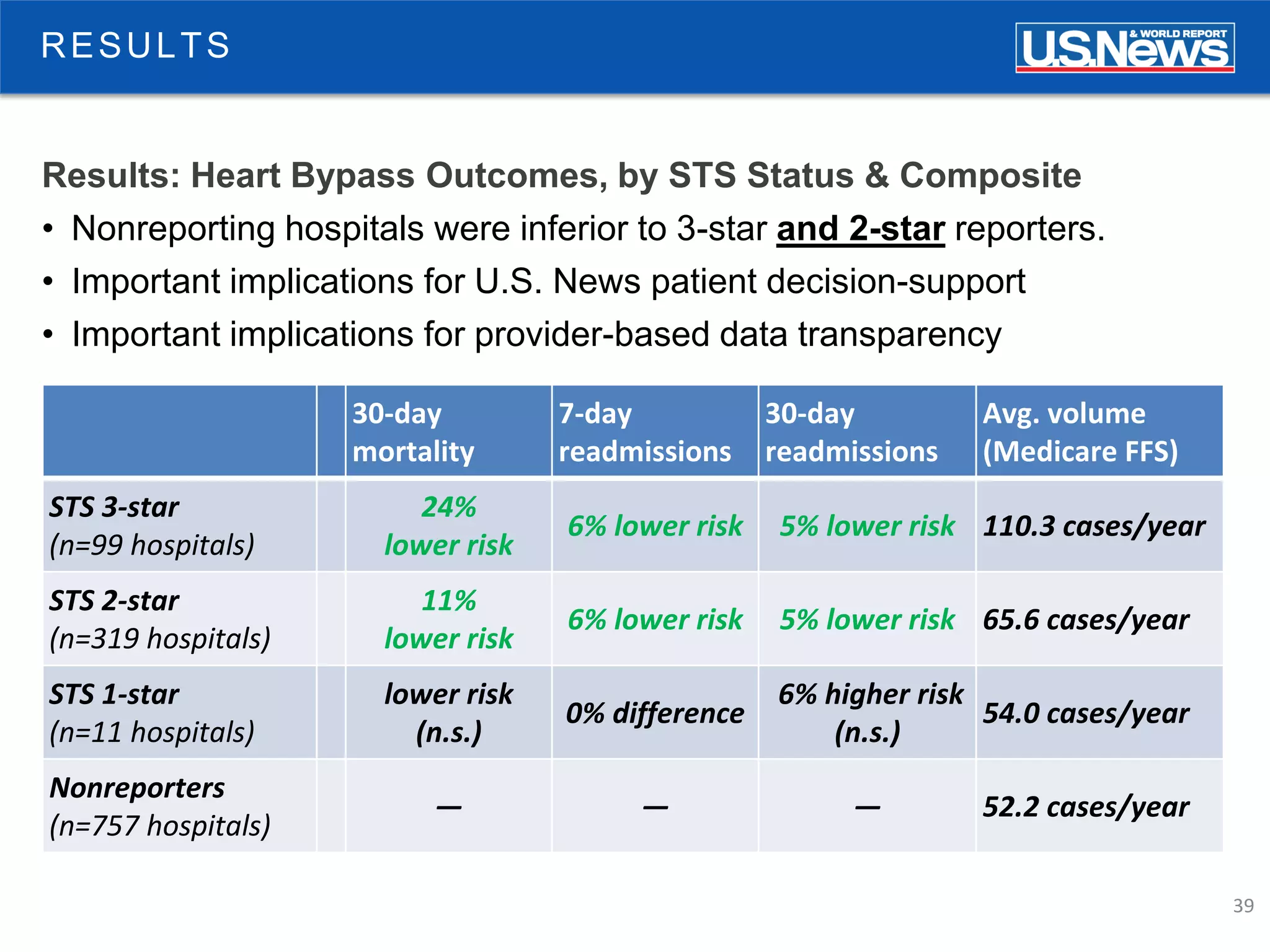
Results: Heart Bypass Outcomes, by STS Status & Composite
• Nonreporting hospitals were inferior to 3-star and 2-star reporters.
• Important implications for U.S. News patient decision-support
• Important implications for provider-based data transparency
30-day
mortality
7-day
readmissions
30-day
readmissions
Avg. volume
(Medicare FFS)
STS 3-star
(n=99 hospitals)
24%
lower risk
6% lower risk 5% lower risk 110.3 cases/year
STS 2-star
(n=319 hospitals)
11%
lower risk
6% lower risk 5% lower risk 65.6 cases/year
STS 1-star
(n=11 hospitals)
lower risk
(n.s.)
0% difference
6% higher risk
(n.s.)
54.0 cases/year
Nonreporters
(n=757 hospitals)
— — — 52.2 cases/year
40
TRANSPARENCY
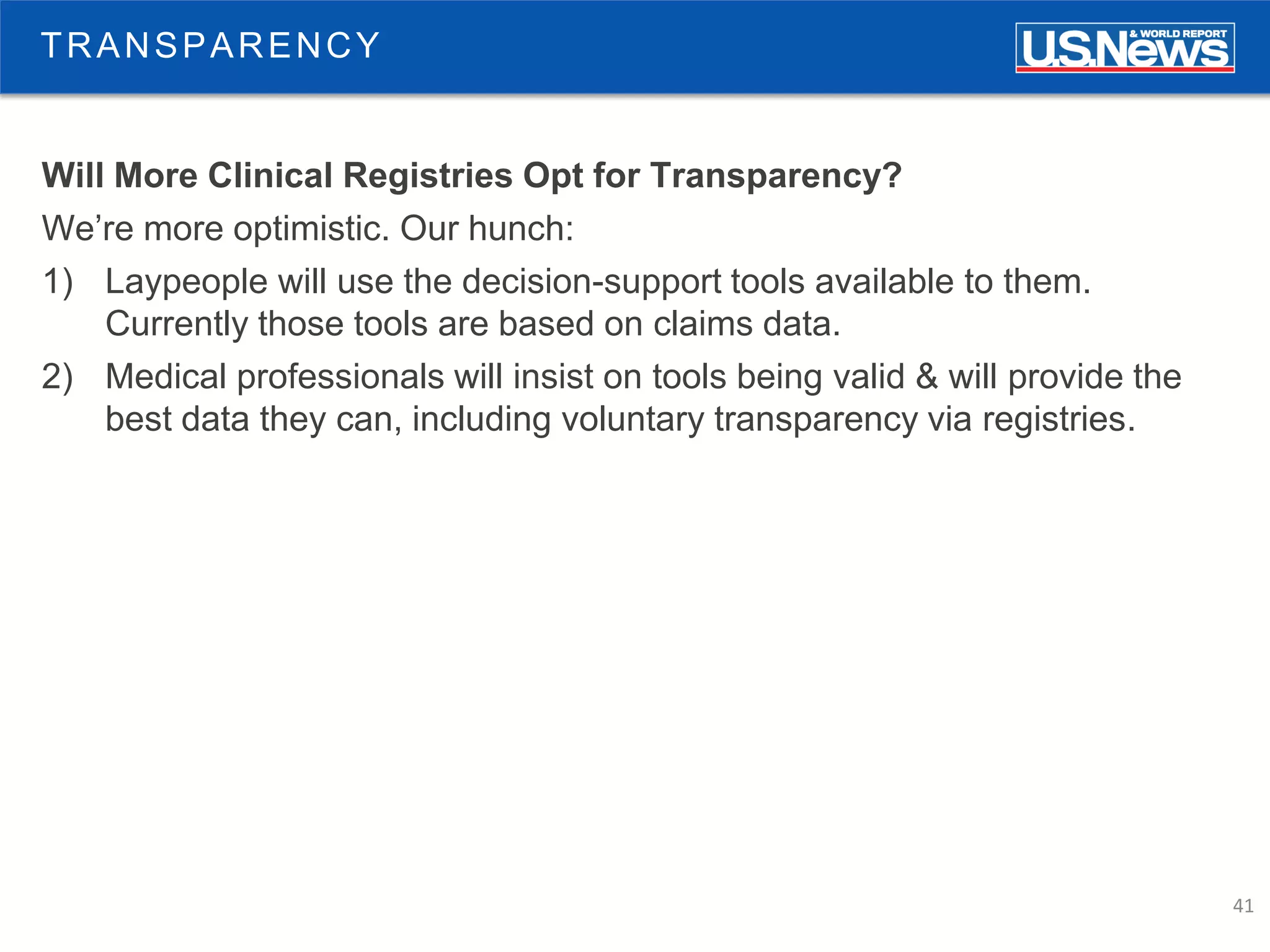
Will More Clinical Registries Opt for Transparency?
• One observer thinks not:
“the medical priesthood [says]: ‘You are not worthy to judge us.’ ”
41
TRANSPARENCY
Will More Clinical Registries Opt for Transparency?
We’re more optimistic. Our hunch:
1) Laypeople will use the decision-support tools available to them.
Currently those tools are based on claims data.
2) Medical professionals will insist on tools being valid & will provide the
best data they can, including voluntary transparency via registries.
VOLUME & REFERRAL PATTERNS
43
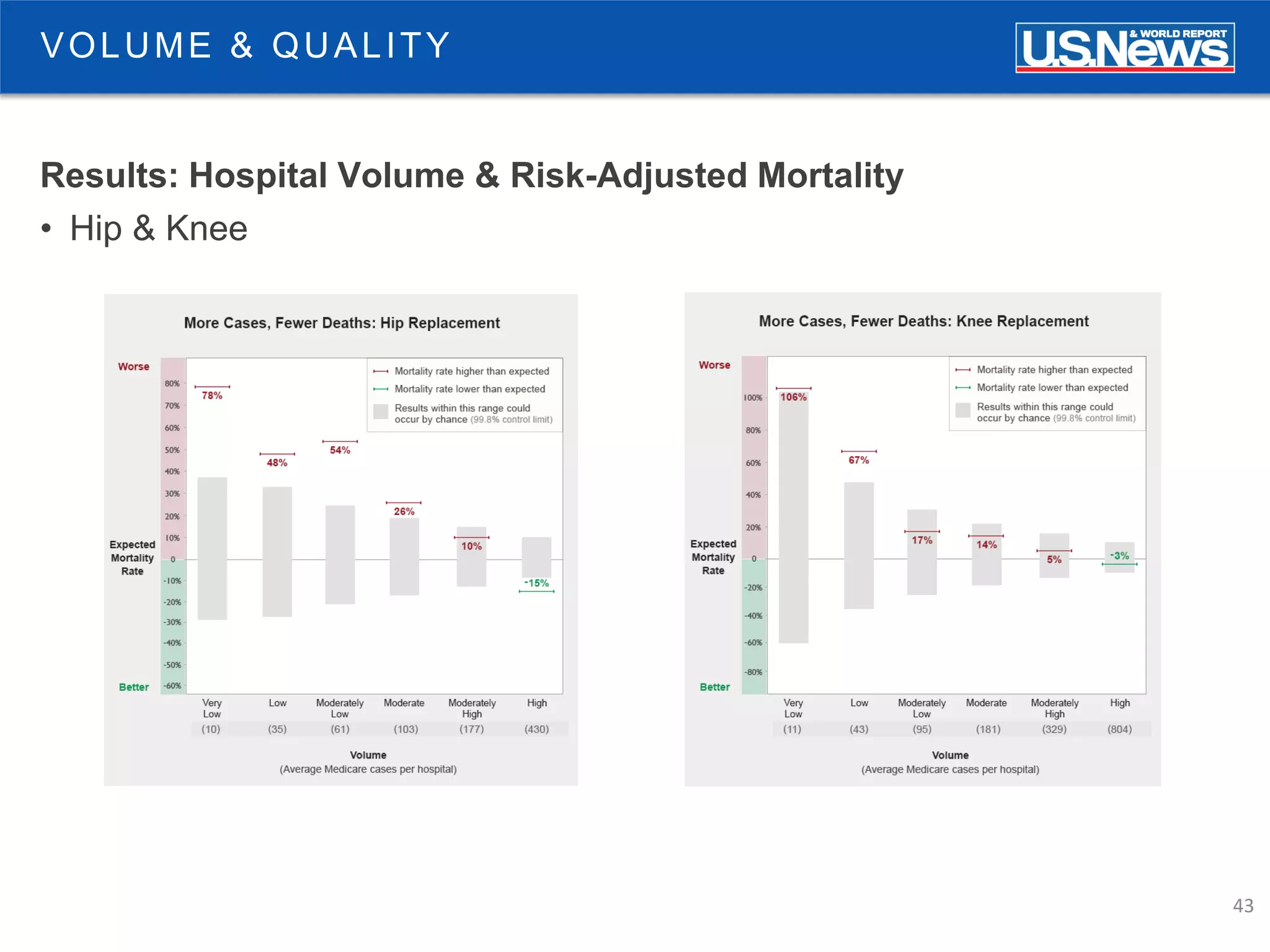
Results: Hospital Volume & Risk-Adjusted Mortality
• Hip & Knee
VOLUME & QUALITY
44
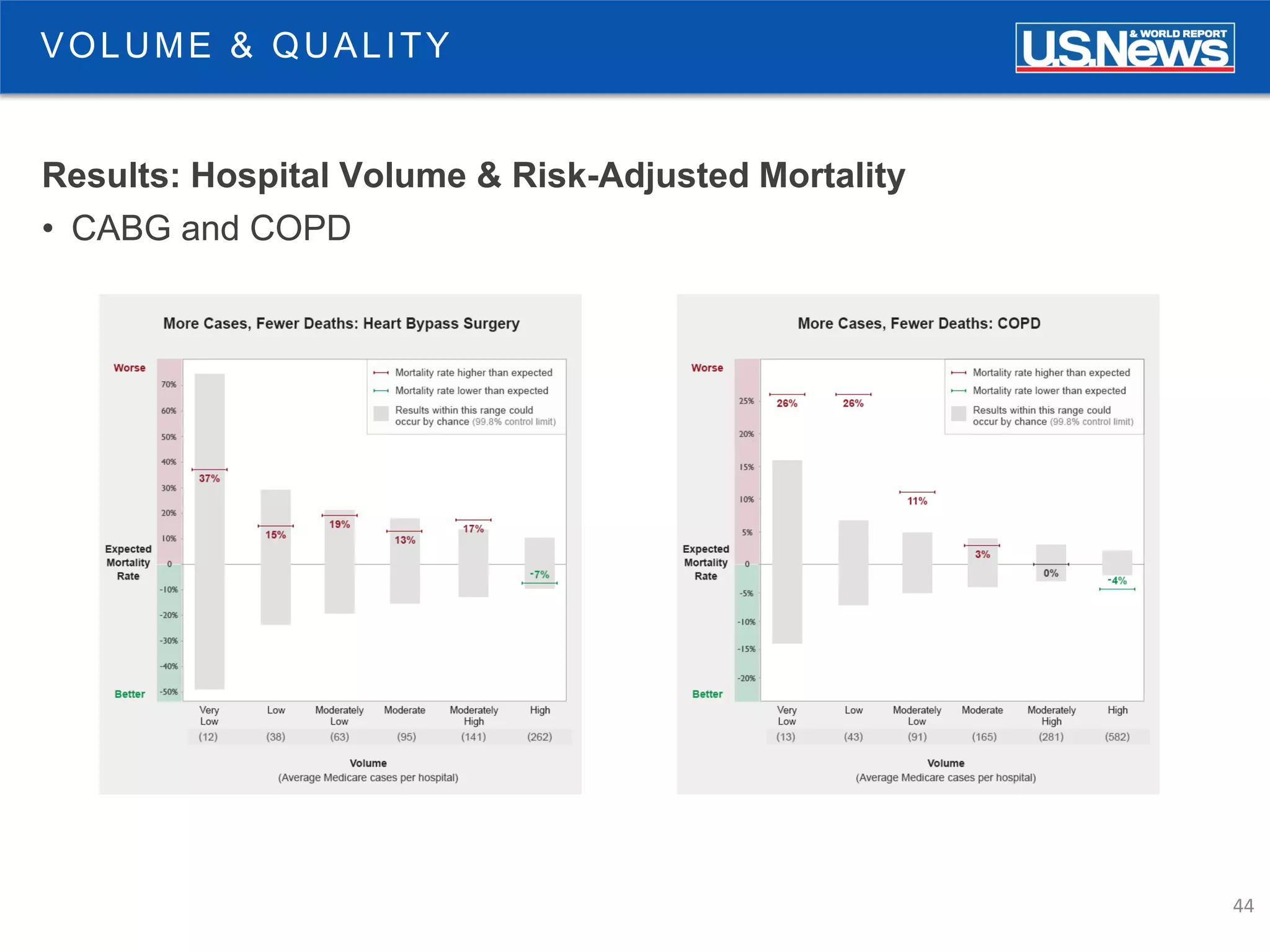
Results: Hospital Volume & Risk-Adjusted Mortality
• CABG and COPD
VOLUME & QUALITY
45
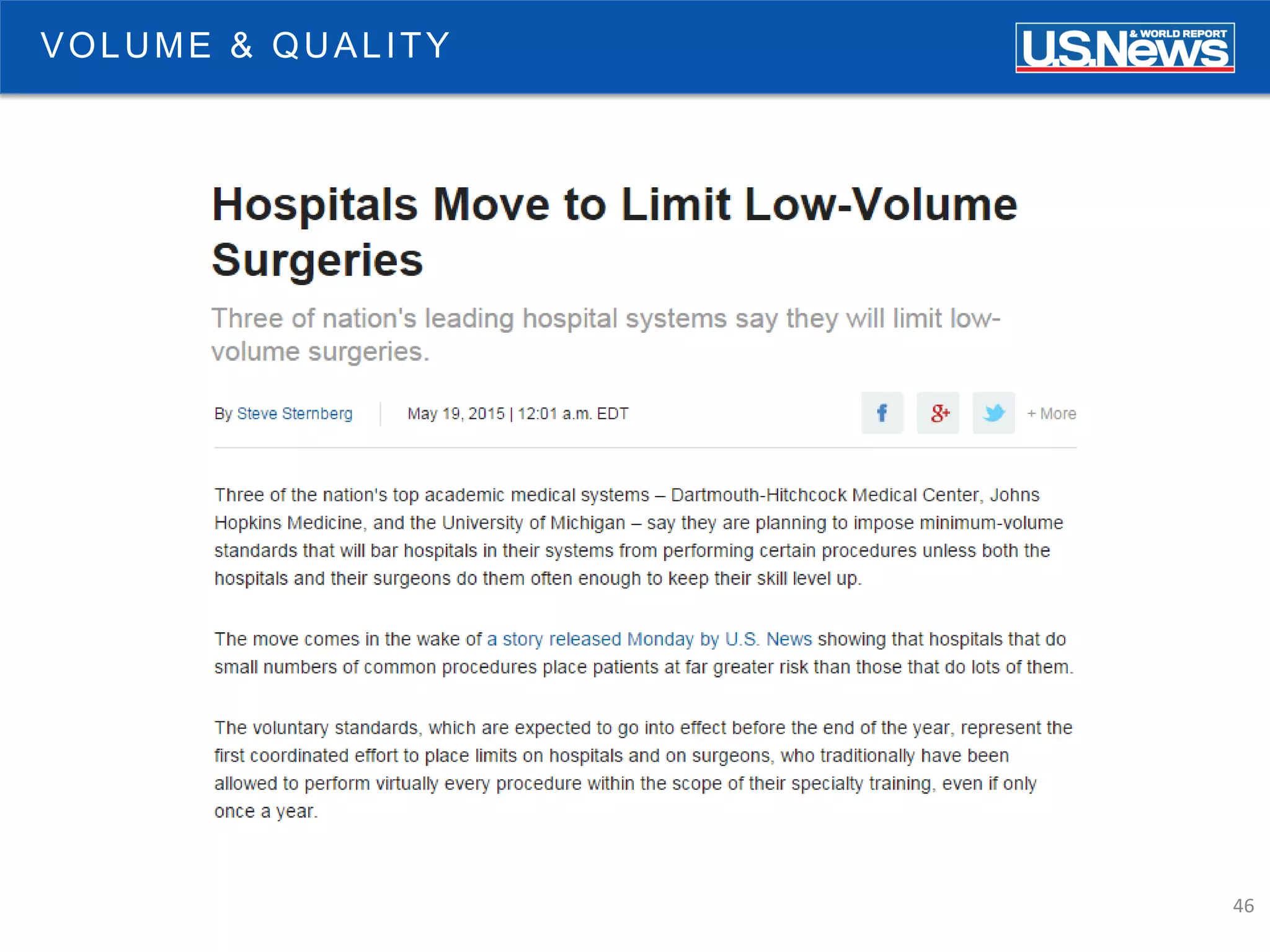
VOLUME & QUALITY
46
VOLUME & QUALITY
47
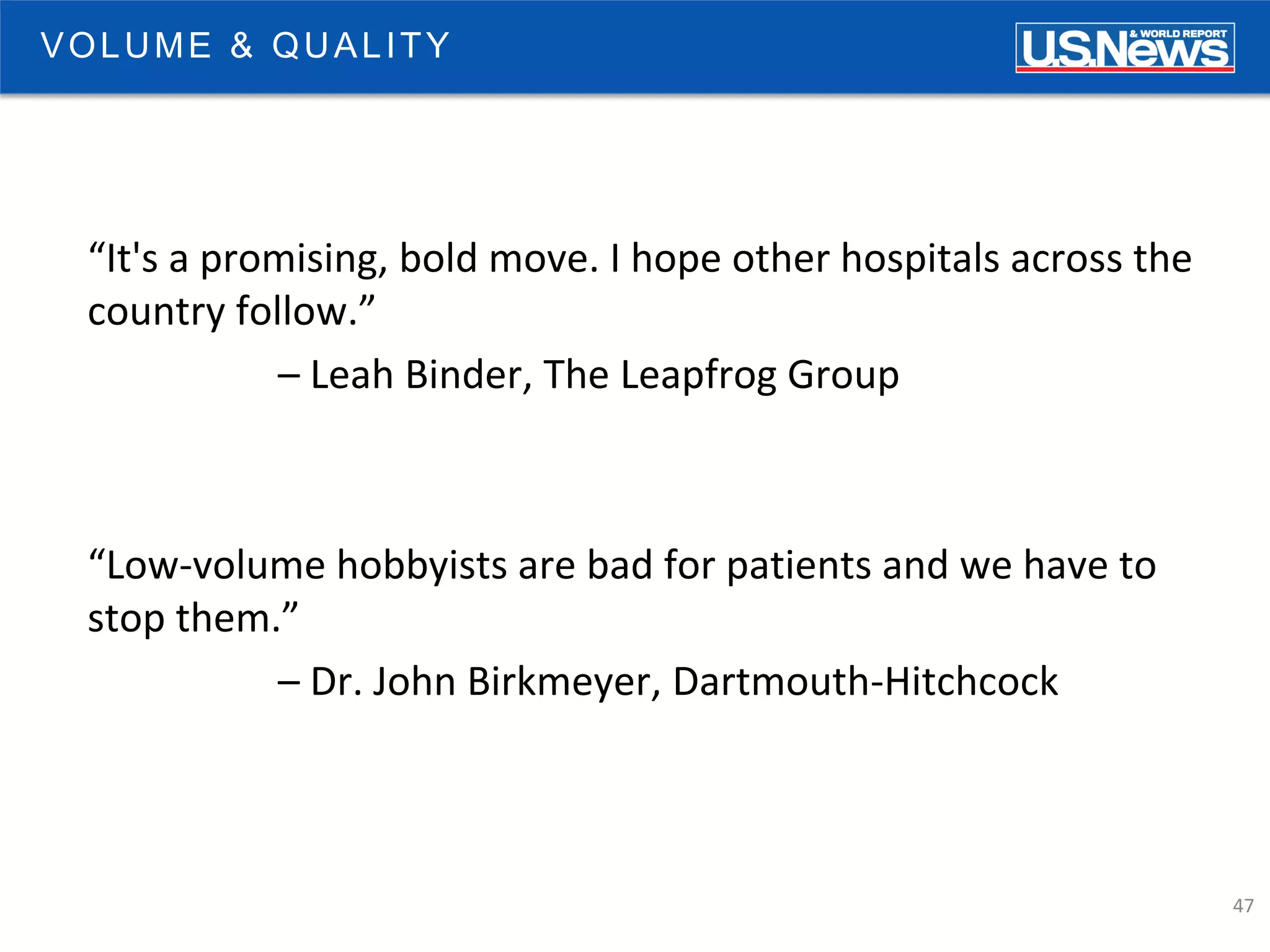
“It's a promising, bold move. I hope other hospitals across the
country follow.”
– Leah Binder, The Leapfrog Group
“Low-volume hobbyists are bad for patients and we have to
stop them.”
– Dr. John Birkmeyer, Dartmouth-Hitchcock
VOLUME & QUALITY
48
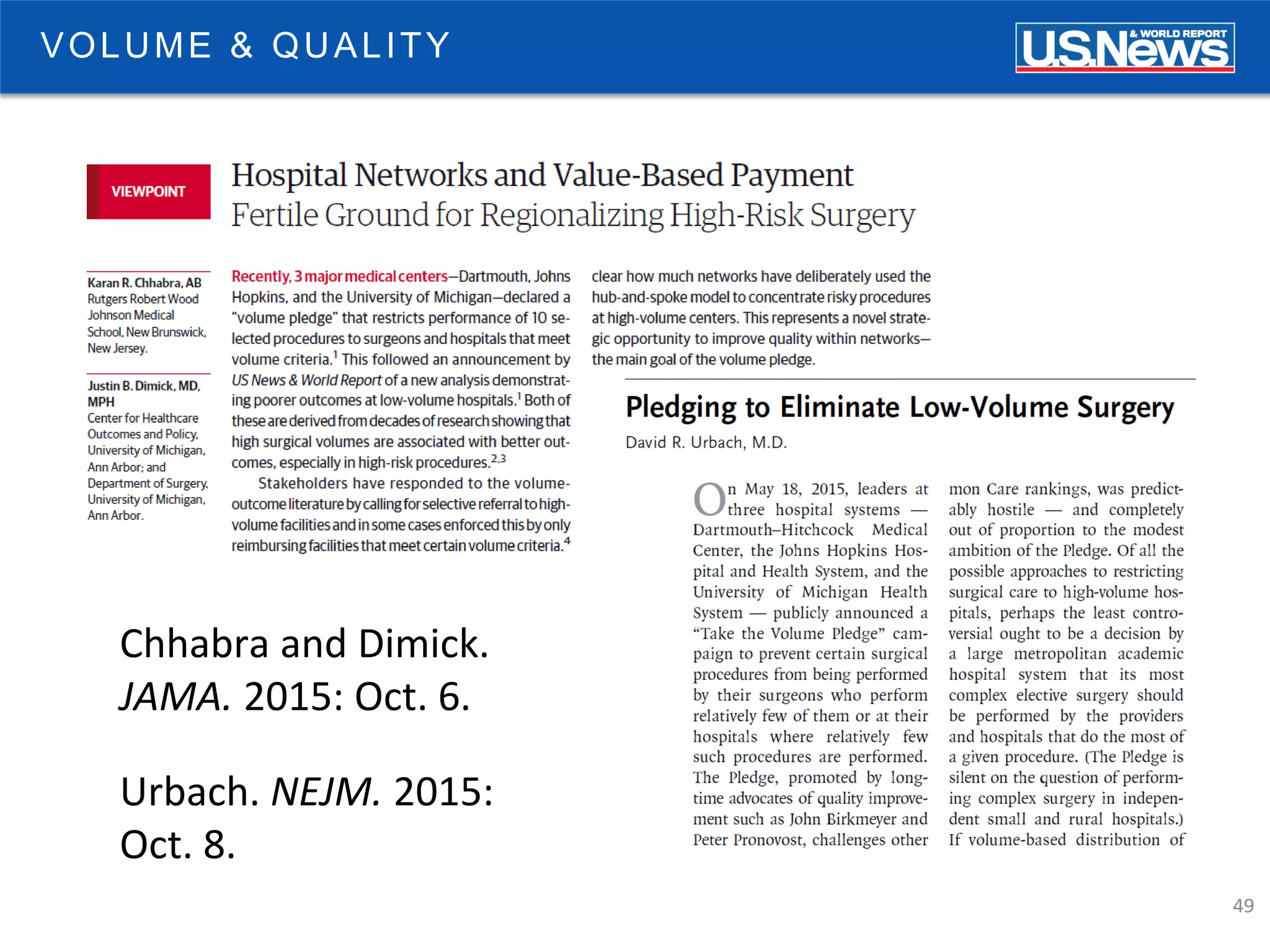
VOLUME & QUALITY
49
Chhabra and Dimick.
JAMA. 2015: Oct. 6.
Urbach. NEJM. 2015:
Oct. 8.
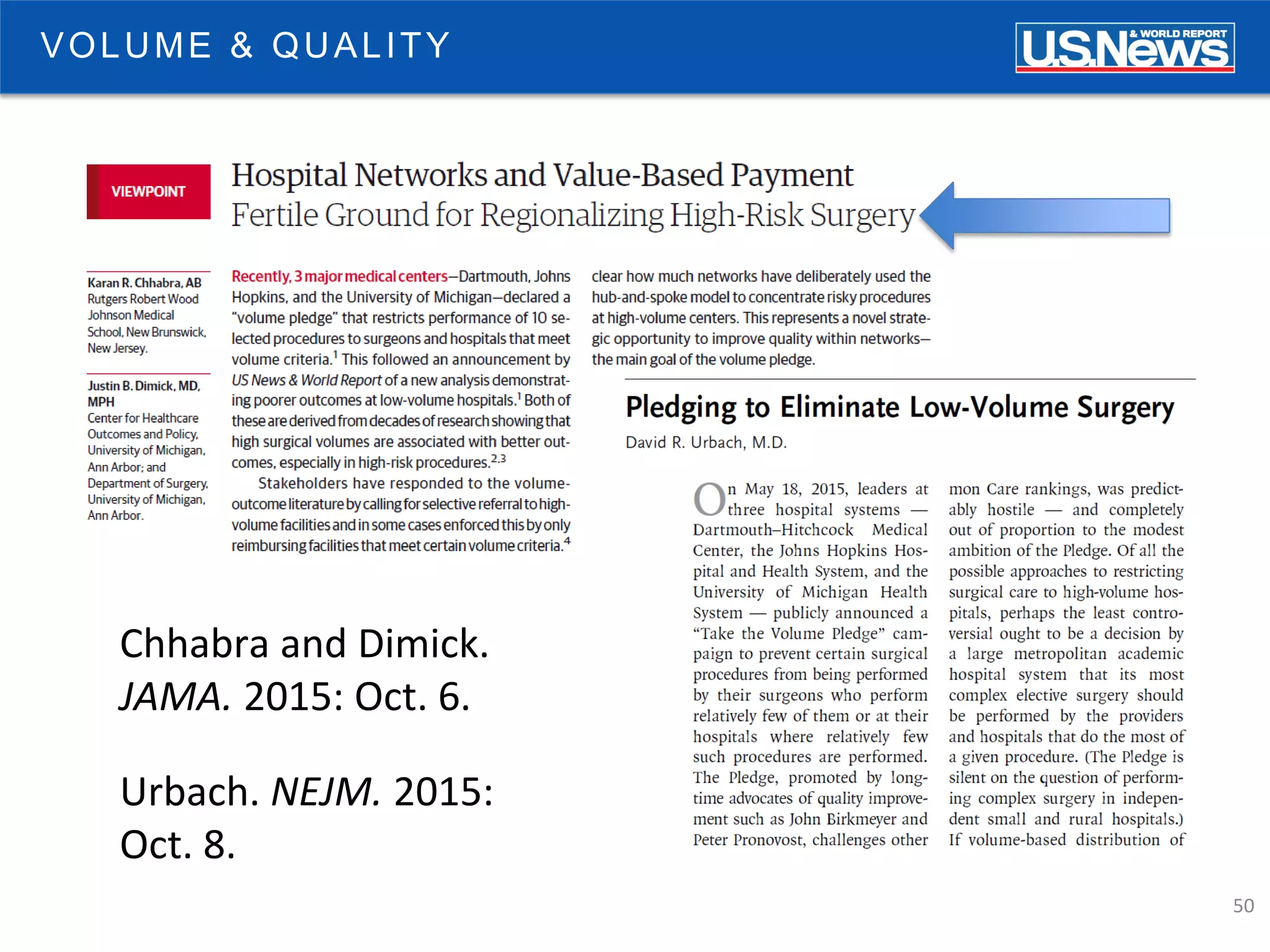
VOLUME & QUALITY
50
Chhabra and Dimick.
JAMA. 2015: Oct. 6.
Urbach. NEJM. 2015:
Oct. 8.
VOLUME & QUALITY
FUTURE DIRECTIONS:
SYSTEM & PHYSICIAN PERFORMANCE
52
FUTURE DIRECTIONS
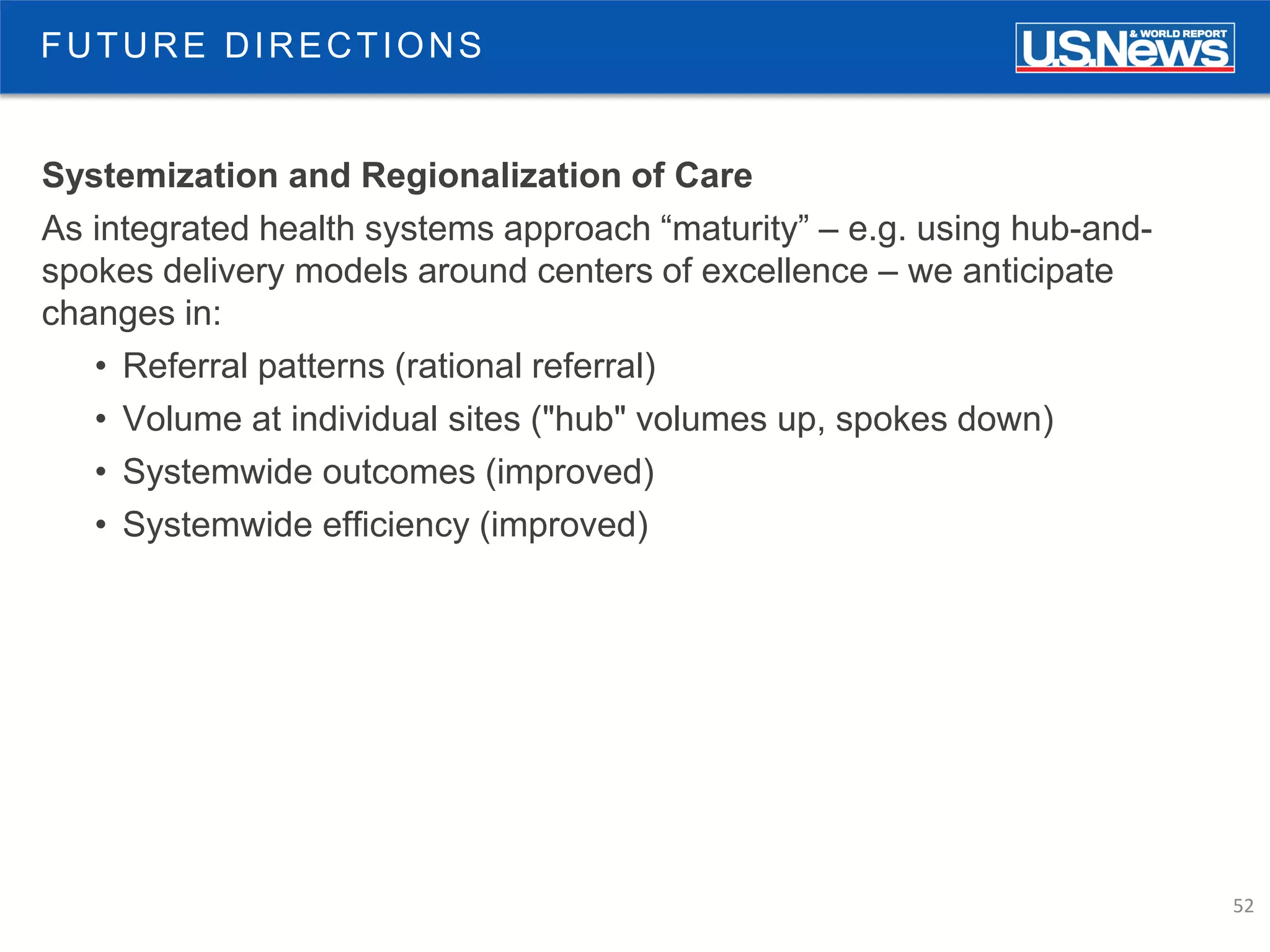
Systemization and Regionalization of Care
As integrated health systems approach “maturity” – e.g. using hub-and-
spokes delivery models around centers of excellence – we anticipate
changes in:
• Referral patterns (rational referral)
• Volume at individual sites ("hub" volumes up, spokes down)
• Systemwide outcomes (improved)
• Systemwide efficiency (improved)
53
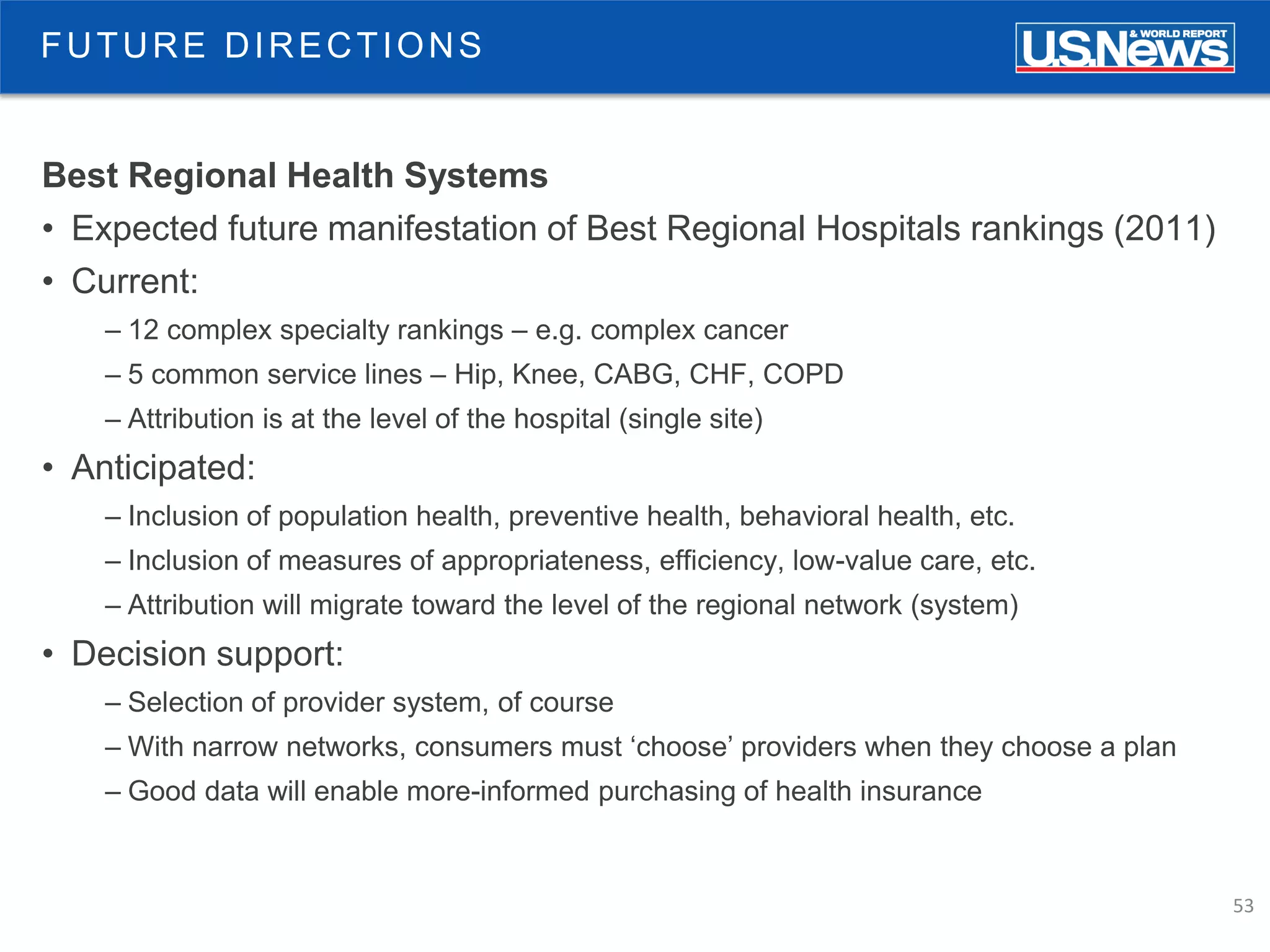
Best Regional Health Systems
• Expected future manifestation of Best Regional Hospitals rankings (2011)
• Current:
– 12 complex specialty rankings – e.g. complex cancer
– 5 common service lines – Hip, Knee, CABG, CHF, COPD
– Attribution is at the level of the hospital (single site)
• Anticipated:
– Inclusion of population health, preventive health, behavioral health, etc.
– Inclusion of measures of appropriateness, efficiency, low-value care, etc.
– Attribution will migrate toward the level of the regional network (system)
• Decision support:
– Selection of provider system, of course
– With narrow networks, consumers must ‘choose’ providers when they choose a plan
– Good data will enable more-informed purchasing of health insurance
FUTURE DIRECTIONS
15
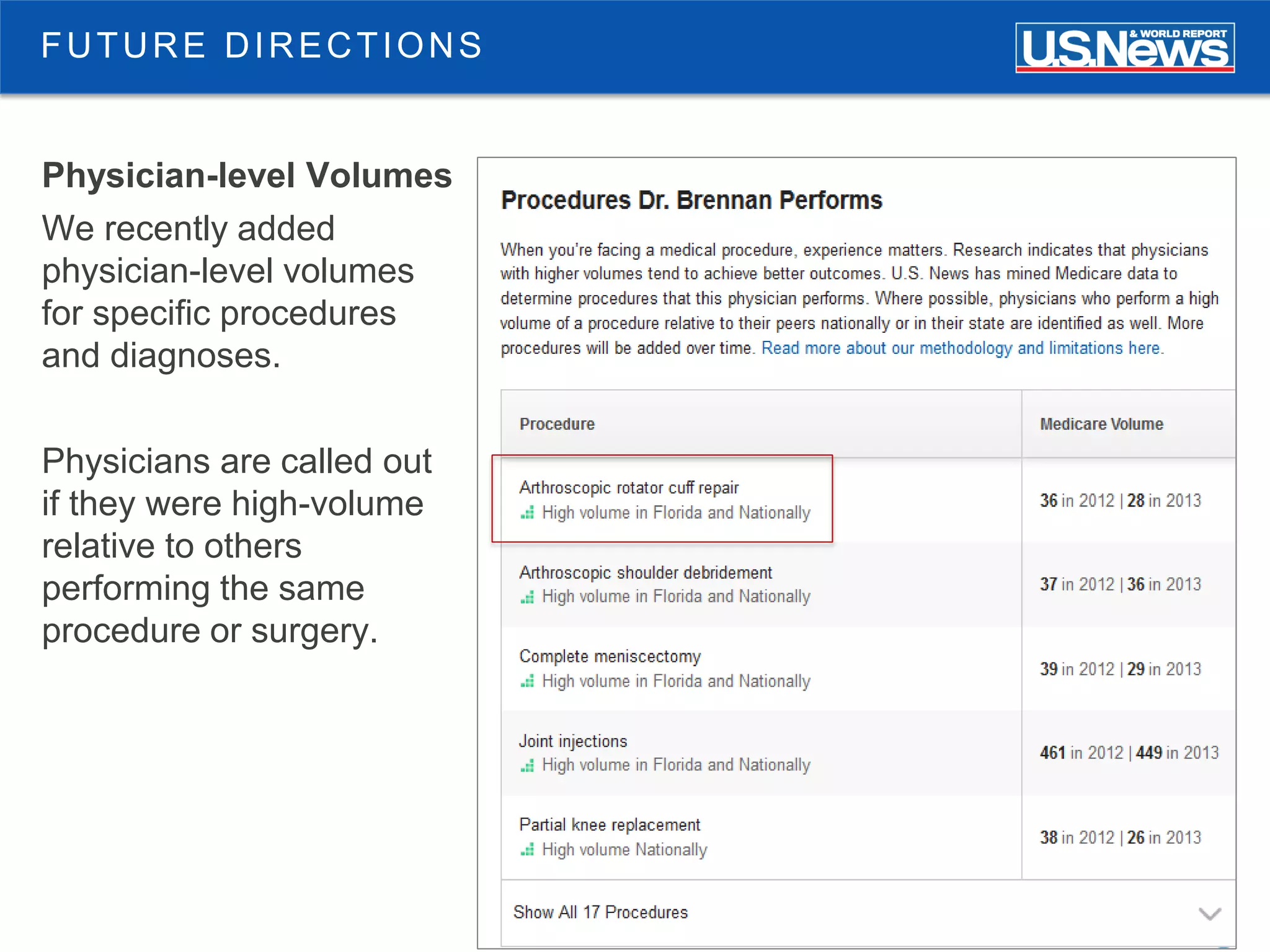
Physician-level Volumes
We recently added
physician-level volumes
for specific procedures
and diagnoses.
Physicians are called out
if they were high-volume
relative to others
performing the same
procedure or surgery.
FUTURE DIRECTIONS
55
Public Reporting on Physician Quality
The Volume Pledge is about quality of surgeon as well as hospital. Surgeon
quality, in particular, is of great public interest.
FUTURE DIRECTIONS
56
FUTURE DIRECTIONS
Public Reporting on Physician Quality
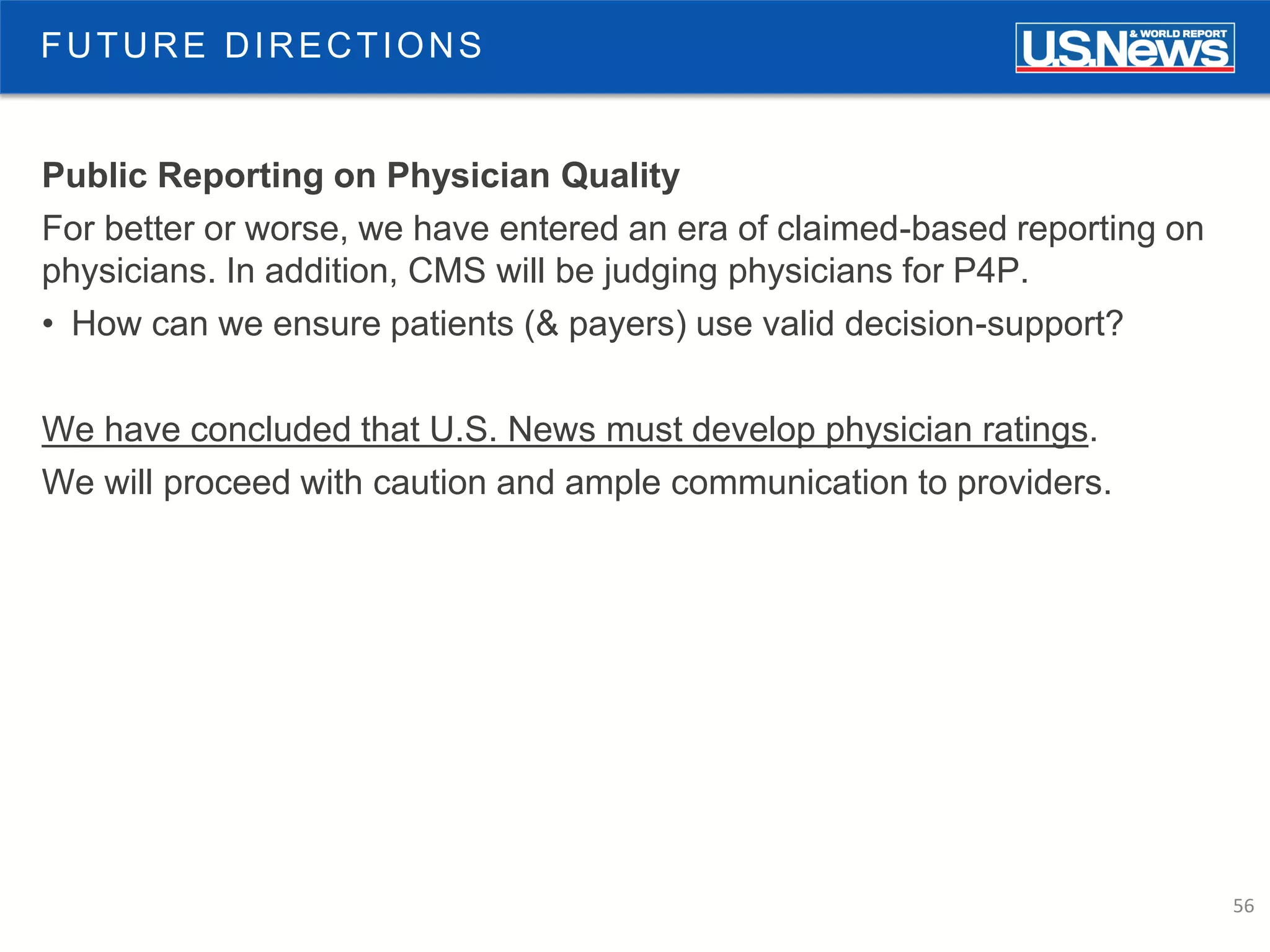
For better or worse, we have entered an era of claimed-based reporting on
physicians. In addition, CMS will be judging physicians for P4P.
• How can we ensure patients (& payers) use valid decision-support?
We have concluded that U.S. News must develop physician ratings.
We will proceed with caution and ample communication to providers.
57
FUTURE DIRECTIONS
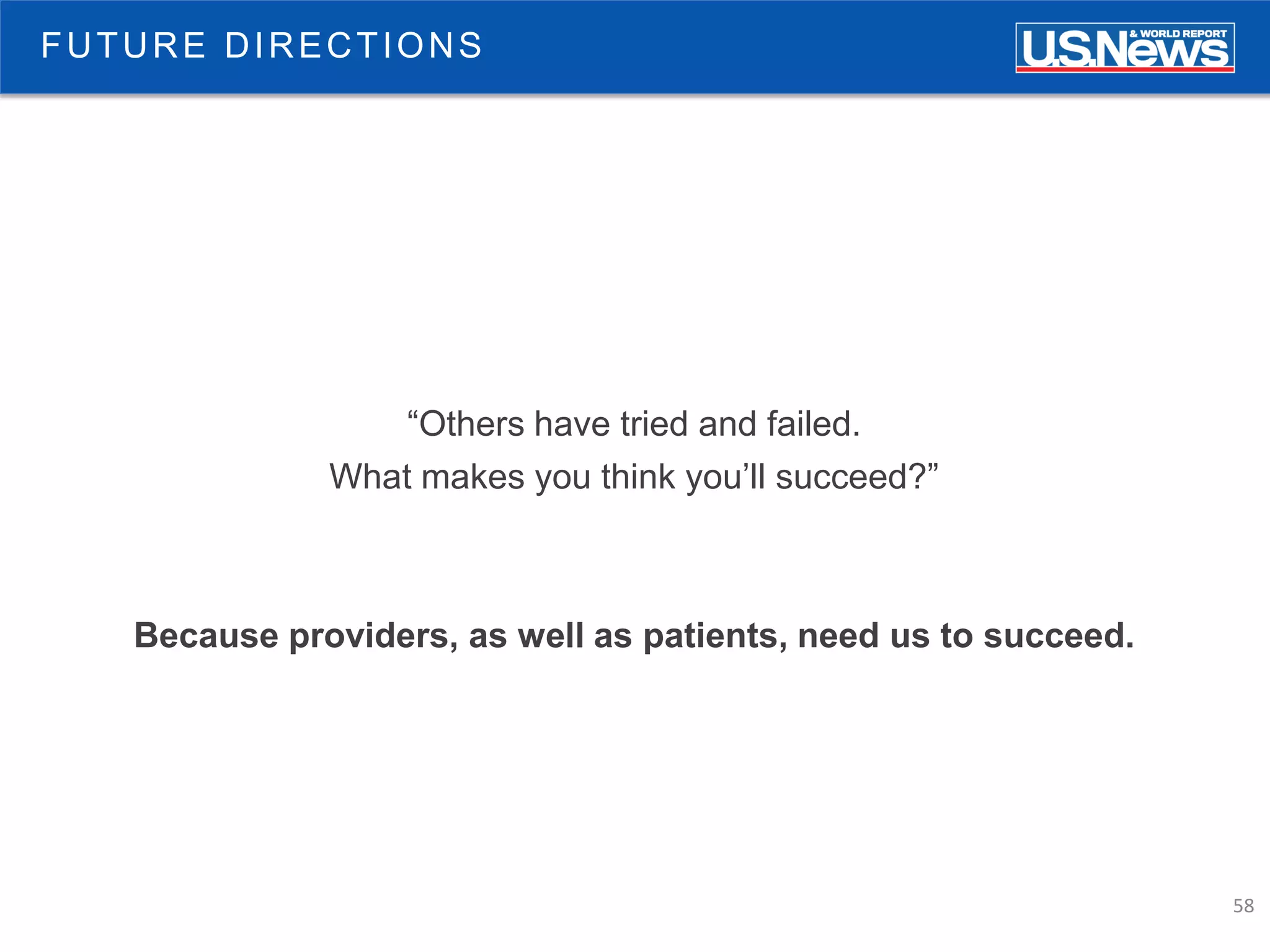
“Others have tried and failed.
What makes you think you’ll succeed?”
58
FUTURE DIRECTIONS
“Others have tried and failed.
What makes you think you’ll succeed?”
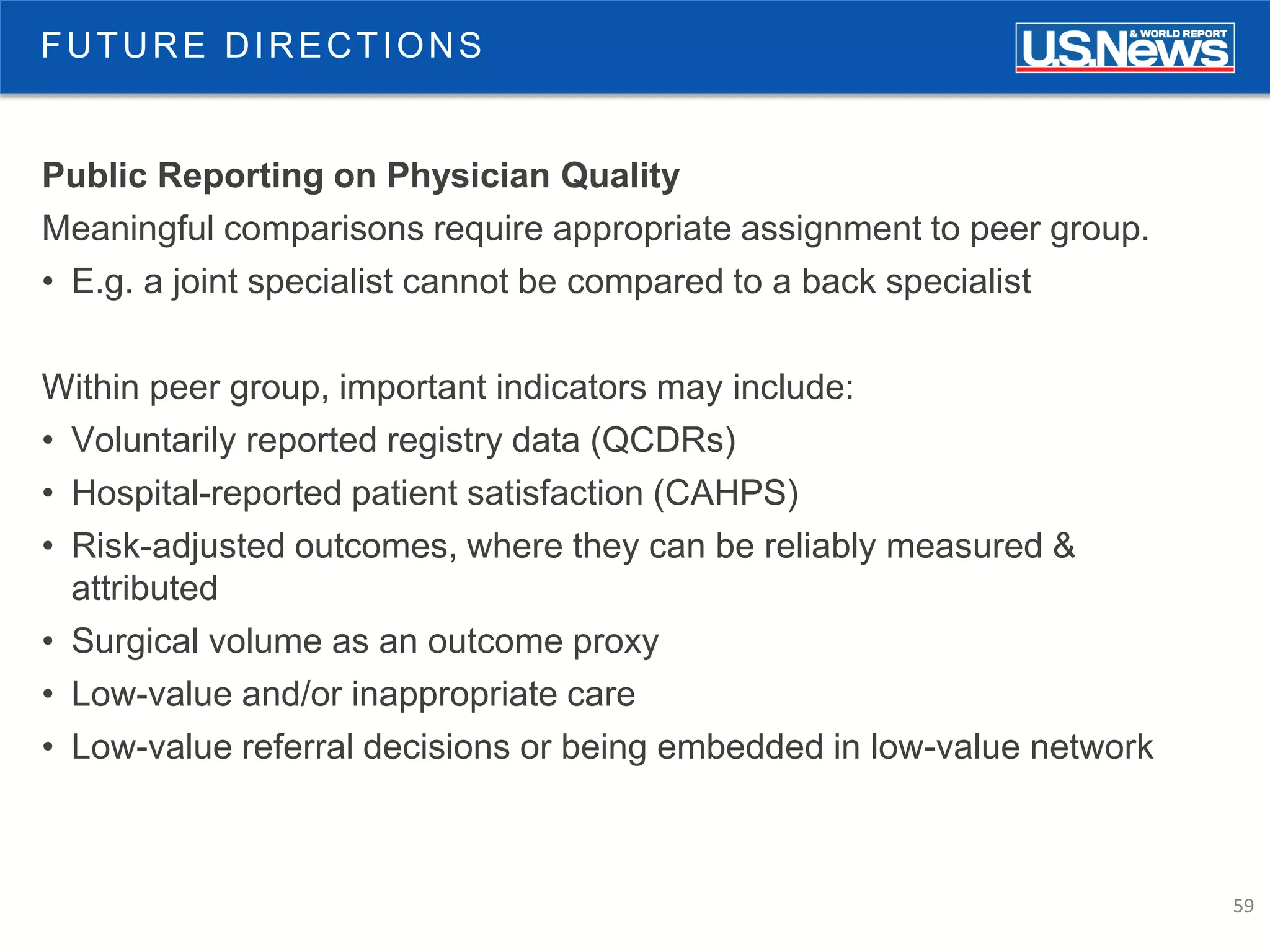
Because providers, as well as patients, need us to succeed.
59
FUTURE DIRECTIONS
Public Reporting on Physician Quality
Meaningful comparisons require appropriate assignment to peer group.
• E.g. a joint specialist cannot be compared to a back specialist
Within peer group, important indicators may include:
• Voluntarily reported registry data (QCDRs)
• Hospital-reported patient satisfaction (CAHPS)
• Risk-adjusted outcomes, where they can be reliably measured &
attributed
• Surgical volume as an outcome proxy
• Low-value and/or inappropriate care
• Low-value referral decisions or being embedded in low-value network
60
FUTURE DIRECTIONS
61
FUTURE DIRECTIONS
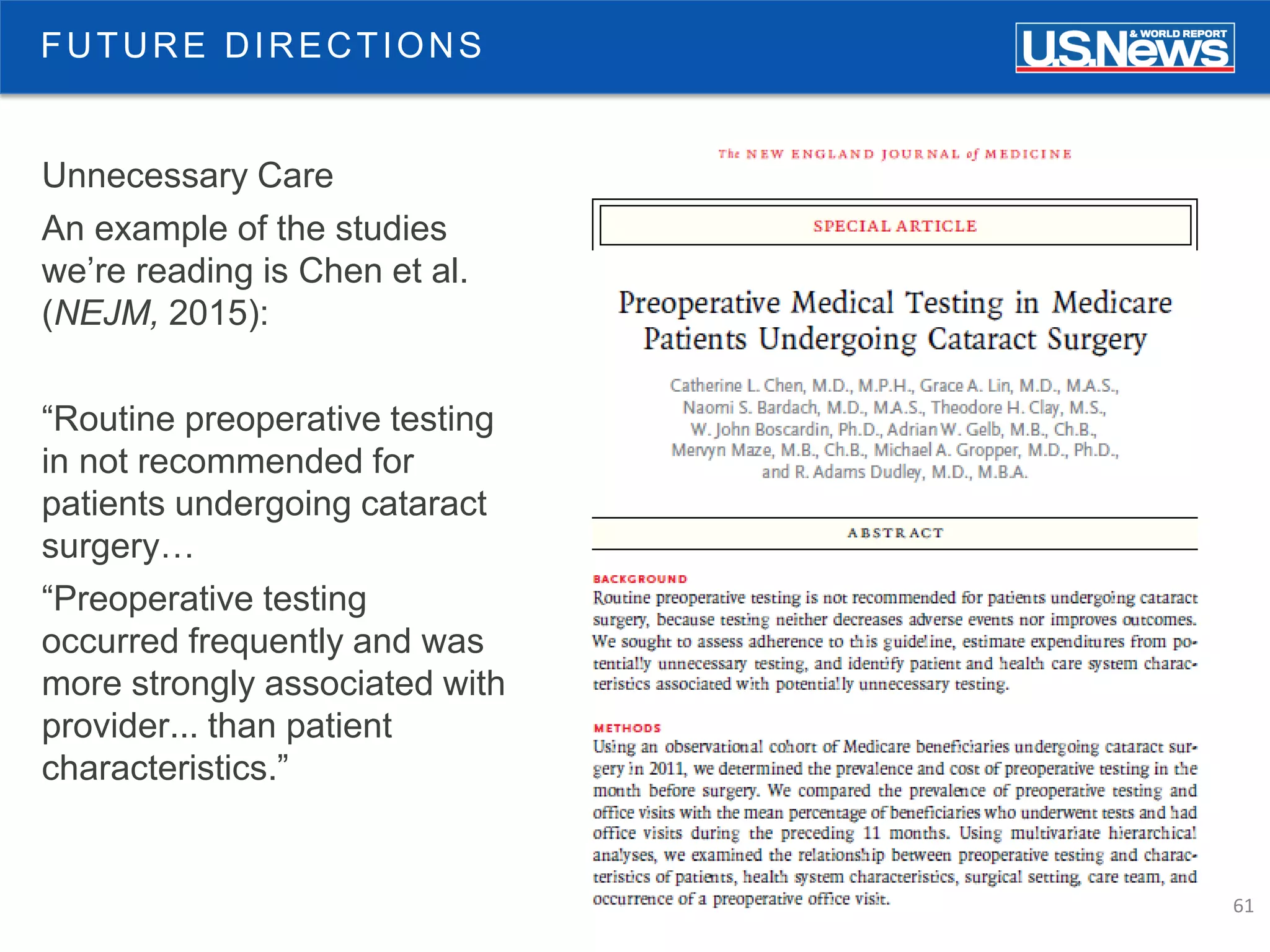
Unnecessary Care
An example of the studies
we’re reading is Chen et al.
(NEJM, 2015):
“Routine preoperative testing
in not recommended for
patients undergoing cataract
surgery…
“Preoperative testing
occurred frequently and was
more strongly associated with
provider... than patient
characteristics.”
62
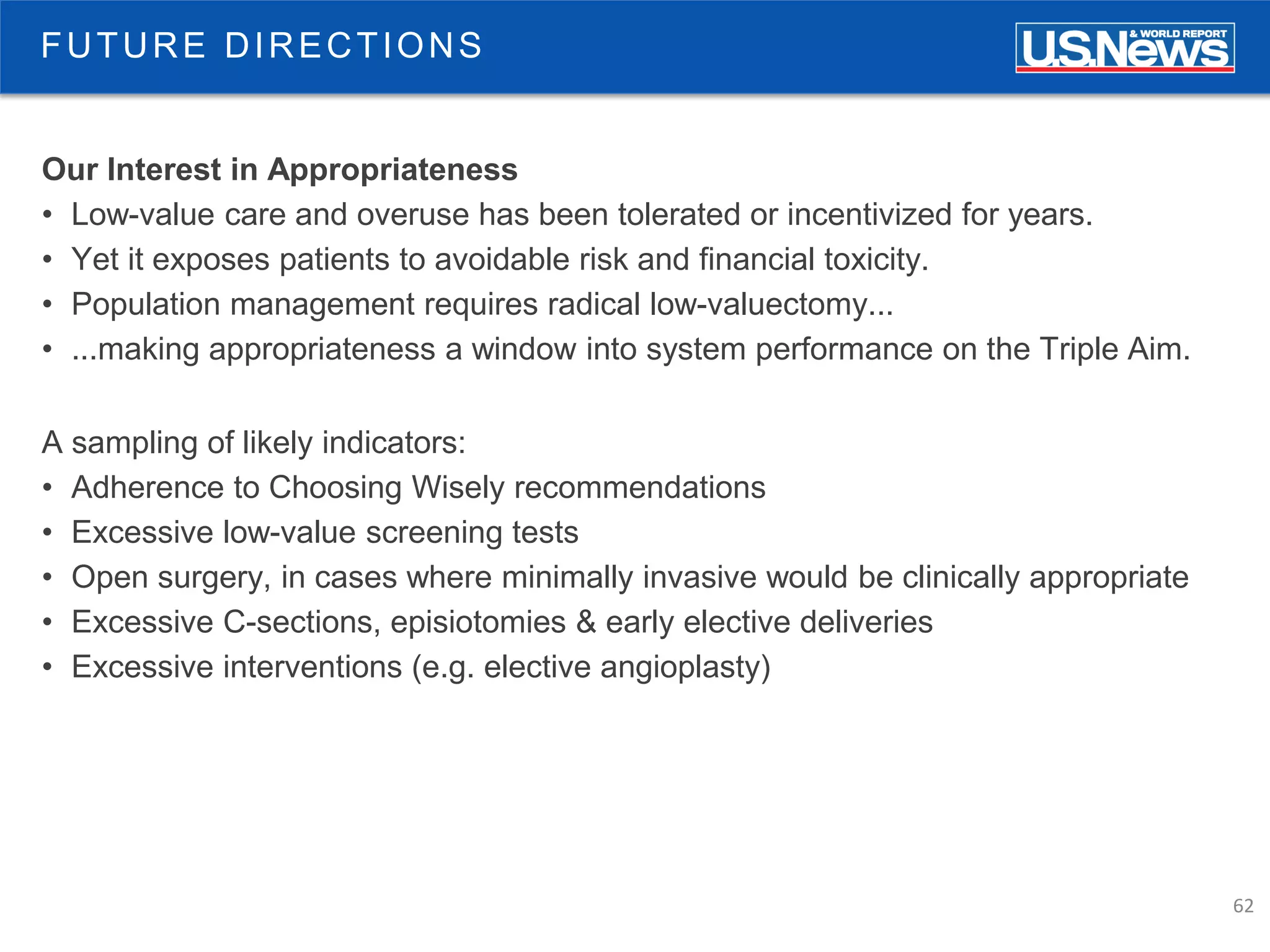
Our Interest in Appropriateness
• Low-value care and overuse has been tolerated or incentivized for years.
• Yet it exposes patients to avoidable risk and financial toxicity.
• Population management requires radical low-valuectomy...
• ...making appropriateness a window into system performance on the Triple Aim.
A sampling of likely indicators:
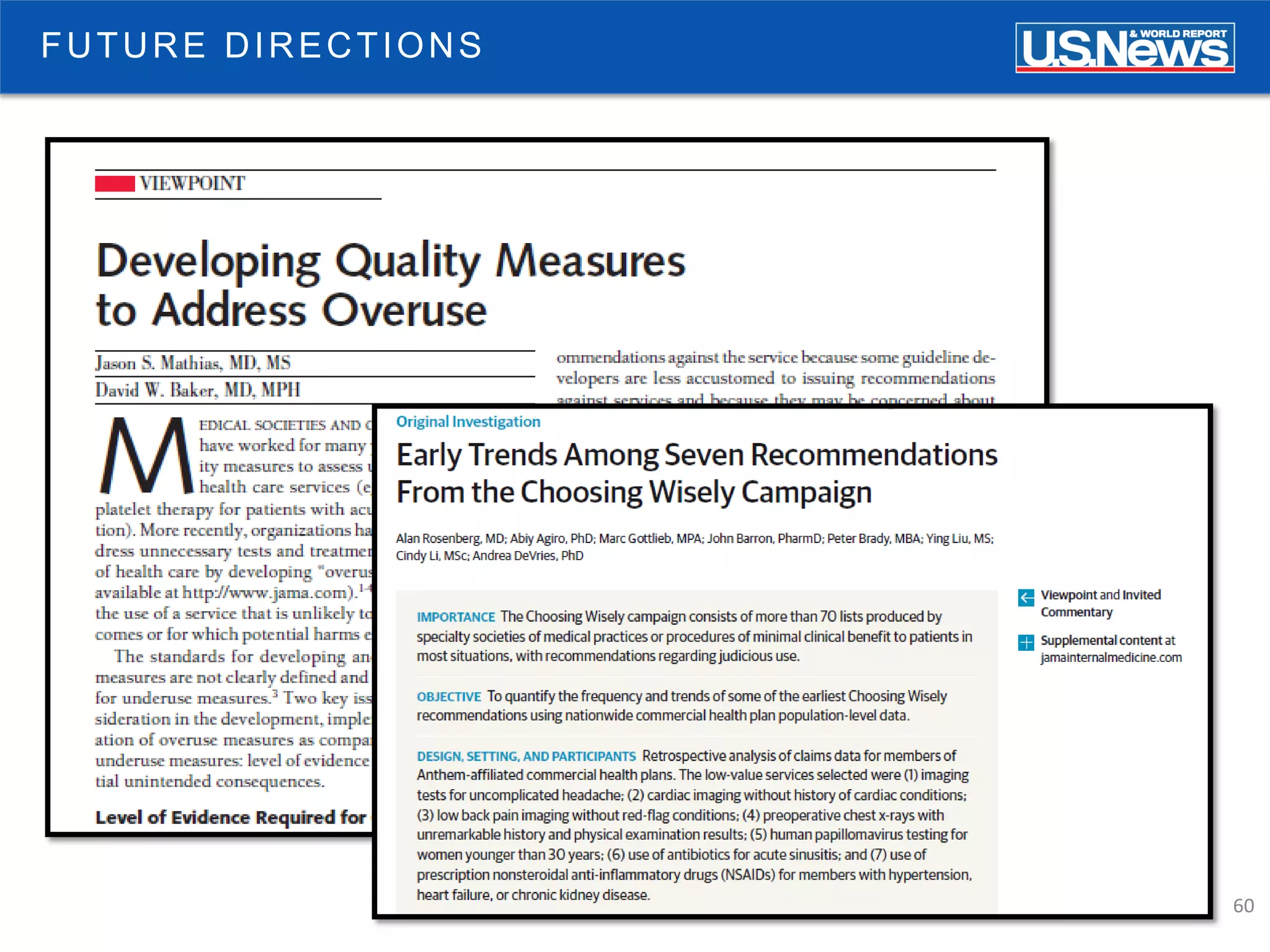
• Adherence to Choosing Wisely recommendations
• Excessive low-value screening tests
• Open surgery, in cases where minimally invasive would be clinically appropriate
• Excessive C-sections, episiotomies & early elective deliveries
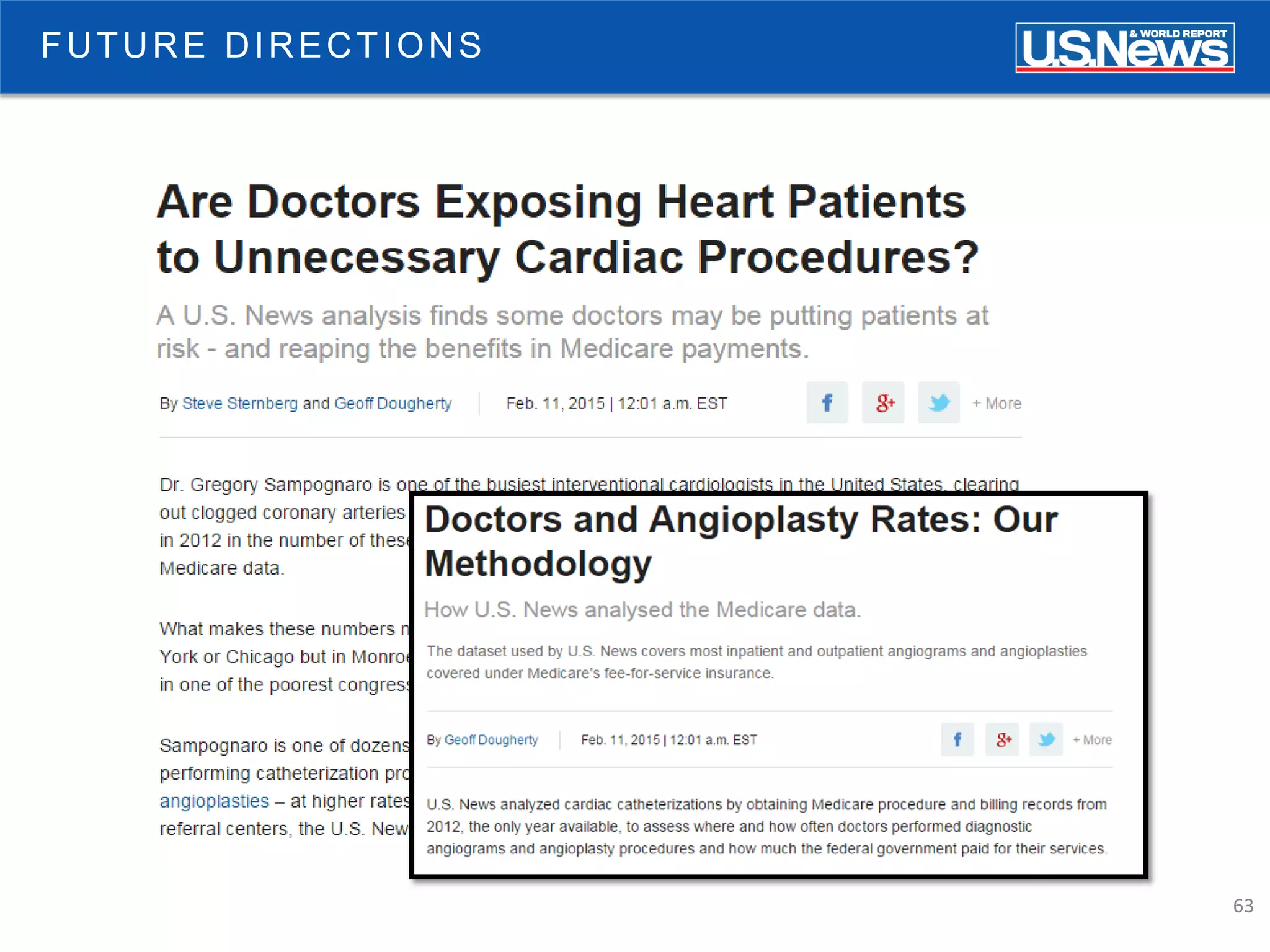
• Excessive interventions (e.g. elective angioplasty)
FUTURE DIRECTIONS
63
FUTURE DIRECTIONS
QUESTIONS & COMMENTS WELCOME
CONTACT ME: @benharder

Public Reporting as a Catalyst for Better Consumer Decisions

  • 1.
    Public Reporting asa Catalyst for Better Consumer Decisions Ben H ar der @ benharder A T L A S C O N F E R E N C E | B O S T O N O C T O B E R 2 8 , 2 0 1 5
  • 2.
    2 LEAD INVESTIGATORS Avery ComarowGeoff Dougherty, MPH Murrey Olmsted, Ph.D. (RTI) Ben Harder
  • 3.
    3 DISCLOSURES My Group • U.S.News, which is the sole sponsor of my group's work, receives revenues from multiple advertisers including health systems Ben Harder • Wife is a MedStar Health-employed vascular neurologist • Sister is a Brigham & Women’s-employed neuropsychiatrist • I plan to serve as a part-time Senior Fellow at GuideStar, a data-transparency platform for philanthropic stakeholders Geoff Dougherty (senior health services researcher) • Part-time employee, fellowship recipient, and Ph.D. student in the Johns Hopkins Bloomberg School of Public Health Department of Epidemiology Other Co-investigators • None disclosed
  • 4.
    4 LEARNING OBJECTIVES Learning Objectives •The U.S. News perspective on public reporting • An overview of our provider look-up tool – Doctor Finder – Best Hospitals • Results & future directions – Volume, quality & referral – Rating systems and physicians
  • 5.
    “WHERE ARE THEGOAL POSTS?”
  • 6.
  • 7.
    7 PERSPECTIVE ON PUBLICREPORTING Patient-Provider Matching and the Triple Aim • The Triple Aim requires efficient matching of patients and providers: • To maximize delivery of quality & value from providers to patients • To serve the largest possible population per unit of clinical resources • Availability of good data on provider quality & value is crucial to informed patient decision-making. • Ability to make meaningful comparisons among providers • Ability to access the most-appropriate provider (must be actionable) • Public-reporting tools – such as usnews.com – are venues for informed patient decision-making. • These tools are maturing rapidly • Patient engagement with them is accelerating • Will catalyze informed decision-making
  • 8.
    8 PERSPECTIVE ON PUBLICREPORTING Our Mission To provide decision support to patients, families and referring physicians. Patient Engagement About 135,000 people per day – 4 million unique users per month – access our provider-lookup tools, including Best Hospitals and Doctor Finder. Engagement has doubled over the past two years. Additionally, tens of thousands of consumers per day read our patient- advice articles, evidence-based diet information, health news and more.
  • 9.
  • 10.
    10 HOW WE REPORT:PHYSICIANS Doctor Finder • Physician directory launched in 2013 & includes 800,000+ U.S. clinicians • Data from Doximity; directory includes non-members of that network • Target audience: Patients researching any active M.D. or D.O. • Qualifications: – Board certification(s) – Specialty & subspecialty – Education & training – Publications • Access factors: – Office location – Insurance accepted – Hospital affiliations – Appointment booking (via Kyruus)
  • 11.
  • 12.
    15 Hospital Affiliation We showwhich hospitals each physician admits to. The physician's profile also shows his/her hospital(s)' quality ratings for relevant specialties and service lines. Insurance Accepted Insurance information is shown only if proactively reviewed by the provider. HOW WE REPORT: PHYSICIANS
  • 13.
    13 Dorner, Jacobs &Sommers. JAMA. 2015 (Oct. 27). • Provider networks of some ACA marketplace plans excluded endocrinologists, psychiatrics, rheumatologists etc., according to a review of 135 plans in 34 states. HOW WE REPORT: PHYSICIANS
  • 14.
    15 Physician-level Volumes We recentlyadded physician-level volumes for specific procedures and diagnoses. Physicians are called out if they were high-volume relative to others performing the same procedure or surgery. HOW WE REPORT: PHYSICIANS
  • 15.
  • 16.
    16 Physician Appointment Booking Integrationof Kyruus functionality on participating hospitals’ profiles: 1) Patient inputs keywords (doctor name, specialty, diagnosis, etc.) HOW WE REPORT: PHYSICIANS
  • 17.
    17 Physician Appointment Booking 2)At this hospital, a search for “hip replacement” returns dozens of results 3) Patient can immediately request an appointment with any physician currently accepting new patients, if the hospital has deemed appropriate for that clinical need. HOW WE REPORT: PHYSICIANS
  • 18.
  • 19.
    19 HOW WE REPORT:COMPLEX CARE Best Hospitals (complex specialty care) • Published annually since 1990 • Target audience: Patients facing a complex dx or difficult procedure • Covers 16 specialties, 12 of them data-driven • Classifications: – Ranked nationally #1 to #50 – High performing (top decile) – Unranked (not a negative composite) • Past methodology refinements: – Replaced inpatient mortality with 30-day mortality (2007) – Introduced select Patient Safety Indicators (2009) – Reduced weight assigned to Reputation (2014) – Expanded sample of surveyed physicians (2014)
  • 20.
    20 Complex care reportcard: Cardiology & Heart Surgery
  • 21.
    21 HOW WE REPORT:COMPLEX CARE Best Hospitals: Quality Measures • Risk-adjusted mortality • Patient safety score – Not equivalent to PSI-90, which is used by CMS • Volume of relevant complex cases • Staffing factors (intensivist staffing, nurse staffing, Magnet status) • Other structural measures • Program reputation (expert medical opinion) – Survey of board-certified physicians in relevant specialties – RTI conducts the survey, analysis and weighting – Two sampling frames: (1) non-members of Doximity; (2) members of Doximity – Proportional weighting to ensure results are nationally representative
  • 22.
    22 HOW WE REPORT:COMPLEX CARE Reputation: a (Modest) Role for Expert Clinical Opinion • Reputational data may capture clinician-possessed information about program quality that’s not apparent in objective data – The essence of “expert opinion” • Reputation acts primarily as a differentiator among exceptionally high- performing centers • It has relatively modest effects on which hospitals are ranked
  • 23.
    23 HOW WE REPORT:COMPLEX CARE The Reputation Myth • If reputation were removed from our model: – 98% of Best Hospitals would be in the top 100 of ~5,000 hospitals evaluated – 84% would be in the top 50 • That is: The best hospitals in a reputation-less ranking methodology would have 84% overlap with the published Best Hospitals
  • 24.
    24 HOW WE REPORT:PEDIATRIC CARE Best Children’s Hospitals • Debuted in 2007 • Target audience: Families of children with complex or rare diagnoses • Covers 10 pediatric specialties • Classifications: – Ranked nationally #1 to #50 – Unranked • Past methodology refinements: – Entirely reputational prior to 2007 – Began data collection from pediatric programs – now an 1,800-item inventory (2007) – Data-driven rankings published in 6 specialties (2008) – Steady increase in clinical measures, e.g. outcomes, best practices (2008–) – Reduced reputational component to 25% (2013) – Reduced reputational component to 16.7% (2014)
  • 25.
  • 26.
    26 HOW WE REPORT:PEDIATRIC CARE Best Children’s Hospitals: Quality Measures • Outcomes measures – at least 1 per specialty (e.g. complex heart surgery mortality, 3-year cancer survival, rate of ICU infection) • Best practices based on patient population (e.g. management of CF and diabetes patients) • Inpatient and outpatient volumes • Staffing factors (e.g. intensivist staffing, nurse staffing, Magnet status) • 37 structural measures including key technologies (e.g. ECMO in Neonatology) • Program’s reputation among pediatric specialists and subspecialists
  • 27.
    27 HOW WE REPORT:COMMON CARE Best Hospitals for Common Care • Debuted in May 2015 • Target audience: Typical patient facing a routine elective procedure or managing a chronic condition that may episodically require admission • Patient cohorts – Hip replacement – Knee replacement – CABG – CHF – COPD • Classifications (ratings) – High performing – Average – Below average – Low volume (non-outliers with <25 FFS cases over 3 years) • No reputational component
  • 28.
    28 HOW WE REPORT:COMMON CARE Best Hospitals for Common Care: Expansion Anticipated • Common Care ratings to be updated in Spring 2016 • Analysis based on 2012-2014 inpatient claims • Inclusion of outpatient claims in 2017 • Additional cohorts under development – Aortic valve surgery – Abdominal aortic aneurysm (AAA) surgery – Lobectomy – Colectomy – Maternal/perinatal care (using different methods & quality indicators) – Others for 2017 and beyond
  • 29.
  • 30.
    30 HOW WE REPORT:COMMON CARE Common Care: Quality Measures • SES- & risk-adjusted readmissions (7- & 30-day, LDS SAF) • Risk-adjusted mortality (30-day, derived from analysis of LDS SAF data) • Infection rates, per NHSN • Staffing factors (intensivist staffing, nurse staffing, Magnet status) • Volume (LDS SAF) • Patient experience measures, per CMS • Joint complication rates, per CMS • Joint revision rates (1-year, LDS SAF) • Composite CABG rating, per STS • Transparency on clinical outcomes, via STS
  • 31.
    31 HOW WE REPORT:COMMON CARE
  • 32.
    32 HOW WE REPORT DataLimitations • Retrospective analysis cannot adjust for all potential confounders – Claims data may obscure variations in risk factors, coding practices, diagnostic accuracy and appropriateness of care • Lagging performance may not predict current performance. – CMS recently accelerated LDS release; next public reporting will add 2013 & 2014 • Differences in setting (inpatient vs outpatient) may affect results – We anticipate incorporating outpatient claims in 2017 • Analysis is limited primarily to Medicare FFS patients – We will expand a voluntary program to use audited, system-submitted all-payer data • Important outcomes, e.g. functional status, unmeasurable from claims • Proxy measures such as volume & staffing may correlate imperfectly to outcomes of interest
  • 33.
    33 Potential Unintended Consequences Publicreporting, like any intervention, may have unintended consequences: • Risk aversion • Misclassification and its consequences • Inefficient or perverse resource allocation – E.g., diversion of resources from clinical care, board overattentive to imperfect indicators We are: • Mindful of potential consequences in making analytical & publishing decisions • Watchful for evidence of actual unintended consequences HOW WE REPORT
  • 34.
  • 35.
  • 36.
    36 RESULTS Results: Outlier Frequencyin U.S. News Knee Replacement Analysis • Range: <2% (mortality) to 40% (30-day readmissions) from LDS SAF • 4% are outliers on a CMS complications measure KNEE COHORT USN Knee Composite USN Joint Mortality 1-year Knee Revisions 30-day Knee Readmissions CMS Joint Complications Better than expected 278 (10%) 10 (0.4%) 203 (7.2%) 530 (19%) 61 (2.2%) No different 2,301 (82%) 2,767 (98%) 2,545 (91%) 1,725 (61%) 2,635 (96%) Worse than expected 235 (8%) 37 (1.3%) 63 (2.2%) 559 (20%) 53 (1.9%)
  • 37.
    37 RESULTS Results: Heart BypassOutcomes, by STS Reporting Status • We compared 431 hospitals practicing voluntary reporting via STS.org (as of Feb. 2015) to 757 nonreporters that perform CABG • Hospitals that were not voluntarily transparent had inferior outcomes 30-day mortality 7-day readmissions 30-day readmissions Avg. volume (Medicare FFS) Voluntarily reporting hospitals (n=97,751 cases) 17% lower risk 8% lower risk 7% lower risk 75.6 cases/year STS nonreporters (n=118,546 cases) — — — 52.2 cases/year
  • 38.
    38 RESULTS Shahian et al.Annals of Surgery. 2015; 262(3):526-535 “STS programs that voluntarily participate in public reporting have significantly higher volumes and performance. No evidence of risk aversion was found.”
  • 39.
    39 RESULTS Results: Heart BypassOutcomes, by STS Status & Composite • Nonreporting hospitals were inferior to 3-star and 2-star reporters. • Important implications for U.S. News patient decision-support • Important implications for provider-based data transparency 30-day mortality 7-day readmissions 30-day readmissions Avg. volume (Medicare FFS) STS 3-star (n=99 hospitals) 24% lower risk 6% lower risk 5% lower risk 110.3 cases/year STS 2-star (n=319 hospitals) 11% lower risk 6% lower risk 5% lower risk 65.6 cases/year STS 1-star (n=11 hospitals) lower risk (n.s.) 0% difference 6% higher risk (n.s.) 54.0 cases/year Nonreporters (n=757 hospitals) — — — 52.2 cases/year
  • 40.
    40 TRANSPARENCY Will More ClinicalRegistries Opt for Transparency? • One observer thinks not: “the medical priesthood [says]: ‘You are not worthy to judge us.’ ”
  • 41.
    41 TRANSPARENCY Will More ClinicalRegistries Opt for Transparency? We’re more optimistic. Our hunch: 1) Laypeople will use the decision-support tools available to them. Currently those tools are based on claims data. 2) Medical professionals will insist on tools being valid & will provide the best data they can, including voluntary transparency via registries.
  • 42.
  • 43.
    43 Results: Hospital Volume& Risk-Adjusted Mortality • Hip & Knee VOLUME & QUALITY
  • 44.
    44 Results: Hospital Volume& Risk-Adjusted Mortality • CABG and COPD VOLUME & QUALITY
  • 45.
  • 46.
  • 47.
    47 “It's a promising,bold move. I hope other hospitals across the country follow.” – Leah Binder, The Leapfrog Group “Low-volume hobbyists are bad for patients and we have to stop them.” – Dr. John Birkmeyer, Dartmouth-Hitchcock VOLUME & QUALITY
  • 48.
  • 49.
    49 Chhabra and Dimick. JAMA.2015: Oct. 6. Urbach. NEJM. 2015: Oct. 8. VOLUME & QUALITY
  • 50.
    50 Chhabra and Dimick. JAMA.2015: Oct. 6. Urbach. NEJM. 2015: Oct. 8. VOLUME & QUALITY
  • 51.
    FUTURE DIRECTIONS: SYSTEM &PHYSICIAN PERFORMANCE
  • 52.
    52 FUTURE DIRECTIONS Systemization andRegionalization of Care As integrated health systems approach “maturity” – e.g. using hub-and- spokes delivery models around centers of excellence – we anticipate changes in: • Referral patterns (rational referral) • Volume at individual sites ("hub" volumes up, spokes down) • Systemwide outcomes (improved) • Systemwide efficiency (improved)
  • 53.
    53 Best Regional HealthSystems • Expected future manifestation of Best Regional Hospitals rankings (2011) • Current: – 12 complex specialty rankings – e.g. complex cancer – 5 common service lines – Hip, Knee, CABG, CHF, COPD – Attribution is at the level of the hospital (single site) • Anticipated: – Inclusion of population health, preventive health, behavioral health, etc. – Inclusion of measures of appropriateness, efficiency, low-value care, etc. – Attribution will migrate toward the level of the regional network (system) • Decision support: – Selection of provider system, of course – With narrow networks, consumers must ‘choose’ providers when they choose a plan – Good data will enable more-informed purchasing of health insurance FUTURE DIRECTIONS
  • 54.
    15 Physician-level Volumes We recentlyadded physician-level volumes for specific procedures and diagnoses. Physicians are called out if they were high-volume relative to others performing the same procedure or surgery. FUTURE DIRECTIONS
  • 55.
    55 Public Reporting onPhysician Quality The Volume Pledge is about quality of surgeon as well as hospital. Surgeon quality, in particular, is of great public interest. FUTURE DIRECTIONS
  • 56.
    56 FUTURE DIRECTIONS Public Reportingon Physician Quality For better or worse, we have entered an era of claimed-based reporting on physicians. In addition, CMS will be judging physicians for P4P. • How can we ensure patients (& payers) use valid decision-support? We have concluded that U.S. News must develop physician ratings. We will proceed with caution and ample communication to providers.
  • 57.
    57 FUTURE DIRECTIONS “Others havetried and failed. What makes you think you’ll succeed?”
  • 58.
    58 FUTURE DIRECTIONS “Others havetried and failed. What makes you think you’ll succeed?” Because providers, as well as patients, need us to succeed.
  • 59.
    59 FUTURE DIRECTIONS Public Reportingon Physician Quality Meaningful comparisons require appropriate assignment to peer group. • E.g. a joint specialist cannot be compared to a back specialist Within peer group, important indicators may include: • Voluntarily reported registry data (QCDRs) • Hospital-reported patient satisfaction (CAHPS) • Risk-adjusted outcomes, where they can be reliably measured & attributed • Surgical volume as an outcome proxy • Low-value and/or inappropriate care • Low-value referral decisions or being embedded in low-value network
  • 60.
  • 61.
    61 FUTURE DIRECTIONS Unnecessary Care Anexample of the studies we’re reading is Chen et al. (NEJM, 2015): “Routine preoperative testing in not recommended for patients undergoing cataract surgery… “Preoperative testing occurred frequently and was more strongly associated with provider... than patient characteristics.”
  • 62.
    62 Our Interest inAppropriateness • Low-value care and overuse has been tolerated or incentivized for years. • Yet it exposes patients to avoidable risk and financial toxicity. • Population management requires radical low-valuectomy... • ...making appropriateness a window into system performance on the Triple Aim. A sampling of likely indicators: • Adherence to Choosing Wisely recommendations • Excessive low-value screening tests • Open surgery, in cases where minimally invasive would be clinically appropriate • Excessive C-sections, episiotomies & early elective deliveries • Excessive interventions (e.g. elective angioplasty) FUTURE DIRECTIONS
  • 63.
  • 64.
    QUESTIONS & COMMENTSWELCOME CONTACT ME: @benharder