Copyright © 2019 IQVIA. All rights reserved.
Jeffrey Keefer MD, PhD
Pediatric and Rare Disease
Center of Excellence
May 2019
Driving Diversity By
Increasing Access to
Clinical Trials
2
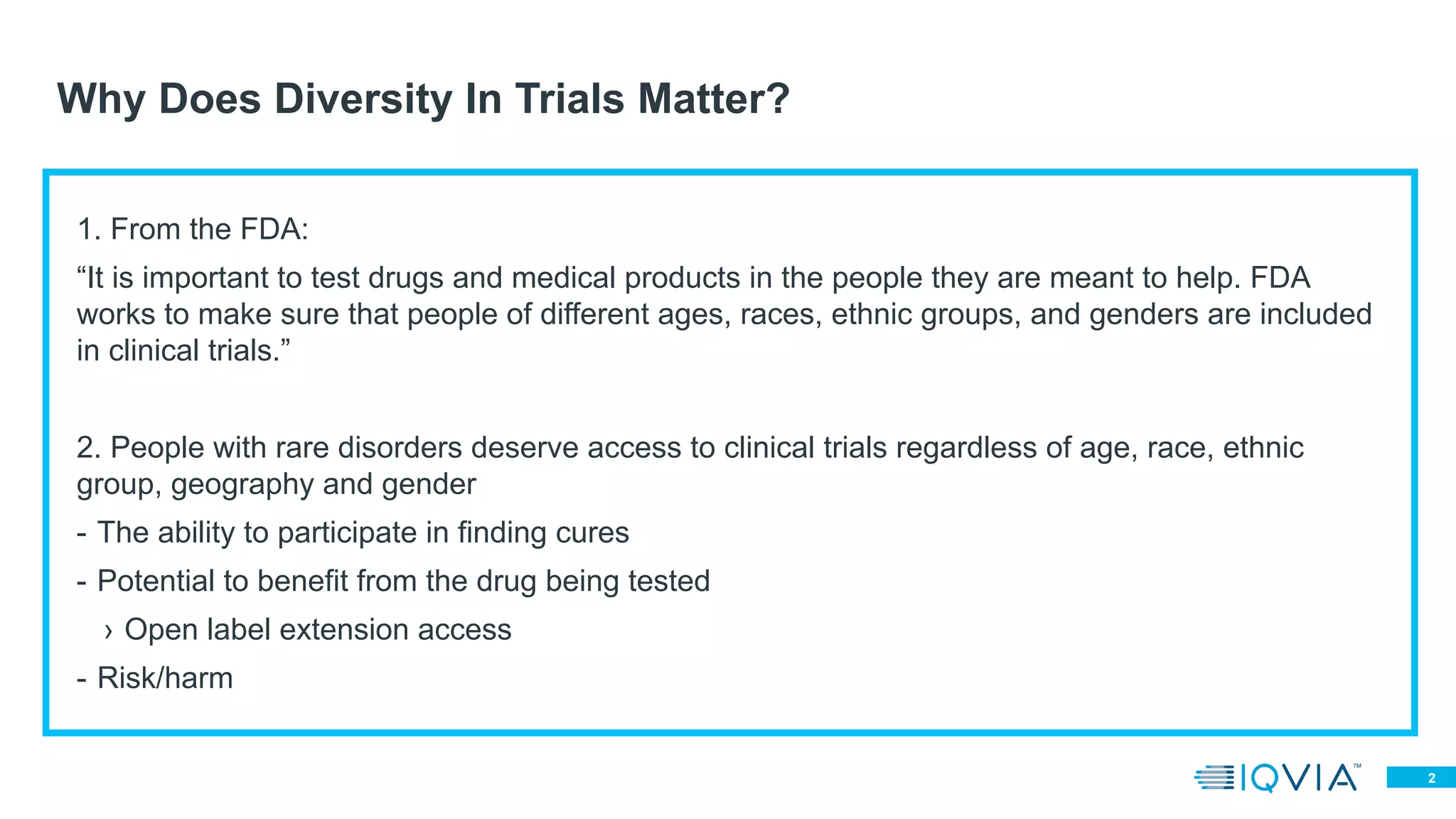
Why Does Diversity In Trials Matter?
1. From the FDA:
“It is important to test drugs and medical products in the people they are meant to help. FDA
works to make sure that people of different ages, races, ethnic groups, and genders are included
in clinical trials.”
2. People with rare disorders deserve access to clinical trials regardless of age, race, ethnic
group, geography and gender
-  The ability to participate in finding cures
-  Potential to benefit from the drug being tested
›  Open label extension access
-  Risk/harm
3
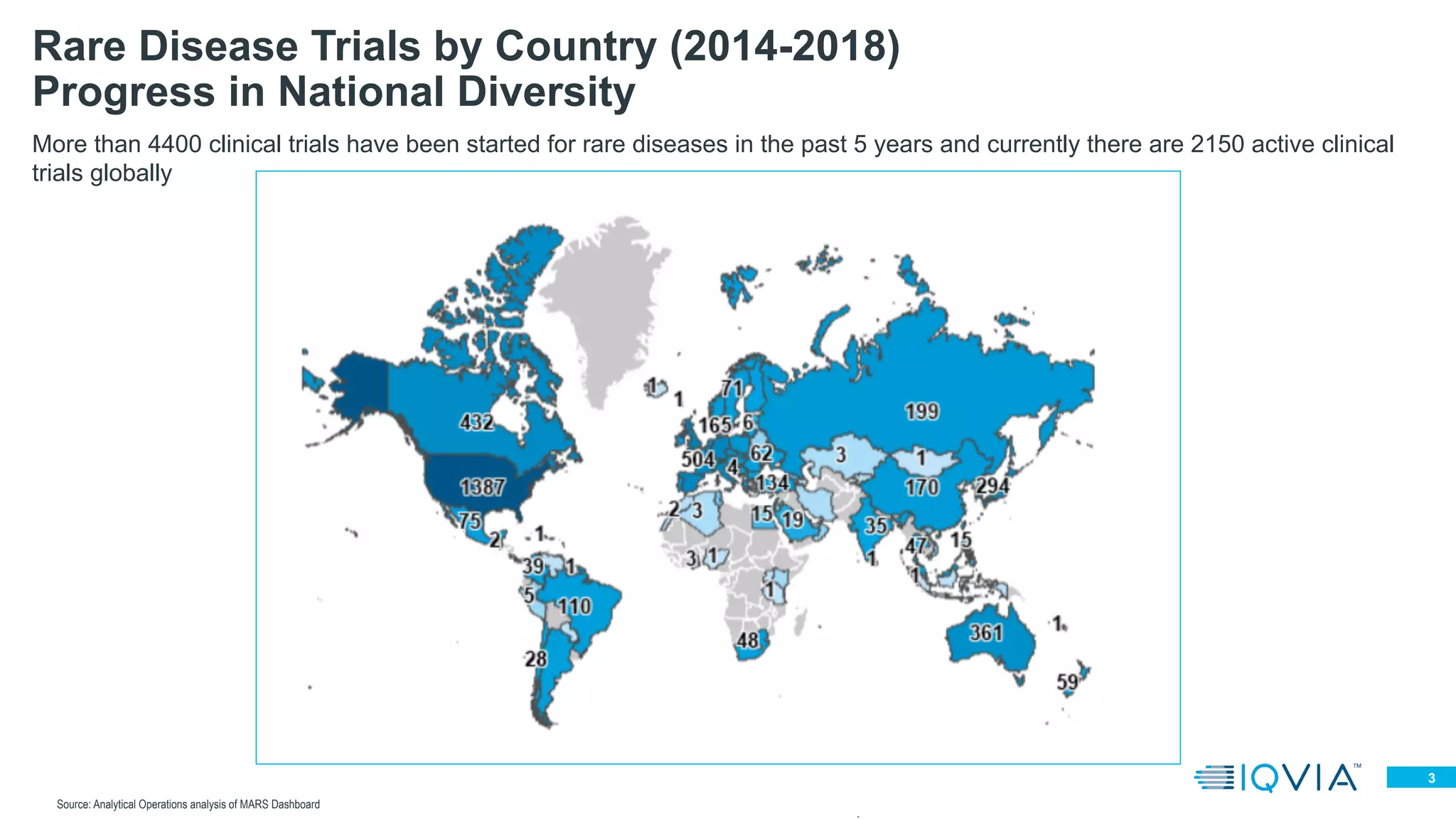
More than 4400 clinical trials have been started for rare diseases in the past 5 years and currently there are 2150 active clinical
trials globally
Rare Disease Trials by Country (2014-2018)
Progress in National Diversity
Confidential: For internal use onlySource: Analytical Operations analysis of MARS Dashboard
Situation Solution
Result
•  Traditional enrollment in sickle cell disease
(SCD) trials in the US and EU for
extremely slow
•  Difficult Indication and complex protocol
•  Why are we not performing the study in
countries with highest disease burden?
•  Build research infrastructure in Sub-
Saharan Africa for SCD
•  Engaged investigators
•  Eager patients
•  Solutions to patient logistics
•  Distance from sites
•  Lack of internet/phone
Sickle Cell Disease in Pediatrics
Providing clinical trial access and novel therapies to those who most need it
Region
Protocol
Deviations/
Subject
ePRO
compliance
(%)
SAE’s/
subject
Africa 0.91 99 0.36
US/Canada 2.91 92 0.75
EU 1.04 93 1.96
•  Rapid recruitment
•  High data quality
•  Now standard practice to include
sub-Saharan Africa in SCD trials
5
Established regional presence providing full service solutions to deliver quality data and new
treatments to the populations that need it most
Sub-Saharan Africa Clinical Operations
BENEFITS OF CONDUCTING
CLINICAL TRIALS IN THE
REGION
q  Potential to provide treatment
options to patients who can truly
benefit
q  Relationships with eager
investigators, emerging site
infrastructure
q  Experience working across
pharma, biotech and public/
private partnership structures
q  Regional teams, supported by
global infrastructure and SOPs
IQVIA Clinical Office locations
Home-based permanent CRA staff
IQVIA clinical trial experience
6
Beyond country selection:
Influencing diversity in clinical trials
7
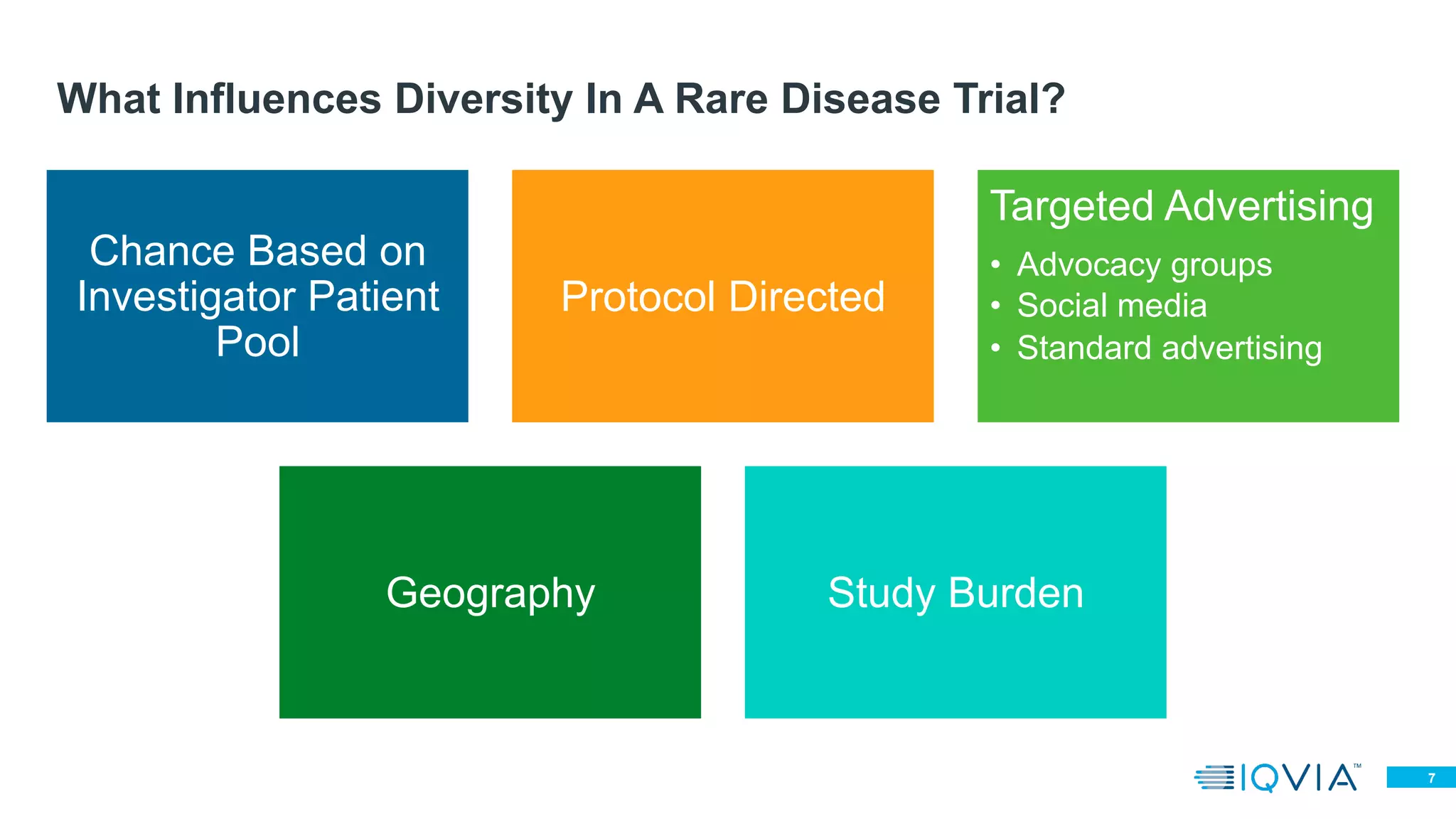
What Influences Diversity In A Rare Disease Trial?
Chance Based on
Investigator Patient
Pool
Protocol Directed
Targeted Advertising
•  Advocacy groups
•  Social media
•  Standard advertising
Geography Study Burden
8
Identifying People With Rare Diseases Using Data
9
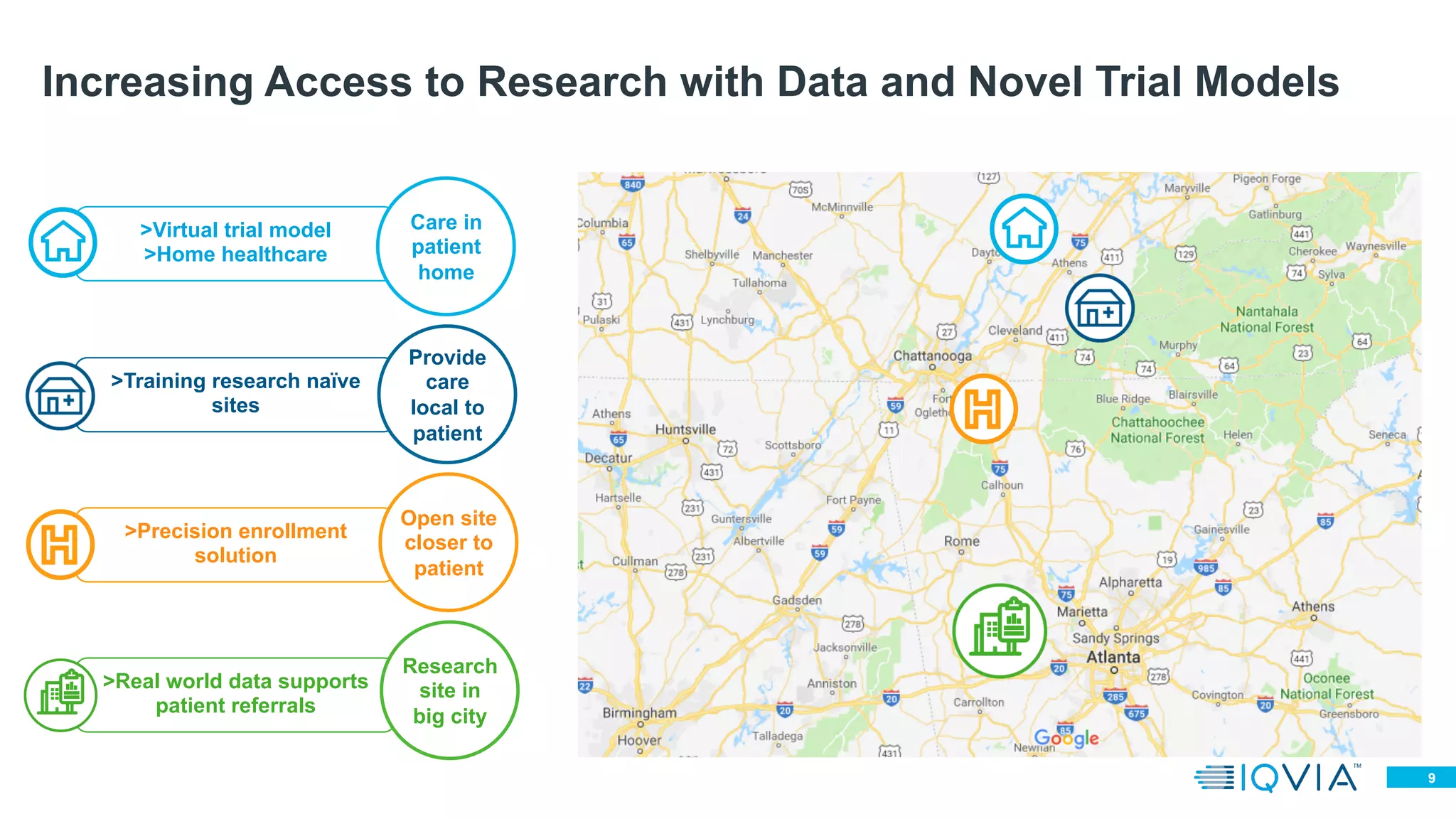
Increasing Access to Research with Data and Novel Trial Models
>Real world data supports
patient referrals
Research
site in
big city
>Precision enrollment
solution
>Training research naïve
sites
>Virtual trial model
>Home healthcare
Care in
patient
home
Provide
care
local to
patient
Open site
closer to
patient
10
Local Care Team
Health Care
Practitioner
Home Health
Nurse
Phlebotomist
Recruitment
ExpertPatient
Guide
Virtual PI and
Study Team
Study
Concierge
Patient
Mobile Health Devices
Electrocardiography
Blood Pressure
Monitor
Continuous
Glucose Monitor
Actigraphy Spirometry
Primary
Investigator
Smartphone
The Virtual Trial: Putting the Patient at the Center
11
Increasing Access to Research with Data and Novel Trial Models
>Real world data supports
patient referrals
Research
site in
big city
>Precision enrollment
solution
>Training research naïve
sites
>Virtual trial model
>Home healthcare
Care in
patient
home
Provide
care
local to
patient
Open site
closer to
patient
12
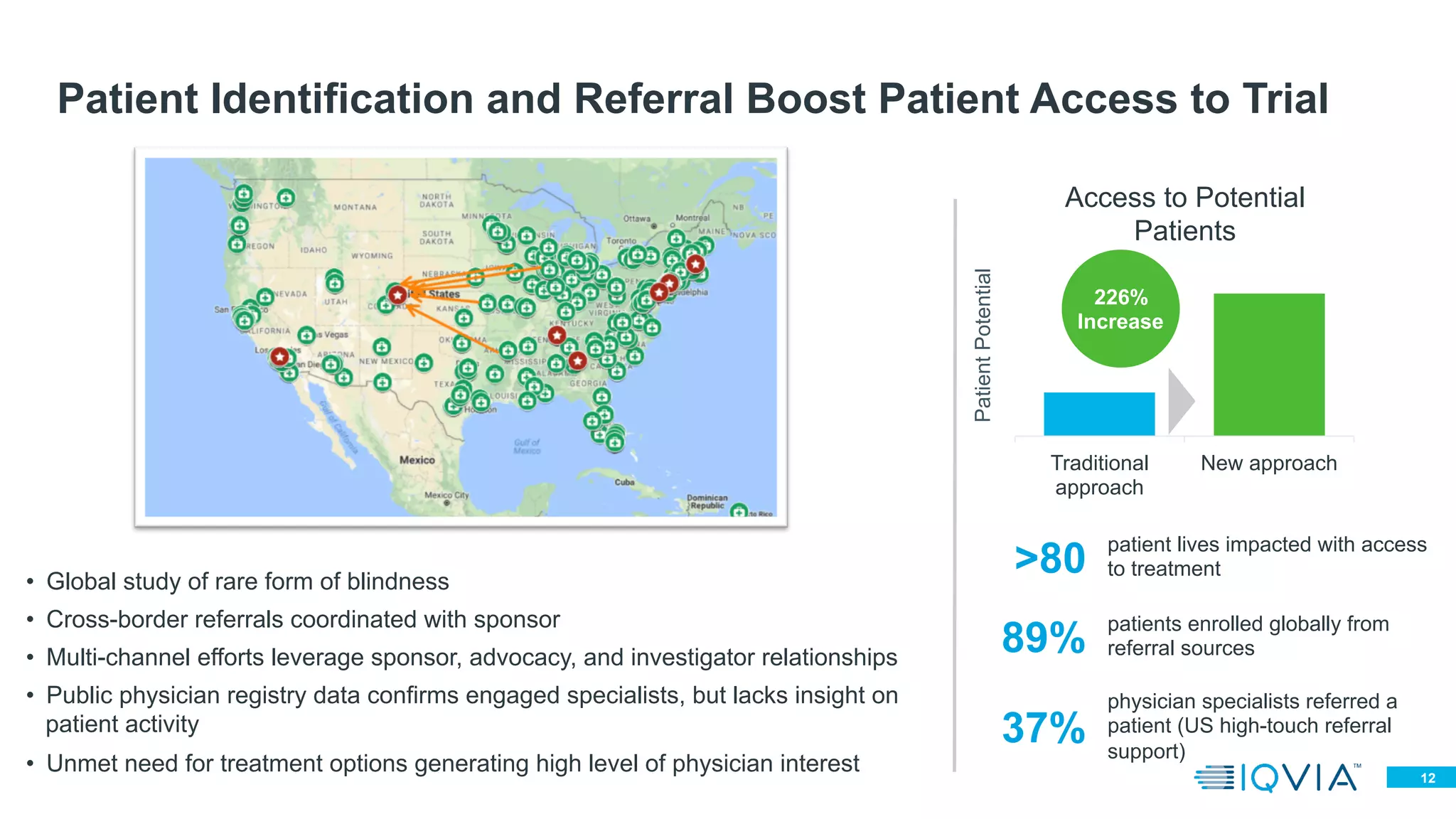
Patient Identification and Referral Boost Patient Access to Trial
Traditional
approach
New approach
Access to Potential
Patients
PatientPotential
226%
Increase
>80
patient lives impacted with access
to treatment
89%
patients enrolled globally from
referral sources
37%
physician specialists referred a
patient (US high-touch referral
support)
•  Global study of rare form of blindness
•  Cross-border referrals coordinated with sponsor
•  Multi-channel efforts leverage sponsor, advocacy, and investigator relationships
•  Public physician registry data confirms engaged specialists, but lacks insight on
patient activity
•  Unmet need for treatment options generating high level of physician interest
13
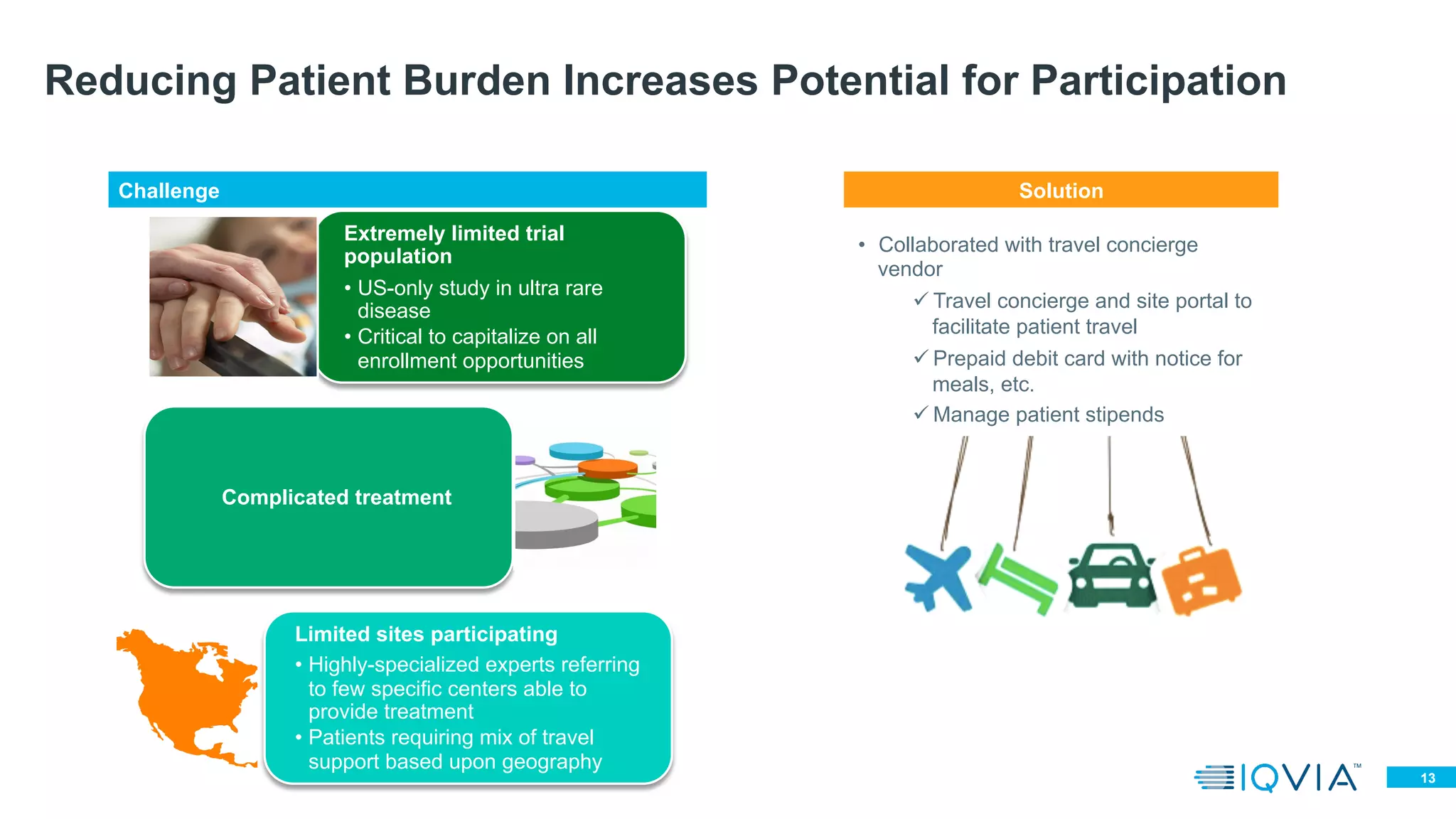
•  Collaborated with travel concierge
vendor
ü Travel concierge and site portal to
facilitate patient travel
ü Prepaid debit card with notice for
meals, etc.
ü Manage patient stipends
Reducing Patient Burden Increases Potential for Participation
Challenge Solution
Extremely limited trial
population
•  US-only study in ultra rare
disease
•  Critical to capitalize on all
enrollment opportunities
Complicated treatment
Limited sites participating
•  Highly-specialized experts referring
to few specific centers able to
provide treatment
•  Patients requiring mix of travel
support based upon geography
13
14
Joint
aches
Thick,
coarse
oil skin
Sleep
apnea
Fatigue
and
weak
Excess
sweat
Presents to
Primary
Physician with
symptoms
John
Presents:
Nov 2018
Referred to
Cardiologist
Referred to
Dermatologist
1
Feb 2019
Referred to
ENT specialist
Mar 2020
Referred to
Rheumatologist
Jul 2022
Finds
Dermatologist
2
John is
Diagnosed:
Sep 2023
Diagnosis of
Acromegaly
from
Endocrinologist
(ICD-10 code
E22.0)
Aug 2019 Apr 2021
Referred to
Endocrinologist
Jul 2023
Average 4.8 Years and 7.4 physicians to diagnosis
John’s symptoms fluctuate, Disease progresses
John may be
given
additional
treatment or
may be
eligible for
clinical
research
study
Improved Access to Clinical Trials Will Drive Diversity

STREAM THREE: Jeff Keefer, Inclusion in Clinical Trials

  • 1.
    Copyright © 2019IQVIA. All rights reserved. Jeffrey Keefer MD, PhD Pediatric and Rare Disease Center of Excellence May 2019 Driving Diversity By Increasing Access to Clinical Trials
  • 2.
    2 Why Does DiversityIn Trials Matter? 1. From the FDA: “It is important to test drugs and medical products in the people they are meant to help. FDA works to make sure that people of different ages, races, ethnic groups, and genders are included in clinical trials.” 2. People with rare disorders deserve access to clinical trials regardless of age, race, ethnic group, geography and gender -  The ability to participate in finding cures -  Potential to benefit from the drug being tested ›  Open label extension access -  Risk/harm
  • 3.
    3 More than 4400clinical trials have been started for rare diseases in the past 5 years and currently there are 2150 active clinical trials globally Rare Disease Trials by Country (2014-2018) Progress in National Diversity Confidential: For internal use onlySource: Analytical Operations analysis of MARS Dashboard
  • 4.
    Situation Solution Result •  Traditionalenrollment in sickle cell disease (SCD) trials in the US and EU for extremely slow •  Difficult Indication and complex protocol •  Why are we not performing the study in countries with highest disease burden? •  Build research infrastructure in Sub- Saharan Africa for SCD •  Engaged investigators •  Eager patients •  Solutions to patient logistics •  Distance from sites •  Lack of internet/phone Sickle Cell Disease in Pediatrics Providing clinical trial access and novel therapies to those who most need it Region Protocol Deviations/ Subject ePRO compliance (%) SAE’s/ subject Africa 0.91 99 0.36 US/Canada 2.91 92 0.75 EU 1.04 93 1.96 •  Rapid recruitment •  High data quality •  Now standard practice to include sub-Saharan Africa in SCD trials
  • 5.
    5 Established regional presenceproviding full service solutions to deliver quality data and new treatments to the populations that need it most Sub-Saharan Africa Clinical Operations BENEFITS OF CONDUCTING CLINICAL TRIALS IN THE REGION q  Potential to provide treatment options to patients who can truly benefit q  Relationships with eager investigators, emerging site infrastructure q  Experience working across pharma, biotech and public/ private partnership structures q  Regional teams, supported by global infrastructure and SOPs IQVIA Clinical Office locations Home-based permanent CRA staff IQVIA clinical trial experience
  • 6.
    6 Beyond country selection: Influencingdiversity in clinical trials
  • 7.
    7 What Influences DiversityIn A Rare Disease Trial? Chance Based on Investigator Patient Pool Protocol Directed Targeted Advertising •  Advocacy groups •  Social media •  Standard advertising Geography Study Burden
  • 8.
    8 Identifying People WithRare Diseases Using Data
  • 9.
    9 Increasing Access toResearch with Data and Novel Trial Models >Real world data supports patient referrals Research site in big city >Precision enrollment solution >Training research naïve sites >Virtual trial model >Home healthcare Care in patient home Provide care local to patient Open site closer to patient
  • 10.
    10 Local Care Team HealthCare Practitioner Home Health Nurse Phlebotomist Recruitment ExpertPatient Guide Virtual PI and Study Team Study Concierge Patient Mobile Health Devices Electrocardiography Blood Pressure Monitor Continuous Glucose Monitor Actigraphy Spirometry Primary Investigator Smartphone The Virtual Trial: Putting the Patient at the Center
  • 11.
    11 Increasing Access toResearch with Data and Novel Trial Models >Real world data supports patient referrals Research site in big city >Precision enrollment solution >Training research naïve sites >Virtual trial model >Home healthcare Care in patient home Provide care local to patient Open site closer to patient
  • 12.
    12 Patient Identification andReferral Boost Patient Access to Trial Traditional approach New approach Access to Potential Patients PatientPotential 226% Increase >80 patient lives impacted with access to treatment 89% patients enrolled globally from referral sources 37% physician specialists referred a patient (US high-touch referral support) •  Global study of rare form of blindness •  Cross-border referrals coordinated with sponsor •  Multi-channel efforts leverage sponsor, advocacy, and investigator relationships •  Public physician registry data confirms engaged specialists, but lacks insight on patient activity •  Unmet need for treatment options generating high level of physician interest
  • 13.
    13 •  Collaborated withtravel concierge vendor ü Travel concierge and site portal to facilitate patient travel ü Prepaid debit card with notice for meals, etc. ü Manage patient stipends Reducing Patient Burden Increases Potential for Participation Challenge Solution Extremely limited trial population •  US-only study in ultra rare disease •  Critical to capitalize on all enrollment opportunities Complicated treatment Limited sites participating •  Highly-specialized experts referring to few specific centers able to provide treatment •  Patients requiring mix of travel support based upon geography 13
  • 14.
    14 Joint aches Thick, coarse oil skin Sleep apnea Fatigue and weak Excess sweat Presents to Primary Physicianwith symptoms John Presents: Nov 2018 Referred to Cardiologist Referred to Dermatologist 1 Feb 2019 Referred to ENT specialist Mar 2020 Referred to Rheumatologist Jul 2022 Finds Dermatologist 2 John is Diagnosed: Sep 2023 Diagnosis of Acromegaly from Endocrinologist (ICD-10 code E22.0) Aug 2019 Apr 2021 Referred to Endocrinologist Jul 2023 Average 4.8 Years and 7.4 physicians to diagnosis John’s symptoms fluctuate, Disease progresses John may be given additional treatment or may be eligible for clinical research study Improved Access to Clinical Trials Will Drive Diversity