PSYCHOPHARMACOLO
GY
Objectives: At the end of this module you
should be able to:
Identify general pharmacologic strategies
Discuss antidepressants including indications for use and
side effects
Describe mood stabilizers including indications for use
and side effects
Review antipsychotics including how to choose an
antipsychotic and side effects
Identify anxiolytic classes and indications for use
Substance Use
Insomnia
Neurobiological
Theories of Mental Disorders
 Approximately 100
billion brain cells
form groups of
neurons, or nerve
cells, that are
arranged in
networks.
Neurobiological
Theories of Mental Disorders
 a synapse is a structure that permits a neurone to pass
an electrical or chemical signal to another neuron.
 Neurons communicate with one another by sending
electrochemical messages from neuron to neuron, a
process called neurotransmission.
 In the nervous system, the electrochemical messages
cross the synapses between neural cells by way of
special chemical messengers called neurotransmitters
 Neurotransmitters: are the chemical substances
manufactured in the neuron that aid in the transmission of
information throughout the body.
 They carry a signal from one nerve cell to another
 They either excite or stimulate an action in the cells
(excitatory) or inhibit or stop an action (inhibitory).
 Major neurotransmitters play a role in psychiatric illnesses
as well as actions and side effects of psychotropic drugs
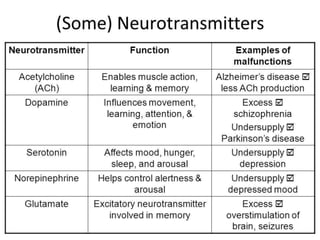
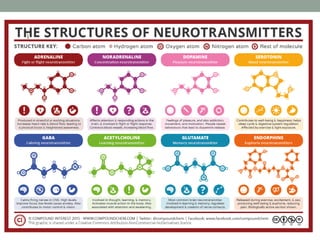
Neurotransmitters
DOPAMINE
 Dopamine, is a neurotransmitter located primarily in the
brain stem,
 involved in the control of complex movements, motivation,
cognition, and regulation of emotional responses.
 Dopamine is generally excitatory and is synthesized from
tyrosine, a dietary amino acid.
 Dopamine dysfunction is implicated in schizophrenia,
psychoses and movement disorders such as Parkinson’s
disease.
 Antipsychotic medications work by blocking dopamine
receptors and reducing dopamine activity.
the most prevalent neurotransmitter in the nervous system
 located primarily in the brain stem
 Role in changes in attention, learning and memory, sleep
and wakefulness, and mood regulation.
 Excess norepinephrine has been implicated in several
anxiety disorders; deficits may contribute to memory loss,
social withdrawal, and depression.
 Epinephrine (adrenaline) has limited distribution in the brain
but controls the fight-or-flight response in the peripheral
nervous system.
NOREPINEPHRINE AND EPINEPHRINE
SEROTONIN
 Serotonin, a neurotransmitter found only in the Brain
 derived from tryptophan, a dietary amino acid.
 The function of serotonin is involved in the control of food intake,
sleep and wakefulness, temperature regulation, pain control, sexual
behavior, and regulation of emotions.
 Serotonin plays an important role in anxiety and mood disorders and
schizophrenia.
 It has been found to contribute to the delusions, hallucinations, and
withdrawn behavior seen in schizophrenia.
 Some antidepressants block serotonin reuptake, thus leaving it
available for longer in the synapse, which results in improved mood.
Metabolism of the mono-amine
neurotransmitters
• Serotonin, dopamine and norepinephrine are the mono-
amine neurotransmitters
• To terminate their activity in the synaptic cleft:
• Broken down by COMT
• Reuptake by the presynaptic neuron.
HISTAMINE
 The role of histamine in mental illness is under
investigation.
 It is involved in peripheral allergic responses, control of
gastric secretions, cardiac stimulation and alertness.,
 Some psychotropic drugs block histamine, resulting in
weight gain, sedation, and hypotension.
ACETYLCHOLINE
 Acetylcholine is a neurotransmitter found in the brain, spinal cord, and
peripheral nervous system particularly at the neuromuscular junction of
skeletal muscle.
 It can be excitatory or inhibitory.
 Synthesized from dietary choline found in red meat and vegetables
 found to affect the sleep/wake cycle and to signal muscles to become
active.
 Studies have shown that people with Alzheimer’s disease have decreased
acetylcholine-secreting neurons, and people with myasthenia gravis (a
muscular disorder in which impulses fail to pass the myoneural junction,
which causes muscle weakness) have reduced acetylcholine receptors.
GLUTAMATE
 Glutamate is an excitatory amino acid that, at high levels,
can have major neurotoxic effects.
 Glutamate has been implicated in the brain damage caused
by stroke, hypoglycemia, sustained hypoxia or ischemia,
and some degenerative diseases such as Huntington’s or
Alzheimer’s.
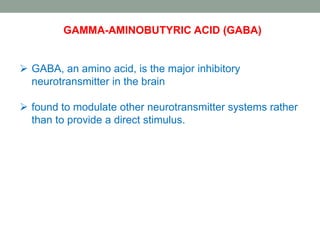
GAMMA-AMINOBUTYRIC ACID (GABA)
 GABA, an amino acid, is the major inhibitory
neurotransmitter in the brain
 found to modulate other neurotransmitter systems rather
than to provide a direct stimulus.
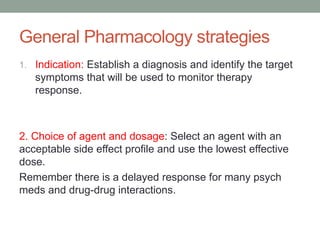
General Pharmacology strategies
1. Indication: Establish a diagnosis and identify the target
symptoms that will be used to monitor therapy
response.
2. Choice of agent and dosage: Select an agent with an
acceptable side effect profile and use the lowest effective
dose.
Remember there is a delayed response for many psych
meds and drug-drug interactions.
Pharmacology Guidelines
3. Establish informed consent: The patient should
understand the benefits and risks of the
medication e.g. teratogenicity discussion.
4. Implement a monitoring program: Track and
document compliance, side effects, target
symptom response, blood levels and blood
tests as appropriate.
Pharmacology Guidelines
6. Management: Adjust dosage for optimum benefit, safety
and compliance.
• Use adjunctive and combination therapies if needed-
always strive for the simplest regimen.
Antidepressants Indications
• Unipolar and bipolar depression,
• organic mood disorders,
• schizoaffective disorder,
• anxiety disorders e.g.OCD, panic, social
phobia, PTSD,
• premenstrual dysphoric disorder and
• impulsivity associated with personality
disorders.
General guidelines for antidepressant use
• Antidepressant efficacy is similar so selection is
based on
• past history of a response,
• side effect profile and
• coexisting medical conditions.
• Delay of 3-6 weeks after a therapeutic dose is
achieved before symptoms improve.
• If no improvement is seen after a trial of adequate
length (at least 2 months) and adequate dose,
switch to another antidepressant or augment with
another agent.
Antidepressants
• Antidepressants do not act immediately (show clinical
effects after 2 weeks)
• Affect only people who are depressed.
• Effect does not increase with increasing doses.
• Antidepressants are not habit-forming.
• Antidepressants differ widely in side effects.
Antidepressant Classifications
• Tricyclics (TCAs)
• Monoamine Oxidase Inhibitors (MAOIs)
• Selective Serotonin Reuptake Inhibitors (SSRIs)
• Serotonin/Norepinephrine Reuptake Inhibitors (SNRIs)
• Novel antidepressants
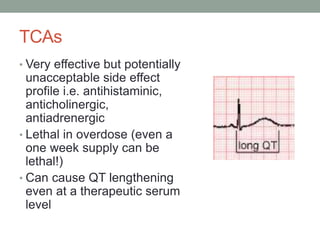
TCAs
• Very effective but potentially
unacceptable side effect
profile i.e. antihistaminic,
anticholinergic,
antiadrenergic
• Lethal in overdose (even a
one week supply can be
lethal!)
• Can cause QT lengthening
even at a therapeutic serum
level
Tertiary TCAs
• Have tertiary amine side chains
• Side chains are prone to cross react different
neurotransmitter receptors:
• antihistaminic (sedation and weight gain),
• anticholinergic (dry mouth, dry eyes, constipation, memory deficits
and potentially delirium),
• antiadrenergic (orthostatic hypotension, sedation, sexual
dysfunction)
• Act predominantly on serotonin receptors
• Examples: Imipramine, amitriptyline, clomipramine
• Have active metabolites including desipramine and
nortriptyline
Secondary TCAs
• Are often metabolites of tertiary amines
• Primarily block norepinephrine
• Side effects are the same as tertiary TCAs but generally
are less severe
• Examples: Desipramine, notrtriptyline
Monoamine Oxidase Inhibitors
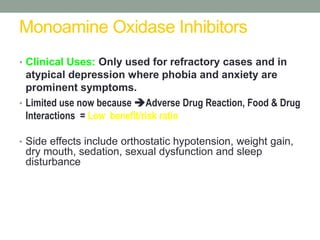
• Clinical Uses: Only used for refractory cases and in
atypical depression where phobia and anxiety are
prominent symptoms.
• Limited use now because Adverse Drug Reaction, Food & Drug
Interactions = Low benefit/risk ratio
• Side effects include orthostatic hypotension, weight gain,
dry mouth, sedation, sexual dysfunction and sleep
disturbance
Monoamine Oxidase Inhibitors
MonoAmine Oxidase is an enzyme found in nearly all tissues
Ø Two forms of monoamine oxidase exist:
Ø MAO-A responsible for NE, 5-HT catabolism. It also
metabolizes tyramine of ingested food
Ø MAO-B is more selective for dopamine metabolism
Monoamine Oxidase Inhibitors (MAOIs)
1- Non Selective Inhibitors (MAO-A & MAO-B)
ØIrreversible Phenelzine,
ØReversible  Tranylcypromine
2- Selective Reversible Inhibitors
•  Moclobemide, (MAO-A) (antidepressant action, Short
•  Selegiline, (MAO-B) (used in the treatment of Parkinsonism)
The effect of irreversible MAOIs persists for a period of 2-3 weeks.
MAOIs interaction with tyramine
‘cheese reaction’
• This occurs when Tyramine rich foods are taken with
MAOIs.
• Tyramine rich foods include Old cheese ,
Concentrated yeast products, Pickled or smoked
fish, Red beans, Red Wine, Chicken liver, Sausages.
• Tyramine in food is normally degraded in the gut by
MAO-A.
• Since the enzyme (MAO) is inhibited by MAOIs,
tyramine from ingested food is absorbed and
causes massive release of NE and may result in
hypertensive crisis ; severe hypertension, severe
headache and fatal intracranial haemorrhage.
• The special advantage claimed for Moclobemide
is that, No cheese reaction occurs with its use.
MAOIs cont.
• Serotonin Syndrome can develop if take MAOI
with meds that increase serotonin or have
sympathomimetic actions.
• SS sx include abdominal pain, diarrhea, sweats,
tachycardia, HPT, myoclonus, irritability, delirium,
hyperpyrexia, cardiovascular shock and death.
• To avoid need to wait 2 weeks before switching
from an SSRI to an MAOI. The exception of
fluoxetine where need to wait 5 weeks because of
long half-life.
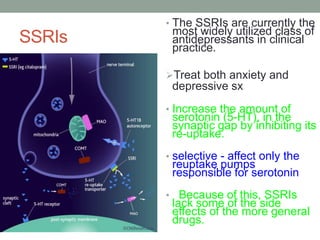
SSRIs
• The SSRIs are currently the
most widely utilized class of
antidepressants in clinical
practice.
Treat both anxiety and
depressive sx
• Increase the amount of
serotonin (5-HT), in the
synaptic gap by inhibiting its
re-uptake.
• selective - affect only the
reuptake pumps
responsible for serotonin
• Because of this, SSRIs
lack some of the side
effects of the more general
drugs.
Selective Serotonin Reuptake Inhibitors
(SSRIs) Side Effects
Most common side effects include GI upset,
sexual dysfunction (30%+!), anxiety, restlessness,
nervousness, insomnia, fatigue or sedation,
dizziness
Very little risk of cardiotoxicity in overdose
Can develop a discontinuation syndrome with
agitation, nausea, disequilibrium and dysphoria
Paroxetine (Paxil)
Pros
Short half life with no active metabolite means no build-
up (which is good if hypomania develops)
Sedating properties (dose at night) offers good initial
relief from anxiety and insomnia
Cons
Significant liver enzyme interactions
Sedating, wt gain, more anticholinergic effects
Likely to cause a discontinuation syndrome
Sertraline (Zoloft)
 Pros
 Very weak liver enzyme interaction
 Short half life with lower build-up of metabolites
 Less sedating when compared to paroxetine
 Cons
 Max absorption requires a full stomach
Fluoxetine (Prozac)
Pros
Long half-life (2-4days) so decreased incidence of discontinuation
syndromes.
Good for pts with medication noncompliance issues
Initially activating so may provide increased energy
Secondary to long half life, can give one 20mg tab to taper
someone off SSRI when trying to prevent SSRI Discontinuation
Syndrome
Cons
Long half life and active metabolite may build up (not a good choice
in patients with hepatic illness)
Significant liver interactions so this may not be a good choice in
pts already on a number of meds
Initial activation may increase anxiety and insomnia
More likely to induce mania than some of the other SSRIs
Citalopram (Celexa)
• Pros
• Low inhibition of liver enzymes so fewer drug-drug
interactions
• Intermediate ½ life
• Cons
• Can be sedating
• GI side effects (less than sertraline)
Escitalopram (Lexapro)
• Pros
• Low overall inhibition of liver enzymes so fewer drug-drug
interactions
• More effective than Citalopram in acute response and remission
• Cons
• Nausea, headache
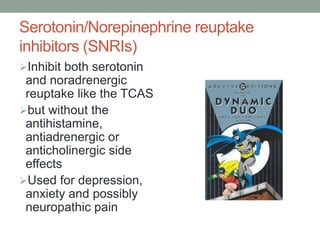
Serotonin/Norepinephrine reuptake
inhibitors (SNRIs)
Inhibit both serotonin
and noradrenergic
reuptake like the TCAS
but without the
antihistamine,
antiadrenergic or
anticholinergic side
effects
Used for depression,
anxiety and possibly
neuropathic pain
Venlafaxine (Effexor)
Pros
Minimal drug interactions
Short half life and fast renal clearance avoids build-up (good for
geriatric populations)
Cons
Can cause a 10-15 mmHG dose dependent increase in diastolic
BP.
May cause significant nausea, primarily with immediate-release
(IR) tabs
Can cause a bad discontinuation syndrome, and taper
recommended after 2 weeks of administration
Sexual side effects in >30%
Duloxetine (Cymbalta)
• Pros
• Some data to suggest efficacy for the physical symptoms of
depression
• Thus far less BP increase as compared to venlafaxine, however
this may change in time
• Cons
• Cannot break capsule, as active ingredient not stable within the
stomach
• Has high drop out rate
Novel antidepressants
Mirtazapine (NE and specific Serotonergic
Antidepressant)
Pros
Different mechanism of action may provide a good augmentation
strategy to SSRIs. Is a 5HT2 and 5HT3 receptor antagonist –
reducing anxiety and sexual dysfunction
Can be utilized as a hypnotic at lower doses secondary to
antihistaminic effects
Cons
Increases serum cholesterol by 20% in 15% of patients and
triglycerides in 6% of patients
Very sedating at lower doses. At doses 30mg and above it can
become activating and require change of administration time to the
morning.
Associated with weight gain (particularly at doses below 45mg
Bupropion (Wellbutrin) (NDRI)
• Pros
• Good for use as an augmenting agent
• Mechanism of action likely reuptake inhibition of dopamine and
norepinephrine
• No weight gain, sexual side effects, sedation or cardiac interactions
• Low induction of mania
• Is a second line ADHD agent so consider if patient has a co-occurring
diagnosis
• Cons
• May increase seizure risk at high doses (450mg+) and should avoid in
patients with Traumatic Brain Injury, bulimia and anorexia.
• Does not treat anxiety unlike many other antidepressants and can actually
cause anxiety, agitation and insomnia
• Has abuse potential because can induce psychotic sx at high doses
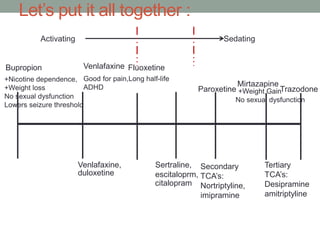
Let’s put it all together :
Bupropion
Activating Sedating
Venlafaxine,
Fluoxetine
Sertraline,
escitaloprm,
Mirtazapine
Trazodone
Tertiary
TCA’s:
Desipramine
amitriptyline
Secondary
TCA’s:
Nortriptyline,
imipramine
Paroxetine
duloxetine
citalopram
+Nicotine dependence,
+Weight loss
No sexual dysfunction
Lowers seizure threshold
+Weight Gain
No sexual dysfunction
Venlafaxine
Good for pain,
ADHD
Long half-life
Case 1
• Susie Q has a nonpsychotic unipolar depression
with no history of hypomania or mania. She has
depressed mood, hyperphagia, psychomotor
retardation and hypersomnolence. What agent
would you like to use for her?
• Establish dx: Major depressive disorder
• Target symptoms: depression, hyperphagia,
psychomotor retardation and hypersomnolence
• For a treatment naive patient start with an SSRI.
• Using the side effect profile as a guide select an
SSRI that is less sedating. Good choices would
be Citalopram, Fluoxetine or Sertraline.
• Bupropion would also have been a reasonable
choice given her hypersomnolence, psychomotor
retardation and hyperphagia.
• Less desirable choices include Paxil and
Mirtazapine because of sedation and wt gain.
• No dual reuptake inhibitors because she is
treatment naïve and may not need a “big gun”.
• Not a TCA because of side effects
Case 2
• B. is a 55 year old diabetic man with mild HTN
and painful diabetic neuropathy who has had
previous depressive episodes and one suicide
attempt.
• Currently meets criteria for a major depressive
episode with some anxiety.
• He has been treated with paroxetine, setraline
and buproprion. His depression was improved
slightly with each of these meds but never
remitted. What would you like to treat him with?
Case 2 continued
Establish dx: Major depressive disorder with
anxious features
Target symptoms: depressive sx, anxiety and
possibly his neuropathic pain
Assuming he received adequate trials previously
would move on to a duel reuptake inhibitor as he
had not achieved remission with two SSRIS or a
novel agent.
Case 2 continued
• Given his mild HTN would not choose
Venlafaxine.
• TCA’s can help with neuropathic pain and
depression however not a good choice given the
SE profile and lethality in overdose.
• Duloxetine is a good choice since it has an
indication for neuropathic pain, depression and
anxiety. Three birds with one stone!!
• Keep in mind Duloxetine is a CYP2D6 and
CPY1A2 inhibitor and has potential drug-drug
interactions.
Mood Stabilizers
Mood stabilizers Indications
Bipolar Mood Disorder,
cyclothymia,
schizoaffective,
impulse control and
intermittent explosive disorders.
Classes: Lithium, anticonvulsants, antipsychotics
Choice depends on what you are treating and the side
effect profile.
Main Principles Continued
1. Treating bipolar disorder is actually a matter of
managing up to four different situations, all of which
respond differently to medications.
A. Acute mania
B. Acute depression
C. Prophylaxis against mania
D. Prophylaxis against depression
More Principles
• You have to consider all four of the situations when
treating your bipolar patients.
What percentage of people with an acute manic episode will have
further mood episodes requiring treatment?
Recurrence following remission occurred in 58% of patients by 1
year and 74% by 4 years (60% depressive, 28% manic and 12%
hypomanic.
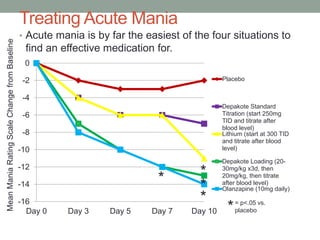
Treating Acute Mania
• Acute mania is by far the easiest of the four situations to
find an effective medication for.
-16
-14
-12
-10
-8
-6
-4
-2
0
Day 0 Day 3 Day 5 Day 7 Day 10
Placebo
Depakote Standard
Titration (start 250mg
TID and titrate after
blood level)
Lithium (start at 300 TID
and titrate after blood
level)
Depakote Loading (20-
30mg/kg x3d, then
20mg/kg, then titrate
after blood level)
Olanzapine (10mg daily)
*
*
*
*
= p<.05 vs.
placebo
*
Mean
Mania
Rating
Scale
Change
from
Baseline
Acute Mania Continued…
• The take home lessons:
• Acute mania responds well to olanzapine,
valproic acid, and lithium.
• Even aggressive treatment takes 7 days to
separate from placebo
• Other medications with good evidence in the treatment of acute
mania include :
• Carbamazepine, all atypical antipsychotics, and various combinations of
the above.
• The only two medications historically used in bipolar disorder that do not
have efficacy in acute mania are topiramate and lamotrigine (due its to
slow titration)
Prophylaxis Against Mania
• Remember the high rate of recurrent mood
episodes; prophylaxis is important.
• Mania is easier to treat than prevent
Mania Prophylaxis Continued…
• Essentially the same medications that work for
treating acute mania also work to prophylaxis against
mania
• Lithium has the best support for prophylaxis against
mania, with studies suggesting that it is superior to
other options.
• Atypical antipsychotics also seem to work fairly well
• Valproate and carbamazepine also have evidence
supporting their use.
Treating Acute Bipolar Depression
Do antidepressants work in treating acute bipolar
depression?
• Evidence-based guidelines do not support
antidepressant monotherapy for bipolar depression.
• Antidepressant monotherapy should be avoided in
bipolar I disorder
• Risk of switching patient into manic episode or rapid
cycling
Bipolar Depression
• A shorter list:
• Atypical antipsychotics, especially quetiapine and olanzapine.
• Lithium is less effective in treating depression than it is at treating
mania, but it is still effective.
• Lamotrigine is effective, but can take a very long time to get up to a
treatment dose.
• There is some evidence that carbamazepine and valproic acid work,
though this evidence is poor.
Prophylaxis against Bipolar Depression
The shortest list of all:
• Lamotrigine
• Atypical antipsychotics (again, especially quetiapine and
olanzapine)
• And the olanzapine/fluoxetine (Zyprexa) combination pill that actually
outperformed olanzapine alone in a study.
• Lithium, which is, again, better at preventing manic
episodes, but does work to prevent depression
Lithium
• Only medication to reduce suicide rate.
• Rate of completed suicide in BAD ~15%
• Effective in long-term prophylaxis of both mania
and depressive episodes in 70+% of BAD I pts
• Factors predicting positive response to lithium
• Prior long-term response or family member with good
response
• Classic pure mania
• Mania is followed by depression
Lithium
• U+ E’s, creatinine,
• TFT
• FBC.
• In women check a pregnancy test- during the first
trimester is associated with Ebstein’s anomaly
1/1000 (20X greater risk than the general
population)
• Monitoring: Steady state achieved after 5 days-
check 12 hours after last dose. Once stable
check q 3 months and TFT and U+E q 6 months.
• Goal: blood level between 0.6-1.2mmol/l
Lithium side effects
• Most common are;
• GI distress including reduced appetite,
nausea/vomiting, diarrhea
• Thyroid abnormalities
• Nonsignificant leukocytosis
• Polyuria/polydipsia.
• In a small number of patients can cause interstitial
renal fibrosis.
• Hair loss, acne
• Reduces seizure threshold, cognitive slowing,
intention tremor
Lithium toxicity
• Mild- levels 1.5-2.0 vomiting, diarrhea, ataxia, dizziness,
slurred speech, nystagmus.
• Moderate-2.0-2.5 nausea, vomiting, anorexia, blurred
vision, clonic limb movements, convulsions, delirium,
syncope
• Severe- >2.5 generalized convulsions, oliguria and renal
failure
Valproic acid
Valproic acid is as effective as Lithium in mania
prophylaxis but is not as effective in depression
prophylaxis.
Factors predicting a positive response:
rapid cycling patients (females>males)
comorbid substance issues
Patients with comorbid anxiety disorders
HIV positive patients
Better tolerated than Lithium
Valproic acid
Baseline liver function tests (LFT), pregnancy test and
FBC
Start folic acid supplement in women
Valproic acid side effects
• Thrombocytopenia and
platelet dysfunction
• Nausea, vomiting,
weight gain
• Transaminitis
• Sedation, tremor
• Increased risk of neural
tube defect 1-2% vs
0.14-0.2% in general
population secondary to
reduction in folic acid
• Hair loss
• PCOS
Carbamazepine
First line agent for acute mania and mania prophylaxis
Indicated for rapid cyclers and mixed patients
Carbamazepine
Baseline liver function tests, FBC and an
ECG
Monitoring: Steady state achieved after 5
days -check 12 hours after last dose and
repeat CBC and LFT
Need to adjust dosing after around a
month because induces own metabolism.
Carbamazepine side effects
• Rash- most common SE seen
• Nausea, vomiting, diarrhea
• Sedation, dizziness, ataxia
• Cardiac conduction delays
• Aplastic anemia and agranulocytosis (<0.002%)
• Drug-drug interactions!
Carbamazepine side effects
• Carries a 1-6/10000 risk of Stevens-Johnson
syndrome and toxic epidermal necrolysis (except
in Asians, where the risk may be up to 10x
higher)
Drug interactions
• Drugs that increase carbamazepine levels and/or toxicity:
• clozapine, INH, occasionally fluoxetine, erythromycin, fluconazole,
ketoconazole, metronidazole, verapamil, diltiazem.
• Drugs that decrease carbamazepine levels: neuroleptics,
barbiturates, phenytoin, TCA’s.
• Carbamazepine is a heteroinducer, increasing its own metabolism
and that of many other drugs, including contraceptives, warfarin,
many psychotropics including antidepressants, antipsychotics, BZD’s.
Lamotrigine ( Lamictal)
Indications similar to other anticonvulsants
Also used for neuropathic/chronic pain
Before med is started: baseline liver function tests
Initiation/titration: start with 25 mg daily X 2 weeks then
increase to 50mg X 2 weeks then increase to 100mg- faster
titration has a higher incidence of serious rash
• The risk of SJS is low (~0.1%)
• However, the risk is related to the rate of dose increase, so
a slow schedule is required (25mg every other week)
If the patient stops the med for 5 days or more have to start at
25mg again!
Lamotrigine: Side effects
• Nausea/vomiting
• Sedation, dizziness, ataxia and confusion
• The most severe are toxic epidermal necrolysis and
Stevens Johnson's Syndrome. The character/severity of
the rash is not a good predictor of severity of reaction.
Therefore, if ANY rash develops, discontinue use
immediately.
• Drugs that increase lamotrigine levels: VPA (doubles
concentration, so use slower dose titration), sertraline.
Antipsychotics as mood stabilizers
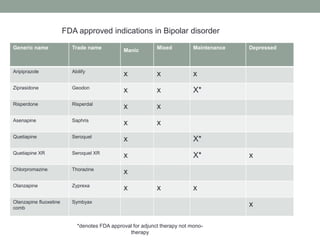
Generic name Trade name Manic Mixed Maintenance Depressed
Aripiprazole Abilify
x x x
Ziprasidone Geodon
x x X*
Risperdone Risperdal
x x
Asenapine Saphris
x x
Quetiapine Seroquel
x X*
Quetiapine XR Seroquel XR
x X* x
Chlorpromazine Thorazine
x
Olanzapine Zyprexa
x x x
Olanzapine fluoxetine
comb
Symbyax
x
FDA approved indications in Bipolar disorder
*denotes FDA approval for adjunct therapy not mono-
therapy
So, let’s put it all together…
Acute Mania
• Lithium
• Valproic acid (Depakote)
• Carbamazepine (Tegretol)
• Oxcarbazepine (Trileptal)
• Risperidone (Risperidol)
• Olanzapine (Zyprexa)
• Quetiapine (Seroquel)
• Aripiprazole (Abilify)
Depression Prophylaxis
• Lithium
• Valproic acid (Depakote)
• Carbamazepine (Tegretol)
• Oxcarbazepine (Trileptal)
• Topiramate (Topamax)
• Lamotrigine (Lamictal)
• Risperidone (Risperidol)
• Olanzapine (Zyprexa)
• Quetiapine (Seroquel)
• Aripiprazole (Abilify)
• Antidepressants
Acute Depression
• Lithium
• Valproic acid (Depakote)
• Carbamazepine (Tegretol)
• Oxcarbazepine (Trileptal)
• Topiramate (Topamax)
• Lamotrigine (Lamictal)
• Risperidone (Risperidol)
• Olanzapine (Zyprexa)
• Quetiapine (Seroquel)
• Aripiprazole (Abilify)
• Antidepressants
Mania Prophylaxis
• Lithium
• Valproic acid (Depakote)
• Carbamazepine (Tegretol)
• Lamotrigine (Lamictal)
• Risperidone (Risperidol)
• Olanzapine (Zyprexa)
• Quetiapine (Seroquel)
• Aripiprazole (Abilify)
Options to both treat acute mood
episodes and prevent future mood
episodes
• Lithium
• Atypical antipsychotics (quetiapine and olanzapine especially for
depression)
• Consider adding lamotrigine for depression prophylaxis if monotherapy isn’t
sufficient
• Other combination therapy
• (Could consider olanzapine/fluoxetine combination for bipolar depression)
Case 3
27 y.o male is admitted secondary to a manic episode. In
reviewing his history you find he has 5 to 6 manic or
depressive episodes a year. He has also struggled on and
off with ETOH abuse. What medication would you like to
start?
• Valproic acid would be a good choice because pt is a
rapid cycler (4 or more depressive or manic
episodes/year) and because of comorbid ETOH abuse.
• Start 250mg BID and titrate to 500mg BID.
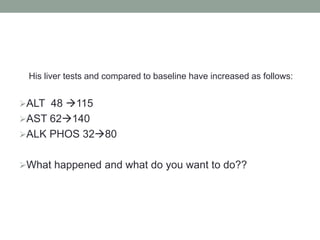
His liver tests and compared to baseline have increased as follows:
ALT 48 115
AST 62140
ALK PHOS 3280
What happened and what do you want to do??
• It is not unusual for patients on anticonvulsants to
experience an increase in lfts and as long as they do not
more than triple no change in therapy is indicated.
• Continue to monitor over time
Antipsychotics Indications
• schizophrenia, schizoaffective disorder,
• bipolar disorder- for mood stabilization and/or when
psychotic features are present,
• delirium,
• psychotic depression,
• dementia,
• trichotillomania,
• augmenting agent in treatment resistant anxiety disorders.
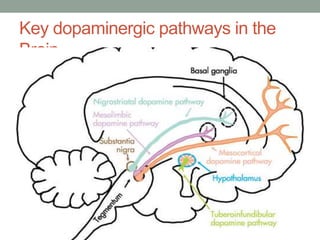
Key dopaminergic pathways in the
Brain
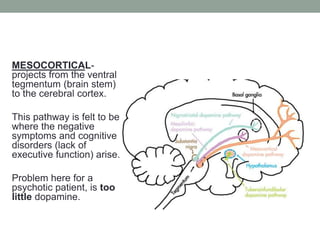
MESOCORTICAL-
projects from the ventral
tegmentum (brain stem)
to the cerebral cortex.
This pathway is felt to be
where the negative
symptoms and cognitive
disorders (lack of
executive function) arise.
Problem here for a
psychotic patient, is too
little dopamine.
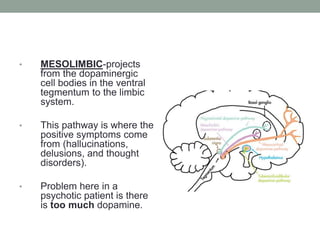
• MESOLIMBIC-projects
from the dopaminergic
cell bodies in the ventral
tegmentum to the limbic
system.
• This pathway is where the
positive symptoms come
from (hallucinations,
delusions, and thought
disorders).
• Problem here in a
psychotic patient is there
is too much dopamine.
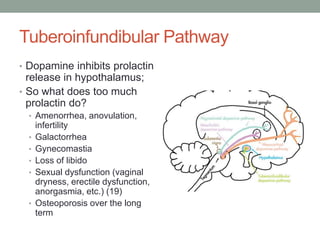
Tuberoinfundibular Pathway
• Dopamine inhibits prolactin
release in hypothalamus;
• So what does too much
prolactin do?
• Amenorrhea, anovulation,
infertility
• Galactorrhea
• Gynecomastia
• Loss of libido
• Sexual dysfunction (vaginal
dryness, erectile dysfunction,
anorgasmia, etc.) (19)
• Osteoporosis over the long
term
• Low potency typical antipsychotics have less affinity for
the D2 receptors
• but tend to interact with nondopaminergic receptors
resulting in more cardiotoxic and anticholinergic adverse
effects including sedation, hypotension.
• Examples include chlorpromazine and Thioridazine.
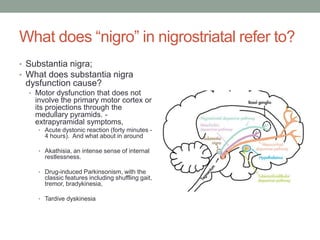
What does “nigro” in nigrostriatal refer to?
• Substantia nigra;
• What does substantia nigra
dysfunction cause?
• Motor dysfunction that does not
involve the primary motor cortex or
its projections through the
medullary pyramids. -
extrapyramidal symptoms,
• Acute dystonic reaction (forty minutes -
4 hours). And what about in around
• Akathisia, an intense sense of internal
restlessness.
• Drug-induced Parkinsonism, with the
classic features including shuffling gait,
tremor, bradykinesia,
• Tardive dyskinesia
Anticholinergic Side Effect Profile
What are the effects of blocking (muscarinic) cholinergic
receptors?
• Think atropine: “Blind as a bat, dry as a bone, red as a beet…”
• Dry mouth (leading to cavities, sore throat)
• Urinary retention
• Constipation (or ileus)
• Photophobia (Mydriasis), blurred vision
• Sedation
• Increased intraocular pressure (dangerous in acute angle glaucoma)
• Ataxia (with increased fall risk)
• Orthostatic Hypotension
• The lower the average dose, the higher the risk of dopaminergic
side effects and the lower the risk of anticholinergic side effects.
• Conversely, the higher the average dose, the lower the risk of
dopaminergic side effects and the higher the rate of anticholinergic
side effects.
Antipsychotics: Atypicals
• The Atypical Antipsychotics - atypical agents are
serotonin-dopamine 2 antagonists (SDAs)
• They are considered atypical in the way they affect
dopamine and serotonin neurotransmission in the four
key dopamine pathways in the brain.
Risperidone (Risperdal)
Available in regular tabs, IM depot forms and
rapidly dissolving tablet 2-6mg/day
Functions more like a typical antipsychotic at
doses greater than 6mg
Increased extrapyramidal side effects at higher
doses (dose dependent)
Most likely atypical to induce hyperprolactinemia
Weight gain and sedation (dosage dependent)
Olanzapine (Zyprexa)
Available in regular tabs, immediate release IM,
rapidly dissolving tab, depo form 5mg -20mg/day
Weight gain (can be as much as 15-25 kg with
even short term use)
May cause hypertriglyceridemia,
hypercholesterolemia, hyperglycemia (even
without weight gain)
Quetiapine (Seroquel)
Available in a regular tablet form only
May be associated with weight gain, though less
than seen with olanzapine
May cause hypertriglyceridemia,
hypercholesterolemia, hyperglycemia (even
without weight gain), however less than
olanzapine
Most likely to cause orthostatic hypotension
Ziprasidone
Available regular tabs and IM immediate release
form
May cause hyperprolactinemia (< risperidone)
No associated weight gain
Absorption is increased (up to 100%) with food
Aripiprazole (Abilify)
Available in regular tabs, immediate release IM
formulation and depo form
Unique mechanism of action as a D2 partial
agonist
Low EPS,
Could cause potential intolerability due to
akathisia/activation.
Not associated with weight gain
Clozapine (Clozaril)
• Available in 1 form- a regular tablet
• Is reserved for treatment resistant patients because of
side effect profile but this stuff works!
• Associated with agranulocytosis (0.5-2%) and therefore
requires weekly blood draws x 6 months, then Q- 2weeks
x 6 months)
• Increased risk of seizures (especially if lithium is also on
board)
• Associated with the most sedation, weight gain and
transaminitis
• Increased risk of hypertriglyceridemia,
hypercholesterolemia, hyperglycemia with or without
weight gain
Antipsychotic adverse effects
Tardive Dyskinesia (TD)-involuntary muscle
movements that may not resolve with drug
discontinuation- risk approx. 5% per year
Neuroleptic Malignant Syndrome (NMS):
Characterized by severe muscle rigidity, fever,
altered mental status, autonomic instability,
elevated WBC, CPK and lfts. Potentially fatal.
Extrapyramidal side effects (EPS): Acute
dystonia, Parkinson syndrome, Akathisia
Agents for EPS
Anticholinergics such as Benzhexol and biperidine.
Dopamine facilitators such as Amantadine
Beta-blockers such as propranolol
Need to watch for anticholinergic SE particularly if taken
with other meds with anticholinergic activity ie TCAs
Case
• 21 y.o male with symptoms consistent with schizophrenia
is admitted because of profound psychotic sx.
• He is treatment naïve.
• You plan to start an antipsychotic- what baseline blood
work would you obtain?
• Many atypical antipsychotics can cause dyslipidemia,
transaminitis and elevated blood sugars and there is a
class risk of diabetes unrelated to weight gain so you
need the following:
• lipid profile
• blood sugar
• Lfts
• FBC
• Risperidone or Aripiprazole are good choices.
• You start Risperidone and titrate to 3mg BID (high
average dose). He starts to complain that he
“feels uncomfortable in my skin like I can’t sit
still”.
• What is likely going on and what are you going to
do about it?
• He is likely experiencing akathisia.
• This is not uncommon with Risperidone.
• Given he was very ill reducing the dose may not be the
best choice so likely treat with an anticholinergic agent or
propranolol.
• You need to treat akathisia because it is associated with
an increase risk for suicide!
Anxiolytics
• Used to treat many diagnoses including
• panic disorder,
• generalized Anxiety disorder,
• substance-related disorders and their withdrawal,
• insomnias and parasomnias.
• In anxiety disorders often use anxiolytics in combination
with SSRIS or SNRIs for treatment.
Buspirone
• Pros:
• Good augmentation strategy- Mechanism of action is
5HT1A agonist. It works independent of endogenous
release of serotonin.
• No sedation
• Cons:
• Takes around 2 weeks before patients notice results.
• Will not reduce anxiety in patients that are used to
taking BZDs because there is no sedation effect to
“take the edge off.
Benzodiazapines
Used to treat insomnia, parasomnias and anxiety
disorders.
Often used for CNS depressant withdrawal
protocols e.g. ETOH withdrawal.
Side effects/cons
Somnolence
Cognitive deficits
Amnesia
Disinhibition
Tolerance
Dependence
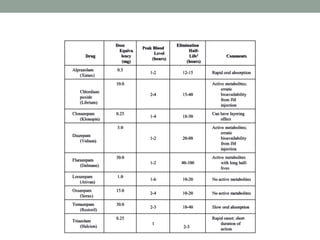
Drug
Dose
Equiva
lency
(mg)
Peak Blood
Level
(hours)
Elimination
Half-
Life1
(hours)
Comments
Alprazolam
(Xanax)
0.5
1-2 12-15 Rapid oral absorption
Chlordiaze
poxide
(Librium)
10.0
2-4 15-40
Active metabolites;
erratic
bioavailability
from IM
injection
Clonazepam
(Klonopin)
0.25
1-4 18-50
Can have layering
effect
Diazepam
(Valium)
5.0
1-2 20-80
Active metabolites;
erratic
bioavailability
from IM
injection
Flurazepam
(Dalmane)
30.0
1-2 40-100
Active metabolites
with long half-
lives
Lorazepam
(Ativan)
1.0
1-6 10-20 No active metabolites
Oxazepam
(Serax)
15.0
2-4 10-20 No active metabolites
Temazepam
(Restoril)
30.0
2-3 10-40 Slow oral absorption
Triazolam
(Halcion)
0.25
1
2-3
Rapid onset; short
duration of
action
Take home points
• Be clear on the diagnosis you are treating and any
comorbid diagnoses when you are selecting an agent to
treat- often can get 2 birds with 1 stone!
• Select the agent based on patients history, current
symptom profile and the side effect profile of the
medication- there is no one correct answer in most cases.
Monitor for efficacy and tolerance and adjust as indicated.
If the patient does not improve step back, rethink your
diagnosis and treatment plan!
Keep an eye on drug-drug interactions
Insomnia Definitions: DSM-V
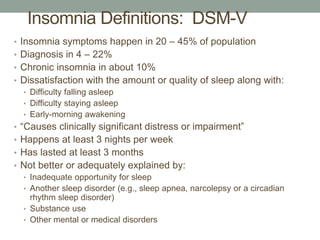
• Insomnia symptoms happen in 20 – 45% of population
• Diagnosis in 4 – 22%
• Chronic insomnia in about 10%
• Dissatisfaction with the amount or quality of sleep along with:
• Difficulty falling asleep
• Difficulty staying asleep
• Early-morning awakening
• “Causes clinically significant distress or impairment”
• Happens at least 3 nights per week
• Has lasted at least 3 months
• Not better or adequately explained by:
• Inadequate opportunity for sleep
• Another sleep disorder (e.g., sleep apnea, narcolepsy or a circadian
rhythm sleep disorder)
• Substance use
• Other mental or medical disorders
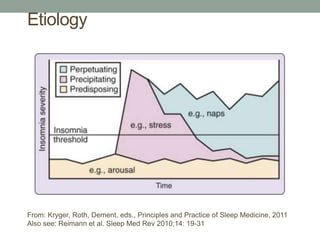
Etiology
From: Kryger, Roth, Dement, eds., Principles and Practice of Sleep Medicine, 2011
Also see: Reimann et al. Sleep Med Rev 2010;14: 19-31
Morbidity/Co-Morbidity
• Psychiatric: prevalence of any psychiatric disorder is 2-3x
greater in insomniacs,
• depression prevalence is 4x greater
• Decreased quality of life
• Increased accidents and decreased productivity
• Increased risk of:
• Hypertension
• Diabetes
• Metabolic syndrome (> 3: hyperglycemia, hypertriglyceridemia,
increased waist circumference, HTN)
• Myocardial infarction
• Suicidal Ideation
Treatment
• Treat underlying Medical or Psychiatric
Condition (insomnia symptoms can remain)
• Improve sleep hygiene (limited data on
efficacy)
• Change environment
• Cognitive-Behavioral Therapy for Insomnia
(CBT-I)
• Pharmacologic
• Light and melatonin
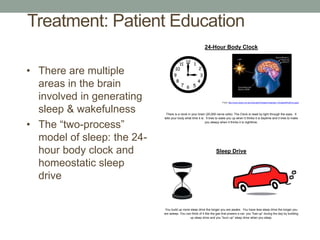
24-Hour Body Clock
From: http://www.nigms.nih.gov/Education/Pages/Factsheet_CircadianRhythms.aspx
There is a clock in your brain (20,000 nerve cells). The Clock is reset by light through the eyes. It
tells your body what time it is. It tries to wake you up when it thinks it is daytime and it tries to make
you sleepy when it thinks it is nighttime.
Sleep Drive
You build up more sleep drive the longer you are awake. You have less sleep drive the longer you
are asleep. You can think of it like the gas that powers a car: you “fuel up” during the day by building
up sleep drive and you “burn up” sleep drive when you sleep.
• There are multiple
areas in the brain
involved in generating
sleep & wakefulness
• The “two-process”
model of sleep: the 24-
hour body clock and
homeostatic sleep
drive
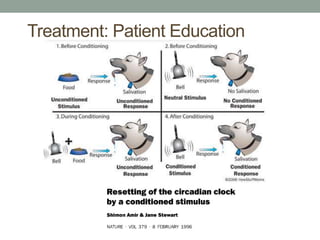
Treatment: Patient Education
• Progressive relaxation
• Guided imagery
• Stimulus control therapy: in bed only when sleepy,
bed/bedroom is for sleep and sex only, & get out of bed when
unable to sleep
• Sleep Restriction: fixed waketime, change bedtime by 15
minutes if sleep efficiency >90% in the last week
• Regular sleep schedule and light/dark schedule
• Requires the use of a sleep diary
Treatment: Behavioral
Morin CM, et al. Sleep 2006;29:1398-1414
Treatment: Pharmacologic
• Benzodiazepine Receptor Agonists
– Benzodiazepines
– Non-Benzodiazepines GABAA agonists
• Sedating Antidepressants
• Sedating Antipsychotics
• Antihistamines
• Suvorexant (orexin antagonist)
• Gamma-Hydroxybutyrate (GHB)
• Melatonin and Melatonin agonists,
Gabapentin, Valerian
Benzodiazepines
• More than 45 years old and are potent hypnotics and
anxolytics
• Improve sleep time, but not usually sleep latency (often one
of the more desired effects)
• Disrupt normal sleep cycles
• Tend to cause bad “hangover” effects
• Very drowsy the following day
• Occasional impaired cognition
• Extremely high potential for abuse with prolonged use as well
as tolerance
• Drugs in this class are
• Diazepam, Lorazepam, Clonazepam
Pharmacological treatment
• Benzodiazepines are well for problems of abuse and
dependance.
• Z drugs are non-benzodiazepine GABA agonists e.g. zolpidem
and zopiclone
• Sleep onset is and maintainance is improved
• Claim amore restful night sleep
• Fewer problems with dependency, though still an issue
• Do not show deleterious effects to the sleep cycle
• Longer half-life than benzodiazepines so help with sleep
maintenance
• But:
• Risk of sleep walking, sleep driving, sleep eating and sleep sex
• Attention and working memory are impaired
Melatonin Receptor Agonists
• Newer class of drug
• Far less potential for abuse and dependency and is the only
hypnotic that is not classified as a controlled substance
• Approved for long-term use more readily than other
medications
• There have been complains of drowsiness, dizziness, and
fatigue in the following days after use
• Only drug in this class thus far is Ramelteon
• This works by selectively binds to regulate the sleepiness and
readjustment of the circadian rhythms, respectively
• Does not show any addictive or dependency in patients because it
does not, nor do any of its metabolites, bind to any large ligand group
receptors
Antidepressants/Antipsychotics
• Some physicians prefer this mode of treatment over
benzodiazepines because of the far less potential for
dependency
• Can produce anticholinergic effects if used too long:
• Constipation
• Weight Gain
• This is mostly used in patients who suffer from comorbid
insomnia as a result from depression
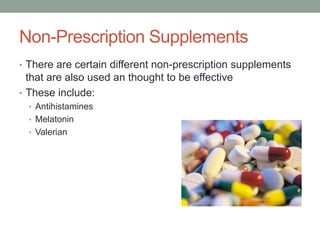
Non-Prescription Supplements
• There are certain different non-prescription supplements
that are also used an thought to be effective
• These include:
• Antihistamines
• Melatonin
• Valerian
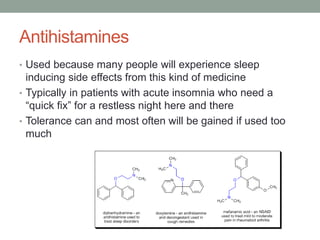
Antihistamines
• Used because many people will experience sleep
inducing side effects from this kind of medicine
• Typically in patients with acute insomnia who need a
“quick fix” for a restless night here and there
• Tolerance can and most often will be gained if used too
much
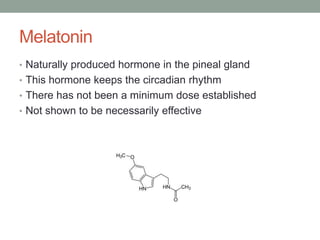
Melatonin
• Naturally produced hormone in the pineal gland
• This hormone keeps the circadian rhythm
• There has not been a minimum dose established
• Not shown to be necessarily effective
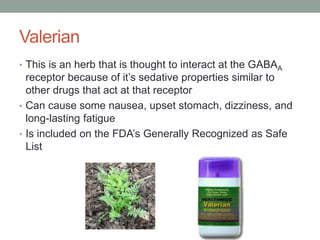
Valerian
• This is an herb that is thought to interact at the GABAA
receptor because of it’s sedative properties similar to
other drugs that act at that receptor
• Can cause some nausea, upset stomach, dizziness, and
long-lasting fatigue
• Is included on the FDA’s Generally Recognized as Safe
List
Suggestions
• Ask what they mean by they cannot sleep (even if this
requires a second appointment)
• Treat the specific problem(s)
• If CBT-I available, please consider (first line therapy)
• Smallest dose needed
• Consider factors like age, hepatic, renal impairment
• Consider sleeping pills
• Avoid using anti-depressant (except for low dose
Doxepin) for insomnia alone
• Re-evaluate for effectiveness and side effects
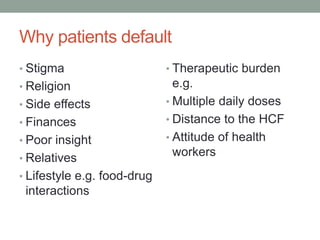
Why patients default
• Stigma
• Religion
• Side effects
• Finances
• Poor insight
• Relatives
• Lifestyle e.g. food-drug
interactions
• Therapeutic burden
e.g.
• Multiple daily doses
• Distance to the HCF
• Attitude of health
workers
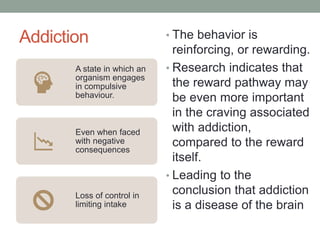
Addiction
A state in which an
organism engages
in compulsive
behaviour.
Even when faced
with negative
consequences
Loss of control in
limiting intake
• The behavior is
reinforcing, or rewarding.
• Research indicates that
the reward pathway may
be even more important
in the craving associated
with addiction,
compared to the reward
itself.
• Leading to the
conclusion that addiction
is a disease of the brain
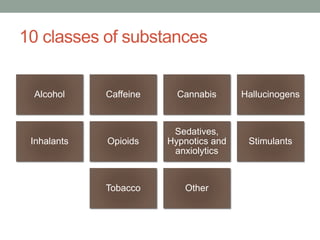
10 classes of substances
Alcohol Caffeine Cannabis Hallucinogens
Inhalants Opioids
Sedatives,
Hypnotics and
anxiolytics
Stimulants
Tobacco Other
Stimulants
Central Nervous
System Depressants
Hallucinogens (National Institute on Drug Abuse, 2018a; National Institute on Drug Abuse,
2016)
Drug Classifications
(National Institute on Alcohol Abuse and Alcoholism; National Institute on Drug Abuse,
2018a)
Alcohol
Cocaine
Heroin
Common Drugs
(National Institute on Drug Abuse, 2018a)
Methamphetamine
Marijuana
Opioids
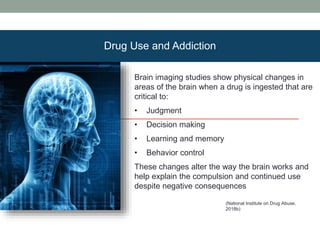
Brain imaging studies show physical changes in
areas of the brain when a drug is ingested that are
critical to:
• Judgment
• Decision making
• Learning and memory
• Behavior control
These changes alter the way the brain works and
help explain the compulsion and continued use
despite negative consequences
(National Institute on Drug Abuse,
2018b)
Drug Use and Addiction
Substance Related disorders
• Divided into 2:
1. Substance use disorders
2. Substance induced disorders e.g.
• Intoxication, withdrawal, mental disorders e.g. psychosis,
depression, anxiety.
Substance Use Disorders
• Cognitive, behavioural and physiological symptoms
indicating continued use despite significant substance
related disorders.
• Underlying changes to the brain circuits may persist
beyond detoxification resulting in repeated relapses.
S.U.D Criteria
• Impaired control over substance use is the theme of criteria 1- 4.
• Substance use in larger amounts or over longer period than intended
• Persistent desire to cut down or regulate substance use and may have
multiple failed attempts to discontinue
• Much time spent procuring, using or recovering from the substance
• Uncontrollable cravings (a prognostic indicator of imminent relapse)
• Social impairment is the theme of criteria 5 – 7.
• Recurrent failure to fulfill major role obligations
• Continued use despite persistent social or interpersonal problems
caused or exacerbated by substance use
• Important social, occupational or recreational activities may be given
up because of substance use
SUD Criteria continued
• Risky use of substance use is the theme of criteria 8 - 9
• Recurrent use of substances In physically hazardous
conditions
• Continued use despite knowledge of having a persistent
physical or mental problem caused or worsened by substance
use i.e failure to abstain despite the problems it is causing.
• Pharmacological criteria are the theme of 10 and 11(not
required for a Dx of SUD)
• Tolerance - requiring markedly increased dose of substance
to achieve the desired effect (history + lab tests can assist)
• Withdrawal – a syndrome that occurs as blood or tissue
concentrations of a substance decline in an individ
Alcohol
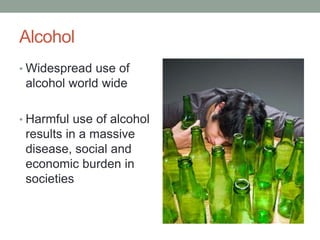
• Widespread use of
alcohol world wide
• Harmful use of alcohol
results in a massive
disease, social and
economic burden in
societies
Alcohol effects on the brain -Tolerance
• Ethanol enhances inhibitory GABA receptor
activity
• Resulting increased inhibitory
neurotransmission
• Chronic alcohol use: tolerance develops
because GABA receptor function is
downregulated i.e more alcohol should be
ingested to achieve same level of
intoxication
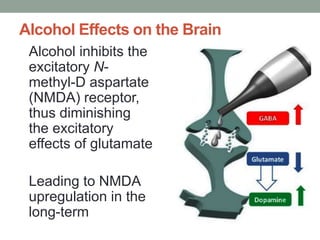
Alcohol Effects on the Brain
Alcohol inhibits the
excitatory N-
methyl-D aspartate
(NMDA) receptor,
thus diminishing
the excitatory
effects of glutamate
Leading to NMDA
upregulation in the
long-term
A.U.D SEVERITY
The presence of at least 2 of these symptoms indicates an Alcohol Use
Disorder (AUD).
The severity of the AUD is defined as:
Mild - The presence of 2 to 3 symptoms
Moderate - The presence of 4 to 5 symptoms
Severe - The presence of 6 or more symptoms
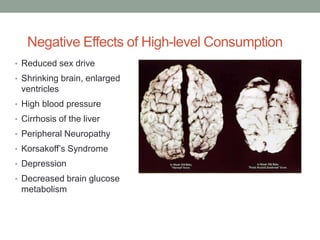
Negative Effects of High-level Consumption
• Reduced sex drive
• Shrinking brain, enlarged
ventricles
• High blood pressure
• Cirrhosis of the liver
• Peripheral Neuropathy
• Korsakoff’s Syndrome
• Depression
• Decreased brain glucose
metabolism
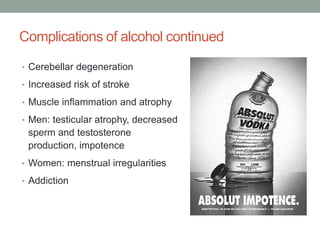
Complications of alcohol continued
• Cerebellar degeneration
• Increased risk of stroke
• Muscle inflammation and atrophy
• Men: testicular atrophy, decreased
sperm and testosterone
production, impotence
• Women: menstrual irregularities
• Addiction
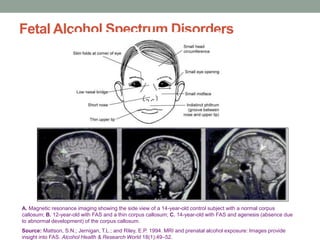
Fetal Alcohol Spectrum Disorders
• The most serious risk during pregnancy is fetal
alcohol spectrum disorders (FASD).
• FASD is the leading known cause of mental
retardation in the United States.
Fetal Alcohol Spectrum Disorders
A. Magnetic resonance imaging showing the side view of a 14-year-old control subject with a normal corpus
callosum; B. 12-year-old with FAS and a thin corpus callosum; C. 14-year-old with FAS and agenesis (absence due
to abnormal development) of the corpus callosum.
Source: Mattson, S.N.; Jernigan, T.L.; and Riley, E.P. 1994. MRI and prenatal alcohol exposure: Images provide
insight into FAS. Alcohol Health & Research World 18(1):49–52.
Withdrawal
• When alcohol is withdrawn, inhibitory control of
the excitatory neurotransmitters is removed.
• Neurons are hyperexcitable because
• GABA-A activation is low,
• NMDA activation is high
• Increased glutamate, dopamine and
norepinephrine neurotransmission results in
the symptoms of alcohol withdrawal e.g.
tremors, agitation, hallucinations, hypertension
Alcohol withdrawal - clinical presentation
• Minor withdrawal (5-10 hours)
• Autonomic hyperactivity: tremulousness, hyperhydrosis,
tachycardia, hypertension, GI upset;
• Anxiety, insomnia, and vivid dreams
• Major Withdrawal (12-72 hours)
• Hallucinations (visual, tactile) – 10-25%
• Seizures (generalized tonic-clonic seizures ) – 10%
• Delirium tremens (48-72 hours) – 5%
• Disordered consciousness
• Life threatening state – medical emergency!!!!
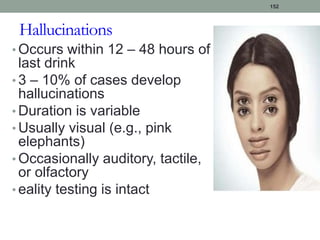
Hallucinations
• Occurs within 12 – 48 hours of
last drink
• 3 – 10% of cases develop
hallucinations
• Duration is variable
• Usually visual (e.g., pink
elephants)
• Occasionally auditory, tactile,
or olfactory
• eality testing is intact
152
Seizures
• Occur within 6 – 48 hours of
last drink
• 11-35% of patients develop
seizures in hospital setting
• Risk correlates with duration
of alcohol use
• Manifests as grand mal tonic-
clonic activity
• Always rule out other causes
• 40% are single episodes
• 30% of untreated patients go
on to develop delirium tremens
Alcohol
consumption
(gm/day Risk
51 – 100 3x
101 – 200 8x
201 – 300 20x
•10 gm = 1 beer
153
Delirium Tremens
• Begins 3 to 5 days after last drink
• Occurs in less than 5% of withdrawal patients
• Not always predictable or preventable
• Usually lasts 2-3 days
• Risk factors
• Acute concurrent medical illness
• History of seizures or delirium tremens
• Heavier & longer alcohol history
• Age > 60
• Elevated blood alcohol concentration on admission
(greater than 300 mg/dl)
154
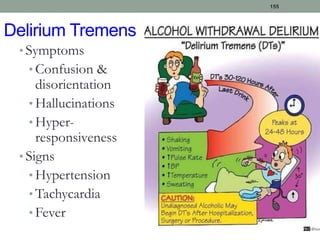
Delirium Tremens
• Symptoms
• Confusion &
disorientation
• Hallucinations
• Hyper-
responsiveness
• Signs
• Hypertension
• Tachycardia
• Fever
155
Psychopathology of delirium tremens
- Disordered conscioussness, confusion
- Impaired attention, distractibility
- Disorientation in relation to time, place and
person
- Hallucinations and illusions (complex, visual,
tactile, auditory)
- Disorganised behaviour, agitation, violence
• without treatment = 20%
• with treatment = 2 – 10%
• Hyperthermia  45% mortality
• Seizures & DTs  24% mortality
• Cause of death
• Liver disease
• Hypotension
• Cardiac arrhythmia
(hypokalaemia!)
• Cardiac failure
• Infections (pneumonia, meningitis,
sepsis)
• Concurrent medical comorbidities
157
Delirium Tremens
Mortality
Alcohol withdrawal- treatment
•Monitoring vital parameters, especially
blood electrolytes and fluid balance (Na,
K, Mg, glucose), ECG.
•Assess severity of withdrawal symptoms
using an objective scale such as CIWA.
159
Benzodiazepines
• Ideal for management of withdrawal symptoms
• Cross-tolerance with alcohol
• Fairly wide therapeutic window
• Short- vs. long-acting
• diazepam [5-20 mg p.o. every 4-6 hour, starting dose of
10-30 mg i.v. if needed],
• chlordiazepoxide –
• avoid in intoxication and long-term use, risk of respiratory
depression and sedation
• Liver disease limits use to short acting medications
without active metabolites
BENZODIAZEPINES
•benzodiazepines can prevent seizures and delirium
tremens
•In general, long-acting benzodiazepines with active
metabolites seem to result in a smoother course
with less chance of recurrent withdrawal or
seizures.
•Lorazepam or oxazepam are preferred for the
treatment of patients with advanced cirrhosis or
acute alcoholic hepatitis.
•The shorter half-life of lorazepam and the absence
of active metabolites with oxazepam may prevent
prolonged effects if oversedation occurs,
SYMPTOM TRIGGERED
MEDICATION
Patients with overt or suspected alcohol withdrawal
are objectively assessed for presence of significant
withdrawal at regular intervals.
Severity of withdrawal is assessed using a
standardised CIWA Scale
If found to have significant withdrawal (CIWA =10),
the patient is given a stat dose of a benzodiazepine
(diazepam 20mg).
Repeated every ninety minutes until the patient is no
longer in withdrawal and detoxification is complete
Symptom triggered treatment
• This procedure is repeated every ninety
minutes until the patient is no longer in
withdrawal and detoxification is complete
when there are 3 consecutive CIWA scores
less than 10
FIXED DOSE REGIMENS
Symptom triggered medications require
repeated observation and may be
inappropriate where there is staff shortage
Fixed dose regimens give tapering doses
of benzodiazepines over a period of 10
days
Thiamine Replacement
• Wernicke-Korsakoff Syndrome (WKS) is a neurological
syndrome of Vitamin B deficiency that may have
serious sequelae.
• Thiamine for prophylaxis against WKS should be given
to all alcohol dependent in-patients intravenously once
daily for 3 days.
• It should be diluted in 100ml saline or dextrose
(infused over 30 minutes).
• In patients with signs of possible WKS, (ie acute
delirium, ataxia, gaze palsy), give thiamine three times
daily and continue for as long as symptoms are
improving.
Treatment of withdrawal
• Beta blockers (e.g. propranolol or atenolol for
autonomic hyperactivity)
• Valproate or carbamazepine - if seizures are
present
• Haloperidol - for hallucinations, delusions,
and violence in delirium [5-10 mg p.o. or i.m.],
together with benzodiazepines (risk of
seizures and extrapyramidal side effects)
Anti- craving medications
• Naltrexone 50mg-100mg daily improves abstinence in motivated patients
• Acamprosate 333mg – 666mg bd/ tds
• Disulfiram as an aversive agent also helps patients remain abstinent
Alcoholics Anonymous
• Long term treatment for alcohol
• Employs self-help supportive group therapy framework
• Quasi religious approach
CannabisUseandMisuse
Background
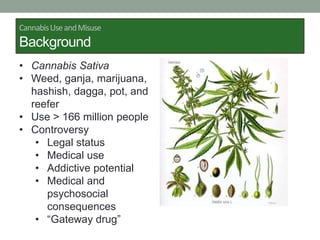
• Cannabis Sativa
• Weed, ganja, marijuana,
hashish, dagga, pot, and
reefer
• Use > 166 million people
• Controversy
• Legal status
• Medical use
• Addictive potential
• Medical and
psychosocial
consequences
• “Gateway drug”
• Appeared 4000 years ago
• In China it was used to make clothing,
rope, and paper
• Medicinal
• Spiritual use due to its mind
altering properties
• Government research: not
addictive and potential health
benefits
• Early-mid 1900’s: Increasing public
controversy driven in part by racist
fears
CannabisUseandMisuse
Cannabis Throughout History
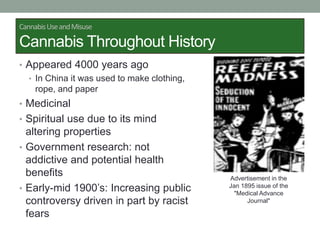
Advertisement in the
Jan 1895 issue of the
"Medical Advance
Journal"
CannabisUseandMisuse
How is cannabis prepared and consumed?
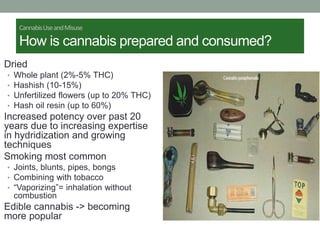
• Dried
• Whole plant (2%-5% THC)
• Hashish (10-15%)
• Unfertilized flowers (up to 20% THC)
• Hash oil resin (up to 60%)
• Increased potency over past 20
years due to increasing expertise
in hydridization and growing
techniques
• Smoking most common
• Joints, blunts, pipes, bongs
• Combining with tobacco
• “Vaporizing”= inhalation without
combustion
• Edible cannabis -> becoming
more popular
CannabisUseandMisuse
What Are the General Effects of Cannabis Use?
• Administration
• Smoked (start 1-2 minutes -> ends 4 hours)
• PO (start 30 minutes -> ends 6 hours)
• General effects of Cannabis use:
• Potential Positives:
• Euphoria, relaxation, laughing, >appreciation for music
• Potential Negatives:
• Anxiety, fear, paranoia, or panic
• Hallucinations (rare)
• Dissipate with time
Introduction
• Cannabis contains a number over 100 active
compounds.
• Two of the most abundant and best studied are
tetrahydrocannabinol (THC) and cannabidiol (CBD).
• They account for most of cannabis’ known
effects.
• They have very different physiological and
pharmacological properties.
THC
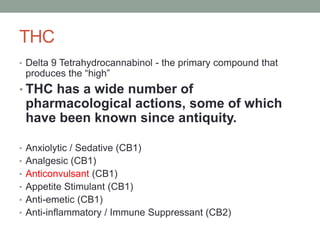
• Delta 9 Tetrahydrocannabinol - the primary compound that
produces the “high”
• THC has a wide number of
pharmacological actions, some of which
have been known since antiquity.
• Anxiolytic / Sedative (CB1)
• Analgesic (CB1)
• Anticonvulsant (CB1)
• Appetite Stimulant (CB1)
• Anti-emetic (CB1)
• Anti-inflammatory / Immune Suppressant (CB2)
THC Receptors
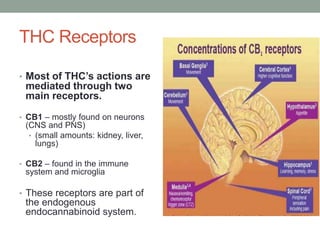
• Most of THC’s actions are
mediated through two
main receptors.
• CB1 – mostly found on neurons
(CNS and PNS)
• (small amounts: kidney, liver,
lungs)
• CB2 – found in the immune
system and microglia
• These receptors are part of
the endogenous
endocannabinoid system.
Endocannabionoid system
• The are two major endogenous messengers that
bind to the cannabinoid receptors:
• 2 AG (2-arachidonoylglycerol)
• anadamide
• This system involved in
• Brain growth
• Regulation of other neurotransmitters
• Executive functioning skills, memory, reward processing
• Plant THC stronger and longer lasting effect than anandamine
• Brain “adolescence” continues into mid-20s and not at age 21
CannabisUseandMisuse
How Does Cannabis Interact with the Brain?
• Cannabis exerts its effects primarily through an
endogenous cannabinoid receptor system through the
two receptors (CB1, CB2)
• Psychoactive and reinforcing effects are mainly
through the CB1 receptor which has
• Highest concentrations
• Basal ganglia (reward, learning, motor control)
• Cerebellum (sensorimotor coordination)
• Hippocampus (memory)
• Cortex (planning, inhibition, higher-order cognition)
• Dose and time dependent
• The euphoric effect of cannabis is related to THC enhancing
dopamine neuronal firing in the reward pathway
• Euphoria: increased dopamine in reward center
• Dry mouth
• Stimulated appetite (munchies)
• Antiemetic (low doses)
• Nausea and vomiting (high doses)
• Dilate blood vessels (red eyes)
• Increased heart rate
• Orthostatic hypotension
• Impaired:
• Attention
• Short term memory
• Some complex cognitive processes,
• Motor abilities
• Most effects are dose dependent and moderated by
tolerance, comparable to those of moderate doses of
alcohol (BAC approximately 0.05%)
CannabisUseandMisuse
Acute Effects
• Dry mouth
• Stimulated appetite (munchies)
• Antiemetic (low doses)
• Nausea and vomiting (high doses)
• Dilate blood vessels (red eyes)
• Increased heart rate
• Orthostatic hypotension
• Impaired:
• Attention
• Short term memory
• Some complex cognitive processes,
• Motor abilities
• Most effects are dose dependent and moderated by
tolerance, comparable to those of moderate doses of
alcohol (BAC approximately 0.05%)
CannabisUseandMisuse
Acute Effects
Cannabis use
• Decreased motivation specially to perform more
challenging cognitive tasks
• Changes in brain growth and development
• Strong evidence of impairment in attention, memory,
learning when intoxicated
• In some studies Cannabis use associated with the
following
• Worse PTSD symptoms
• Higher aggression
• More alcohol and drug use
Cannabis Dependance and Withdrawal
• Occurs in about 9% of cannabis users (higher
among teen users)
• Peaks about 2-4 days but can last up to 3 weeks
after stopping
• Symptoms include restlessness, agitation,
anxiety, anger, aggression, sleep problems and
strange dreams, decreased appetite
• Most casual cannabis users do not develop
withdrawal
CannabisUseandMisuse
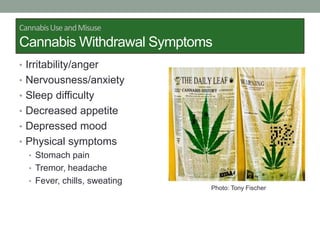
Cannabis Withdrawal Symptoms
• Irritability/anger
• Nervousness/anxiety
• Sleep difficulty
• Decreased appetite
• Depressed mood
• Physical symptoms
• Stomach pain
• Tremor, headache
• Fever, chills, sweating
Photo: Tony Fischer
CannabisUseandMisuse
Epidemiology of Cannabis Use Disorder (CUD)
• Most users do not develop a use disorder
• 9% of cannabis users = CUD
• 15% of cocaine users
• 25% heroin users
• # of patients with CUD > other drug use disorders
• increasing # of patients with CUD
- Stable rates of cannabis use
- Increased potency
- Earlier onset of use
CannabisUseandMisuse
Treatment: Pharmacotherapy
• No strong evidence for any medication
• No approved medications for CUD
• CB1 agonists
• CB1 antagonists (rimonabant)
• Lofexidine & zolpidem withdrawal symptoms
What is amphetamine/
methamphetamine?
• Amphetamine was first synthesized in Germany in 1887.
Methamphetamine was synthesized in Japan in 1919.
• (The different dates for the synthesis of amphetamine and
methamphetamine draw attention to an important distinction,
because meth is much more powerful stimulant)
• Methamphetamine was developed early in the 20th century
from its parent drug, amphetamine, and was used originally in
nasal decongestants and bronchial inhalers
• Methamphetamine (methylamphetamine ), popularly
shortened to meth, is a psychostimulant drug. It is prescribed
for attention-deficit hyperactivity disorder or narcolepsy or
obesity.
Crystal Meth
• Like amphetamine, methamphetamine causes increased
activity and talkativeness, decreased appetite, and a
pleasurable sense of well-being or euphoria
• Methamphetamine differs from amphetamine:
o Greater amounts of the drug get into the brain, making it a
more potent stimulant
o It has longer-lasting and more harmful effects on the
central nervous system
• These characteristics make it a drug with high potential
for widespread misuse
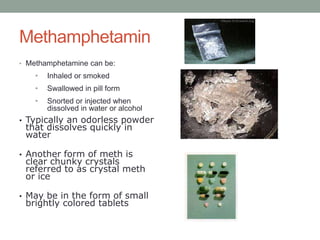
Methamphetamin
• Methamphetamine can be:
• Inhaled or smoked
• Swallowed in pill form
• Snorted or injected when
dissolved in water or alcohol
• Typically an odorless powder
that dissolves quickly in
water
• Another form of meth is
clear chunky crystals
referred to as crystal meth
or ice
• May be in the form of small
brightly colored tablets
Crystal Meth
• Crystallized methamphetamine known as "ice," "crystal,"
or "glass," is a smokable and more powerful form of the
drug
• Methamphetamine use causes a euphoric experience
that can alter brain functioning, memory, decision-
making, mood, and potentially damage the central
nervous system
• Chronic or long-term methamphetamine use can result in
irreversible physiological and psychological damage
Effects of Methamphetamine Use
The effects of methamphetamine use include:
• Euphoria
• Increased heart rate and blood pressure
• Increased wakefulness; insomnia
• Increased physical activity
• Decreased appetite; extreme anorexia
• Respiratory problems
• Hyperthermia, convulsions, and cardiovascular problems, which can lead to
death
Meth causes…
•Increased alertness
•Decreased appetite
•A distorted sense of well-
being
•Effects that can last 8 to 24
hours
Effects of Methamphetamine Use (cont.)
The effects of methamphetamine use include:
• Irritability, confusion, tremors
• Anxiety, paranoia, or violent behavior
• Possible irreversible damage to blood vessels in the brain, producing
strokes
Methamphetamine users who inject the drug and share needles are at risk for
acquiring HIV/AIDS
For up to six months after they stop using, a person with a substance use
disorder recovering from sustained, heavy meth use may have trouble
processing information and may experience anhedonia (inability to experience
even the simplest pleasures), depression, and anxiety.
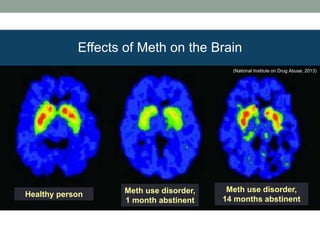
Healthy person Meth use disorder,
1 month abstinent
Meth use disorder,
14 months abstinent
Effects of Meth on the Brain
(National Institute on Drug Abuse, 2013)
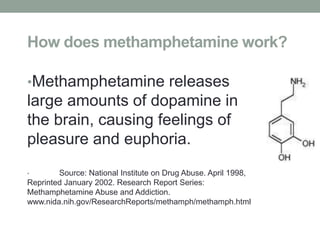
How does methamphetamine work?
•Methamphetamine releases
large amounts of dopamine in
the brain, causing feelings of
pleasure and euphoria.
• Source: National Institute on Drug Abuse. April 1998,
Reprinted January 2002. Research Report Series:
Methamphetamine Abuse and Addiction.
www.nida.nih.gov/ResearchReports/methamph/methamph.html
Brain Damage?
• The red area is indicative of
dopamine activity in those areas.
• The comparison subject is able to
pleasure from everyday activities.
• The red in the meth abuser, a lot
less. This means the meth abuser
feels less pleasure, or even no
pleasure at all, even from every day
activities that were once highly
pleasurable, such as eating.
• This damage and inability to feel
pleasure from normal activities can
be very long lasting, even
permanent.
• Unfortunately, the abuser may only
be able to feel pleasure from taking
Crystal Meth
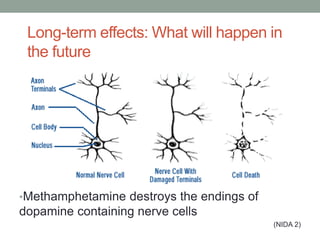
Long-term effects: What will happen in
the future
•Methamphetamine destroys the endings of
dopamine containing nerve cells
(NIDA 2)

Psychopharmacology.pptx

  • 1.
  • 2.
    Objectives: At theend of this module you should be able to: Identify general pharmacologic strategies Discuss antidepressants including indications for use and side effects Describe mood stabilizers including indications for use and side effects Review antipsychotics including how to choose an antipsychotic and side effects Identify anxiolytic classes and indications for use Substance Use Insomnia
  • 3.
    Neurobiological Theories of MentalDisorders  Approximately 100 billion brain cells form groups of neurons, or nerve cells, that are arranged in networks.
  • 5.
    Neurobiological Theories of MentalDisorders  a synapse is a structure that permits a neurone to pass an electrical or chemical signal to another neuron.  Neurons communicate with one another by sending electrochemical messages from neuron to neuron, a process called neurotransmission.  In the nervous system, the electrochemical messages cross the synapses between neural cells by way of special chemical messengers called neurotransmitters
  • 6.
     Neurotransmitters: arethe chemical substances manufactured in the neuron that aid in the transmission of information throughout the body.  They carry a signal from one nerve cell to another  They either excite or stimulate an action in the cells (excitatory) or inhibit or stop an action (inhibitory).  Major neurotransmitters play a role in psychiatric illnesses as well as actions and side effects of psychotropic drugs Neurotransmitters
  • 7.
    DOPAMINE  Dopamine, isa neurotransmitter located primarily in the brain stem,  involved in the control of complex movements, motivation, cognition, and regulation of emotional responses.  Dopamine is generally excitatory and is synthesized from tyrosine, a dietary amino acid.  Dopamine dysfunction is implicated in schizophrenia, psychoses and movement disorders such as Parkinson’s disease.  Antipsychotic medications work by blocking dopamine receptors and reducing dopamine activity.
  • 8.
    the most prevalentneurotransmitter in the nervous system  located primarily in the brain stem  Role in changes in attention, learning and memory, sleep and wakefulness, and mood regulation.  Excess norepinephrine has been implicated in several anxiety disorders; deficits may contribute to memory loss, social withdrawal, and depression.  Epinephrine (adrenaline) has limited distribution in the brain but controls the fight-or-flight response in the peripheral nervous system. NOREPINEPHRINE AND EPINEPHRINE
  • 9.
    SEROTONIN  Serotonin, aneurotransmitter found only in the Brain  derived from tryptophan, a dietary amino acid.  The function of serotonin is involved in the control of food intake, sleep and wakefulness, temperature regulation, pain control, sexual behavior, and regulation of emotions.  Serotonin plays an important role in anxiety and mood disorders and schizophrenia.  It has been found to contribute to the delusions, hallucinations, and withdrawn behavior seen in schizophrenia.  Some antidepressants block serotonin reuptake, thus leaving it available for longer in the synapse, which results in improved mood.
  • 10.
    Metabolism of themono-amine neurotransmitters • Serotonin, dopamine and norepinephrine are the mono- amine neurotransmitters • To terminate their activity in the synaptic cleft: • Broken down by COMT • Reuptake by the presynaptic neuron.
  • 11.
    HISTAMINE  The roleof histamine in mental illness is under investigation.  It is involved in peripheral allergic responses, control of gastric secretions, cardiac stimulation and alertness.,  Some psychotropic drugs block histamine, resulting in weight gain, sedation, and hypotension.
  • 12.
    ACETYLCHOLINE  Acetylcholine isa neurotransmitter found in the brain, spinal cord, and peripheral nervous system particularly at the neuromuscular junction of skeletal muscle.  It can be excitatory or inhibitory.  Synthesized from dietary choline found in red meat and vegetables  found to affect the sleep/wake cycle and to signal muscles to become active.  Studies have shown that people with Alzheimer’s disease have decreased acetylcholine-secreting neurons, and people with myasthenia gravis (a muscular disorder in which impulses fail to pass the myoneural junction, which causes muscle weakness) have reduced acetylcholine receptors.
  • 13.
    GLUTAMATE  Glutamate isan excitatory amino acid that, at high levels, can have major neurotoxic effects.  Glutamate has been implicated in the brain damage caused by stroke, hypoglycemia, sustained hypoxia or ischemia, and some degenerative diseases such as Huntington’s or Alzheimer’s.
  • 14.
    GAMMA-AMINOBUTYRIC ACID (GABA) GABA, an amino acid, is the major inhibitory neurotransmitter in the brain  found to modulate other neurotransmitter systems rather than to provide a direct stimulus.
  • 17.
    General Pharmacology strategies 1.Indication: Establish a diagnosis and identify the target symptoms that will be used to monitor therapy response. 2. Choice of agent and dosage: Select an agent with an acceptable side effect profile and use the lowest effective dose. Remember there is a delayed response for many psych meds and drug-drug interactions.
  • 18.
    Pharmacology Guidelines 3. Establishinformed consent: The patient should understand the benefits and risks of the medication e.g. teratogenicity discussion. 4. Implement a monitoring program: Track and document compliance, side effects, target symptom response, blood levels and blood tests as appropriate.
  • 19.
    Pharmacology Guidelines 6. Management:Adjust dosage for optimum benefit, safety and compliance. • Use adjunctive and combination therapies if needed- always strive for the simplest regimen.
  • 20.
    Antidepressants Indications • Unipolarand bipolar depression, • organic mood disorders, • schizoaffective disorder, • anxiety disorders e.g.OCD, panic, social phobia, PTSD, • premenstrual dysphoric disorder and • impulsivity associated with personality disorders.
  • 21.
    General guidelines forantidepressant use • Antidepressant efficacy is similar so selection is based on • past history of a response, • side effect profile and • coexisting medical conditions. • Delay of 3-6 weeks after a therapeutic dose is achieved before symptoms improve. • If no improvement is seen after a trial of adequate length (at least 2 months) and adequate dose, switch to another antidepressant or augment with another agent.
  • 22.
    Antidepressants • Antidepressants donot act immediately (show clinical effects after 2 weeks) • Affect only people who are depressed. • Effect does not increase with increasing doses. • Antidepressants are not habit-forming. • Antidepressants differ widely in side effects.
  • 23.
    Antidepressant Classifications • Tricyclics(TCAs) • Monoamine Oxidase Inhibitors (MAOIs) • Selective Serotonin Reuptake Inhibitors (SSRIs) • Serotonin/Norepinephrine Reuptake Inhibitors (SNRIs) • Novel antidepressants
  • 24.
    TCAs • Very effectivebut potentially unacceptable side effect profile i.e. antihistaminic, anticholinergic, antiadrenergic • Lethal in overdose (even a one week supply can be lethal!) • Can cause QT lengthening even at a therapeutic serum level
  • 25.
    Tertiary TCAs • Havetertiary amine side chains • Side chains are prone to cross react different neurotransmitter receptors: • antihistaminic (sedation and weight gain), • anticholinergic (dry mouth, dry eyes, constipation, memory deficits and potentially delirium), • antiadrenergic (orthostatic hypotension, sedation, sexual dysfunction) • Act predominantly on serotonin receptors • Examples: Imipramine, amitriptyline, clomipramine • Have active metabolites including desipramine and nortriptyline
  • 26.
    Secondary TCAs • Areoften metabolites of tertiary amines • Primarily block norepinephrine • Side effects are the same as tertiary TCAs but generally are less severe • Examples: Desipramine, notrtriptyline
  • 27.
    Monoamine Oxidase Inhibitors •Clinical Uses: Only used for refractory cases and in atypical depression where phobia and anxiety are prominent symptoms. • Limited use now because Adverse Drug Reaction, Food & Drug Interactions = Low benefit/risk ratio • Side effects include orthostatic hypotension, weight gain, dry mouth, sedation, sexual dysfunction and sleep disturbance
  • 28.
    Monoamine Oxidase Inhibitors MonoAmineOxidase is an enzyme found in nearly all tissues Ø Two forms of monoamine oxidase exist: Ø MAO-A responsible for NE, 5-HT catabolism. It also metabolizes tyramine of ingested food Ø MAO-B is more selective for dopamine metabolism Monoamine Oxidase Inhibitors (MAOIs)
  • 29.
    Monoamine Oxidase Inhibitors(MAOIs) 1- Non Selective Inhibitors (MAO-A & MAO-B) ØIrreversible Phenelzine, ØReversible  Tranylcypromine 2- Selective Reversible Inhibitors •  Moclobemide, (MAO-A) (antidepressant action, Short •  Selegiline, (MAO-B) (used in the treatment of Parkinsonism) The effect of irreversible MAOIs persists for a period of 2-3 weeks.
  • 30.
    MAOIs interaction withtyramine ‘cheese reaction’ • This occurs when Tyramine rich foods are taken with MAOIs. • Tyramine rich foods include Old cheese , Concentrated yeast products, Pickled or smoked fish, Red beans, Red Wine, Chicken liver, Sausages. • Tyramine in food is normally degraded in the gut by MAO-A.
  • 31.
    • Since theenzyme (MAO) is inhibited by MAOIs, tyramine from ingested food is absorbed and causes massive release of NE and may result in hypertensive crisis ; severe hypertension, severe headache and fatal intracranial haemorrhage. • The special advantage claimed for Moclobemide is that, No cheese reaction occurs with its use.
  • 32.
    MAOIs cont. • SerotoninSyndrome can develop if take MAOI with meds that increase serotonin or have sympathomimetic actions. • SS sx include abdominal pain, diarrhea, sweats, tachycardia, HPT, myoclonus, irritability, delirium, hyperpyrexia, cardiovascular shock and death. • To avoid need to wait 2 weeks before switching from an SSRI to an MAOI. The exception of fluoxetine where need to wait 5 weeks because of long half-life.
  • 33.
    SSRIs • The SSRIsare currently the most widely utilized class of antidepressants in clinical practice. Treat both anxiety and depressive sx • Increase the amount of serotonin (5-HT), in the synaptic gap by inhibiting its re-uptake. • selective - affect only the reuptake pumps responsible for serotonin • Because of this, SSRIs lack some of the side effects of the more general drugs.
  • 34.
    Selective Serotonin ReuptakeInhibitors (SSRIs) Side Effects Most common side effects include GI upset, sexual dysfunction (30%+!), anxiety, restlessness, nervousness, insomnia, fatigue or sedation, dizziness Very little risk of cardiotoxicity in overdose Can develop a discontinuation syndrome with agitation, nausea, disequilibrium and dysphoria
  • 35.
    Paroxetine (Paxil) Pros Short halflife with no active metabolite means no build- up (which is good if hypomania develops) Sedating properties (dose at night) offers good initial relief from anxiety and insomnia Cons Significant liver enzyme interactions Sedating, wt gain, more anticholinergic effects Likely to cause a discontinuation syndrome
  • 36.
    Sertraline (Zoloft)  Pros Very weak liver enzyme interaction  Short half life with lower build-up of metabolites  Less sedating when compared to paroxetine  Cons  Max absorption requires a full stomach
  • 37.
    Fluoxetine (Prozac) Pros Long half-life(2-4days) so decreased incidence of discontinuation syndromes. Good for pts with medication noncompliance issues Initially activating so may provide increased energy Secondary to long half life, can give one 20mg tab to taper someone off SSRI when trying to prevent SSRI Discontinuation Syndrome Cons Long half life and active metabolite may build up (not a good choice in patients with hepatic illness) Significant liver interactions so this may not be a good choice in pts already on a number of meds Initial activation may increase anxiety and insomnia More likely to induce mania than some of the other SSRIs
  • 38.
    Citalopram (Celexa) • Pros •Low inhibition of liver enzymes so fewer drug-drug interactions • Intermediate ½ life • Cons • Can be sedating • GI side effects (less than sertraline)
  • 39.
    Escitalopram (Lexapro) • Pros •Low overall inhibition of liver enzymes so fewer drug-drug interactions • More effective than Citalopram in acute response and remission • Cons • Nausea, headache
  • 40.
    Serotonin/Norepinephrine reuptake inhibitors (SNRIs) Inhibitboth serotonin and noradrenergic reuptake like the TCAS but without the antihistamine, antiadrenergic or anticholinergic side effects Used for depression, anxiety and possibly neuropathic pain
  • 41.
    Venlafaxine (Effexor) Pros Minimal druginteractions Short half life and fast renal clearance avoids build-up (good for geriatric populations) Cons Can cause a 10-15 mmHG dose dependent increase in diastolic BP. May cause significant nausea, primarily with immediate-release (IR) tabs Can cause a bad discontinuation syndrome, and taper recommended after 2 weeks of administration Sexual side effects in >30%
  • 42.
    Duloxetine (Cymbalta) • Pros •Some data to suggest efficacy for the physical symptoms of depression • Thus far less BP increase as compared to venlafaxine, however this may change in time • Cons • Cannot break capsule, as active ingredient not stable within the stomach • Has high drop out rate
  • 43.
    Novel antidepressants Mirtazapine (NEand specific Serotonergic Antidepressant) Pros Different mechanism of action may provide a good augmentation strategy to SSRIs. Is a 5HT2 and 5HT3 receptor antagonist – reducing anxiety and sexual dysfunction Can be utilized as a hypnotic at lower doses secondary to antihistaminic effects Cons Increases serum cholesterol by 20% in 15% of patients and triglycerides in 6% of patients Very sedating at lower doses. At doses 30mg and above it can become activating and require change of administration time to the morning. Associated with weight gain (particularly at doses below 45mg
  • 44.
    Bupropion (Wellbutrin) (NDRI) •Pros • Good for use as an augmenting agent • Mechanism of action likely reuptake inhibition of dopamine and norepinephrine • No weight gain, sexual side effects, sedation or cardiac interactions • Low induction of mania • Is a second line ADHD agent so consider if patient has a co-occurring diagnosis • Cons • May increase seizure risk at high doses (450mg+) and should avoid in patients with Traumatic Brain Injury, bulimia and anorexia. • Does not treat anxiety unlike many other antidepressants and can actually cause anxiety, agitation and insomnia • Has abuse potential because can induce psychotic sx at high doses
  • 45.
    Let’s put itall together : Bupropion Activating Sedating Venlafaxine, Fluoxetine Sertraline, escitaloprm, Mirtazapine Trazodone Tertiary TCA’s: Desipramine amitriptyline Secondary TCA’s: Nortriptyline, imipramine Paroxetine duloxetine citalopram +Nicotine dependence, +Weight loss No sexual dysfunction Lowers seizure threshold +Weight Gain No sexual dysfunction Venlafaxine Good for pain, ADHD Long half-life
  • 46.
    Case 1 • SusieQ has a nonpsychotic unipolar depression with no history of hypomania or mania. She has depressed mood, hyperphagia, psychomotor retardation and hypersomnolence. What agent would you like to use for her? • Establish dx: Major depressive disorder • Target symptoms: depression, hyperphagia, psychomotor retardation and hypersomnolence
  • 47.
    • For atreatment naive patient start with an SSRI. • Using the side effect profile as a guide select an SSRI that is less sedating. Good choices would be Citalopram, Fluoxetine or Sertraline. • Bupropion would also have been a reasonable choice given her hypersomnolence, psychomotor retardation and hyperphagia.
  • 48.
    • Less desirablechoices include Paxil and Mirtazapine because of sedation and wt gain. • No dual reuptake inhibitors because she is treatment naïve and may not need a “big gun”. • Not a TCA because of side effects
  • 49.
    Case 2 • B.is a 55 year old diabetic man with mild HTN and painful diabetic neuropathy who has had previous depressive episodes and one suicide attempt. • Currently meets criteria for a major depressive episode with some anxiety. • He has been treated with paroxetine, setraline and buproprion. His depression was improved slightly with each of these meds but never remitted. What would you like to treat him with?
  • 50.
    Case 2 continued Establishdx: Major depressive disorder with anxious features Target symptoms: depressive sx, anxiety and possibly his neuropathic pain Assuming he received adequate trials previously would move on to a duel reuptake inhibitor as he had not achieved remission with two SSRIS or a novel agent.
  • 51.
    Case 2 continued •Given his mild HTN would not choose Venlafaxine. • TCA’s can help with neuropathic pain and depression however not a good choice given the SE profile and lethality in overdose. • Duloxetine is a good choice since it has an indication for neuropathic pain, depression and anxiety. Three birds with one stone!! • Keep in mind Duloxetine is a CYP2D6 and CPY1A2 inhibitor and has potential drug-drug interactions.
  • 52.
  • 53.
    Mood stabilizers Indications BipolarMood Disorder, cyclothymia, schizoaffective, impulse control and intermittent explosive disorders. Classes: Lithium, anticonvulsants, antipsychotics Choice depends on what you are treating and the side effect profile.
  • 54.
    Main Principles Continued 1.Treating bipolar disorder is actually a matter of managing up to four different situations, all of which respond differently to medications. A. Acute mania B. Acute depression C. Prophylaxis against mania D. Prophylaxis against depression
  • 55.
    More Principles • Youhave to consider all four of the situations when treating your bipolar patients. What percentage of people with an acute manic episode will have further mood episodes requiring treatment? Recurrence following remission occurred in 58% of patients by 1 year and 74% by 4 years (60% depressive, 28% manic and 12% hypomanic.
  • 56.
    Treating Acute Mania •Acute mania is by far the easiest of the four situations to find an effective medication for. -16 -14 -12 -10 -8 -6 -4 -2 0 Day 0 Day 3 Day 5 Day 7 Day 10 Placebo Depakote Standard Titration (start 250mg TID and titrate after blood level) Lithium (start at 300 TID and titrate after blood level) Depakote Loading (20- 30mg/kg x3d, then 20mg/kg, then titrate after blood level) Olanzapine (10mg daily) * * * * = p<.05 vs. placebo * Mean Mania Rating Scale Change from Baseline
  • 57.
    Acute Mania Continued… •The take home lessons: • Acute mania responds well to olanzapine, valproic acid, and lithium. • Even aggressive treatment takes 7 days to separate from placebo • Other medications with good evidence in the treatment of acute mania include : • Carbamazepine, all atypical antipsychotics, and various combinations of the above. • The only two medications historically used in bipolar disorder that do not have efficacy in acute mania are topiramate and lamotrigine (due its to slow titration)
  • 58.
    Prophylaxis Against Mania •Remember the high rate of recurrent mood episodes; prophylaxis is important. • Mania is easier to treat than prevent
  • 59.
    Mania Prophylaxis Continued… •Essentially the same medications that work for treating acute mania also work to prophylaxis against mania • Lithium has the best support for prophylaxis against mania, with studies suggesting that it is superior to other options. • Atypical antipsychotics also seem to work fairly well • Valproate and carbamazepine also have evidence supporting their use.
  • 60.
    Treating Acute BipolarDepression Do antidepressants work in treating acute bipolar depression? • Evidence-based guidelines do not support antidepressant monotherapy for bipolar depression. • Antidepressant monotherapy should be avoided in bipolar I disorder • Risk of switching patient into manic episode or rapid cycling
  • 61.
    Bipolar Depression • Ashorter list: • Atypical antipsychotics, especially quetiapine and olanzapine. • Lithium is less effective in treating depression than it is at treating mania, but it is still effective. • Lamotrigine is effective, but can take a very long time to get up to a treatment dose. • There is some evidence that carbamazepine and valproic acid work, though this evidence is poor.
  • 62.
    Prophylaxis against BipolarDepression The shortest list of all: • Lamotrigine • Atypical antipsychotics (again, especially quetiapine and olanzapine) • And the olanzapine/fluoxetine (Zyprexa) combination pill that actually outperformed olanzapine alone in a study. • Lithium, which is, again, better at preventing manic episodes, but does work to prevent depression
  • 63.
    Lithium • Only medicationto reduce suicide rate. • Rate of completed suicide in BAD ~15% • Effective in long-term prophylaxis of both mania and depressive episodes in 70+% of BAD I pts • Factors predicting positive response to lithium • Prior long-term response or family member with good response • Classic pure mania • Mania is followed by depression
  • 64.
    Lithium • U+ E’s,creatinine, • TFT • FBC. • In women check a pregnancy test- during the first trimester is associated with Ebstein’s anomaly 1/1000 (20X greater risk than the general population) • Monitoring: Steady state achieved after 5 days- check 12 hours after last dose. Once stable check q 3 months and TFT and U+E q 6 months. • Goal: blood level between 0.6-1.2mmol/l
  • 65.
    Lithium side effects •Most common are; • GI distress including reduced appetite, nausea/vomiting, diarrhea • Thyroid abnormalities • Nonsignificant leukocytosis • Polyuria/polydipsia. • In a small number of patients can cause interstitial renal fibrosis. • Hair loss, acne • Reduces seizure threshold, cognitive slowing, intention tremor
  • 66.
    Lithium toxicity • Mild-levels 1.5-2.0 vomiting, diarrhea, ataxia, dizziness, slurred speech, nystagmus. • Moderate-2.0-2.5 nausea, vomiting, anorexia, blurred vision, clonic limb movements, convulsions, delirium, syncope • Severe- >2.5 generalized convulsions, oliguria and renal failure
  • 67.
    Valproic acid Valproic acidis as effective as Lithium in mania prophylaxis but is not as effective in depression prophylaxis. Factors predicting a positive response: rapid cycling patients (females>males) comorbid substance issues Patients with comorbid anxiety disorders HIV positive patients Better tolerated than Lithium
  • 68.
    Valproic acid Baseline liverfunction tests (LFT), pregnancy test and FBC Start folic acid supplement in women
  • 69.
    Valproic acid sideeffects • Thrombocytopenia and platelet dysfunction • Nausea, vomiting, weight gain • Transaminitis • Sedation, tremor • Increased risk of neural tube defect 1-2% vs 0.14-0.2% in general population secondary to reduction in folic acid • Hair loss • PCOS
  • 70.
    Carbamazepine First line agentfor acute mania and mania prophylaxis Indicated for rapid cyclers and mixed patients
  • 71.
    Carbamazepine Baseline liver functiontests, FBC and an ECG Monitoring: Steady state achieved after 5 days -check 12 hours after last dose and repeat CBC and LFT Need to adjust dosing after around a month because induces own metabolism.
  • 72.
    Carbamazepine side effects •Rash- most common SE seen • Nausea, vomiting, diarrhea • Sedation, dizziness, ataxia • Cardiac conduction delays • Aplastic anemia and agranulocytosis (<0.002%) • Drug-drug interactions!
  • 73.
    Carbamazepine side effects •Carries a 1-6/10000 risk of Stevens-Johnson syndrome and toxic epidermal necrolysis (except in Asians, where the risk may be up to 10x higher)
  • 74.
    Drug interactions • Drugsthat increase carbamazepine levels and/or toxicity: • clozapine, INH, occasionally fluoxetine, erythromycin, fluconazole, ketoconazole, metronidazole, verapamil, diltiazem. • Drugs that decrease carbamazepine levels: neuroleptics, barbiturates, phenytoin, TCA’s. • Carbamazepine is a heteroinducer, increasing its own metabolism and that of many other drugs, including contraceptives, warfarin, many psychotropics including antidepressants, antipsychotics, BZD’s.
  • 75.
    Lamotrigine ( Lamictal) Indicationssimilar to other anticonvulsants Also used for neuropathic/chronic pain Before med is started: baseline liver function tests Initiation/titration: start with 25 mg daily X 2 weeks then increase to 50mg X 2 weeks then increase to 100mg- faster titration has a higher incidence of serious rash • The risk of SJS is low (~0.1%) • However, the risk is related to the rate of dose increase, so a slow schedule is required (25mg every other week) If the patient stops the med for 5 days or more have to start at 25mg again!
  • 76.
    Lamotrigine: Side effects •Nausea/vomiting • Sedation, dizziness, ataxia and confusion • The most severe are toxic epidermal necrolysis and Stevens Johnson's Syndrome. The character/severity of the rash is not a good predictor of severity of reaction. Therefore, if ANY rash develops, discontinue use immediately. • Drugs that increase lamotrigine levels: VPA (doubles concentration, so use slower dose titration), sertraline.
  • 77.
  • 78.
    Generic name Tradename Manic Mixed Maintenance Depressed Aripiprazole Abilify x x x Ziprasidone Geodon x x X* Risperdone Risperdal x x Asenapine Saphris x x Quetiapine Seroquel x X* Quetiapine XR Seroquel XR x X* x Chlorpromazine Thorazine x Olanzapine Zyprexa x x x Olanzapine fluoxetine comb Symbyax x FDA approved indications in Bipolar disorder *denotes FDA approval for adjunct therapy not mono- therapy
  • 79.
    So, let’s putit all together… Acute Mania • Lithium • Valproic acid (Depakote) • Carbamazepine (Tegretol) • Oxcarbazepine (Trileptal) • Risperidone (Risperidol) • Olanzapine (Zyprexa) • Quetiapine (Seroquel) • Aripiprazole (Abilify) Depression Prophylaxis • Lithium • Valproic acid (Depakote) • Carbamazepine (Tegretol) • Oxcarbazepine (Trileptal) • Topiramate (Topamax) • Lamotrigine (Lamictal) • Risperidone (Risperidol) • Olanzapine (Zyprexa) • Quetiapine (Seroquel) • Aripiprazole (Abilify) • Antidepressants Acute Depression • Lithium • Valproic acid (Depakote) • Carbamazepine (Tegretol) • Oxcarbazepine (Trileptal) • Topiramate (Topamax) • Lamotrigine (Lamictal) • Risperidone (Risperidol) • Olanzapine (Zyprexa) • Quetiapine (Seroquel) • Aripiprazole (Abilify) • Antidepressants Mania Prophylaxis • Lithium • Valproic acid (Depakote) • Carbamazepine (Tegretol) • Lamotrigine (Lamictal) • Risperidone (Risperidol) • Olanzapine (Zyprexa) • Quetiapine (Seroquel) • Aripiprazole (Abilify) Options to both treat acute mood episodes and prevent future mood episodes • Lithium • Atypical antipsychotics (quetiapine and olanzapine especially for depression) • Consider adding lamotrigine for depression prophylaxis if monotherapy isn’t sufficient • Other combination therapy • (Could consider olanzapine/fluoxetine combination for bipolar depression)
  • 80.
    Case 3 27 y.omale is admitted secondary to a manic episode. In reviewing his history you find he has 5 to 6 manic or depressive episodes a year. He has also struggled on and off with ETOH abuse. What medication would you like to start?
  • 81.
    • Valproic acidwould be a good choice because pt is a rapid cycler (4 or more depressive or manic episodes/year) and because of comorbid ETOH abuse. • Start 250mg BID and titrate to 500mg BID.
  • 82.
    His liver testsand compared to baseline have increased as follows: ALT 48 115 AST 62140 ALK PHOS 3280 What happened and what do you want to do??
  • 83.
    • It isnot unusual for patients on anticonvulsants to experience an increase in lfts and as long as they do not more than triple no change in therapy is indicated. • Continue to monitor over time
  • 84.
    Antipsychotics Indications • schizophrenia,schizoaffective disorder, • bipolar disorder- for mood stabilization and/or when psychotic features are present, • delirium, • psychotic depression, • dementia, • trichotillomania, • augmenting agent in treatment resistant anxiety disorders.
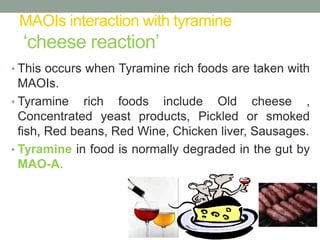
  • 85.
  • 86.
    MESOCORTICAL- projects from theventral tegmentum (brain stem) to the cerebral cortex. This pathway is felt to be where the negative symptoms and cognitive disorders (lack of executive function) arise. Problem here for a psychotic patient, is too little dopamine.
  • 87.
    • MESOLIMBIC-projects from thedopaminergic cell bodies in the ventral tegmentum to the limbic system. • This pathway is where the positive symptoms come from (hallucinations, delusions, and thought disorders). • Problem here in a psychotic patient is there is too much dopamine.
  • 88.
    Tuberoinfundibular Pathway • Dopamineinhibits prolactin release in hypothalamus; • So what does too much prolactin do? • Amenorrhea, anovulation, infertility • Galactorrhea • Gynecomastia • Loss of libido • Sexual dysfunction (vaginal dryness, erectile dysfunction, anorgasmia, etc.) (19) • Osteoporosis over the long term
  • 89.
    • Low potencytypical antipsychotics have less affinity for the D2 receptors • but tend to interact with nondopaminergic receptors resulting in more cardiotoxic and anticholinergic adverse effects including sedation, hypotension. • Examples include chlorpromazine and Thioridazine.
  • 90.
    What does “nigro”in nigrostriatal refer to? • Substantia nigra; • What does substantia nigra dysfunction cause? • Motor dysfunction that does not involve the primary motor cortex or its projections through the medullary pyramids. - extrapyramidal symptoms, • Acute dystonic reaction (forty minutes - 4 hours). And what about in around • Akathisia, an intense sense of internal restlessness. • Drug-induced Parkinsonism, with the classic features including shuffling gait, tremor, bradykinesia, • Tardive dyskinesia
  • 91.
    Anticholinergic Side EffectProfile What are the effects of blocking (muscarinic) cholinergic receptors? • Think atropine: “Blind as a bat, dry as a bone, red as a beet…” • Dry mouth (leading to cavities, sore throat) • Urinary retention • Constipation (or ileus) • Photophobia (Mydriasis), blurred vision • Sedation • Increased intraocular pressure (dangerous in acute angle glaucoma) • Ataxia (with increased fall risk) • Orthostatic Hypotension
  • 92.
    • The lowerthe average dose, the higher the risk of dopaminergic side effects and the lower the risk of anticholinergic side effects. • Conversely, the higher the average dose, the lower the risk of dopaminergic side effects and the higher the rate of anticholinergic side effects.
  • 93.
    Antipsychotics: Atypicals • TheAtypical Antipsychotics - atypical agents are serotonin-dopamine 2 antagonists (SDAs) • They are considered atypical in the way they affect dopamine and serotonin neurotransmission in the four key dopamine pathways in the brain.
  • 94.
    Risperidone (Risperdal) Available inregular tabs, IM depot forms and rapidly dissolving tablet 2-6mg/day Functions more like a typical antipsychotic at doses greater than 6mg Increased extrapyramidal side effects at higher doses (dose dependent) Most likely atypical to induce hyperprolactinemia Weight gain and sedation (dosage dependent)
  • 95.
    Olanzapine (Zyprexa) Available inregular tabs, immediate release IM, rapidly dissolving tab, depo form 5mg -20mg/day Weight gain (can be as much as 15-25 kg with even short term use) May cause hypertriglyceridemia, hypercholesterolemia, hyperglycemia (even without weight gain)
  • 96.
    Quetiapine (Seroquel) Available ina regular tablet form only May be associated with weight gain, though less than seen with olanzapine May cause hypertriglyceridemia, hypercholesterolemia, hyperglycemia (even without weight gain), however less than olanzapine Most likely to cause orthostatic hypotension
  • 97.
    Ziprasidone Available regular tabsand IM immediate release form May cause hyperprolactinemia (< risperidone) No associated weight gain Absorption is increased (up to 100%) with food
  • 98.
    Aripiprazole (Abilify) Available inregular tabs, immediate release IM formulation and depo form Unique mechanism of action as a D2 partial agonist Low EPS, Could cause potential intolerability due to akathisia/activation. Not associated with weight gain
  • 99.
    Clozapine (Clozaril) • Availablein 1 form- a regular tablet • Is reserved for treatment resistant patients because of side effect profile but this stuff works! • Associated with agranulocytosis (0.5-2%) and therefore requires weekly blood draws x 6 months, then Q- 2weeks x 6 months) • Increased risk of seizures (especially if lithium is also on board) • Associated with the most sedation, weight gain and transaminitis • Increased risk of hypertriglyceridemia, hypercholesterolemia, hyperglycemia with or without weight gain
  • 100.
    Antipsychotic adverse effects TardiveDyskinesia (TD)-involuntary muscle movements that may not resolve with drug discontinuation- risk approx. 5% per year Neuroleptic Malignant Syndrome (NMS): Characterized by severe muscle rigidity, fever, altered mental status, autonomic instability, elevated WBC, CPK and lfts. Potentially fatal. Extrapyramidal side effects (EPS): Acute dystonia, Parkinson syndrome, Akathisia
  • 101.
    Agents for EPS Anticholinergicssuch as Benzhexol and biperidine. Dopamine facilitators such as Amantadine Beta-blockers such as propranolol Need to watch for anticholinergic SE particularly if taken with other meds with anticholinergic activity ie TCAs
  • 102.
    Case • 21 y.omale with symptoms consistent with schizophrenia is admitted because of profound psychotic sx. • He is treatment naïve. • You plan to start an antipsychotic- what baseline blood work would you obtain?
  • 103.
    • Many atypicalantipsychotics can cause dyslipidemia, transaminitis and elevated blood sugars and there is a class risk of diabetes unrelated to weight gain so you need the following: • lipid profile • blood sugar • Lfts • FBC
  • 104.
    • Risperidone orAripiprazole are good choices. • You start Risperidone and titrate to 3mg BID (high average dose). He starts to complain that he “feels uncomfortable in my skin like I can’t sit still”. • What is likely going on and what are you going to do about it?
  • 105.
    • He islikely experiencing akathisia. • This is not uncommon with Risperidone. • Given he was very ill reducing the dose may not be the best choice so likely treat with an anticholinergic agent or propranolol. • You need to treat akathisia because it is associated with an increase risk for suicide!
  • 106.
    Anxiolytics • Used totreat many diagnoses including • panic disorder, • generalized Anxiety disorder, • substance-related disorders and their withdrawal, • insomnias and parasomnias. • In anxiety disorders often use anxiolytics in combination with SSRIS or SNRIs for treatment.
  • 107.
    Buspirone • Pros: • Goodaugmentation strategy- Mechanism of action is 5HT1A agonist. It works independent of endogenous release of serotonin. • No sedation • Cons: • Takes around 2 weeks before patients notice results. • Will not reduce anxiety in patients that are used to taking BZDs because there is no sedation effect to “take the edge off.
  • 108.
    Benzodiazapines Used to treatinsomnia, parasomnias and anxiety disorders. Often used for CNS depressant withdrawal protocols e.g. ETOH withdrawal. Side effects/cons Somnolence Cognitive deficits Amnesia Disinhibition Tolerance Dependence
  • 109.
    Drug Dose Equiva lency (mg) Peak Blood Level (hours) Elimination Half- Life1 (hours) Comments Alprazolam (Xanax) 0.5 1-2 12-15Rapid oral absorption Chlordiaze poxide (Librium) 10.0 2-4 15-40 Active metabolites; erratic bioavailability from IM injection Clonazepam (Klonopin) 0.25 1-4 18-50 Can have layering effect Diazepam (Valium) 5.0 1-2 20-80 Active metabolites; erratic bioavailability from IM injection Flurazepam (Dalmane) 30.0 1-2 40-100 Active metabolites with long half- lives Lorazepam (Ativan) 1.0 1-6 10-20 No active metabolites Oxazepam (Serax) 15.0 2-4 10-20 No active metabolites Temazepam (Restoril) 30.0 2-3 10-40 Slow oral absorption Triazolam (Halcion) 0.25 1 2-3 Rapid onset; short duration of action
  • 110.
    Take home points •Be clear on the diagnosis you are treating and any comorbid diagnoses when you are selecting an agent to treat- often can get 2 birds with 1 stone! • Select the agent based on patients history, current symptom profile and the side effect profile of the medication- there is no one correct answer in most cases.
  • 111.
    Monitor for efficacyand tolerance and adjust as indicated. If the patient does not improve step back, rethink your diagnosis and treatment plan! Keep an eye on drug-drug interactions
  • 112.
    Insomnia Definitions: DSM-V •Insomnia symptoms happen in 20 – 45% of population • Diagnosis in 4 – 22% • Chronic insomnia in about 10% • Dissatisfaction with the amount or quality of sleep along with: • Difficulty falling asleep • Difficulty staying asleep • Early-morning awakening • “Causes clinically significant distress or impairment” • Happens at least 3 nights per week • Has lasted at least 3 months • Not better or adequately explained by: • Inadequate opportunity for sleep • Another sleep disorder (e.g., sleep apnea, narcolepsy or a circadian rhythm sleep disorder) • Substance use • Other mental or medical disorders
  • 113.
    Etiology From: Kryger, Roth,Dement, eds., Principles and Practice of Sleep Medicine, 2011 Also see: Reimann et al. Sleep Med Rev 2010;14: 19-31
  • 114.
    Morbidity/Co-Morbidity • Psychiatric: prevalenceof any psychiatric disorder is 2-3x greater in insomniacs, • depression prevalence is 4x greater • Decreased quality of life • Increased accidents and decreased productivity • Increased risk of: • Hypertension • Diabetes • Metabolic syndrome (> 3: hyperglycemia, hypertriglyceridemia, increased waist circumference, HTN) • Myocardial infarction • Suicidal Ideation
  • 115.
    Treatment • Treat underlyingMedical or Psychiatric Condition (insomnia symptoms can remain) • Improve sleep hygiene (limited data on efficacy) • Change environment • Cognitive-Behavioral Therapy for Insomnia (CBT-I) • Pharmacologic • Light and melatonin
  • 116.
    24-Hour Body Clock From:http://www.nigms.nih.gov/Education/Pages/Factsheet_CircadianRhythms.aspx There is a clock in your brain (20,000 nerve cells). The Clock is reset by light through the eyes. It tells your body what time it is. It tries to wake you up when it thinks it is daytime and it tries to make you sleepy when it thinks it is nighttime. Sleep Drive You build up more sleep drive the longer you are awake. You have less sleep drive the longer you are asleep. You can think of it like the gas that powers a car: you “fuel up” during the day by building up sleep drive and you “burn up” sleep drive when you sleep. • There are multiple areas in the brain involved in generating sleep & wakefulness • The “two-process” model of sleep: the 24- hour body clock and homeostatic sleep drive Treatment: Patient Education
  • 117.
  • 118.
  • 119.
    • Progressive relaxation •Guided imagery • Stimulus control therapy: in bed only when sleepy, bed/bedroom is for sleep and sex only, & get out of bed when unable to sleep • Sleep Restriction: fixed waketime, change bedtime by 15 minutes if sleep efficiency >90% in the last week • Regular sleep schedule and light/dark schedule • Requires the use of a sleep diary Treatment: Behavioral Morin CM, et al. Sleep 2006;29:1398-1414
  • 120.
    Treatment: Pharmacologic • BenzodiazepineReceptor Agonists – Benzodiazepines – Non-Benzodiazepines GABAA agonists • Sedating Antidepressants • Sedating Antipsychotics • Antihistamines • Suvorexant (orexin antagonist) • Gamma-Hydroxybutyrate (GHB) • Melatonin and Melatonin agonists, Gabapentin, Valerian
  • 121.
    Benzodiazepines • More than45 years old and are potent hypnotics and anxolytics • Improve sleep time, but not usually sleep latency (often one of the more desired effects) • Disrupt normal sleep cycles • Tend to cause bad “hangover” effects • Very drowsy the following day • Occasional impaired cognition • Extremely high potential for abuse with prolonged use as well as tolerance • Drugs in this class are • Diazepam, Lorazepam, Clonazepam
  • 122.
    Pharmacological treatment • Benzodiazepinesare well for problems of abuse and dependance. • Z drugs are non-benzodiazepine GABA agonists e.g. zolpidem and zopiclone • Sleep onset is and maintainance is improved • Claim amore restful night sleep • Fewer problems with dependency, though still an issue • Do not show deleterious effects to the sleep cycle • Longer half-life than benzodiazepines so help with sleep maintenance • But: • Risk of sleep walking, sleep driving, sleep eating and sleep sex • Attention and working memory are impaired
  • 123.
    Melatonin Receptor Agonists •Newer class of drug • Far less potential for abuse and dependency and is the only hypnotic that is not classified as a controlled substance • Approved for long-term use more readily than other medications • There have been complains of drowsiness, dizziness, and fatigue in the following days after use • Only drug in this class thus far is Ramelteon • This works by selectively binds to regulate the sleepiness and readjustment of the circadian rhythms, respectively • Does not show any addictive or dependency in patients because it does not, nor do any of its metabolites, bind to any large ligand group receptors
  • 124.
    Antidepressants/Antipsychotics • Some physiciansprefer this mode of treatment over benzodiazepines because of the far less potential for dependency • Can produce anticholinergic effects if used too long: • Constipation • Weight Gain • This is mostly used in patients who suffer from comorbid insomnia as a result from depression
  • 125.
    Non-Prescription Supplements • Thereare certain different non-prescription supplements that are also used an thought to be effective • These include: • Antihistamines • Melatonin • Valerian
  • 126.
    Antihistamines • Used becausemany people will experience sleep inducing side effects from this kind of medicine • Typically in patients with acute insomnia who need a “quick fix” for a restless night here and there • Tolerance can and most often will be gained if used too much
  • 127.
    Melatonin • Naturally producedhormone in the pineal gland • This hormone keeps the circadian rhythm • There has not been a minimum dose established • Not shown to be necessarily effective
  • 128.
    Valerian • This isan herb that is thought to interact at the GABAA receptor because of it’s sedative properties similar to other drugs that act at that receptor • Can cause some nausea, upset stomach, dizziness, and long-lasting fatigue • Is included on the FDA’s Generally Recognized as Safe List
  • 129.
    Suggestions • Ask whatthey mean by they cannot sleep (even if this requires a second appointment) • Treat the specific problem(s) • If CBT-I available, please consider (first line therapy) • Smallest dose needed • Consider factors like age, hepatic, renal impairment • Consider sleeping pills • Avoid using anti-depressant (except for low dose Doxepin) for insomnia alone • Re-evaluate for effectiveness and side effects
  • 130.
    Why patients default •Stigma • Religion • Side effects • Finances • Poor insight • Relatives • Lifestyle e.g. food-drug interactions • Therapeutic burden e.g. • Multiple daily doses • Distance to the HCF • Attitude of health workers
  • 131.
    Addiction A state inwhich an organism engages in compulsive behaviour. Even when faced with negative consequences Loss of control in limiting intake • The behavior is reinforcing, or rewarding. • Research indicates that the reward pathway may be even more important in the craving associated with addiction, compared to the reward itself. • Leading to the conclusion that addiction is a disease of the brain
  • 132.
    10 classes ofsubstances Alcohol Caffeine Cannabis Hallucinogens Inhalants Opioids Sedatives, Hypnotics and anxiolytics Stimulants Tobacco Other
  • 133.
    Stimulants Central Nervous System Depressants Hallucinogens(National Institute on Drug Abuse, 2018a; National Institute on Drug Abuse, 2016) Drug Classifications
  • 134.
    (National Institute onAlcohol Abuse and Alcoholism; National Institute on Drug Abuse, 2018a) Alcohol Cocaine Heroin Common Drugs
  • 135.
    (National Institute onDrug Abuse, 2018a) Methamphetamine Marijuana Opioids
  • 136.
    Brain imaging studiesshow physical changes in areas of the brain when a drug is ingested that are critical to: • Judgment • Decision making • Learning and memory • Behavior control These changes alter the way the brain works and help explain the compulsion and continued use despite negative consequences (National Institute on Drug Abuse, 2018b) Drug Use and Addiction
  • 137.
    Substance Related disorders •Divided into 2: 1. Substance use disorders 2. Substance induced disorders e.g. • Intoxication, withdrawal, mental disorders e.g. psychosis, depression, anxiety.
  • 138.
    Substance Use Disorders •Cognitive, behavioural and physiological symptoms indicating continued use despite significant substance related disorders. • Underlying changes to the brain circuits may persist beyond detoxification resulting in repeated relapses.
  • 139.
    S.U.D Criteria • Impairedcontrol over substance use is the theme of criteria 1- 4. • Substance use in larger amounts or over longer period than intended • Persistent desire to cut down or regulate substance use and may have multiple failed attempts to discontinue • Much time spent procuring, using or recovering from the substance • Uncontrollable cravings (a prognostic indicator of imminent relapse) • Social impairment is the theme of criteria 5 – 7. • Recurrent failure to fulfill major role obligations • Continued use despite persistent social or interpersonal problems caused or exacerbated by substance use • Important social, occupational or recreational activities may be given up because of substance use
  • 140.
    SUD Criteria continued •Risky use of substance use is the theme of criteria 8 - 9 • Recurrent use of substances In physically hazardous conditions • Continued use despite knowledge of having a persistent physical or mental problem caused or worsened by substance use i.e failure to abstain despite the problems it is causing. • Pharmacological criteria are the theme of 10 and 11(not required for a Dx of SUD) • Tolerance - requiring markedly increased dose of substance to achieve the desired effect (history + lab tests can assist) • Withdrawal – a syndrome that occurs as blood or tissue concentrations of a substance decline in an individ
  • 141.
    Alcohol • Widespread useof alcohol world wide • Harmful use of alcohol results in a massive disease, social and economic burden in societies
  • 143.
    Alcohol effects onthe brain -Tolerance • Ethanol enhances inhibitory GABA receptor activity • Resulting increased inhibitory neurotransmission • Chronic alcohol use: tolerance develops because GABA receptor function is downregulated i.e more alcohol should be ingested to achieve same level of intoxication
  • 144.
    Alcohol Effects onthe Brain Alcohol inhibits the excitatory N- methyl-D aspartate (NMDA) receptor, thus diminishing the excitatory effects of glutamate Leading to NMDA upregulation in the long-term
  • 145.
    A.U.D SEVERITY The presenceof at least 2 of these symptoms indicates an Alcohol Use Disorder (AUD). The severity of the AUD is defined as: Mild - The presence of 2 to 3 symptoms Moderate - The presence of 4 to 5 symptoms Severe - The presence of 6 or more symptoms
  • 146.
    Negative Effects ofHigh-level Consumption • Reduced sex drive • Shrinking brain, enlarged ventricles • High blood pressure • Cirrhosis of the liver • Peripheral Neuropathy • Korsakoff’s Syndrome • Depression • Decreased brain glucose metabolism
  • 147.
    Complications of alcoholcontinued • Cerebellar degeneration • Increased risk of stroke • Muscle inflammation and atrophy • Men: testicular atrophy, decreased sperm and testosterone production, impotence • Women: menstrual irregularities • Addiction
  • 148.
    Fetal Alcohol SpectrumDisorders • The most serious risk during pregnancy is fetal alcohol spectrum disorders (FASD). • FASD is the leading known cause of mental retardation in the United States.
  • 149.
    Fetal Alcohol SpectrumDisorders A. Magnetic resonance imaging showing the side view of a 14-year-old control subject with a normal corpus callosum; B. 12-year-old with FAS and a thin corpus callosum; C. 14-year-old with FAS and agenesis (absence due to abnormal development) of the corpus callosum. Source: Mattson, S.N.; Jernigan, T.L.; and Riley, E.P. 1994. MRI and prenatal alcohol exposure: Images provide insight into FAS. Alcohol Health & Research World 18(1):49–52.
  • 150.
    Withdrawal • When alcoholis withdrawn, inhibitory control of the excitatory neurotransmitters is removed. • Neurons are hyperexcitable because • GABA-A activation is low, • NMDA activation is high • Increased glutamate, dopamine and norepinephrine neurotransmission results in the symptoms of alcohol withdrawal e.g. tremors, agitation, hallucinations, hypertension
  • 151.
    Alcohol withdrawal -clinical presentation • Minor withdrawal (5-10 hours) • Autonomic hyperactivity: tremulousness, hyperhydrosis, tachycardia, hypertension, GI upset; • Anxiety, insomnia, and vivid dreams • Major Withdrawal (12-72 hours) • Hallucinations (visual, tactile) – 10-25% • Seizures (generalized tonic-clonic seizures ) – 10% • Delirium tremens (48-72 hours) – 5% • Disordered consciousness • Life threatening state – medical emergency!!!!
  • 152.
    Hallucinations • Occurs within12 – 48 hours of last drink • 3 – 10% of cases develop hallucinations • Duration is variable • Usually visual (e.g., pink elephants) • Occasionally auditory, tactile, or olfactory • eality testing is intact 152
  • 153.
    Seizures • Occur within6 – 48 hours of last drink • 11-35% of patients develop seizures in hospital setting • Risk correlates with duration of alcohol use • Manifests as grand mal tonic- clonic activity • Always rule out other causes • 40% are single episodes • 30% of untreated patients go on to develop delirium tremens Alcohol consumption (gm/day Risk 51 – 100 3x 101 – 200 8x 201 – 300 20x •10 gm = 1 beer 153
  • 154.
    Delirium Tremens • Begins3 to 5 days after last drink • Occurs in less than 5% of withdrawal patients • Not always predictable or preventable • Usually lasts 2-3 days • Risk factors • Acute concurrent medical illness • History of seizures or delirium tremens • Heavier & longer alcohol history • Age > 60 • Elevated blood alcohol concentration on admission (greater than 300 mg/dl) 154
  • 155.
    Delirium Tremens • Symptoms •Confusion & disorientation • Hallucinations • Hyper- responsiveness • Signs • Hypertension • Tachycardia • Fever 155
  • 156.
    Psychopathology of deliriumtremens - Disordered conscioussness, confusion - Impaired attention, distractibility - Disorientation in relation to time, place and person - Hallucinations and illusions (complex, visual, tactile, auditory) - Disorganised behaviour, agitation, violence
  • 157.
    • without treatment= 20% • with treatment = 2 – 10% • Hyperthermia  45% mortality • Seizures & DTs  24% mortality • Cause of death • Liver disease • Hypotension • Cardiac arrhythmia (hypokalaemia!) • Cardiac failure • Infections (pneumonia, meningitis, sepsis) • Concurrent medical comorbidities 157 Delirium Tremens Mortality
  • 158.
    Alcohol withdrawal- treatment •Monitoringvital parameters, especially blood electrolytes and fluid balance (Na, K, Mg, glucose), ECG. •Assess severity of withdrawal symptoms using an objective scale such as CIWA.
  • 159.
    159 Benzodiazepines • Ideal formanagement of withdrawal symptoms • Cross-tolerance with alcohol • Fairly wide therapeutic window • Short- vs. long-acting • diazepam [5-20 mg p.o. every 4-6 hour, starting dose of 10-30 mg i.v. if needed], • chlordiazepoxide – • avoid in intoxication and long-term use, risk of respiratory depression and sedation • Liver disease limits use to short acting medications without active metabolites
  • 160.
    BENZODIAZEPINES •benzodiazepines can preventseizures and delirium tremens •In general, long-acting benzodiazepines with active metabolites seem to result in a smoother course with less chance of recurrent withdrawal or seizures. •Lorazepam or oxazepam are preferred for the treatment of patients with advanced cirrhosis or acute alcoholic hepatitis. •The shorter half-life of lorazepam and the absence of active metabolites with oxazepam may prevent prolonged effects if oversedation occurs,
  • 161.
    SYMPTOM TRIGGERED MEDICATION Patients withovert or suspected alcohol withdrawal are objectively assessed for presence of significant withdrawal at regular intervals. Severity of withdrawal is assessed using a standardised CIWA Scale If found to have significant withdrawal (CIWA =10), the patient is given a stat dose of a benzodiazepine (diazepam 20mg). Repeated every ninety minutes until the patient is no longer in withdrawal and detoxification is complete
  • 162.
    Symptom triggered treatment •This procedure is repeated every ninety minutes until the patient is no longer in withdrawal and detoxification is complete when there are 3 consecutive CIWA scores less than 10
  • 163.
    FIXED DOSE REGIMENS Symptomtriggered medications require repeated observation and may be inappropriate where there is staff shortage Fixed dose regimens give tapering doses of benzodiazepines over a period of 10 days
  • 164.
    Thiamine Replacement • Wernicke-KorsakoffSyndrome (WKS) is a neurological syndrome of Vitamin B deficiency that may have serious sequelae. • Thiamine for prophylaxis against WKS should be given to all alcohol dependent in-patients intravenously once daily for 3 days. • It should be diluted in 100ml saline or dextrose (infused over 30 minutes). • In patients with signs of possible WKS, (ie acute delirium, ataxia, gaze palsy), give thiamine three times daily and continue for as long as symptoms are improving.
  • 165.
    Treatment of withdrawal •Beta blockers (e.g. propranolol or atenolol for autonomic hyperactivity) • Valproate or carbamazepine - if seizures are present • Haloperidol - for hallucinations, delusions, and violence in delirium [5-10 mg p.o. or i.m.], together with benzodiazepines (risk of seizures and extrapyramidal side effects)
  • 166.
    Anti- craving medications •Naltrexone 50mg-100mg daily improves abstinence in motivated patients • Acamprosate 333mg – 666mg bd/ tds • Disulfiram as an aversive agent also helps patients remain abstinent
  • 167.
    Alcoholics Anonymous • Longterm treatment for alcohol • Employs self-help supportive group therapy framework • Quasi religious approach
  • 168.
    CannabisUseandMisuse Background • Cannabis Sativa •Weed, ganja, marijuana, hashish, dagga, pot, and reefer • Use > 166 million people • Controversy • Legal status • Medical use • Addictive potential • Medical and psychosocial consequences • “Gateway drug”
  • 169.
    • Appeared 4000years ago • In China it was used to make clothing, rope, and paper • Medicinal • Spiritual use due to its mind altering properties • Government research: not addictive and potential health benefits • Early-mid 1900’s: Increasing public controversy driven in part by racist fears CannabisUseandMisuse Cannabis Throughout History Advertisement in the Jan 1895 issue of the "Medical Advance Journal"
  • 170.
    CannabisUseandMisuse How is cannabisprepared and consumed? • Dried • Whole plant (2%-5% THC) • Hashish (10-15%) • Unfertilized flowers (up to 20% THC) • Hash oil resin (up to 60%) • Increased potency over past 20 years due to increasing expertise in hydridization and growing techniques • Smoking most common • Joints, blunts, pipes, bongs • Combining with tobacco • “Vaporizing”= inhalation without combustion • Edible cannabis -> becoming more popular
  • 171.
    CannabisUseandMisuse What Are theGeneral Effects of Cannabis Use? • Administration • Smoked (start 1-2 minutes -> ends 4 hours) • PO (start 30 minutes -> ends 6 hours) • General effects of Cannabis use: • Potential Positives: • Euphoria, relaxation, laughing, >appreciation for music • Potential Negatives: • Anxiety, fear, paranoia, or panic • Hallucinations (rare) • Dissipate with time
  • 172.
    Introduction • Cannabis containsa number over 100 active compounds. • Two of the most abundant and best studied are tetrahydrocannabinol (THC) and cannabidiol (CBD). • They account for most of cannabis’ known effects. • They have very different physiological and pharmacological properties.
  • 173.
    THC • Delta 9Tetrahydrocannabinol - the primary compound that produces the “high” • THC has a wide number of pharmacological actions, some of which have been known since antiquity. • Anxiolytic / Sedative (CB1) • Analgesic (CB1) • Anticonvulsant (CB1) • Appetite Stimulant (CB1) • Anti-emetic (CB1) • Anti-inflammatory / Immune Suppressant (CB2)
  • 174.
    THC Receptors • Mostof THC’s actions are mediated through two main receptors. • CB1 – mostly found on neurons (CNS and PNS) • (small amounts: kidney, liver, lungs) • CB2 – found in the immune system and microglia • These receptors are part of the endogenous endocannabinoid system.
  • 175.
    Endocannabionoid system • Theare two major endogenous messengers that bind to the cannabinoid receptors: • 2 AG (2-arachidonoylglycerol) • anadamide • This system involved in • Brain growth • Regulation of other neurotransmitters • Executive functioning skills, memory, reward processing • Plant THC stronger and longer lasting effect than anandamine • Brain “adolescence” continues into mid-20s and not at age 21
  • 176.
    CannabisUseandMisuse How Does CannabisInteract with the Brain? • Cannabis exerts its effects primarily through an endogenous cannabinoid receptor system through the two receptors (CB1, CB2) • Psychoactive and reinforcing effects are mainly through the CB1 receptor which has • Highest concentrations • Basal ganglia (reward, learning, motor control) • Cerebellum (sensorimotor coordination) • Hippocampus (memory) • Cortex (planning, inhibition, higher-order cognition) • Dose and time dependent • The euphoric effect of cannabis is related to THC enhancing dopamine neuronal firing in the reward pathway • Euphoria: increased dopamine in reward center
  • 177.
    • Dry mouth •Stimulated appetite (munchies) • Antiemetic (low doses) • Nausea and vomiting (high doses) • Dilate blood vessels (red eyes) • Increased heart rate • Orthostatic hypotension • Impaired: • Attention • Short term memory • Some complex cognitive processes, • Motor abilities • Most effects are dose dependent and moderated by tolerance, comparable to those of moderate doses of alcohol (BAC approximately 0.05%) CannabisUseandMisuse Acute Effects
  • 178.
    • Dry mouth •Stimulated appetite (munchies) • Antiemetic (low doses) • Nausea and vomiting (high doses) • Dilate blood vessels (red eyes) • Increased heart rate • Orthostatic hypotension • Impaired: • Attention • Short term memory • Some complex cognitive processes, • Motor abilities • Most effects are dose dependent and moderated by tolerance, comparable to those of moderate doses of alcohol (BAC approximately 0.05%) CannabisUseandMisuse Acute Effects
  • 179.
    Cannabis use • Decreasedmotivation specially to perform more challenging cognitive tasks • Changes in brain growth and development • Strong evidence of impairment in attention, memory, learning when intoxicated • In some studies Cannabis use associated with the following • Worse PTSD symptoms • Higher aggression • More alcohol and drug use
  • 180.
    Cannabis Dependance andWithdrawal • Occurs in about 9% of cannabis users (higher among teen users) • Peaks about 2-4 days but can last up to 3 weeks after stopping • Symptoms include restlessness, agitation, anxiety, anger, aggression, sleep problems and strange dreams, decreased appetite • Most casual cannabis users do not develop withdrawal
  • 181.
    CannabisUseandMisuse Cannabis Withdrawal Symptoms •Irritability/anger • Nervousness/anxiety • Sleep difficulty • Decreased appetite • Depressed mood • Physical symptoms • Stomach pain • Tremor, headache • Fever, chills, sweating Photo: Tony Fischer
  • 182.
    CannabisUseandMisuse Epidemiology of CannabisUse Disorder (CUD) • Most users do not develop a use disorder • 9% of cannabis users = CUD • 15% of cocaine users • 25% heroin users • # of patients with CUD > other drug use disorders • increasing # of patients with CUD - Stable rates of cannabis use - Increased potency - Earlier onset of use
  • 183.
    CannabisUseandMisuse Treatment: Pharmacotherapy • Nostrong evidence for any medication • No approved medications for CUD • CB1 agonists • CB1 antagonists (rimonabant) • Lofexidine & zolpidem withdrawal symptoms
  • 184.
    What is amphetamine/ methamphetamine? •Amphetamine was first synthesized in Germany in 1887. Methamphetamine was synthesized in Japan in 1919. • (The different dates for the synthesis of amphetamine and methamphetamine draw attention to an important distinction, because meth is much more powerful stimulant) • Methamphetamine was developed early in the 20th century from its parent drug, amphetamine, and was used originally in nasal decongestants and bronchial inhalers • Methamphetamine (methylamphetamine ), popularly shortened to meth, is a psychostimulant drug. It is prescribed for attention-deficit hyperactivity disorder or narcolepsy or obesity.
  • 185.
    Crystal Meth • Likeamphetamine, methamphetamine causes increased activity and talkativeness, decreased appetite, and a pleasurable sense of well-being or euphoria • Methamphetamine differs from amphetamine: o Greater amounts of the drug get into the brain, making it a more potent stimulant o It has longer-lasting and more harmful effects on the central nervous system • These characteristics make it a drug with high potential for widespread misuse
  • 186.
    Methamphetamin • Methamphetamine canbe: • Inhaled or smoked • Swallowed in pill form • Snorted or injected when dissolved in water or alcohol • Typically an odorless powder that dissolves quickly in water • Another form of meth is clear chunky crystals referred to as crystal meth or ice • May be in the form of small brightly colored tablets
  • 187.
    Crystal Meth • Crystallizedmethamphetamine known as "ice," "crystal," or "glass," is a smokable and more powerful form of the drug • Methamphetamine use causes a euphoric experience that can alter brain functioning, memory, decision- making, mood, and potentially damage the central nervous system • Chronic or long-term methamphetamine use can result in irreversible physiological and psychological damage
  • 188.
    Effects of MethamphetamineUse The effects of methamphetamine use include: • Euphoria • Increased heart rate and blood pressure • Increased wakefulness; insomnia • Increased physical activity • Decreased appetite; extreme anorexia • Respiratory problems • Hyperthermia, convulsions, and cardiovascular problems, which can lead to death
  • 189.
    Meth causes… •Increased alertness •Decreasedappetite •A distorted sense of well- being •Effects that can last 8 to 24 hours
  • 190.
    Effects of MethamphetamineUse (cont.) The effects of methamphetamine use include: • Irritability, confusion, tremors • Anxiety, paranoia, or violent behavior • Possible irreversible damage to blood vessels in the brain, producing strokes Methamphetamine users who inject the drug and share needles are at risk for acquiring HIV/AIDS For up to six months after they stop using, a person with a substance use disorder recovering from sustained, heavy meth use may have trouble processing information and may experience anhedonia (inability to experience even the simplest pleasures), depression, and anxiety.
  • 191.
    Healthy person Methuse disorder, 1 month abstinent Meth use disorder, 14 months abstinent Effects of Meth on the Brain (National Institute on Drug Abuse, 2013)
  • 192.
    How does methamphetaminework? •Methamphetamine releases large amounts of dopamine in the brain, causing feelings of pleasure and euphoria. • Source: National Institute on Drug Abuse. April 1998, Reprinted January 2002. Research Report Series: Methamphetamine Abuse and Addiction. www.nida.nih.gov/ResearchReports/methamph/methamph.html
  • 193.
    Brain Damage? • Thered area is indicative of dopamine activity in those areas. • The comparison subject is able to pleasure from everyday activities. • The red in the meth abuser, a lot less. This means the meth abuser feels less pleasure, or even no pleasure at all, even from every day activities that were once highly pleasurable, such as eating. • This damage and inability to feel pleasure from normal activities can be very long lasting, even permanent. • Unfortunately, the abuser may only be able to feel pleasure from taking Crystal Meth
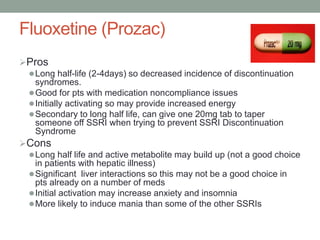
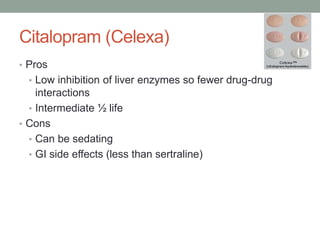
  • 194.
    Long-term effects: Whatwill happen in the future •Methamphetamine destroys the endings of dopamine containing nerve cells (NIDA 2)