PSYCHIATRIC
EMERGENCIES
SAM KENAZ PAUL
M.SC. NURSING(PSYCHIATRY)
LECTURER
INTRODUCTION
◦ Psychiatric emergency is a condition wherein the patient has
disturbances of thought, affect and psychomotor activity leading to
a threat to his existence (suicide), or threat to the people in the
environment (homicide).
COMMON PSYCHIATRIC EMERGENCIES
◦ • Suicidal threat
◦ • Violent or aggressive behavior or excitement
◦ • Panic attacks
◦ • Catatonic stupor
◦ • Hysterical attacks
◦ • Transient situational disturbances
Suicidal threat
◦ ETIOLOGY
◦ Psychiatric Disorders
◦ • Major depression
◦ • Schizophrenia
◦ • Drug or alcohol abuse
◦ • Dementia
◦ • Delirium
◦ • Personality disorder
◦ Physical Disorders
◦ • Patients with incurable or painful physical disorders like, cancer and AIDS.
◦ Psychosocial Factors
◦ • Failure in examination
◦ • Dowry difficulties
◦ • Marital difficulties
◦ • Loss of loved object
MANAGEMENT
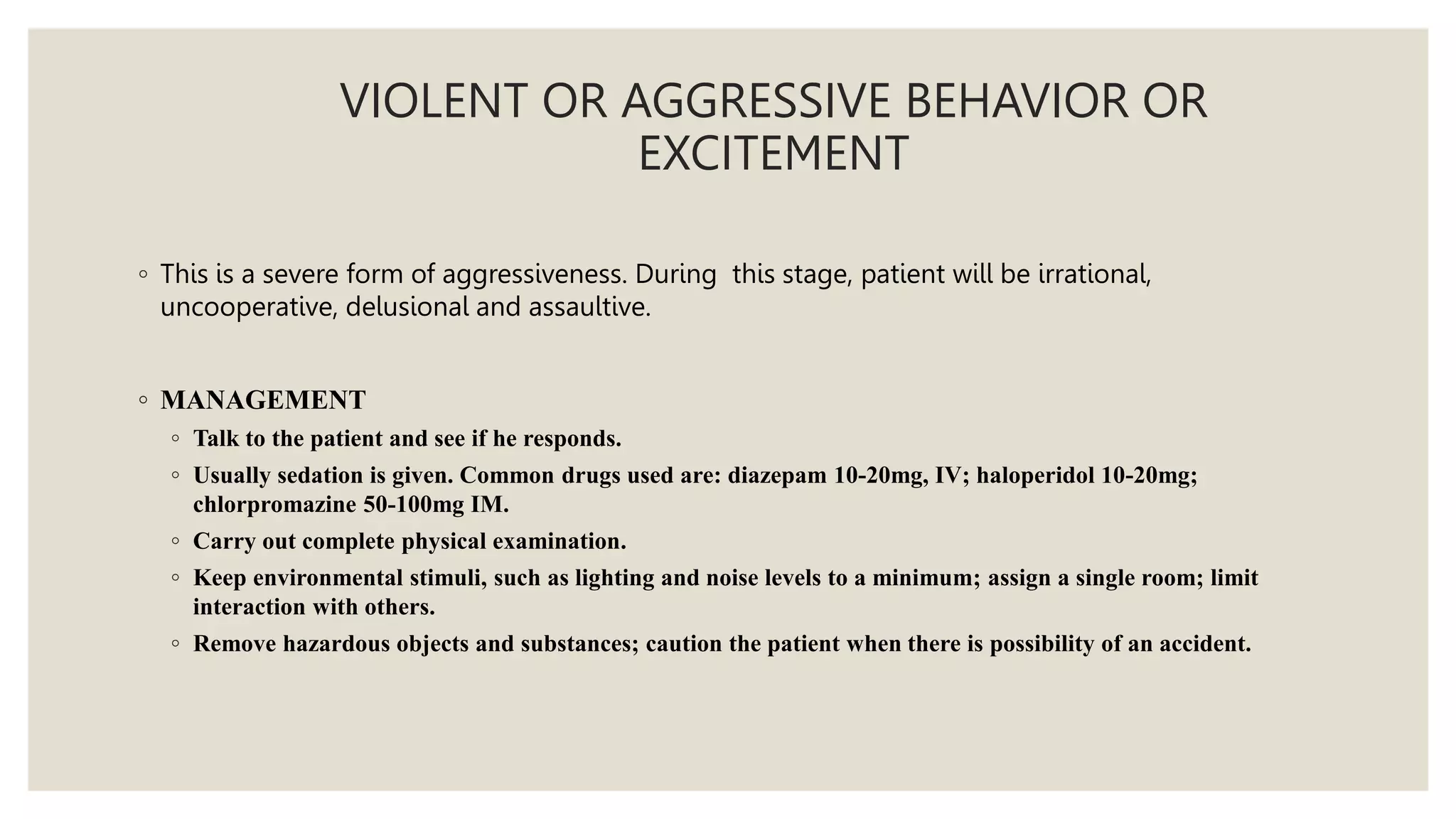
VIOLENT OR AGGRESSIVE BEHAVIOR OR
EXCITEMENT
◦ This is a severe form of aggressiveness. During this stage, patient will be irrational,
uncooperative, delusional and assaultive.
◦ MANAGEMENT
◦ Talk to the patient and see if he responds.
◦ Usually sedation is given. Common drugs used are: diazepam 10-20mg, IV; haloperidol 10-20mg;
chlorpromazine 50-100mg IM.
◦ Carry out complete physical examination.
◦ Keep environmental stimuli, such as lighting and noise levels to a minimum; assign a single room; limit
interaction with others.
◦ Remove hazardous objects and substances; caution the patient when there is possibility of an accident.
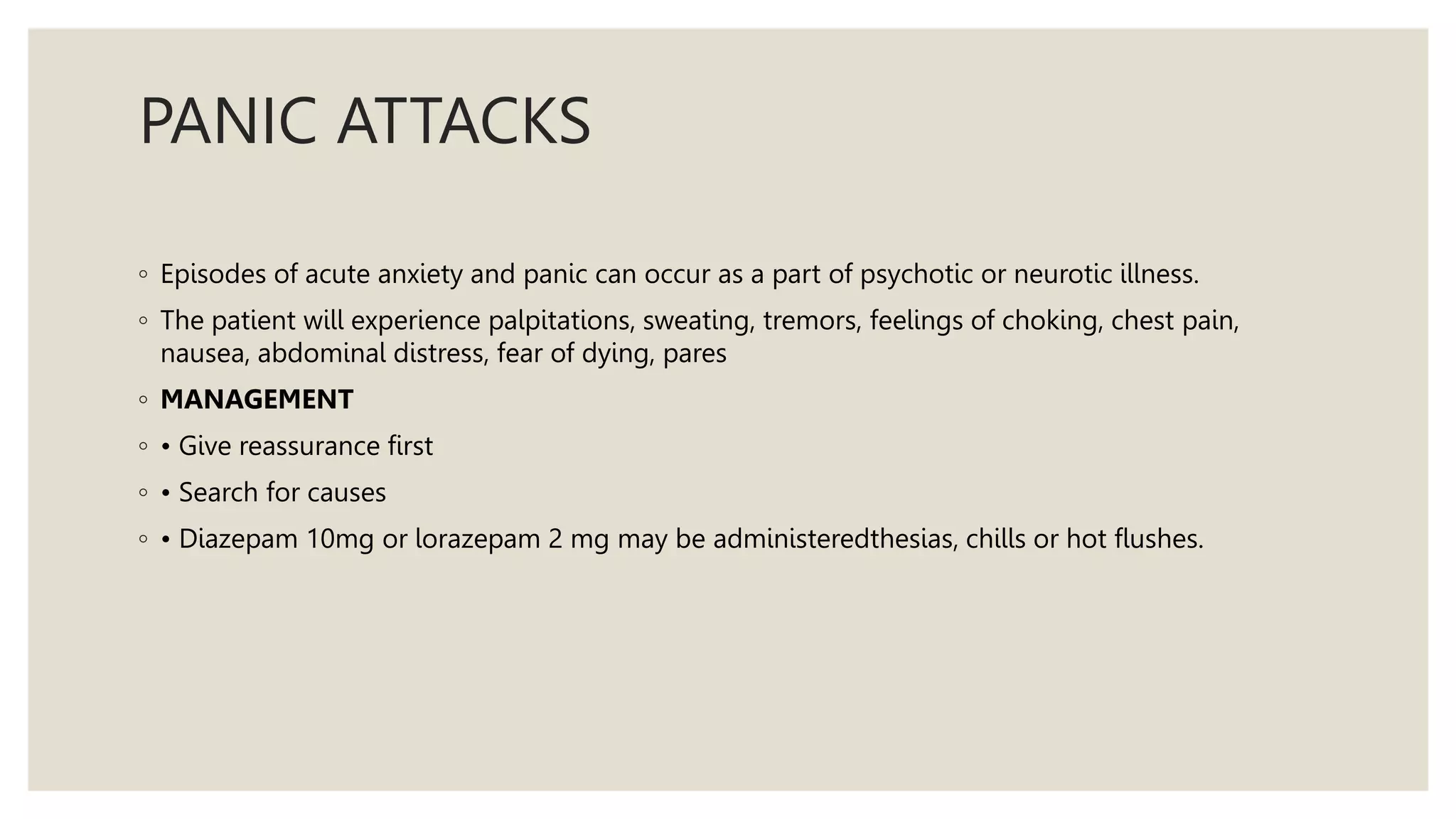
PANIC ATTACKS
◦ Episodes of acute anxiety and panic can occur as a part of psychotic or neurotic illness.
◦ The patient will experience palpitations, sweating, tremors, feelings of choking, chest pain,
nausea, abdominal distress, fear of dying, pares
◦ MANAGEMENT
◦ • Give reassurance first
◦ • Search for causes
◦ • Diazepam 10mg or lorazepam 2 mg may be administeredthesias, chills or hot flushes.
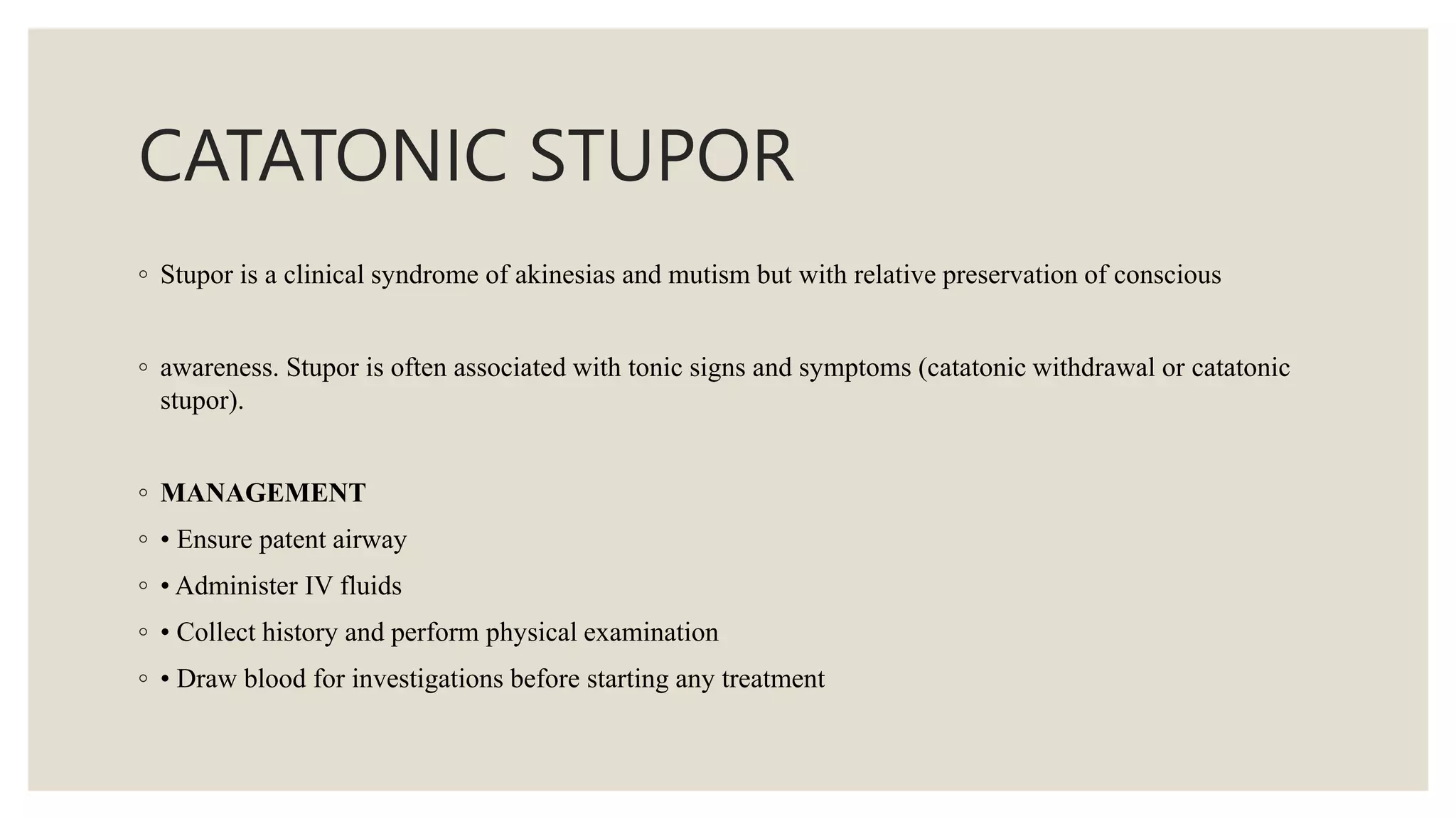
CATATONIC STUPOR
◦ Stupor is a clinical syndrome of akinesias and mutism but with relative preservation of conscious
◦ awareness. Stupor is often associated with tonic signs and symptoms (catatonic withdrawal or catatonic
stupor).
◦ MANAGEMENT
◦ • Ensure patent airway
◦ • Administer IV fluids
◦ • Collect history and perform physical examination
◦ • Draw blood for investigations before starting any treatment
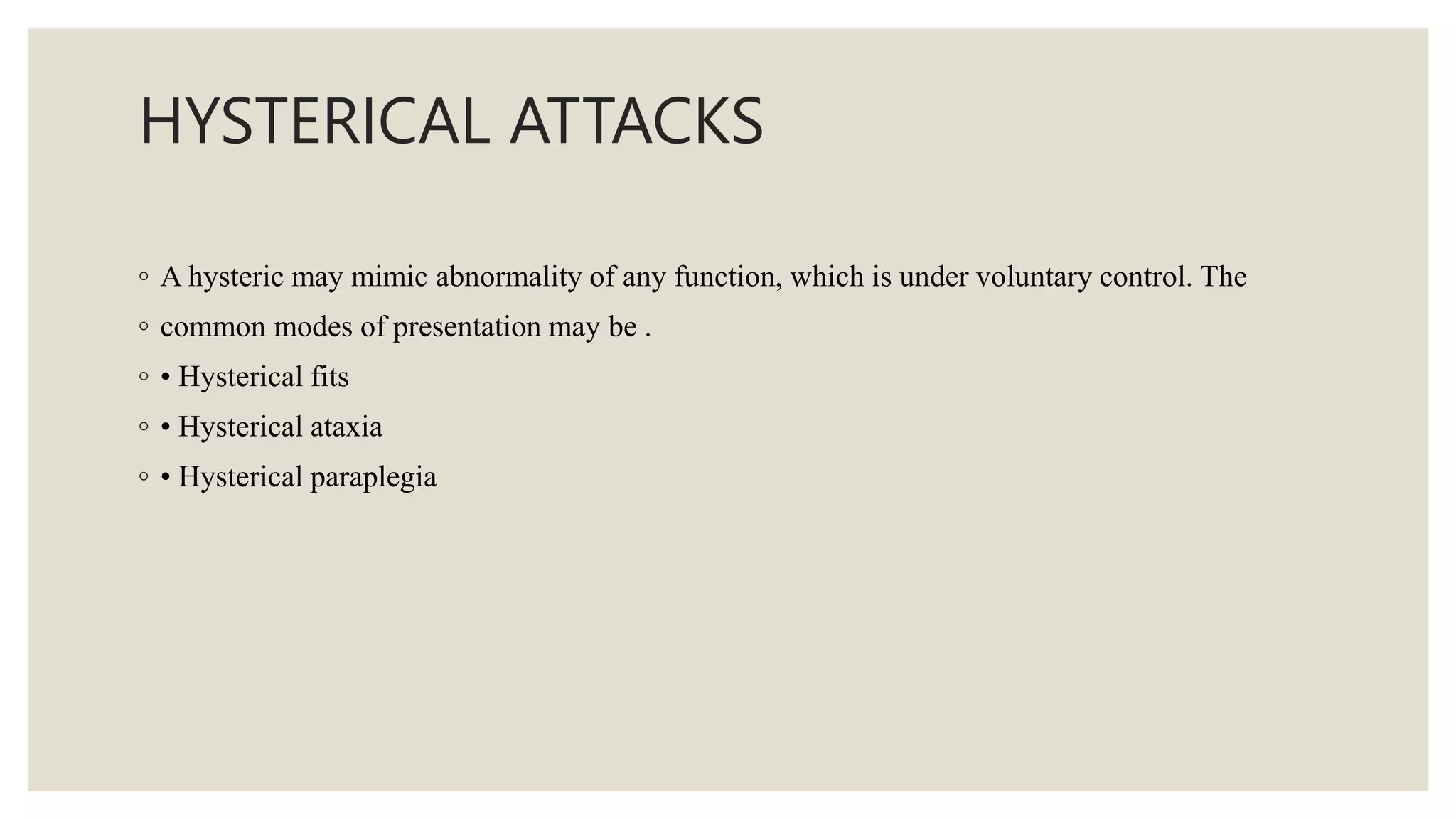
HYSTERICAL ATTACKS
◦ A hysteric may mimic abnormality of any function, which is under voluntary control. The
◦ common modes of presentation may be .
◦ • Hysterical fits
◦ • Hysterical ataxia
◦ • Hysterical paraplegia
DRUG TOXICITY
◦ Drug over-dosage may be accidental or suicidal.
◦ In either case all attempts must be made to find out the drug
consumed. A detailed history should be collected and symptomatic
treatment instituted.

PSYCHIATRIC EMERGENCIES.pptx

  • 1.
  • 2.
    INTRODUCTION ◦ Psychiatric emergencyis a condition wherein the patient has disturbances of thought, affect and psychomotor activity leading to a threat to his existence (suicide), or threat to the people in the environment (homicide).
  • 3.
    COMMON PSYCHIATRIC EMERGENCIES ◦• Suicidal threat ◦ • Violent or aggressive behavior or excitement ◦ • Panic attacks ◦ • Catatonic stupor ◦ • Hysterical attacks ◦ • Transient situational disturbances
  • 4.
    Suicidal threat ◦ ETIOLOGY ◦Psychiatric Disorders ◦ • Major depression ◦ • Schizophrenia ◦ • Drug or alcohol abuse ◦ • Dementia ◦ • Delirium ◦ • Personality disorder ◦ Physical Disorders ◦ • Patients with incurable or painful physical disorders like, cancer and AIDS. ◦ Psychosocial Factors ◦ • Failure in examination ◦ • Dowry difficulties ◦ • Marital difficulties ◦ • Loss of loved object
  • 5.
  • 6.
    VIOLENT OR AGGRESSIVEBEHAVIOR OR EXCITEMENT ◦ This is a severe form of aggressiveness. During this stage, patient will be irrational, uncooperative, delusional and assaultive. ◦ MANAGEMENT ◦ Talk to the patient and see if he responds. ◦ Usually sedation is given. Common drugs used are: diazepam 10-20mg, IV; haloperidol 10-20mg; chlorpromazine 50-100mg IM. ◦ Carry out complete physical examination. ◦ Keep environmental stimuli, such as lighting and noise levels to a minimum; assign a single room; limit interaction with others. ◦ Remove hazardous objects and substances; caution the patient when there is possibility of an accident.
  • 7.
    PANIC ATTACKS ◦ Episodesof acute anxiety and panic can occur as a part of psychotic or neurotic illness. ◦ The patient will experience palpitations, sweating, tremors, feelings of choking, chest pain, nausea, abdominal distress, fear of dying, pares ◦ MANAGEMENT ◦ • Give reassurance first ◦ • Search for causes ◦ • Diazepam 10mg or lorazepam 2 mg may be administeredthesias, chills or hot flushes.
  • 8.
    CATATONIC STUPOR ◦ Stuporis a clinical syndrome of akinesias and mutism but with relative preservation of conscious ◦ awareness. Stupor is often associated with tonic signs and symptoms (catatonic withdrawal or catatonic stupor). ◦ MANAGEMENT ◦ • Ensure patent airway ◦ • Administer IV fluids ◦ • Collect history and perform physical examination ◦ • Draw blood for investigations before starting any treatment
  • 9.
    HYSTERICAL ATTACKS ◦ Ahysteric may mimic abnormality of any function, which is under voluntary control. The ◦ common modes of presentation may be . ◦ • Hysterical fits ◦ • Hysterical ataxia ◦ • Hysterical paraplegia
  • 10.
    DRUG TOXICITY ◦ Drugover-dosage may be accidental or suicidal. ◦ In either case all attempts must be made to find out the drug consumed. A detailed history should be collected and symptomatic treatment instituted.