PSLE English Oral:
Mastering the Art of
Effective Communication
Introduction
The PSLE English Oral examination is a crucial component of the Primary School Leaving
Examination.
It assesses students' ability to communicate fluently, coherently, and confidently in English.
This presentation aims to provide insights, tips, and strategies to excel in the PSLE English Oral
examination.
Understanding the PSLE English Oral
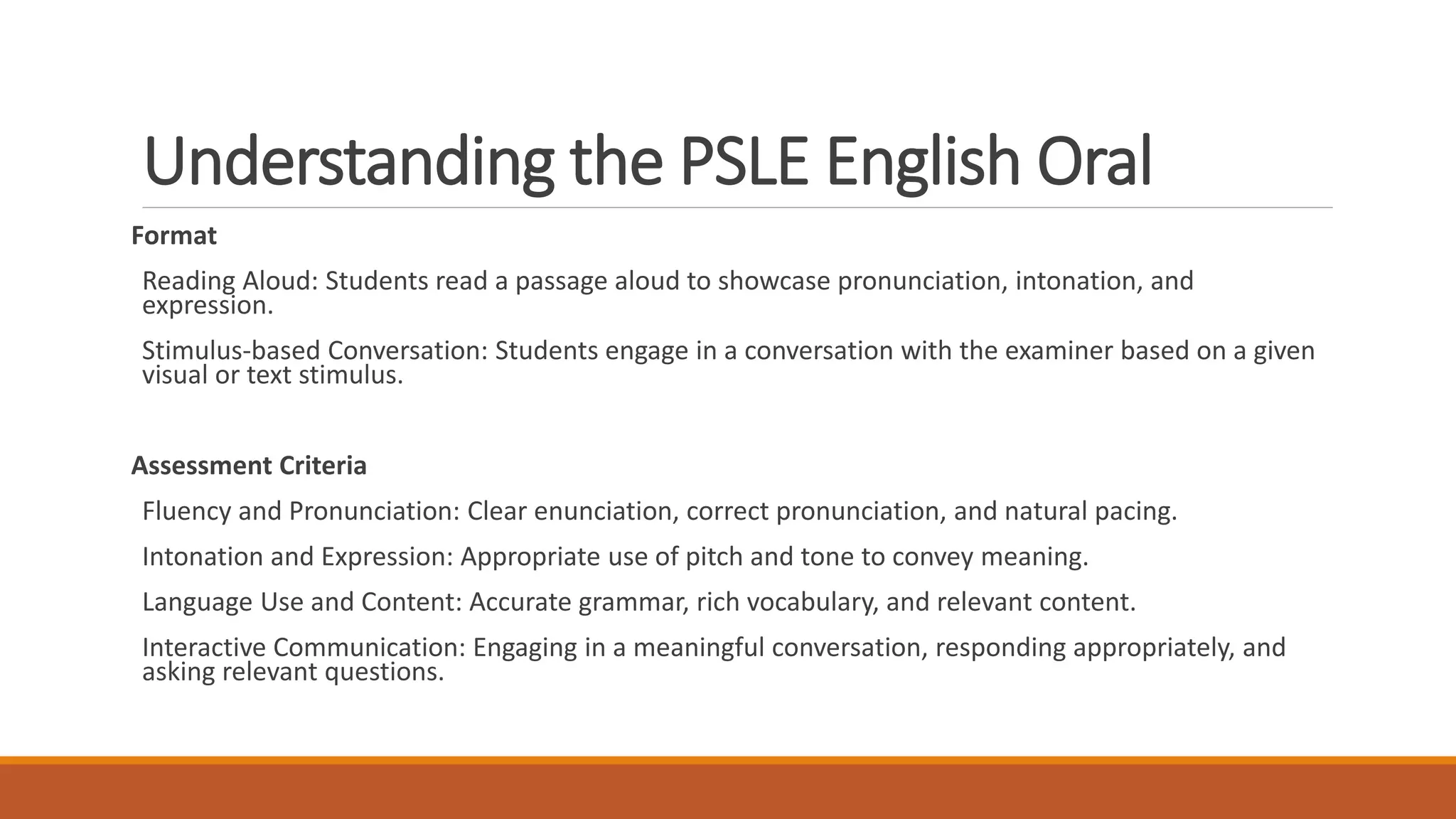
Format
Reading Aloud: Students read a passage aloud to showcase pronunciation, intonation, and
expression.
Stimulus-based Conversation: Students engage in a conversation with the examiner based on a given
visual or text stimulus.
Assessment Criteria
Fluency and Pronunciation: Clear enunciation, correct pronunciation, and natural pacing.
Intonation and Expression: Appropriate use of pitch and tone to convey meaning.
Language Use and Content: Accurate grammar, rich vocabulary, and relevant content.
Interactive Communication: Engaging in a meaningful conversation, responding appropriately, and
asking relevant questions.
Tips for Success
Reading Aloud
Practice Regularly: Read a variety of texts aloud to improve fluency and pronunciation.
Focus on Punctuation: Pay attention to punctuation marks for natural pauses and intonation.
Use Expressive Tone: Adjust your tone to reflect the emotions and context of the passage.
Stimulus-based Conversation
Understand the Stimulus: Analyze the visual or text stimulus carefully before responding.
Expand on Ideas: Elaborate on your answers with relevant details and examples.
Listen Actively: Respond to the examiner's prompts and questions attentively.
Strategies for Effective Communication
Speak Confidently
Maintain eye contact with the examiner.
Project your voice clearly and confidently.
Use Formal Language
Employ polite language and complete sentences.
Avoid using informal or colloquial expressions.
Structure Your Responses
Introduction: Greet the examiner and provide a brief introduction.
Body: Present your ideas logically and coherently.
Conclusion: Summarize your points and express a closing thought.
Common Mistakes to Avoid
Mumbling or Speaking Too Fast: Speak slowly and clearly to ensure your words are understood.
Monotonous Tone: Vary your tone to reflect different emotions and meanings.
Ignoring the Stimulus: Always refer to the stimulus in your responses.
Final Tips
Practice Active Listening: Understand the examiner's prompts and respond appropriately.
Stay Calm: Take deep breaths to manage nervousness and speak confidently.
Prepare Examples: Have relevant examples ready to support your responses.
Conclusion
Mastering the PSLE English Oral requires practice, preparation, and effective communication
skills.
By focusing on fluency, pronunciation, appropriate tone, and coherent responses, students can
excel in this important examination component.
Remember, the PSLE English Oral is an opportunity to showcase your language skills and
communication abilities in your primary school tuition. With practice and a confident approach,
you can shine in this assessment and make a positive impression. Good luck!

PSLE English Oral.pptx

  • 1.
    PSLE English Oral: Masteringthe Art of Effective Communication
  • 2.
    Introduction The PSLE EnglishOral examination is a crucial component of the Primary School Leaving Examination. It assesses students' ability to communicate fluently, coherently, and confidently in English. This presentation aims to provide insights, tips, and strategies to excel in the PSLE English Oral examination.
  • 3.
    Understanding the PSLEEnglish Oral Format Reading Aloud: Students read a passage aloud to showcase pronunciation, intonation, and expression. Stimulus-based Conversation: Students engage in a conversation with the examiner based on a given visual or text stimulus. Assessment Criteria Fluency and Pronunciation: Clear enunciation, correct pronunciation, and natural pacing. Intonation and Expression: Appropriate use of pitch and tone to convey meaning. Language Use and Content: Accurate grammar, rich vocabulary, and relevant content. Interactive Communication: Engaging in a meaningful conversation, responding appropriately, and asking relevant questions.
  • 4.
    Tips for Success ReadingAloud Practice Regularly: Read a variety of texts aloud to improve fluency and pronunciation. Focus on Punctuation: Pay attention to punctuation marks for natural pauses and intonation. Use Expressive Tone: Adjust your tone to reflect the emotions and context of the passage. Stimulus-based Conversation Understand the Stimulus: Analyze the visual or text stimulus carefully before responding. Expand on Ideas: Elaborate on your answers with relevant details and examples. Listen Actively: Respond to the examiner's prompts and questions attentively.
  • 5.
    Strategies for EffectiveCommunication Speak Confidently Maintain eye contact with the examiner. Project your voice clearly and confidently. Use Formal Language Employ polite language and complete sentences. Avoid using informal or colloquial expressions. Structure Your Responses Introduction: Greet the examiner and provide a brief introduction. Body: Present your ideas logically and coherently. Conclusion: Summarize your points and express a closing thought.
  • 6.
    Common Mistakes toAvoid Mumbling or Speaking Too Fast: Speak slowly and clearly to ensure your words are understood. Monotonous Tone: Vary your tone to reflect different emotions and meanings. Ignoring the Stimulus: Always refer to the stimulus in your responses.
  • 7.
    Final Tips Practice ActiveListening: Understand the examiner's prompts and respond appropriately. Stay Calm: Take deep breaths to manage nervousness and speak confidently. Prepare Examples: Have relevant examples ready to support your responses.
  • 8.
    Conclusion Mastering the PSLEEnglish Oral requires practice, preparation, and effective communication skills. By focusing on fluency, pronunciation, appropriate tone, and coherent responses, students can excel in this important examination component. Remember, the PSLE English Oral is an opportunity to showcase your language skills and communication abilities in your primary school tuition. With practice and a confident approach, you can shine in this assessment and make a positive impression. Good luck!