PROVERBS

  DAY 3
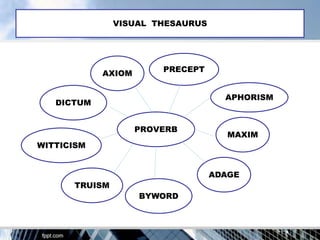
VISUAL THESAURUS


                        PRECEPT
            AXIOM


                                    APHORISM
   DICTUM


                    PROVERB
                                     MAXIM
WITTICISM


                                  ADAGE
      TRUISM
                    BYWORD
YOUR DISCOVERY TASK
• TASK 1
  –Locate, Reflect, Evaluate!
    •Locate information in the
     selection to determine
     whether the statement is
     true (T) or false (F).
DAY 4
• CONTINUATION OF TASK 1
• LOCATE, REFLECT, EVALUATE!
1. Only a few people work
 on compiling folk
 literature.

2. Proverbs and other
forms of folk literature
were introduced by the
Spaniards.
3. Our ancestors’ proverbs
 served as guideposts for
 upright living.

4. All proverbs are poetic
and figurative in nature.
5. Proverbs may have
 geographical origins.

6. People react to the
 meaning of proverbs
 quite quickly.
7. Proverbs are more
 superior than other
 literary forms in
 expressing messages.

8. If proverbs can instruct,
 they can definitely
 prescribe.
9. It is impossible to
 classify and categorize
 our numerous proverbs.
10. Our proverbs reflect a
 lot of things about our
 culture and identity.
Task 2. Classify!
–Use Damiana
 Eugenio’s system to
 classify the following
 proverbs. Use the given
 codes.
• G – proverbs expressing a
  general attitude towards life
  and the laws that govern life
• E – ethical proverbs
  recommending certain virtues
  and condemning certain vices
• V – proverbs expressing a
  system of values
• T – proverbs expressing
    general truths /
  observations about life
  and human nature
• H – humorous proverbs
• M – miscellaneous
  proverbs
1. Matibay ang walis,
   palibhasa'y
   magkabigkis.
    A broom is sturdy
   because its strands are
   tightly bound.
2. Sa taong walang
 takot, walang mataas
 na bakod.
To a fearless person,
 no fence is high
 enough.
3. Kung ano ang puno,
 siya ang bunga.

Whatever the tree, so
is the fruit.
4. Aanhin pa ang
 damo, kung patay
 na ang kabayo.
What good is the
 grass if the horse is
 already dead.
5. Kung may
 isinuksok, may
 madudukot.
If you save, you have
 something to
 withdraw.
6. Ang magalang na
 sagot, nakakapawi
 ng pagod.
A respectful retort
 wipes away
 weariness
7. Ang hindi marunong
 magmahal sa sariling
 wika, daig pa ang
 malangsang isda.
He who does not love
 the national language
 is worse than a smelly
8. Ang mabigat ay
 gumagaan, kung
 pinag- tutulungan.
A heavy burden is
 lightened if everyone
 participates in
 carrying it.
9. Ang buhay ay parang
 gulong, minsang nasa
 ibabaw, minsang nasa
 ilalim. Life is like a
 wheel; sometimes you
 are on top, sometimes
 you are in the bottom.
10. Ang pili ng pili,
 natatapat sa bungi.
One who is choosy
 ends up with the least
 attractive choice.
KEY ANSWERS:

1. T     5. V 9. T
2. E     6. V 10. H
3. T     7. G
4. E     8. G/V
ASSIGN: # 4
• Underline the subject
  and the verb in each
  sentence. Put a check
  mark if they are written
  correctly, and cross if
  incorrectly.
The number of recorded
proverbs are unknown. A number
of them are from the Tagalog
regions. There‟s many scholars
who proved that other regions
also have their proverbs. Still,
there are those who think many
proverbs have not yet been
recorded.
• Prof. Jose, as well as Prof.
  Lacsamana have the same
  belief. One of their findings
  are important to many folk
  literature scholars. Prof.
  Ruiz, who studied their
  findings are very much
  interested in such finding.

Proverbs

  • 1.
  • 2.
    VISUAL THESAURUS PRECEPT AXIOM APHORISM DICTUM PROVERB MAXIM WITTICISM ADAGE TRUISM BYWORD
  • 3.
    YOUR DISCOVERY TASK •TASK 1 –Locate, Reflect, Evaluate! •Locate information in the selection to determine whether the statement is true (T) or false (F).
  • 4.
    DAY 4 • CONTINUATIONOF TASK 1 • LOCATE, REFLECT, EVALUATE!
  • 5.
    1. Only afew people work on compiling folk literature. 2. Proverbs and other forms of folk literature were introduced by the Spaniards.
  • 6.
    3. Our ancestors’proverbs served as guideposts for upright living. 4. All proverbs are poetic and figurative in nature.
  • 7.
    5. Proverbs mayhave geographical origins. 6. People react to the meaning of proverbs quite quickly.
  • 8.
    7. Proverbs aremore superior than other literary forms in expressing messages. 8. If proverbs can instruct, they can definitely prescribe.
  • 9.
    9. It isimpossible to classify and categorize our numerous proverbs. 10. Our proverbs reflect a lot of things about our culture and identity.
  • 10.
    Task 2. Classify! –UseDamiana Eugenio’s system to classify the following proverbs. Use the given codes.
  • 11.
    • G –proverbs expressing a general attitude towards life and the laws that govern life • E – ethical proverbs recommending certain virtues and condemning certain vices • V – proverbs expressing a system of values
  • 12.
    • T –proverbs expressing general truths / observations about life and human nature • H – humorous proverbs • M – miscellaneous proverbs
  • 13.
    1. Matibay angwalis, palibhasa'y magkabigkis. A broom is sturdy because its strands are tightly bound.
  • 14.
    2. Sa taongwalang takot, walang mataas na bakod. To a fearless person, no fence is high enough.
  • 15.
    3. Kung anoang puno, siya ang bunga. Whatever the tree, so is the fruit.
  • 16.
    4. Aanhin paang damo, kung patay na ang kabayo. What good is the grass if the horse is already dead.
  • 17.
    5. Kung may isinuksok, may madudukot. If you save, you have something to withdraw.
  • 18.
    6. Ang magalangna sagot, nakakapawi ng pagod. A respectful retort wipes away weariness
  • 19.
    7. Ang hindimarunong magmahal sa sariling wika, daig pa ang malangsang isda. He who does not love the national language is worse than a smelly
  • 20.
    8. Ang mabigatay gumagaan, kung pinag- tutulungan. A heavy burden is lightened if everyone participates in carrying it.
  • 21.
    9. Ang buhayay parang gulong, minsang nasa ibabaw, minsang nasa ilalim. Life is like a wheel; sometimes you are on top, sometimes you are in the bottom.
  • 22.
    10. Ang piling pili, natatapat sa bungi. One who is choosy ends up with the least attractive choice.
  • 23.
    KEY ANSWERS: 1. T 5. V 9. T 2. E 6. V 10. H 3. T 7. G 4. E 8. G/V
  • 24.
    ASSIGN: # 4 •Underline the subject and the verb in each sentence. Put a check mark if they are written correctly, and cross if incorrectly.
  • 25.
    The number ofrecorded proverbs are unknown. A number of them are from the Tagalog regions. There‟s many scholars who proved that other regions also have their proverbs. Still, there are those who think many proverbs have not yet been recorded.
  • 26.
    • Prof. Jose,as well as Prof. Lacsamana have the same belief. One of their findings are important to many folk literature scholars. Prof. Ruiz, who studied their findings are very much interested in such finding.