Transfer Protocol in I CU
Hosam M Atef
Airway
 Patients with (or at risk from) airway compromise
should be intubated prior to transfer
 The tracheal tube should be secured and confirmed in
correct position
Breathing
 Patient adequately sedated if ventilated
 Ventilation established (and stable) on transport
ventilator
 Adequate gas exchange on transport ventilator
confirmed by arterial blood gas analysis
 Adequate oxygen supply on transfer vehicle
Circulation
 Adequate intravenous access
 Circulating volume optimized
 Hemodynamically stable
 All lines are patent and secured
 Any active bleeding controlled
 Long bone/pelvic fractures stabilized
 ECG and blood pressure monitored
C. Spine
 Adequate spinal immobilization (if indicated)
 Disability
 No active seizures
 Initial treatments for raised intracranial pressure (if
indicated)
 Life-threatening electrolyte disturbances corrected
 Blood glucose >70 mg/dl
 Exposure
 Patient adequately covered to prevent heat loss
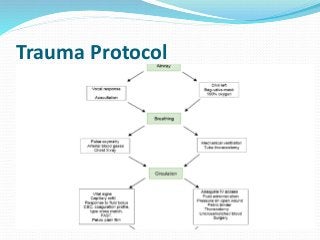
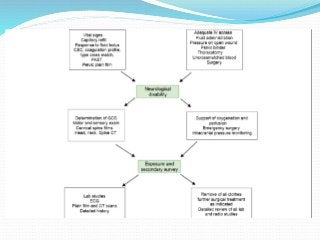
Trauma Protocol
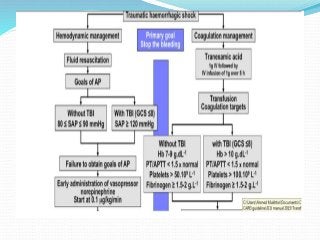
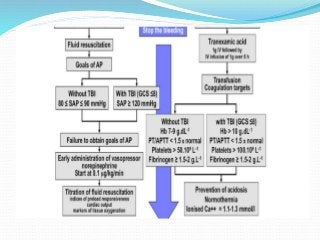
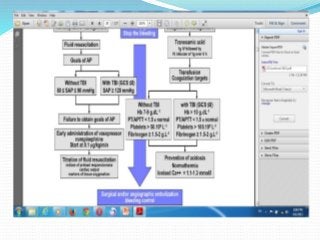
Resuscitation protocol in traumatic hemorrhagic shock
 General principle:
 Traumatic death is the main cause of life years lost worldwide.
 Hemorrhage is responsible for almost 50% of deaths in the first
24 h after trauma.
 The optimal resuscitative strategy is controversial:
 Choice of fluid
 Target of hemodynamic goals for hemorrhage control
 The optimal prevention of traumatic coagulopathy are questions.
Fluid resuscitation
 I. Type of fluid
 Lactated Ringer’s solution is recommended as first-
line resuscitation fluid in trauma patients
 Albumin should be avoided in patients with TBI
 In patients with TBI, isotonic saline should be
preferred over hypotonic fluids because it can reduce
the risk of cerebral edema.
II. Endpoints of resuscitation
 Three different target systolic blood pressure values can be
considered for three different traumatic conditions before
controlling source of hemorrhage:
 60–70 mmHg for penetrating trauma
 80–90 mmHg for blunt trauma without TBI
 100–110 mmHg for blunt trauma with TBI
 Lactate ≥ 2 mmol/L and base deficits ≥ -5 mEq/L have been
demonstrated useful to stratify patients who need a larger
amount of fluid after the initial resuscitation.
III. Vasopressor
 Early use of norepinephrine could limit fluid
resuscitation and hemodilution.
 The dose of norepinephrine should be titrated until we
reach the target systolic blood pressure as indicated
above
IV. Transfusion and prevention of acute
coagulopathy of trauma
 The correction and prevention of traumatic coagulopathy
have become central goals of early resuscitative
management of hemorrhagic shock.
 a) Red blood cells
 In patients without TBI: Target haemoglobin level (7-9
g/dL)
 In patients with severe TBI (GCS ≤ 8): Target haemoglobin
level ≥ 10 g/dL
 a) Fresh Frozen Plasma (FFP)
 In all patients FFP should be considered when PT or
PTT ≥ 1.5 times normal value
 The initial recommended dose of FFP is 10 to 15 ml/kg
 b) Platelet
 In patients without TBI: Platelet transfusion is
recommended when platelet count ≤ 50.000/L
 In patients with TBI: Platelet transfusion is
recommended when platelet count ≤ 100.000/L
c) Fibrinogen
 In all patients, fibrinogen level should be maintained ≥ 150-200
mg/dL
 If The use of FFP failed to rapidly correct the
hypofibrinogenemia
 Resuscitation with 10 to 15 mL/kg of FFP only increased the
fibrinogen plasma level to 40 mg/dL
 More than 30 mL.kg of FPP should be necessary to increase the
fibrinogen plasma level to 100 mg/dL
 Ten single bags of cryoprecipitate derived from whole blood are
needed to raise the plasma fibrinogen level by 100 mg/dL
d) Adjuvant Therapy
 I. Tranxemic acid: routine administration of tranexamic acid
(loading dose of 1 g over 10 min, then infusion of 1g over 8 hr) in
patients with hemorrhagic shock was associated with a
decreased mortality rate.
 II. Factor VIIa: No clear recommendation to use activate factor
VII and the use of this factor should be discussed on a case-by-
case basis.
 III. Ionized calcium level should be maintained between 1.1-1.3
mmol/L
THANK U

Protocol of trauma resuscitation

  • 1.
    Transfer Protocol inI CU Hosam M Atef
  • 2.
    Airway  Patients with(or at risk from) airway compromise should be intubated prior to transfer  The tracheal tube should be secured and confirmed in correct position
  • 3.
    Breathing  Patient adequatelysedated if ventilated  Ventilation established (and stable) on transport ventilator  Adequate gas exchange on transport ventilator confirmed by arterial blood gas analysis  Adequate oxygen supply on transfer vehicle
  • 4.
    Circulation  Adequate intravenousaccess  Circulating volume optimized  Hemodynamically stable  All lines are patent and secured  Any active bleeding controlled  Long bone/pelvic fractures stabilized  ECG and blood pressure monitored
  • 5.
    C. Spine  Adequatespinal immobilization (if indicated)  Disability  No active seizures  Initial treatments for raised intracranial pressure (if indicated)  Life-threatening electrolyte disturbances corrected  Blood glucose >70 mg/dl
  • 6.
     Exposure  Patientadequately covered to prevent heat loss
  • 7.
  • 9.
    Resuscitation protocol intraumatic hemorrhagic shock  General principle:  Traumatic death is the main cause of life years lost worldwide.  Hemorrhage is responsible for almost 50% of deaths in the first 24 h after trauma.  The optimal resuscitative strategy is controversial:  Choice of fluid  Target of hemodynamic goals for hemorrhage control  The optimal prevention of traumatic coagulopathy are questions.
  • 10.
    Fluid resuscitation  I.Type of fluid  Lactated Ringer’s solution is recommended as first- line resuscitation fluid in trauma patients  Albumin should be avoided in patients with TBI  In patients with TBI, isotonic saline should be preferred over hypotonic fluids because it can reduce the risk of cerebral edema.
  • 11.
    II. Endpoints ofresuscitation  Three different target systolic blood pressure values can be considered for three different traumatic conditions before controlling source of hemorrhage:  60–70 mmHg for penetrating trauma  80–90 mmHg for blunt trauma without TBI  100–110 mmHg for blunt trauma with TBI  Lactate ≥ 2 mmol/L and base deficits ≥ -5 mEq/L have been demonstrated useful to stratify patients who need a larger amount of fluid after the initial resuscitation.
  • 12.
    III. Vasopressor  Earlyuse of norepinephrine could limit fluid resuscitation and hemodilution.  The dose of norepinephrine should be titrated until we reach the target systolic blood pressure as indicated above
  • 13.
    IV. Transfusion andprevention of acute coagulopathy of trauma  The correction and prevention of traumatic coagulopathy have become central goals of early resuscitative management of hemorrhagic shock.  a) Red blood cells  In patients without TBI: Target haemoglobin level (7-9 g/dL)  In patients with severe TBI (GCS ≤ 8): Target haemoglobin level ≥ 10 g/dL
  • 14.
     a) FreshFrozen Plasma (FFP)  In all patients FFP should be considered when PT or PTT ≥ 1.5 times normal value  The initial recommended dose of FFP is 10 to 15 ml/kg
  • 15.
     b) Platelet In patients without TBI: Platelet transfusion is recommended when platelet count ≤ 50.000/L  In patients with TBI: Platelet transfusion is recommended when platelet count ≤ 100.000/L
  • 16.
    c) Fibrinogen  Inall patients, fibrinogen level should be maintained ≥ 150-200 mg/dL  If The use of FFP failed to rapidly correct the hypofibrinogenemia  Resuscitation with 10 to 15 mL/kg of FFP only increased the fibrinogen plasma level to 40 mg/dL  More than 30 mL.kg of FPP should be necessary to increase the fibrinogen plasma level to 100 mg/dL  Ten single bags of cryoprecipitate derived from whole blood are needed to raise the plasma fibrinogen level by 100 mg/dL
  • 17.
    d) Adjuvant Therapy I. Tranxemic acid: routine administration of tranexamic acid (loading dose of 1 g over 10 min, then infusion of 1g over 8 hr) in patients with hemorrhagic shock was associated with a decreased mortality rate.  II. Factor VIIa: No clear recommendation to use activate factor VII and the use of this factor should be discussed on a case-by- case basis.  III. Ionized calcium level should be maintained between 1.1-1.3 mmol/L
  • 21.