2017 • Number 01
Introduction
The European Commission estimates that VAT
carousel fraud costs the EU economy in the
region of €50bn in lost revenue per annum.
Little wonder, therefore, that the issue of VAT
carousel fraud is high on the agenda of the
EU’s tax authorities and law enforcement
organisations.
But is the risk of VAT carousel fraud high on
the agenda of Irish businesses? The answer
to that is “probably not” in most cases.
However, legitimate businesses that have
no intent to engage in or benefit from fraud
cannot be complacent to the risks. Revenue
and other tax authorities have powers to
target not only fraudulent traders but also
other businesses that knew or should have
known that they were involved in fraudulent
transactions.
The consequences of being caught up in a
fraudulent transaction are potentially significant
and include disallowed input VAT on purchases,
VAT liabilities on cross-border sales, and being
held jointly and severally liable for VAT due by
the fraudulent trader.
This is a live issue. We are aware of a number
of cases where traders who inadvertently
David Duffy
VAT Director, KPMG
Suzanne O’Donovan
VAT Manager, KPMG
Protecting Against VAT Fraud
127
Protecting Against VAT Fraud
became part of a fraudulent supply chain are
under investigation. To protect themselves,
businesses must take steps to obtain sufficient
information in respect of their trading partners
and watch out for risk indicators. As Revenue’s
guidelines on how to protect your business
from VAT fraud (eBrief No. 82/2016) state: “if
a commercial proposition looks too good to be
true it probably is.”
This article considers the Irish and EU VAT
principles under which legitimate traders can
be held liable for unwittingly being a party
to transactions involving VAT fraud. We also
discuss what legitimate businesses can do to
protect themselves against these risks. Lastly,
we consider potentially significant future
changes to the EU VAT regime with a view to
reducing carousel fraud.
What Is VAT Carousel Fraud?
Any situation where a trader knowingly and
deliberately underpays VAT to a tax authority
can be described as VAT fraud. However, this
article principally focuses on what is frequently
referred to as “missing trader intra-Community”
fraud or “carousel” fraud. These types of fraud
are perpetrated through a circular chain of
transactions, typically involving high-value,
mobile and resellable goods such as consumer
electronics. However, they could in principle
involve goods or services from any sector,
and therefore the risk of fraud exists across all
industries.
The fraudsters manipulate the cross-border and
domestic VAT rules to create a situation where
they can purchase goods without payment
of VAT and sell them on with VAT to innocent
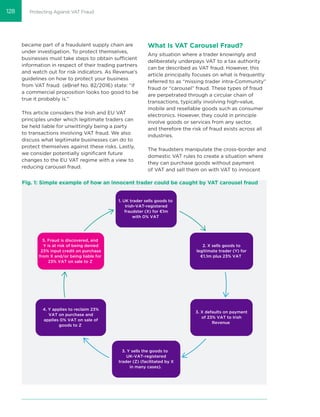
Fig. 1: Simple example of how an innocent trader could be caught by VAT carousel fraud
1. UK trader sells goods to
Irish-VAT-registered
fraudster (X) for €1m
with 0% VAT
2. X sells goods to
legitimate trader (Y) for
€1.1m plus 23% VAT
3. X defaults on payment
of 23% VAT to Irish
Revenue
3. Y sells the goods to
UK-VAT-registered
trader (Z) (facilitated by X
in many cases).
4. Y applies to reclaim 23%
VAT on purchase and
applies 0% VAT on sale of
goods to Z
5. Fraud is discovered, and
Y is at risk of being denied
23% input credit on purchase
from X and/or being liable for
23% VAT on sale to Z
128
2017 • Number 01
traders. However, the fraudster then “goes
missing” without paying the VAT due to the
tax authorities. Fraudsters are keen to involve
innocent traders in the transaction chain to
fund the missing VAT and to give the initial
impression that the arrangements are genuine.
The supply chains involved in carousel fraud are
usually highly sophisticated to avoid detection
by the tax authorities and legitimate traders.
Fig. 1 is a simple illustration of how an innocent
Irish distribution company could become
liable for substantial VAT amounts due to its
inadvertent participation in a fraudulent supply
chain.
Revenue’s Powers
The judgments of the Court of Justice of the
European Union (CJEU) and Irish VAT law
support Revenue’s powers to make a legitimate
business, in certain circumstances, liable for the
costs of VAT fraud. In the Kittel case1
the CJEU
confirmed that a taxable person can be denied
the right to deduct input VAT on a purchase
where it was part of a fraudulent supply chain
and the taxable person “knew or should have
known” that to be the case.
The judgment in the case of Mecsek-Gabona2
confirmed Member States’ right to refuse VAT
zero rating of an intra-Community supply of
goods where it has been established:
“that the vendor has failed to fulfil its
obligations as regards evidence, or that
it knew or should have known that the
transaction which it carried out was
part of a tax fraud committed by the
purchaser, and that it had not taken
every reasonable step within its power
to prevent its own participation in that
fraud”.
Irish Revenue has in recent years taken a
number of legislative steps to protect the Irish
Exchequer, by targeting both the fraudsters and
the parties they do business with.
Finance Act 2014 introduced s108C of the
Value-Added Tax Consolidation Act 2010
(VATCA 2010), under which any trader who is
involved in a series of taxable supplies and who
knew or was “reckless as to whether or not” the
supply was connected to the fraudulent evasion
of VAT shall be held jointly and severally liable
for the payment of such VAT.3
Finance Act 2015 introduced s108D of VATCA
2010. This section provides that Revenue can
notify other parties and publish details of the
cancellation of VAT numbers in Iris Oifigiúil and
other publications. This is intended to inform
other parties that they can no longer rely on
the cancelled VAT number for the purposes
of their supplies to and from the entity whose
number has been cancelled.
In addition to the above, the VAT reverse-
charge mechanism has been applied to
domestic business-to-business supplies of
particular goods and services, which are known
to be at higher risk of being used in VAT fraud.
These include transactions involving scrap
metal and carbon emission credits. Applying
the reverse-charge principle helps to reduce
the scenarios where a supplier charges VAT to a
customer and then potentially fails to pay that
VAT to Revenue.
Protecting Legitimate Businesses
How can legitimate businesses protect
themselves from unwittingly becoming a party
to VAT fraud and being held liable under the
principles set out above? Revenue’s guidelines
in eBrief No. 82/2016 outline details of the steps
that businesses should take and the high-risk
indicators that VAT fraud could be involved.
In our experience, Revenue looks for evidence
of these steps having been taken when
investigating legitimate businesses that have
1 Joined cases C-439/04 and C-440/04.
2 C-273/11 at para. 55.
3 For a more detailed analysis of s108C VATCA 2010 and its interaction with EU law principles, see Frank Mitchell’s article “VAT Fraud and
Why Finance Act 2014 Has Reduced Revenue’s Powers”, Irish Tax Review, 27/4 (2014).
129
Protecting Against VAT Fraud
inadvertently become a party to fraudulent
transactions.
The Revenue guidelines in respect of the due
diligence to be carried out when entering a
transaction can be summarised as follows:
• Know and obtain independent evidence of
your trading partners, including obtaining
certificates of incorporation, trade
references, credit and background checks,
signed letters of introduction etc.
• Obtain and verify the other party’s VAT
registration details on the Europa VIES
website.
Some of the steps outlined in the guidelines, it
could be argued, go beyond what would usually
be expected in the normal course of business.
However, the more robust the steps taken, the
stronger the legitimate business’s arguments
that it did not know of, should not have known
of and was not reckless as to any risk of being
involved in VAT fraud and therefore that it
should not be held liable for the fraud.
In relation to risk factors, businesses should
be alert to anything that deviates from normal
commercial practices. This will depend on the
particular industry, but examples that could
alert businesses that VAT fraud may be at play
include:
• Limited information is available on the
background of the other party, and there is a
reluctance on its part to provide independent
information.
• The terms of the transaction appear unusual
or “too good to be true”, including that there
is purportedly no commercial risk for you,
there is a lack of formal documentation or
the deal appears to be significantly better
than is available through other established
operators.
• There is a link (either apparent or through
further investigation) between the supplier
and other parties in the chain. For example,
does the supplier introduce you to customers
for the goods?
One or more of the above indicators does not
necessarily confirm that fraud is involved, but
businesses should remain vigilant and seek
answers in respect of any suspicious or unusual
features of a transaction. It is important to
remember that steps will have been taken to
conceal the potential risk factors and to give
the impression of genuine transactions.
As VAT fraud arises on day-to-day transactions,
the implementation of these steps should
not be a matter only for the tax or finance
department. A coordinated approach between
functions, including procurement, accounts
receivable, accounts payable and relationship
managers, is needed. In addition, training for all
relevant employees and a clear policy on how
to identify and raise the potential issue of VAT
fraud should be put in place.
Future VAT Changes to
Combat Fraud
Combating VAT fraud is a high priority for the
EU. The European Commission’s VAT Action
Plan, published in April 2016, stated that urgent
reform of the VAT system is needed, with a core
objective to combat the growing risk of VAT
fraud. Therefore, changes are likely in future to
the EU VAT system to make it more robust in
order to deal with the risk of VAT fraud.
In the short term, it is proposed to enhance
administrative cooperation between tax
administrations and improve voluntary
compliance through effective dispute-
prevention and -resolution mechanisms. This
might include tax authorities having automated
access to taxpayer data and the use of standard
audit files across the EU to allow more efficient
cross-checking. We have already seen the
implementation of proposals to this effect in
some EU countries.
In December 2016 the Commission announced
proposals to allow Member States to apply a
general reverse-charge mechanism (GRCM)
to domestic supplies where certain conditions
apply. As currently drafted, this proposal should
not apply to Ireland. However, if it is introduced
130
2017 • Number 01
successfully in other Member States, a similar
proposal could be rolled out on a wider basis in
the future.
In the medium to longer term, the Commission
proposes a more radical solution that would
fundamentally change how VAT applies to
cross-border supplies of goods between
businesses. The Commission estimates that
the implementation of these proposals would
reduce the current levels of fraud by 80%, i.e.
€40bn per annum, across the EU.
Under these proposals, the supplier of goods
would be liable to charge VAT in the country
to which the goods are transported and remit
that VAT to the tax authorities in that country.
So, for example, an Irish supplier selling and
dispatching goods to a business customer
in, say, Germany would be obliged to charge
German VAT at the appropriate rate and pay
that VAT to the German tax authorities. This
is intended to limit the scenarios in which
fraudsters can purchase goods without having
to pay VAT. However, the implications for
legitimate businesses of requiring the know-
how and systems capability to charge VAT on
their sales in multiple jurisdictions would
be significant.
There would be some relieving measures under
the Commission’s proposals. Firstly, a “one-stop
shop” regime would avoid the need to actually
register for VAT in the foreign country. In the
above example, the Irish supplier could account
for the German VAT through a single EU
return, which would be filed with Irish Revenue.
Secondly, legitimate businesses could apply
to their respective tax authorities to become a
“certified taxable person” (CTP). Foreign sellers
to CTP customers would not charge local VAT
on their sales, and instead the reverse-charge
rules would continue to apply, similar to today.
However, the exact criteria for CTP status would
need to be clear and consistent across the EU.
The Commission currently has a consultation
open until 20 March 2017 in relation to the
above proposals and is committed to issuing
legislative proposals during the second half of
2017. Member States would then be required to
approve the proposals unanimously before they
would go live.
Conclusion
VAT fraud is costing the EU billions every year,
and tax authorities across the EU are playing
catch-up. In the short term, businesses must
pay close attention to their transactions and put
in place procedures and controls to mitigate the
risk of participating, albeit innocently, in VAT
carousel fraud. In the longer term, we expect to
see changes at EU level, particularly to the VAT
treatment of cross-border sales, and businesses
will have to adapt to the implementation of
these changes. However, fraudsters are nothing
if not innovative, and VAT fraud will continue
to be an important issue for tax authorities and
legitimate businesses for some time to come.
Read more on VAT Fraud
and Why Finance Act 2014 Has Reduced
Revenue’s Powers, Irish Tax Review, Issue 4,
2014; Revenue eBrief 82/16; Part 16-06 - How
to protect your business from becoming
involved in VAT fraud, Revenue Guidance
131

Protecting against VAT fraud

  • 1.
    2017 • Number01 Introduction The European Commission estimates that VAT carousel fraud costs the EU economy in the region of €50bn in lost revenue per annum. Little wonder, therefore, that the issue of VAT carousel fraud is high on the agenda of the EU’s tax authorities and law enforcement organisations. But is the risk of VAT carousel fraud high on the agenda of Irish businesses? The answer to that is “probably not” in most cases. However, legitimate businesses that have no intent to engage in or benefit from fraud cannot be complacent to the risks. Revenue and other tax authorities have powers to target not only fraudulent traders but also other businesses that knew or should have known that they were involved in fraudulent transactions. The consequences of being caught up in a fraudulent transaction are potentially significant and include disallowed input VAT on purchases, VAT liabilities on cross-border sales, and being held jointly and severally liable for VAT due by the fraudulent trader. This is a live issue. We are aware of a number of cases where traders who inadvertently David Duffy VAT Director, KPMG Suzanne O’Donovan VAT Manager, KPMG Protecting Against VAT Fraud 127
  • 2.
    Protecting Against VATFraud became part of a fraudulent supply chain are under investigation. To protect themselves, businesses must take steps to obtain sufficient information in respect of their trading partners and watch out for risk indicators. As Revenue’s guidelines on how to protect your business from VAT fraud (eBrief No. 82/2016) state: “if a commercial proposition looks too good to be true it probably is.” This article considers the Irish and EU VAT principles under which legitimate traders can be held liable for unwittingly being a party to transactions involving VAT fraud. We also discuss what legitimate businesses can do to protect themselves against these risks. Lastly, we consider potentially significant future changes to the EU VAT regime with a view to reducing carousel fraud. What Is VAT Carousel Fraud? Any situation where a trader knowingly and deliberately underpays VAT to a tax authority can be described as VAT fraud. However, this article principally focuses on what is frequently referred to as “missing trader intra-Community” fraud or “carousel” fraud. These types of fraud are perpetrated through a circular chain of transactions, typically involving high-value, mobile and resellable goods such as consumer electronics. However, they could in principle involve goods or services from any sector, and therefore the risk of fraud exists across all industries. The fraudsters manipulate the cross-border and domestic VAT rules to create a situation where they can purchase goods without payment of VAT and sell them on with VAT to innocent Fig. 1: Simple example of how an innocent trader could be caught by VAT carousel fraud 1. UK trader sells goods to Irish-VAT-registered fraudster (X) for €1m with 0% VAT 2. X sells goods to legitimate trader (Y) for €1.1m plus 23% VAT 3. X defaults on payment of 23% VAT to Irish Revenue 3. Y sells the goods to UK-VAT-registered trader (Z) (facilitated by X in many cases). 4. Y applies to reclaim 23% VAT on purchase and applies 0% VAT on sale of goods to Z 5. Fraud is discovered, and Y is at risk of being denied 23% input credit on purchase from X and/or being liable for 23% VAT on sale to Z 128
  • 3.
    2017 • Number01 traders. However, the fraudster then “goes missing” without paying the VAT due to the tax authorities. Fraudsters are keen to involve innocent traders in the transaction chain to fund the missing VAT and to give the initial impression that the arrangements are genuine. The supply chains involved in carousel fraud are usually highly sophisticated to avoid detection by the tax authorities and legitimate traders. Fig. 1 is a simple illustration of how an innocent Irish distribution company could become liable for substantial VAT amounts due to its inadvertent participation in a fraudulent supply chain. Revenue’s Powers The judgments of the Court of Justice of the European Union (CJEU) and Irish VAT law support Revenue’s powers to make a legitimate business, in certain circumstances, liable for the costs of VAT fraud. In the Kittel case1 the CJEU confirmed that a taxable person can be denied the right to deduct input VAT on a purchase where it was part of a fraudulent supply chain and the taxable person “knew or should have known” that to be the case. The judgment in the case of Mecsek-Gabona2 confirmed Member States’ right to refuse VAT zero rating of an intra-Community supply of goods where it has been established: “that the vendor has failed to fulfil its obligations as regards evidence, or that it knew or should have known that the transaction which it carried out was part of a tax fraud committed by the purchaser, and that it had not taken every reasonable step within its power to prevent its own participation in that fraud”. Irish Revenue has in recent years taken a number of legislative steps to protect the Irish Exchequer, by targeting both the fraudsters and the parties they do business with. Finance Act 2014 introduced s108C of the Value-Added Tax Consolidation Act 2010 (VATCA 2010), under which any trader who is involved in a series of taxable supplies and who knew or was “reckless as to whether or not” the supply was connected to the fraudulent evasion of VAT shall be held jointly and severally liable for the payment of such VAT.3 Finance Act 2015 introduced s108D of VATCA 2010. This section provides that Revenue can notify other parties and publish details of the cancellation of VAT numbers in Iris Oifigiúil and other publications. This is intended to inform other parties that they can no longer rely on the cancelled VAT number for the purposes of their supplies to and from the entity whose number has been cancelled. In addition to the above, the VAT reverse- charge mechanism has been applied to domestic business-to-business supplies of particular goods and services, which are known to be at higher risk of being used in VAT fraud. These include transactions involving scrap metal and carbon emission credits. Applying the reverse-charge principle helps to reduce the scenarios where a supplier charges VAT to a customer and then potentially fails to pay that VAT to Revenue. Protecting Legitimate Businesses How can legitimate businesses protect themselves from unwittingly becoming a party to VAT fraud and being held liable under the principles set out above? Revenue’s guidelines in eBrief No. 82/2016 outline details of the steps that businesses should take and the high-risk indicators that VAT fraud could be involved. In our experience, Revenue looks for evidence of these steps having been taken when investigating legitimate businesses that have 1 Joined cases C-439/04 and C-440/04. 2 C-273/11 at para. 55. 3 For a more detailed analysis of s108C VATCA 2010 and its interaction with EU law principles, see Frank Mitchell’s article “VAT Fraud and Why Finance Act 2014 Has Reduced Revenue’s Powers”, Irish Tax Review, 27/4 (2014). 129
  • 4.
    Protecting Against VATFraud inadvertently become a party to fraudulent transactions. The Revenue guidelines in respect of the due diligence to be carried out when entering a transaction can be summarised as follows: • Know and obtain independent evidence of your trading partners, including obtaining certificates of incorporation, trade references, credit and background checks, signed letters of introduction etc. • Obtain and verify the other party’s VAT registration details on the Europa VIES website. Some of the steps outlined in the guidelines, it could be argued, go beyond what would usually be expected in the normal course of business. However, the more robust the steps taken, the stronger the legitimate business’s arguments that it did not know of, should not have known of and was not reckless as to any risk of being involved in VAT fraud and therefore that it should not be held liable for the fraud. In relation to risk factors, businesses should be alert to anything that deviates from normal commercial practices. This will depend on the particular industry, but examples that could alert businesses that VAT fraud may be at play include: • Limited information is available on the background of the other party, and there is a reluctance on its part to provide independent information. • The terms of the transaction appear unusual or “too good to be true”, including that there is purportedly no commercial risk for you, there is a lack of formal documentation or the deal appears to be significantly better than is available through other established operators. • There is a link (either apparent or through further investigation) between the supplier and other parties in the chain. For example, does the supplier introduce you to customers for the goods? One or more of the above indicators does not necessarily confirm that fraud is involved, but businesses should remain vigilant and seek answers in respect of any suspicious or unusual features of a transaction. It is important to remember that steps will have been taken to conceal the potential risk factors and to give the impression of genuine transactions. As VAT fraud arises on day-to-day transactions, the implementation of these steps should not be a matter only for the tax or finance department. A coordinated approach between functions, including procurement, accounts receivable, accounts payable and relationship managers, is needed. In addition, training for all relevant employees and a clear policy on how to identify and raise the potential issue of VAT fraud should be put in place. Future VAT Changes to Combat Fraud Combating VAT fraud is a high priority for the EU. The European Commission’s VAT Action Plan, published in April 2016, stated that urgent reform of the VAT system is needed, with a core objective to combat the growing risk of VAT fraud. Therefore, changes are likely in future to the EU VAT system to make it more robust in order to deal with the risk of VAT fraud. In the short term, it is proposed to enhance administrative cooperation between tax administrations and improve voluntary compliance through effective dispute- prevention and -resolution mechanisms. This might include tax authorities having automated access to taxpayer data and the use of standard audit files across the EU to allow more efficient cross-checking. We have already seen the implementation of proposals to this effect in some EU countries. In December 2016 the Commission announced proposals to allow Member States to apply a general reverse-charge mechanism (GRCM) to domestic supplies where certain conditions apply. As currently drafted, this proposal should not apply to Ireland. However, if it is introduced 130
  • 5.
    2017 • Number01 successfully in other Member States, a similar proposal could be rolled out on a wider basis in the future. In the medium to longer term, the Commission proposes a more radical solution that would fundamentally change how VAT applies to cross-border supplies of goods between businesses. The Commission estimates that the implementation of these proposals would reduce the current levels of fraud by 80%, i.e. €40bn per annum, across the EU. Under these proposals, the supplier of goods would be liable to charge VAT in the country to which the goods are transported and remit that VAT to the tax authorities in that country. So, for example, an Irish supplier selling and dispatching goods to a business customer in, say, Germany would be obliged to charge German VAT at the appropriate rate and pay that VAT to the German tax authorities. This is intended to limit the scenarios in which fraudsters can purchase goods without having to pay VAT. However, the implications for legitimate businesses of requiring the know- how and systems capability to charge VAT on their sales in multiple jurisdictions would be significant. There would be some relieving measures under the Commission’s proposals. Firstly, a “one-stop shop” regime would avoid the need to actually register for VAT in the foreign country. In the above example, the Irish supplier could account for the German VAT through a single EU return, which would be filed with Irish Revenue. Secondly, legitimate businesses could apply to their respective tax authorities to become a “certified taxable person” (CTP). Foreign sellers to CTP customers would not charge local VAT on their sales, and instead the reverse-charge rules would continue to apply, similar to today. However, the exact criteria for CTP status would need to be clear and consistent across the EU. The Commission currently has a consultation open until 20 March 2017 in relation to the above proposals and is committed to issuing legislative proposals during the second half of 2017. Member States would then be required to approve the proposals unanimously before they would go live. Conclusion VAT fraud is costing the EU billions every year, and tax authorities across the EU are playing catch-up. In the short term, businesses must pay close attention to their transactions and put in place procedures and controls to mitigate the risk of participating, albeit innocently, in VAT carousel fraud. In the longer term, we expect to see changes at EU level, particularly to the VAT treatment of cross-border sales, and businesses will have to adapt to the implementation of these changes. However, fraudsters are nothing if not innovative, and VAT fraud will continue to be an important issue for tax authorities and legitimate businesses for some time to come. Read more on VAT Fraud and Why Finance Act 2014 Has Reduced Revenue’s Powers, Irish Tax Review, Issue 4, 2014; Revenue eBrief 82/16; Part 16-06 - How to protect your business from becoming involved in VAT fraud, Revenue Guidance 131