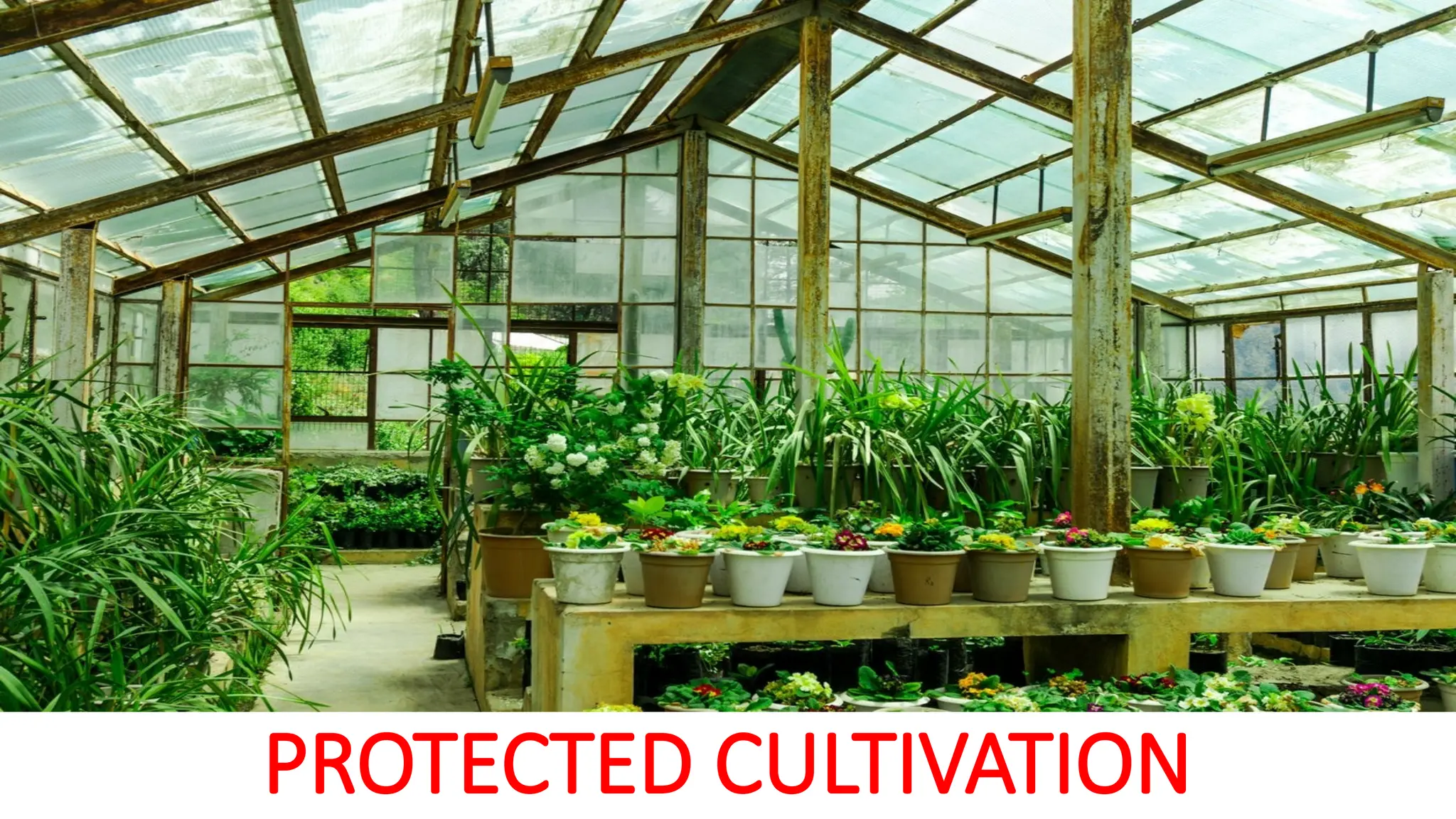
PROTECTED CULTIVATION
Greenhouse effect
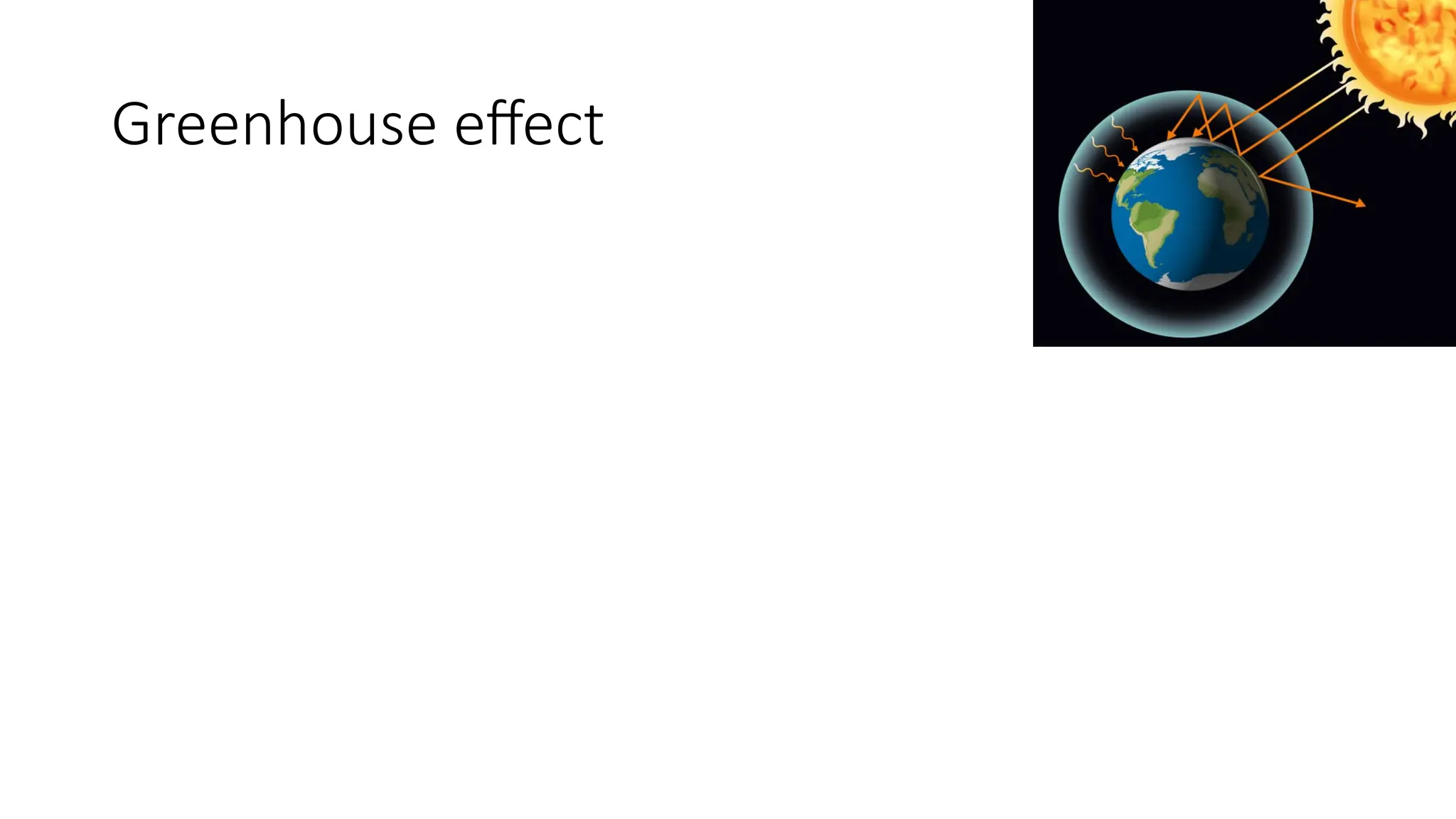
Greenhouse effect
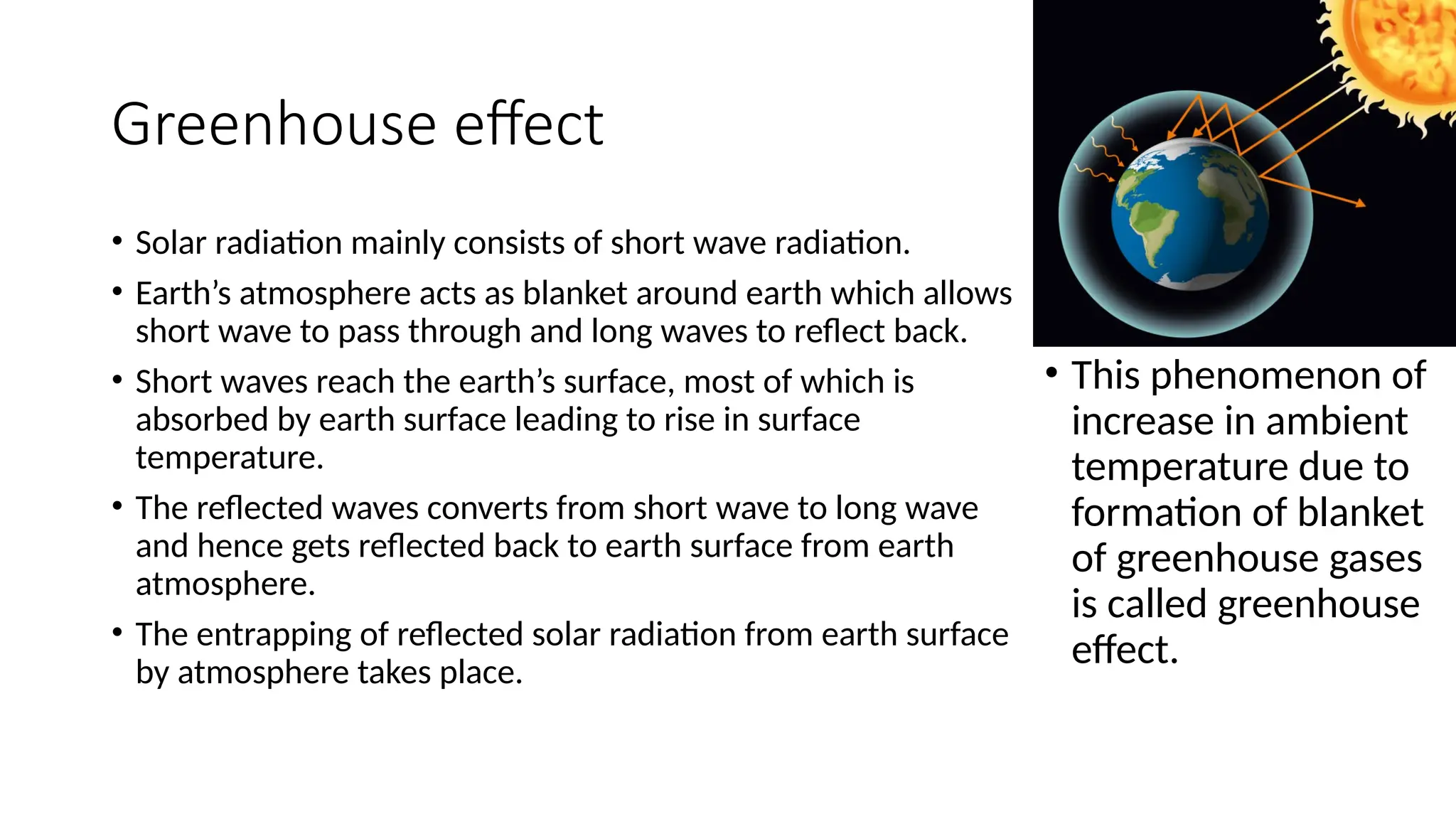
• Solar radiation mainly consists of short wave radiation.
• Earth’s atmosphere acts as blanket around earth which allows
short wave to pass through and long waves to reflect back.
• Short waves reach the earth’s surface, most of which is
absorbed by earth surface leading to rise in surface
temperature.
• The reflected waves converts from short wave to long wave
and hence gets reflected back to earth surface from earth
atmosphere.
• The entrapping of reflected solar radiation from earth surface
by atmosphere takes place.
• This phenomenon of
increase in ambient
temperature due to
formation of blanket
of greenhouse gases
is called greenhouse
effect.
Greenhouse technology
• Technique or science of providing favorable
environmental conditions for plant growth.
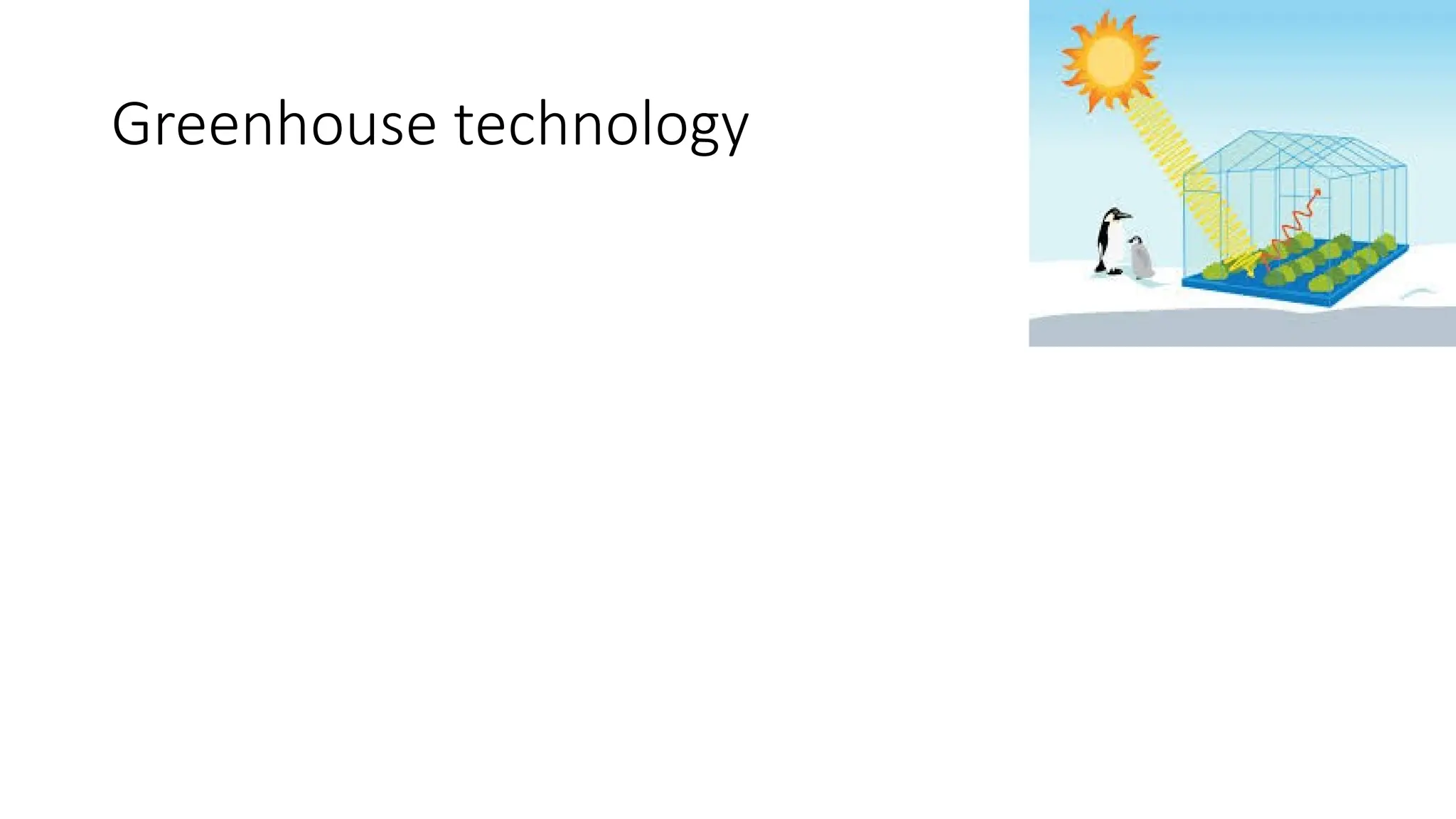
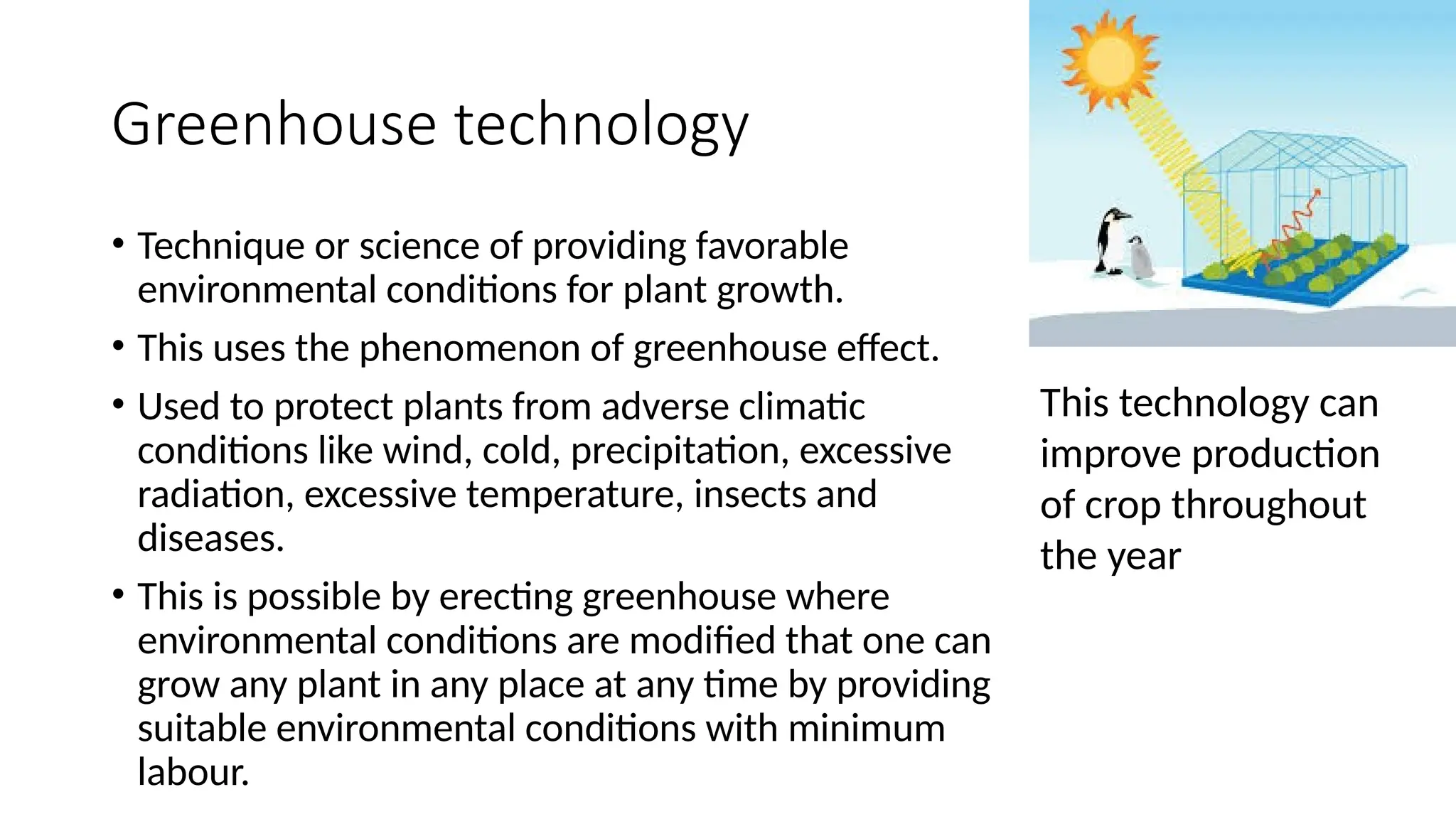
• This uses the phenomenon of greenhouse effect.
• Used to protect plants from adverse climatic
conditions like wind, cold, precipitation, excessive
radiation, excessive temperature, insects and
diseases.
• This is possible by erecting greenhouse where
environmental conditions are modified that one can
grow any plant in any place at any time by providing
suitable environmental conditions with minimum
labour.
This technology can
improve production
of crop throughout
the year
Greenhouse cultivation
• Also called as protected cultivation
• or surface covered cultivation
• Used for
• Adverse agro climatic conditions
• Growing certain crops round the year
• Growing export oriented crops
• Raising productivity of crops & increasing economic returns from small
holdings.
Greenhouse
Greenhouse
• It is a structure with walls and roof made chiefly of transparent
material like glass in which plants requiring regulated climatic
conditions are grown.
• Miniature greenhouse is called cold frame.
• Interior of greenhouse exposed to sunlight becomes significantly
warmer than external ambient temperature protecting its content in
cold weather.
Greenhouse
• Greenhouse also called as
• Polyhouse
• Glass house
• Shade net house
• Indo – Israel projects
• Mainly aim at construction of sophisticated greenhouses
• RKVY projects
• Promotion of low cost green houses for vegetable production
Greenhouse
Technical definition
• Framed or inflated structure
• Covered with transparent or translucent material
• Under partial or fully controlled environment
• Large enough to permit persons to work within it
• For growing crops
• To get optimum growth and productivity
Greenhouse
• It utilizes solar radiant energy to grow crops
• May have heating, cooling and ventilating equipments for
temperature control.
• Greenhouse can be constructed in hilly areas and colder climatic
conditions.
• Highly useful for raising seedlings in nurseries.
• For growing shade loving plants and indoor plants in urban areas.
• Urban agriculture is also called as roof top garden/ pot culture.
Abbreviations
• NHM – National Horticulture Mission
• NCPA – National Committee on use of Plastics in Agriculture
• PFDC – Precision Farming Development Centre
• RKVY – Rashtriya Krishi Vikas Yojana
• SAF - Society of American Florists
• RPRC – Regional Plant Research Centre
• IPM - Integrated Pest Management
• INM - Integrated Nutrient Management
• NFT – Nutrient Filling technique
• NBPGR – National Bureau of Plant Genetic Resources
Plants grown in greenhouse
• Vegetables
• Tomato, cucumber, lettuce, onion, capsicum, beans, peas, spinach, brinjal, pepper,
chilies, okra, broccoli, cabbage, cauliflower
• Fruits
• Strawberries, grapes, citrus fruits
• Nursery
• Tobacco, coffee, tea, cocoa, rubber, forest species
Plants grown in greenhouse
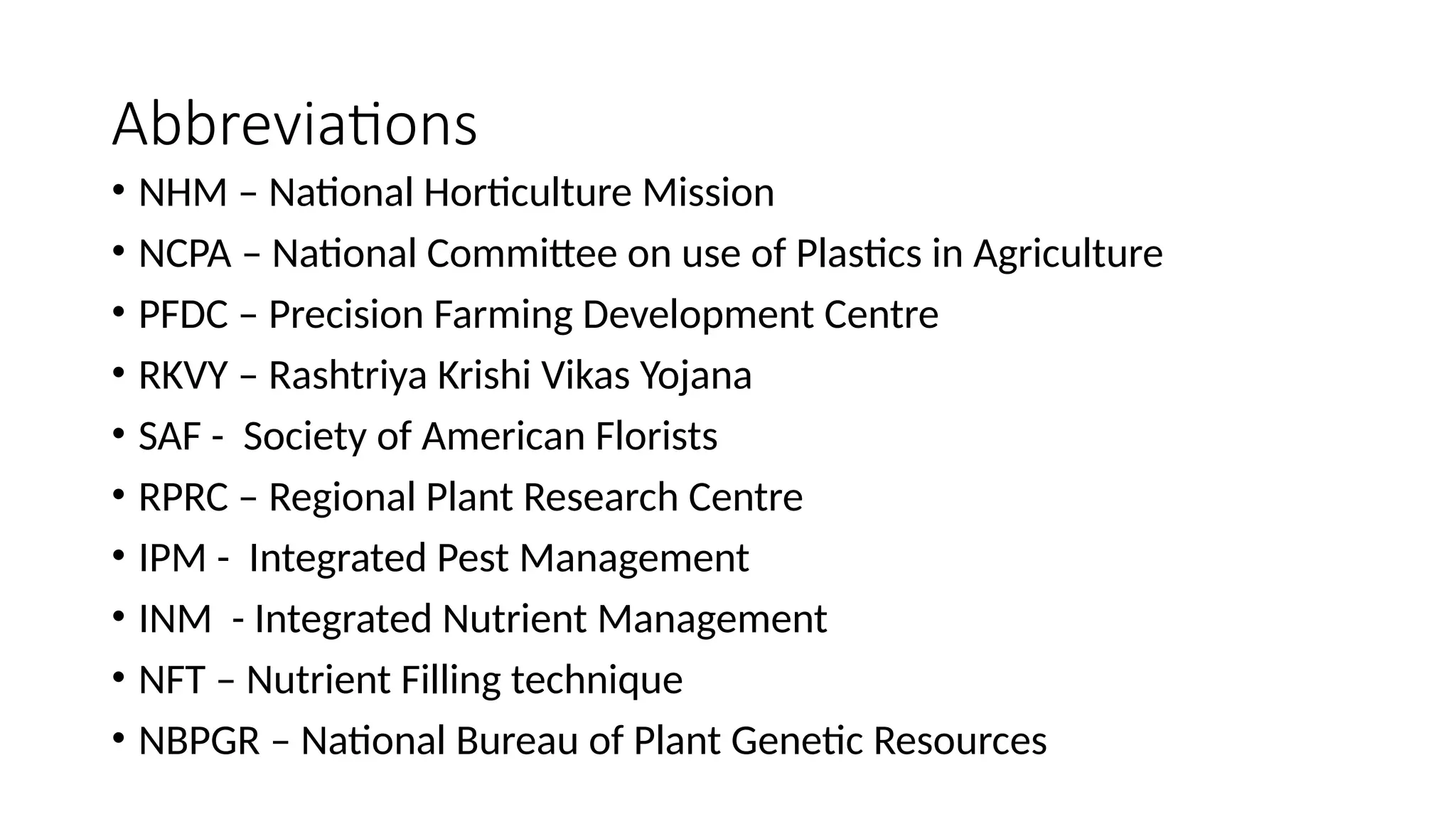
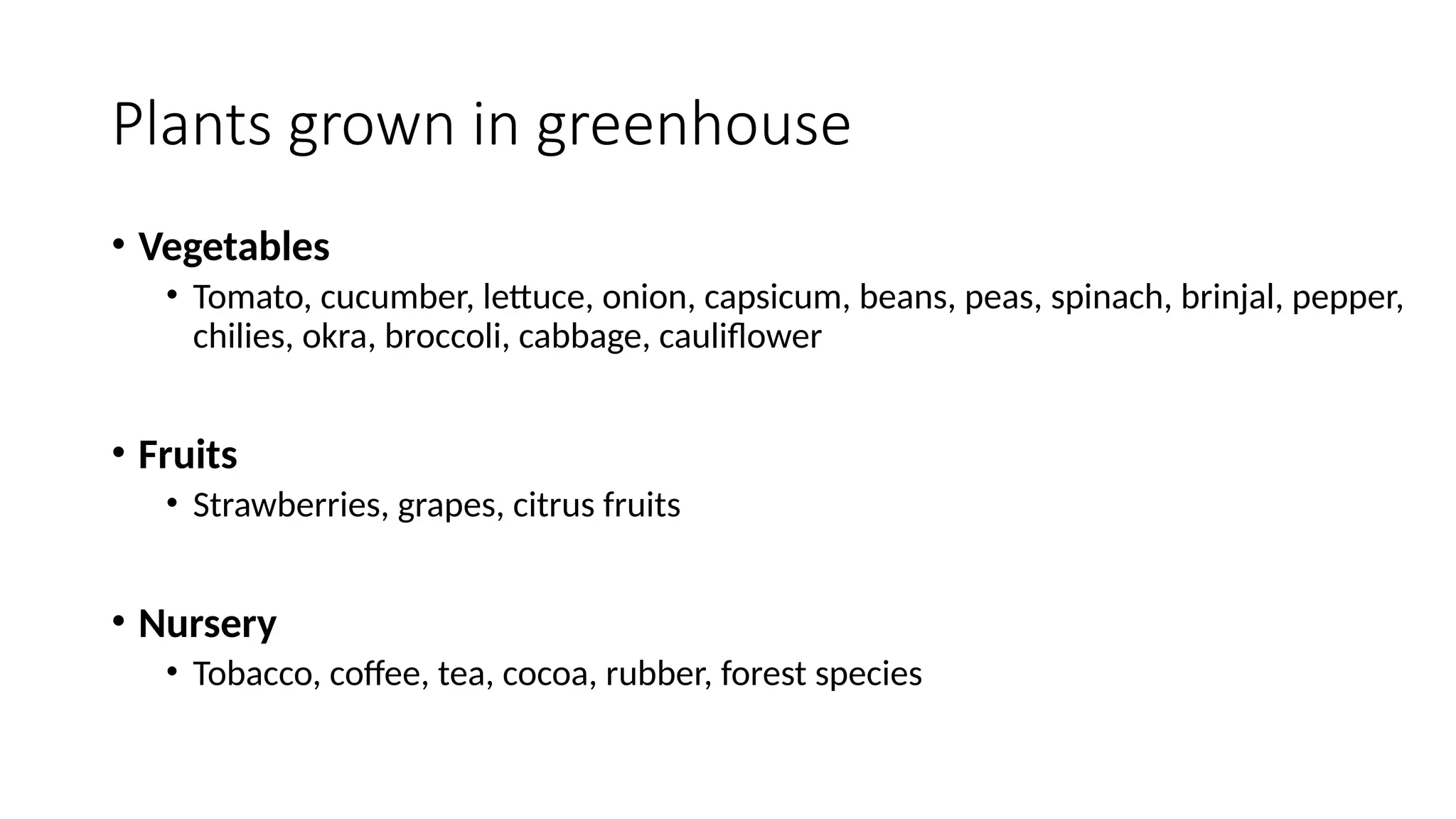
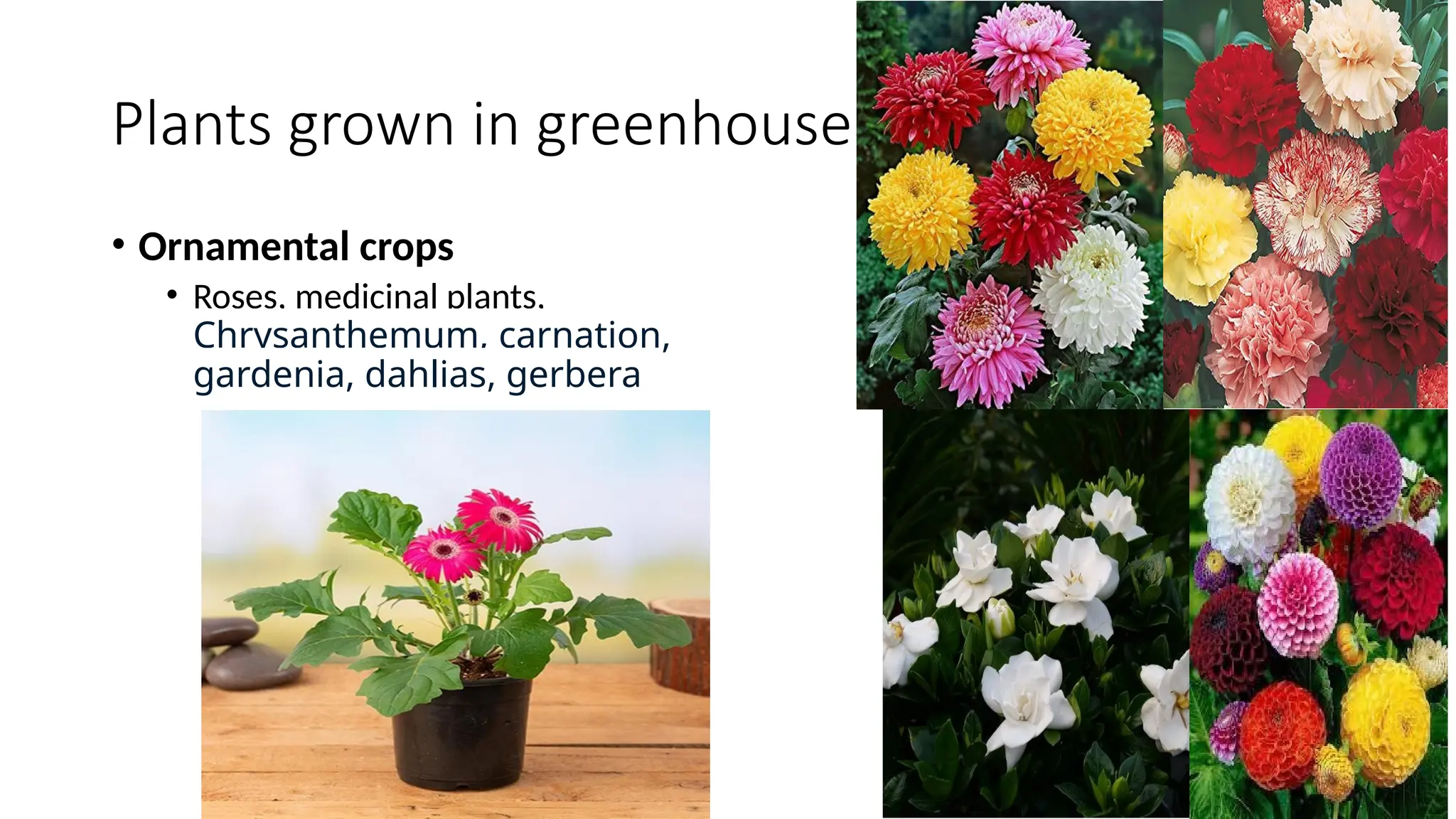
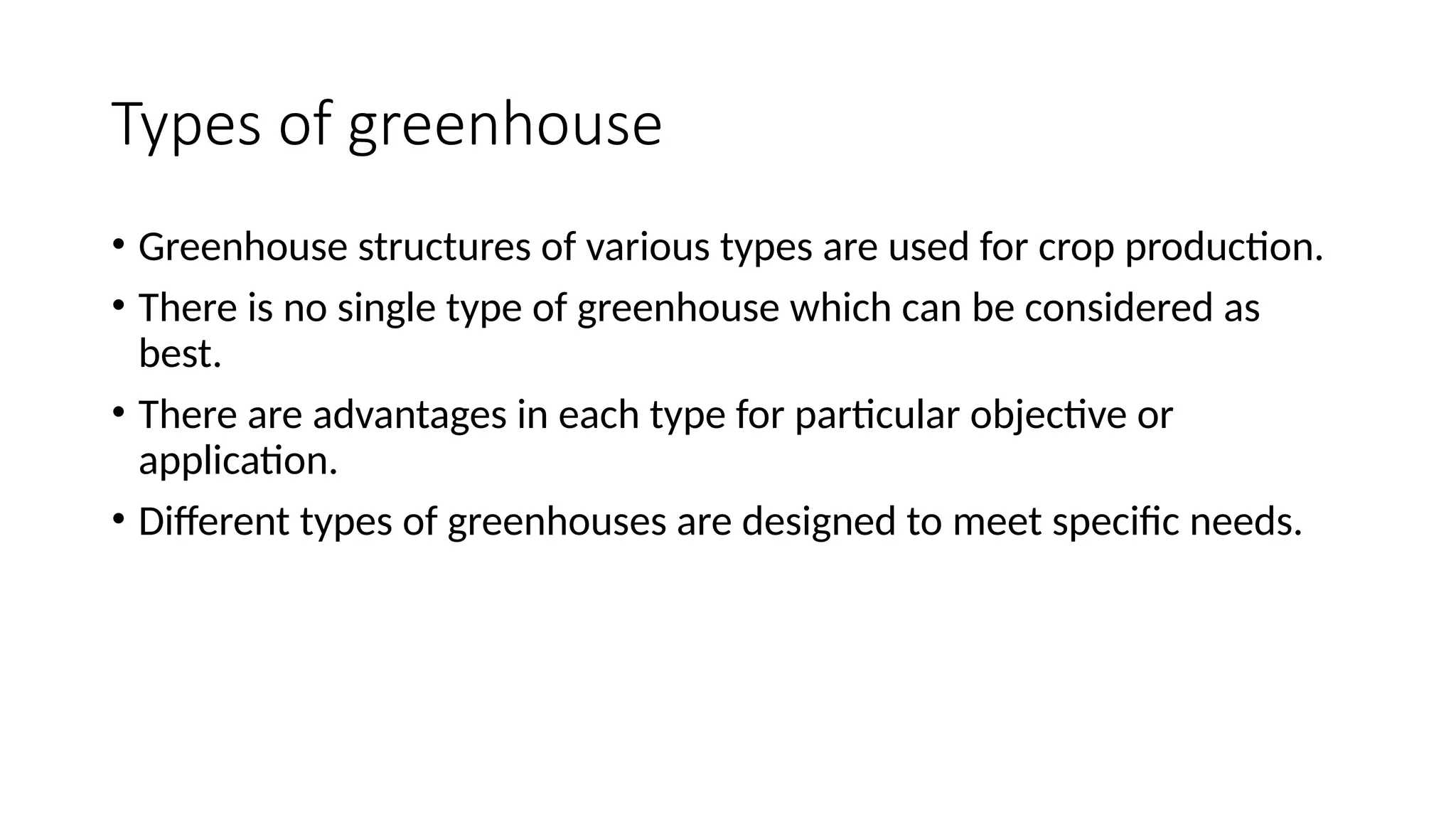
• Ornamental crops
• Roses, medicinal plants,
Chrysanthemum, carnation,
gardenia, dahlias, gerbera
Types of greenhouse
• Greenhouse structures of various types are used for crop production.
• There is no single type of greenhouse which can be considered as
best.
• There are advantages in each type for particular objective or
application.
• Different types of greenhouses are designed to meet specific needs.
Greenhouse types
• Based on shape
• Based on utility
• Based on construction
• Based on covering material
• Based on cost of construction
Based on shape
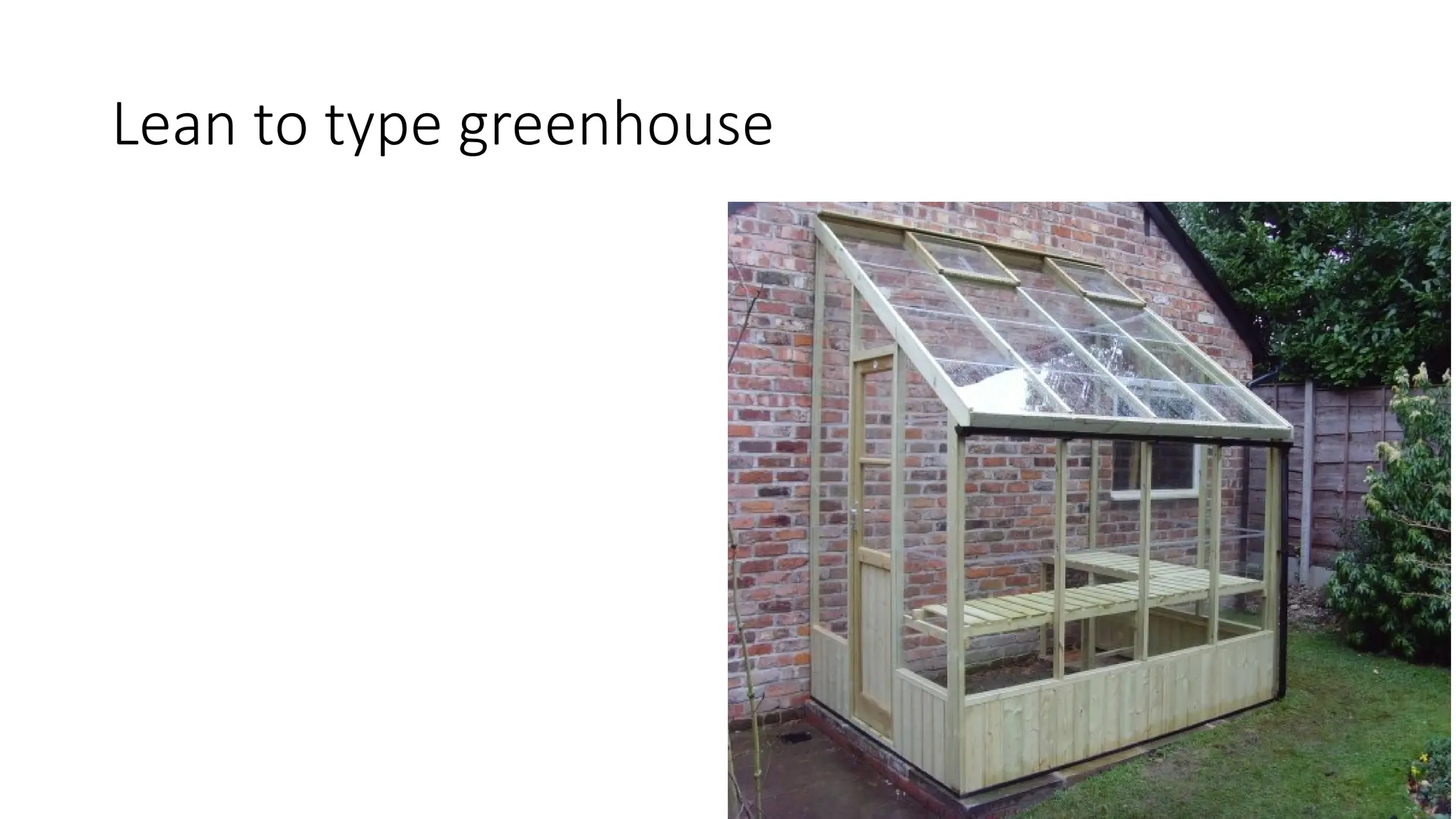
• Lean to type
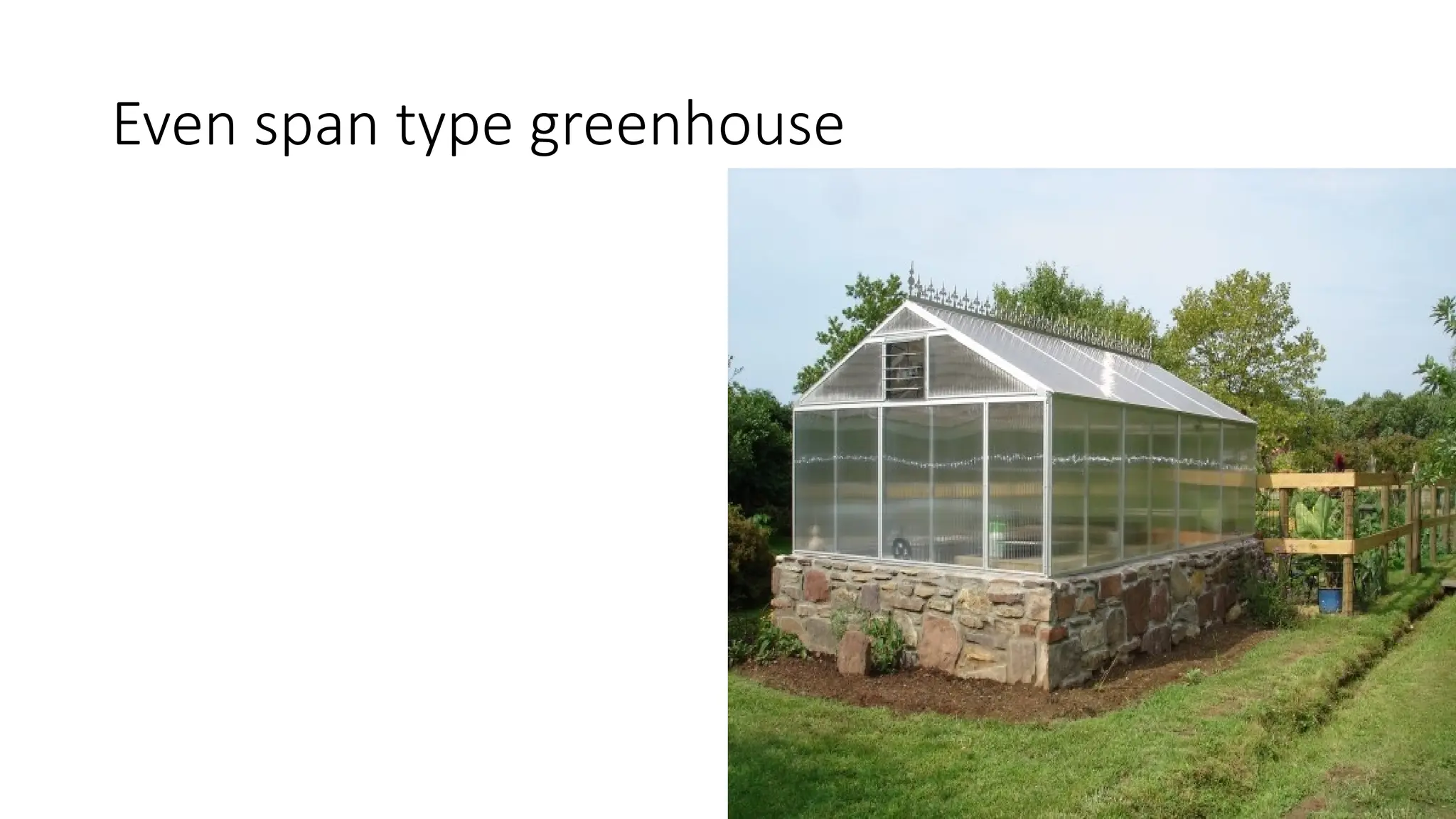
• Even span type
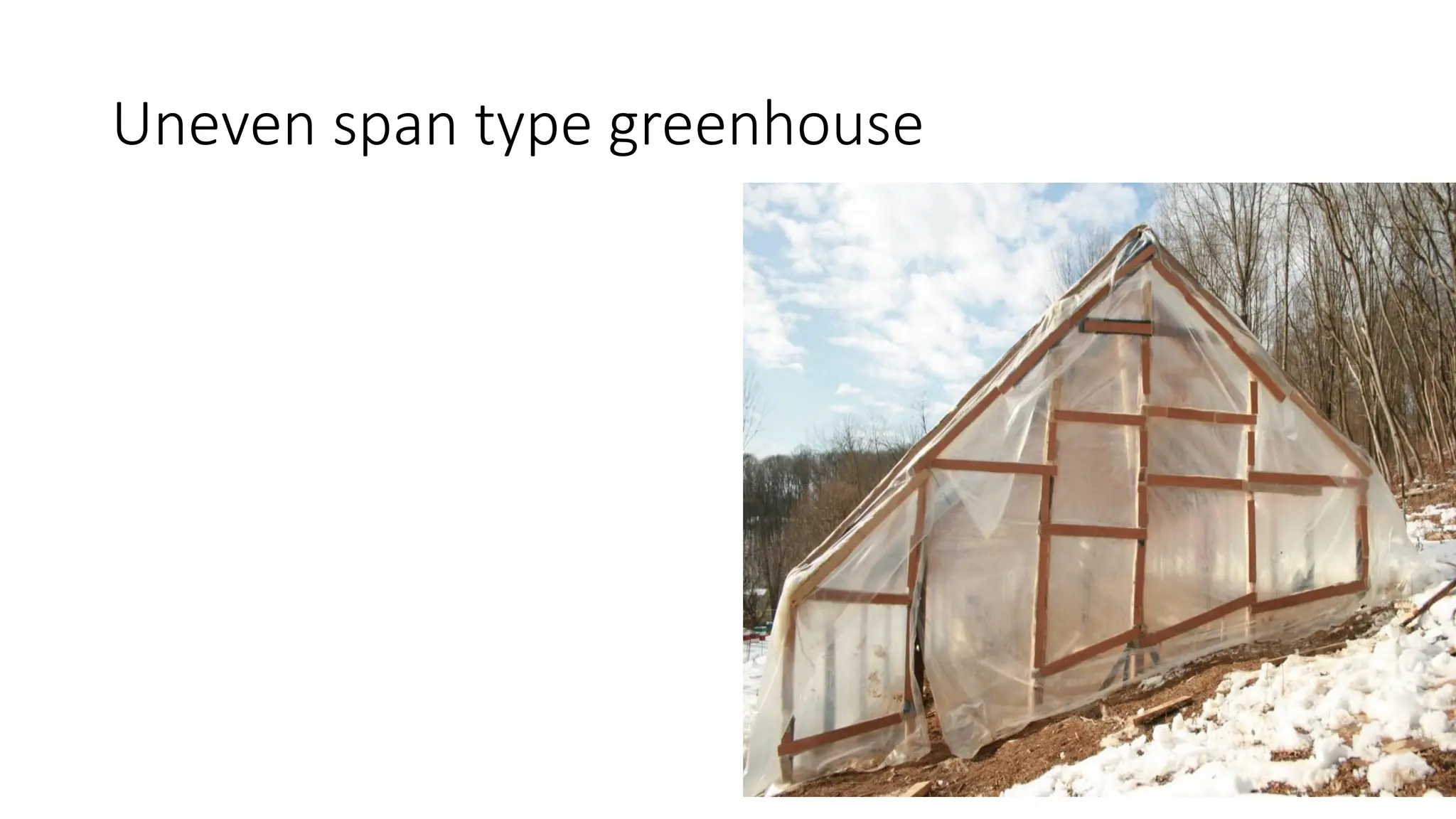
• Uneven span type
• Ridge and furrow type
• Saw tooth type
• Quonset type
Lean to type greenhouse
Even span type greenhouse
Uneven span type greenhouse
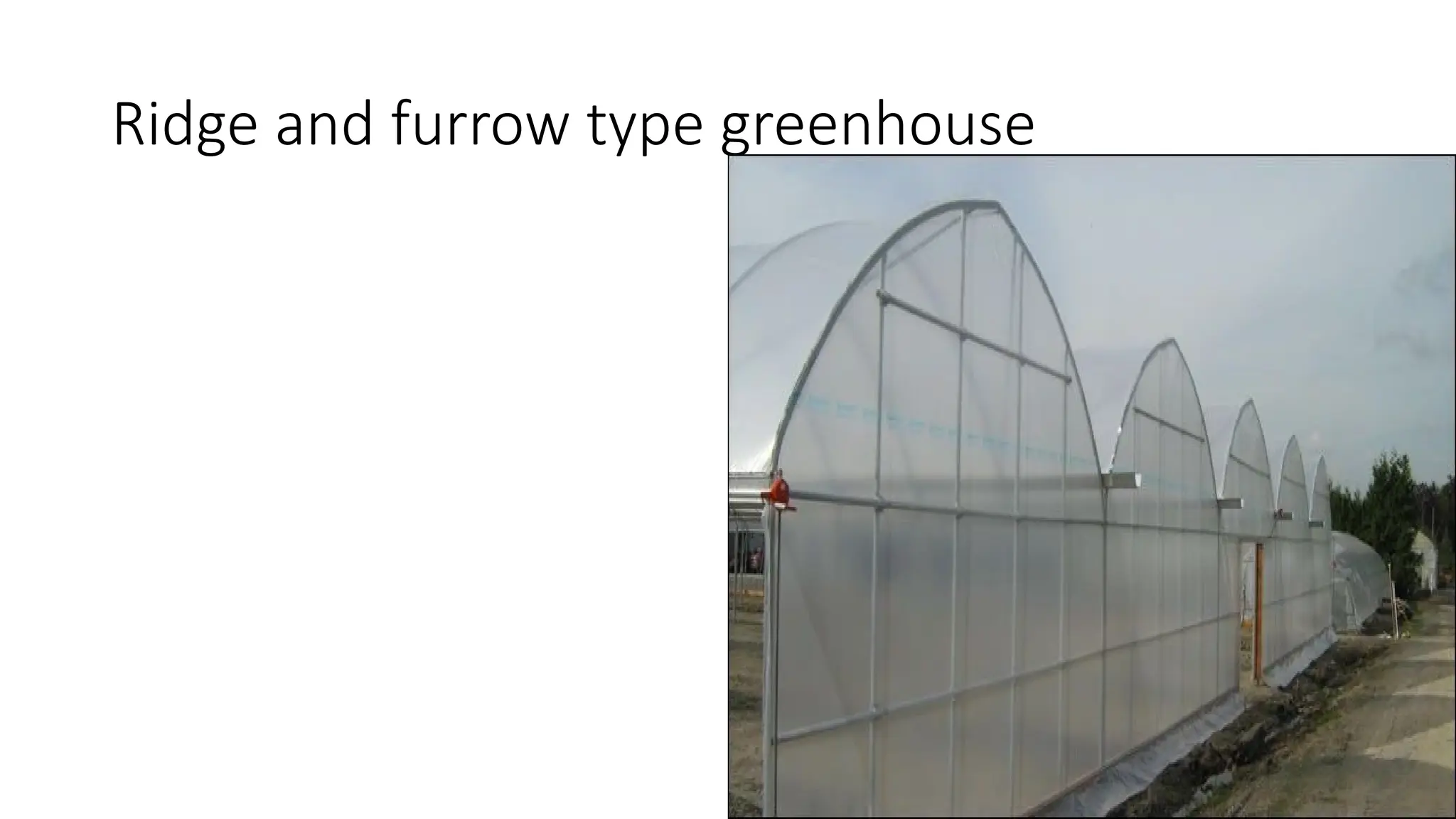
Ridge and furrow type greenhouse
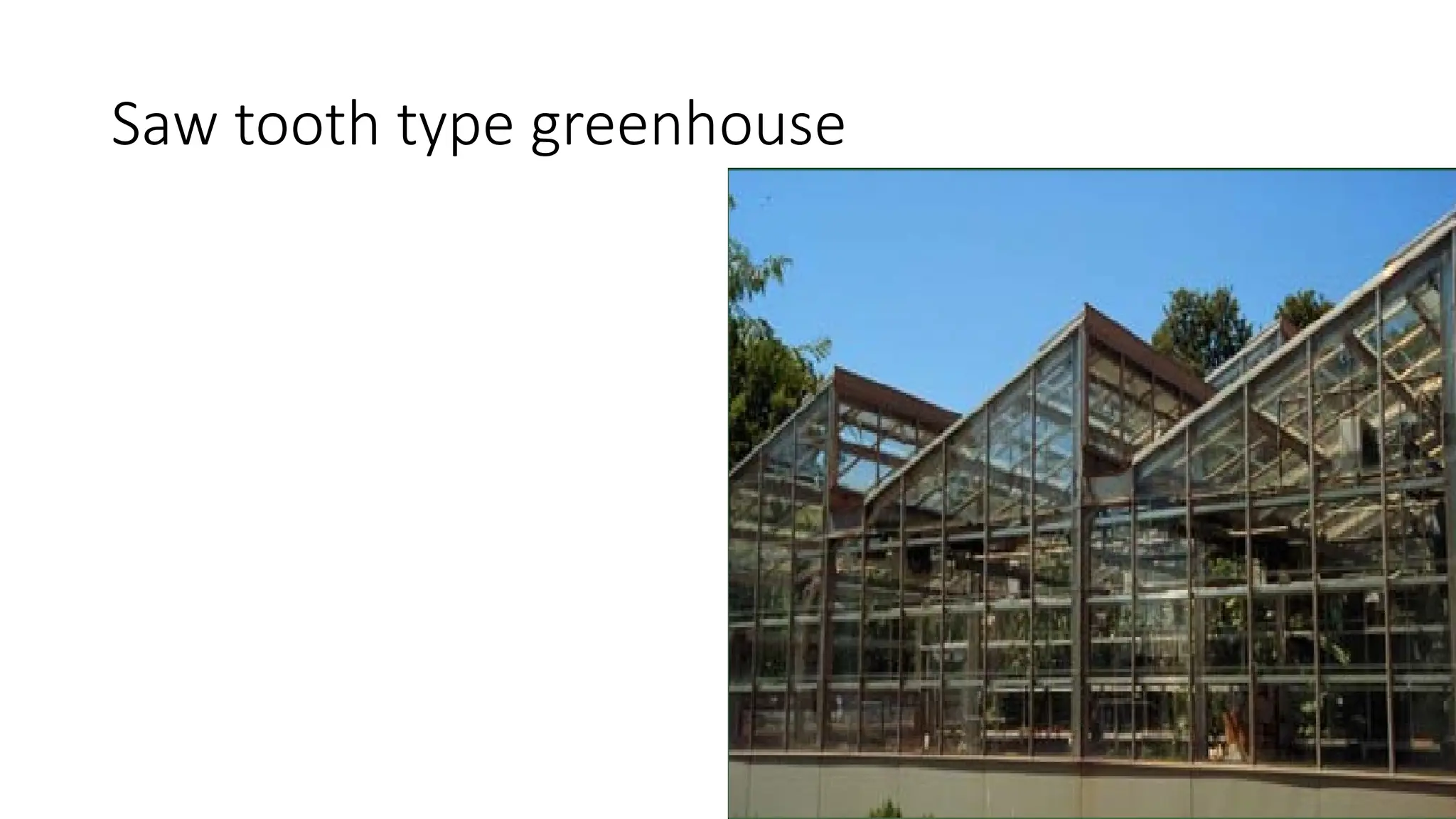
Saw tooth type greenhouse
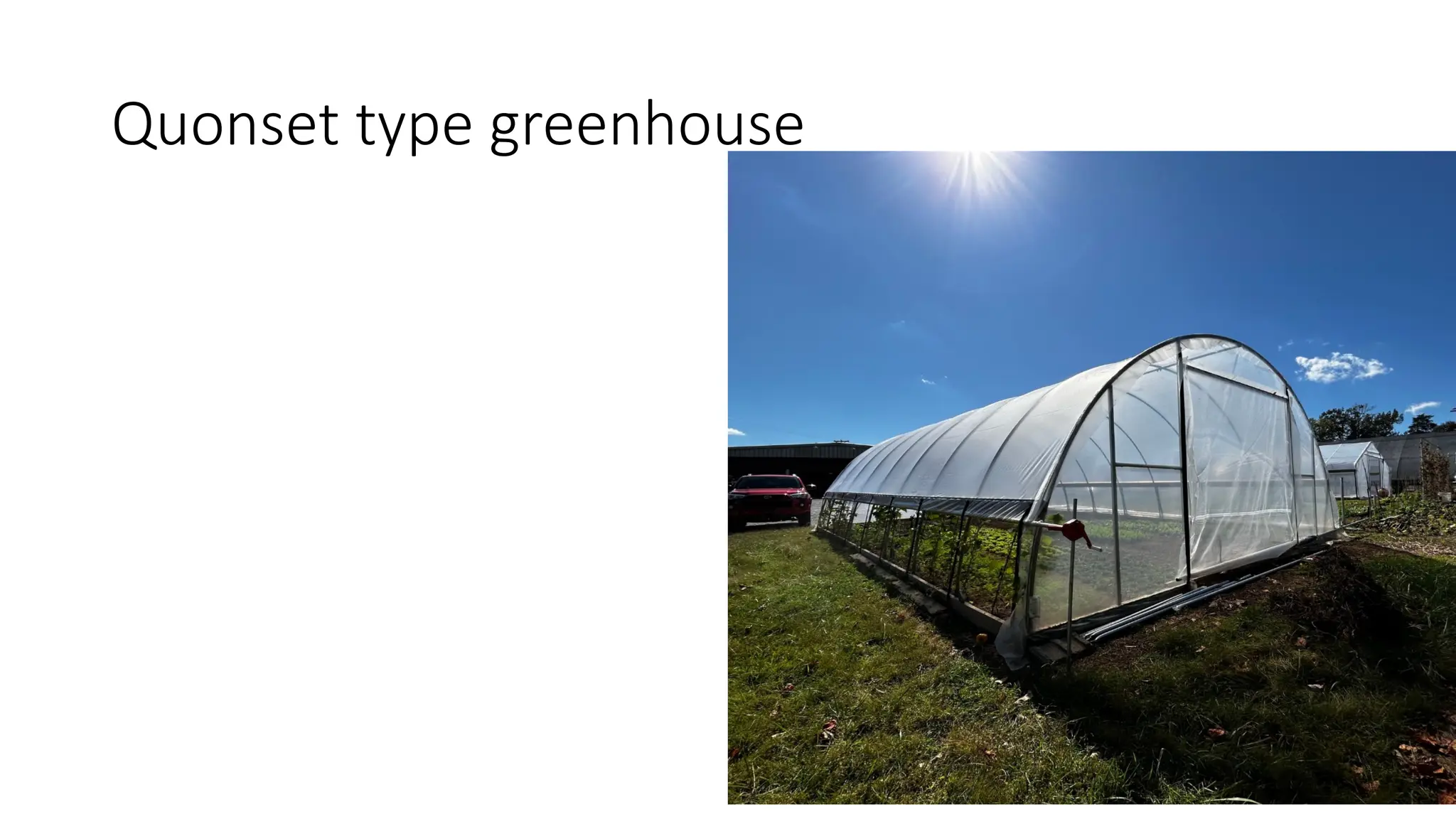
Quonset type greenhouse

protected cultivation.pptx greenhouse part 6th sem

  • 1.
  • 2.
  • 3.
    Greenhouse effect • Solarradiation mainly consists of short wave radiation. • Earth’s atmosphere acts as blanket around earth which allows short wave to pass through and long waves to reflect back. • Short waves reach the earth’s surface, most of which is absorbed by earth surface leading to rise in surface temperature. • The reflected waves converts from short wave to long wave and hence gets reflected back to earth surface from earth atmosphere. • The entrapping of reflected solar radiation from earth surface by atmosphere takes place. • This phenomenon of increase in ambient temperature due to formation of blanket of greenhouse gases is called greenhouse effect.
  • 4.
  • 5.
    Greenhouse technology • Techniqueor science of providing favorable environmental conditions for plant growth. • This uses the phenomenon of greenhouse effect. • Used to protect plants from adverse climatic conditions like wind, cold, precipitation, excessive radiation, excessive temperature, insects and diseases. • This is possible by erecting greenhouse where environmental conditions are modified that one can grow any plant in any place at any time by providing suitable environmental conditions with minimum labour. This technology can improve production of crop throughout the year
  • 6.
  • 7.
    Greenhouse cultivation • Alsocalled as protected cultivation • or surface covered cultivation • Used for • Adverse agro climatic conditions • Growing certain crops round the year • Growing export oriented crops • Raising productivity of crops & increasing economic returns from small holdings.
  • 8.
  • 9.
    Greenhouse • It isa structure with walls and roof made chiefly of transparent material like glass in which plants requiring regulated climatic conditions are grown. • Miniature greenhouse is called cold frame. • Interior of greenhouse exposed to sunlight becomes significantly warmer than external ambient temperature protecting its content in cold weather.
  • 10.
    Greenhouse • Greenhouse alsocalled as • Polyhouse • Glass house • Shade net house • Indo – Israel projects • Mainly aim at construction of sophisticated greenhouses • RKVY projects • Promotion of low cost green houses for vegetable production
  • 11.
    Greenhouse Technical definition • Framedor inflated structure • Covered with transparent or translucent material • Under partial or fully controlled environment • Large enough to permit persons to work within it • For growing crops • To get optimum growth and productivity
  • 12.
    Greenhouse • It utilizessolar radiant energy to grow crops • May have heating, cooling and ventilating equipments for temperature control. • Greenhouse can be constructed in hilly areas and colder climatic conditions. • Highly useful for raising seedlings in nurseries. • For growing shade loving plants and indoor plants in urban areas. • Urban agriculture is also called as roof top garden/ pot culture.
  • 13.
    Abbreviations • NHM –National Horticulture Mission • NCPA – National Committee on use of Plastics in Agriculture • PFDC – Precision Farming Development Centre • RKVY – Rashtriya Krishi Vikas Yojana • SAF - Society of American Florists • RPRC – Regional Plant Research Centre • IPM - Integrated Pest Management • INM - Integrated Nutrient Management • NFT – Nutrient Filling technique • NBPGR – National Bureau of Plant Genetic Resources
  • 14.
    Plants grown ingreenhouse • Vegetables • Tomato, cucumber, lettuce, onion, capsicum, beans, peas, spinach, brinjal, pepper, chilies, okra, broccoli, cabbage, cauliflower • Fruits • Strawberries, grapes, citrus fruits • Nursery • Tobacco, coffee, tea, cocoa, rubber, forest species
  • 15.
    Plants grown ingreenhouse • Ornamental crops • Roses, medicinal plants, Chrysanthemum, carnation, gardenia, dahlias, gerbera
  • 16.
    Types of greenhouse •Greenhouse structures of various types are used for crop production. • There is no single type of greenhouse which can be considered as best. • There are advantages in each type for particular objective or application. • Different types of greenhouses are designed to meet specific needs.
  • 17.
    Greenhouse types • Basedon shape • Based on utility • Based on construction • Based on covering material • Based on cost of construction
  • 18.
    Based on shape •Lean to type • Even span type • Uneven span type • Ridge and furrow type • Saw tooth type • Quonset type
  • 19.
    Lean to typegreenhouse
  • 20.
    Even span typegreenhouse
  • 21.
    Uneven span typegreenhouse
  • 22.
    Ridge and furrowtype greenhouse
  • 23.
    Saw tooth typegreenhouse
  • 24.