Propagation By Seed
It’s Time
To
Grow Your
Dreams
Seed
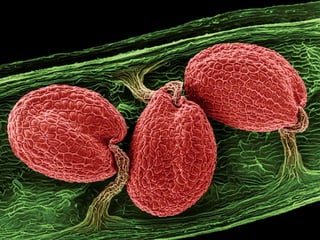
● Most seeds are composed of three major parts: embryo, endosperm
(food storage) tissue, and a seed coat (protective tissue)
● The embryo is a miniature plant in a resting (dormant) state. Most
seeds contain a built-in food supply called the endosperm. The
protective outer covering of a seed is called the seed coat.
● It protects seeds from mechanical injury and from diseases and
insects. Also, the seed coat usually prevents water from entering the
seed until time to germinate. The seed coat in many cases allows
seeds to be stored for extended periods.
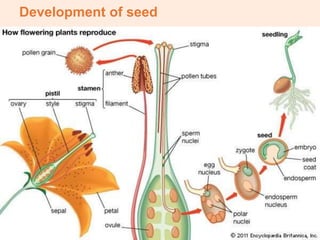
Development of seed
Germination
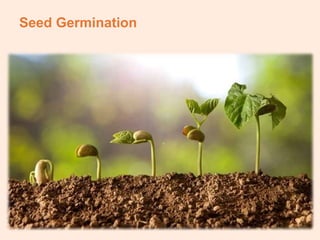
● Germination is the resumption of active embryo growth after a
dormant period. Three conditions must be satisfied for a seed to
germinate:
● The seed must be viable; that is, the embryo must be alive and
capable of germination.
● Internal conditions of the seed must be favorable for germination; that
is, any physical, chemical, or physiological barriers to germination
must have disappeared or must have been removed by the
propagator.
● The seed must be subjected to appropriate environmental conditions,
including water (moisture), proper temperature, oxygen, and, for
some species, light
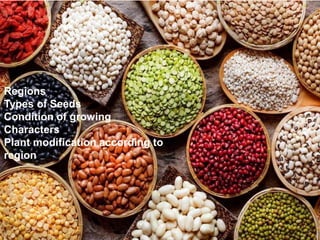
Regions
Types of Seeds
Condition of growing
Characters
Plant modification according to
region
Factors affect Germination
● Water
● Light
● Oxygen
● temperature
Seed Germination
Seed Dormancy
● Viable seeds that do not germinate are dormant. Dormancy
can be regulated by the environment or by the seed itself. If a
seed is not exposed to sufficient moisture, proper temperature,
oxygen, or for some species, light, the seed will not germinate.
In this case, the seed's dormancy is caused by unfavorable
environmental conditions.
● Some seeds may not germinate because of some inhibitory
factor of the seed itself. This kind of dormancy consists of two
general types:
● (a) seed coat (or external) dormancy and
● (b) internal (endogenous) dormancy.
Growing Plants From seeds
● Media
● Containers
● Sterilizing container
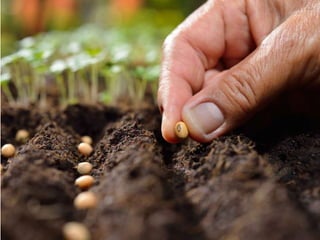
● Sowing seed
● Water and light
● Hardening of plants
● transplantation
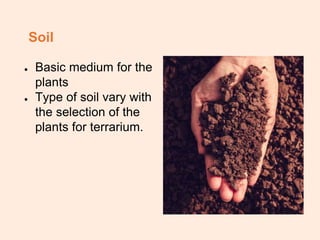
Soil
● Basic medium for the
plants
● Type of soil vary with
the selection of the
plants for terrarium.
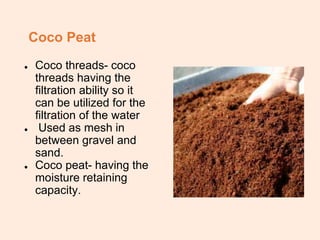
Coco Peat
● Coco threads- coco
threads having the
filtration ability so it
can be utilized for the
filtration of the water
● Used as mesh in
between gravel and
sand.
● Coco peat- having the
moisture retaining
capacity.
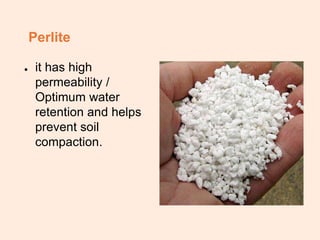
Perlite
● it has high
permeability /
Optimum water
retention and helps
prevent soil
compaction.
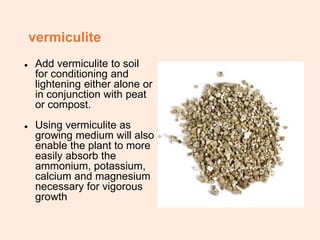
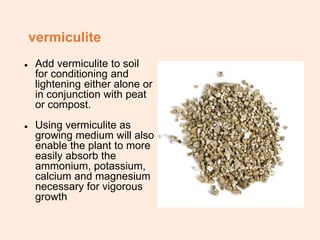
vermiculite
● Add vermiculite to soil
for conditioning and
lightening either alone or
in conjunction with peat
or compost.
● Using vermiculite as
growing medium will also
enable the plant to more
easily absorb the
ammonium, potassium,
calcium and magnesium
necessary for vigorous
growth
vermiculite
● Add vermiculite to soil
for conditioning and
lightening either alone or
in conjunction with peat
or compost.
● Using vermiculite as
growing medium will also
enable the plant to more
easily absorb the
ammonium, potassium,
calcium and magnesium
necessary for vigorous
growth
We do the lot
Call Now
7030616162
GrowGreenWith
Greeniti
For all your gardening need call and one of our customer service
staff will assist you with your enquiry

propagation by seed explained sexual propagation.pptx

  • 1.
  • 2.
  • 3.
    Seed ● Most seedsare composed of three major parts: embryo, endosperm (food storage) tissue, and a seed coat (protective tissue) ● The embryo is a miniature plant in a resting (dormant) state. Most seeds contain a built-in food supply called the endosperm. The protective outer covering of a seed is called the seed coat. ● It protects seeds from mechanical injury and from diseases and insects. Also, the seed coat usually prevents water from entering the seed until time to germinate. The seed coat in many cases allows seeds to be stored for extended periods.
  • 4.
  • 6.
    Germination ● Germination isthe resumption of active embryo growth after a dormant period. Three conditions must be satisfied for a seed to germinate: ● The seed must be viable; that is, the embryo must be alive and capable of germination. ● Internal conditions of the seed must be favorable for germination; that is, any physical, chemical, or physiological barriers to germination must have disappeared or must have been removed by the propagator. ● The seed must be subjected to appropriate environmental conditions, including water (moisture), proper temperature, oxygen, and, for some species, light
  • 8.
    Regions Types of Seeds Conditionof growing Characters Plant modification according to region
  • 9.
    Factors affect Germination ●Water ● Light ● Oxygen ● temperature
  • 10.
  • 11.
    Seed Dormancy ● Viableseeds that do not germinate are dormant. Dormancy can be regulated by the environment or by the seed itself. If a seed is not exposed to sufficient moisture, proper temperature, oxygen, or for some species, light, the seed will not germinate. In this case, the seed's dormancy is caused by unfavorable environmental conditions. ● Some seeds may not germinate because of some inhibitory factor of the seed itself. This kind of dormancy consists of two general types: ● (a) seed coat (or external) dormancy and ● (b) internal (endogenous) dormancy.
  • 12.
    Growing Plants Fromseeds ● Media ● Containers ● Sterilizing container ● Sowing seed ● Water and light ● Hardening of plants ● transplantation
  • 13.
    Soil ● Basic mediumfor the plants ● Type of soil vary with the selection of the plants for terrarium.
  • 14.
    Coco Peat ● Cocothreads- coco threads having the filtration ability so it can be utilized for the filtration of the water ● Used as mesh in between gravel and sand. ● Coco peat- having the moisture retaining capacity.
  • 15.
    Perlite ● it hashigh permeability / Optimum water retention and helps prevent soil compaction.
  • 16.
    vermiculite ● Add vermiculiteto soil for conditioning and lightening either alone or in conjunction with peat or compost. ● Using vermiculite as growing medium will also enable the plant to more easily absorb the ammonium, potassium, calcium and magnesium necessary for vigorous growth
  • 17.
    vermiculite ● Add vermiculiteto soil for conditioning and lightening either alone or in conjunction with peat or compost. ● Using vermiculite as growing medium will also enable the plant to more easily absorb the ammonium, potassium, calcium and magnesium necessary for vigorous growth
  • 18.
    We do thelot Call Now 7030616162 GrowGreenWith Greeniti For all your gardening need call and one of our customer service staff will assist you with your enquiry