BIOSYNTHESIS OF CuO/Fe2O3
NANOCOMPOSITE USING Raphanus Sativus
AND ITS ADSORPTION STUDIES
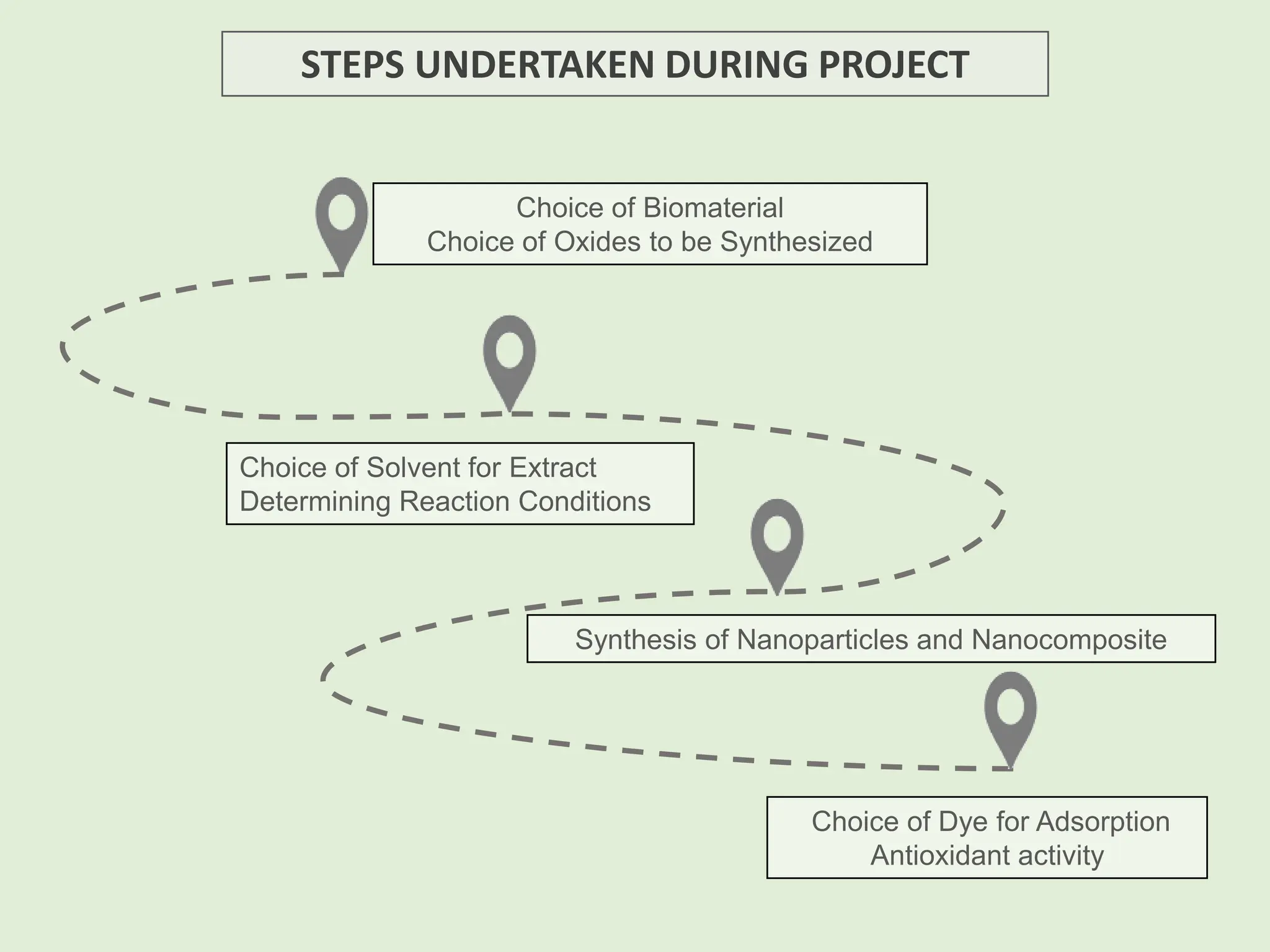
STEPS UNDERTAKEN DURING PROJECT
Choice of Biomaterial
Choice of Oxides to be Synthesized
Choice of Solvent for Extract
Determining Reaction Conditions
Synthesis of Nanoparticles and Nanocomposite
Choice of Dye for Adsorption
Antioxidant activity
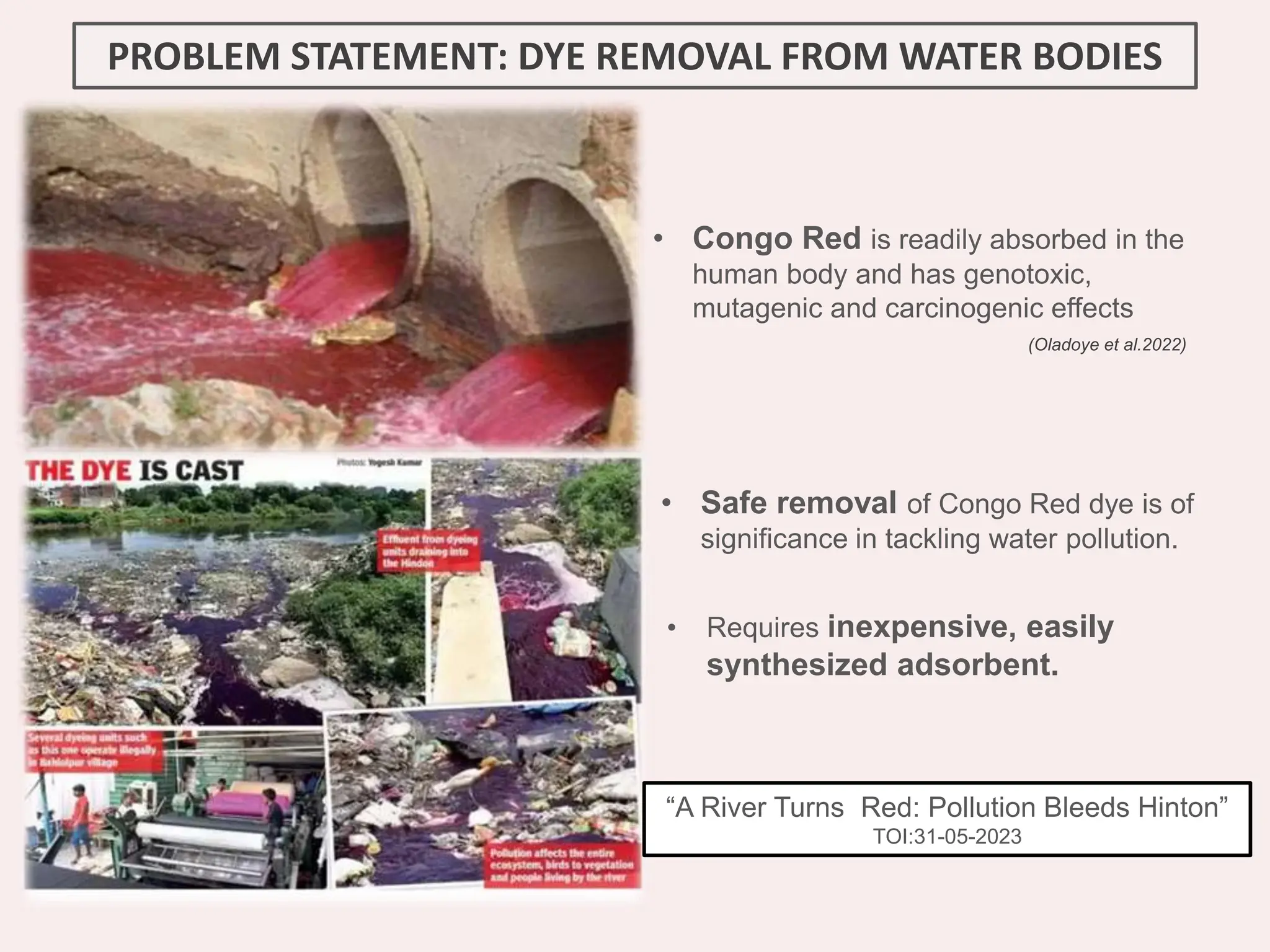
PROBLEM STATEMENT: DYE REMOVAL FROM WATER BODIES
• Congo Red is readily absorbed in the
human body and has genotoxic,
mutagenic and carcinogenic effects
(Oladoye et al.2022)
“A River Turns Red: Pollution Bleeds Hinton”
TOI:31-05-2023
• Safe removal of Congo Red dye is of
significance in tackling water pollution.
• Requires inexpensive, easily
synthesized adsorbent.
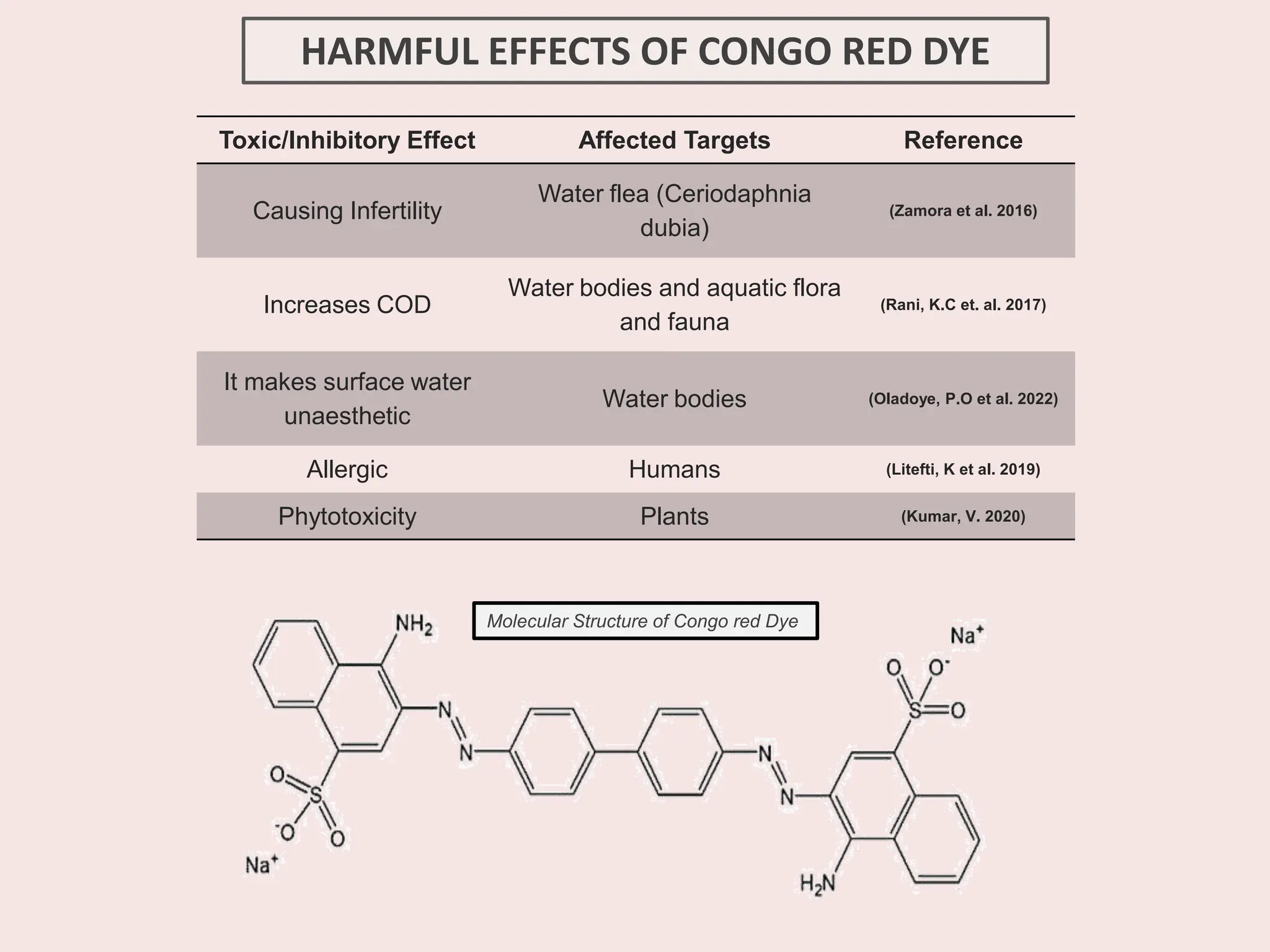
HARMFUL EFFECTS OF CONGO RED DYE
Toxic/Inhibitory Effect Affected Targets Reference
Causing Infertility
Water flea (Ceriodaphnia
dubia)
(Zamora et al. 2016)
Increases COD
Water bodies and aquatic flora
and fauna
(Rani, K.C et. al. 2017)
It makes surface water
unaesthetic
Water bodies (Oladoye, P.O et al. 2022)
Allergic Humans (Litefti, K et al. 2019)
Phytotoxicity Plants (Kumar, V. 2020)
Molecular Structure of Congo red Dye
PROBLEM STATEMENT: NEED FOR SAFE ANTIOXIDANTS
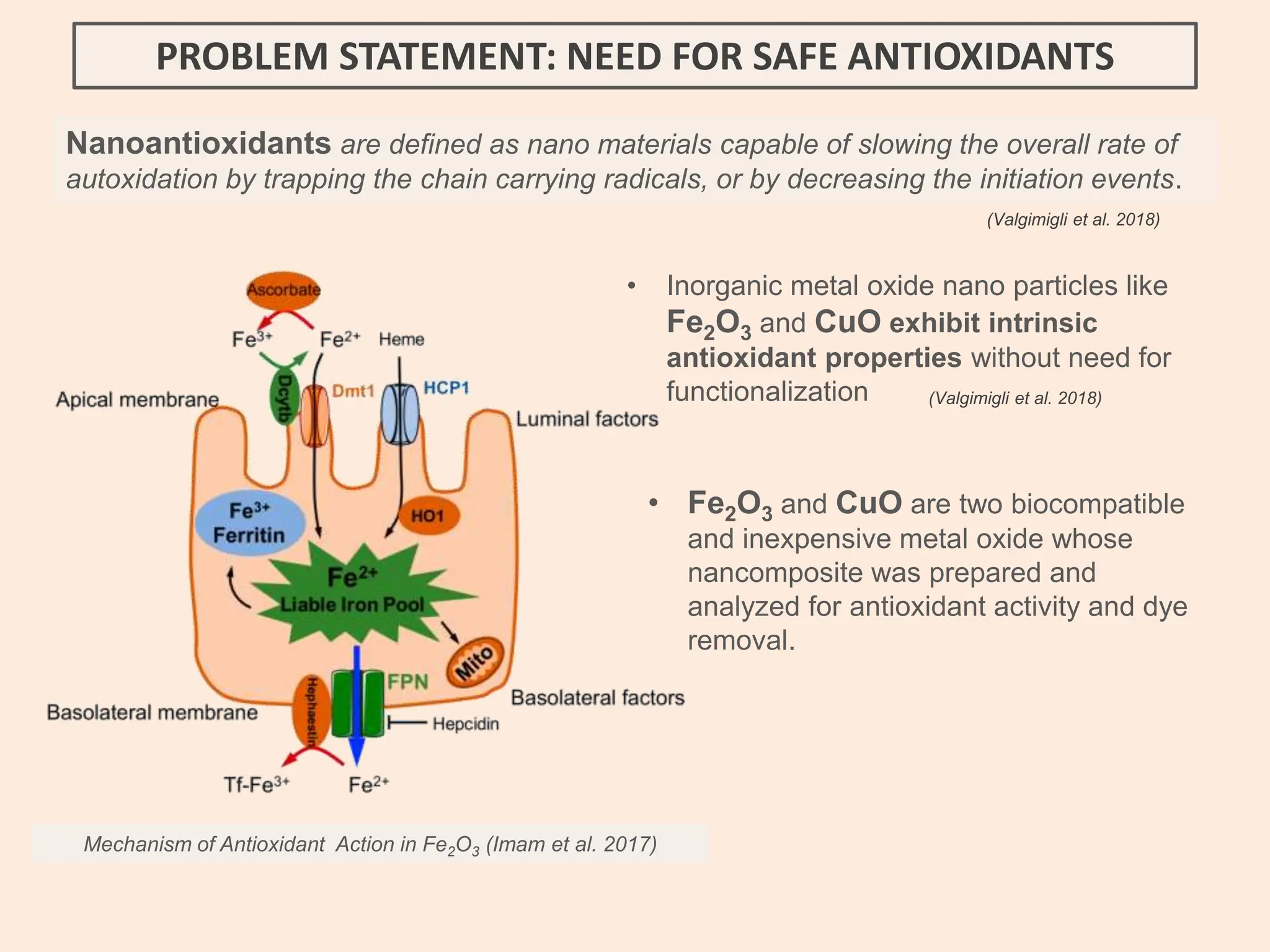
Nanoantioxidants are defined as nano materials capable of slowing the overall rate of
autoxidation by trapping the chain carrying radicals, or by decreasing the initiation events.
• Inorganic metal oxide nano particles like
Fe2O3 and CuO exhibit intrinsic
antioxidant properties without need for
functionalization (Valgimigli et al. 2018)
(Valgimigli et al. 2018)
• Fe2O3 and CuO are two biocompatible
and inexpensive metal oxide whose
nancomposite was prepared and
analyzed for antioxidant activity and dye
removal.
Mechanism of Antioxidant Action in Fe2O3 (Imam et al. 2017)
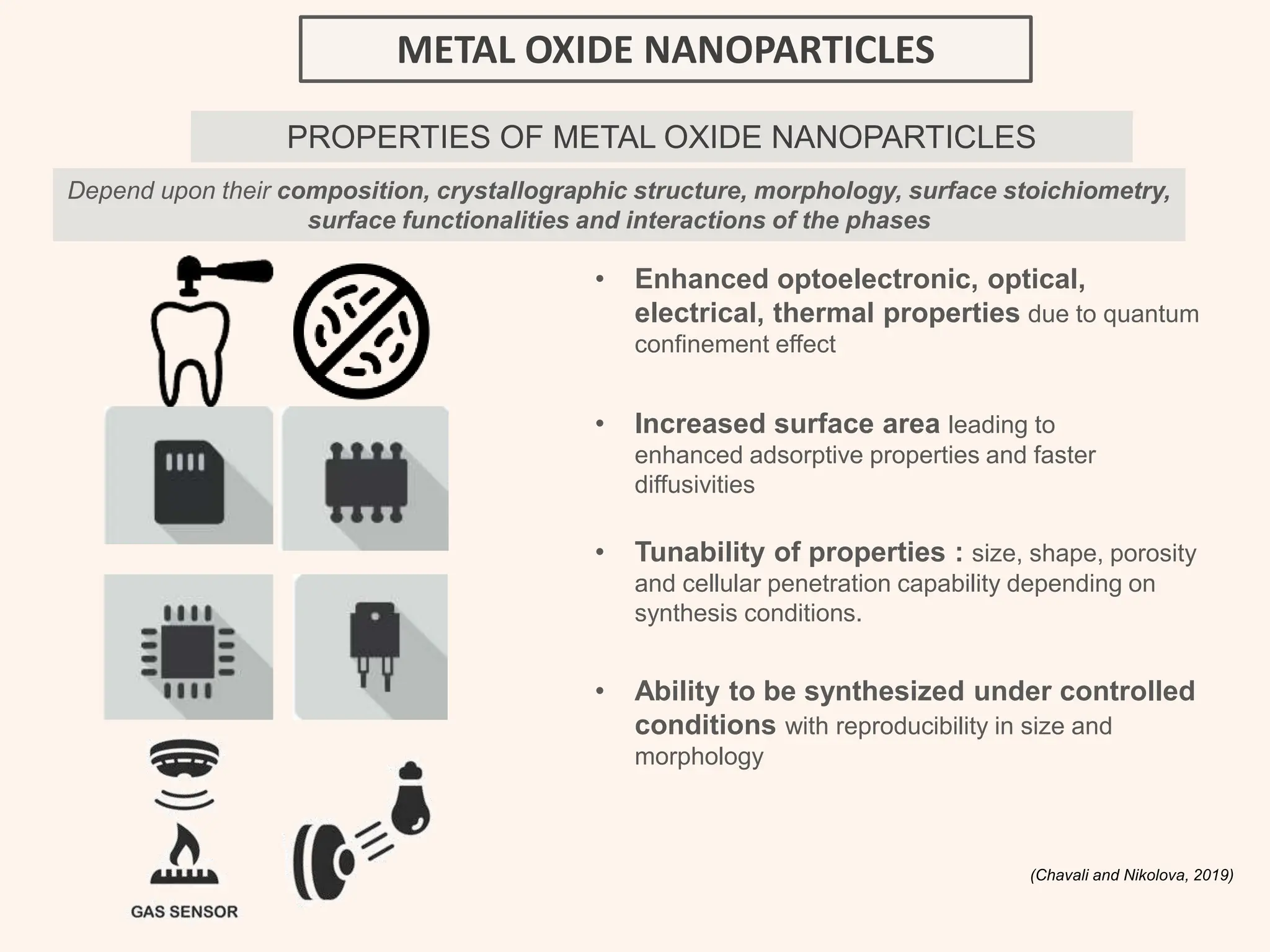
METAL OXIDE NANOPARTICLES
PROPERTIES OF METAL OXIDE NANOPARTICLES
• Increased surface area leading to
enhanced adsorptive properties and faster
diffusivities
• Enhanced optoelectronic, optical,
electrical, thermal properties due to quantum
confinement effect
• Tunability of properties : size, shape, porosity
and cellular penetration capability depending on
synthesis conditions.
• Ability to be synthesized under controlled
conditions with reproducibility in size and
morphology
Depend upon their composition, crystallographic structure, morphology, surface stoichiometry,
surface functionalities and interactions of the phases
(Chavali and Nikolova, 2019)
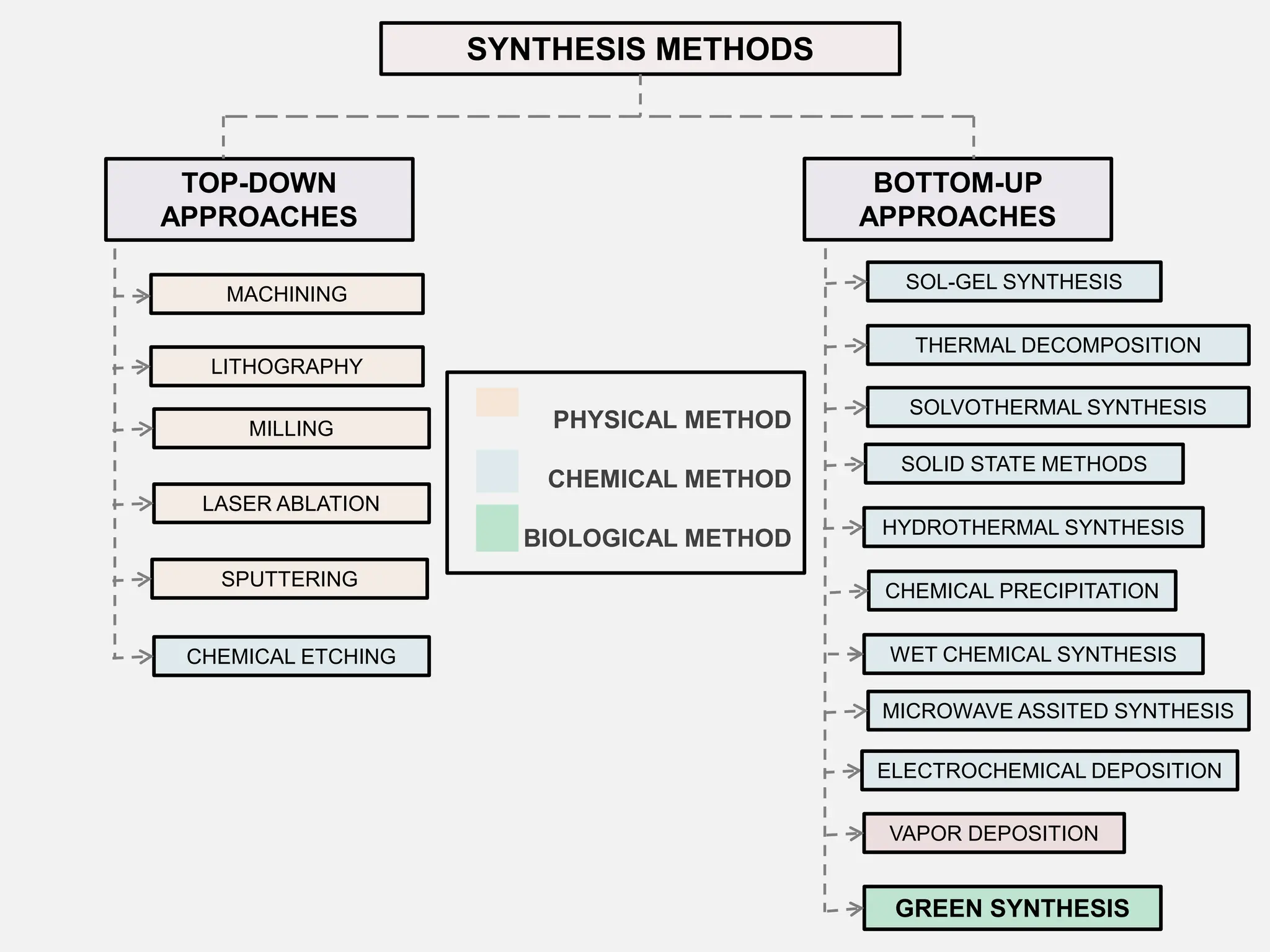
TOP-DOWN
APPROACHES
BOTTOM-UP
APPROACHES
SYNTHESIS METHODS
HYDROTHERMAL SYNTHESIS
SOLVOTHERMAL SYNTHESIS
SOL-GEL SYNTHESIS
SOLID STATE METHODS
THERMAL DECOMPOSITION
MICROWAVE ASSITED SYNTHESIS
WET CHEMICAL SYNTHESIS
CHEMICAL PRECIPITATION
GREEN SYNTHESIS
VAPOR DEPOSITION
ELECTROCHEMICAL DEPOSITION
MILLING
MACHINING
LITHOGRAPHY
LASER ABLATION
SPUTTERING
CHEMICAL ETCHING
PHYSICAL METHOD
CHEMICAL METHOD
BIOLOGICAL METHOD
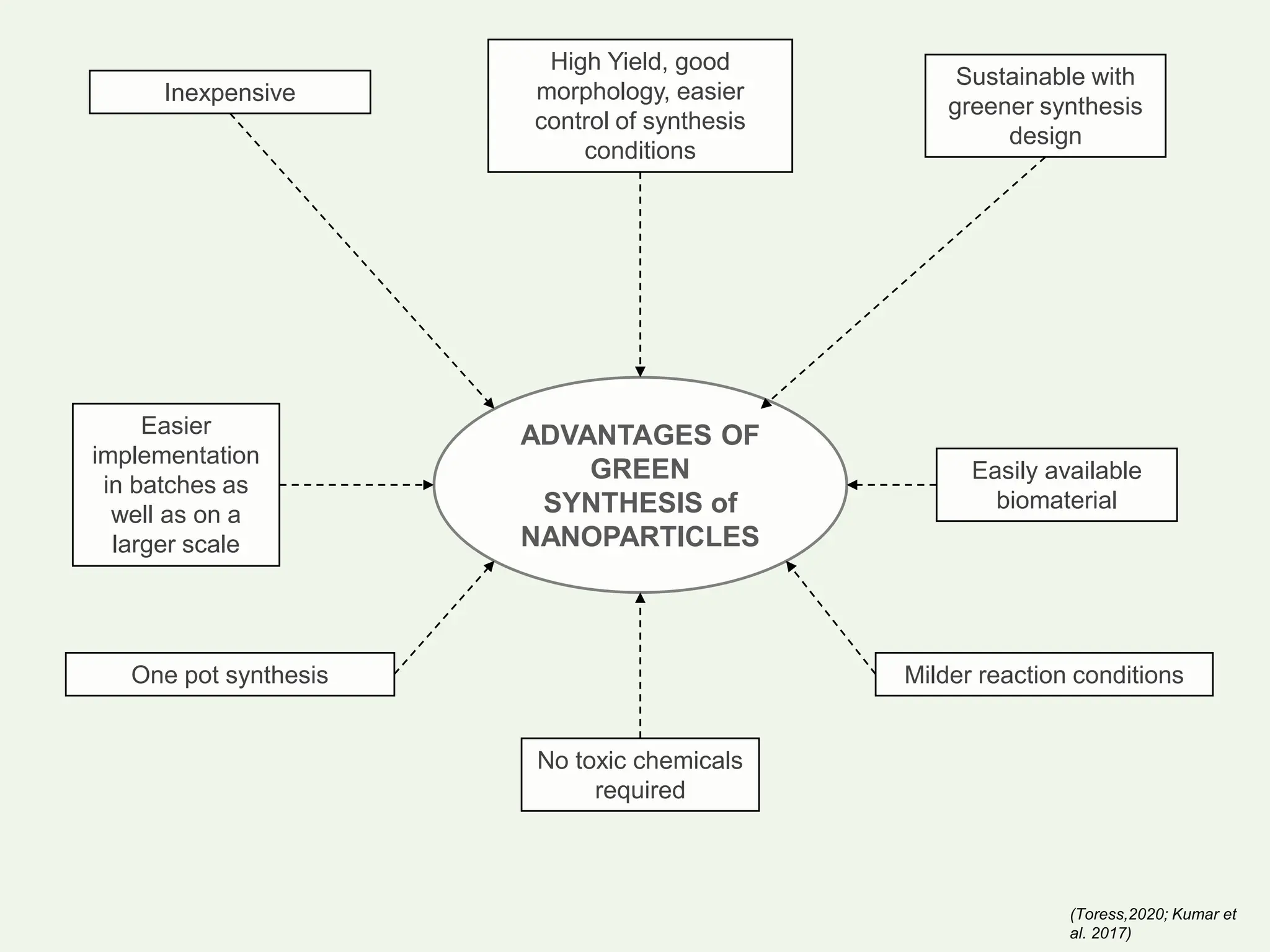
ADVANTAGES OF
GREEN
SYNTHESIS of
NANOPARTICLES
Inexpensive
High Yield, good
morphology, easier
control of synthesis
conditions
No toxic chemicals
required
Milder reaction conditions
One pot synthesis
Easier
implementation
in batches as
well as on a
larger scale
Easily available
biomaterial
Sustainable with
greener synthesis
design
(Toress,2020; Kumar et
al. 2017)
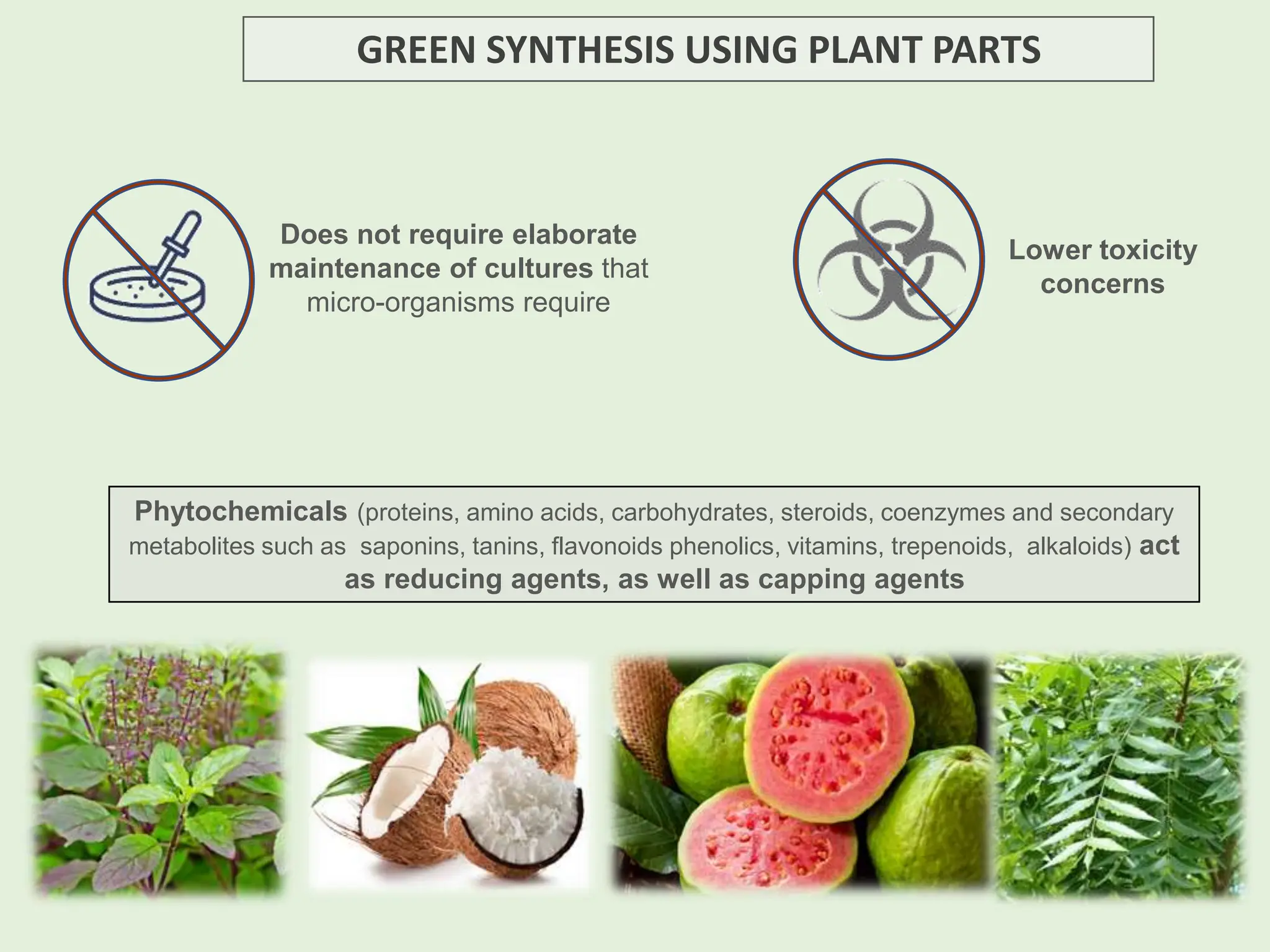
GREEN SYNTHESIS USING PLANT PARTS
Does not require elaborate
maintenance of cultures that
micro-organisms require
Lower toxicity
concerns
Phytochemicals (proteins, amino acids, carbohydrates, steroids, coenzymes and secondary
metabolites such as saponins, tanins, flavonoids phenolics, vitamins, trepenoids, alkaloids) act
as reducing agents, as well as capping agents
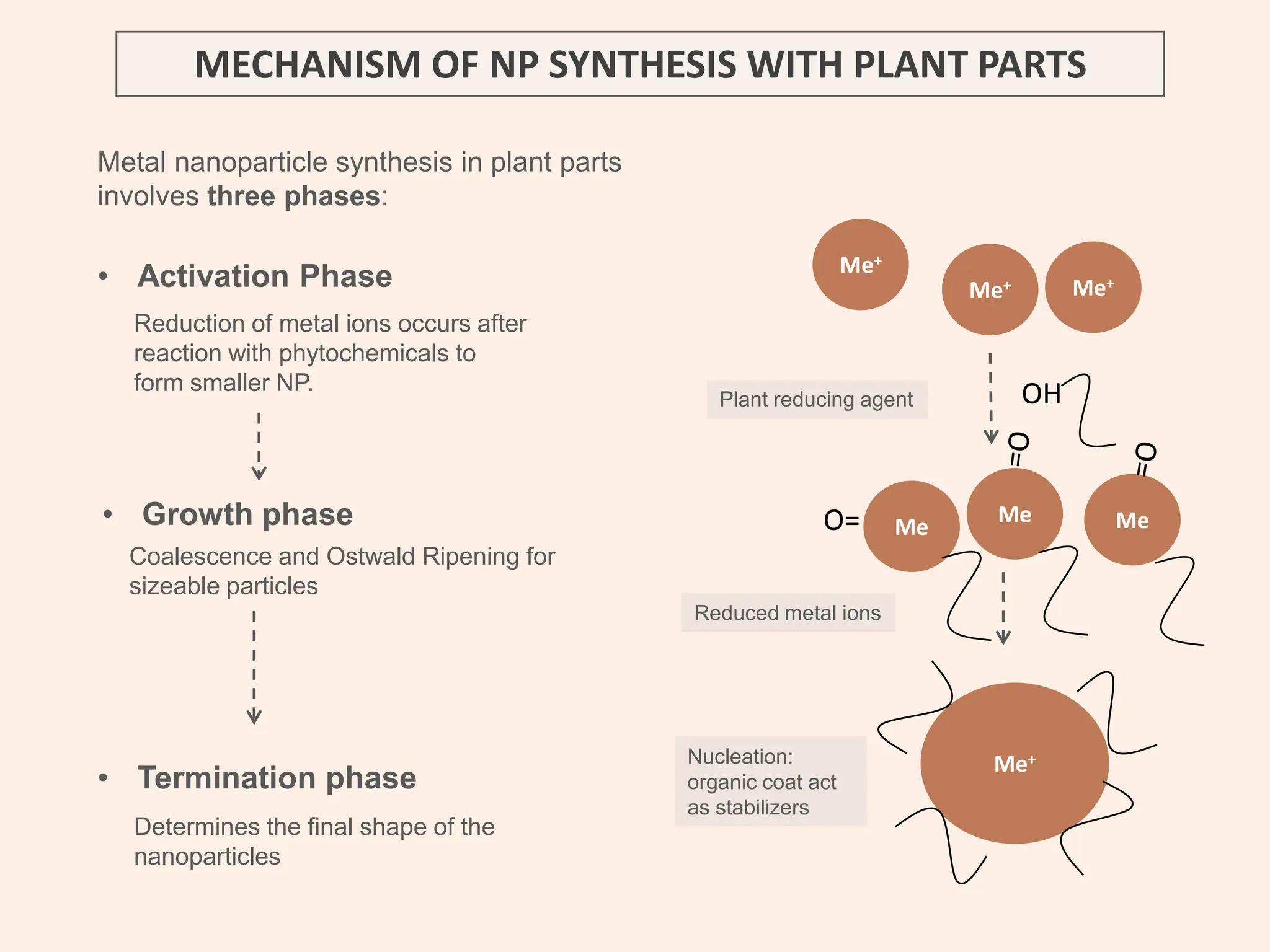
Me+
Me+
Me+
• Growth phase
• Activation Phase
• Termination phase
Metal nanoparticle synthesis in plant parts
involves three phases:
MECHANISM OF NP SYNTHESIS WITH PLANT PARTS
Reduction of metal ions occurs after
reaction with phytochemicals to
form smaller NP.
OH
Me
Me Me
O=
Me+
Coalescence and Ostwald Ripening for
sizeable particles
Determines the final shape of the
nanoparticles
Plant reducing agent
Nucleation:
organic coat act
as stabilizers
Reduced metal ions
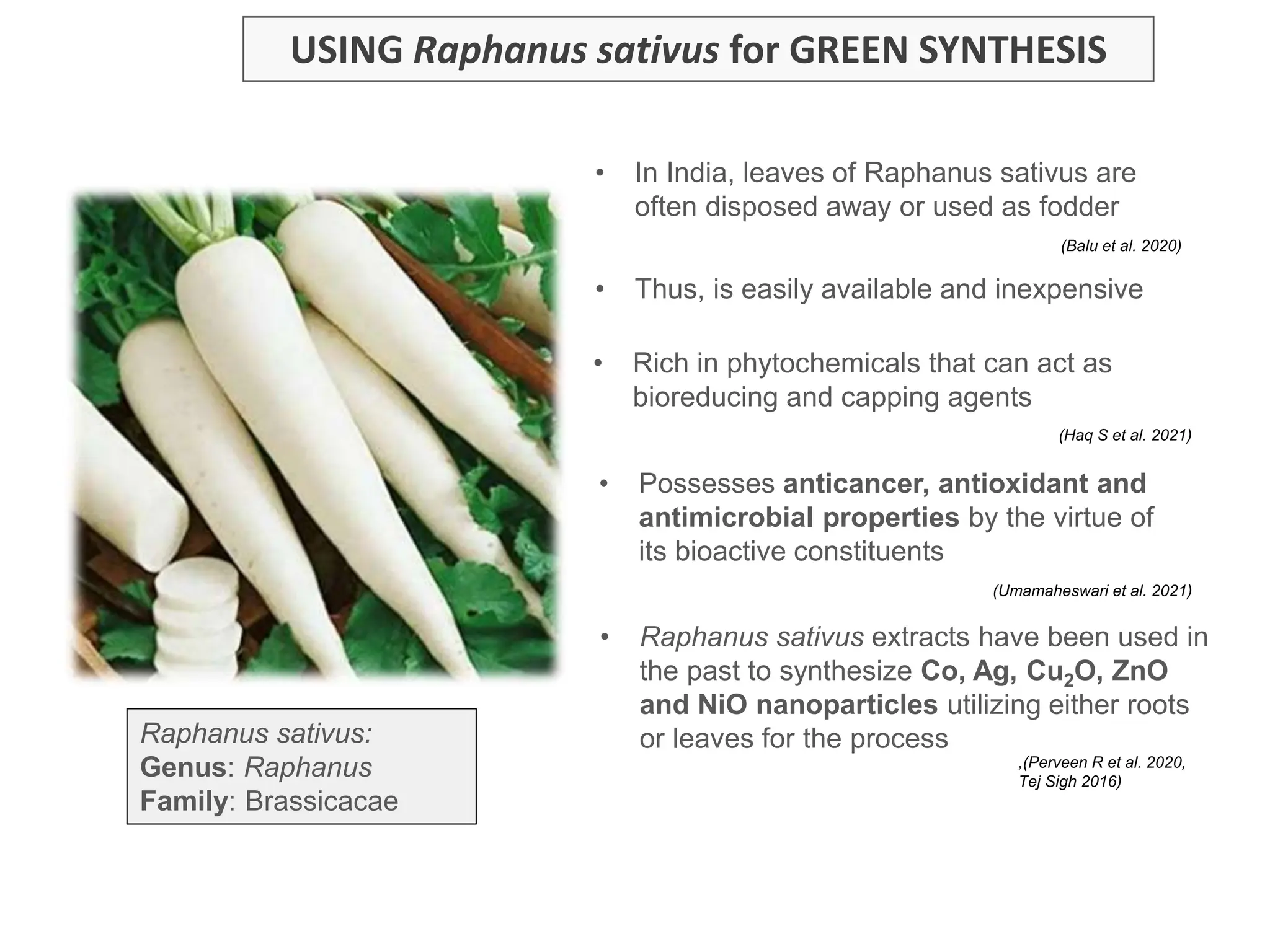
USING Raphanus sativus for GREEN SYNTHESIS
• In India, leaves of Raphanus sativus are
often disposed away or used as fodder
• Thus, is easily available and inexpensive
• Possesses anticancer, antioxidant and
antimicrobial properties by the virtue of
its bioactive constituents
• Rich in phytochemicals that can act as
bioreducing and capping agents
• Raphanus sativus extracts have been used in
the past to synthesize Co, Ag, Cu2O, ZnO
and NiO nanoparticles utilizing either roots
or leaves for the process
,(Perveen R et al. 2020,
Tej Sigh 2016)
(Balu et al. 2020)
(Umamaheswari et al. 2021)
(Haq S et al. 2021)
Raphanus sativus:
Genus: Raphanus
Family: Brassicacae
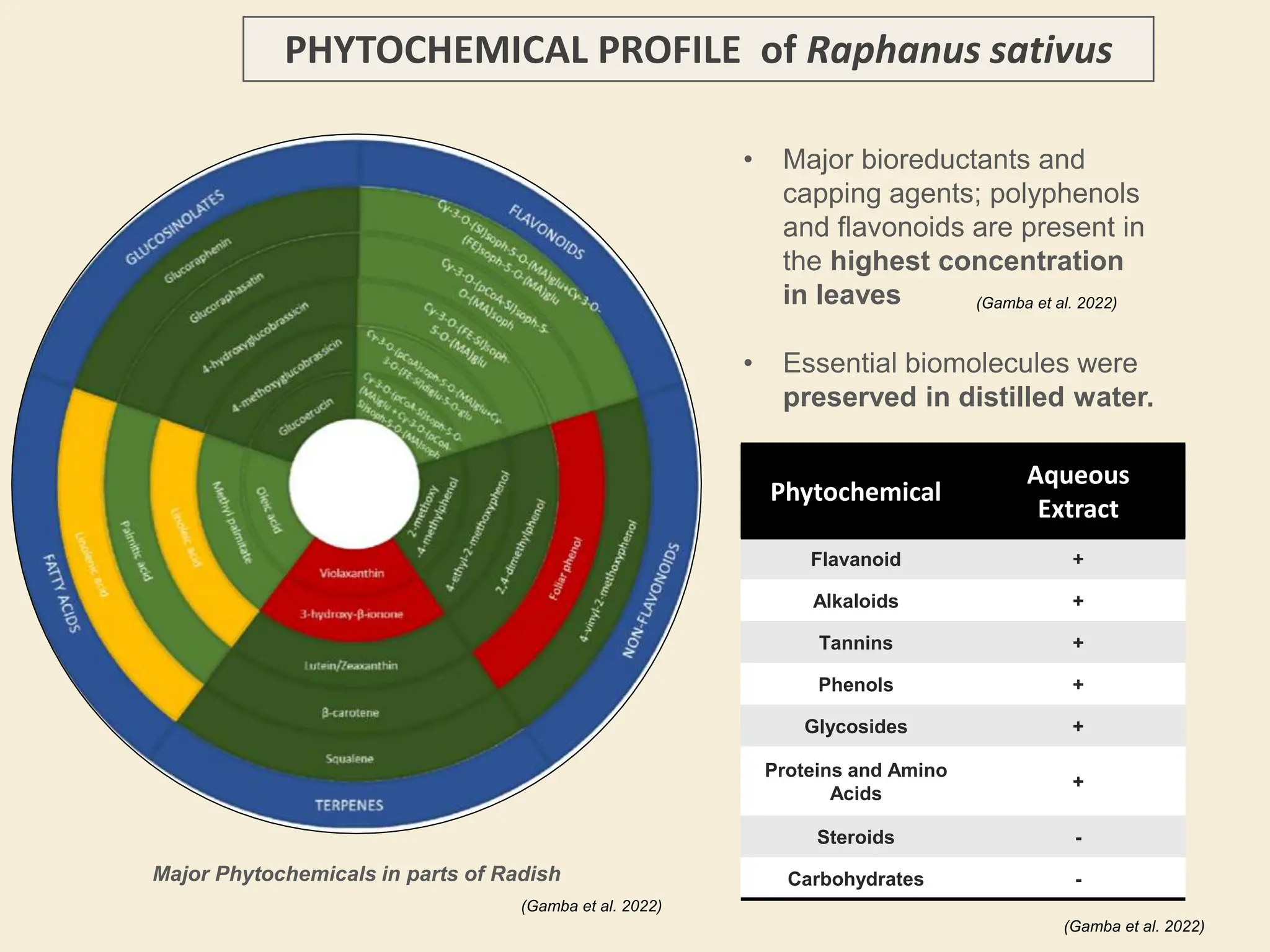
• Major bioreductants and
capping agents; polyphenols
and flavonoids are present in
the highest concentration
in leaves
• Essential biomolecules were
preserved in distilled water.
PHYTOCHEMICAL PROFILE of Raphanus sativus
Phytochemical
Aqueous
Extract
Flavanoid +
Alkaloids +
Tannins +
Phenols +
Glycosides +
Proteins and Amino
Acids
+
Steroids -
Carbohydrates -
(Gamba et al. 2022)
(Gamba et al. 2022)
(Gamba et al. 2022)
Major Phytochemicals in parts of Radish
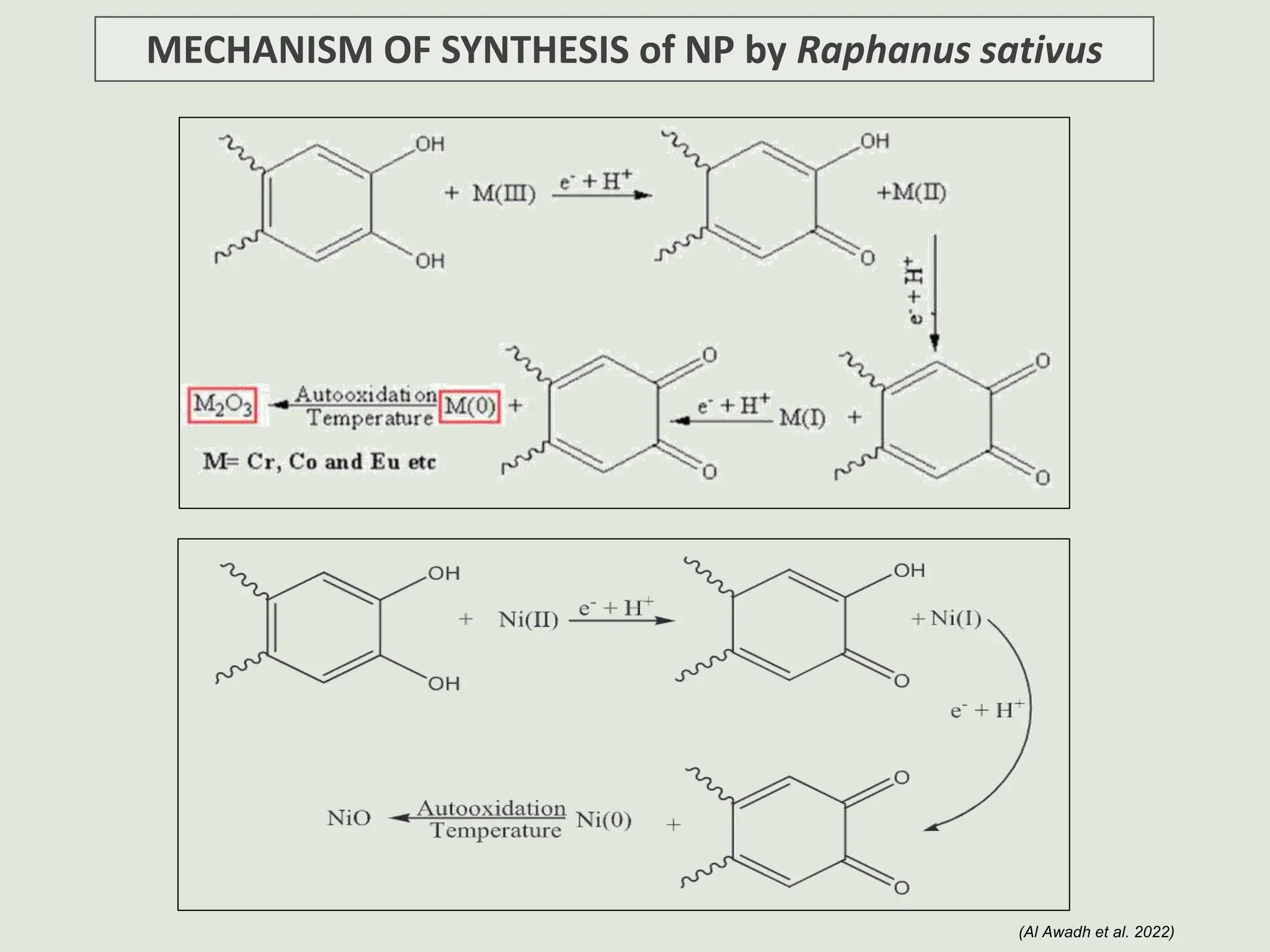
MECHANISM OF SYNTHESIS of NP by Raphanus sativus
(Al Awadh et al. 2022)
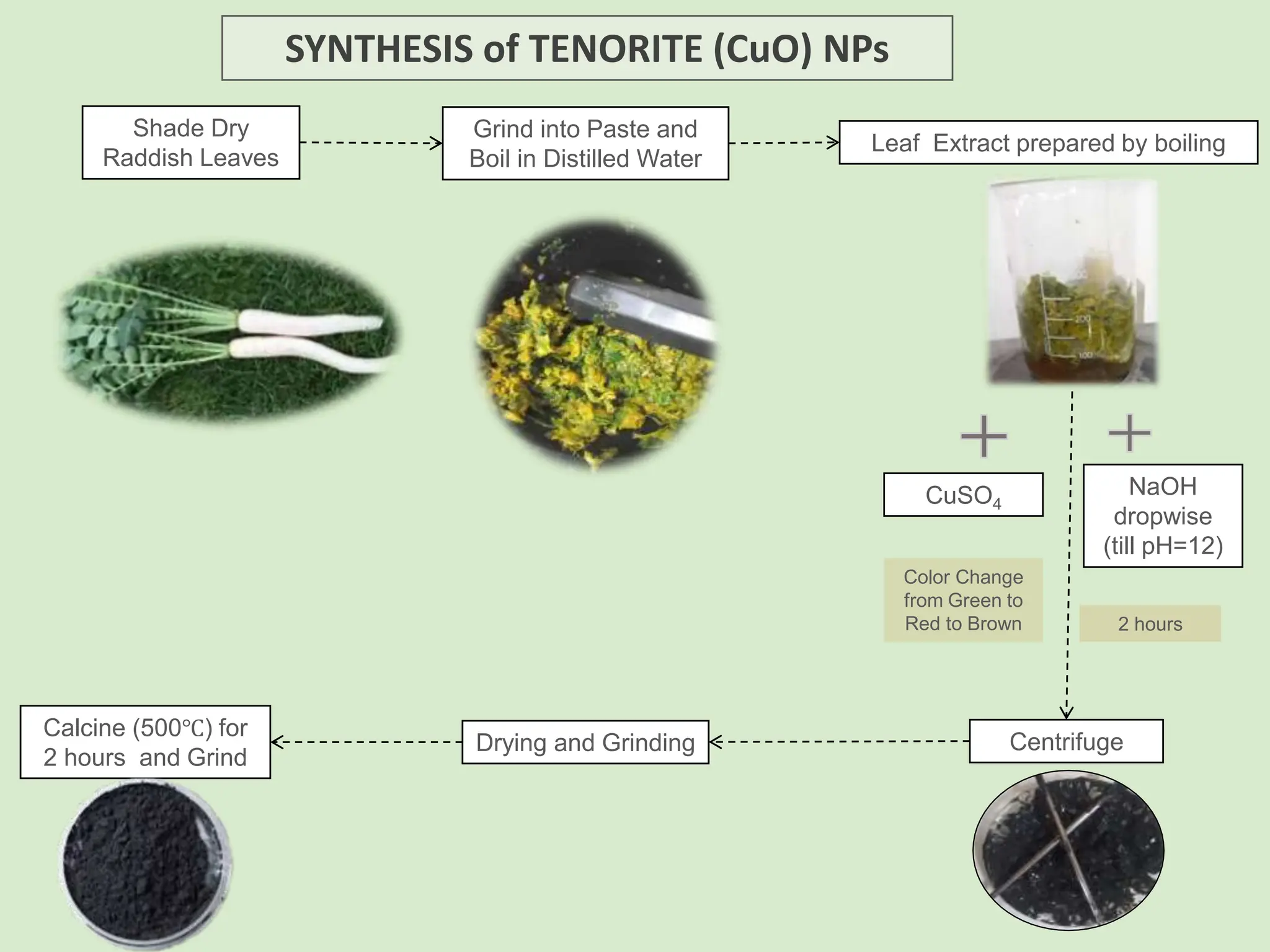
SYNTHESIS of TENORITE (CuO) NPs
CuSO4
Leaf Extract prepared by boiling
Shade Dry
Raddish Leaves
Grind into Paste and
Boil in Distilled Water
NaOH
dropwise
(till pH=12)
2 hours
Centrifuge
Drying and Grinding
Calcine (500℃) for
2 hours and Grind
Color Change
from Green to
Red to Brown
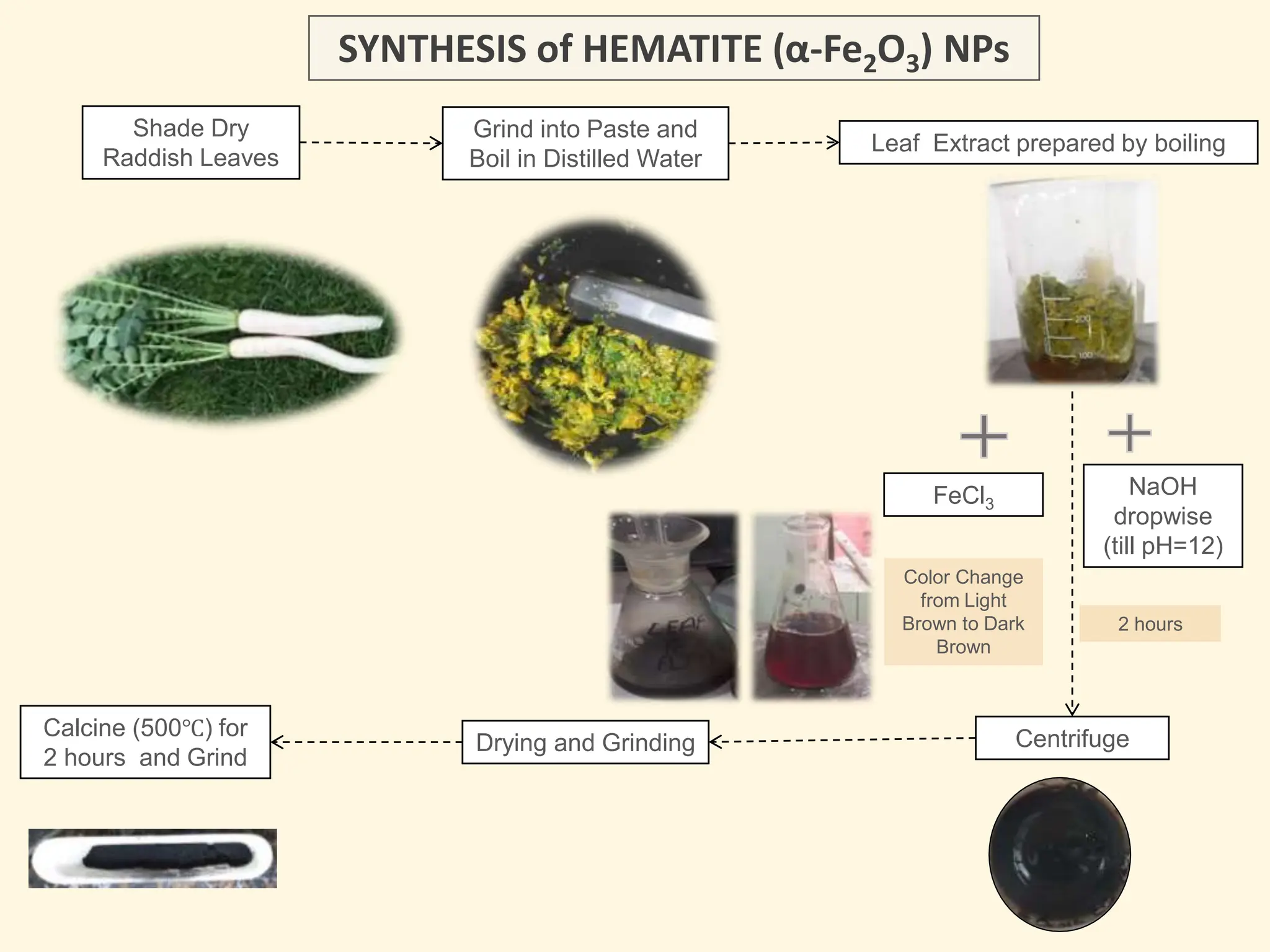
SYNTHESIS of HEMATITE (α-Fe2O3) NPs
FeCl3
Leaf Extract prepared by boiling
Shade Dry
Raddish Leaves
Grind into Paste and
Boil in Distilled Water
NaOH
dropwise
(till pH=12)
2 hours
Centrifuge
Drying and Grinding
Calcine (500℃) for
2 hours and Grind
Color Change
from Light
Brown to Dark
Brown
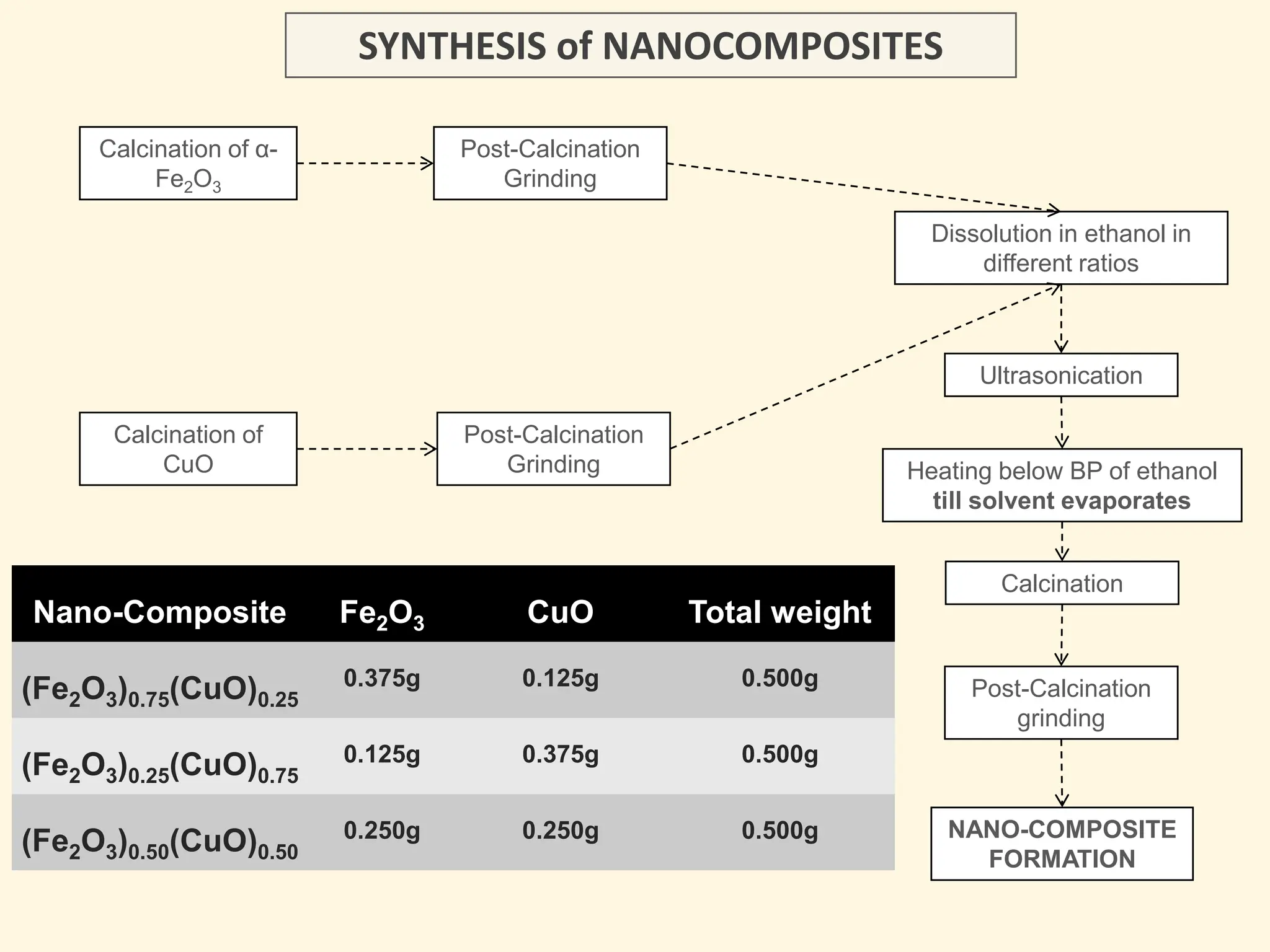
SYNTHESIS of NANOCOMPOSITES
Calcination of α-
Fe2O3
Calcination of
CuO
Post-Calcination
Grinding
Post-Calcination
Grinding
Dissolution in ethanol in
different ratios
Ultrasonication
Heating below BP of ethanol
till solvent evaporates
Calcination
Post-Calcination
grinding
NANO-COMPOSITE
FORMATION
Nano-Composite Fe2O3 CuO Total weight
(Fe2O3)0.75(CuO)0.25
0.375g 0.125g 0.500g
(Fe2O3)0.25(CuO)0.75
0.125g 0.375g 0.500g
(Fe2O3)0.50(CuO)0.50
0.250g 0.250g 0.500g
CHARACTERIZATION
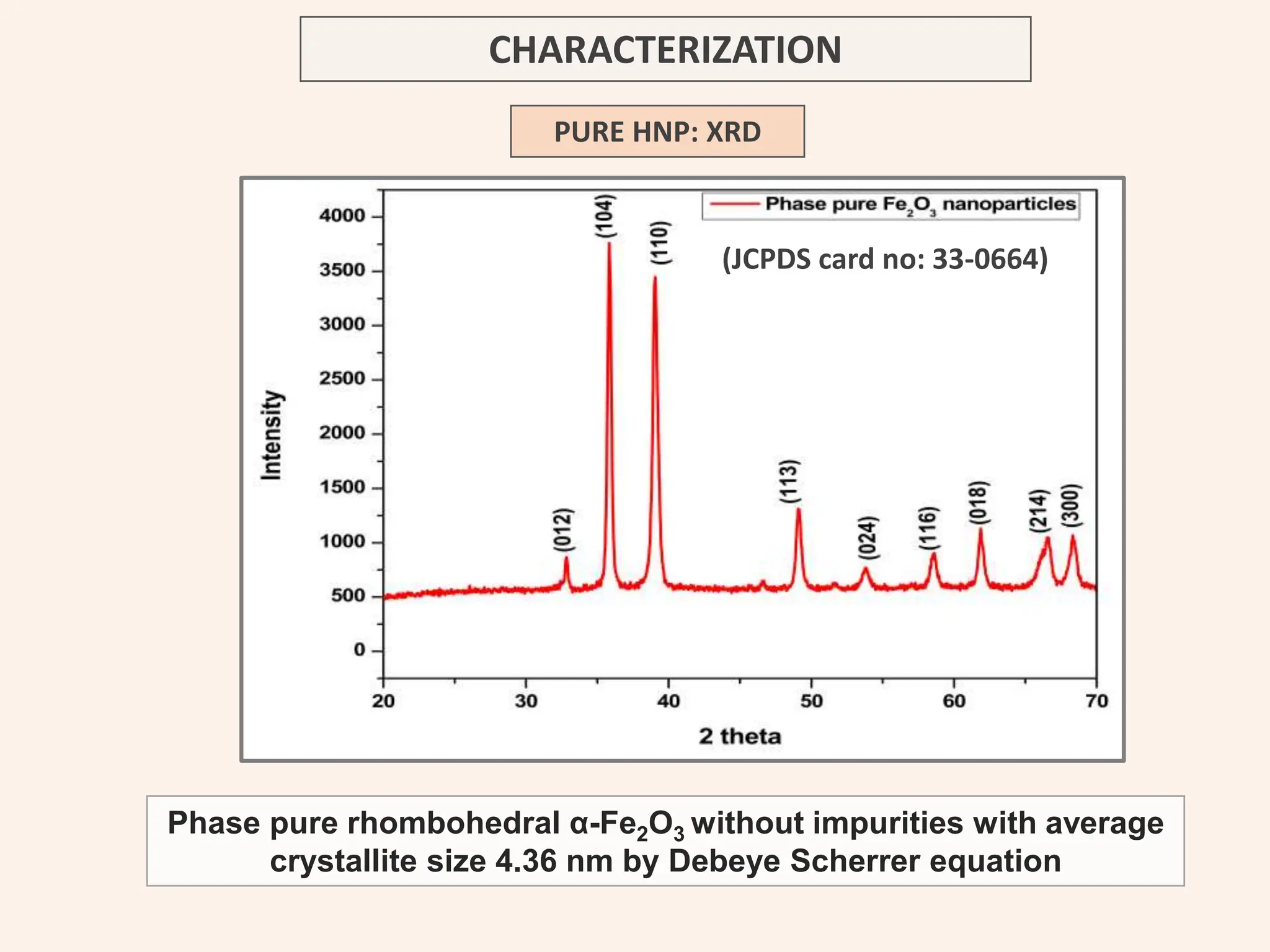
PURE HNP: XRD
(JCPDS card no: 33-0664)
Phase pure rhombohedral α-Fe2O3 without impurities with average
crystallite size 4.36 nm by Debeye Scherrer equation
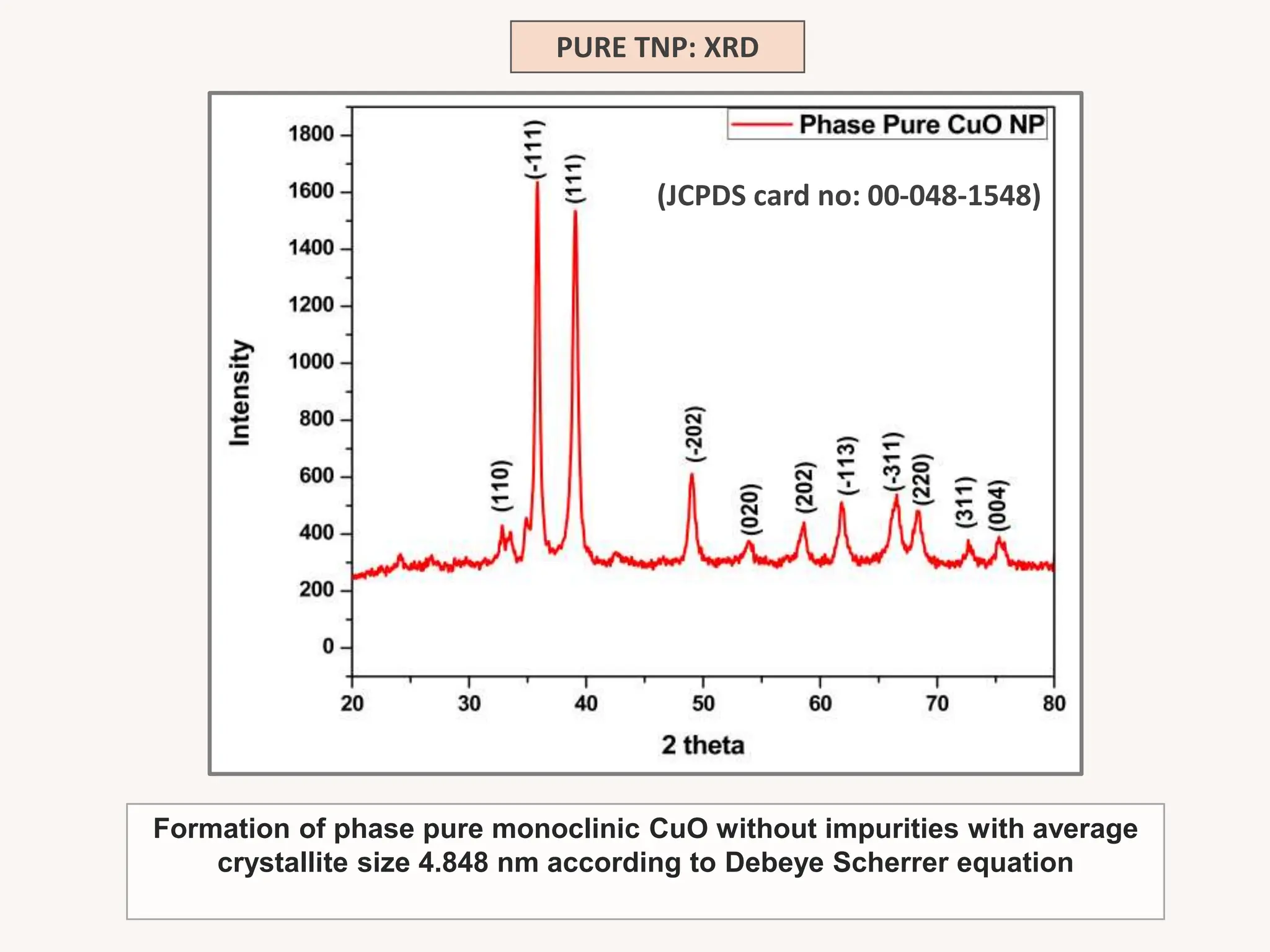
Formation of phase pure monoclinic CuO without impurities with average
crystallite size 4.848 nm according to Debeye Scherrer equation
PURE TNP: XRD
(JCPDS card no: 00-048-1548)
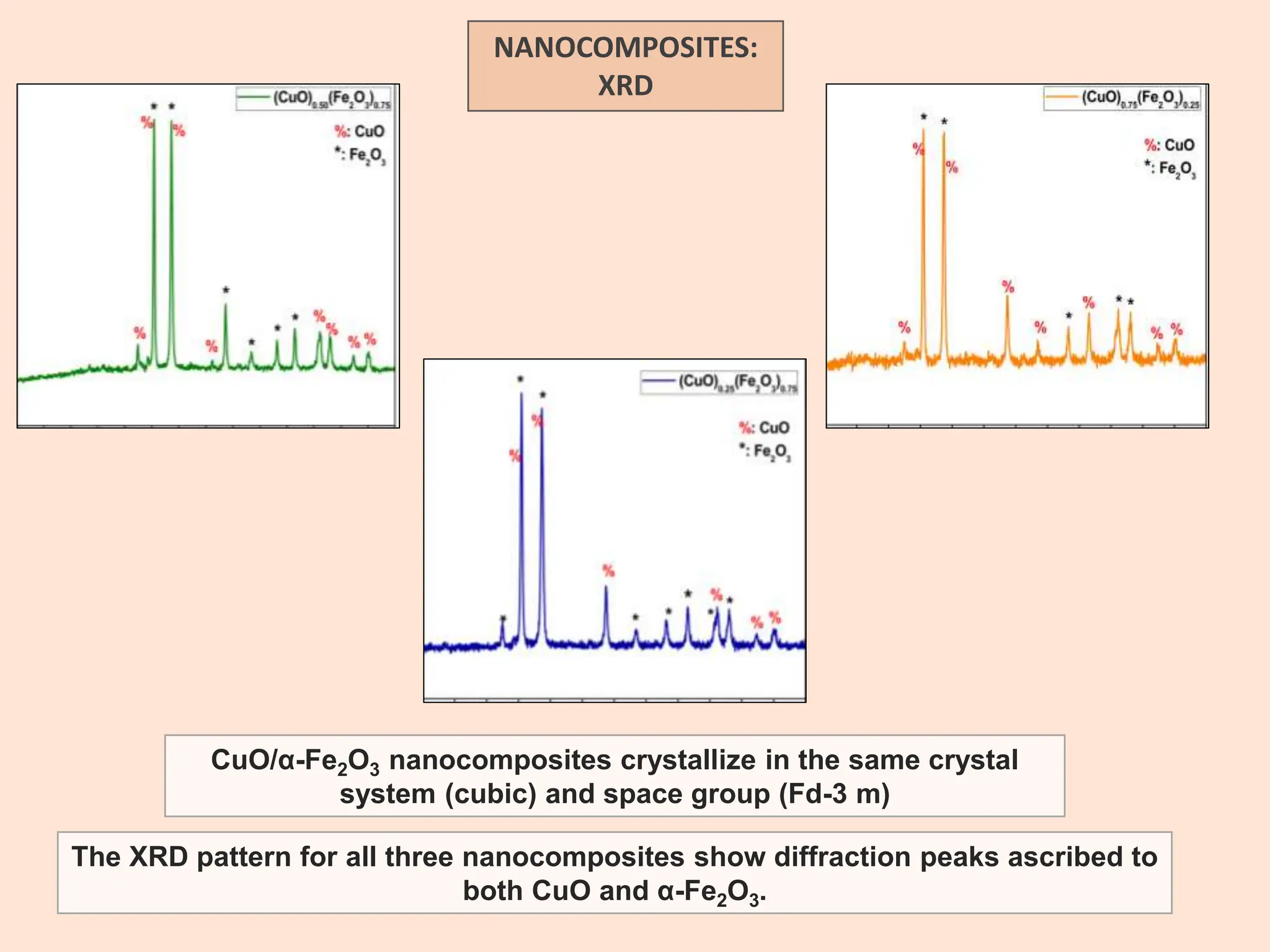
The XRD pattern for all three nanocomposites show diffraction peaks ascribed to
both CuO and α-Fe2O3.
NANOCOMPOSITES:
XRD
CuO/α-Fe2O3 nanocomposites crystallize in the same crystal
system (cubic) and space group (Fd-3 m)
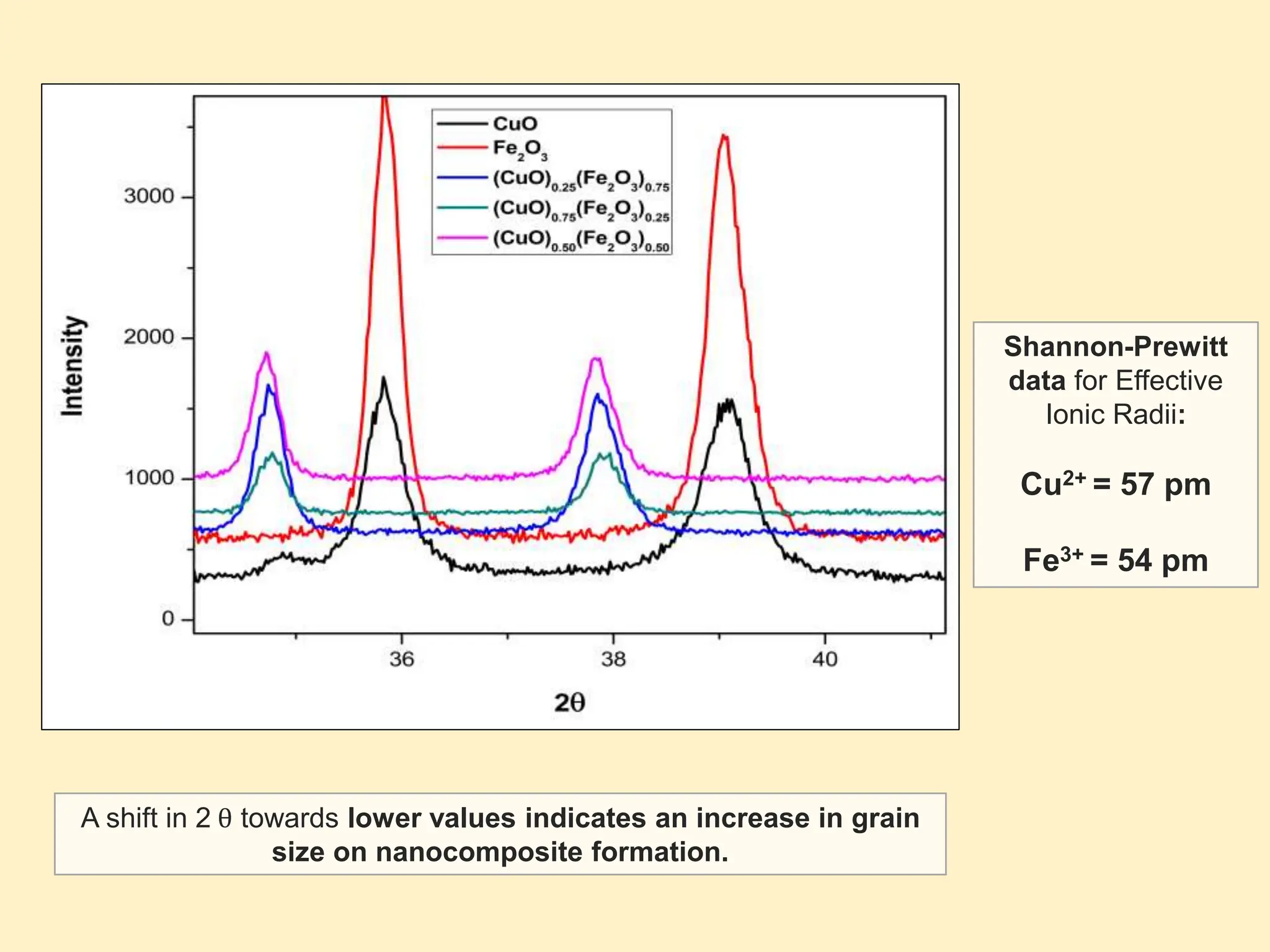
A shift in 2 θ towards lower values indicates an increase in grain
size on nanocomposite formation.
Shannon-Prewitt
data for Effective
Ionic Radii:
Cu2+ = 57 pm
Fe3+ = 54 pm
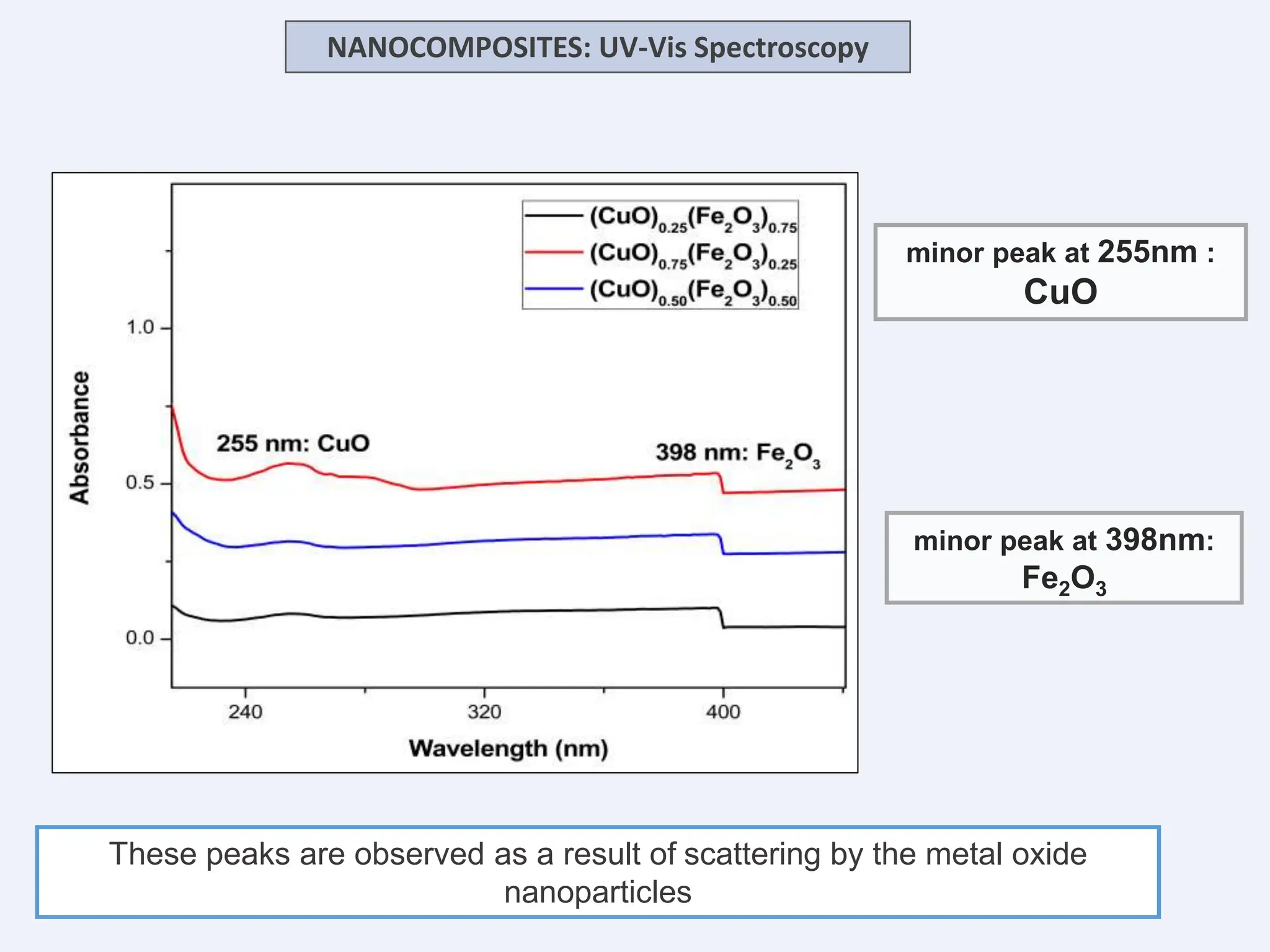
minor peak at 398nm:
Fe2O3
These peaks are observed as a result of scattering by the metal oxide
nanoparticles
minor peak at 255nm :
CuO
NANOCOMPOSITES: UV-Vis Spectroscopy
Antioxidant activity was examined through DPPH ASSAY where
absorbance was determined at 517 nm with respect to DPPH
[(Ao - An)/Ao] * 100
(Ao = absorbance of DPPH
; An = absorbance of
DPPH@Nanocomposite
mixture)
.
APPLICATIONS
ANTIOXIDANT APPLICATION
RESULT: values for 0.01mg/ml nanocomposite were calculated to be
83.99%, 72.37% and 91.24%
0
10
20
30
40
50
60
70
80
90
100
25% CuO 75% CuO 50% CuO
%Antioxidant Activity
25% CuO
75% CuO
50% CuO
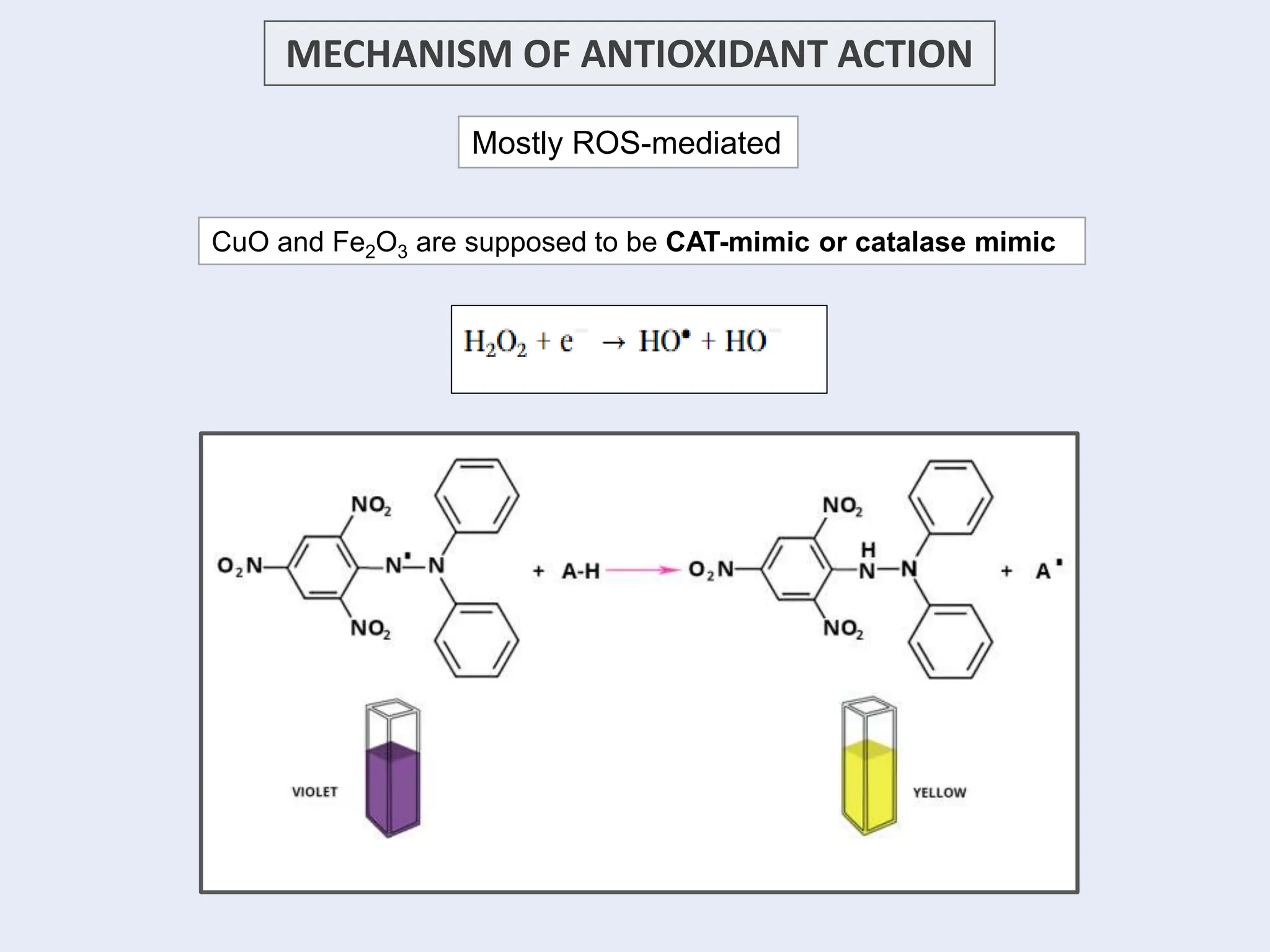
MECHANISM OF ANTIOXIDANT ACTION
Mostly ROS-mediated
CuO and Fe2O3 are supposed to be CAT-mimic or catalase mimic
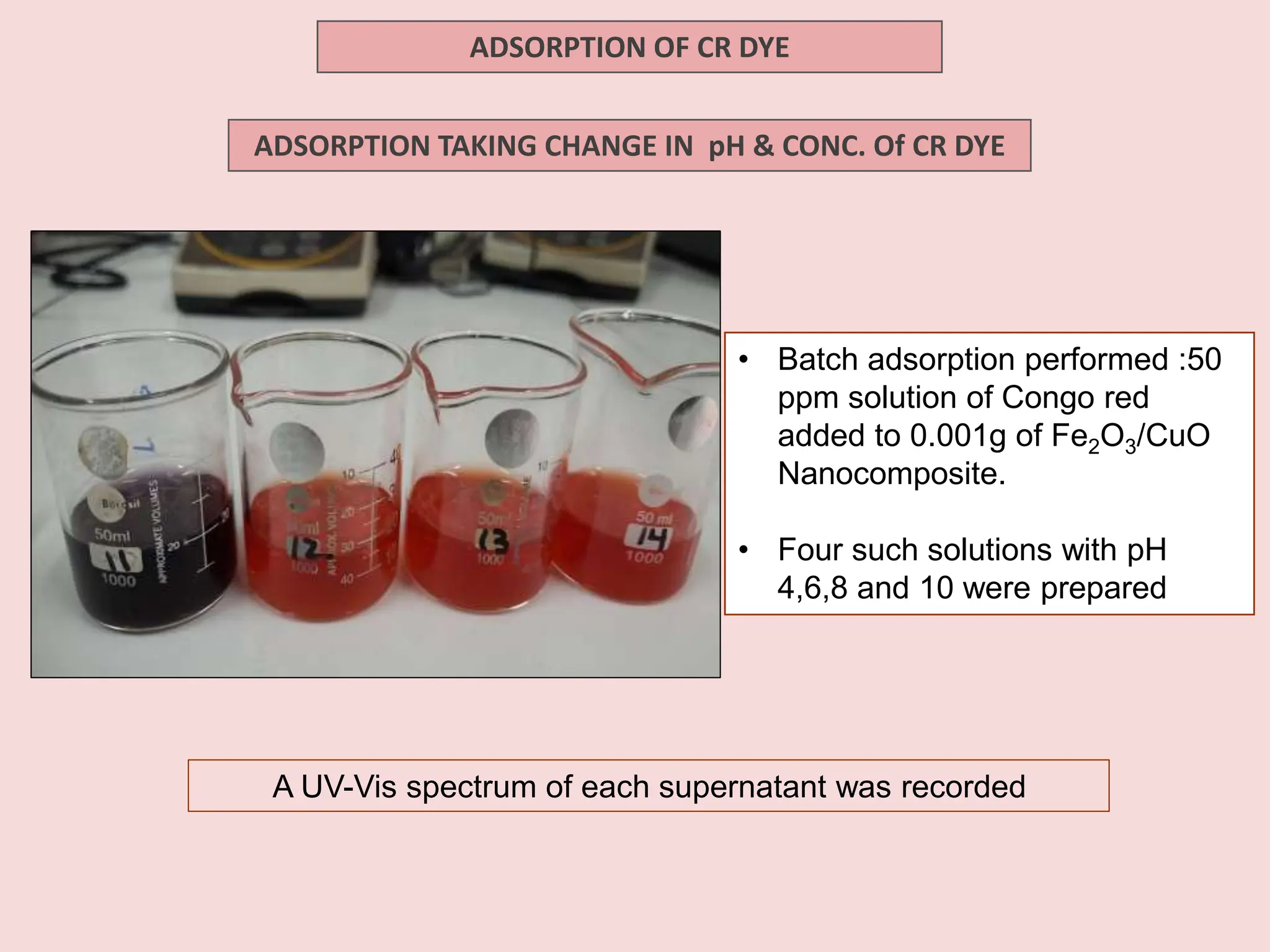
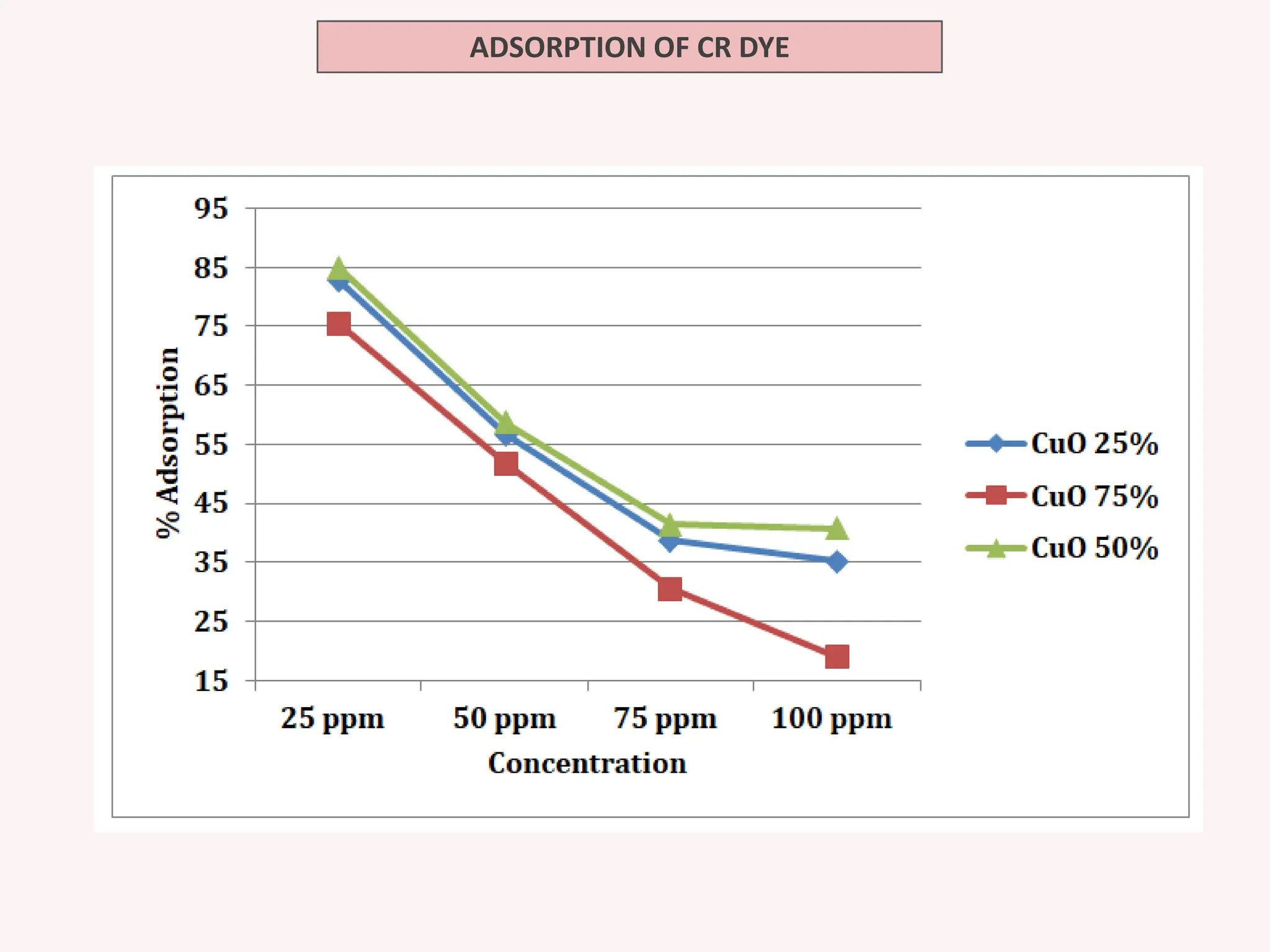
ADSORPTION OF CR DYE
ADSORPTION TAKING CHANGE IN pH & CONC. Of CR DYE
• Batch adsorption performed :50
ppm solution of Congo red
added to 0.001g of Fe2O3/CuO
Nanocomposite.
• Four such solutions with pH
4,6,8 and 10 were prepared
A UV-Vis spectrum of each supernatant was recorded
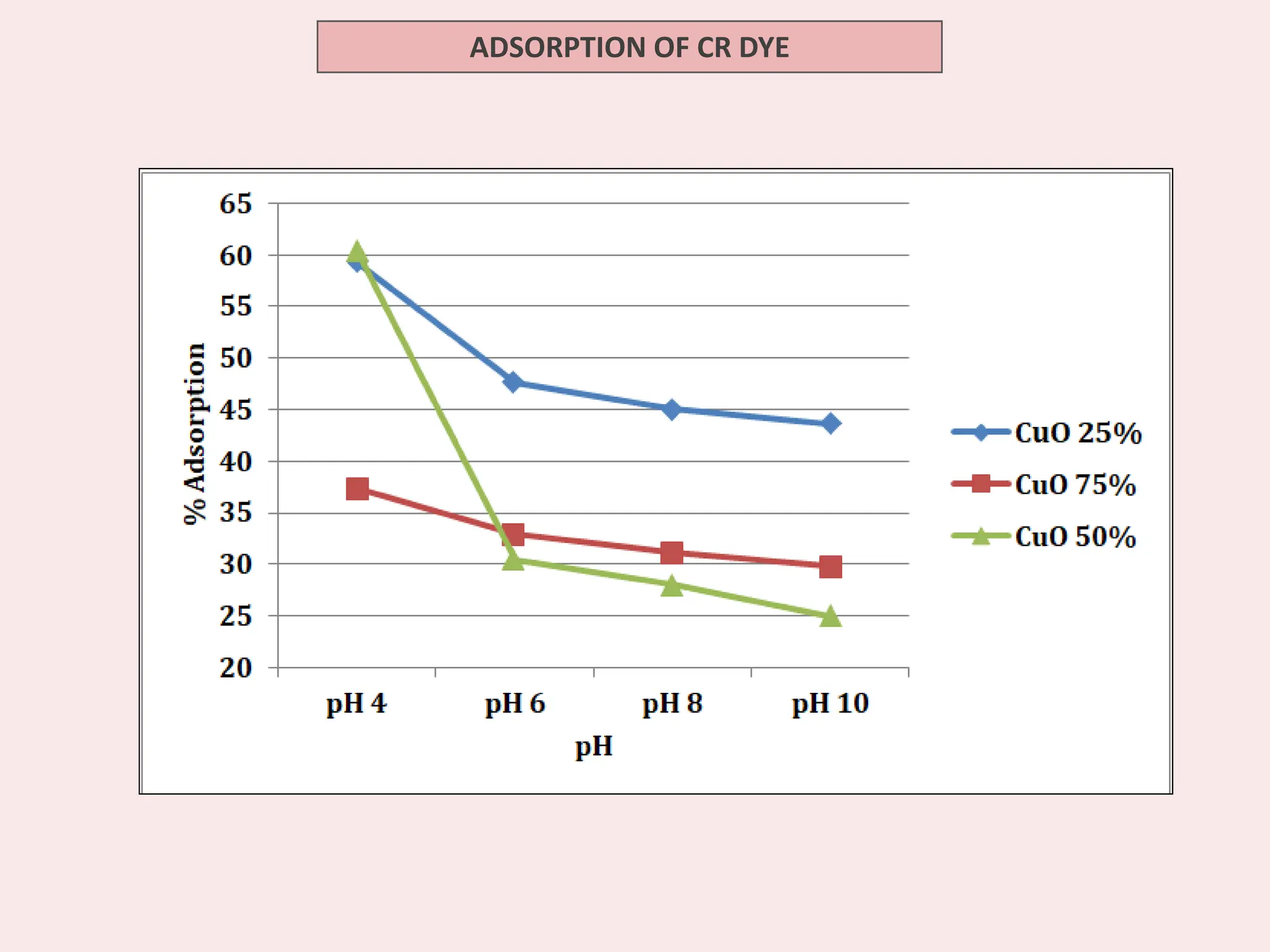
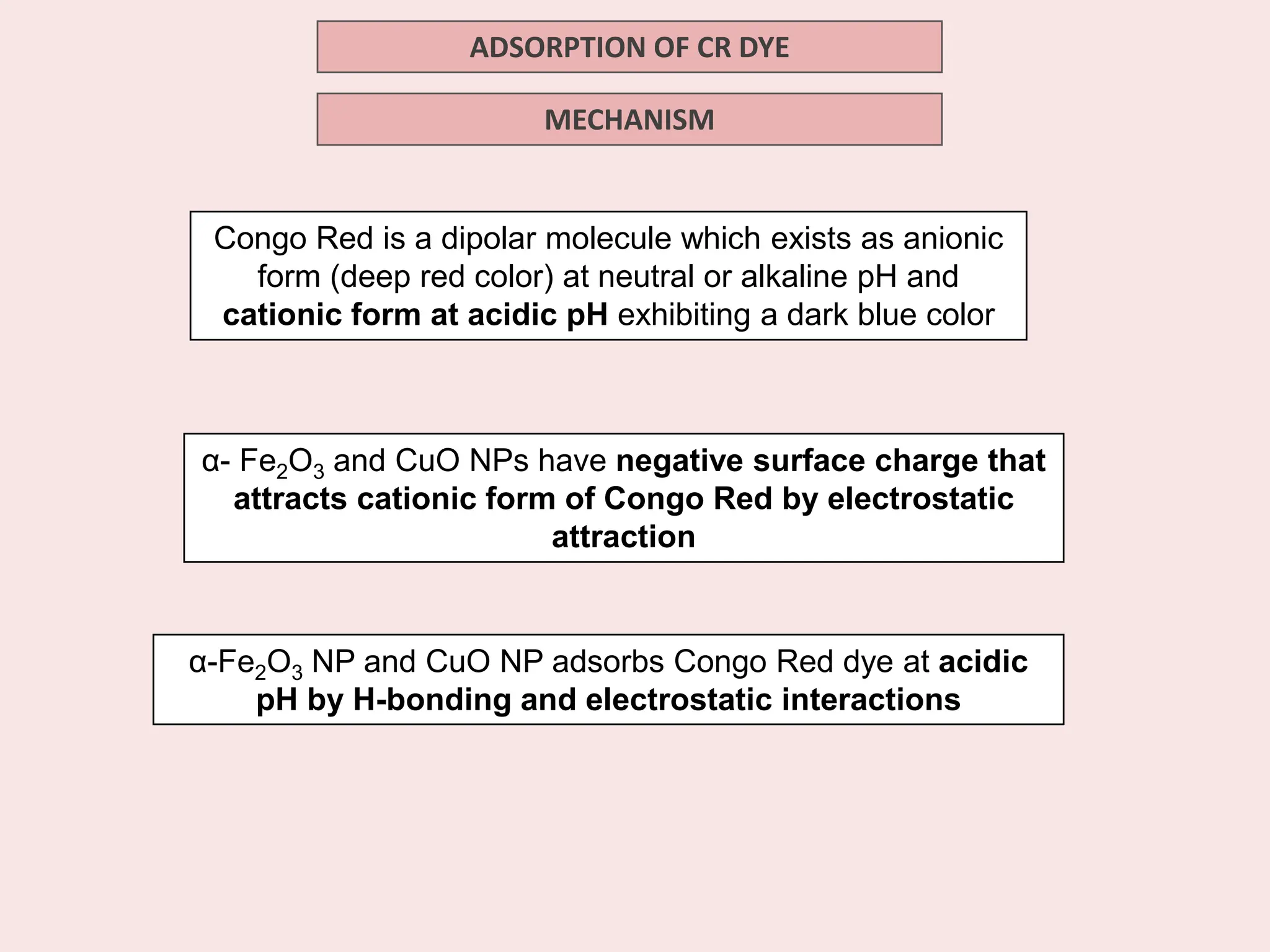
ADSORPTION OF CR DYE
MECHANISM
Congo Red is a dipolar molecule which exists as anionic
form (deep red color) at neutral or alkaline pH and
cationic form at acidic pH exhibiting a dark blue color
α- Fe2O3 and CuO NPs have negative surface charge that
attracts cationic form of Congo Red by electrostatic
attraction
α-Fe2O3 NP and CuO NP adsorbs Congo Red dye at acidic
pH by H-bonding and electrostatic interactions
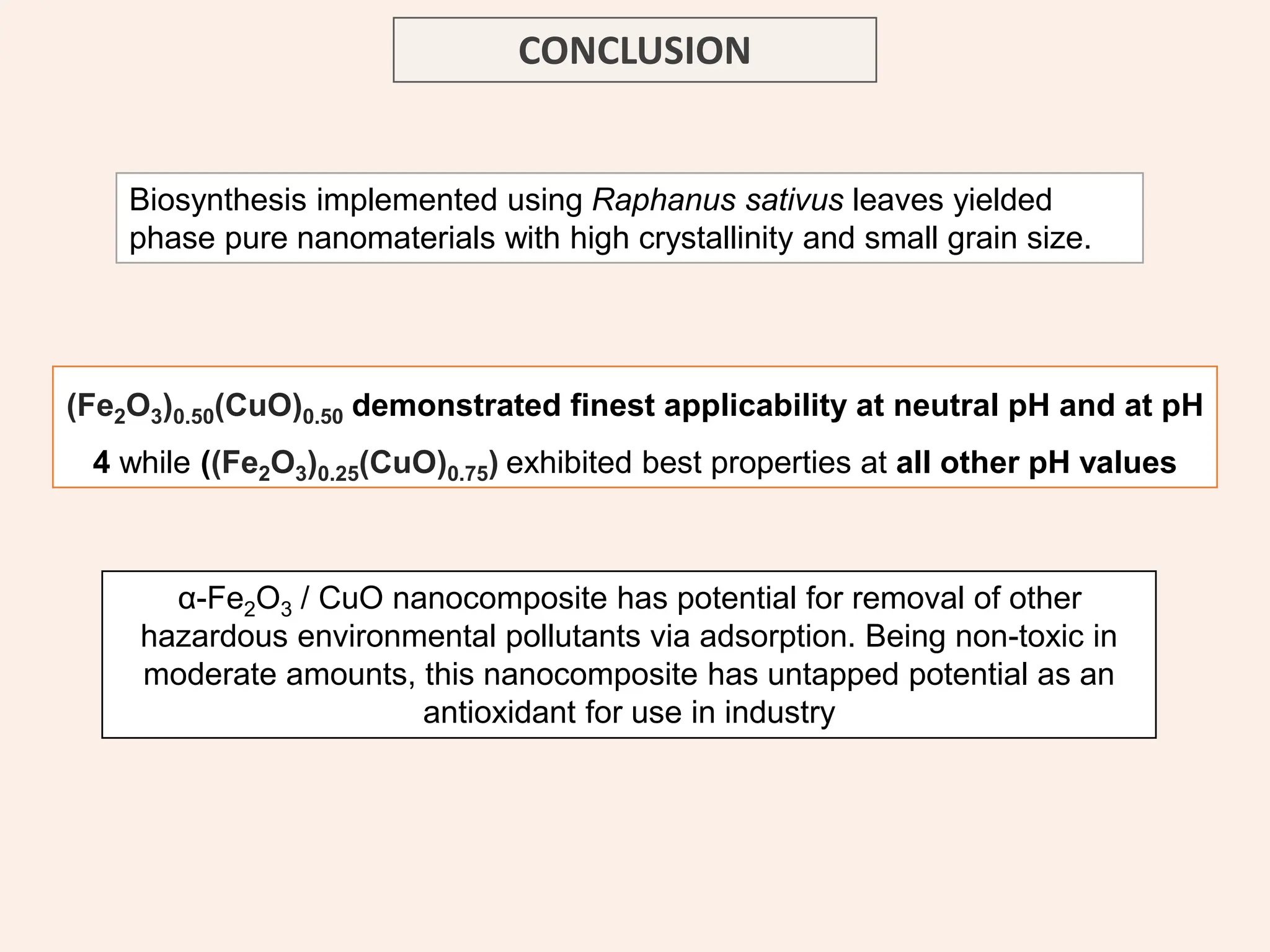
Biosynthesis implemented using Raphanus sativus leaves yielded
phase pure nanomaterials with high crystallinity and small grain size.
(Fe2O3)0.50(CuO)0.50 demonstrated finest applicability at neutral pH and at pH
4 while ((Fe2O3)0.25(CuO)0.75) exhibited best properties at all other pH values
α-Fe2O3 / CuO nanocomposite has potential for removal of other
hazardous environmental pollutants via adsorption. Being non-toxic in
moderate amounts, this nanocomposite has untapped potential as an
antioxidant for use in industry
CONCLUSION
REFERENCES
• Mulvaney, P. (2015). Nanoscience vs nanotechnology-defining the field. In ACS Nano (Vol. 9, Issue 3, pp. 2215–2217). American Chemical Society.
https://doi.org/10.1021/acsnano.5b01418
• Valgimigli, L., Baschieri, A., & Amorati, R. (2018). Antioxidant activity of nanomaterials. In Journal of Materials Chemistry B (Vol. 6, Issue 14, pp. 2036–2051). Royal Society of
Chemistry. https://doi.org/10.1039/c8tb00107c
• Oladoye, P. O., Bamigboye, M. O., Ogunbiyi, O. D., & Akano, M. T. (2022). Toxicity and decontamination strategies of Congo red dye. Groundwater for Sustainable Development, 19,
100844. https://doi.org/10.1016/J.GSD.2022.100844
• Siddiqui, S. I., Allehyani, E. S., Al-Harbi, S. A., Hasan, Z., Abomuti, M. A., Rajor, H. K., & Oh, S. (2023). Investigation of Congo Red Toxicity towards Different Living Organisms: A
Review. Processes, 11(3), 807. https://doi.org/10.3390/pr11030807
• Dobrucka, R. (2018). Antioxidant and Catalytic Activity of Biosynthesized CuO Nanoparticles Using Extract of Galeopsidis herba. Journal of Inorganic and Organometallic Polymers
and Materials, 28(3), 812–819. https://doi.org/10.1007/s10904-017-0750-2
• Chavali, M. S., & Nikolova, M. P. (2019). Metal oxide nanoparticles and their applications in nanotechnology. In SN Applied Sciences (Vol. 1, Issue 6). Springer Nature.
https://doi.org/10.1007/s42452-019-0592-3
• Yoon, Y., Truong, P. L., Lee, D., & Ko, S. H. (2022). Metal-Oxide Nanomaterials Synthesis and Applications in Flexible and Wearable Sensors. In ACS Nanoscience Au (Vol. 2, Issue
2, pp. 64–92). American Chemical Society.
• Immanuel, S., Aparna, T. K., & Sivasubramanian, R. (2018). Graphene-metal oxide nanocomposite modified electrochemical sensors. In Graphene-Based Electrochemical Sensors
for Biomolecules: A Volume in Micro and Nano Technologies (pp. 113–138). Elsevier. https://doi.org/10.1016/B978-0-12-815394-9.00005-4
• Duy, H. H., Ngoc, P. T. K., Anh, L. T. H., Dao, D. T. A., Nguyen, D. C., & Than, V. T. (2019). In vitro antifungal efficacy of white radish (Raphanus sativus L.) root extract and
application as a natural preservative in sponge cake. Processes, 7(9). https://doi.org/10.3390/pr7090549
• Nikam, A. v., Prasad, B. L. V., & Kulkarni, A. A. (2018). Wet chemical synthesis of metal oxide nanoparticles: A review. CrystEngComm, 20(35), 5091–5107.
https://doi.org/10.1039/C8CE00487K
• Pal, G., Rai, P., & Pandey, A. (2018). Green synthesis of nanoparticles: A greener approach for a cleaner future. In Green Synthesis, Characterization and Applications of
Nanoparticles (pp. 1–26). Elsevier. https://doi.org/10.1016/B978-0-08-102579-6.00001-0
• Ariyanta, H. A., Ivandini, T. A., & Yulizar, Y. (2021). Novel NiO nanoparticles via phytosynthesis method: Structural, morphological and optical properties. Journal of Molecular
Structure, 1227. https://doi.org/10.1016/j.molstruc.2020.129543
• Shyam, A., Chandran S, S., George, B., & E, S. (2021). Plant mediated synthesis of AgNPs and its applications: an overview. In Inorganic and Nano-Metal Chemistry (Vol. 51, Issue
12, pp. 1646–1662). Taylor and Francis Ltd. https://doi.org/10.1080/24701556.2020.1852254
• Kim, D. M., Busch, M., Hoefsloot, H. C. J., & Iedema, P. D. (2004). Molecular weight distribution modeling in low-density polyethylene polymerization; impact of scission mechanisms
in the case of CSTR. Chemical Engineering Science, 59(3), 699–718. https://doi.org/10.1016/J.CES.2003.11.008
• Lee, N. Y., Ko, W. C., & Hsueh, P. R. (2019). Nanoparticles in the treatment of infections caused by multidrug-resistant organisms. In Frontiers in Pharmacology (Vol. 10). Frontiers
Media S.A. https://doi.org/10.3389/fphar.2019.01153
• Ssekatawa, K., Byarugaba, D. K., Kato, C. D., Wampande, E. M., Ejobi, F., Nakavuma, J. L., Maaza, M., Sackey, J., Nxumalo, E., & Kirabira, J. B. (2021). Green Strategy–Based
Synthesis of Silver Nanoparticles for Antibacterial Applications. Frontiers in Nanotechnology, 3. https://doi.org/10.3389/fnano.2021.697303
• Thomas, R., Nair, A. P., Kr, S., Mathew, J., & Ek, R. (2014). Antibacterial activity and synergistic effect of biosynthesized AgNPs with antibiotics against multidrug-resistant biofilm-
forming coagulase-negative staphylococci isolated from clinical samples. Applied Biochemistry and Biotechnology, 173(2), 449–460. https://doi.org/10.1007/s12010-014-0852-z
• Wang, Y., O’Connor, D., Shen, Z., Lo, I. M. C., Tsang, D. C. W., Pehkonen, S., Pu, S., & Hou, D. (2019). Green synthesis of nanoparticles for the remediation of contaminated waters
and soils: Constituents, synthesizing methods, and influencing factors. In Journal of Cleaner Production (Vol. 226, pp. 540–549). Elsevier Ltd.
https://doi.org/10.1016/j.jclepro.2019.04.128
• MODAN, E. M., & PLĂIAȘU, A. G. (2020). Advantages and Disadvantages of Chemical Methods in the Elaboration of Nanomaterials. The Annals of “Dunarea de Jos” University of
Galati. Fascicle IX, Metallurgy and Materials Science, 43(1), 53–60. https://doi.org/10.35219/mms.2020.1.08
• Sanjay, S. S. (2018). Safe nano is green nano. In Green Synthesis, Characterization and Applications of Nanoparticles (pp. 27–36). Elsevier. https://doi.org/10.1016/B978-0-08-
102579-6.00002-2
• Rana, A., Yadav, K., & Jagadevan, S. (2020). A comprehensive review on green synthesis of nature-inspired metal nanoparticles: Mechanism, application and toxicity. In Journal of
Cleaner Production (Vol. 272). Elsevier Ltd. https://doi.org/10.1016/j.jclepro.2020.122880
• Singh, J., Dutta, T., Kim, K. H., Rawat, M., Samddar, P., & Kumar, P. (2018). “Green” synthesis of metals and their oxide nanoparticles: Applications for environmental remediation. In
Journal of Nanobiotechnology (Vol. 16, Issue 1). BioMed Central Ltd. https://
• I would like to express my sincere gratitude to Prof. Nahid
Nishat for her constant support and encouragement
throughout the duration of this project.
• I am forever indebted to our Assistant Professor, Dr. Zeba
Haque for providing her able guidance and direction through
every step of the way. This project wouldn’t have been
possible without her vision and planning.
• I would also like to thank our senior research scholars and
my batchmates
• I would like to thank CIF, Jamia Millia Islamia and AMU, Aligarh
ACKNOWLEGMENT

project presentation on nanoparticles biosynthesis

  • 1.
    BIOSYNTHESIS OF CuO/Fe2O3 NANOCOMPOSITEUSING Raphanus Sativus AND ITS ADSORPTION STUDIES
  • 2.
    STEPS UNDERTAKEN DURINGPROJECT Choice of Biomaterial Choice of Oxides to be Synthesized Choice of Solvent for Extract Determining Reaction Conditions Synthesis of Nanoparticles and Nanocomposite Choice of Dye for Adsorption Antioxidant activity
  • 3.
    PROBLEM STATEMENT: DYEREMOVAL FROM WATER BODIES • Congo Red is readily absorbed in the human body and has genotoxic, mutagenic and carcinogenic effects (Oladoye et al.2022) “A River Turns Red: Pollution Bleeds Hinton” TOI:31-05-2023 • Safe removal of Congo Red dye is of significance in tackling water pollution. • Requires inexpensive, easily synthesized adsorbent.
  • 4.
    HARMFUL EFFECTS OFCONGO RED DYE Toxic/Inhibitory Effect Affected Targets Reference Causing Infertility Water flea (Ceriodaphnia dubia) (Zamora et al. 2016) Increases COD Water bodies and aquatic flora and fauna (Rani, K.C et. al. 2017) It makes surface water unaesthetic Water bodies (Oladoye, P.O et al. 2022) Allergic Humans (Litefti, K et al. 2019) Phytotoxicity Plants (Kumar, V. 2020) Molecular Structure of Congo red Dye
  • 5.
    PROBLEM STATEMENT: NEEDFOR SAFE ANTIOXIDANTS Nanoantioxidants are defined as nano materials capable of slowing the overall rate of autoxidation by trapping the chain carrying radicals, or by decreasing the initiation events. • Inorganic metal oxide nano particles like Fe2O3 and CuO exhibit intrinsic antioxidant properties without need for functionalization (Valgimigli et al. 2018) (Valgimigli et al. 2018) • Fe2O3 and CuO are two biocompatible and inexpensive metal oxide whose nancomposite was prepared and analyzed for antioxidant activity and dye removal. Mechanism of Antioxidant Action in Fe2O3 (Imam et al. 2017)
  • 6.
    METAL OXIDE NANOPARTICLES PROPERTIESOF METAL OXIDE NANOPARTICLES • Increased surface area leading to enhanced adsorptive properties and faster diffusivities • Enhanced optoelectronic, optical, electrical, thermal properties due to quantum confinement effect • Tunability of properties : size, shape, porosity and cellular penetration capability depending on synthesis conditions. • Ability to be synthesized under controlled conditions with reproducibility in size and morphology Depend upon their composition, crystallographic structure, morphology, surface stoichiometry, surface functionalities and interactions of the phases (Chavali and Nikolova, 2019)
  • 7.
    TOP-DOWN APPROACHES BOTTOM-UP APPROACHES SYNTHESIS METHODS HYDROTHERMAL SYNTHESIS SOLVOTHERMALSYNTHESIS SOL-GEL SYNTHESIS SOLID STATE METHODS THERMAL DECOMPOSITION MICROWAVE ASSITED SYNTHESIS WET CHEMICAL SYNTHESIS CHEMICAL PRECIPITATION GREEN SYNTHESIS VAPOR DEPOSITION ELECTROCHEMICAL DEPOSITION MILLING MACHINING LITHOGRAPHY LASER ABLATION SPUTTERING CHEMICAL ETCHING PHYSICAL METHOD CHEMICAL METHOD BIOLOGICAL METHOD
  • 8.
    ADVANTAGES OF GREEN SYNTHESIS of NANOPARTICLES Inexpensive HighYield, good morphology, easier control of synthesis conditions No toxic chemicals required Milder reaction conditions One pot synthesis Easier implementation in batches as well as on a larger scale Easily available biomaterial Sustainable with greener synthesis design (Toress,2020; Kumar et al. 2017)
  • 9.
    GREEN SYNTHESIS USINGPLANT PARTS Does not require elaborate maintenance of cultures that micro-organisms require Lower toxicity concerns Phytochemicals (proteins, amino acids, carbohydrates, steroids, coenzymes and secondary metabolites such as saponins, tanins, flavonoids phenolics, vitamins, trepenoids, alkaloids) act as reducing agents, as well as capping agents
  • 10.
    Me+ Me+ Me+ • Growth phase •Activation Phase • Termination phase Metal nanoparticle synthesis in plant parts involves three phases: MECHANISM OF NP SYNTHESIS WITH PLANT PARTS Reduction of metal ions occurs after reaction with phytochemicals to form smaller NP. OH Me Me Me O= Me+ Coalescence and Ostwald Ripening for sizeable particles Determines the final shape of the nanoparticles Plant reducing agent Nucleation: organic coat act as stabilizers Reduced metal ions
  • 11.
    USING Raphanus sativusfor GREEN SYNTHESIS • In India, leaves of Raphanus sativus are often disposed away or used as fodder • Thus, is easily available and inexpensive • Possesses anticancer, antioxidant and antimicrobial properties by the virtue of its bioactive constituents • Rich in phytochemicals that can act as bioreducing and capping agents • Raphanus sativus extracts have been used in the past to synthesize Co, Ag, Cu2O, ZnO and NiO nanoparticles utilizing either roots or leaves for the process ,(Perveen R et al. 2020, Tej Sigh 2016) (Balu et al. 2020) (Umamaheswari et al. 2021) (Haq S et al. 2021) Raphanus sativus: Genus: Raphanus Family: Brassicacae
  • 12.
    • Major bioreductantsand capping agents; polyphenols and flavonoids are present in the highest concentration in leaves • Essential biomolecules were preserved in distilled water. PHYTOCHEMICAL PROFILE of Raphanus sativus Phytochemical Aqueous Extract Flavanoid + Alkaloids + Tannins + Phenols + Glycosides + Proteins and Amino Acids + Steroids - Carbohydrates - (Gamba et al. 2022) (Gamba et al. 2022) (Gamba et al. 2022) Major Phytochemicals in parts of Radish
  • 13.
    MECHANISM OF SYNTHESISof NP by Raphanus sativus (Al Awadh et al. 2022)
  • 14.
    SYNTHESIS of TENORITE(CuO) NPs CuSO4 Leaf Extract prepared by boiling Shade Dry Raddish Leaves Grind into Paste and Boil in Distilled Water NaOH dropwise (till pH=12) 2 hours Centrifuge Drying and Grinding Calcine (500℃) for 2 hours and Grind Color Change from Green to Red to Brown
  • 15.
    SYNTHESIS of HEMATITE(α-Fe2O3) NPs FeCl3 Leaf Extract prepared by boiling Shade Dry Raddish Leaves Grind into Paste and Boil in Distilled Water NaOH dropwise (till pH=12) 2 hours Centrifuge Drying and Grinding Calcine (500℃) for 2 hours and Grind Color Change from Light Brown to Dark Brown
  • 16.
    SYNTHESIS of NANOCOMPOSITES Calcinationof α- Fe2O3 Calcination of CuO Post-Calcination Grinding Post-Calcination Grinding Dissolution in ethanol in different ratios Ultrasonication Heating below BP of ethanol till solvent evaporates Calcination Post-Calcination grinding NANO-COMPOSITE FORMATION Nano-Composite Fe2O3 CuO Total weight (Fe2O3)0.75(CuO)0.25 0.375g 0.125g 0.500g (Fe2O3)0.25(CuO)0.75 0.125g 0.375g 0.500g (Fe2O3)0.50(CuO)0.50 0.250g 0.250g 0.500g
  • 17.
    CHARACTERIZATION PURE HNP: XRD (JCPDScard no: 33-0664) Phase pure rhombohedral α-Fe2O3 without impurities with average crystallite size 4.36 nm by Debeye Scherrer equation
  • 18.
    Formation of phasepure monoclinic CuO without impurities with average crystallite size 4.848 nm according to Debeye Scherrer equation PURE TNP: XRD (JCPDS card no: 00-048-1548)
  • 19.
    The XRD patternfor all three nanocomposites show diffraction peaks ascribed to both CuO and α-Fe2O3. NANOCOMPOSITES: XRD CuO/α-Fe2O3 nanocomposites crystallize in the same crystal system (cubic) and space group (Fd-3 m)
  • 20.
    A shift in2 θ towards lower values indicates an increase in grain size on nanocomposite formation. Shannon-Prewitt data for Effective Ionic Radii: Cu2+ = 57 pm Fe3+ = 54 pm
  • 21.
    minor peak at398nm: Fe2O3 These peaks are observed as a result of scattering by the metal oxide nanoparticles minor peak at 255nm : CuO NANOCOMPOSITES: UV-Vis Spectroscopy
  • 22.
    Antioxidant activity wasexamined through DPPH ASSAY where absorbance was determined at 517 nm with respect to DPPH [(Ao - An)/Ao] * 100 (Ao = absorbance of DPPH ; An = absorbance of DPPH@Nanocomposite mixture) . APPLICATIONS ANTIOXIDANT APPLICATION RESULT: values for 0.01mg/ml nanocomposite were calculated to be 83.99%, 72.37% and 91.24% 0 10 20 30 40 50 60 70 80 90 100 25% CuO 75% CuO 50% CuO %Antioxidant Activity 25% CuO 75% CuO 50% CuO
  • 23.
    MECHANISM OF ANTIOXIDANTACTION Mostly ROS-mediated CuO and Fe2O3 are supposed to be CAT-mimic or catalase mimic
  • 24.
    ADSORPTION OF CRDYE ADSORPTION TAKING CHANGE IN pH & CONC. Of CR DYE • Batch adsorption performed :50 ppm solution of Congo red added to 0.001g of Fe2O3/CuO Nanocomposite. • Four such solutions with pH 4,6,8 and 10 were prepared A UV-Vis spectrum of each supernatant was recorded
  • 25.
  • 26.
  • 27.
    ADSORPTION OF CRDYE MECHANISM Congo Red is a dipolar molecule which exists as anionic form (deep red color) at neutral or alkaline pH and cationic form at acidic pH exhibiting a dark blue color α- Fe2O3 and CuO NPs have negative surface charge that attracts cationic form of Congo Red by electrostatic attraction α-Fe2O3 NP and CuO NP adsorbs Congo Red dye at acidic pH by H-bonding and electrostatic interactions
  • 28.
    Biosynthesis implemented usingRaphanus sativus leaves yielded phase pure nanomaterials with high crystallinity and small grain size. (Fe2O3)0.50(CuO)0.50 demonstrated finest applicability at neutral pH and at pH 4 while ((Fe2O3)0.25(CuO)0.75) exhibited best properties at all other pH values α-Fe2O3 / CuO nanocomposite has potential for removal of other hazardous environmental pollutants via adsorption. Being non-toxic in moderate amounts, this nanocomposite has untapped potential as an antioxidant for use in industry CONCLUSION
  • 29.
    REFERENCES • Mulvaney, P.(2015). Nanoscience vs nanotechnology-defining the field. In ACS Nano (Vol. 9, Issue 3, pp. 2215–2217). American Chemical Society. https://doi.org/10.1021/acsnano.5b01418 • Valgimigli, L., Baschieri, A., & Amorati, R. (2018). Antioxidant activity of nanomaterials. In Journal of Materials Chemistry B (Vol. 6, Issue 14, pp. 2036–2051). Royal Society of Chemistry. https://doi.org/10.1039/c8tb00107c • Oladoye, P. O., Bamigboye, M. O., Ogunbiyi, O. D., & Akano, M. T. (2022). Toxicity and decontamination strategies of Congo red dye. Groundwater for Sustainable Development, 19, 100844. https://doi.org/10.1016/J.GSD.2022.100844 • Siddiqui, S. I., Allehyani, E. S., Al-Harbi, S. A., Hasan, Z., Abomuti, M. A., Rajor, H. K., & Oh, S. (2023). Investigation of Congo Red Toxicity towards Different Living Organisms: A Review. Processes, 11(3), 807. https://doi.org/10.3390/pr11030807 • Dobrucka, R. (2018). Antioxidant and Catalytic Activity of Biosynthesized CuO Nanoparticles Using Extract of Galeopsidis herba. Journal of Inorganic and Organometallic Polymers and Materials, 28(3), 812–819. https://doi.org/10.1007/s10904-017-0750-2 • Chavali, M. S., & Nikolova, M. P. (2019). Metal oxide nanoparticles and their applications in nanotechnology. In SN Applied Sciences (Vol. 1, Issue 6). Springer Nature. https://doi.org/10.1007/s42452-019-0592-3 • Yoon, Y., Truong, P. L., Lee, D., & Ko, S. H. (2022). Metal-Oxide Nanomaterials Synthesis and Applications in Flexible and Wearable Sensors. In ACS Nanoscience Au (Vol. 2, Issue 2, pp. 64–92). American Chemical Society. • Immanuel, S., Aparna, T. K., & Sivasubramanian, R. (2018). Graphene-metal oxide nanocomposite modified electrochemical sensors. In Graphene-Based Electrochemical Sensors for Biomolecules: A Volume in Micro and Nano Technologies (pp. 113–138). Elsevier. https://doi.org/10.1016/B978-0-12-815394-9.00005-4 • Duy, H. H., Ngoc, P. T. K., Anh, L. T. H., Dao, D. T. A., Nguyen, D. C., & Than, V. T. (2019). In vitro antifungal efficacy of white radish (Raphanus sativus L.) root extract and application as a natural preservative in sponge cake. Processes, 7(9). https://doi.org/10.3390/pr7090549 • Nikam, A. v., Prasad, B. L. V., & Kulkarni, A. A. (2018). Wet chemical synthesis of metal oxide nanoparticles: A review. CrystEngComm, 20(35), 5091–5107. https://doi.org/10.1039/C8CE00487K • Pal, G., Rai, P., & Pandey, A. (2018). Green synthesis of nanoparticles: A greener approach for a cleaner future. In Green Synthesis, Characterization and Applications of Nanoparticles (pp. 1–26). Elsevier. https://doi.org/10.1016/B978-0-08-102579-6.00001-0 • Ariyanta, H. A., Ivandini, T. A., & Yulizar, Y. (2021). Novel NiO nanoparticles via phytosynthesis method: Structural, morphological and optical properties. Journal of Molecular Structure, 1227. https://doi.org/10.1016/j.molstruc.2020.129543 • Shyam, A., Chandran S, S., George, B., & E, S. (2021). Plant mediated synthesis of AgNPs and its applications: an overview. In Inorganic and Nano-Metal Chemistry (Vol. 51, Issue 12, pp. 1646–1662). Taylor and Francis Ltd. https://doi.org/10.1080/24701556.2020.1852254 • Kim, D. M., Busch, M., Hoefsloot, H. C. J., & Iedema, P. D. (2004). Molecular weight distribution modeling in low-density polyethylene polymerization; impact of scission mechanisms in the case of CSTR. Chemical Engineering Science, 59(3), 699–718. https://doi.org/10.1016/J.CES.2003.11.008 • Lee, N. Y., Ko, W. C., & Hsueh, P. R. (2019). Nanoparticles in the treatment of infections caused by multidrug-resistant organisms. In Frontiers in Pharmacology (Vol. 10). Frontiers Media S.A. https://doi.org/10.3389/fphar.2019.01153 • Ssekatawa, K., Byarugaba, D. K., Kato, C. D., Wampande, E. M., Ejobi, F., Nakavuma, J. L., Maaza, M., Sackey, J., Nxumalo, E., & Kirabira, J. B. (2021). Green Strategy–Based Synthesis of Silver Nanoparticles for Antibacterial Applications. Frontiers in Nanotechnology, 3. https://doi.org/10.3389/fnano.2021.697303 • Thomas, R., Nair, A. P., Kr, S., Mathew, J., & Ek, R. (2014). Antibacterial activity and synergistic effect of biosynthesized AgNPs with antibiotics against multidrug-resistant biofilm- forming coagulase-negative staphylococci isolated from clinical samples. Applied Biochemistry and Biotechnology, 173(2), 449–460. https://doi.org/10.1007/s12010-014-0852-z • Wang, Y., O’Connor, D., Shen, Z., Lo, I. M. C., Tsang, D. C. W., Pehkonen, S., Pu, S., & Hou, D. (2019). Green synthesis of nanoparticles for the remediation of contaminated waters and soils: Constituents, synthesizing methods, and influencing factors. In Journal of Cleaner Production (Vol. 226, pp. 540–549). Elsevier Ltd. https://doi.org/10.1016/j.jclepro.2019.04.128 • MODAN, E. M., & PLĂIAȘU, A. G. (2020). Advantages and Disadvantages of Chemical Methods in the Elaboration of Nanomaterials. The Annals of “Dunarea de Jos” University of Galati. Fascicle IX, Metallurgy and Materials Science, 43(1), 53–60. https://doi.org/10.35219/mms.2020.1.08 • Sanjay, S. S. (2018). Safe nano is green nano. In Green Synthesis, Characterization and Applications of Nanoparticles (pp. 27–36). Elsevier. https://doi.org/10.1016/B978-0-08- 102579-6.00002-2 • Rana, A., Yadav, K., & Jagadevan, S. (2020). A comprehensive review on green synthesis of nature-inspired metal nanoparticles: Mechanism, application and toxicity. In Journal of Cleaner Production (Vol. 272). Elsevier Ltd. https://doi.org/10.1016/j.jclepro.2020.122880 • Singh, J., Dutta, T., Kim, K. H., Rawat, M., Samddar, P., & Kumar, P. (2018). “Green” synthesis of metals and their oxide nanoparticles: Applications for environmental remediation. In Journal of Nanobiotechnology (Vol. 16, Issue 1). BioMed Central Ltd. https://
  • 30.
    • I wouldlike to express my sincere gratitude to Prof. Nahid Nishat for her constant support and encouragement throughout the duration of this project. • I am forever indebted to our Assistant Professor, Dr. Zeba Haque for providing her able guidance and direction through every step of the way. This project wouldn’t have been possible without her vision and planning. • I would also like to thank our senior research scholars and my batchmates • I would like to thank CIF, Jamia Millia Islamia and AMU, Aligarh ACKNOWLEGMENT