Evanston Fire
& Life-Safety
Services
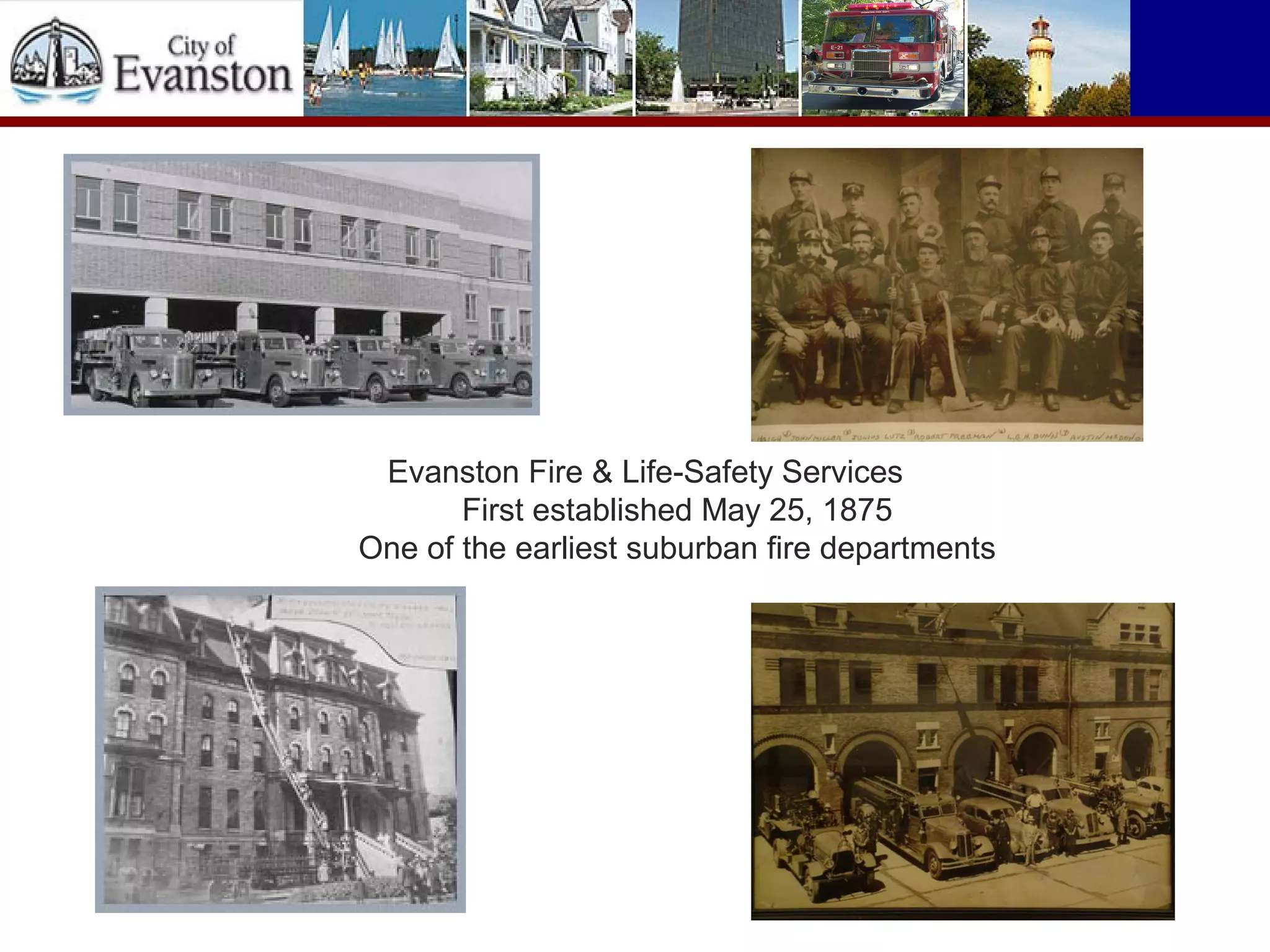
Evanston Fire & Life-Safety Services
First established May 25, 1875
One of the earliest suburban fire departments
We exist, 24 hours of every day, to protect life, property, and the environment. We will provide superior quality fire
suppression, emergency medical services, fire prevention, public education, technical rescue, non-emergency and
support services; to prevent or minimize situations that effect the people we serve.
Organizational Values
Individual worth We believe our members are the most important resource.
Teamwork Together we strive, together we accomplish.
Professionalism Maintaining high standards of ethical conduct and technical competence.
Quality Committing to excellence in everything we do.
Respect We treat each other and the public with dignity. We make each encounter a reflection of how
we wish to be treated.
Preparation We will seek continuous improvement and evaluation of our knowledge and skills,
sharing them with each other.
Evanston Fire & Life-Safety Services
Our Mission Statement
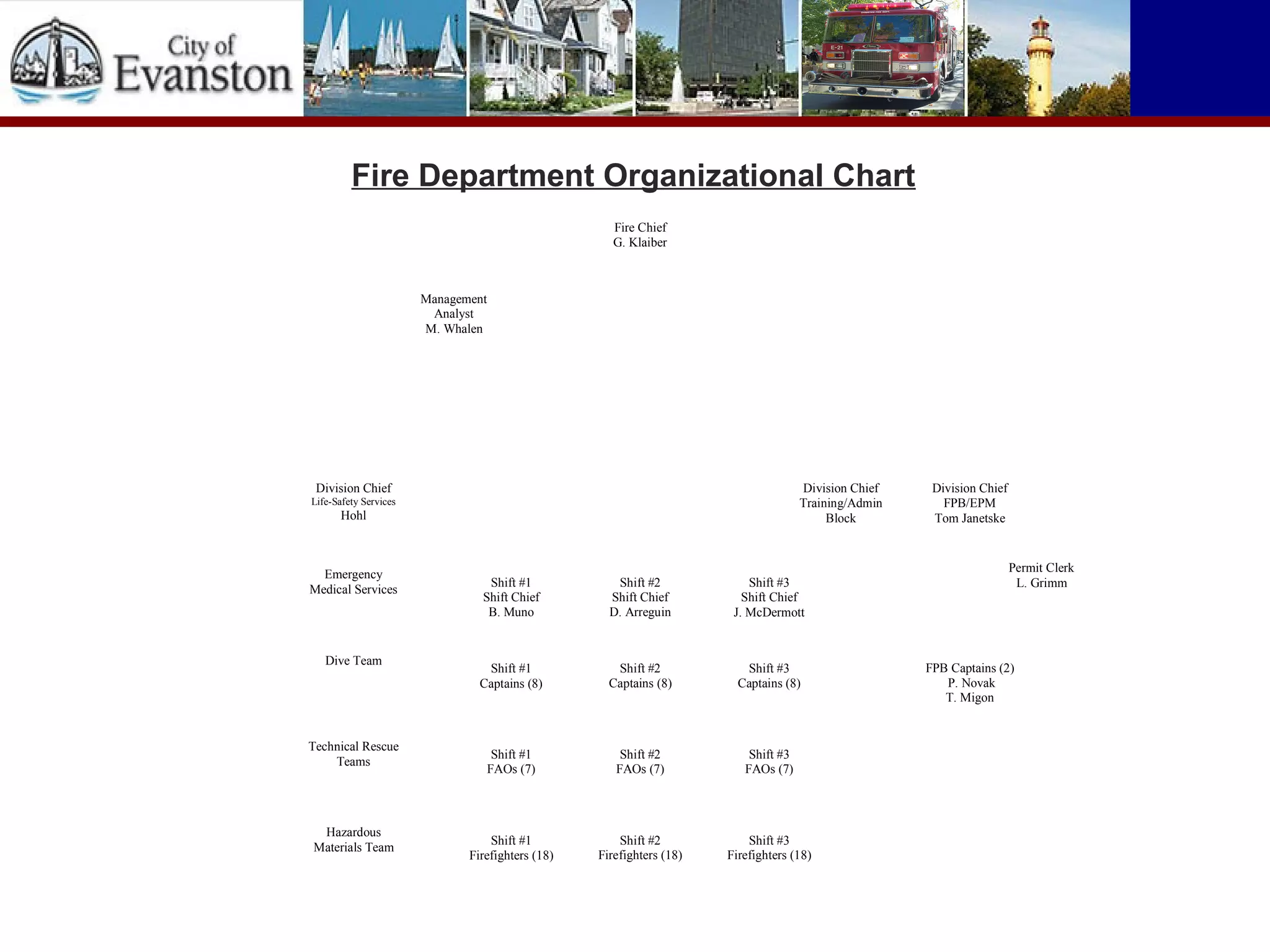
Fire Department Organizational Chart
Fire Chief
G. Klaiber
Management
Analyst
M. Whalen
Division Chief
Life-Safety Services
Hohl
Division Chief
FPB/EPM
Tom Janetske
Division Chief
Training/Admin
Block
Shift #3
Shift Chief
J. McDermott
Shift #2
Shift Chief
D. Arreguin
Shift #1
Shift Chief
B. Muno
Shift #3
Captains (8)
Shift #2
Captains (8)
Shift #1
Captains (8)
Shift #3
FAOs (7)
Shift #2
FAOs (7)
Shift #1
FAOs (7)
Shift #3
Firefighters (18)
Shift #2
Firefighters (18)
Shift #1
Firefighters (18)
Dive Team
Emergency
Medical Services
Hazardous
Materials Team
Technical Rescue
Teams
Permit Clerk
L. Grimm
FPB Captains (2)
P. Novak
T. Migon
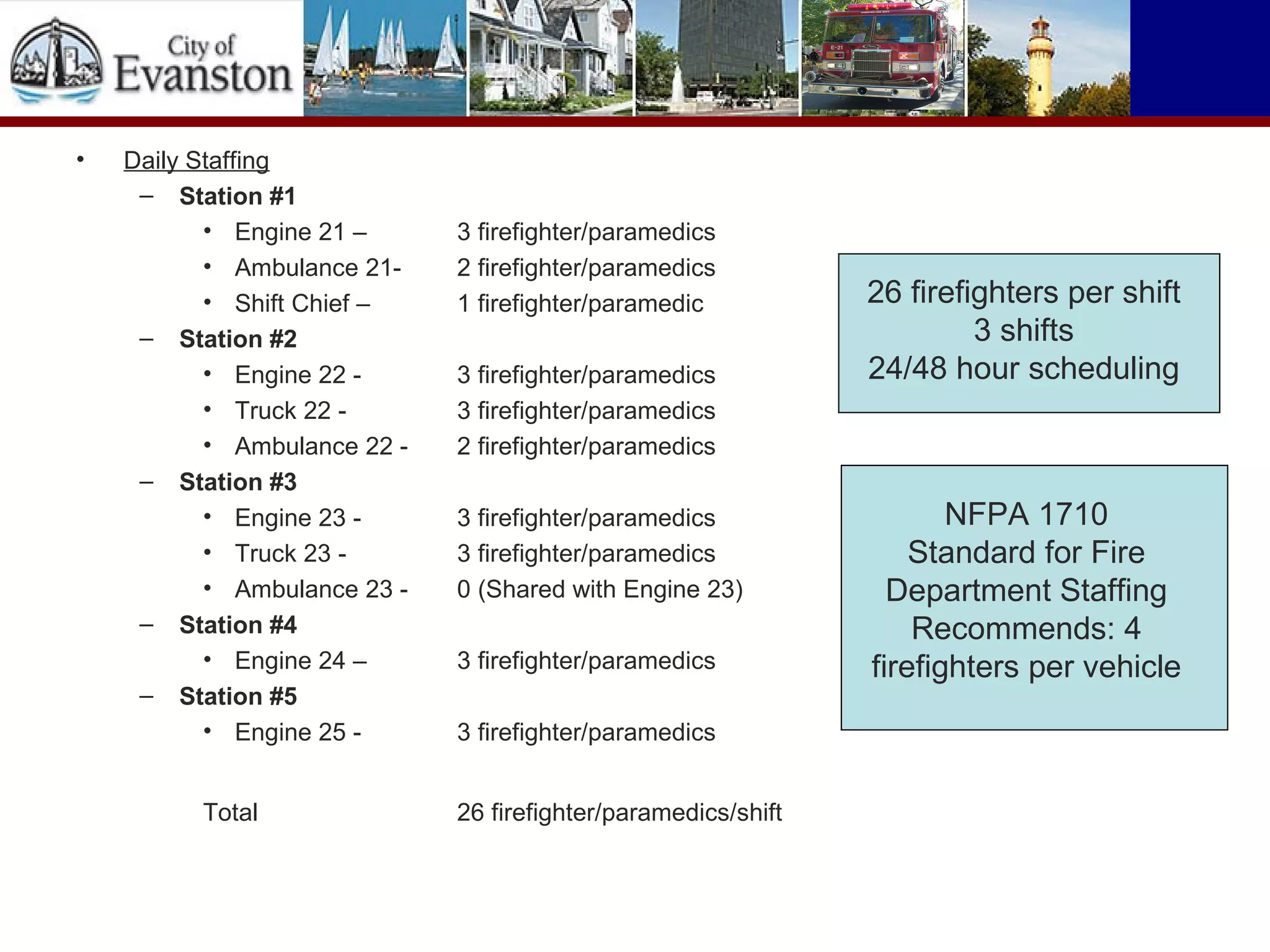
• Daily Staffing
– Station #1
• Engine 21 – 3 firefighter/paramedics
• Ambulance 21- 2 firefighter/paramedics
• Shift Chief – 1 firefighter/paramedic
– Station #2
• Engine 22 - 3 firefighter/paramedics
• Truck 22 - 3 firefighter/paramedics
• Ambulance 22 - 2 firefighter/paramedics
– Station #3
• Engine 23 - 3 firefighter/paramedics
• Truck 23 - 3 firefighter/paramedics
• Ambulance 23 - 0 (Shared with Engine 23)
– Station #4
• Engine 24 – 3 firefighter/paramedics
– Station #5
• Engine 25 - 3 firefighter/paramedics
Total 26 firefighter/paramedics/shift
26 firefighters per shift
3 shifts
24/48 hour scheduling
NFPA 1710
Standard for Fire
Department Staffing
Recommends: 4
firefighters per vehicle
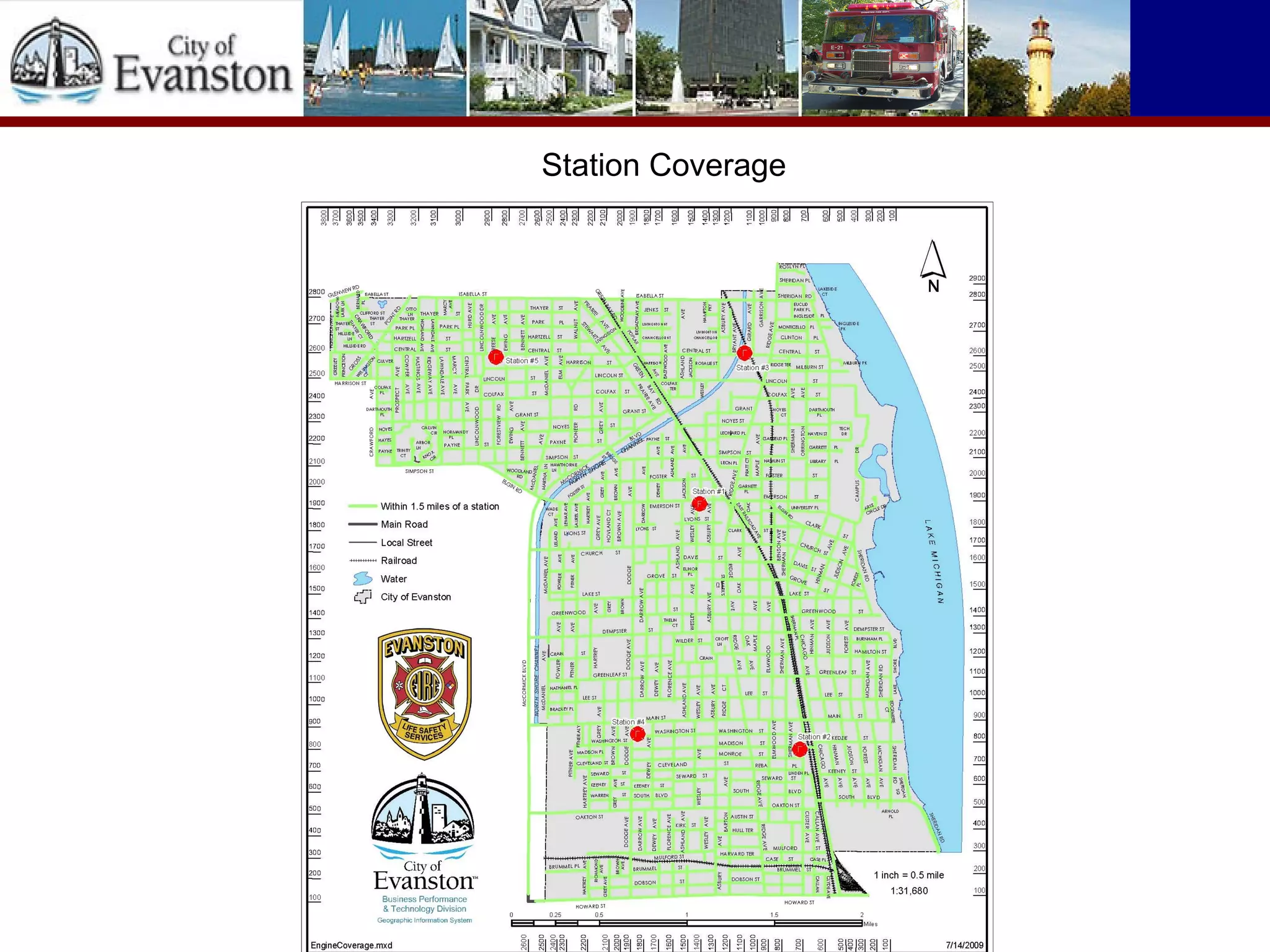
Station Coverage
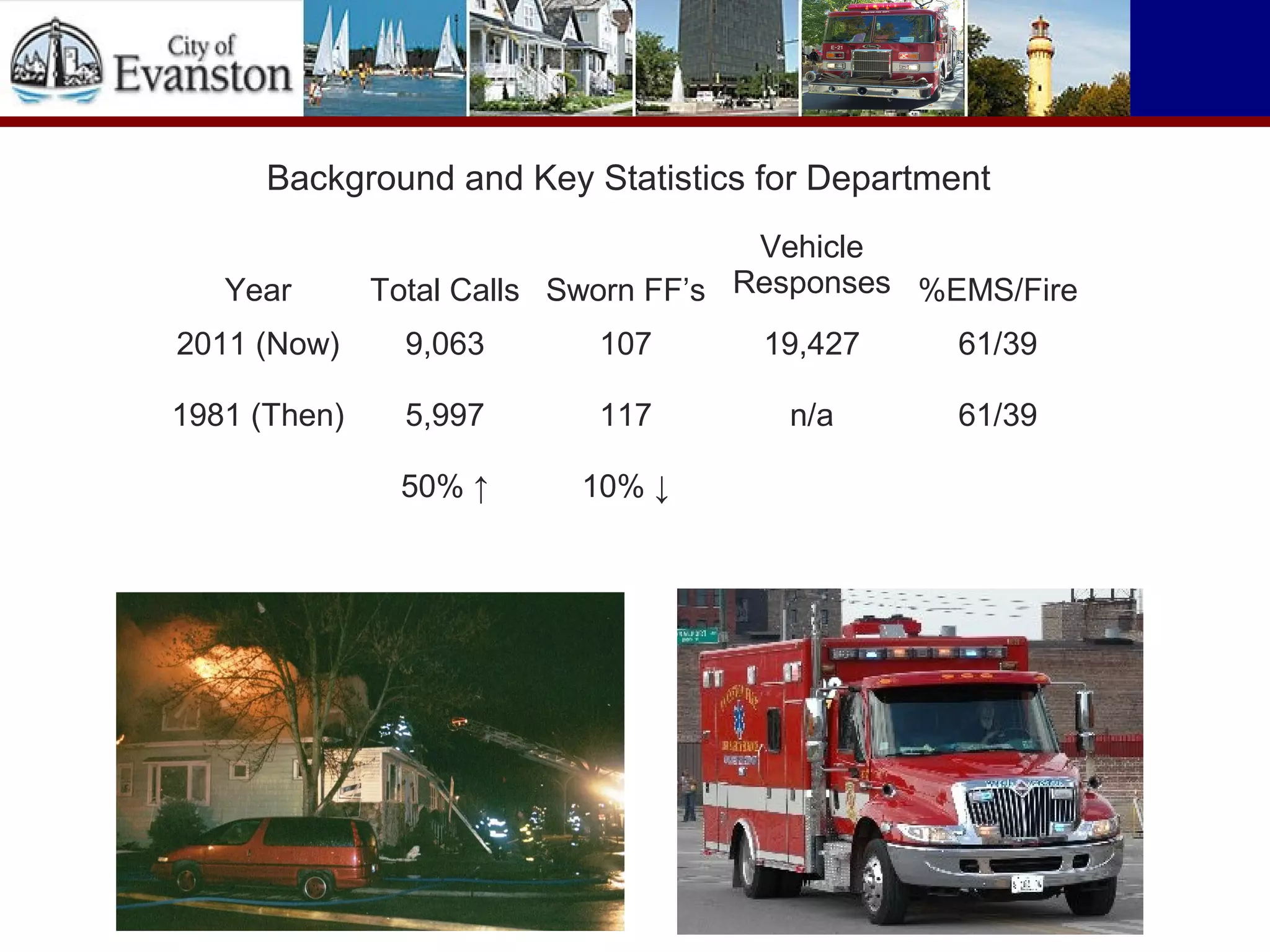
Year Total Calls Sworn FF’s
Vehicle
Responses %EMS/Fire
2011 (Now) 9,063 107 19,427 61/39
1981 (Then) 5,997 117 n/a 61/39
50% ↑ 10% ↓
Background and Key Statistics for Department
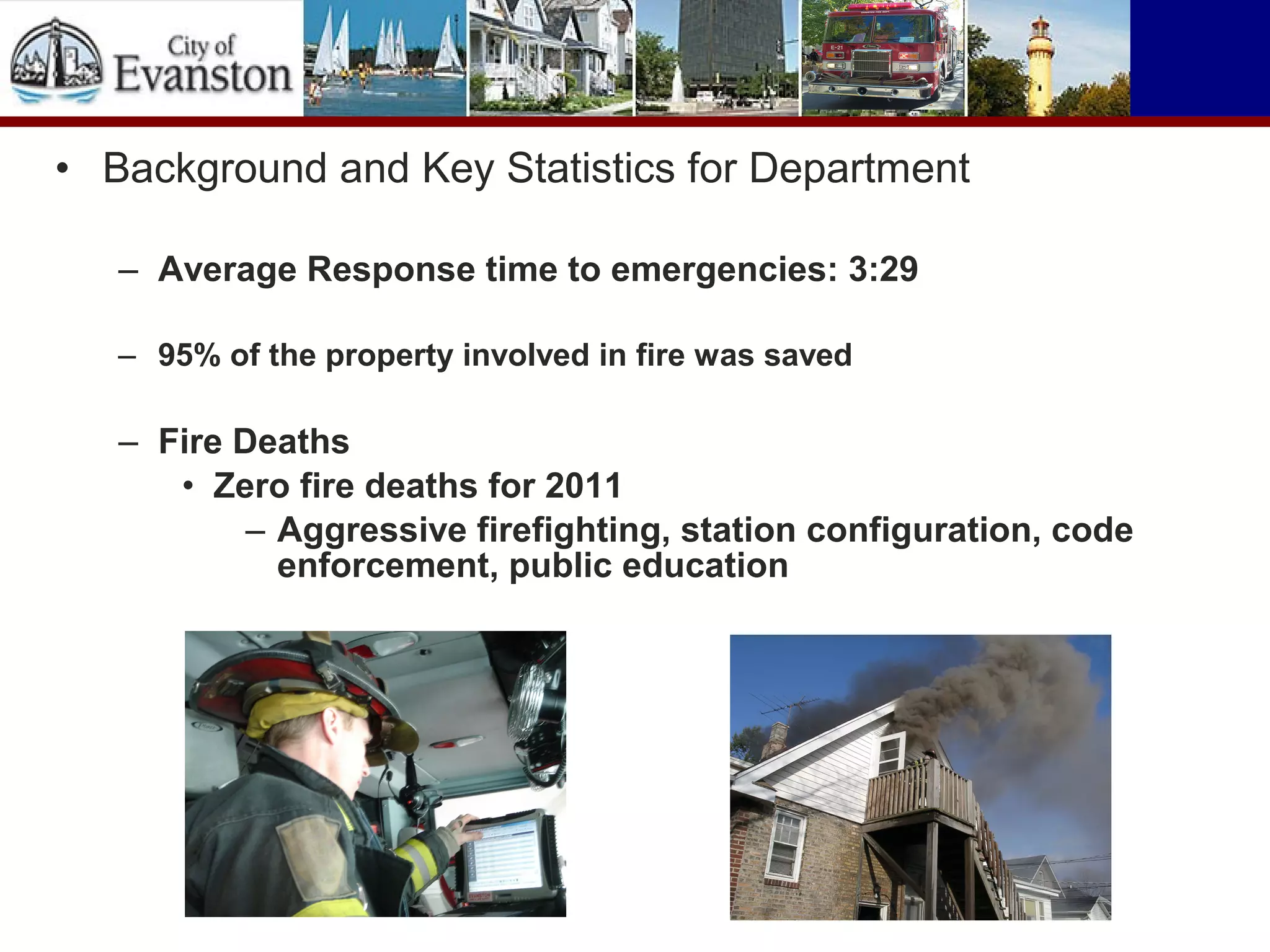
• Background and Key Statistics for Department
– Average Response time to emergencies: 3:29
– 95% of the property involved in fire was saved
– Fire Deaths
• Zero fire deaths for 2011
– Aggressive firefighting, station configuration, code
enforcement, public education
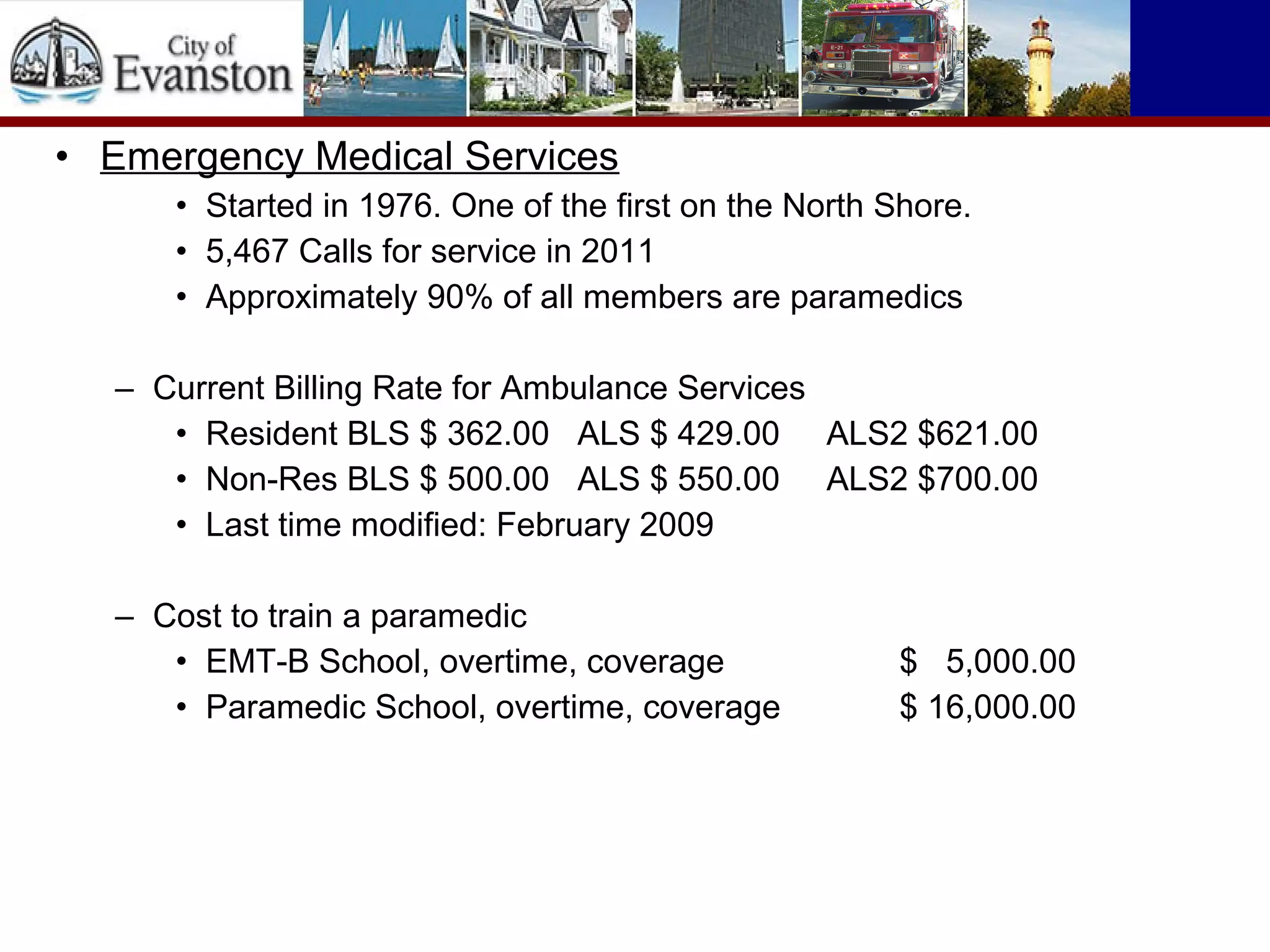
• Emergency Medical Services
• Started in 1976. One of the first on the North Shore.
• 5,467 Calls for service in 2011
• Approximately 90% of all members are paramedics
– Current Billing Rate for Ambulance Services
• Resident BLS $ 362.00 ALS $ 429.00 ALS2 $621.00
• Non-Res BLS $ 500.00 ALS $ 550.00 ALS2 $700.00
• Last time modified: February 2009
– Cost to train a paramedic
• EMT-B School, overtime, coverage $ 5,000.00
• Paramedic School, overtime, coverage $ 16,000.00
Response Types
EMS Response
Ambulance Response
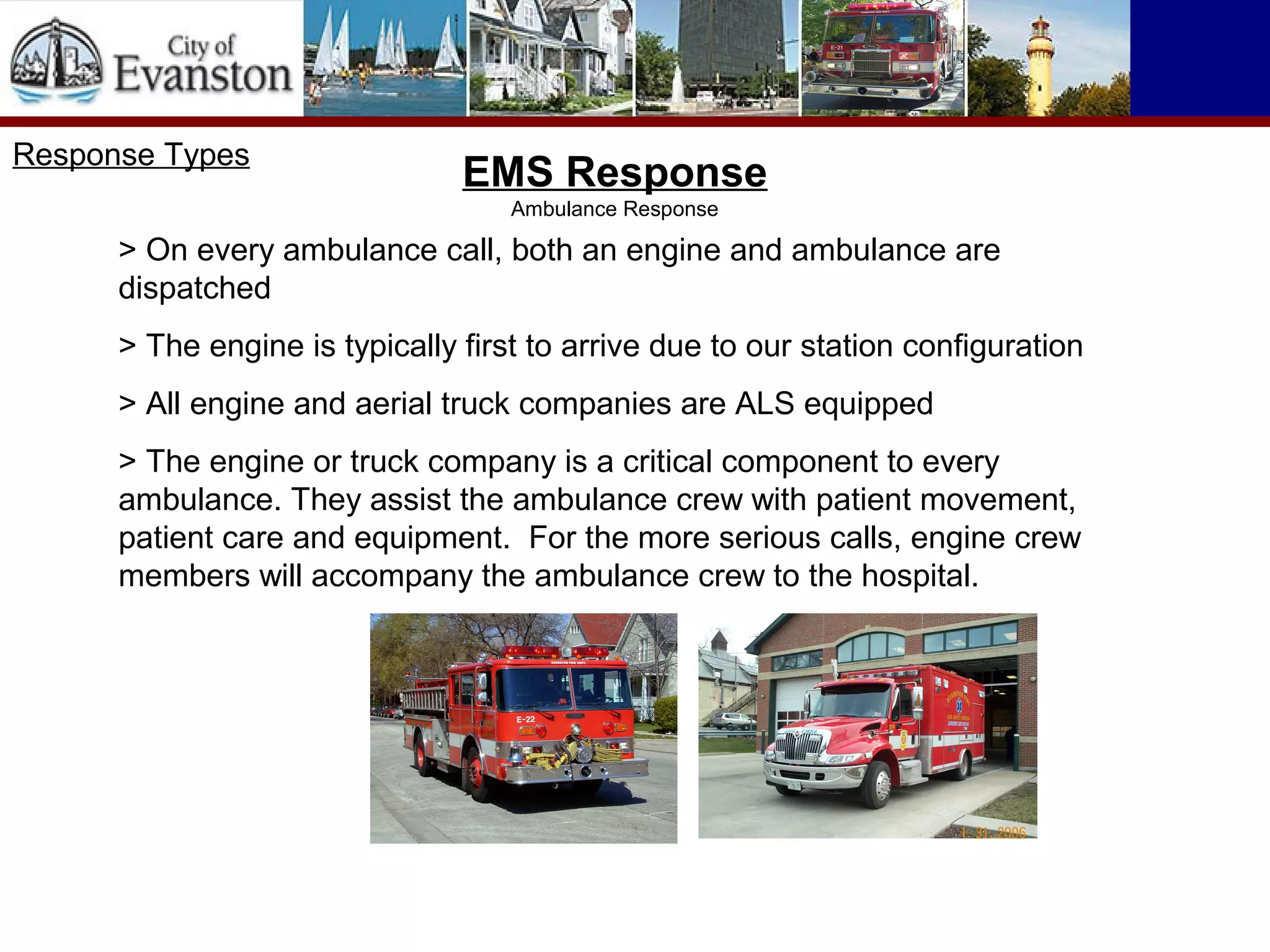
> On every ambulance call, both an engine and ambulance are
dispatched
> The engine is typically first to arrive due to our station configuration
> All engine and aerial truck companies are ALS equipped
> The engine or truck company is a critical component to every
ambulance. They assist the ambulance crew with patient movement,
patient care and equipment. For the more serious calls, engine crew
members will accompany the ambulance crew to the hospital.
Response Types
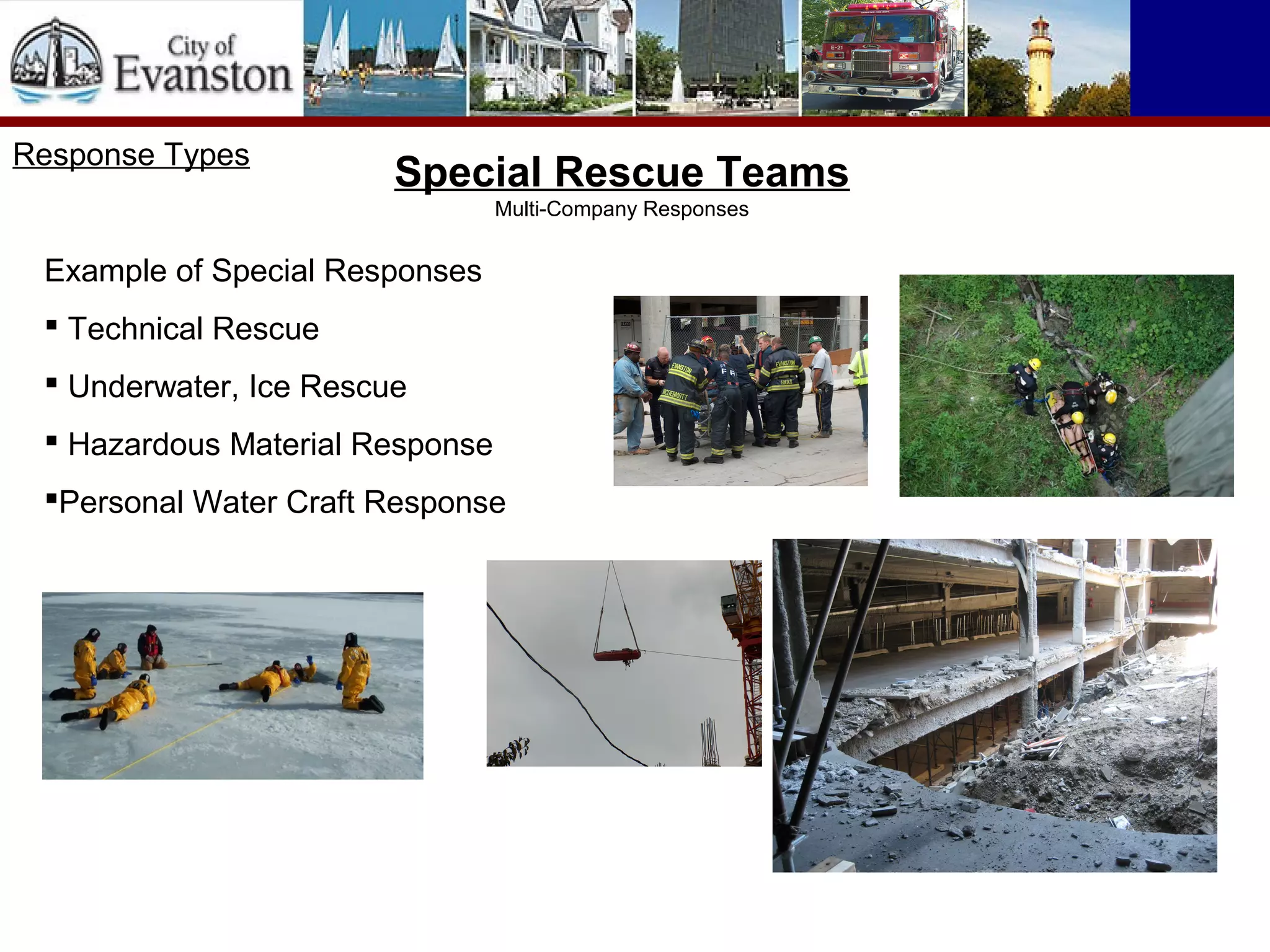
Special Rescue Teams
Multi-Company Responses
Example of Special Responses
 Technical Rescue
 Underwater, Ice Rescue
 Hazardous Material Response
Personal Water Craft Response
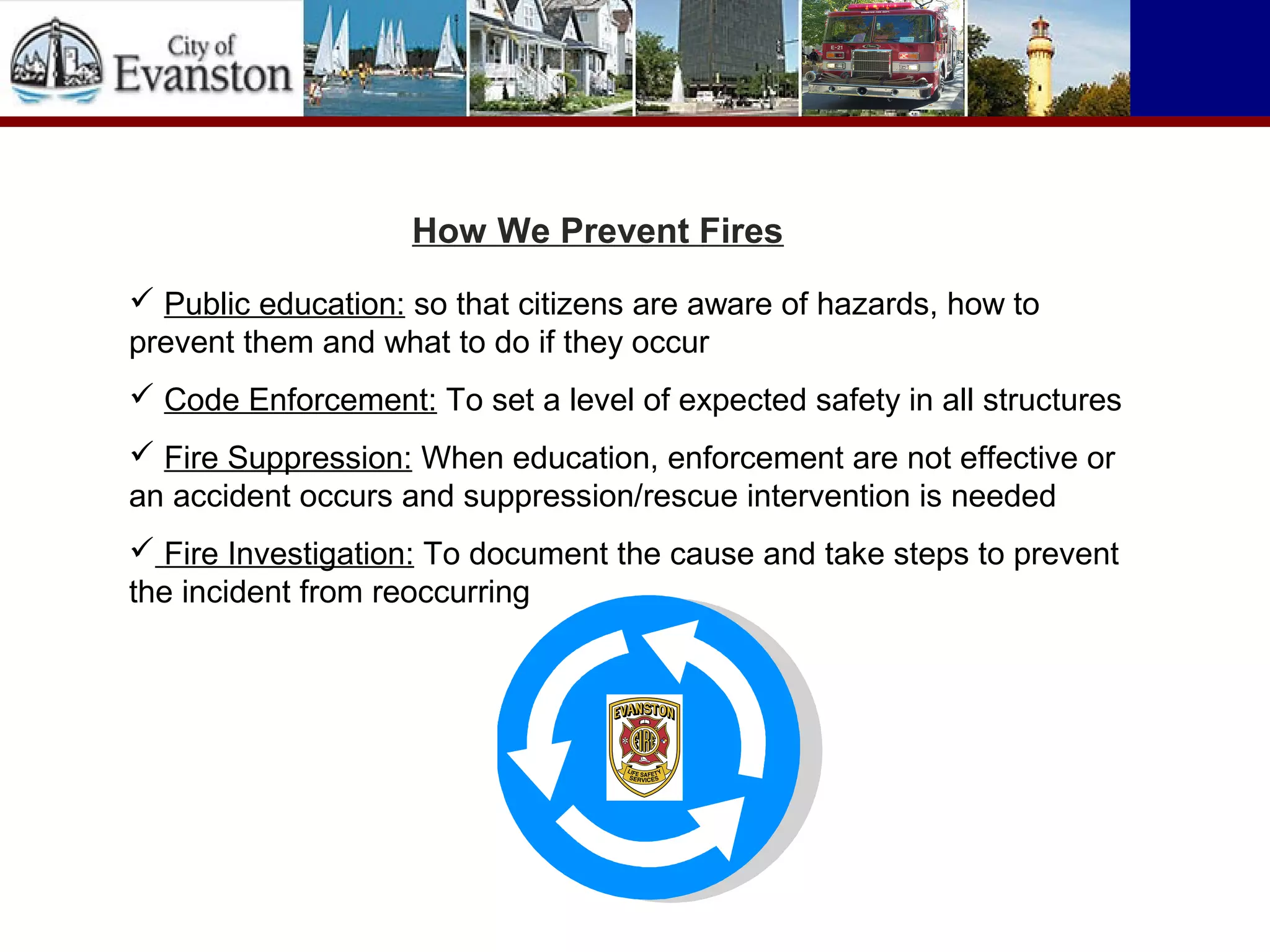
 Public education: so that citizens are aware of hazards, how to
prevent them and what to do if they occur
 Code Enforcement: To set a level of expected safety in all structures
 Fire Suppression: When education, enforcement are not effective or
an accident occurs and suppression/rescue intervention is needed
 Fire Investigation: To document the cause and take steps to prevent
the incident from reoccurring
How We Prevent Fires
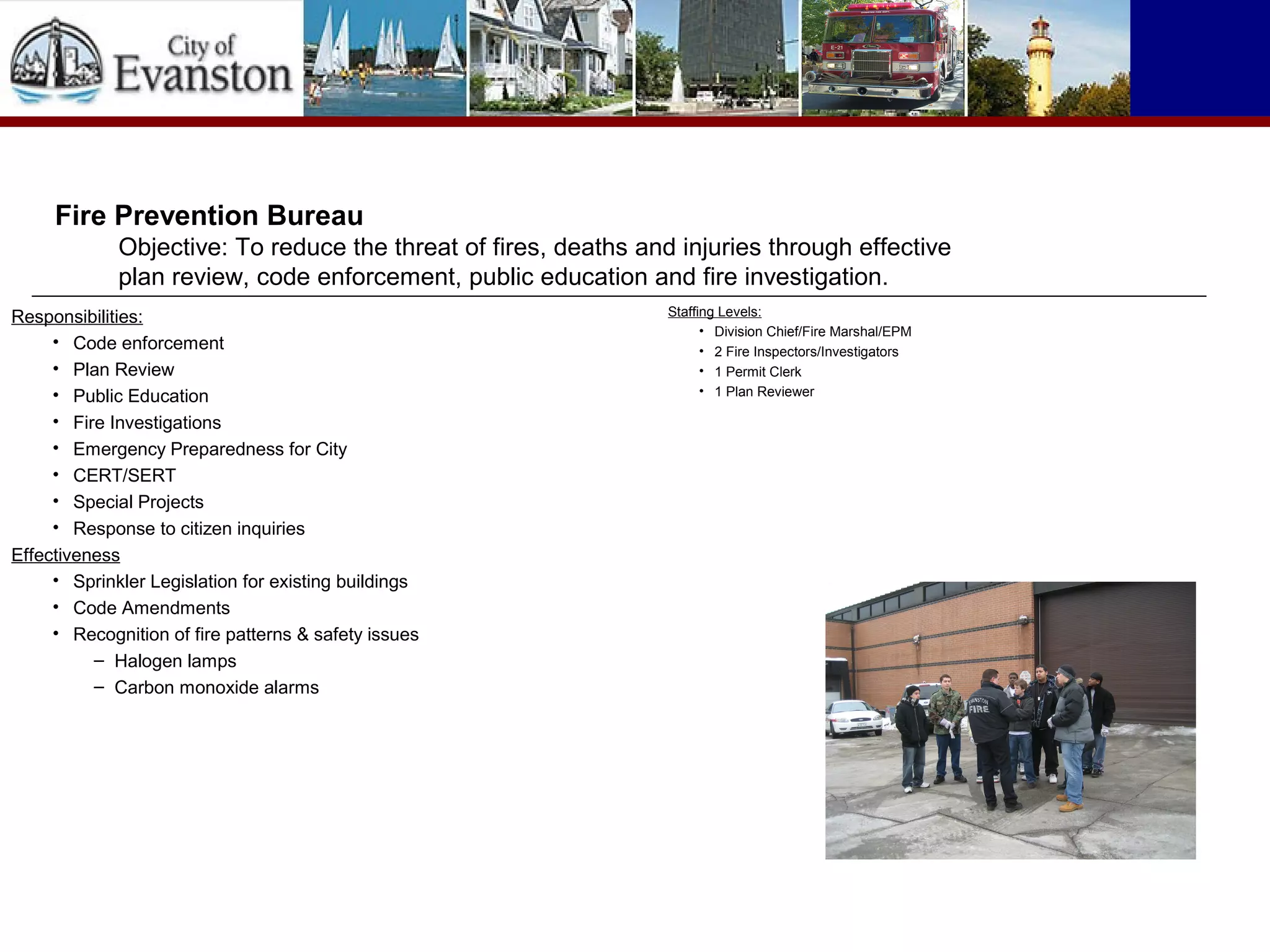
Responsibilities:
• Code enforcement
• Plan Review
• Public Education
• Fire Investigations
• Emergency Preparedness for City
• CERT/SERT
• Special Projects
• Response to citizen inquiries
Effectiveness
• Sprinkler Legislation for existing buildings
• Code Amendments
• Recognition of fire patterns & safety issues
– Halogen lamps
– Carbon monoxide alarms
Fire Prevention Bureau
Objective: To reduce the threat of fires, deaths and injuries through effective
plan review, code enforcement, public education and fire investigation.
Staffing Levels:
• Division Chief/Fire Marshal/EPM
• 2 Fire Inspectors/Investigators
• 1 Permit Clerk
• 1 Plan Reviewer
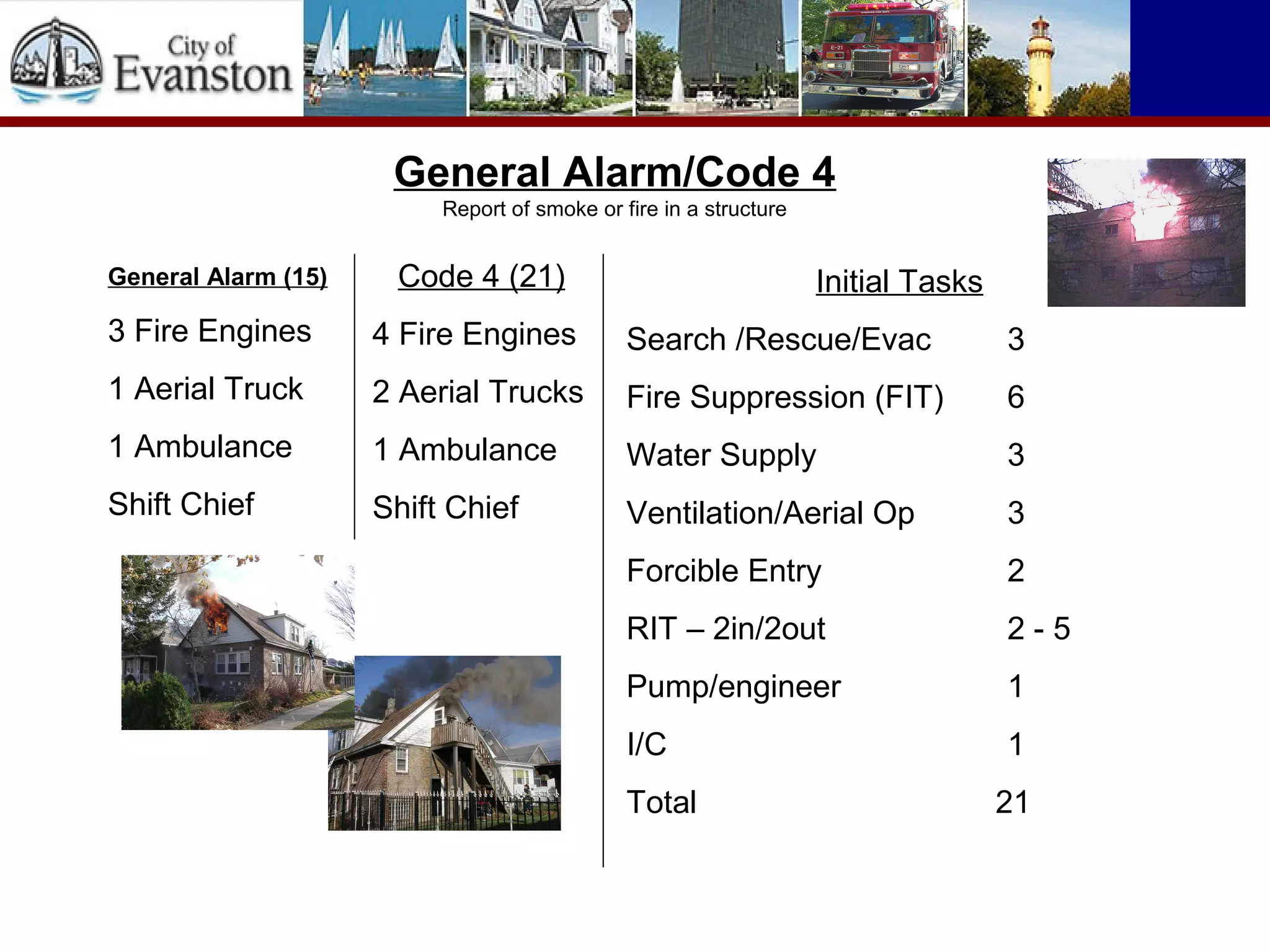
General Alarm/Code 4
Report of smoke or fire in a structure
General Alarm (15)
3 Fire Engines
1 Aerial Truck
1 Ambulance
Shift Chief
Initial Tasks
Search /Rescue/Evac 3
Fire Suppression (FIT) 6
Water Supply 3
Ventilation/Aerial Op 3
Forcible Entry 2
RIT – 2in/2out 2 - 5
Pump/engineer 1
I/C 1
Total 21
Code 4 (21)
4 Fire Engines
2 Aerial Trucks
1 Ambulance
Shift Chief
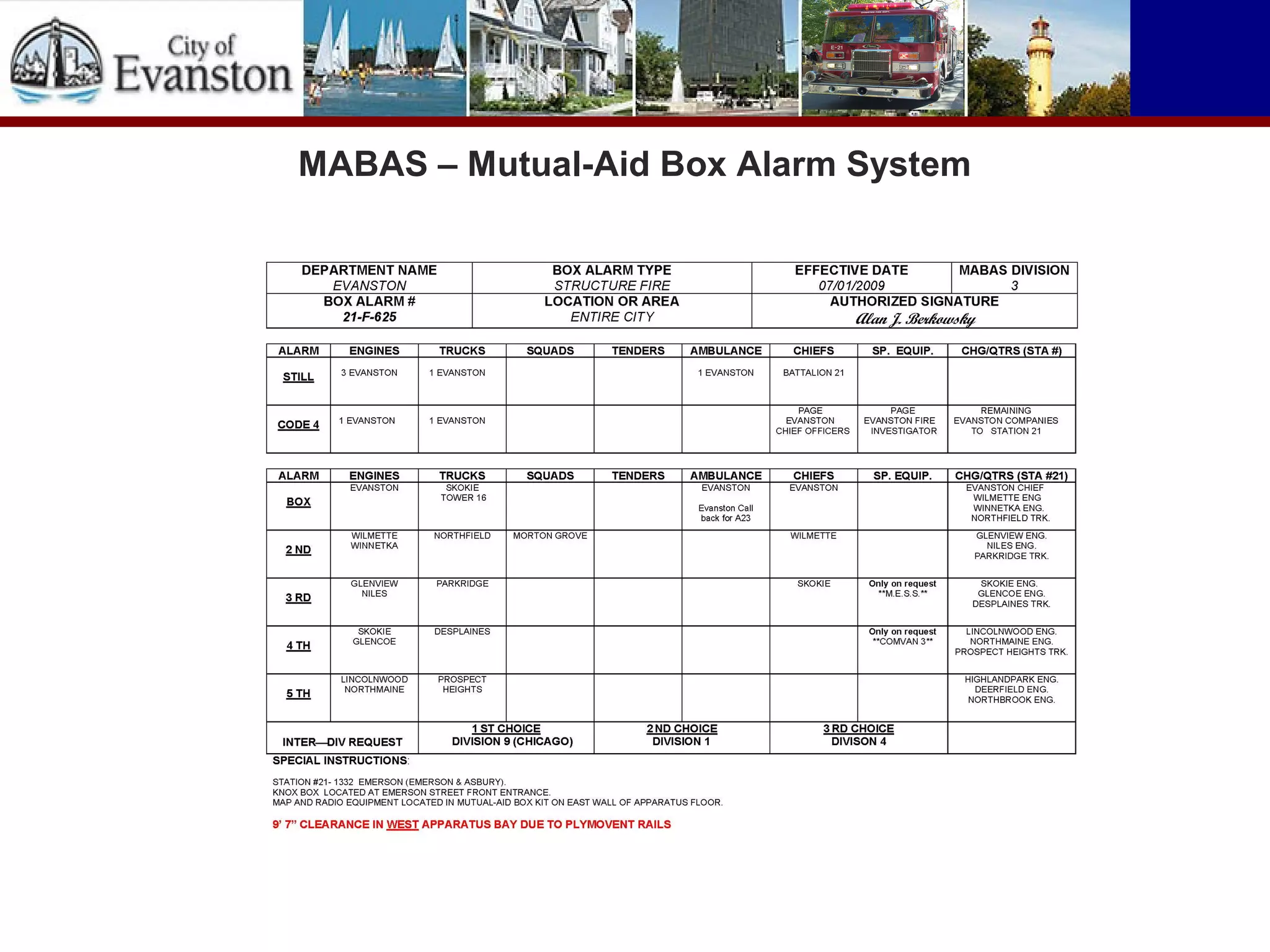
MABAS – Mutual-Aid Box Alarm System
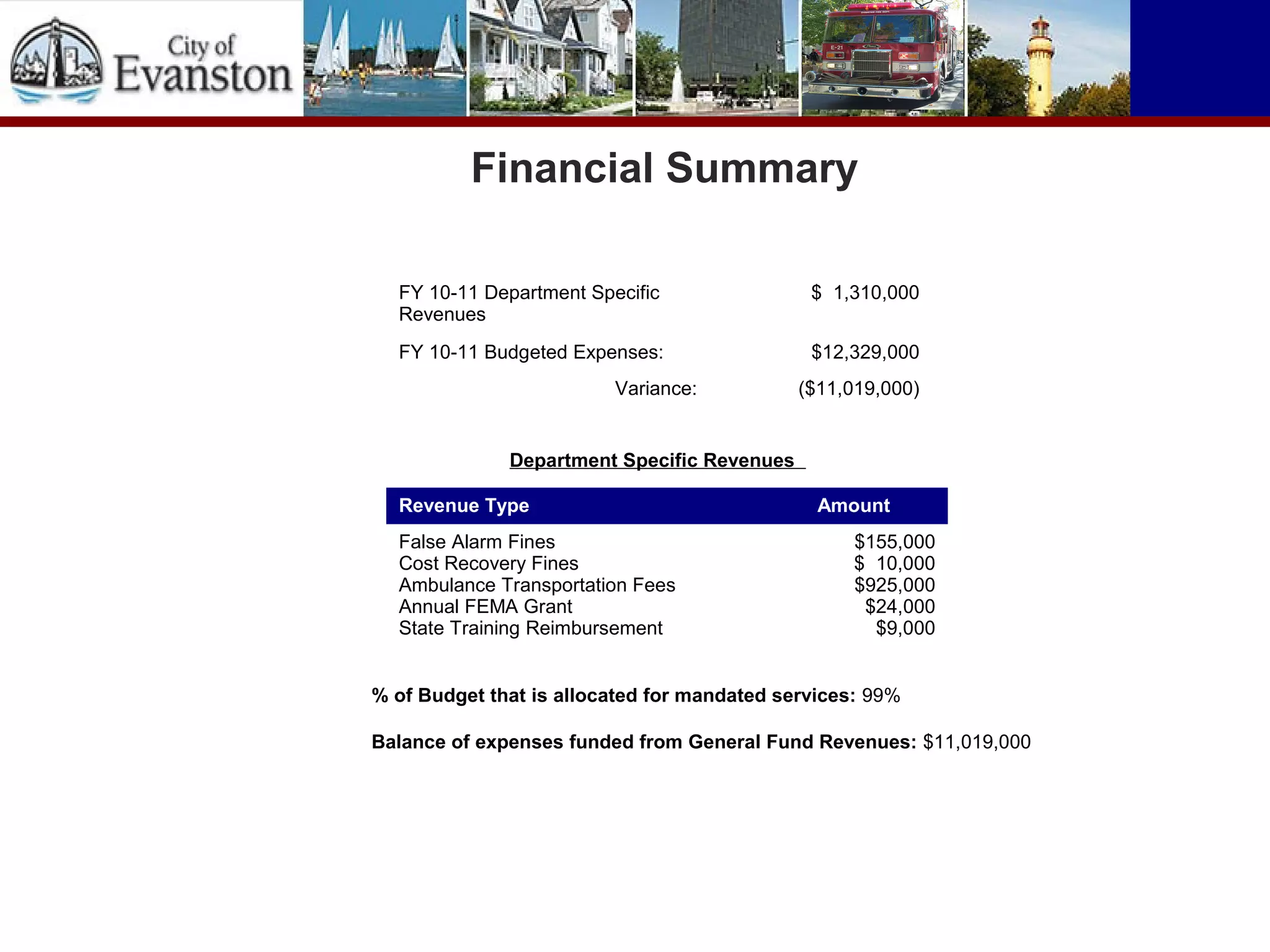
Financial Summary
FY 10-11 Department Specific
Revenues
$ 1,310,000
FY 10-11 Budgeted Expenses: $12,329,000
Variance: ($11,019,000)
Department Specific Revenues
Revenue Type Amount
False Alarm Fines
Cost Recovery Fines
Ambulance Transportation Fees
Annual FEMA Grant
State Training Reimbursement
$155,000
$ 10,000
$925,000
$24,000
$9,000
% of Budget that is allocated for mandated services: 99%
Balance of expenses funded from General Fund Revenues: $11,019,000
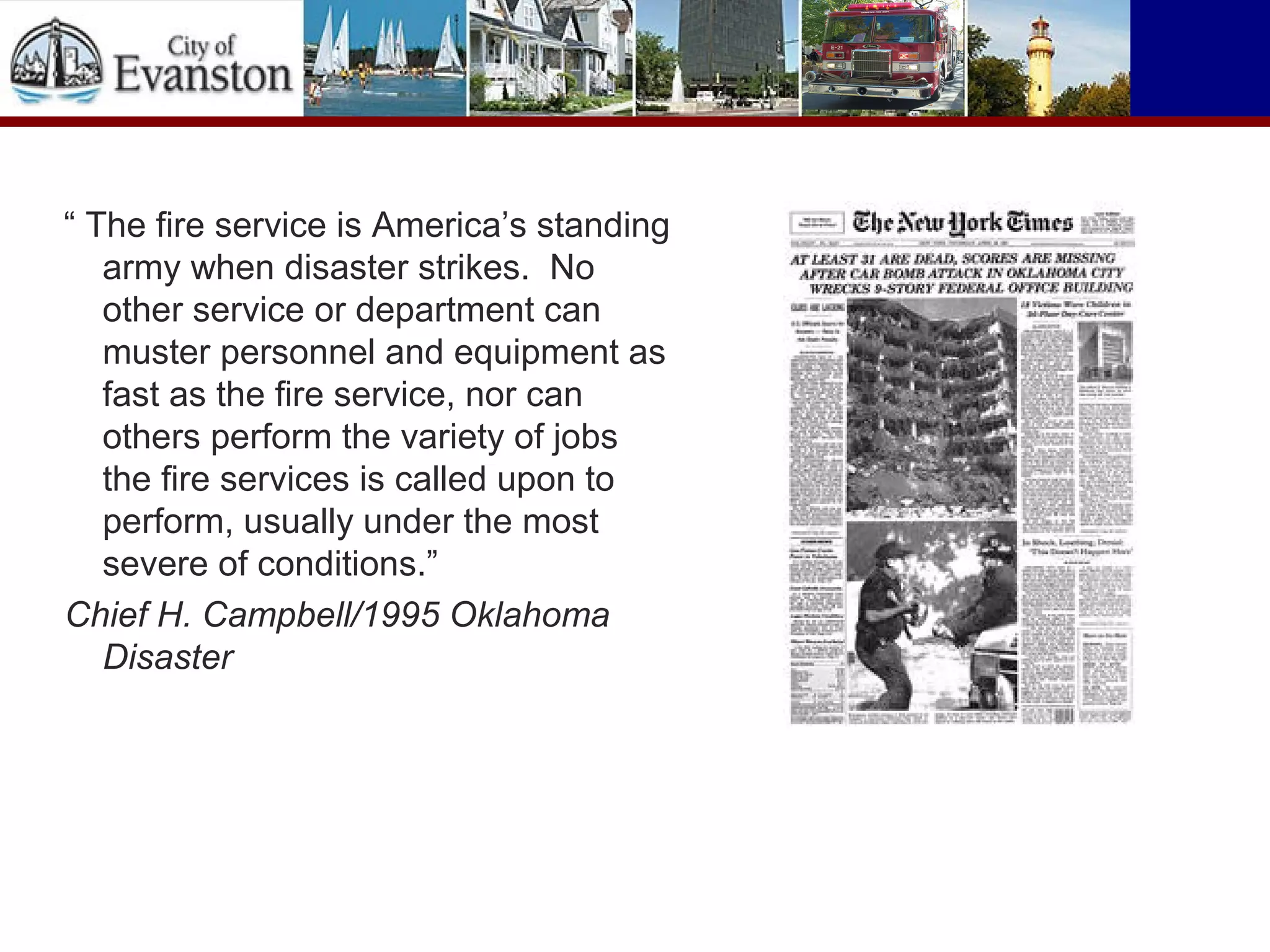
“ The fire service is America’s standing
army when disaster strikes. No
other service or department can
muster personnel and equipment as
fast as the fire service, nor can
others perform the variety of jobs
the fire services is called upon to
perform, usually under the most
severe of conditions.”
Chief H. Campbell/1995 Oklahoma
Disaster

Program review presentation fire and life safety services 3.30.12

  • 1.
  • 2.
    Evanston Fire &Life-Safety Services First established May 25, 1875 One of the earliest suburban fire departments
  • 3.
    We exist, 24hours of every day, to protect life, property, and the environment. We will provide superior quality fire suppression, emergency medical services, fire prevention, public education, technical rescue, non-emergency and support services; to prevent or minimize situations that effect the people we serve. Organizational Values Individual worth We believe our members are the most important resource. Teamwork Together we strive, together we accomplish. Professionalism Maintaining high standards of ethical conduct and technical competence. Quality Committing to excellence in everything we do. Respect We treat each other and the public with dignity. We make each encounter a reflection of how we wish to be treated. Preparation We will seek continuous improvement and evaluation of our knowledge and skills, sharing them with each other. Evanston Fire & Life-Safety Services Our Mission Statement
  • 4.
    Fire Department OrganizationalChart Fire Chief G. Klaiber Management Analyst M. Whalen Division Chief Life-Safety Services Hohl Division Chief FPB/EPM Tom Janetske Division Chief Training/Admin Block Shift #3 Shift Chief J. McDermott Shift #2 Shift Chief D. Arreguin Shift #1 Shift Chief B. Muno Shift #3 Captains (8) Shift #2 Captains (8) Shift #1 Captains (8) Shift #3 FAOs (7) Shift #2 FAOs (7) Shift #1 FAOs (7) Shift #3 Firefighters (18) Shift #2 Firefighters (18) Shift #1 Firefighters (18) Dive Team Emergency Medical Services Hazardous Materials Team Technical Rescue Teams Permit Clerk L. Grimm FPB Captains (2) P. Novak T. Migon
  • 5.
    • Daily Staffing –Station #1 • Engine 21 – 3 firefighter/paramedics • Ambulance 21- 2 firefighter/paramedics • Shift Chief – 1 firefighter/paramedic – Station #2 • Engine 22 - 3 firefighter/paramedics • Truck 22 - 3 firefighter/paramedics • Ambulance 22 - 2 firefighter/paramedics – Station #3 • Engine 23 - 3 firefighter/paramedics • Truck 23 - 3 firefighter/paramedics • Ambulance 23 - 0 (Shared with Engine 23) – Station #4 • Engine 24 – 3 firefighter/paramedics – Station #5 • Engine 25 - 3 firefighter/paramedics Total 26 firefighter/paramedics/shift 26 firefighters per shift 3 shifts 24/48 hour scheduling NFPA 1710 Standard for Fire Department Staffing Recommends: 4 firefighters per vehicle
  • 6.
  • 7.
    Year Total CallsSworn FF’s Vehicle Responses %EMS/Fire 2011 (Now) 9,063 107 19,427 61/39 1981 (Then) 5,997 117 n/a 61/39 50% ↑ 10% ↓ Background and Key Statistics for Department
  • 8.
    • Background andKey Statistics for Department – Average Response time to emergencies: 3:29 – 95% of the property involved in fire was saved – Fire Deaths • Zero fire deaths for 2011 – Aggressive firefighting, station configuration, code enforcement, public education
  • 9.
    • Emergency MedicalServices • Started in 1976. One of the first on the North Shore. • 5,467 Calls for service in 2011 • Approximately 90% of all members are paramedics – Current Billing Rate for Ambulance Services • Resident BLS $ 362.00 ALS $ 429.00 ALS2 $621.00 • Non-Res BLS $ 500.00 ALS $ 550.00 ALS2 $700.00 • Last time modified: February 2009 – Cost to train a paramedic • EMT-B School, overtime, coverage $ 5,000.00 • Paramedic School, overtime, coverage $ 16,000.00
  • 10.
    Response Types EMS Response AmbulanceResponse > On every ambulance call, both an engine and ambulance are dispatched > The engine is typically first to arrive due to our station configuration > All engine and aerial truck companies are ALS equipped > The engine or truck company is a critical component to every ambulance. They assist the ambulance crew with patient movement, patient care and equipment. For the more serious calls, engine crew members will accompany the ambulance crew to the hospital.
  • 11.
    Response Types Special RescueTeams Multi-Company Responses Example of Special Responses  Technical Rescue  Underwater, Ice Rescue  Hazardous Material Response Personal Water Craft Response
  • 12.
     Public education:so that citizens are aware of hazards, how to prevent them and what to do if they occur  Code Enforcement: To set a level of expected safety in all structures  Fire Suppression: When education, enforcement are not effective or an accident occurs and suppression/rescue intervention is needed  Fire Investigation: To document the cause and take steps to prevent the incident from reoccurring How We Prevent Fires
  • 13.
    Responsibilities: • Code enforcement •Plan Review • Public Education • Fire Investigations • Emergency Preparedness for City • CERT/SERT • Special Projects • Response to citizen inquiries Effectiveness • Sprinkler Legislation for existing buildings • Code Amendments • Recognition of fire patterns & safety issues – Halogen lamps – Carbon monoxide alarms Fire Prevention Bureau Objective: To reduce the threat of fires, deaths and injuries through effective plan review, code enforcement, public education and fire investigation. Staffing Levels: • Division Chief/Fire Marshal/EPM • 2 Fire Inspectors/Investigators • 1 Permit Clerk • 1 Plan Reviewer
  • 14.
    General Alarm/Code 4 Reportof smoke or fire in a structure General Alarm (15) 3 Fire Engines 1 Aerial Truck 1 Ambulance Shift Chief Initial Tasks Search /Rescue/Evac 3 Fire Suppression (FIT) 6 Water Supply 3 Ventilation/Aerial Op 3 Forcible Entry 2 RIT – 2in/2out 2 - 5 Pump/engineer 1 I/C 1 Total 21 Code 4 (21) 4 Fire Engines 2 Aerial Trucks 1 Ambulance Shift Chief
  • 15.
    MABAS – Mutual-AidBox Alarm System
  • 16.
    Financial Summary FY 10-11Department Specific Revenues $ 1,310,000 FY 10-11 Budgeted Expenses: $12,329,000 Variance: ($11,019,000) Department Specific Revenues Revenue Type Amount False Alarm Fines Cost Recovery Fines Ambulance Transportation Fees Annual FEMA Grant State Training Reimbursement $155,000 $ 10,000 $925,000 $24,000 $9,000 % of Budget that is allocated for mandated services: 99% Balance of expenses funded from General Fund Revenues: $11,019,000
  • 17.
    “ The fireservice is America’s standing army when disaster strikes. No other service or department can muster personnel and equipment as fast as the fire service, nor can others perform the variety of jobs the fire services is called upon to perform, usually under the most severe of conditions.” Chief H. Campbell/1995 Oklahoma Disaster