AFLAC|WORKFORCESREPORT|2015	FACTSHEET
Professional services industry trends
2015 Aflac WorkForces Report results
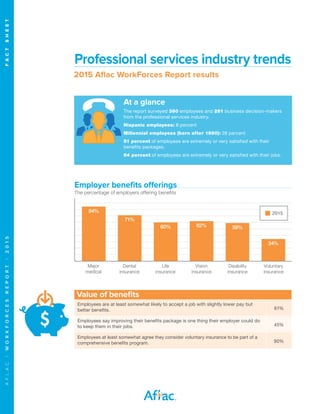
At a glance
The report surveyed 380 employees and 261 business decision-makers
from the professional services industry.
Hispanic employees: 8 percent
Millennial employees (born after 1980): 28 percent
51 percent of employees are extremely or very satisfied with their
benefits packages.
64 percent of employees are extremely or very satisfied with their jobs.
Value of benefits
Employees are at least somewhat likely to accept a job with slightly lower pay but
better benefits. 61%
Employees say improving their benefits package is one thing their employer could do
to keep them in their jobs. 45%
Employees at least somewhat agree they consider voluntary insurance to be part of a
comprehensive benefits program. 90%
Major
medical
Dental
insurance
Life
insurance
Vision
insurance
Disability
insurance
Voluntary
insurance
Employer benefits offerings
The percentage of employers offering benefits
201584%
60%
71%
62% 59%
34%
AFLAC|WORKFORCESREPORT|2015	FACTSHEET
0 5 10 15 20 25 30 35 40
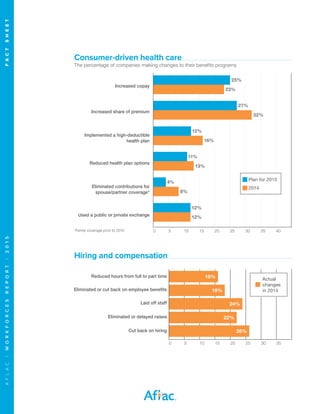
Consumer-driven health care
The percentage of companies making changes to their benefits programs
Plan for 2015
2014
25%
23%
Increased copay
Increased share of premium
Implemented a high-deductible
health plan
Reduced health plan options
Eliminated contributions for
spouse/partner coverage*
Used a public or private exchange
*Family coverage prior to 2015
Reduced hours from full to part time
Eliminated or cut back on employee benefits
Laid off staff
Eliminated or delayed raises
Cut back on hiring
0 5 10 15 20 25 30 35
16% Actual
changes
in 2014
Hiring and compensation
27%
32%
12%
16%
11%
13%
4%
8%
12%
12%
18%
14% 24%
14%14%14% 22%
14%14%14% 26%
4/15N150098H
AFLAC|WORKFORCESREPORT|2015	FACTSHEET
The 2015 Aflac WorkForces Report is the fifth annual Aflac employee benefits study. The study, conducted in February
2015 by Research Now, captured responses from 1,977 benefits decision-makers and 5,337 employees from across
the United States. To learn more about the Aflac WorkForces Report, visit AflacWorkForcesReport.com.
This material is intended to provide general information about an evolving topic and does not constitute legal, tax or
accounting advice regarding any specific situation. Aflac cannot anticipate all the facts that a particular employer or
individual will have to consider in their benefits decision-making process. We strongly encourage readers to discuss
their HCR situations with their advisors to determine the actions they need to take or to visit healthcare.gov
(which may also be contacted at 1-800-318-2596) for additional information.
This article is for informational purposes only and is not intended to be a solicitation.
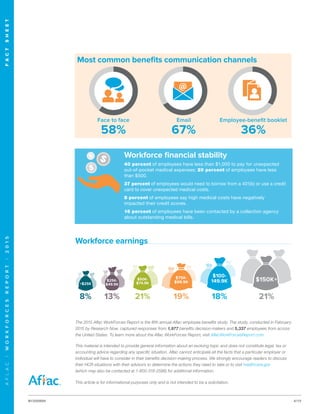
Workforce earnings
8%
<$25K
13%
$25K-
$49.9K
21%
$50K-
$74.9K
19%
$75K-
$99.9K
18%
$100-
149.9K
21%
$150K+
Workforce financial stability
40 percent of employees have less than $1,000 to pay for unexpected
out-of-pocket medical expenses; 20 percent of employees have less
than $500.
37 percent of employees would need to borrow from a 401(k) or use a credit
card to cover unexpected medical costs.
8 percent of employees say high medical costs have negatively
impacted their credit scores.
16 percent of employees have been contacted by a collection agency
about outstanding medical bills.
Most common benefits communication channels
Face to face
58%
Email
67%
Employee-benefit booklet
36%

Professional Services Industry Trends

  • 1.
    AFLAC|WORKFORCESREPORT|2015 FACTSHEET Professional services industrytrends 2015 Aflac WorkForces Report results At a glance The report surveyed 380 employees and 261 business decision-makers from the professional services industry. Hispanic employees: 8 percent Millennial employees (born after 1980): 28 percent 51 percent of employees are extremely or very satisfied with their benefits packages. 64 percent of employees are extremely or very satisfied with their jobs. Value of benefits Employees are at least somewhat likely to accept a job with slightly lower pay but better benefits. 61% Employees say improving their benefits package is one thing their employer could do to keep them in their jobs. 45% Employees at least somewhat agree they consider voluntary insurance to be part of a comprehensive benefits program. 90% Major medical Dental insurance Life insurance Vision insurance Disability insurance Voluntary insurance Employer benefits offerings The percentage of employers offering benefits 201584% 60% 71% 62% 59% 34%
  • 2.
    AFLAC|WORKFORCESREPORT|2015 FACTSHEET 0 5 1015 20 25 30 35 40 Consumer-driven health care The percentage of companies making changes to their benefits programs Plan for 2015 2014 25% 23% Increased copay Increased share of premium Implemented a high-deductible health plan Reduced health plan options Eliminated contributions for spouse/partner coverage* Used a public or private exchange *Family coverage prior to 2015 Reduced hours from full to part time Eliminated or cut back on employee benefits Laid off staff Eliminated or delayed raises Cut back on hiring 0 5 10 15 20 25 30 35 16% Actual changes in 2014 Hiring and compensation 27% 32% 12% 16% 11% 13% 4% 8% 12% 12% 18% 14% 24% 14%14%14% 22% 14%14%14% 26%
  • 3.
    4/15N150098H AFLAC|WORKFORCESREPORT|2015 FACTSHEET The 2015 AflacWorkForces Report is the fifth annual Aflac employee benefits study. The study, conducted in February 2015 by Research Now, captured responses from 1,977 benefits decision-makers and 5,337 employees from across the United States. To learn more about the Aflac WorkForces Report, visit AflacWorkForcesReport.com. This material is intended to provide general information about an evolving topic and does not constitute legal, tax or accounting advice regarding any specific situation. Aflac cannot anticipate all the facts that a particular employer or individual will have to consider in their benefits decision-making process. We strongly encourage readers to discuss their HCR situations with their advisors to determine the actions they need to take or to visit healthcare.gov (which may also be contacted at 1-800-318-2596) for additional information. This article is for informational purposes only and is not intended to be a solicitation. Workforce earnings 8% <$25K 13% $25K- $49.9K 21% $50K- $74.9K 19% $75K- $99.9K 18% $100- 149.9K 21% $150K+ Workforce financial stability 40 percent of employees have less than $1,000 to pay for unexpected out-of-pocket medical expenses; 20 percent of employees have less than $500. 37 percent of employees would need to borrow from a 401(k) or use a credit card to cover unexpected medical costs. 8 percent of employees say high medical costs have negatively impacted their credit scores. 16 percent of employees have been contacted by a collection agency about outstanding medical bills. Most common benefits communication channels Face to face 58% Email 67% Employee-benefit booklet 36%