WorkForces Report
Small company business trends
2016 Aflac WorkForces Report results for businesses
with fewer than 50 employees
Employer results at a glance:
Surveyed 323 business decision-makers.
14 percent of those who offer major medical health insurance to employees
offer a high-deductible health plan with an individual deductible over $1K.
19 percent have a wellness program.
10 percent offer voluntary insurance.
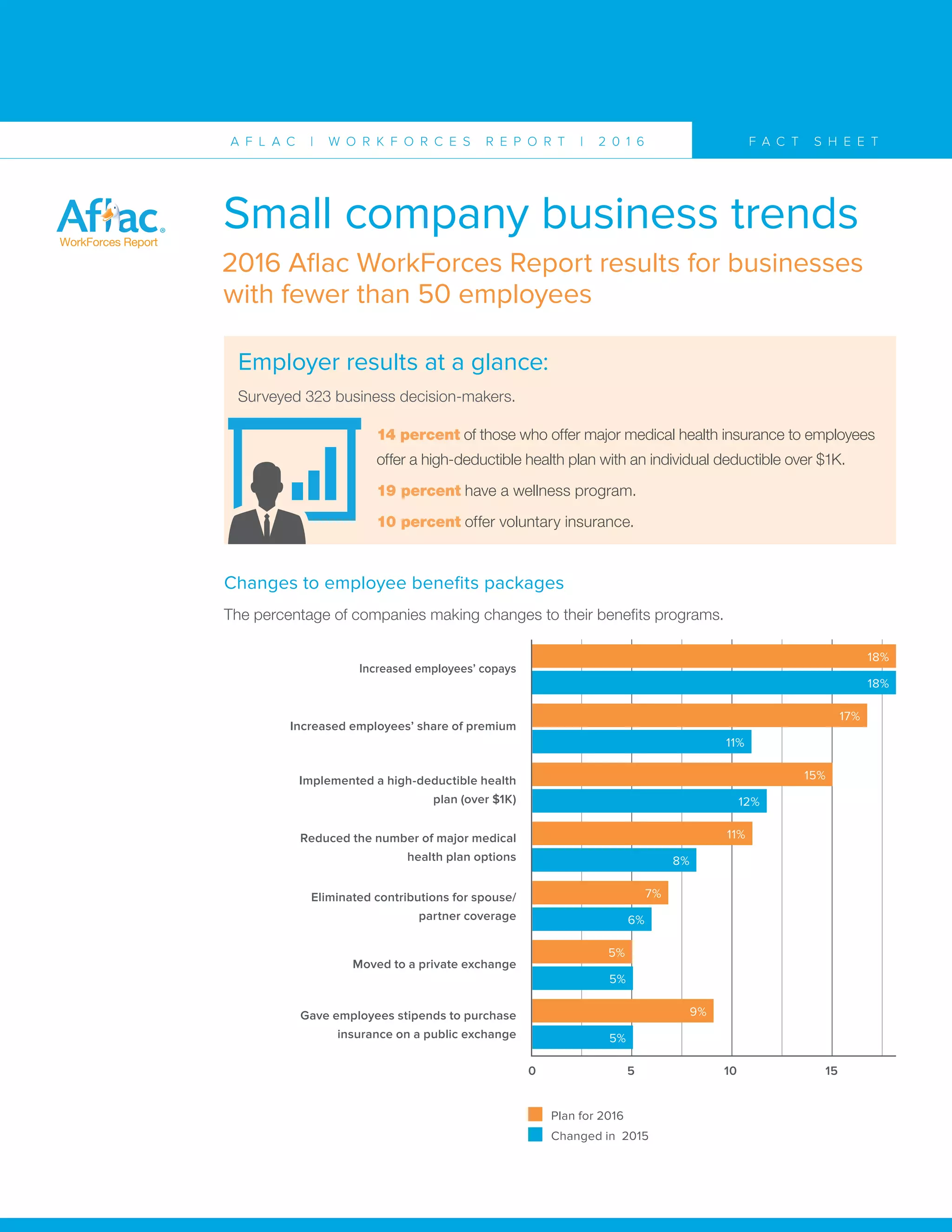
Changes to employee benefits packages
The percentage of companies making changes to their benefits programs.
Increased employees’ copays
Increased employees’ share of premium
Implemented a high-deductible health
plan (over $1K)
Reduced the number of major medical
health plan options
Eliminated contributions for spouse/
partner coverage
Moved to a private exchange
Gave employees stipends to purchase
insurance on a public exchange
0		5		10		15
18%
18%
11%
17%
12%
15%
8%
11%
6%
7%
5%
5%
5%
9%
Plan for 2016
Changed in 2015
	 A F L A C | W O R K F O R C E S R E P O R T | 2 0 1 6 	 F A C T S H E E T
PAGE 2
Employer concerns
Legislative issues
40%
say staying competitive in today’s marketplace is their company’s most important business
objective.
38% say lack of qualified talent results in the most productivity lost within their organization.
19%
say taking care of my employees by offering the widest range of benefits options is the most
important objective of their benefits programs.
26% are interested in outsourcing employee benefits communications services to a third party.
36% understand health care reform legislation extremely or very well.
16%
of employers offering major medical/health insurance say they are very concerned about the
excise tax on high-value medical plans, often referred to as the Cadillac Tax; 5 percent are not
familiar with this tax.
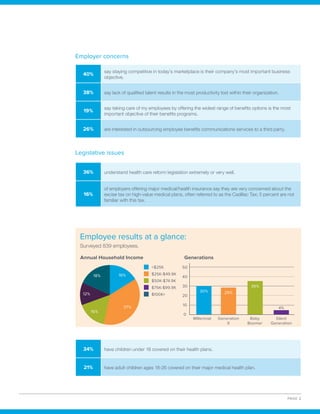
Employee results at a glance:
Surveyed 839 employees.
GenerationsAnnual Household Income
50
40
30
20
10
0
30% 29%
36%
Millennial Generation
X
Baby
Boomer
Silent
Generation
4%
<$25K
$25K-$49.9K
$50K-$74.9K
$75K-$99.9K
$100K+
16%18%
12%
16%
37%
34% have children under 18 covered on their health plans.
21% have adult children ages 18-26 covered on their major medical health plan.
PAGE 3
Growing importance of voluntary insurance
50%
agree that they regularly underestimate the total cost of an injury or illness, including medical,
household and out-of-pocket costs.
55%
say that if their employer did not provide adequate health insurance coverage, they would
purchase additional, affordable insurance products to ensure their coverage is adequate.
77%
would be at least somewhat likely to purchase voluntary insurance if their employers offered
the benefits.1
Value of benefits
Financial well-being
71%
say a benefits package offering is extremely or very important to their job satisfaction, and
60 percent say it’s extremely or very important to their employer loyalty.
55%
of employees are at least somewhat likely to accept a job with slightly lower pay but
better benefits.
36%
say improving their benefits package is one thing their employer could do to keep them in
their jobs.
15% have left or turned down a job due to the benefits it offered in the last 12 months.
66%
would be able to pay less than $1,000 for out-of-pocket expenses if an unexpected serious
illness or accident occurred today.
35%
would use a credit card to cover unexpected out-of-pocket expenses, and 16 percent would
borrow/withdraw money from their 401(k) or other retirement account.
14% say high medical costs have negatively affected their credit scores.
16% have been contacted by a collection agency related to outstanding medical bills.
Happiness
51% are extremely or very satisfied with their benefits packages.
67% are extremely or very satisfied with their jobs.
44% are at least somewhat likely to look for a job in the next 12 months.
3/16Z160241
Keep up to date
and follow Aflac at:
	 A F L A C | W O R K F O R C E S R E P O R T | 2 0 1 6 	 F A C T S H E E T
WorkForces Report
	 @Aflac	 linkedin.com/company/aflac
	 YouTube.com/Aflac	 facebook.com/aflac	
The 2016 Aflac WorkForces Report is the sixth annual Aflac employee benefits study
examining benefit trends and attitudes. The study captured responses from 1,500 benefits
decision-makers and 5,000 employees across the United States in various industries. The
2016 Aflac WorkForces Report survey was conducted by Lightspeed/GMI on behalf of Aflac.
For a full methodology, visit AflacWorkForcesReport.com.
This article is for informational purposes only and is not intended to be a solicitation.
1
Of respondents not offered voluntary benefits by their employers.
2
Of respondents offered wellness programs by their employers.
Wellness
79% participate in their employers’ wellness programs.2
53%
would participate in an exercise program through their workplace to help lower their health
insurance cost.

Awr.2016 fact-sheet small-business-trends-less-than-50

  • 1.
    WorkForces Report Small companybusiness trends 2016 Aflac WorkForces Report results for businesses with fewer than 50 employees Employer results at a glance: Surveyed 323 business decision-makers. 14 percent of those who offer major medical health insurance to employees offer a high-deductible health plan with an individual deductible over $1K. 19 percent have a wellness program. 10 percent offer voluntary insurance. Changes to employee benefits packages The percentage of companies making changes to their benefits programs. Increased employees’ copays Increased employees’ share of premium Implemented a high-deductible health plan (over $1K) Reduced the number of major medical health plan options Eliminated contributions for spouse/ partner coverage Moved to a private exchange Gave employees stipends to purchase insurance on a public exchange 0 5 10 15 18% 18% 11% 17% 12% 15% 8% 11% 6% 7% 5% 5% 5% 9% Plan for 2016 Changed in 2015 A F L A C | W O R K F O R C E S R E P O R T | 2 0 1 6 F A C T S H E E T
  • 2.
    PAGE 2 Employer concerns Legislativeissues 40% say staying competitive in today’s marketplace is their company’s most important business objective. 38% say lack of qualified talent results in the most productivity lost within their organization. 19% say taking care of my employees by offering the widest range of benefits options is the most important objective of their benefits programs. 26% are interested in outsourcing employee benefits communications services to a third party. 36% understand health care reform legislation extremely or very well. 16% of employers offering major medical/health insurance say they are very concerned about the excise tax on high-value medical plans, often referred to as the Cadillac Tax; 5 percent are not familiar with this tax. Employee results at a glance: Surveyed 839 employees. GenerationsAnnual Household Income 50 40 30 20 10 0 30% 29% 36% Millennial Generation X Baby Boomer Silent Generation 4% <$25K $25K-$49.9K $50K-$74.9K $75K-$99.9K $100K+ 16%18% 12% 16% 37% 34% have children under 18 covered on their health plans. 21% have adult children ages 18-26 covered on their major medical health plan.
  • 3.
    PAGE 3 Growing importanceof voluntary insurance 50% agree that they regularly underestimate the total cost of an injury or illness, including medical, household and out-of-pocket costs. 55% say that if their employer did not provide adequate health insurance coverage, they would purchase additional, affordable insurance products to ensure their coverage is adequate. 77% would be at least somewhat likely to purchase voluntary insurance if their employers offered the benefits.1 Value of benefits Financial well-being 71% say a benefits package offering is extremely or very important to their job satisfaction, and 60 percent say it’s extremely or very important to their employer loyalty. 55% of employees are at least somewhat likely to accept a job with slightly lower pay but better benefits. 36% say improving their benefits package is one thing their employer could do to keep them in their jobs. 15% have left or turned down a job due to the benefits it offered in the last 12 months. 66% would be able to pay less than $1,000 for out-of-pocket expenses if an unexpected serious illness or accident occurred today. 35% would use a credit card to cover unexpected out-of-pocket expenses, and 16 percent would borrow/withdraw money from their 401(k) or other retirement account. 14% say high medical costs have negatively affected their credit scores. 16% have been contacted by a collection agency related to outstanding medical bills. Happiness 51% are extremely or very satisfied with their benefits packages. 67% are extremely or very satisfied with their jobs. 44% are at least somewhat likely to look for a job in the next 12 months.
  • 4.
    3/16Z160241 Keep up todate and follow Aflac at: A F L A C | W O R K F O R C E S R E P O R T | 2 0 1 6 F A C T S H E E T WorkForces Report @Aflac linkedin.com/company/aflac YouTube.com/Aflac facebook.com/aflac The 2016 Aflac WorkForces Report is the sixth annual Aflac employee benefits study examining benefit trends and attitudes. The study captured responses from 1,500 benefits decision-makers and 5,000 employees across the United States in various industries. The 2016 Aflac WorkForces Report survey was conducted by Lightspeed/GMI on behalf of Aflac. For a full methodology, visit AflacWorkForcesReport.com. This article is for informational purposes only and is not intended to be a solicitation. 1 Of respondents not offered voluntary benefits by their employers. 2 Of respondents offered wellness programs by their employers. Wellness 79% participate in their employers’ wellness programs.2 53% would participate in an exercise program through their workplace to help lower their health insurance cost.