MRS Census & 
Geodemographics Group 
Jeni Tennison - @JeniT 
Peter Wells - @peterkwells
"The sale of the PAF with the Royal Mail was a 
mistake. Public access to public sector data 
must never be sold or given away again. This 
type of information, like census information 
and many other data sets, is very expensive to 
collect and collate into useable form, but it 
also has huge potential value to the economy 
and society as a whole if it is kept as an open, 
public good." 
Bernard Jenkin, Chair of Public Administration Select Committee
“Open data is data that can be freely used, 
reused and redistributed by anyone – 
subject only, at most, to the requirement to 
attribute and share alike.” 
Opendefinition.org
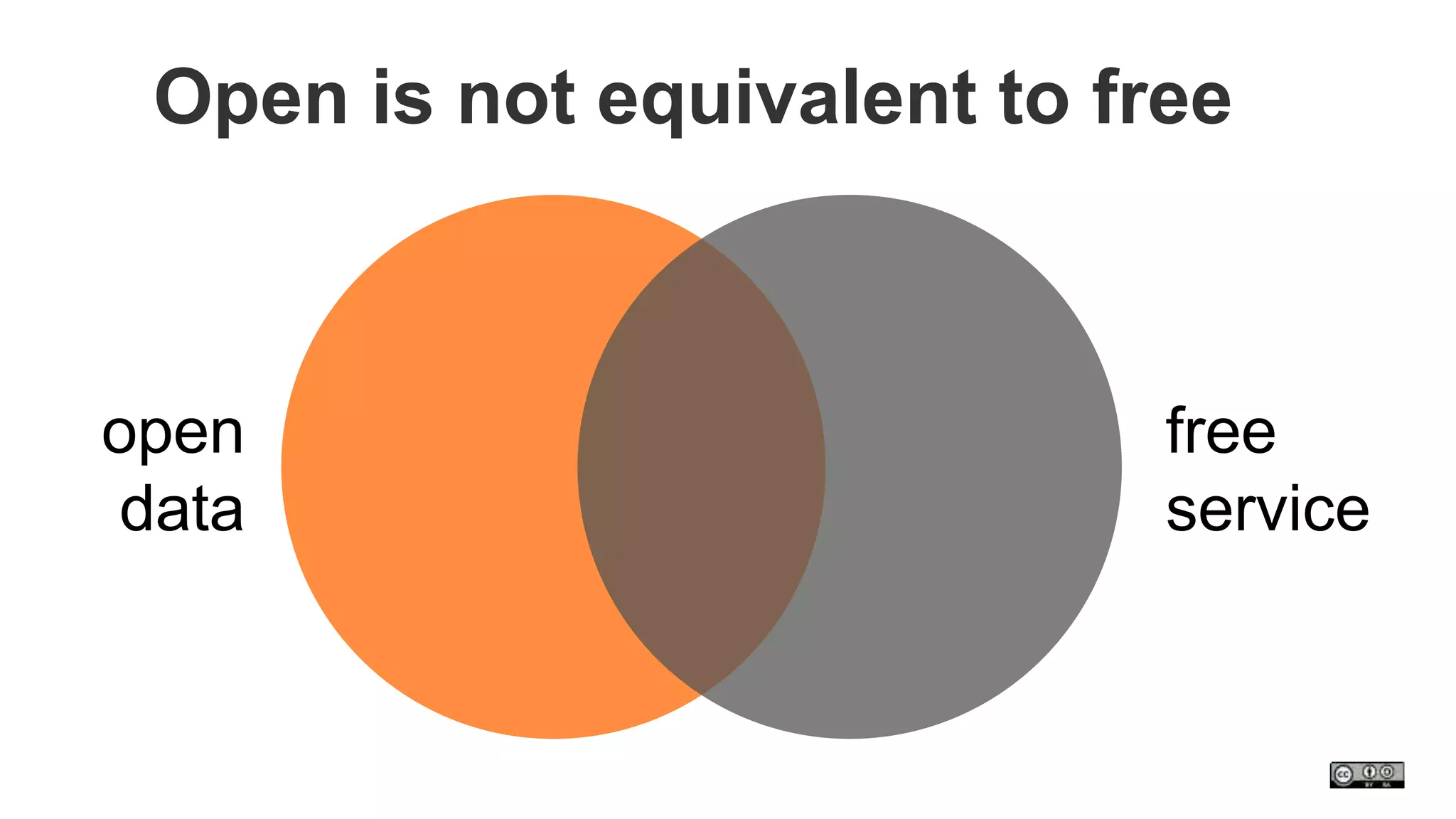
Open is not equivalent to free 
open 
data 
free 
service
Hypothesis 1: closed address files are monopoly 
information assets, embedded in huge amounts of public 
data, but which cannot be reproduced to a usable quality 
Hypothesis 2: it is possible to build & maintain a 
sustainable open address database better suited to 
today's requirements using modern, collaborative 
approaches to data management
A platform that brings together 
data about the places we live, 
work and visit.
Open Addresses Vision 
• Meeting the expectations of the modern 
information economy 
• Collaboratively maintained to benefit 
everyone 
• Providing plenty of scope for value-added 
products & services that avoid lock-in
Modern requirements 
• Addresses are not just for posting mail 
• Other requirements: 
– validation & auto-completion 
– geocoding for route finding 
– associating people with areas 
– classification of addresses for targeting 
interventions 
– linking datasets together
Modern maintenance 
• Through collaboration 
– professional / expert engagement 
– the wider crowd 
• Supplemented by 
– targeted (funded) activity 
• Addresses are well suited for this
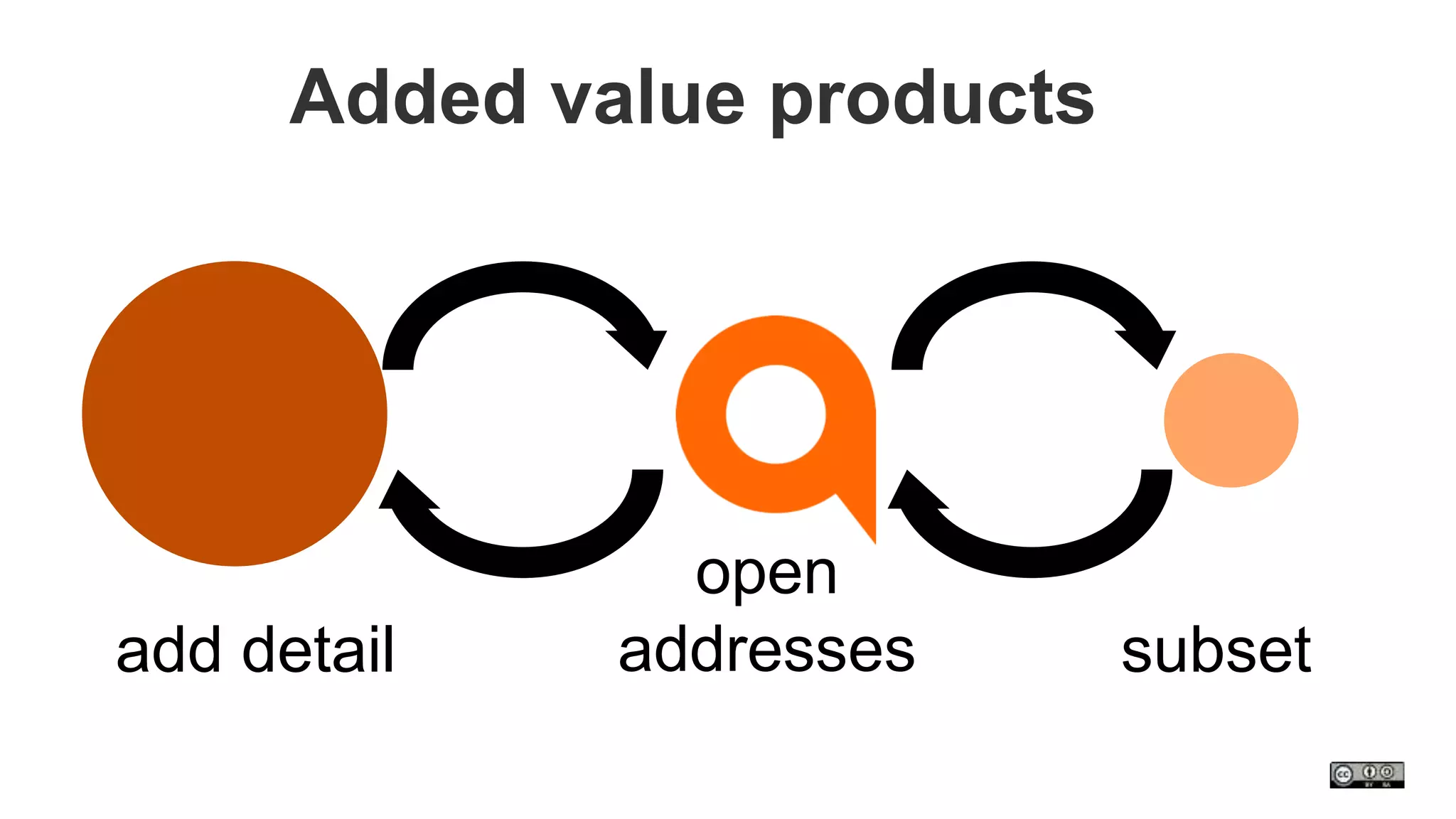
Added value products 
open 
add detail addresses subset
The Project 
• Funded from Release of Data Fund 
– administered by Open Data User Group 
– agreed by Public Sector Transparency Board 
– operating out of Cabinet Office 
• Legal feasibility 
• Technical feasibility 
• Sustainability feasibility
Symposium
What we found 
• Legal feasibility 
– received legal opinion that validation embeds RM/OS IP 
– doing due diligence on key open datasets 
• Technical feasibility 
– data integration & inference from open data sets 
– architecture for service provision including provenance 
• Sustainability feasibility 
– identified customer needs & possible products
Alpha Phase 
• October & November 
• Building minimum viable product 
– inferred addresses from open data 
– initial website with one page per address 
– data downloads via BitTorrent 
• Stakeholder engagement 
– talking to prospective providers & users 
• Initial business planning
Beta Phase 
• December to March 2015 
• Developing operational service 
– providing API for data access 
– providing lookup service with corrections 
– crowd sourcing addresses from public / businesses 
• Stakeholder engagement 
– talking to sponsors & customers 
• Detailed business planning
Unique opportunity 
• Green field development 
– do not need to be limited by legacy 
• You can help this succeed 
– supply addresses 
– use validation / lookup service 
• You can benefit from its success 
– reduce costs 
– build new products
Jeni Tennison 
jeni.tennison@openaddressesuk.org 
Peter Wells 
peter.wells@openaddressesuk.org

Open Addresses - MRS

  • 1.
    MRS Census & Geodemographics Group Jeni Tennison - @JeniT Peter Wells - @peterkwells
  • 2.
    "The sale ofthe PAF with the Royal Mail was a mistake. Public access to public sector data must never be sold or given away again. This type of information, like census information and many other data sets, is very expensive to collect and collate into useable form, but it also has huge potential value to the economy and society as a whole if it is kept as an open, public good." Bernard Jenkin, Chair of Public Administration Select Committee
  • 3.
    “Open data isdata that can be freely used, reused and redistributed by anyone – subject only, at most, to the requirement to attribute and share alike.” Opendefinition.org
  • 4.
    Open is notequivalent to free open data free service
  • 5.
    Hypothesis 1: closedaddress files are monopoly information assets, embedded in huge amounts of public data, but which cannot be reproduced to a usable quality Hypothesis 2: it is possible to build & maintain a sustainable open address database better suited to today's requirements using modern, collaborative approaches to data management
  • 6.
    A platform thatbrings together data about the places we live, work and visit.
  • 7.
    Open Addresses Vision • Meeting the expectations of the modern information economy • Collaboratively maintained to benefit everyone • Providing plenty of scope for value-added products & services that avoid lock-in
  • 8.
    Modern requirements •Addresses are not just for posting mail • Other requirements: – validation & auto-completion – geocoding for route finding – associating people with areas – classification of addresses for targeting interventions – linking datasets together
  • 9.
    Modern maintenance •Through collaboration – professional / expert engagement – the wider crowd • Supplemented by – targeted (funded) activity • Addresses are well suited for this
  • 10.
    Added value products open add detail addresses subset
  • 11.
    The Project •Funded from Release of Data Fund – administered by Open Data User Group – agreed by Public Sector Transparency Board – operating out of Cabinet Office • Legal feasibility • Technical feasibility • Sustainability feasibility
  • 12.
  • 13.
    What we found • Legal feasibility – received legal opinion that validation embeds RM/OS IP – doing due diligence on key open datasets • Technical feasibility – data integration & inference from open data sets – architecture for service provision including provenance • Sustainability feasibility – identified customer needs & possible products
  • 14.
    Alpha Phase •October & November • Building minimum viable product – inferred addresses from open data – initial website with one page per address – data downloads via BitTorrent • Stakeholder engagement – talking to prospective providers & users • Initial business planning
  • 15.
    Beta Phase •December to March 2015 • Developing operational service – providing API for data access – providing lookup service with corrections – crowd sourcing addresses from public / businesses • Stakeholder engagement – talking to sponsors & customers • Detailed business planning
  • 16.
    Unique opportunity •Green field development – do not need to be limited by legacy • You can help this succeed – supply addresses – use validation / lookup service • You can benefit from its success – reduce costs – build new products
  • 17.
    Jeni Tennison jeni.tennison@openaddressesuk.org Peter Wells peter.wells@openaddressesuk.org

Editor's Notes

  • #3 The cultural shift to open data is evident in addressing too, evidenced by PASC's comments.
  • #5 It is perfectly possible to provide closed data through a free service. Royal Mail does this for example, for micro companies and charities. But the licence is still closed and restrictive. In fact even companies like Google who could easily afford to pay for access to the data can't use it because of those licence restrictions. It is also possible to provide open data through a paid-for service. The Valuations Office Agency currently does this for the ratings list, for example. It's also possible to charge for service level agreements that provide certain guarantees when accessing open data, indeed for large companies to feel comfortable using open data you may have to. But the underlying data remains open for anyone to reuse.