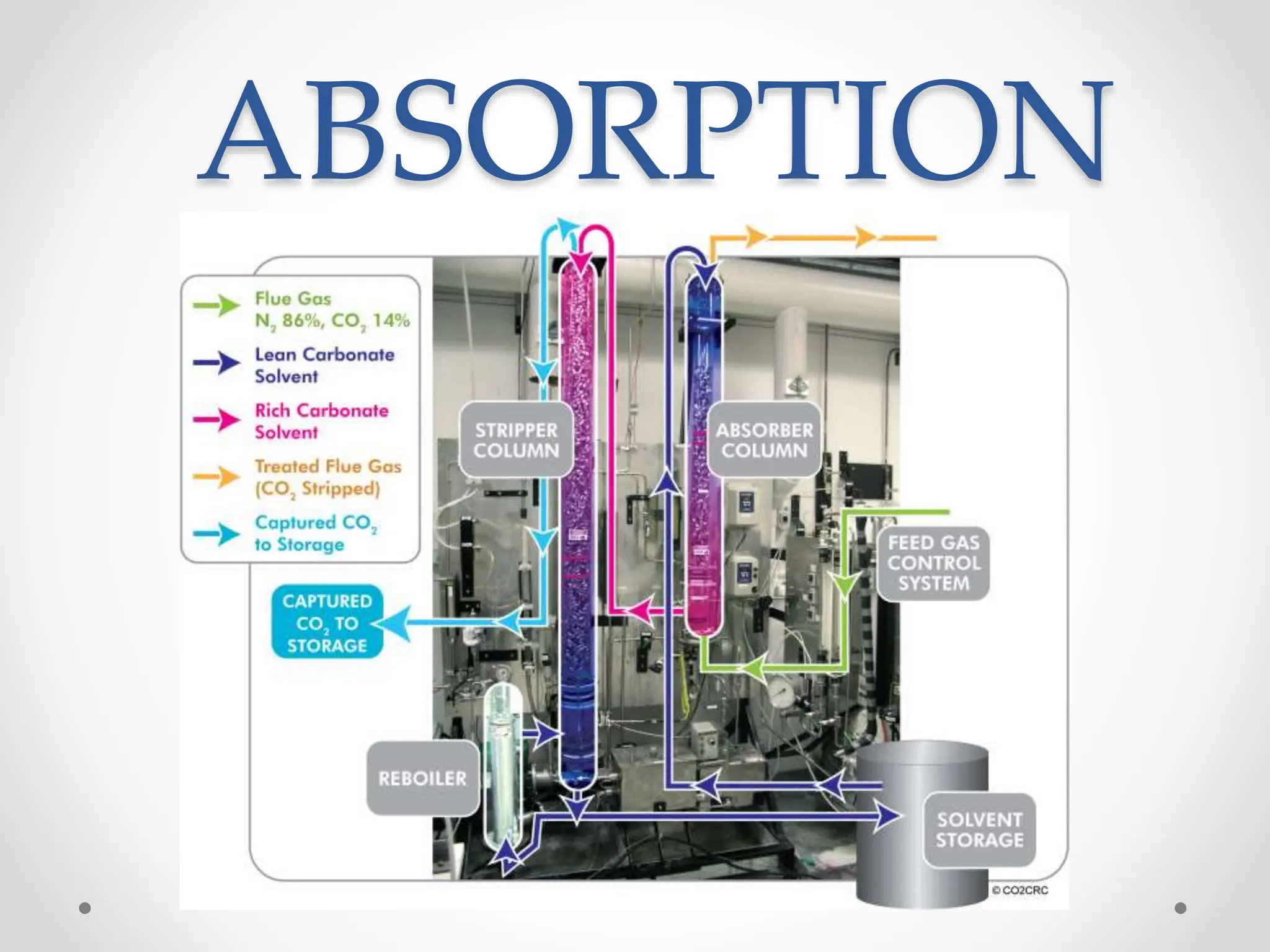
ABSORPTION
Basic Concepts
• In absorption, there is a transfer of one or more species from
the gas phase to a liquid solvent.
• The species transferred to the liquid phase are referred to as
solutes or absorbate.
• Absorption involves no change in the chemical species
present in the system.
• Absorption is used to separate gas mixtures, remove
impurities, or recover valuable chemicals.
• In stripping (desorption), a liquid mixture is contacted with a
gas to selectively remove components by mass transfer from
the liquid to the gas phase.
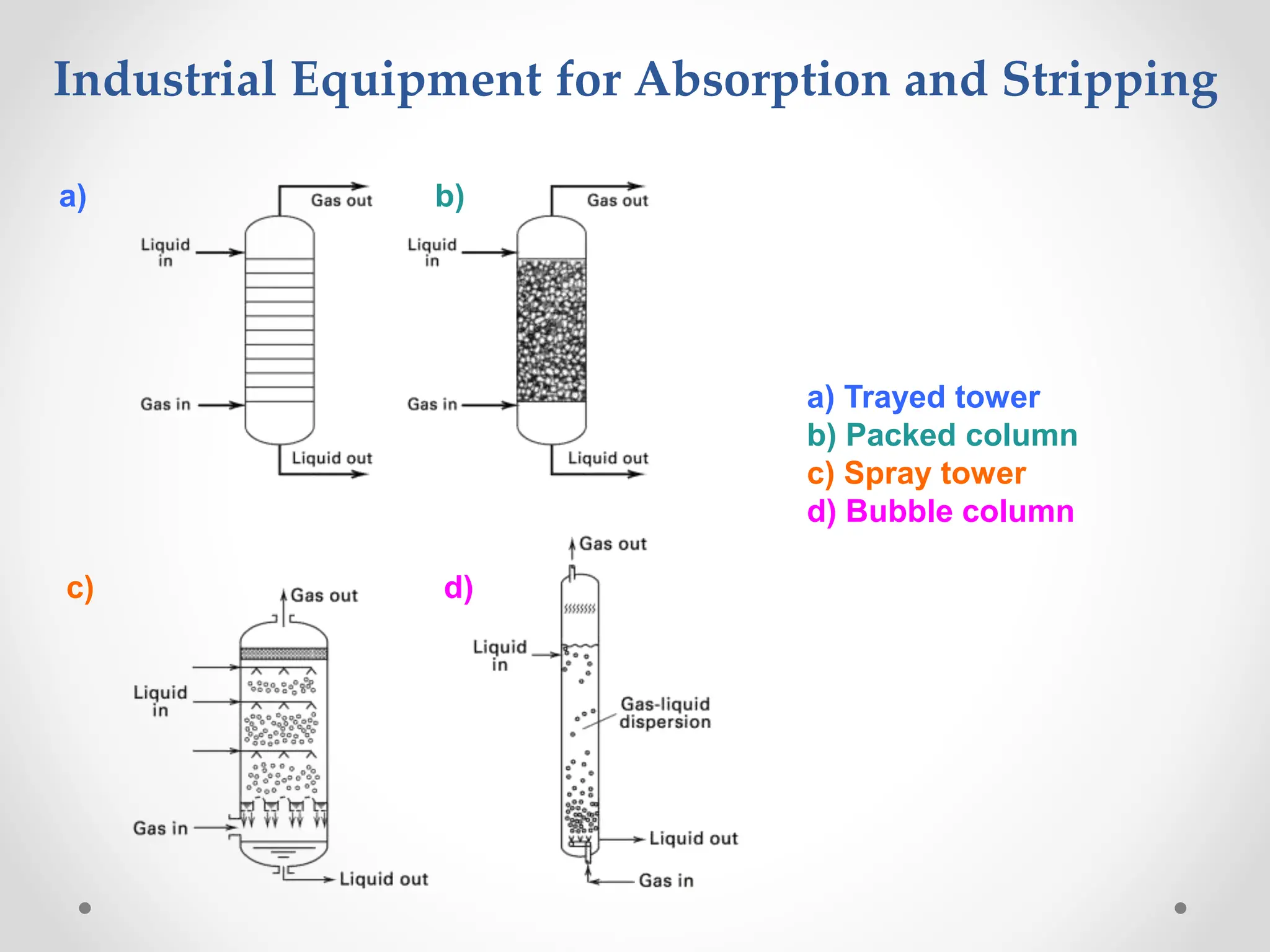
Industrial Equipment for Absorption and Stripping
a) Trayed tower
b) Packed column
c) Spray tower
d) Bubble column
a) b)
c) d)
GENERAL DESIGN CONSIDERATIONS
• Entering gas flow rate, composition, T and P
• Desired degree of recovery of one or more solutes
• Choice of absorbent, operating P and T, and allowable
gas pressure drop
• Type of absorption equipment
• Minimum and actual absorbent flow rate
• Number or equilibrium stages and stage efficiency
• Height of absorption equipment
• Diameter of absorption equipment
Ideal absorbent
• High solubility for the solute
• Low volatility to reduce loss
• Stability and inertness
• Low corrosiveness
• Low viscosity and high diffusivity
• Low foaming proclivities
• Low toxicity and flammability
• Availability
• Low cost
Most widely used: water, hydrocarbon oils, and aqueous
solutions of acids and bases.
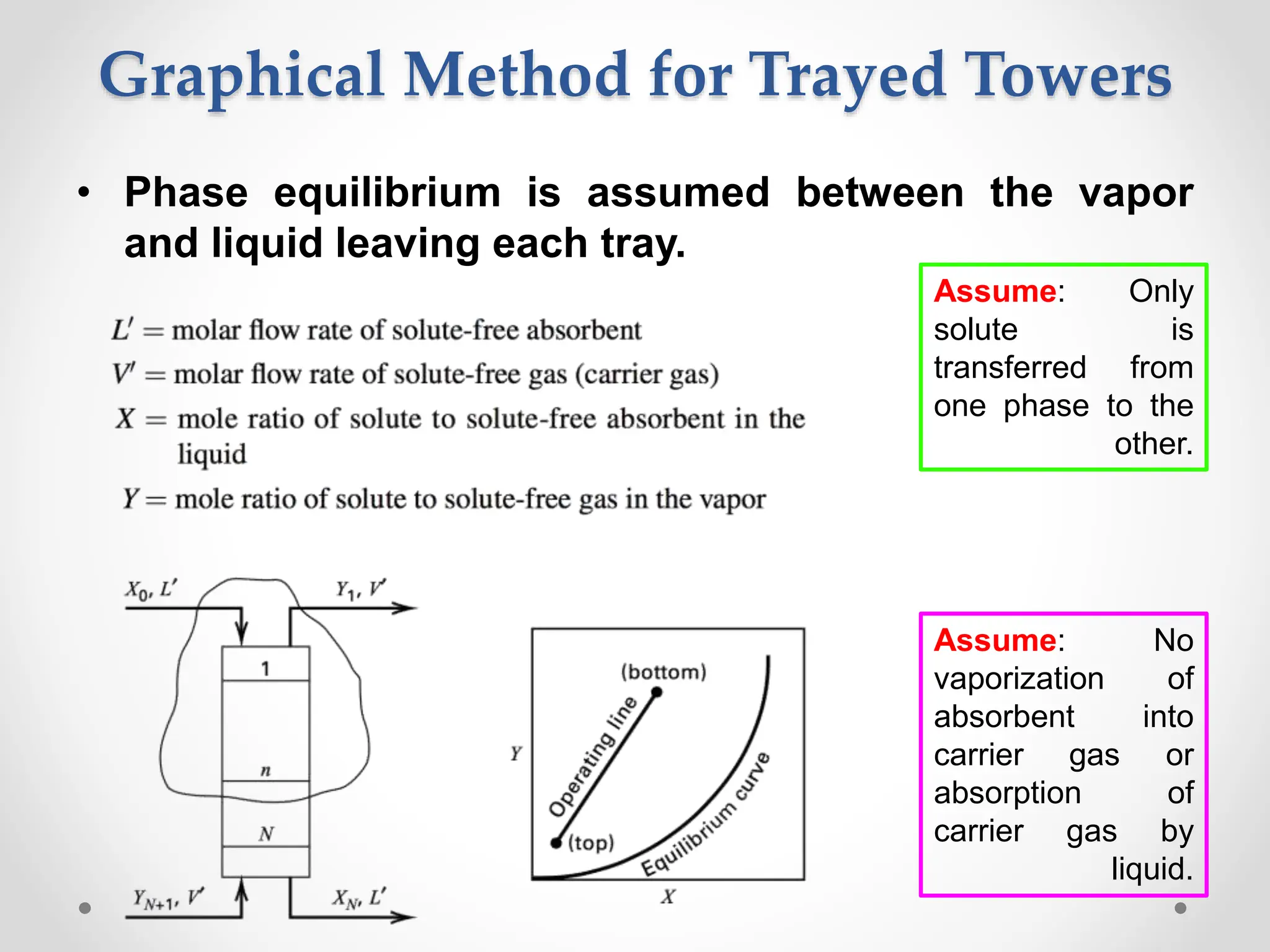
Graphical Method for Trayed Towers
• Phase equilibrium is assumed between the vapor
and liquid leaving each tray.
Assume: Only
solute is
transferred from
one phase to the
other.
Assume: No
vaporization of
absorbent into
carrier gas or
absorption of
carrier gas by
liquid.
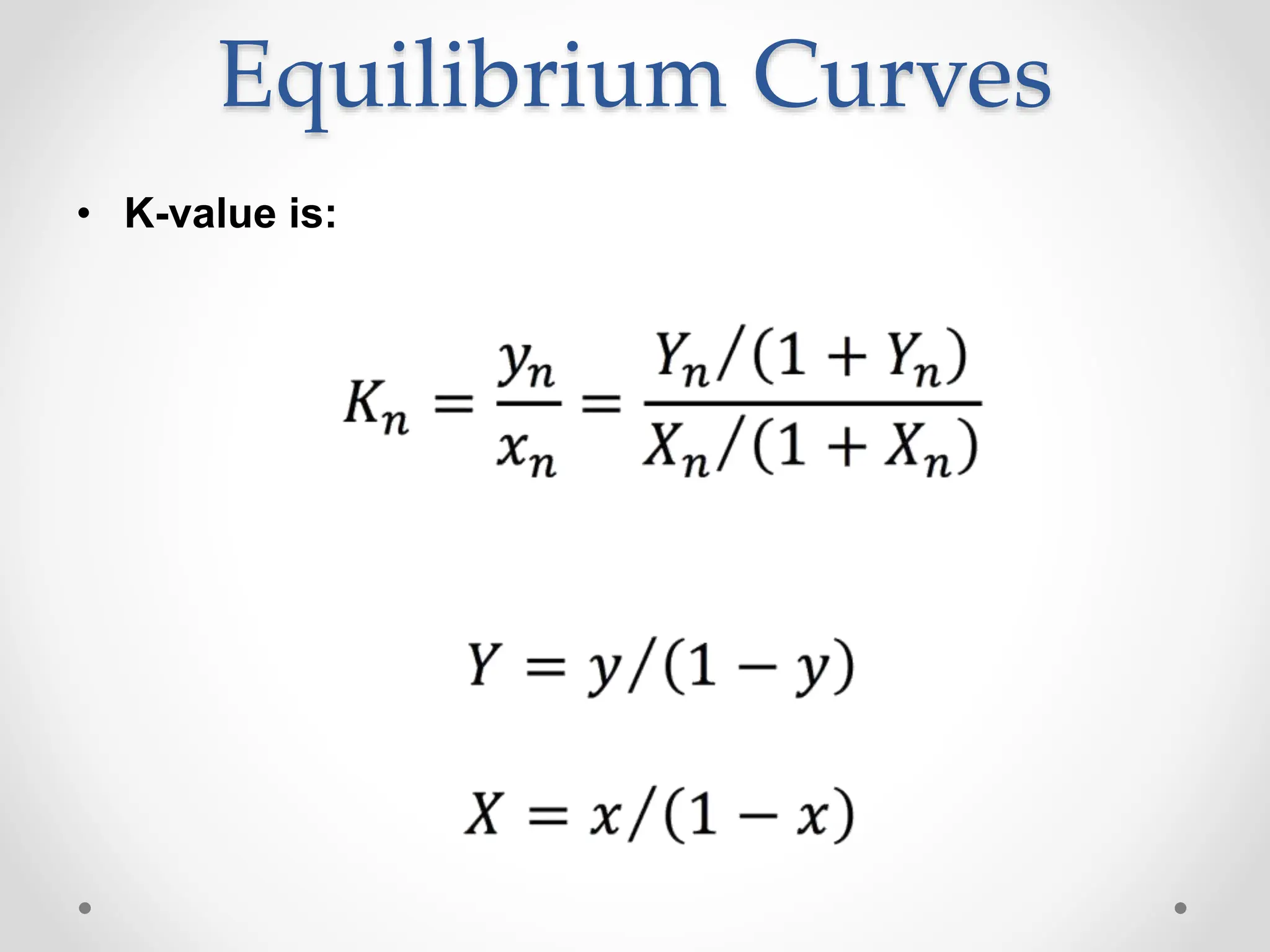
Equilibrium Curves
• K-value is:
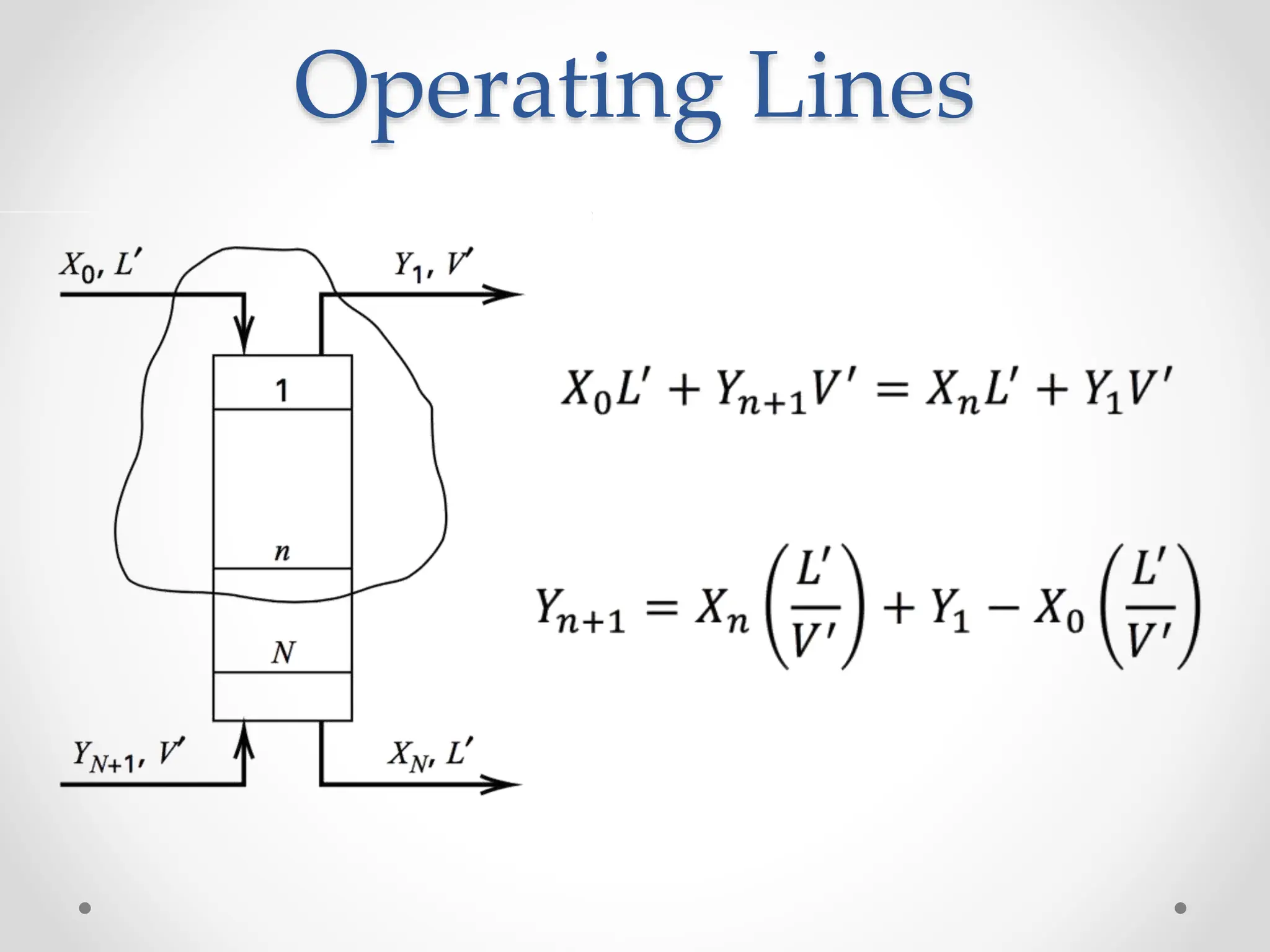
Operating Lines
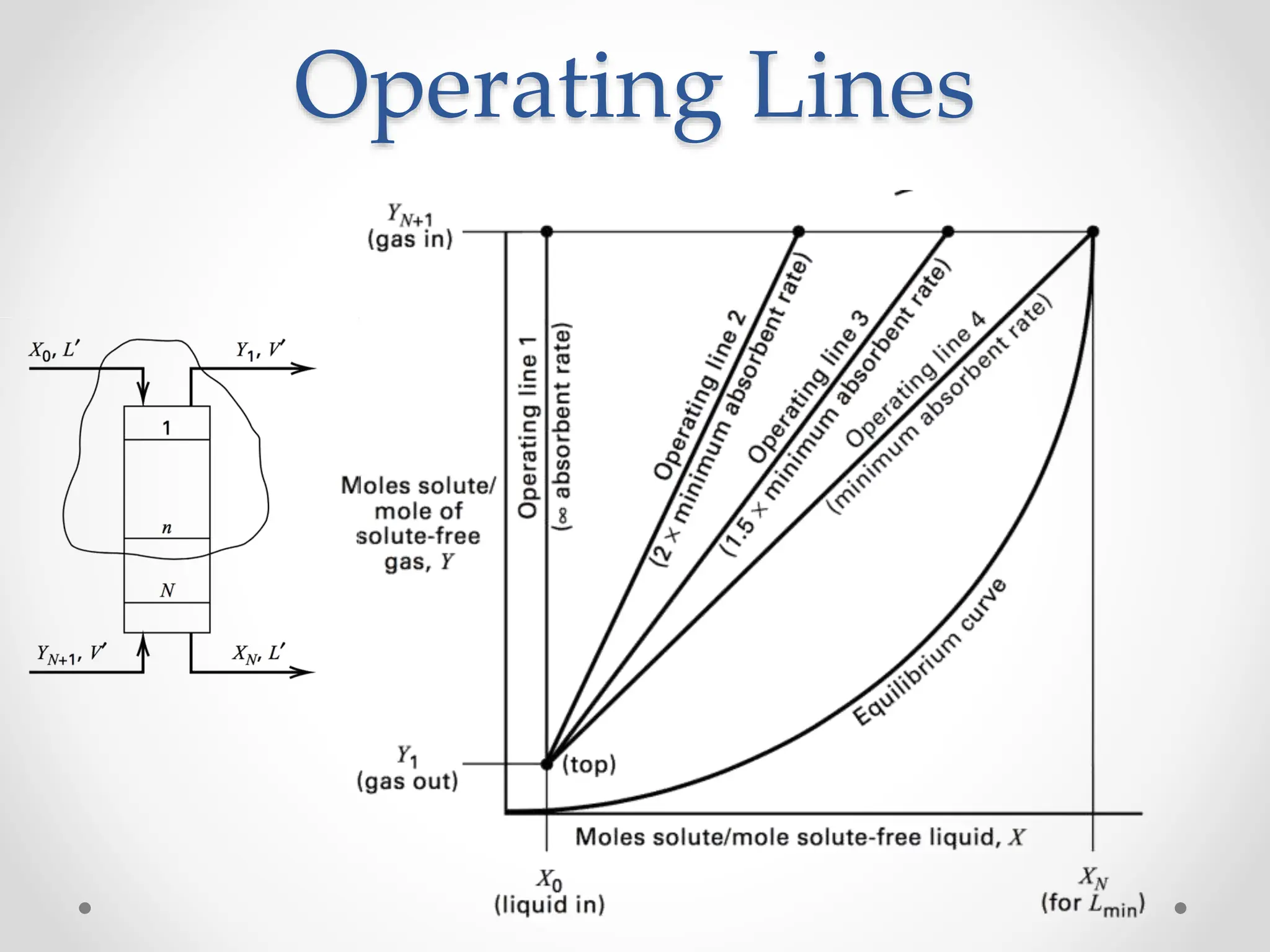
Operating Lines
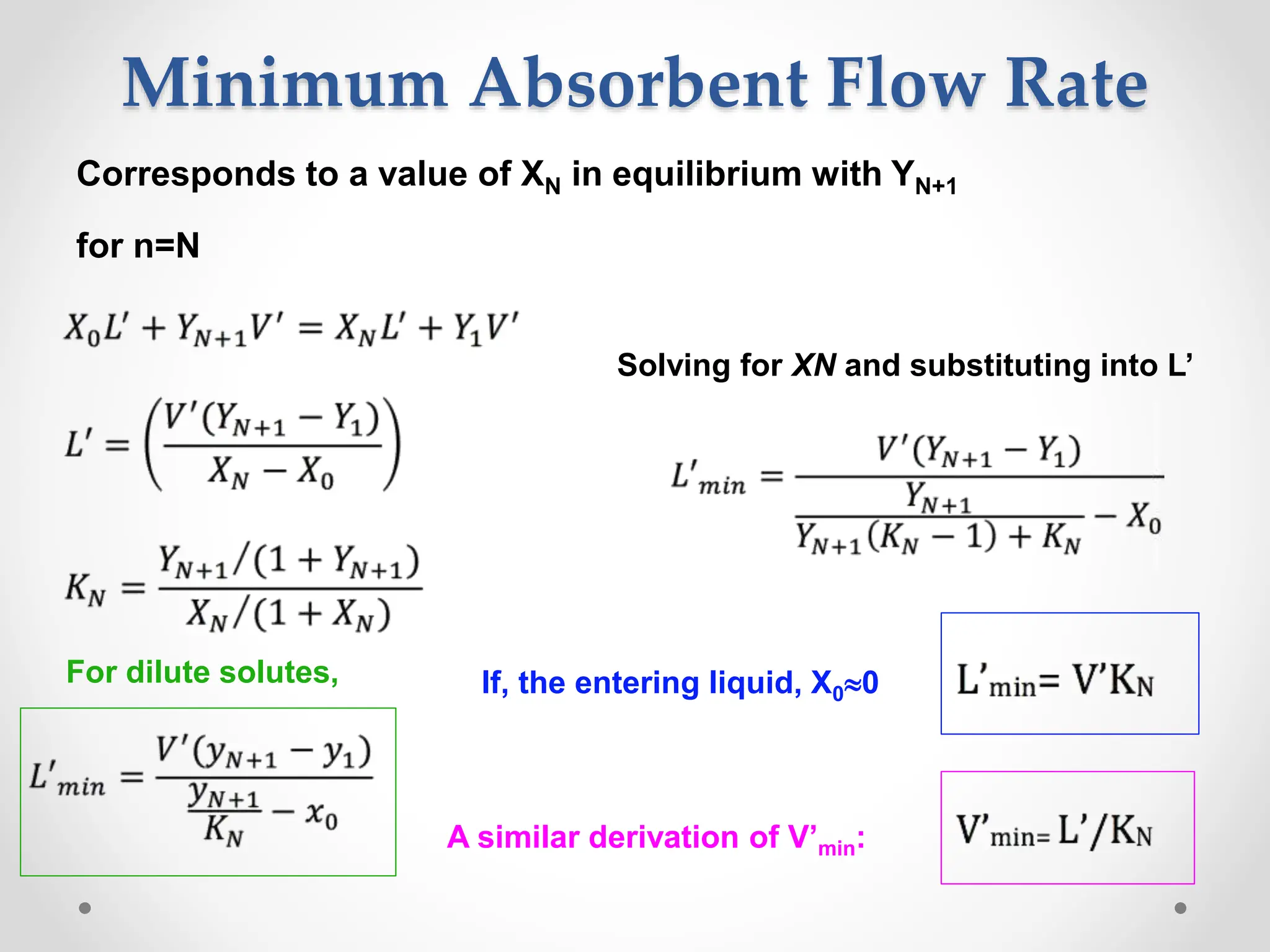
Minimum Absorbent Flow Rate
Corresponds to a value of XN in equilibrium with YN+1
for n=N
Solving for XN and substituting into L’
For dilute solutes, If, the entering liquid, X00
A similar derivation of V’min:
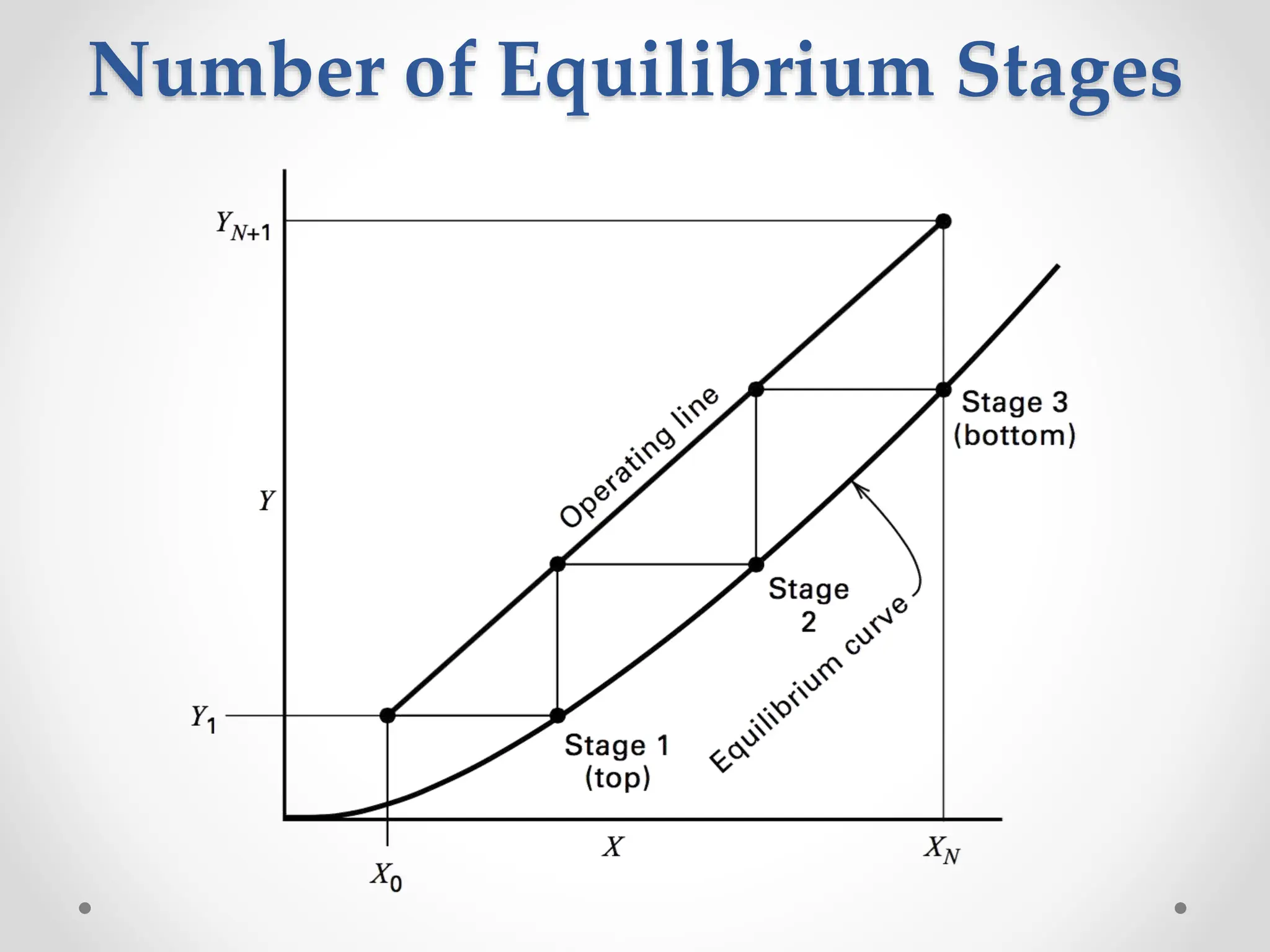
Number of Equilibrium Stages
Ejemplo 1
El 95 % del vapor de acetona, contenida en una corriente
gaseosa con 85 % molar de aire, ha de absorberse por
contacto en contracorriente con agua pura en una columna
de platos. La columna operará esencialmente a 20ºC y 101
kPa. Los datos de equilibrio para acetona-agua en estas
condiciones se muestran en la tabla adjunta.
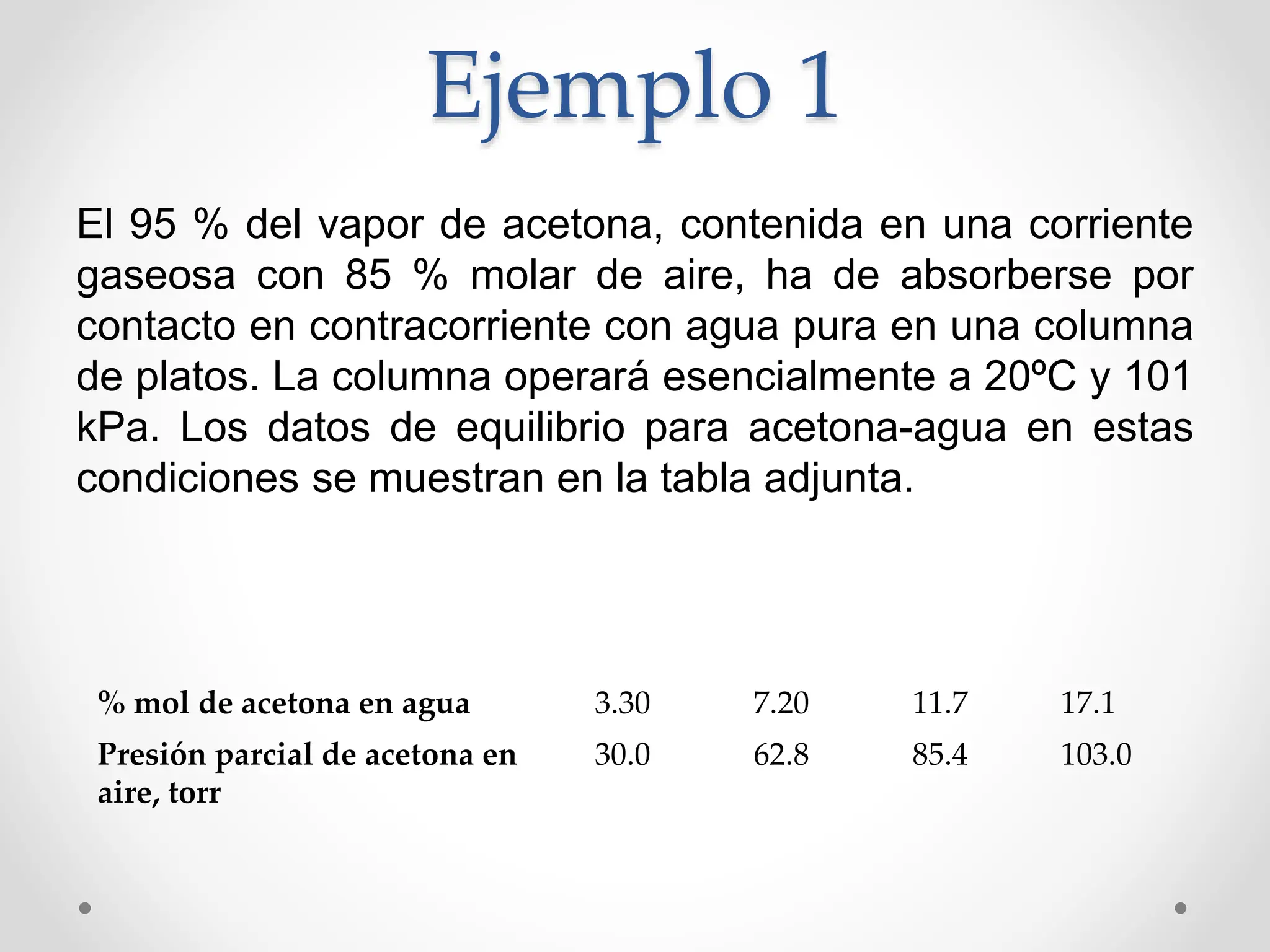
% mol de acetona en agua 3.30 7.20 11.7 17.1
Presión parcial de acetona en
aire, torr
30.0 62.8 85.4 103.0
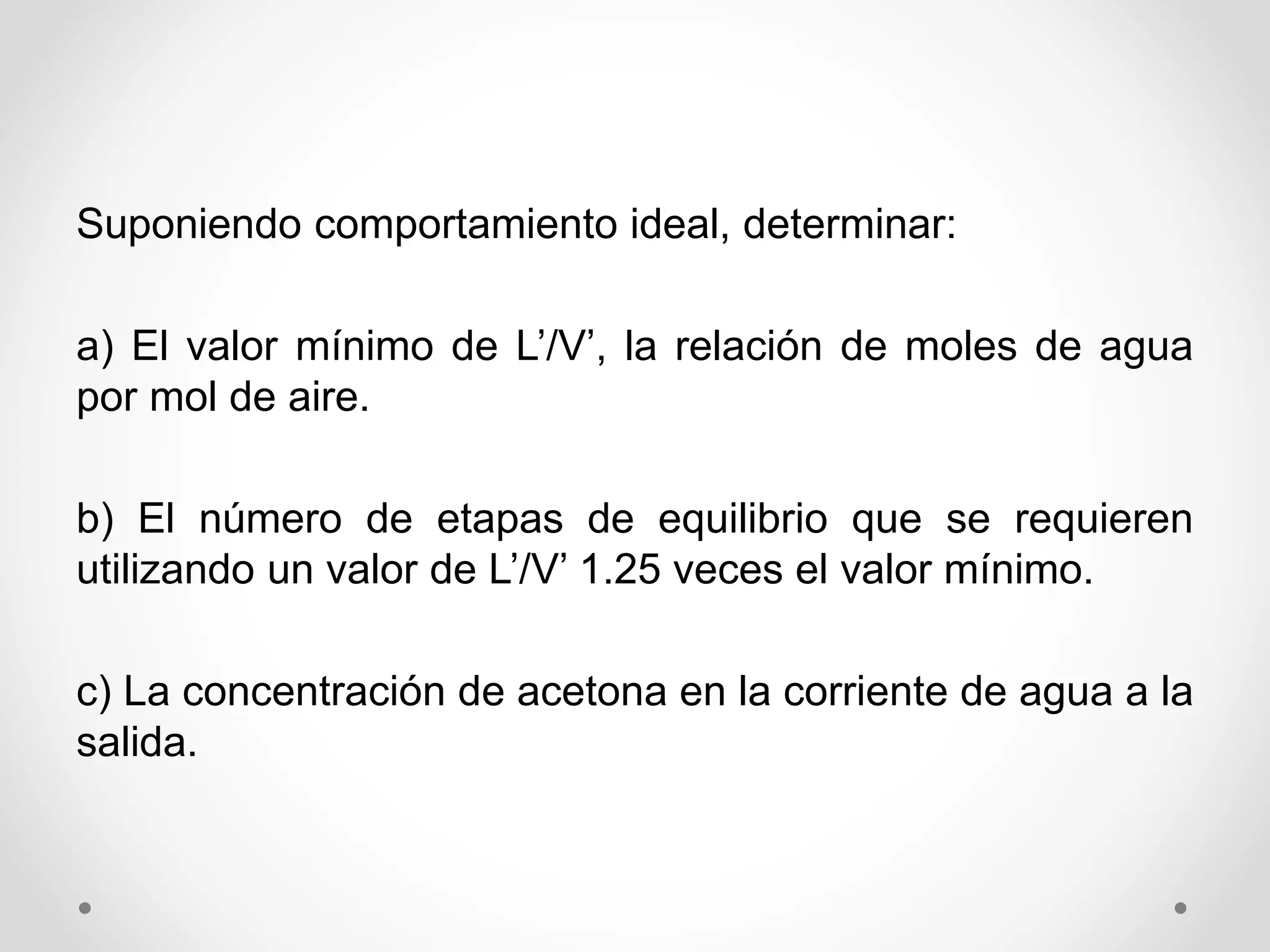
Suponiendo comportamiento ideal, determinar:
a) El valor mínimo de L’/V’, la relación de moles de agua
por mol de aire.
b) El número de etapas de equilibrio que se requieren
utilizando un valor de L’/V’ 1.25 veces el valor mínimo.
c) La concentración de acetona en la corriente de agua a la
salida.
Example 2
A solute A is to be recovered from an inert carrier
gas B by absorption into a solvent. The gas
entering into the absorber flows at a rate of 500
kmol/h with yA=0.3 and leaving the absorbet with
yA=0.01. Solvent enters the absorber at the rate of
1500 kmol/h with xA= 0.001. The equilibrium
relationship is yA=2.8xA. The carrier gas may be
considered insoluble in the solvent and the solvent
may be considered nonvolatile. Construct the x-y
plot for the equilibrium and operating lines, and
determine the equilibrium stages.
Example 3
It is desired to absorb 95 % of acetone by water
from a mixture of acetone and nitrogen containing
1.5 % of the component in a countercurrent tray
tower. Total gas input is 30 kmol/h and water
enters the tower at a rate of 90 kmol/h. The tower
operates at 27 ºC and 1 atm. The equilibrium
relation is y=2.53x. Determine the number of ideal
stages necessary for the separation using a
graphical method.
Recovery of Alcohol
In a bioprocess, molasses is fermented to produce a liquor
containing ethyl alcohol. A CO2-rich vapor with a small amount of
ethyl alcohol is evolved. The alcohol is recovered by absorption
with water in a sieve-tray tower. Determine the number of
equilibrium stages required for countercurrent flow of liquid and
gas, assuming isothermal, isobaric conditions and that only
alcohol is absorbed.
Entering gas is 180 kmol/h; 98 % CO2; 2% ethyl alcohol; 30ºC,
110 kPa.
Entering liquid absorbent is 100 % water; 30ºC, 110 kPa.
Required recovery of ethyl alcohol is 97 %.
Use the following equilibrium equation Y = 0.57X / (1 + 0.43X).

Proceso de absorción en fase liquido- vapor.pptx

  • 1.
  • 2.
    Basic Concepts • Inabsorption, there is a transfer of one or more species from the gas phase to a liquid solvent. • The species transferred to the liquid phase are referred to as solutes or absorbate. • Absorption involves no change in the chemical species present in the system. • Absorption is used to separate gas mixtures, remove impurities, or recover valuable chemicals. • In stripping (desorption), a liquid mixture is contacted with a gas to selectively remove components by mass transfer from the liquid to the gas phase.
  • 3.
    Industrial Equipment forAbsorption and Stripping a) Trayed tower b) Packed column c) Spray tower d) Bubble column a) b) c) d)
  • 4.
    GENERAL DESIGN CONSIDERATIONS •Entering gas flow rate, composition, T and P • Desired degree of recovery of one or more solutes • Choice of absorbent, operating P and T, and allowable gas pressure drop • Type of absorption equipment • Minimum and actual absorbent flow rate • Number or equilibrium stages and stage efficiency • Height of absorption equipment • Diameter of absorption equipment
  • 5.
    Ideal absorbent • Highsolubility for the solute • Low volatility to reduce loss • Stability and inertness • Low corrosiveness • Low viscosity and high diffusivity • Low foaming proclivities • Low toxicity and flammability • Availability • Low cost Most widely used: water, hydrocarbon oils, and aqueous solutions of acids and bases.
  • 6.
    Graphical Method forTrayed Towers • Phase equilibrium is assumed between the vapor and liquid leaving each tray. Assume: Only solute is transferred from one phase to the other. Assume: No vaporization of absorbent into carrier gas or absorption of carrier gas by liquid.
  • 7.
  • 8.
  • 9.
  • 10.
    Minimum Absorbent FlowRate Corresponds to a value of XN in equilibrium with YN+1 for n=N Solving for XN and substituting into L’ For dilute solutes, If, the entering liquid, X00 A similar derivation of V’min:
  • 11.
  • 12.
    Ejemplo 1 El 95% del vapor de acetona, contenida en una corriente gaseosa con 85 % molar de aire, ha de absorberse por contacto en contracorriente con agua pura en una columna de platos. La columna operará esencialmente a 20ºC y 101 kPa. Los datos de equilibrio para acetona-agua en estas condiciones se muestran en la tabla adjunta. % mol de acetona en agua 3.30 7.20 11.7 17.1 Presión parcial de acetona en aire, torr 30.0 62.8 85.4 103.0
  • 13.
    Suponiendo comportamiento ideal,determinar: a) El valor mínimo de L’/V’, la relación de moles de agua por mol de aire. b) El número de etapas de equilibrio que se requieren utilizando un valor de L’/V’ 1.25 veces el valor mínimo. c) La concentración de acetona en la corriente de agua a la salida.
  • 14.
    Example 2 A soluteA is to be recovered from an inert carrier gas B by absorption into a solvent. The gas entering into the absorber flows at a rate of 500 kmol/h with yA=0.3 and leaving the absorbet with yA=0.01. Solvent enters the absorber at the rate of 1500 kmol/h with xA= 0.001. The equilibrium relationship is yA=2.8xA. The carrier gas may be considered insoluble in the solvent and the solvent may be considered nonvolatile. Construct the x-y plot for the equilibrium and operating lines, and determine the equilibrium stages.
  • 15.
    Example 3 It isdesired to absorb 95 % of acetone by water from a mixture of acetone and nitrogen containing 1.5 % of the component in a countercurrent tray tower. Total gas input is 30 kmol/h and water enters the tower at a rate of 90 kmol/h. The tower operates at 27 ºC and 1 atm. The equilibrium relation is y=2.53x. Determine the number of ideal stages necessary for the separation using a graphical method.
  • 16.
    Recovery of Alcohol Ina bioprocess, molasses is fermented to produce a liquor containing ethyl alcohol. A CO2-rich vapor with a small amount of ethyl alcohol is evolved. The alcohol is recovered by absorption with water in a sieve-tray tower. Determine the number of equilibrium stages required for countercurrent flow of liquid and gas, assuming isothermal, isobaric conditions and that only alcohol is absorbed. Entering gas is 180 kmol/h; 98 % CO2; 2% ethyl alcohol; 30ºC, 110 kPa. Entering liquid absorbent is 100 % water; 30ºC, 110 kPa. Required recovery of ethyl alcohol is 97 %. Use the following equilibrium equation Y = 0.57X / (1 + 0.43X).

Editor's Notes

  • #2 Flue gas is the gas exiting to the atmosphere via a flue, which is a pipe or channel for conveying exhaust gases from a fireplace, oven, furnance, boiler, etc.