Mostafijur Rahman – BSSE 
0312 
Md Irfan– BSSE 0326 
Nadia Nahar – BSSE 0327 
Moshiur Rahman – BSSE 
0330 
2 11/18/2014
 Information Security Policy 
Guideline, Version 1.12.12.00 
 ICT Act, 2006 
3 11/18/2014
Vision 2021: Digital 
Bangladesh 
Implementation of e-governance 
Information Security Policy 
4 11/18/2014
lack of information 
protection procedure 
weak and 
unmanaged security 
controls 
under skilled 
personnel and lack of 
expertise 
5 11/18/2014
īļ Ministry of ICT on behalf of the Government 
of 
Bangladesh will have the ownership 
īļ Ministry of ICT will monitor the 
implementation 
īļ Bangladesh Computer Council, Office of the 
CCA and Bangladesh Telecommunication 
Regulatory Commission (BTRC) will jointly 
coordinate the implementation 
6 11/18/2014
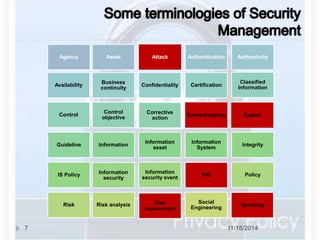
Agency Asset Attack 
Authentication Authenticity 
Availability 
Business 
continuity 
Confidentiality Certification 
Classified 
Information 
Control 
Control 
objective 
Corrective 
action 
Eavesdropping Exploit 
Guideline Information 
Information 
asset 
Information 
System 
Integrity 
IS Policy Information 
security 
Information 
security event 
PKI 
Policy 
Risk Risk analysis 
Risk 
Risk 
assessment 
Social 
Engineering 
Spoofing 
assessment 
7 11/18/2014
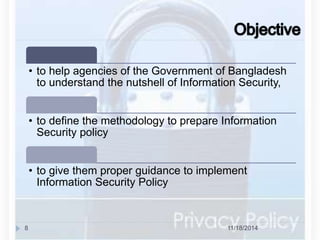
â€ĸ to help agencies of the Government of Bangladesh 
to understand the nutshell of Information Security, 
â€ĸ to define the methodology to prepare Information 
Security policy 
â€ĸ to give them proper guidance to implement 
Information Security Policy 
8 11/18/2014
9 11/18/2014
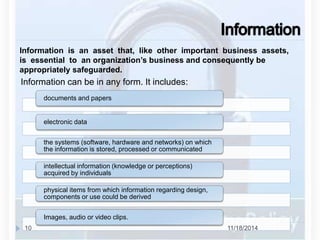
Information is an asset that, like other important business assets, 
is essential to an organization’s business and consequently be 
appropriately safeguarded. 
Information can be in any form. It includes: 
documents and papers 
electronic data 
the systems (software, hardware and networks) on which 
the information is stored, processed or communicated 
intellectual information (knowledge or perceptions) 
acquired by individuals 
physical items from which information regarding design, 
components or use could be derived 
Images, audio or video clips. 
10 11/18/2014
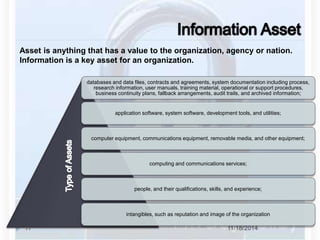
Asset is anything that has a value to the organization, agency or nation. 
Information is a key asset for an organization. 
databases and data files, contracts and agreements, system documentation including process, 
research information, user manuals, training material, operational or support procedures, 
business continuity plans, fallback arrangements, audit trails, and archived information; 
application software, system software, development tools, and utilities; 
computer equipment, communications equipment, removable media, and other equipment; 
computing and communications services; 
people, and their qualifications, skills, and experience; 
intangibles, such as reputation and image of the organization 
11 11/18/2014
12 11/18/2014
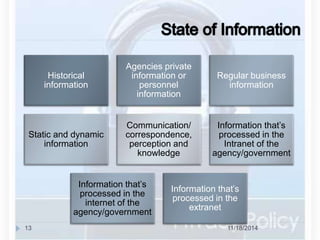
Historical 
information 
Agencies private 
information or 
personnel 
information 
Regular business 
information 
Static and dynamic 
information 
Communication/ 
correspondence, 
perception and 
knowledge 
Information that’s 
processed in the 
Intranet of the 
agency/government 
Information that’s 
processed in the 
internet of the 
agency/government 
Information that’s 
processed in the 
extranet 
13 11/18/2014
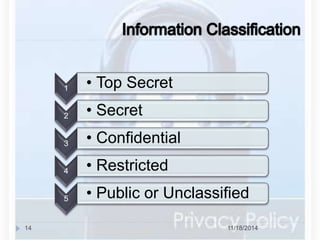
1 â€ĸ Top Secret 
2 â€ĸ Secret 
3 â€ĸ Confidential 
4 â€ĸ Restricted 
5 â€ĸ Public or Unclassified 
14 11/18/2014
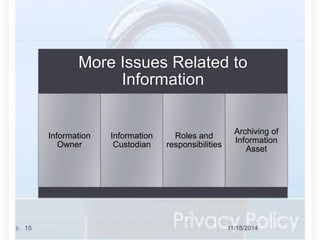
More Issues Related to 
Information 
Information 
Owner 
Information 
Custodian 
Roles and 
responsibilities 
Archiving of 
Information 
Asset 
15 11/18/2014
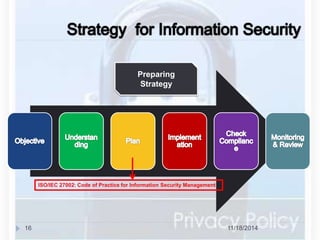
Preparing 
Strategy 
ISO/IEC 27002: Code of Practice for Information Security Management 
16 11/18/2014
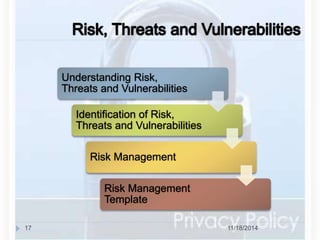
Understanding Risk, 
Threats and Vulnerabilities 
Identification of Risk, 
Threats and Vulnerabilities 
Risk Management 
Risk Management 
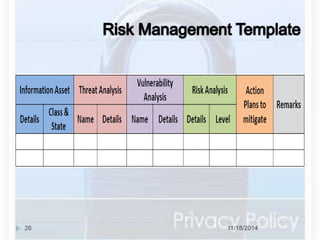
Template 
17 11/18/2014
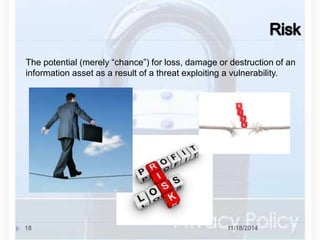
The potential (merely “chance”) for loss, damage or destruction of an 
information asset as a result of a threat exploiting a vulnerability. 
18 11/18/2014
lack of security awareness are 
there 
Operating procedures are not 
documented 
Lack of fire prevention system 
little support for security measures 
information is not classified 
no official policy and no 
monitoring/intrusion detection 
or incident response 
team are in place 
The building is in an earthquake zone, 
where minor quakes are expected 
weak access control mechanisms exists 
inadequate information security 
policy operates 
The building is in an flooded 
zone or can be affected by flood 
because of lack of proper water 
disposal system 
Employees are not identified adequately, visitors may roam unchecked 
19 11/18/2014
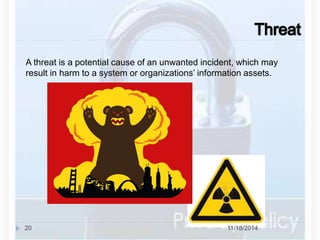
A threat is a potential cause of an unwanted incident, which may 
result in harm to a system or organizations’ information assets. 
20 11/18/2014
unauthorized access, 
disclosure of information, 
legal threats, 
sabotage, 
inadequate security awareness, 
poor security policy, 
fraudulent, 
workload, 
denial of service, 
spoofing, 
advanced persistent threat 
(APT), 
applications with bugs, 
eavesdropping 
21 11/18/2014
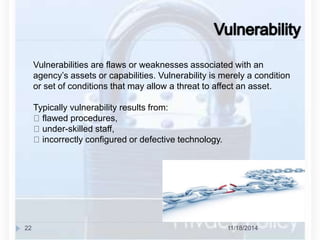
Vulnerabilities are flaws or weaknesses associated with an 
agency’s assets or capabilities. Vulnerability is merely a condition 
or set of conditions that may allow a threat to affect an asset. 
Typically vulnerability results from: 
flawed procedures, 
under-skilled staff, 
incorrectly configured or defective technology. 
22 11/18/2014
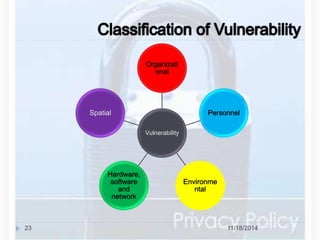
Organizati 
onal 
Vulnerability 
Personnel 
Environme 
ntal 
Hardware, 
software 
and 
network 
Spatial 
23 11/18/2014
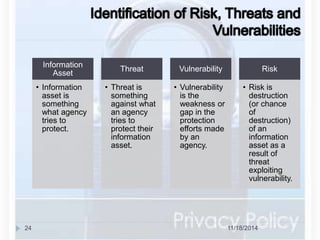
Information 
Asset 
â€ĸ Information 
asset is 
something 
what agency 
tries to 
protect. 
Threat 
â€ĸ Threat is 
something 
against what 
an agency 
tries to 
protect their 
information 
asset. 
Vulnerability 
â€ĸ Vulnerability 
is the 
weakness or 
gap in the 
protection 
efforts made 
by an 
agency. 
Risk 
â€ĸ Risk is 
destruction 
(or chance 
of 
destruction) 
of an 
information 
asset as a 
result of 
threat 
exploiting 
vulnerability. 
24 11/18/2014
25 11/18/2014
26 11/18/2014
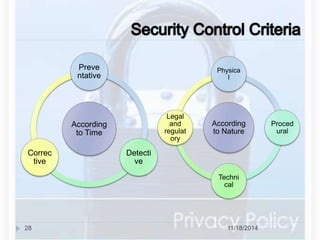
Security controls are safeguards or countermeasures to avoid, 
counteract or minimize security risks. 
27 11/18/2014
Preve 
ntative 
According 
to Time 
Detecti 
ve 
Correc 
tive 
Physica 
l 
According 
to Nature 
Proced 
ural 
Techni 
cal 
Legal 
and 
regulat 
ory 
28 11/18/2014
Personnel Security, 
Equipment Control, 
Access controls, 
Physical and Environmental 
Protection, 
Operational Procedure and 
responsibilities, 
Third party service delivery 
management, 
System planning and acceptance, 
Application Security, 
Protection against malicious code, 
Information back-up, 
Network security 
management, 
Removable Media handling, 
Information 
exchange/transmission, 
Information disposal, 
Information system security, 
Cryptographic controls, 
Correct processing, 
System files security, 
Monitoring 
29 11/18/2014
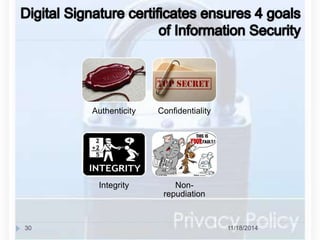
Authenticity Confidentiality 
Integrity Non-repudiation 
30 11/18/2014
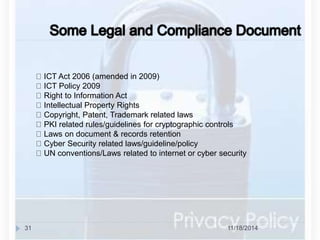
ICT Act 2006 (amended in 2009) 
ICT Policy 2009 
Right to Information Act 
Intellectual Property Rights 
Copyright, Patent, Trademark related laws 
PKI related rules/guidelines for cryptographic controls 
Laws on document & records retention 
Cyber Security related laws/guideline/policy 
UN conventions/Laws related to internet or cyber security 
31 11/18/2014
Step 
s 
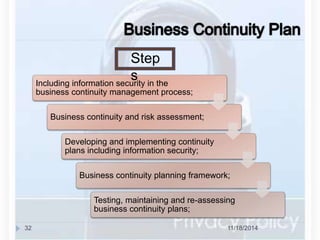
Including information security in the 
business continuity management process; 
Business continuity and risk assessment; 
Developing and implementing continuity 
plans including information security; 
Business continuity planning framework; 
Testing, maintaining and re-assessing 
business continuity plans; 
32 11/18/2014
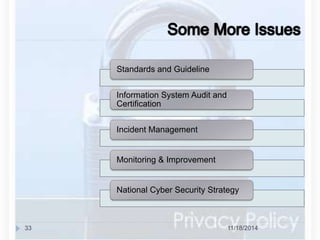
Standards and Guideline 
Information System Audit and 
Certification 
Incident Management 
Monitoring & Improvement 
National Cyber Security Strategy 
33 11/18/2014
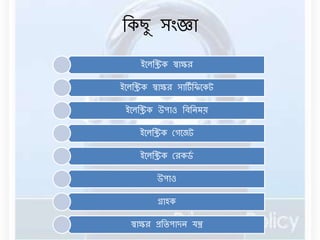
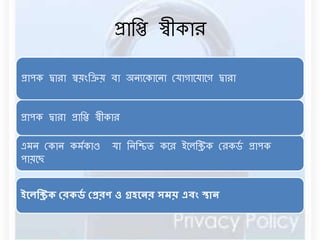
āĻŦāĻŋāώ⧟āĻŋāĻ¸ā§āϤ⧁ 
īļāϏāĻ‚āĻœā§āĻžāĻž 
īļāφāχāύ⧇āϰ āĻ…āĻŦāĻŋāϰāĻžāĻŦāĻŋāĻ• āĻĒā§āϰāύ⧟āĻžāĻ— 
īļāχāύ⧇āĻŦāĻŋāĻ• āϏāĻžāĻ•ā§āώāϰ āĻāĻŋāĻ‚ āχāύ⧇āĻŦāĻŋāĻ• āϰāϰāĻ•āĻ°ā§āĻĄ 
īļāχāύ⧇āĻŦāĻŋāĻ• āϰāϰāĻ•āĻ°ā§āĻĄ āĻ¸ā§āĻŦā§€āĻ•ā§ƒāĻŦāĻŋ, āĻĒā§āϰāĻžāĻŦāĻŋāĻ¸ā§āĻŦā§€āĻ•āĻžāϰ, āϰāĻĒā§āϰāϰ⧇ 
īļāĻŦ⧇āϰāĻžāĻĒāĻĻ āχāύ⧇āĻŦāĻŋāĻ• āϰāϰāĻ•āĻ°ā§āĻĄ āĻ“ āĻŦ⧇āϰāĻžāĻĒāĻĻ āχāύ⧇āĻŦāĻŋāĻ• āĻ¸ā§āĻŦāĻžāĻ•ā§āώāϰ 
īļāĻŦā§‡ā§ŸāĻ¨ā§āĻ¤ā§āϰāĻ• āĻ“ āϏāĻžāĻ°ā§āϟāĻĄāĻŦāĻŋāύāĻ•āϟ āĻĒā§āϰāĻĻāĻžā§‡āĻ•āĻžāϰ⧀ āĻ•āĻ°ā§āĻĄāĻ•āĻŋāĻĄāĻž
āĻŦāĻ•āϛ⧁ āϏāĻ‚āĻœā§āĻžāĻž 
āχāύ⧇āĻŦāĻŋāĻ• āĻ¸ā§āĻŦāĻžāĻ•ā§āώāϰ 
āχāύ⧇āĻŦāĻŋāĻ• āĻ¸ā§āĻŦāĻžāĻ•ā§āώāϰ āϏāĻžāĻ°ā§āϟāĻĄāĻŦāĻŋāύāĻ•āϟ 
āχāύ⧇āĻŦāĻŋāĻ• āωāĻĒāĻžāĻ“ āĻŦāĻŋāĻŦ⧇āĻ°ā§ā§Ÿ 
āχāύ⧇āĻŦāĻŋāĻ• āϰāĻ—āύ⧇āϟ 
āχāύ⧇āĻŦāĻŋāĻ• āϰāϰāĻ•āĻ°ā§āĻĄ 
āωāĻĒāĻžāĻ“ 
āĻ—ā§āϰāĻžāĻšāĻ• 
āĻ¸ā§āĻŦāĻžāĻ•ā§āώāϰ āĻĒā§āϰāĻŦāĻŋāĻĒāĻžāĻĻ⧇ āϝāĻ¨ā§āĻ¤ā§āϰ
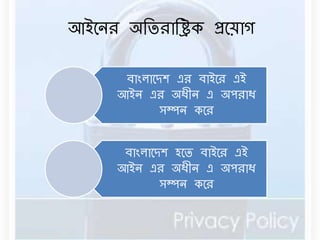
āφāχāύ⧇āϰ āĻ…āĻŦāĻŋāϰāĻžāĻŦāĻŋāĻ• āĻĒā§āϰāύ⧟āĻžāĻ— 
āĻŋāĻžāς⧇āĻžāύāĻĻāĻļ āĻāϰ āĻŋāĻžāχāύāϰ āĻāχ 
āφāχ⧇ āĻāϰ āĻ…āϧ⧀⧇ āĻ āĻ…āĻĒāϰāĻžāϧ 
āϏāĻŽā§āĻĒ⧇ āĻ•āύāϰ 
āĻŋāĻžāς⧇āĻžāύāĻĻāĻļ āĻšāύāĻŋ āĻŋāĻžāχāύāϰ āĻāχ 
āφāχ⧇ āĻāϰ āĻ…āϧ⧀⧇ āĻ āĻ…āĻĒāϰāĻžāϧ 
āϏāĻŽā§āĻĒ⧇ āĻ•āύāϰ
āχāύ⧇āĻŦāĻŋāĻ• āϏāĻžāĻ•ā§āώāϰ āĻāĻŋāĻ‚ āχāύ⧇āĻŦāĻŋāĻ• āϰāϰāĻ•āĻ°ā§āĻĄ
āχāύ⧇āĻŦāĻŋāĻ• āϏāĻžāĻ•ā§āώāϰ āĻĻā§āĻŦāĻžāϰāĻž āχāύ⧇āĻŦāĻŋāĻ• āϰāϰāĻ•āĻ°ā§āĻĄ āϏāĻŋāϝāĻžāĻŦ⧟āĻŋ 
āχāύ⧇āĻŦāĻŋāĻ• āϰāϰāĻ•āĻ°ā§āĻĄ āĻāϰ āφāχ⧇āĻžā§‡ā§āĻ— āĻ¸ā§āĻŦā§€āĻ•ā§ƒāĻŦāĻŋ 
āχāύ⧇āĻŦāĻŋāĻ• āϏāĻžāĻ•ā§āώāϰ āĻāϰ āφāχ⧇āĻžā§‡ā§āĻ— āĻ¸ā§āĻŦā§€āĻ•ā§ƒāĻŦāĻŋ 
āϏāϰāĻ•āĻžāĻŦāϰ āĻ…āĻŦāĻŋāϏ, āχāĻŋāϝāĻžāĻŦāĻĻ āĻ¸ā§āĻĨāĻžā§‡ āĻ āχāύ⧇āĻŦāĻŋāĻ• āϏāĻžāĻ•ā§āώāϰ āĻāĻŋāĻ‚ āχāύ⧇āĻŦāĻŋāĻ• āϰāϰāĻ•āĻ°ā§āĻĄ 
āĻāϰ āĻŋāϝāĻŋāĻšāĻžāϰ 
āχāύ⧇āĻŦāĻŋāĻ• āϰāϰāĻ•āĻ°ā§āĻĄ āϏāĻ‚āϰāĻ•ā§āώāĻŖ 
āχāύ⧇āĻŦāĻŋāĻ• āĻĒāĻĻā§āϧāĻŦāĻŋāύāĻŋ āĻĻāĻŦ⧇⧇ āĻ—ā§āϰāĻšāύ⧇ āĻŋāĻžāϧāϝāĻŋāĻžāϧāĻ•āĻŋāĻž ⧇āĻž āĻĨāĻžāĻ•āĻž
āχāύ⧇āĻŦāĻŋāĻ• āϰāϰāĻ•āĻ°ā§āĻĄ 
āĻ¸ā§āĻŦā§€āĻ•ā§ƒāĻŦāĻŋ 
āĻĒā§āϰāĻžāĻŦāĻŋāĻ¸ā§āĻŦā§€āĻ•āĻžāϰ 
āϰāĻĒā§āϰāϰ⧇
āĻ¸ā§āĻŦā§€āĻ•ā§ƒāĻŦāĻŋ 
āϰāĻ•āĻžā§‡ āϰāĻĒā§āϰāϰāĻ• āĻ¸ā§āĻŦ⧟āĻ‚ āϰāĻ•āĻžā§‡ 
āχāύ⧇āĻŦāĻŋāĻ• āϰāϰāĻ•āĻ°ā§āĻĄ āϰāĻĒā§āϰāϰāĻŖ āĻ•āύāϰ 
āĻĨāĻžāĻ•āύ⧇ āωāĻ•ā§āϤ āϰāϰāĻ•āĻ°ā§āĻĄ āϰāĻĒā§āϰāϰāĻ• āĻāϰ 
āϰāĻĒā§āϰāϰāĻ• āĻāĻŋāĻ‚ āĻĒā§āϰāĻžāĻĒāĻ• āĻāϰ āĻ°ā§āĻžāύ⧇ 
āϰāĻ•āĻžā§‡ āχāύ⧇āĻŦāĻŋāĻ• āϰāϰāĻ•āĻ°ā§āĻĄ āϰāĻĒā§āϰāϰāύāĻ•āϰ 
āĻšāύāĻŋ āϝāĻŦāĻĻ 
â€ĸ āϰāĻĒā§āϰāϰāύāĻ•āϰ āĻĒāύāĻ•ā§āώ āĻ•āĻžā§‡ āĻ•āϰāĻžāϰ 
⧇⧇āϝ āϰāĻĒā§āϰāϰāĻŖ āĻ•āϰāĻž āĻšā§Ÿ 
â€ĸ āĻŋāĻĨāϝ āϰāĻĒā§āϰāϰāĻŖ āϰāĻ•ā§ŒāĻļāύ⧇āϰ āĻ°ā§āĻžāύ⧇ 
āϰāĻĒā§āϰāϰāĻŖ āĻ•āϰāĻž āĻšā§Ÿ
āĻĒā§āϰāĻžāĻŦāĻŋ āĻ¸ā§āĻŦā§€āĻ•āĻžāϰ 
āĻĒā§āϰāĻžāĻĒāĻ• āĻĻā§āĻŦāĻžāϰāĻž āĻ¸ā§āĻŦ⧟āĻ‚āĻŦāĻŋ⧟ āĻŋāĻž āυ⧇āϝāύāĻ•āĻžāύ⧇āĻž āϰāϝāĻžāĻ—āĻžāύāϝāĻžāύāĻ— āĻĻā§āĻŦāĻžāϰāĻž 
āĻĒā§āϰāĻžāĻĒāĻ• āĻĻā§āĻŦāĻžāϰāĻž āĻĒā§āϰāĻžāĻŦāĻŋ āĻ¸ā§āĻŦā§€āĻ•āĻžāϰ 
āĻāĻ°ā§ā§‡ āϰāĻ•āĻžā§‡ āĻ•āĻ°ā§āĻĄāĻ•āĻžāĻŖā§āĻĄ āϝāĻž āĻŦ⧇āĻŦāĻŋāĻŋ āĻ•āύāϰ āχāύ⧇āĻŦāĻŋāĻ• āϰāϰāĻ•āĻ°ā§āĻĄ āĻĒā§āϰāĻžāĻĒāĻ• 
āĻĒāĻžā§ŸāύāĻ› 
āχāϞ⧇āĻ•ā§āĻŸā§āϰāĻŋāĻ• āϰ⧇āĻ•āĻ°ā§āĻĄ āϰ⧇⧇āĻŖ āĻ“ āĻ—ā§āϰāĻšāϞ⧇⧇ āϏāĻŽā§Ÿ āĻāĻŦāĻ‚ āĻ¸ā§āĻĨāĻžā§‡
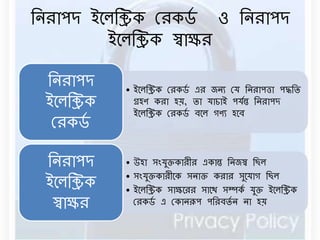
āĻŦ⧇āϰāĻžāĻĒāĻĻ āχāύ⧇āĻŦāĻŋāĻ• āϰāϰāĻ•āĻ°ā§āĻĄ āĻ“ āĻŦ⧇āϰāĻžāĻĒāĻĻ 
āχāύ⧇āĻŦāĻŋāĻ• āĻ¸ā§āĻŦāĻžāĻ•ā§āώāϰ 
â€ĸ āχāύ⧇āĻŦāĻŋāĻ• āϰāϰāĻ•āĻ°ā§āĻĄ āĻāϰ ⧇⧇āϝ āϰāϝ āĻŦ⧇āϰāĻžāĻĒāĻ¤ā§āϤāĻž āĻĒāĻĻā§āϧāĻŦāĻŋ 
āĻ—ā§āϰāĻšāĻŖ āĻ•āϰāĻž āĻšā§Ÿ, āĻŋāĻž āϝāĻžāϚāĻžāχ āĻĒāϝāĻĄāĻ¨ā§āϤ āĻŦ⧇āϰāĻžāĻĒāĻĻ 
āχāύ⧇āĻŦāĻŋāĻ• āϰāϰāĻ•āĻ°ā§āĻĄ āĻŋāύ⧇ āĻ—āĻŖāϝ āĻšāύāĻŋ 
āĻŦ⧇āϰāĻžāĻĒāĻĻ 
āχāύ⧇āĻŦāĻŋāĻ• 
āϰāϰāĻ•āĻ°ā§āĻĄ 
â€ĸ āωāĻšāĻž āϏāĻ‚āϝ⧁āĻ•ā§āϤāĻ•āĻžāϰ⧀āϰ āĻāĻ•āĻžāĻ¨ā§āϤ āĻŦ⧇⧇āĻ¸ā§āĻŦ āĻŦāϛ⧇ 
â€ĸ āϏāĻ‚āϝ⧁āĻ•ā§āϤāĻ•āĻžāϰ⧀āύāĻ• āϏ⧇āĻžāĻ•ā§āϤ āĻ•āϰāĻžāϰ āϏ⧁āύāϝāĻžāĻ— āĻŦāϛ⧇ 
â€ĸ āχāύ⧇āĻŦāĻŋāĻ• āϏāĻžāĻ•ā§āώāύāϰāϰ āϏāĻžāύāĻĨ āϏāĻŽā§āĻĒāĻ•āĻĄ āϝ⧁āĻ•ā§āϤ āχāύ⧇āĻŦāĻŋāĻ• 
āϰāϰāĻ•āĻ°ā§āĻĄ āĻ āϰāĻ•āĻžā§‡āϰ⧂āĻĒ āĻĒāĻŦāϰāĻŋāĻŋāĻĄā§‡ ⧇āĻž āĻšā§Ÿ 
āĻŦ⧇āϰāĻžāĻĒāĻĻ 
āχāύ⧇āĻŦāĻŋāĻ• 
āĻ¸ā§āĻŦāĻžāĻ•ā§āώāϰ
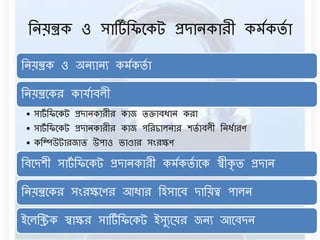
āĻŦā§‡ā§ŸāĻ¨ā§āĻ¤ā§āϰāĻ• āĻ“ āϏāĻžāĻ°ā§āϟāĻĄāĻŦāĻŋāύāĻ•āϟ āĻĒā§āϰāĻĻāĻžā§‡āĻ•āĻžāϰ⧀ āĻ•āĻ°ā§āĻĄāĻ•āĻŋāĻĄāĻž 
āĻŦā§‡ā§ŸāĻ¨ā§āĻ¤ā§āϰāĻ• āĻ“ āυ⧇āϝāĻžā§‡āϝ āĻ•āĻ°ā§āĻĄāĻ•āĻŋāĻĄāĻž 
āĻŦā§‡ā§ŸāĻ¨ā§āĻ¤ā§āϰāύāĻ•āϰ āĻ•āĻžāϝāĻĄāĻžāĻŋ⧇⧀ 
â€ĸ āϏāĻžāϟāĻĄāĻŦāĻŋāύāĻ•āϟ āĻĒā§āϰāĻĻāĻžā§‡āĻ•āĻžāϰ⧀āϰ āĻ•āĻžā§‡ āĻŋāĻ•ā§āϤāĻžāĻŋāϧāĻžā§‡ āĻ•āϰāĻž 
â€ĸ āϏāĻžāϟāĻĄāĻŦāĻŋāύāĻ•āϟ āĻĒā§āϰāĻĻāĻžā§‡āĻ•āĻžāϰ⧀āϰ āĻ•āĻžā§‡ āĻĒāĻŦāϰāϚāĻžā§‡ā§‡āĻžāϰ āĻļāĻŋāĻĄāĻžāĻŋ⧇⧀ āĻŦ⧇āϧāĻĄāĻžāϰāĻŖ 
â€ĸ āĻ•āĻŦāĻŽā§āĻĒāωāϟāĻžāϰ⧇āĻžāĻŋ āωāĻĒāĻžāĻ“ āĻ­āĻžāĻŖā§āĻĄāĻžāϰ āϏāĻ‚āϰāĻ•ā§āώāĻŖ 
āĻŦāĻŋāύāĻĻāĻļā§€ āϏāĻžāϟāĻĄ āĻŦāĻŋāύāĻ•āϟ āĻĒā§āϰāĻĻāĻžā§‡āĻ•āĻžāϰ⧀ āĻ•āĻ°ā§āĻĄāĻ•āĻŋāĻĄāĻžāύāĻ• āĻ¸ā§āĻŦā§€āĻ•ā§ƒāĻŋ āĻĒā§āϰāĻĻāĻžā§‡ 
āĻŦā§‡ā§ŸāĻ¨ā§āĻ¤ā§āϰāύāĻ•āϰ āϏāĻ‚āϰāĻ•ā§āώāύāĻŖāϰ āφāϧāĻžāϰ āĻŦāĻšāϏāĻžāύāĻŋ āĻĻāĻžāĻŦ⧟āĻ¤ā§āĻŦ āĻĒāĻžā§‡ā§‡ 
āχāύ⧇āĻŦāĻŋāĻ• āĻ¸ā§āĻŦāĻžāĻ•ā§āώāϰ āϏāĻžāĻ°ā§āϟāĻĄāĻŦāĻŋāύāĻ•āϟ āχāϏ⧁āϝāύ⧟āϰ ⧇⧇āϝ āφāύāĻŋāĻĻ⧇
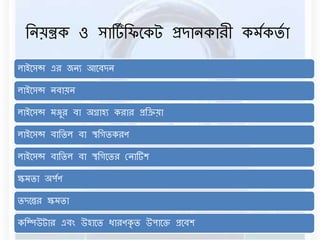
āĻŦā§‡ā§ŸāĻ¨ā§āĻ¤ā§āϰāĻ• āĻ“ āϏāĻžāĻ°ā§āϟāĻĄāĻŦāĻŋāύāĻ•āϟ āĻĒā§āϰāĻĻāĻžā§‡āĻ•āĻžāϰ⧀ āĻ•āĻ°ā§āĻĄāĻ•āĻŋāĻĄāĻž 
⧇āĻžāχāύāϏāĻ¨ā§āϏ āĻāϰ ⧇⧇āϝ āφāύāĻŋāĻĻ⧇ 
⧇āĻžāχāύāϏāĻ¨ā§āϏ ⧇āĻŋāĻžā§Ÿā§‡ 
⧇āĻžāχāύāϏāĻ¨ā§āϏ āĻ°ā§āĻžā§āϜ⧁āϰ āĻŋāĻž āĻ…āĻ—ā§āϰāĻžāĻšāϝ āĻ•āϰāĻžāϰ āĻĒā§āϰāĻŦāĻŋ⧟āĻž 
⧇āĻžāχāύāϏāĻ¨ā§āϏ āĻŋāĻžāĻŦāĻŋ⧇ āĻŋāĻž āĻ¸ā§āĻĨāĻŦāĻ—āĻŋāĻ•āϰāĻŖ 
⧇āĻžāχāύāϏāĻ¨ā§āϏ āĻŋāĻžāĻŦāĻŋ⧇ āĻŋāĻž āĻ¸ā§āĻĨāĻŦāĻ—āύāĻŋāϰ āϰ⧇āĻžāĻ°ā§āϟāĻļ 
āĻ•ā§āώāĻ°ā§āĻŋāĻž āĻ…āĻĒāĻĄāĻŖ 
āĻŋāĻĻāύāĻ¨ā§āϤāϰ āĻ•ā§āώāĻ°ā§āĻŋāĻž 
āĻ•āĻŦāĻŽā§āĻĒāωāϟāĻžāϰ āĻāĻŋāĻ‚ āωāĻšāĻžāύāĻŋ āϧāĻžāϰāĻŖāĻ•ā§ƒāĻŋ āωāĻĒāĻžāύāĻ•ā§āϤ āĻĒā§āϰāύāĻŋāĻļ
āĻŦā§‡ā§ŸāĻ¨ā§āĻ¤ā§āϰāĻ• āĻ“ āϏāĻžāĻ°ā§āϟāĻĄāĻŦāĻŋāύāĻ•āϟ āĻĒā§āϰāĻĻāĻžā§‡āĻ•āĻžāϰ⧀ āĻ•āĻ°ā§āĻĄāĻ•āĻŋāĻĄāĻž 
⧇āĻžāχāύāϏāĻ¨ā§āϏ āϏāĻ°ā§āĻĒāĻĄāĻŖ 
āχāύ⧇āĻŦāĻŋāĻ• āĻ¸ā§āĻŦāĻžāĻ•ā§āώāϰ āϏāĻžāĻ°ā§āϟāĻĄāĻŦāĻŋāύāĻ•āϟ āĻŋāĻžāĻŦāĻŋ⧇
ī‚§ āĻŋāĻžāχāύ⧇ āϰāĻŦāĻŋāĻ—āĻŋ āĻŋāĻĨāϝ āĻŦāĻŋ⧇āĻˇā§āϟ āĻŋāĻž āĻŋāĻžāχ⧇ āĻšāύāĻŋ āĻŋāĻĨāϝ āωāĻĻā§āϧāĻžāϰ 
ī‚§ āωāĻĒāĻžāĻ¤ā§āϤ, āωāĻĒāĻžāĻ¤ā§āϤ āĻ­āĻžāĻŖā§āĻĄāĻžāϰ āĻŋāĻž āĻŋāĻĨāϝ āĻŋāĻž āωāĻšāĻžāϰ āωāĻŦāĻĻā§āϧāĻŋ āĻ…āĻ‚āĻļ āϏāĻ‚āĻ—ā§āϰāĻš 
ī‚§ āĻ¸ā§āĻĨāĻžā§‡āĻžāĻ¨ā§āϤāϰāύāϝāĻžāĻ—āϝ āϏāĻ‚āϰāĻŋāϗ⧇ āĻŋāĻžāĻŋāĻ¸ā§āĻĨāĻžā§Ÿ āϰāĻŦāĻŋāĻ—āĻŋ āĻŋāĻĨāϝ 
ī‚§ āωāĻĒāĻžāĻ¤ā§āϤāϏāĻš āωāĻ•ā§āϤ āĻ•āĻŦāĻŽā§āĻĒāωāϟāĻžāύāϰāϰ āĻŋāĻĨāϝ āĻŋāĻž āϰāĻ•āĻžā§‡ āωāĻĒāĻžāĻ¤ā§āϤāϰ āυ⧇⧁āĻŦ⧇āĻŦāĻĒ āĻŋāĻž āĻ…āĻ‚āĻļ 
āĻŦāĻŋāύāĻļāώ āϏāĻ‚āĻ—ā§āϰāĻš 
ī‚§ āωāύ⧇āĻļāϝāĻ°ā§ā§‚ā§‡āĻ•āĻ­āĻžāύāĻŋ āϰāĻ•āĻžā§‡ āϧāϰāύāĻŖāϰ āĻ•āĻ•ā§āĻŸā§āϰāĻŋāωāϟāĻžā§‡ āϏāĻ‚āĻ•ā§āϰāĻŽāĻ•, āĻĻā§‚āώāĻ• āĻŋāĻž āĻ­āĻžāχāϰāĻžāϏ 
āĻĒā§āϰāύāĻŋāĻļ āĻ•āϰāĻžāύ⧇āĻž āĻŋāĻž āĻ•āϰāĻžāύ⧇āĻžāϰ āϰāϚāĻˇā§āϟāĻž āĻ•āϰāĻž
ī‚§ āωāĻĒāĻžāĻ¤ā§āϤ, āĻ•āĻ•ā§āĻŸā§āϰāĻŋāωāϟāĻžā§‡ āωāĻĒāĻžāĻ¤ā§āϤ-āĻ­āĻžāĻ¨ā§āĻĄāĻžāϞ⧇⧇ āĻ•ā§āώāĻŦāĻŋāϏāĻžāϧ⧇ āĻ•āύāϰ⧇ āĻŋāĻž āĻ•ā§āώāĻŦāĻŋāϏāĻžāϧāύ⧇āϰ 
āϰāϚāĻˇā§āϟāĻž āĻ•āύāϰ⧇ āĻŋāĻž āϰāĻŦāĻŋāĻ—āĻŋ āυ⧇āϝ āϰāĻ•āĻžā§‡ āĻĒā§āϰāĻ—ā§āϰāĻžāύāĻ°ā§āϰ āĻ•ā§āώāĻŦāĻŋāϏāĻžāϧāĻžā§‡ āĻ•āύāϰ⧇ āĻŋāĻž 
āĻ•ā§āώāĻŦāĻŋāϏāĻžāϧāύ⧇āϰ āϰāϚāĻˇā§āϟāĻž āĻ•āύāϰ⧇ 
ī‚§ āĻ•ā§āĻŸā§āϰāĻŦāĻ˜ā§āύ āϏ⧃āĻ•ā§āĻŸā§āϰāĻŋ āĻ•āύāϰ⧇ āĻŋāĻž āĻ•āĻŦāϰāĻŋāĻžāϰ āϰāϚāĻˇā§āϟāĻž āĻ•āύāϰ⧇ 
ī‚§ āĻŦāĻŋāϧ āĻŋāĻž āĻ•ā§āώāĻ°ā§āĻŋāĻžāĻĒā§āϰāĻžāĻŋ āϰāĻ•āĻžā§‡ āĻŋāĻžāĻŦāĻ•ā§āϤāύāĻ• āĻĒā§āϰāύāĻŋāĻļ āĻ•āĻŦāϰāύāĻŋ āĻŋāĻžāϧāĻž āϏ⧃āĻŦāĻˇā§āϟ 
ī‚§ āĻ…āĻŦāĻŋāϧ āĻĒā§āϰāύāĻŋāύāĻļ āϏāĻšā§ŸāĻŋāĻž āĻĒā§āϰāϧāĻžā§‡ 
ī‚§ āĻĒāĻŖāϝ āĻŋāĻž āϰāϏāĻŋāĻž āĻŦāĻŋāĻĒāύ⧇āϰ āωāύ⧇āύāĻļāϝ āĻ¸ā§āĻĒāĻžāĻ°ā§ āĻ‰ā§ŽāĻĒāĻžāĻĻ⧇ āĻŋāĻž āĻŋāĻžā§‡āĻžāϰ⧇āĻžāĻŋ āĻ•āύāϰ⧇ āĻŋāĻž 
āĻ…āϝāĻžāĻŦāϚāĻŋ āϰāĻ°ā§āχ⧇ āϰāĻĒā§āϰāϰ⧇ āĻ•āύāϰ⧇
ī‚§ āυ⧇āϝāĻžā§ŸāĻ­āĻžāύāĻŋ āĻ•āĻžāϰāϏāĻžāĻŦ⧇ āĻ•āĻŦāϰ⧟āĻž āϰāĻ•āĻžā§‡ āĻŋāϝāĻŦāĻ•ā§āϤāϰ āϰāϏāĻŋāĻž āĻ—ā§āϰāĻšā§‡ āĻŋāĻžāĻŋāĻĻ āϧāĻžāϝāĻĄ āϚāĻžā§‡āĻĄ 
āυ⧇āϝāϰ āĻŦāĻšāϏāĻžāύāĻŋ ⧇āĻ°ā§āĻž āĻ•āϰāĻž 
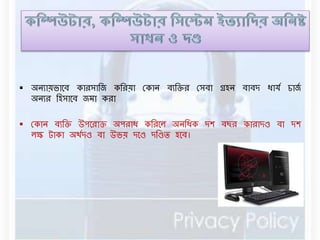
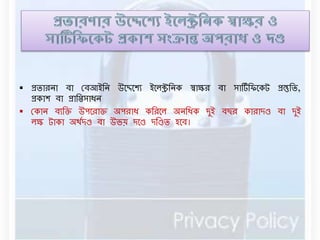
ī‚§ āϰāĻ•āĻžā§‡ āĻŋāϝāĻŦāĻ•ā§āϤ āωāĻĒāύāϰāĻžāĻ•ā§āϤ āĻ…āĻĒāϰāĻžāϧ āĻ•āĻŦāϰāύ⧇ āυ⧇āĻŦāϧāĻ• āĻĻāĻļ āĻŋāĻ›āϰ āĻ•āĻžāϰāĻžāĻĻāĻŖā§āĻĄ āĻŋāĻž āĻĻāĻļ 
⧇āĻ•ā§āώ āϟāĻžāĻ•āĻž āĻ…āĻĨāĻĄāĻĻāĻŖā§āĻĄ āĻŋāĻž āωāϭ⧟ āĻĻāύāĻŖā§āĻĄ āĻĻāĻŦāĻŖā§āĻĄāĻŋ āĻšāύāĻŋāĨ¤
ī‚§ āĻ•āĻ•ā§āĻŸā§āϰāĻŋāωāϟāĻžā§‡ āϰāϏāĻžāϏāĻĄ āϰāĻ•āĻžāĻ°ā§ āϰāĻ—āĻžāĻĒ⧇, āĻ§ā§āĻŦāĻ‚āϏ āĻŋāĻž āĻĒāĻŦāϰāĻŋāĻŋāĻĄā§‡ 
ī‚§ āυ⧇āϝ āϰāĻ•āĻžā§‡ āĻŋāϝāĻŦāĻ•ā§āϤāϰ āĻ°ā§āĻžāϧāϝāύāĻ°ā§ āωāĻ•ā§āϤ āϰāĻ•āĻžāĻ°ā§ āϰāĻ—āĻžāĻĒ⧇, āĻ§ā§āĻŦāĻ‚āϏ āĻŋāĻž āĻĒāĻŦāϰāĻŋāĻŋāĻĄā§‡ 
ī‚§ “āĻ•āĻŦāĻŽā§āĻĒāωāϟāĻžāϰ āϰāϏāĻžāϏāĻĄ āϰāĻ•āĻžāĻ°ā§â€ āĻ…āĻĨāĻĄ – āĻŋāĻžāĻŦ⧇āĻ•āĻžāϭ⧁āĻ•ā§āϤ āϰāĻĒā§āϰāĻžāĻ—ā§āϰāĻžāĻ°ā§, āĻ•āĻŦāĻŽā§āĻĒāωāϟāĻžāϰ āĻ•āĻ°ā§āĻžāĻ¨ā§āĻĄ, 
āĻŦāĻ°ā§ā§‡āĻžāχ⧇ āĻ“ āϰ⧇-āφāωāϟ āĻŋāĻžāĻŦ⧇āĻ•āĻžāϭ⧁āĻŦāĻ•ā§āϤ āĻāĻŋāĻ‚ āĻ•āĻŦāĻŽā§āĻĒāωāϟāĻžāϰ āĻŦāϰāύāϏāĻžāύāϏāĻĄāϰ āϰāĻĒā§āϰāĻžāĻ—ā§āϰāĻžāĻ°ā§ 
āĻŦāĻŋāύ⧇āώāĻŖāĨ¤ 
ī‚§ āϰāĻ•āĻžā§‡ āĻŋāϝāĻŦāĻ•ā§āϤ āωāĻĒāύāϰāĻžāĻ•ā§āϤ āĻ…āĻĒāϰāĻžāϧ āĻ•āĻŦāϰāύ⧇ āυ⧇āĻŦāϧāĻ• āĻŦāĻŋ⧇ āĻŋāĻ›āϰ āĻ•āĻžāϰāĻžāĻĻāĻŖā§āĻĄ āĻŋāĻž āĻŦāĻŋ⧇ 
⧇āĻ•ā§āώ āϟāĻžāĻ•āĻž āĻ…āĻĨāĻĄāĻĻāĻŖā§āĻĄ āĻŋāĻž āωāϭ⧟ āĻĻāύāĻŖā§āĻĄ āĻĻāĻŦāĻŖā§āĻĄāĻŋ āĻšāύāĻŋāĨ¤
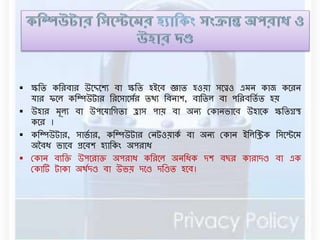
ī‚§ āĻ•ā§āώāĻŦāĻŋ āĻ•āĻŦāϰāĻŋāĻžāϰ āωāύ⧇āύāĻļāϝ āĻŋāĻž āĻ•ā§āώāĻŦāĻŋ āĻšāχāύāĻŋ āĻœā§āĻžāĻžāĻŋ āĻšāĻ“ā§ŸāĻž āϏāύ⧇āĻ“ āĻāĻ°ā§ā§‡ āĻ•āĻžā§‡ āĻ•āύāϰ⧇ 
āϝāĻžāϰ āĻŋāύ⧇ āĻ•āĻŦāĻŽā§āĻĒāωāϟāĻžāϰ āĻŦāϰāύāϏāĻžāύāϏāĻĄāϰ āĻŋāĻĨāϝ āĻŦāĻŋ⧇āĻžāĻļ, āĻŋāĻžāĻŦāĻŋ⧇ āĻŋāĻž āĻĒāĻŦāϰāĻŋāĻŦāĻŋāĻĄāĻŋ āĻšā§Ÿ 
ī‚§ āωāĻšāĻžāϰ āĻ°ā§ā§‚ā§‡āϝ āĻŋāĻž āωāĻĒāύāϝāĻžāĻŦāĻ—āĻŋāĻž āĻšā§āϰāĻžāϏ āĻĒāĻžā§Ÿ āĻŋāĻž āυ⧇āϝ āϰāĻ•āĻžā§‡āĻ­āĻžāύāĻŋ āωāĻšāĻžāύāĻ• āĻ•ā§āώāĻŦāĻŋāĻ—ā§āϰāĻ¸ā§āĻĨ 
āĻ•āύāϰ āĨ¤ 
ī‚§ āĻ•āĻŦāĻŽā§āĻĒāωāϟāĻžāϰ, āϏāĻžāĻ­āĻĄāĻžāϰ, āĻ•āĻŦāĻŽā§āĻĒāωāϟāĻžāϰ āϰ⧇āϟāĻ“ā§ŸāĻžāĻ•āĻĄ āĻŋāĻž āυ⧇āϝ āϰāĻ•āĻžā§‡ āχāĻŦ⧇āĻŦāĻŋāĻ• āĻŦāϏāύ⧇āύāĻ°ā§ 
āĻ…āĻŦāĻŋāϧ āĻ­āĻžāύāĻŋ āĻĒā§āϰāύāĻŋāĻļ āĻšāϝāĻžāĻŦāĻ•āĻ‚ āĻ…āĻĒāϰāĻžāϧ 
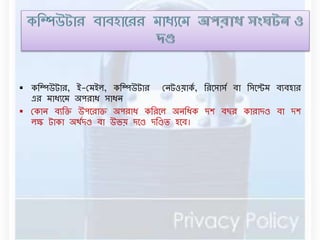
ī‚§ āϰāĻ•āĻžā§‡ āĻŋāϝāĻŦāĻ•ā§āϤ āωāĻĒāύāϰāĻžāĻ•ā§āϤ āĻ…āĻĒāϰāĻžāϧ āĻ•āĻŦāϰāύ⧇ āυ⧇āĻŦāϧāĻ• āĻĻāĻļ āĻŋāĻ›āϰ āĻ•āĻžāϰāĻžāĻĻāĻŖā§āĻĄ āĻŋāĻž āĻāĻ• 
āϰāĻ•āĻžāĻ°ā§āϟ āϟāĻžāĻ•āĻž āĻ…āĻĨāĻĄāĻĻāĻŖā§āĻĄ āĻŋāĻž āωāϭ⧟ āĻĻāύāĻŖā§āĻĄ āĻĻāĻŦāĻŖā§āĻĄāĻŋ āĻšāύāĻŋāĨ¤
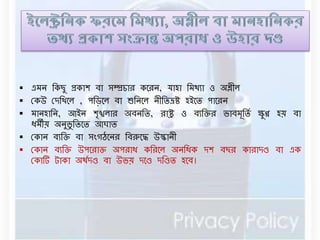
ī‚§ āĻāĻ°ā§ā§‡ āĻŦāĻ•āϛ⧁ āĻĒā§āϰāĻ•āĻžāĻļ āĻŋāĻž āϏāĻŽā§āĻĒā§āϰāϚāĻžāϰ āĻ•āύāϰ⧇, āϝāĻžāĻšāĻž āĻŦāĻ°ā§āĻĨāϝāĻž āĻ“ āυ⧇⧀⧇ 
ī‚§ āϰāĻ•āω āϰāĻĻāĻŦāĻŋāύ⧇ , āĻĒāĻŦāĻŋāύ⧇ āĻŋāĻž āĻļ⧁āĻŦ⧇āύ⧇ ⧇⧀āĻŦāĻŋāĻ­ā§āϰāĻˇā§āϟ āĻšāχāύāĻŋ āĻĒāĻžāύāϰ⧇ 
ī‚§ āĻ°ā§āĻžā§‡āĻšāĻžāĻŦ⧇, āφāχ⧇ āĻļ⧃Į¨ā§‡āĻžāϰ āĻ…āĻŋ⧇āĻŦāĻŋ, āϰāĻžāĻŋ āĻ“ āĻŋāϝāĻŦāĻ•ā§āϤāϰ āĻ­āĻžāĻŋāĻ°ā§ā§‚āĻŦāĻŋāĻĄ āĻ•ā§āώ⧁āĻŖā§āĻŖ āĻšā§Ÿ āĻŋāĻž 
āϧāĻ°ā§ā§€ā§Ÿ āυ⧇⧁āϭ⧁āĻŦāĻŋāύāĻŋ āφāϘāĻžāĻŋ 
ī‚§ āϰāĻ•āĻžā§‡ āĻŋāϝāĻŦāĻ•ā§āϤ āĻŋāĻž āϏāĻ‚āĻ—āĻ āύ⧇āϰ āĻŦāĻŋāϰ⧁āύāĻĻā§āϧ āωāĻ¸ā§āĻ•āĻžā§‡ā§€ 
ī‚§ āϰāĻ•āĻžā§‡ āĻŋāϝāĻŦāĻ•ā§āϤ āωāĻĒāύāϰāĻžāĻ•ā§āϤ āĻ…āĻĒāϰāĻžāϧ āĻ•āĻŦāϰāύ⧇ āυ⧇āĻŦāϧāĻ• āĻĻāĻļ āĻŋāĻ›āϰ āĻ•āĻžāϰāĻžāĻĻāĻŖā§āĻĄ āĻŋāĻž āĻāĻ• 
āϰāĻ•āĻžāĻ°ā§āϟ āϟāĻžāĻ•āĻž āĻ…āĻĨāĻĄāĻĻāĻŖā§āĻĄ āĻŋāĻž āωāϭ⧟ āĻĻāύāĻŖā§āĻĄ āĻĻāĻŦāĻŖā§āĻĄāĻŋ āĻšāύāĻŋāĨ¤
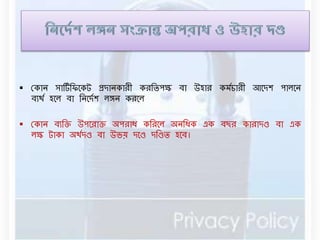
ī‚§ āϏāĻžāĻ°ā§āϟāĻĄāĻŦāĻŋāύāĻ•āϟ āĻĒā§āϰāĻĻāĻžā§‡āĻ•āĻžāϰ⧀ āĻ•āϰāĻŦāĻŋāĻĒāĻ•ā§āώ ⧇āĻžāχāύāϏāĻ¨ā§āϏ āϏāĻ°ā§āĻĒāĻĄāύāĻŖ āĻŋāϝāĻĨāĻĄ āĻšāύ⧇ āϝāĻžāϰ āυ⧇⧁āϕ⧂āύ⧇ 
⧇āĻžāχāύāϏāĻ¨ā§āϏ āĻĒā§āϰāϧāĻžā§‡ āĻ•āϰāĻž āĻšāύ⧟āĻŦāϛ⧇ āϰāϏāχ āĻŋāϝāĻŦāĻ•ā§āϤāϰ āĻŋāϝāĻĨāĻĄāĻŋāĻž āĻ…āĻĒāϰāĻžāϧ 
ī‚§ āϰāĻ•āĻžā§‡ āĻŋāϝāĻŦāĻ•ā§āϤ āωāĻĒāύāϰāĻžāĻ•ā§āϤ āĻ…āĻĒāϰāĻžāϧ āĻ•āĻŦāϰāύ⧇ āυ⧇āĻŦāϧāĻ• āĻ›ā§Ÿ āĻ°ā§āĻžāϏ āĻ•āĻžāϰāĻžāĻĻāĻŖā§āĻĄ āĻŋāĻž āĻĻāĻļ 
āĻšāĻžā§‡āĻžāϰ āϟāĻžāĻ•āĻž āĻ…āĻĨāĻĄāĻĻāĻŖā§āĻĄ āĻŋāĻž āωāϭ⧟ āĻĻāύāĻŖā§āĻĄ āĻĻāĻŦāĻŖā§āĻĄāĻŋ āĻšāύāĻŋāĨ¤
ī‚§ āϰāĻ•āĻžā§‡ āϏāĻžāĻ°ā§āϟāĻĄāĻŦāĻŋāύāĻ•āϟ āĻĒā§āϰāĻĻāĻžā§‡āĻ•āĻžāϰ⧀ āĻ•āϰāĻŦāĻŋāĻĒāĻ•ā§āώ āĻŋāĻž āωāĻšāĻžāϰ āĻ•āĻ°ā§āĻĄāϚāĻžāϰ⧀ āφāύāĻĻāĻļ āĻĒāĻžā§‡āύ⧇ 
āĻŋāϝāĻĨāĻĄ āĻšāύ⧇ āĻŋāĻž āĻŦ⧇āύāĻĻāĻĄāĻļ ⧇āĻ™ā§āϖ⧇ āĻ•āϰāύ⧇ 
ī‚§ āϰāĻ•āĻžā§‡ āĻŋāϝāĻŦāĻ•ā§āϤ āωāĻĒāύāϰāĻžāĻ•ā§āϤ āĻ…āĻĒāϰāĻžāϧ āĻ•āĻŦāϰāύ⧇ āυ⧇āĻŦāϧāĻ• āĻāĻ• āĻŋāĻ›āϰ āĻ•āĻžāϰāĻžāĻĻāĻŖā§āĻĄ āĻŋāĻž āĻāĻ• 
⧇āĻ•ā§āώ āϟāĻžāĻ•āĻž āĻ…āĻĨāĻĄāĻĻāĻŖā§āĻĄ āĻŋāĻž āωāϭ⧟ āĻĻāύāĻŖā§āĻĄ āĻĻāĻŦāĻŖā§āĻĄāĻŋ āĻšāύāĻŋāĨ¤
ī‚§ āϏāĻžāĻŋāĻĄāύāϭ⧌āĻ°ā§āĻ¤ā§āĻŦ, āĻ…āĻŋāĻŖā§āĻĄāĻŋāĻž, āĻŦ⧇āϰāĻžāĻĒāĻ¤ā§āϤāĻž, āυ⧇āϝāĻžā§‡āϝ āϰāĻžāύāĻŋāϰ āϏāĻŦāĻšāĻŋ āĻŋāĻ¨ā§āϧ⧁āĻ¤ā§āĻŦāĻĒā§‚āĻŖāĻĄ āϏāĻŽā§āĻĒāĻ•āĻĄ, 
⧇⧇āĻļ⧃Į¨ā§‡āĻž āĻ“ āĻŦ⧇āϰāĻžāĻĒāĻ¤ā§āϤāĻžāϰ āĻ¸ā§āĻŦāĻžāύāĻĨāĻĄ āĻŦ⧇āĻŦāĻŋāĻŋ āφāύāĻĻāĻļ āĻĻā§āĻŦāĻžāϰāĻž āφāχ⧇ āĻĒā§āĻ°ā§‡ā§Ÿā§‡āĻ•āĻžāϰ⧀ āϏāĻ‚āĻ¸ā§āĻĨāĻžāύāĻ• 
āĻŋāĻžāϧāĻž āϰāĻĻ⧟āĻž āĻ¸ā§āĻŦāύāĻ¤ā§āĻŦāĻ“ āĻŦ⧇āύāĻĻāĻĄāĻļ āĻ…āĻ°ā§āĻžā§‡āϝ āĻ•āϰāύ⧇ 
ī‚§ āϰāĻ•āĻžā§‡ āĻŋāϝāĻŦāĻ•ā§āϤ āωāĻĒāύāϰāĻžāĻ•ā§āϤ āĻ…āĻĒāϰāĻžāϧ āĻ•āĻŦāϰāύ⧇ āυ⧇āĻŦāϧāĻ• āĻĒāĻžāĻžāρāϚ āĻŋāĻ›āϰ āĻ•āĻžāϰāĻžāĻĻāĻŖā§āĻĄ āĻŋāĻž āĻĒāĻžāĻžāρāϚ 
⧇āĻ•ā§āώ āϟāĻžāĻ•āĻž āĻ…āĻĨāĻĄāĻĻāĻŖā§āĻĄ āĻŋāĻž āωāϭ⧟ āĻĻāύāĻŖā§āĻĄ āĻĻāĻŦāĻŖā§āĻĄāĻŋ āĻšāύāĻŋāĨ¤
ī‚§ āϰāĻ•āĻžā§‡ āϏāĻ‚āϰāĻŦāĻ•ā§āώāĻŋ āĻ•āĻŦāĻŽā§āĻĒāωāϟāĻžāϰ, āĻ•āĻŦāĻŽā§āĻĒāωāϟāĻžāϰ āĻŦāϏāύ⧇āĻ°ā§ āĻŋāĻž āĻ•āĻŦāĻŽā§āĻĒāωāϟāĻžāϰ āϰ⧇āϟāĻ“ā§ŸāĻžāĻ•āĻĄāĻ 
āυ⧇⧇⧁āĻ°ā§āĻŦāĻĻāĻŋāĻ­āĻžāύāĻŋ āĻĒā§āϰāύāĻŋāĻļ āĻ•āϰāĻž 
ī‚§ āϰāĻ•āĻžā§‡ āĻŋāϝāĻŦāĻ•ā§āϤ āωāĻĒāύāϰāĻžāĻ•ā§āϤ āĻ…āĻĒāϰāĻžāϧ āĻ•āĻŦāϰāύ⧇ āυ⧇āĻŦāϧāĻ• āĻĻāĻļ āĻŋāĻ›āϰ āĻ•āĻžāϰāĻžāĻĻāĻŖā§āĻĄ āĻŋāĻž āĻĻāĻļ 
⧇āĻ•ā§āώ āϟāĻžāĻ•āĻž āĻ…āĻĨāĻĄāĻĻāĻŖā§āĻĄ āĻŋāĻž āωāϭ⧟ āĻĻāύāĻŖā§āĻĄ āĻĻāĻŦāĻŖā§āĻĄāĻŋ āĻšāύāĻŋāĨ¤
ī‚§ ⧇āĻžāχāύāϏāĻ¨ā§āϏ āĻŋāĻž āχāύ⧇āĻŋāĻŦ⧇āĻ• āϏāĻžāĻ°ā§āϟāĻĄāĻŦāĻŋāύāĻ•āϟ āĻĒā§āϰāĻžāĻŦāĻŋāϰ ⧇⧇āϝ āĻŦā§‡ā§ŸāĻ¨ā§āĻ¤ā§āϰāĻ• āĻŋāĻž āϏāĻžāĻ°ā§āϟāĻĄāĻŦāĻŋāύāĻ•āϟ 
āĻĒā§āϰāĻĻāĻžā§‡āĻ•āĻžāϰ⧀ āĻ•āϰāĻŦāĻŋāĻĒāύāĻ•ā§āώāϰ āĻŦ⧇āĻ•āϟ āĻŦāĻ°ā§āĻĨāϝāĻž āĻĒāĻŦāϰāϚ⧟ āĻĒā§āϰāĻĻāĻžā§‡ 
ī‚§ āϰāĻ•āĻžā§‡ āϗ⧁āϰ⧁āĻ¤ā§āĻŦāĻĒā§‚āĻŖāĻĄ āĻŋāĻĨāϝ āϰāĻ—āĻžāĻĒ⧇ āĻ•āϰāĻž 
ī‚§ āϰāĻ•āĻžā§‡ āĻŋāϝāĻŦāĻ•ā§āϤ āωāĻĒāύāϰāĻžāĻ•ā§āϤ āĻ…āĻĒāϰāĻžāϧ āĻ•āĻŦāϰāύ⧇ āυ⧇āĻŦāϧāĻ• āĻĻ⧁āχ āĻŋāĻ›āϰ āĻ•āĻžāϰāĻžāĻĻāĻŖā§āĻĄ āĻŋāĻž āĻĻ⧁āχ 
⧇āĻ•ā§āώ āϟāĻžāĻ•āĻž āĻ…āĻĨāĻĄāĻĻāĻŖā§āĻĄ āĻŋāĻž āωāϭ⧟ āĻĻāύāĻŖā§āĻĄ āĻĻāĻŦāĻŖā§āĻĄāĻŋ āĻšāύāĻŋāĨ¤
ī‚§ āχāĻŦ⧇āĻŋāĻŦ⧇āĻ• āϰāϰāĻ•āĻ°ā§āĻĄ , āĻŋāχ, āϰāϰāĻŦ⧇⧇āĻžāϰ, āĻĒāĻ¤ā§āϰāύāϝāĻžāĻ—āĻžāύāϝāĻžāĻ—, āĻŋāĻĨāϝ, āĻĻāĻŦ⧇⧇ āĻŋāĻž āυ⧇āϝ āϰāĻ•āĻžā§‡ 
āĻŦāĻŋāώ⧟ āĻŋāĻ¸ā§āϤ⧁āύāĻŋ āĻĒā§āϰāύāĻŋāĻļāĻŦāϧāĻ•āĻžāϰ āĻĒā§āϰāĻžāĻŋ āĻšāύ⧟ āυ⧇āϝ āϰāĻ•āĻžā§‡ āĻŋāϝāĻŦāĻ•ā§āϤāϰ āĻŦ⧇āĻ•āϟ āĻĒā§āϰāĻ•āĻžāĻļ āĻ•āϰāĻž 
ī‚§ āϰāĻ•āĻžā§‡ āĻŋāϝāĻŦāĻ•ā§āϤ āωāĻĒāύāϰāĻžāĻ•ā§āϤ āĻ…āĻĒāϰāĻžāϧ āĻ•āĻŦāϰāύ⧇ āυ⧇āĻŦāϧāĻ• āĻĻ⧁āχ āĻŋāĻ›āϰ āĻ•āĻžāϰāĻžāĻĻāĻŖā§āĻĄ āĻŋāĻž āĻĻ⧁āχ 
⧇āĻ•ā§āώ āϟāĻžāĻ•āĻž āĻ…āĻĨāĻĄāĻĻāĻŖā§āĻĄ āĻŋāĻž āωāϭ⧟ āĻĻāύāĻŖā§āĻĄ āĻĻāĻŦāĻŖā§āĻĄāĻŋ āĻšāύāĻŋāĨ¤
ī‚§ āĻĒā§āϰāĻŋāĻžāϰ⧇āĻž āĻŋāĻž āϰāĻŋāφāχāĻŦ⧇ āωāύ⧇āύāĻļāϝ āχāύ⧇āĻŋāĻŦ⧇āĻ• āĻ¸ā§āĻŦāĻžāĻ•ā§āώāϰ āĻŋāĻž āϏāĻžāĻ°ā§āϟāĻĄāĻŦāĻŋāύāĻ•āϟ āĻĒā§āϰāĻ¸ā§āϤ⧁āĻŦāĻŋ, 
āĻĒā§āϰāĻ•āĻžāĻļ āĻŋāĻž āĻĒā§āϰāĻžāĻŦāĻŋāϏāĻžāϧ⧇ 
ī‚§ āϰāĻ•āĻžā§‡ āĻŋāϝāĻŦāĻ•ā§āϤ āωāĻĒāύāϰāĻžāĻ•ā§āϤ āĻ…āĻĒāϰāĻžāϧ āĻ•āĻŦāϰāύ⧇ āυ⧇āĻŦāϧāĻ• āĻĻ⧁āχ āĻŋāĻ›āϰ āĻ•āĻžāϰāĻžāĻĻāĻŖā§āĻĄ āĻŋāĻž āĻĻ⧁āχ 
⧇āĻ•ā§āώ āϟāĻžāĻ•āĻž āĻ…āĻĨāĻĄāĻĻāĻŖā§āĻĄ āĻŋāĻž āωāϭ⧟ āĻĻāύāĻŖā§āĻĄ āĻĻāĻŦāĻŖā§āĻĄāĻŋ āĻšāύāĻŋāĨ¤
ī‚§ āĻ•āĻŦāĻŽā§āĻĒāωāϟāĻžāϰ, āχ-āϰāĻ°ā§āχ⧇, āĻ•āĻŦāĻŽā§āĻĒāωāϟāĻžāϰ āϰ⧇āϟāĻ“ā§ŸāĻžāĻ•āĻĄ, āĻŦāϰāύāϏāĻžāϏāĻĄ āĻŋāĻž āĻŦāϏāύ⧇āĻ°ā§ āĻŋāϝāĻŋāĻšāĻžāϰ 
āĻāϰ āĻ°ā§āĻžāϧāϝāύāĻ°ā§ āĻ…āĻĒāϰāĻžāϧ āϏāĻžāϧ⧇ 
ī‚§ āϰāĻ•āĻžā§‡ āĻŋāϝāĻŦāĻ•ā§āϤ āωāĻĒāύāϰāĻžāĻ•ā§āϤ āĻ…āĻĒāϰāĻžāϧ āĻ•āĻŦāϰāύ⧇ āυ⧇āĻŦāϧāĻ• āĻĻāĻļ āĻŋāĻ›āϰ āĻ•āĻžāϰāĻžāĻĻāĻŖā§āĻĄ āĻŋāĻž āĻĻāĻļ 
⧇āĻ•ā§āώ āϟāĻžāĻ•āĻž āĻ…āĻĨāĻĄāĻĻāĻŖā§āĻĄ āĻŋāĻž āωāϭ⧟ āĻĻāύāĻŖā§āĻĄ āĻĻāĻŦāĻŖā§āĻĄāĻŋ āĻšāύāĻŋāĨ¤
ī‚§ āϰāĻ•āĻžāĻŋāĻžāĻ•ā§āĻŸā§āϰ⧇ āĻ•āϰāĻŦāĻŋāĻ• āĻ…āĻĒāϰāĻžāϧ āϏāĻ‚āĻ—āĻ āĻŋāĻŋ āĻšāύ⧇ āĻ…āĻĒāϰāĻžāϧ āĻāϰ āϏāĻŦāĻšāĻŋ āĻĒā§āϰāĻŋāϝāĻ•ā§āώ 
āϏāĻ‚āĻŦ⧇āĻˇā§āϟāĻŋāĻž āϰāύ⧟āύāĻ› āĻāĻ°ā§ā§‡ āĻĒā§āϰāύāĻŋāϝāĻ• āĻĒāĻŦāϰāϚāĻžā§‡āĻ•, āĻ°ā§āϝāĻžāύ⧇⧇āĻžāϰ, āϏāĻŦāϚāĻŋ, āĻ…āĻ‚āĻļā§€āĻĻāĻžāϰ, 
āĻ•āĻ°ā§āĻĄāĻ•āĻŋāĻĄāĻž āĻŋāĻž āĻ•āϰāĻ°ā§āϚāĻžāϰ⧀ āχ āĻ…āĻĒāϰāĻžāϧ⧀ āĨ¤ 
ī‚§ āϰāĻ•āĻžā§‡ āĻŋāϝāĻŦāĻ•ā§āϤ āωāĻĒāύāϰāĻžāĻ•ā§āϤ āĻ…āĻĒāϰāĻžāϧ āĻ•āĻŦāϰāύ⧇ āυ⧇āĻŦāϧāĻ• āĻĻāĻļ āĻŋāĻ›āϰ āĻ•āĻžāϰāĻžāĻĻāĻŖā§āĻĄ āĻŋāĻž āĻĻāĻļ 
⧇āĻ•ā§āώ āϟāĻžāĻ•āĻž āĻ…āĻĨāĻĄāĻĻāĻŖā§āĻĄ āĻŋāĻž āωāϭ⧟ āĻĻāύāĻŖā§āĻĄ āĻĻāĻŦāĻŖā§āĻĄāĻŋ āĻšāύāĻŋāĨ¤
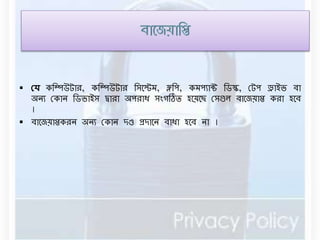
ī‚§ āϰ⧇ āĻ•āĻŦāĻŽā§āĻĒāωāϟāĻžāϰ, āĻ•āĻŦāĻŽā§āĻĒāωāϟāĻžāϰ āĻŦāϏāύ⧇āĻ°ā§, āĻĢā§āϞāĻŦāĻĒ, āĻ•āĻ°ā§āĻĒāϝāĻžāĻ•ā§āϟ āĻŦāĻ°ā§āĻ¸ā§āĻ•, āϰāϟāĻĒ āĻĄā§āϰāĻžāχāĻ­ āĻŋāĻž 
āυ⧇āϝ āϰāĻ•āĻžā§‡ āĻŦāĻ°ā§āĻ­āĻžāχāϏ āĻĻā§āĻŦāĻžāϰāĻž āĻ…āĻĒāϰāĻžāϧ āϏāĻ‚āĻ—āĻ āĻŋāĻŋ āĻšāύ⧟āύāĻ› āϰāϏāϗ⧁⧇ āĻŋāĻžāĻ¨ā§‡ā§ŸāĻžāĻŋ āĻ•āϰāĻž āĻšāύāĻŋ 
āĨ¤ 
ī‚§ āĻŋāĻžāĻ¨ā§‡ā§ŸāĻžāĻŋāĻ•āϰ⧇ āυ⧇āϝ āϰāĻ•āĻžā§‡ āĻĻāĻŖā§āĻĄ āĻĒā§āϰāĻĻāĻžāύ⧇ āĻŋāĻžāϧāĻž āĻšāύāĻŋ ⧇āĻž āĨ¤
Privacy act, bangladesh

Privacy act, bangladesh

  • 2.
    Mostafijur Rahman –BSSE 0312 Md Irfan– BSSE 0326 Nadia Nahar – BSSE 0327 Moshiur Rahman – BSSE 0330 2 11/18/2014
  • 3.
     Information SecurityPolicy Guideline, Version 1.12.12.00  ICT Act, 2006 3 11/18/2014
  • 4.
    Vision 2021: Digital Bangladesh Implementation of e-governance Information Security Policy 4 11/18/2014
  • 5.
    lack of information protection procedure weak and unmanaged security controls under skilled personnel and lack of expertise 5 11/18/2014
  • 6.
    īļ Ministry ofICT on behalf of the Government of Bangladesh will have the ownership īļ Ministry of ICT will monitor the implementation īļ Bangladesh Computer Council, Office of the CCA and Bangladesh Telecommunication Regulatory Commission (BTRC) will jointly coordinate the implementation 6 11/18/2014
  • 7.
    Agency Asset Attack Authentication Authenticity Availability Business continuity Confidentiality Certification Classified Information Control Control objective Corrective action Eavesdropping Exploit Guideline Information Information asset Information System Integrity IS Policy Information security Information security event PKI Policy Risk Risk analysis Risk Risk assessment Social Engineering Spoofing assessment 7 11/18/2014
  • 8.
    â€ĸ to helpagencies of the Government of Bangladesh to understand the nutshell of Information Security, â€ĸ to define the methodology to prepare Information Security policy â€ĸ to give them proper guidance to implement Information Security Policy 8 11/18/2014
  • 9.
  • 10.
    Information is anasset that, like other important business assets, is essential to an organization’s business and consequently be appropriately safeguarded. Information can be in any form. It includes: documents and papers electronic data the systems (software, hardware and networks) on which the information is stored, processed or communicated intellectual information (knowledge or perceptions) acquired by individuals physical items from which information regarding design, components or use could be derived Images, audio or video clips. 10 11/18/2014
  • 11.
    Asset is anythingthat has a value to the organization, agency or nation. Information is a key asset for an organization. databases and data files, contracts and agreements, system documentation including process, research information, user manuals, training material, operational or support procedures, business continuity plans, fallback arrangements, audit trails, and archived information; application software, system software, development tools, and utilities; computer equipment, communications equipment, removable media, and other equipment; computing and communications services; people, and their qualifications, skills, and experience; intangibles, such as reputation and image of the organization 11 11/18/2014
  • 12.
  • 13.
    Historical information Agenciesprivate information or personnel information Regular business information Static and dynamic information Communication/ correspondence, perception and knowledge Information that’s processed in the Intranet of the agency/government Information that’s processed in the internet of the agency/government Information that’s processed in the extranet 13 11/18/2014
  • 14.
    1 â€ĸ TopSecret 2 â€ĸ Secret 3 â€ĸ Confidential 4 â€ĸ Restricted 5 â€ĸ Public or Unclassified 14 11/18/2014
  • 15.
    More Issues Relatedto Information Information Owner Information Custodian Roles and responsibilities Archiving of Information Asset 15 11/18/2014
  • 16.
    Preparing Strategy ISO/IEC27002: Code of Practice for Information Security Management 16 11/18/2014
  • 17.
    Understanding Risk, Threatsand Vulnerabilities Identification of Risk, Threats and Vulnerabilities Risk Management Risk Management Template 17 11/18/2014
  • 18.
    The potential (merely“chance”) for loss, damage or destruction of an information asset as a result of a threat exploiting a vulnerability. 18 11/18/2014
  • 19.
    lack of securityawareness are there Operating procedures are not documented Lack of fire prevention system little support for security measures information is not classified no official policy and no monitoring/intrusion detection or incident response team are in place The building is in an earthquake zone, where minor quakes are expected weak access control mechanisms exists inadequate information security policy operates The building is in an flooded zone or can be affected by flood because of lack of proper water disposal system Employees are not identified adequately, visitors may roam unchecked 19 11/18/2014
  • 20.
    A threat isa potential cause of an unwanted incident, which may result in harm to a system or organizations’ information assets. 20 11/18/2014
  • 21.
    unauthorized access, disclosureof information, legal threats, sabotage, inadequate security awareness, poor security policy, fraudulent, workload, denial of service, spoofing, advanced persistent threat (APT), applications with bugs, eavesdropping 21 11/18/2014
  • 22.
    Vulnerabilities are flawsor weaknesses associated with an agency’s assets or capabilities. Vulnerability is merely a condition or set of conditions that may allow a threat to affect an asset. Typically vulnerability results from: flawed procedures, under-skilled staff, incorrectly configured or defective technology. 22 11/18/2014
  • 23.
    Organizati onal Vulnerability Personnel Environme ntal Hardware, software and network Spatial 23 11/18/2014
  • 24.
    Information Asset â€ĸInformation asset is something what agency tries to protect. Threat â€ĸ Threat is something against what an agency tries to protect their information asset. Vulnerability â€ĸ Vulnerability is the weakness or gap in the protection efforts made by an agency. Risk â€ĸ Risk is destruction (or chance of destruction) of an information asset as a result of threat exploiting vulnerability. 24 11/18/2014
  • 25.
  • 26.
  • 27.
    Security controls aresafeguards or countermeasures to avoid, counteract or minimize security risks. 27 11/18/2014
  • 28.
    Preve ntative According to Time Detecti ve Correc tive Physica l According to Nature Proced ural Techni cal Legal and regulat ory 28 11/18/2014
  • 29.
    Personnel Security, EquipmentControl, Access controls, Physical and Environmental Protection, Operational Procedure and responsibilities, Third party service delivery management, System planning and acceptance, Application Security, Protection against malicious code, Information back-up, Network security management, Removable Media handling, Information exchange/transmission, Information disposal, Information system security, Cryptographic controls, Correct processing, System files security, Monitoring 29 11/18/2014
  • 30.
    Authenticity Confidentiality IntegrityNon-repudiation 30 11/18/2014
  • 31.
    ICT Act 2006(amended in 2009) ICT Policy 2009 Right to Information Act Intellectual Property Rights Copyright, Patent, Trademark related laws PKI related rules/guidelines for cryptographic controls Laws on document & records retention Cyber Security related laws/guideline/policy UN conventions/Laws related to internet or cyber security 31 11/18/2014
  • 32.
    Step s Includinginformation security in the business continuity management process; Business continuity and risk assessment; Developing and implementing continuity plans including information security; Business continuity planning framework; Testing, maintaining and re-assessing business continuity plans; 32 11/18/2014
  • 33.
    Standards and Guideline Information System Audit and Certification Incident Management Monitoring & Improvement National Cyber Security Strategy 33 11/18/2014
  • 35.
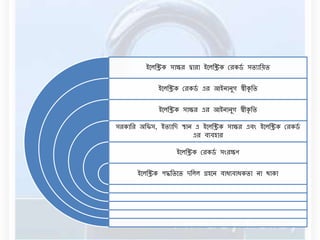
    āĻŦāĻŋāώ⧟āĻŋāĻ¸ā§āϤ⧁ īļāϏāĻ‚āĻœā§āĻžāĻž īļāφāχāύ⧇āϰāĻ…āĻŦāĻŋāϰāĻžāĻŦāĻŋāĻ• āĻĒā§āϰāύ⧟āĻžāĻ— īļāχāύ⧇āĻŦāĻŋāĻ• āϏāĻžāĻ•ā§āώāϰ āĻāĻŋāĻ‚ āχāύ⧇āĻŦāĻŋāĻ• āϰāϰāĻ•āĻ°ā§āĻĄ īļāχāύ⧇āĻŦāĻŋāĻ• āϰāϰāĻ•āĻ°ā§āĻĄ āĻ¸ā§āĻŦā§€āĻ•ā§ƒāĻŦāĻŋ, āĻĒā§āϰāĻžāĻŦāĻŋāĻ¸ā§āĻŦā§€āĻ•āĻžāϰ, āϰāĻĒā§āϰāϰ⧇ īļāĻŦ⧇āϰāĻžāĻĒāĻĻ āχāύ⧇āĻŦāĻŋāĻ• āϰāϰāĻ•āĻ°ā§āĻĄ āĻ“ āĻŦ⧇āϰāĻžāĻĒāĻĻ āχāύ⧇āĻŦāĻŋāĻ• āĻ¸ā§āĻŦāĻžāĻ•ā§āώāϰ īļāĻŦā§‡ā§ŸāĻ¨ā§āĻ¤ā§āϰāĻ• āĻ“ āϏāĻžāĻ°ā§āϟāĻĄāĻŦāĻŋāύāĻ•āϟ āĻĒā§āϰāĻĻāĻžā§‡āĻ•āĻžāϰ⧀ āĻ•āĻ°ā§āĻĄāĻ•āĻŋāĻĄāĻž
  • 36.
    āĻŦāĻ•āϛ⧁ āϏāĻ‚āĻœā§āĻžāĻž āχāύ⧇āĻŦāĻŋāĻ•āĻ¸ā§āĻŦāĻžāĻ•ā§āώāϰ āχāύ⧇āĻŦāĻŋāĻ• āĻ¸ā§āĻŦāĻžāĻ•ā§āώāϰ āϏāĻžāĻ°ā§āϟāĻĄāĻŦāĻŋāύāĻ•āϟ āχāύ⧇āĻŦāĻŋāĻ• āωāĻĒāĻžāĻ“ āĻŦāĻŋāĻŦ⧇āĻ°ā§ā§Ÿ āχāύ⧇āĻŦāĻŋāĻ• āϰāĻ—āύ⧇āϟ āχāύ⧇āĻŦāĻŋāĻ• āϰāϰāĻ•āĻ°ā§āĻĄ āωāĻĒāĻžāĻ“ āĻ—ā§āϰāĻžāĻšāĻ• āĻ¸ā§āĻŦāĻžāĻ•ā§āώāϰ āĻĒā§āϰāĻŦāĻŋāĻĒāĻžāĻĻ⧇ āϝāĻ¨ā§āĻ¤ā§āϰ
  • 37.
    āφāχāύ⧇āϰ āĻ…āĻŦāĻŋāϰāĻžāĻŦāĻŋāĻ• āĻĒā§āϰāύ⧟āĻžāĻ— āĻŋāĻžāς⧇āĻžāύāĻĻāĻļ āĻāϰ āĻŋāĻžāχāύāϰ āĻāχ āφāχ⧇ āĻāϰ āĻ…āϧ⧀⧇ āĻ āĻ…āĻĒāϰāĻžāϧ āϏāĻŽā§āĻĒ⧇ āĻ•āύāϰ āĻŋāĻžāς⧇āĻžāύāĻĻāĻļ āĻšāύāĻŋ āĻŋāĻžāχāύāϰ āĻāχ āφāχ⧇ āĻāϰ āĻ…āϧ⧀⧇ āĻ āĻ…āĻĒāϰāĻžāϧ āϏāĻŽā§āĻĒ⧇ āĻ•āύāϰ
  • 38.
    āχāύ⧇āĻŦāĻŋāĻ• āϏāĻžāĻ•ā§āώāϰ āĻāĻŋāĻ‚āχāύ⧇āĻŦāĻŋāĻ• āϰāϰāĻ•āĻ°ā§āĻĄ
  • 39.
    āχāύ⧇āĻŦāĻŋāĻ• āϏāĻžāĻ•ā§āώāϰ āĻĻā§āĻŦāĻžāϰāĻžāχāύ⧇āĻŦāĻŋāĻ• āϰāϰāĻ•āĻ°ā§āĻĄ āϏāĻŋāϝāĻžāĻŦ⧟āĻŋ āχāύ⧇āĻŦāĻŋāĻ• āϰāϰāĻ•āĻ°ā§āĻĄ āĻāϰ āφāχ⧇āĻžā§‡ā§āĻ— āĻ¸ā§āĻŦā§€āĻ•ā§ƒāĻŦāĻŋ āχāύ⧇āĻŦāĻŋāĻ• āϏāĻžāĻ•ā§āώāϰ āĻāϰ āφāχ⧇āĻžā§‡ā§āĻ— āĻ¸ā§āĻŦā§€āĻ•ā§ƒāĻŦāĻŋ āϏāϰāĻ•āĻžāĻŦāϰ āĻ…āĻŦāĻŋāϏ, āχāĻŋāϝāĻžāĻŦāĻĻ āĻ¸ā§āĻĨāĻžā§‡ āĻ āχāύ⧇āĻŦāĻŋāĻ• āϏāĻžāĻ•ā§āώāϰ āĻāĻŋāĻ‚ āχāύ⧇āĻŦāĻŋāĻ• āϰāϰāĻ•āĻ°ā§āĻĄ āĻāϰ āĻŋāϝāĻŋāĻšāĻžāϰ āχāύ⧇āĻŦāĻŋāĻ• āϰāϰāĻ•āĻ°ā§āĻĄ āϏāĻ‚āϰāĻ•ā§āώāĻŖ āχāύ⧇āĻŦāĻŋāĻ• āĻĒāĻĻā§āϧāĻŦāĻŋāύāĻŋ āĻĻāĻŦ⧇⧇ āĻ—ā§āϰāĻšāύ⧇ āĻŋāĻžāϧāϝāĻŋāĻžāϧāĻ•āĻŋāĻž ⧇āĻž āĻĨāĻžāĻ•āĻž
  • 40.
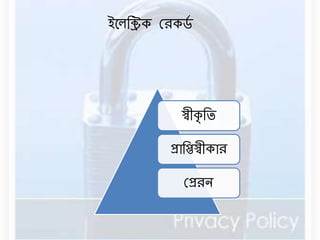
    āχāύ⧇āĻŦāĻŋāĻ• āϰāϰāĻ•āĻ°ā§āĻĄ āĻ¸ā§āĻŦā§€āĻ•ā§ƒāĻŦāĻŋ āĻĒā§āϰāĻžāĻŦāĻŋāĻ¸ā§āĻŦā§€āĻ•āĻžāϰ āϰāĻĒā§āϰāϰ⧇
  • 41.
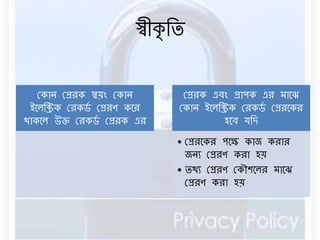
    āĻ¸ā§āĻŦā§€āĻ•ā§ƒāĻŦāĻŋ āϰāĻ•āĻžā§‡ āϰāĻĒā§āϰāϰāĻ•āĻ¸ā§āĻŦ⧟āĻ‚ āϰāĻ•āĻžā§‡ āχāύ⧇āĻŦāĻŋāĻ• āϰāϰāĻ•āĻ°ā§āĻĄ āϰāĻĒā§āϰāϰāĻŖ āĻ•āύāϰ āĻĨāĻžāĻ•āύ⧇ āωāĻ•ā§āϤ āϰāϰāĻ•āĻ°ā§āĻĄ āϰāĻĒā§āϰāϰāĻ• āĻāϰ āϰāĻĒā§āϰāϰāĻ• āĻāĻŋāĻ‚ āĻĒā§āϰāĻžāĻĒāĻ• āĻāϰ āĻ°ā§āĻžāύ⧇ āϰāĻ•āĻžā§‡ āχāύ⧇āĻŦāĻŋāĻ• āϰāϰāĻ•āĻ°ā§āĻĄ āϰāĻĒā§āϰāϰāύāĻ•āϰ āĻšāύāĻŋ āϝāĻŦāĻĻ â€ĸ āϰāĻĒā§āϰāϰāύāĻ•āϰ āĻĒāύāĻ•ā§āώ āĻ•āĻžā§‡ āĻ•āϰāĻžāϰ ⧇⧇āϝ āϰāĻĒā§āϰāϰāĻŖ āĻ•āϰāĻž āĻšā§Ÿ â€ĸ āĻŋāĻĨāϝ āϰāĻĒā§āϰāϰāĻŖ āϰāĻ•ā§ŒāĻļāύ⧇āϰ āĻ°ā§āĻžāύ⧇ āϰāĻĒā§āϰāϰāĻŖ āĻ•āϰāĻž āĻšā§Ÿ
  • 42.
    āĻĒā§āϰāĻžāĻŦāĻŋ āĻ¸ā§āĻŦā§€āĻ•āĻžāϰ āĻĒā§āϰāĻžāĻĒāĻ•āĻĻā§āĻŦāĻžāϰāĻž āĻ¸ā§āĻŦ⧟āĻ‚āĻŦāĻŋ⧟ āĻŋāĻž āυ⧇āϝāύāĻ•āĻžāύ⧇āĻž āϰāϝāĻžāĻ—āĻžāύāϝāĻžāύāĻ— āĻĻā§āĻŦāĻžāϰāĻž āĻĒā§āϰāĻžāĻĒāĻ• āĻĻā§āĻŦāĻžāϰāĻž āĻĒā§āϰāĻžāĻŦāĻŋ āĻ¸ā§āĻŦā§€āĻ•āĻžāϰ āĻāĻ°ā§ā§‡ āϰāĻ•āĻžā§‡ āĻ•āĻ°ā§āĻĄāĻ•āĻžāĻŖā§āĻĄ āϝāĻž āĻŦ⧇āĻŦāĻŋāĻŋ āĻ•āύāϰ āχāύ⧇āĻŦāĻŋāĻ• āϰāϰāĻ•āĻ°ā§āĻĄ āĻĒā§āϰāĻžāĻĒāĻ• āĻĒāĻžā§ŸāύāĻ› āχāϞ⧇āĻ•ā§āĻŸā§āϰāĻŋāĻ• āϰ⧇āĻ•āĻ°ā§āĻĄ āϰ⧇⧇āĻŖ āĻ“ āĻ—ā§āϰāĻšāϞ⧇⧇ āϏāĻŽā§Ÿ āĻāĻŦāĻ‚ āĻ¸ā§āĻĨāĻžā§‡
  • 43.
    āĻŦ⧇āϰāĻžāĻĒāĻĻ āχāύ⧇āĻŦāĻŋāĻ• āϰāϰāĻ•āĻ°ā§āĻĄāĻ“ āĻŦ⧇āϰāĻžāĻĒāĻĻ āχāύ⧇āĻŦāĻŋāĻ• āĻ¸ā§āĻŦāĻžāĻ•ā§āώāϰ â€ĸ āχāύ⧇āĻŦāĻŋāĻ• āϰāϰāĻ•āĻ°ā§āĻĄ āĻāϰ ⧇⧇āϝ āϰāϝ āĻŦ⧇āϰāĻžāĻĒāĻ¤ā§āϤāĻž āĻĒāĻĻā§āϧāĻŦāĻŋ āĻ—ā§āϰāĻšāĻŖ āĻ•āϰāĻž āĻšā§Ÿ, āĻŋāĻž āϝāĻžāϚāĻžāχ āĻĒāϝāĻĄāĻ¨ā§āϤ āĻŦ⧇āϰāĻžāĻĒāĻĻ āχāύ⧇āĻŦāĻŋāĻ• āϰāϰāĻ•āĻ°ā§āĻĄ āĻŋāύ⧇ āĻ—āĻŖāϝ āĻšāύāĻŋ āĻŦ⧇āϰāĻžāĻĒāĻĻ āχāύ⧇āĻŦāĻŋāĻ• āϰāϰāĻ•āĻ°ā§āĻĄ â€ĸ āωāĻšāĻž āϏāĻ‚āϝ⧁āĻ•ā§āϤāĻ•āĻžāϰ⧀āϰ āĻāĻ•āĻžāĻ¨ā§āϤ āĻŦ⧇⧇āĻ¸ā§āĻŦ āĻŦāϛ⧇ â€ĸ āϏāĻ‚āϝ⧁āĻ•ā§āϤāĻ•āĻžāϰ⧀āύāĻ• āϏ⧇āĻžāĻ•ā§āϤ āĻ•āϰāĻžāϰ āϏ⧁āύāϝāĻžāĻ— āĻŦāϛ⧇ â€ĸ āχāύ⧇āĻŦāĻŋāĻ• āϏāĻžāĻ•ā§āώāύāϰāϰ āϏāĻžāύāĻĨ āϏāĻŽā§āĻĒāĻ•āĻĄ āϝ⧁āĻ•ā§āϤ āχāύ⧇āĻŦāĻŋāĻ• āϰāϰāĻ•āĻ°ā§āĻĄ āĻ āϰāĻ•āĻžā§‡āϰ⧂āĻĒ āĻĒāĻŦāϰāĻŋāĻŋāĻĄā§‡ ⧇āĻž āĻšā§Ÿ āĻŦ⧇āϰāĻžāĻĒāĻĻ āχāύ⧇āĻŦāĻŋāĻ• āĻ¸ā§āĻŦāĻžāĻ•ā§āώāϰ
  • 44.
    āĻŦā§‡ā§ŸāĻ¨ā§āĻ¤ā§āϰāĻ• āĻ“ āϏāĻžāĻ°ā§āϟāĻĄāĻŦāĻŋāύāĻ•āϟāĻĒā§āϰāĻĻāĻžā§‡āĻ•āĻžāϰ⧀ āĻ•āĻ°ā§āĻĄāĻ•āĻŋāĻĄāĻž āĻŦā§‡ā§ŸāĻ¨ā§āĻ¤ā§āϰāĻ• āĻ“ āυ⧇āϝāĻžā§‡āϝ āĻ•āĻ°ā§āĻĄāĻ•āĻŋāĻĄāĻž āĻŦā§‡ā§ŸāĻ¨ā§āĻ¤ā§āϰāύāĻ•āϰ āĻ•āĻžāϝāĻĄāĻžāĻŋ⧇⧀ â€ĸ āϏāĻžāϟāĻĄāĻŦāĻŋāύāĻ•āϟ āĻĒā§āϰāĻĻāĻžā§‡āĻ•āĻžāϰ⧀āϰ āĻ•āĻžā§‡ āĻŋāĻ•ā§āϤāĻžāĻŋāϧāĻžā§‡ āĻ•āϰāĻž â€ĸ āϏāĻžāϟāĻĄāĻŦāĻŋāύāĻ•āϟ āĻĒā§āϰāĻĻāĻžā§‡āĻ•āĻžāϰ⧀āϰ āĻ•āĻžā§‡ āĻĒāĻŦāϰāϚāĻžā§‡ā§‡āĻžāϰ āĻļāĻŋāĻĄāĻžāĻŋ⧇⧀ āĻŦ⧇āϧāĻĄāĻžāϰāĻŖ â€ĸ āĻ•āĻŦāĻŽā§āĻĒāωāϟāĻžāϰ⧇āĻžāĻŋ āωāĻĒāĻžāĻ“ āĻ­āĻžāĻŖā§āĻĄāĻžāϰ āϏāĻ‚āϰāĻ•ā§āώāĻŖ āĻŦāĻŋāύāĻĻāĻļā§€ āϏāĻžāϟāĻĄ āĻŦāĻŋāύāĻ•āϟ āĻĒā§āϰāĻĻāĻžā§‡āĻ•āĻžāϰ⧀ āĻ•āĻ°ā§āĻĄāĻ•āĻŋāĻĄāĻžāύāĻ• āĻ¸ā§āĻŦā§€āĻ•ā§ƒāĻŋ āĻĒā§āϰāĻĻāĻžā§‡ āĻŦā§‡ā§ŸāĻ¨ā§āĻ¤ā§āϰāύāĻ•āϰ āϏāĻ‚āϰāĻ•ā§āώāύāĻŖāϰ āφāϧāĻžāϰ āĻŦāĻšāϏāĻžāύāĻŋ āĻĻāĻžāĻŦ⧟āĻ¤ā§āĻŦ āĻĒāĻžā§‡ā§‡ āχāύ⧇āĻŦāĻŋāĻ• āĻ¸ā§āĻŦāĻžāĻ•ā§āώāϰ āϏāĻžāĻ°ā§āϟāĻĄāĻŦāĻŋāύāĻ•āϟ āχāϏ⧁āϝāύ⧟āϰ ⧇⧇āϝ āφāύāĻŋāĻĻ⧇
  • 45.
    āĻŦā§‡ā§ŸāĻ¨ā§āĻ¤ā§āϰāĻ• āĻ“ āϏāĻžāĻ°ā§āϟāĻĄāĻŦāĻŋāύāĻ•āϟāĻĒā§āϰāĻĻāĻžā§‡āĻ•āĻžāϰ⧀ āĻ•āĻ°ā§āĻĄāĻ•āĻŋāĻĄāĻž ⧇āĻžāχāύāϏāĻ¨ā§āϏ āĻāϰ ⧇⧇āϝ āφāύāĻŋāĻĻ⧇ ⧇āĻžāχāύāϏāĻ¨ā§āϏ ⧇āĻŋāĻžā§Ÿā§‡ ⧇āĻžāχāύāϏāĻ¨ā§āϏ āĻ°ā§āĻžā§āϜ⧁āϰ āĻŋāĻž āĻ…āĻ—ā§āϰāĻžāĻšāϝ āĻ•āϰāĻžāϰ āĻĒā§āϰāĻŦāĻŋ⧟āĻž ⧇āĻžāχāύāϏāĻ¨ā§āϏ āĻŋāĻžāĻŦāĻŋ⧇ āĻŋāĻž āĻ¸ā§āĻĨāĻŦāĻ—āĻŋāĻ•āϰāĻŖ ⧇āĻžāχāύāϏāĻ¨ā§āϏ āĻŋāĻžāĻŦāĻŋ⧇ āĻŋāĻž āĻ¸ā§āĻĨāĻŦāĻ—āύāĻŋāϰ āϰ⧇āĻžāĻ°ā§āϟāĻļ āĻ•ā§āώāĻ°ā§āĻŋāĻž āĻ…āĻĒāĻĄāĻŖ āĻŋāĻĻāύāĻ¨ā§āϤāϰ āĻ•ā§āώāĻ°ā§āĻŋāĻž āĻ•āĻŦāĻŽā§āĻĒāωāϟāĻžāϰ āĻāĻŋāĻ‚ āωāĻšāĻžāύāĻŋ āϧāĻžāϰāĻŖāĻ•ā§ƒāĻŋ āωāĻĒāĻžāύāĻ•ā§āϤ āĻĒā§āϰāύāĻŋāĻļ
  • 46.
    āĻŦā§‡ā§ŸāĻ¨ā§āĻ¤ā§āϰāĻ• āĻ“ āϏāĻžāĻ°ā§āϟāĻĄāĻŦāĻŋāύāĻ•āϟāĻĒā§āϰāĻĻāĻžā§‡āĻ•āĻžāϰ⧀ āĻ•āĻ°ā§āĻĄāĻ•āĻŋāĻĄāĻž ⧇āĻžāχāύāϏāĻ¨ā§āϏ āϏāĻ°ā§āĻĒāĻĄāĻŖ āχāύ⧇āĻŦāĻŋāĻ• āĻ¸ā§āĻŦāĻžāĻ•ā§āώāϰ āϏāĻžāĻ°ā§āϟāĻĄāĻŦāĻŋāύāĻ•āϟ āĻŋāĻžāĻŦāĻŋ⧇
  • 49.
    ī‚§ āĻŋāĻžāχāύ⧇ āϰāĻŦāĻŋāĻ—āĻŋāĻŋāĻĨāϝ āĻŦāĻŋ⧇āĻˇā§āϟ āĻŋāĻž āĻŋāĻžāχ⧇ āĻšāύāĻŋ āĻŋāĻĨāϝ āωāĻĻā§āϧāĻžāϰ ī‚§ āωāĻĒāĻžāĻ¤ā§āϤ, āωāĻĒāĻžāĻ¤ā§āϤ āĻ­āĻžāĻŖā§āĻĄāĻžāϰ āĻŋāĻž āĻŋāĻĨāϝ āĻŋāĻž āωāĻšāĻžāϰ āωāĻŦāĻĻā§āϧāĻŋ āĻ…āĻ‚āĻļ āϏāĻ‚āĻ—ā§āϰāĻš ī‚§ āĻ¸ā§āĻĨāĻžā§‡āĻžāĻ¨ā§āϤāϰāύāϝāĻžāĻ—āϝ āϏāĻ‚āϰāĻŋāϗ⧇ āĻŋāĻžāĻŋāĻ¸ā§āĻĨāĻžā§Ÿ āϰāĻŦāĻŋāĻ—āĻŋ āĻŋāĻĨāϝ ī‚§ āωāĻĒāĻžāĻ¤ā§āϤāϏāĻš āωāĻ•ā§āϤ āĻ•āĻŦāĻŽā§āĻĒāωāϟāĻžāύāϰāϰ āĻŋāĻĨāϝ āĻŋāĻž āϰāĻ•āĻžā§‡ āωāĻĒāĻžāĻ¤ā§āϤāϰ āυ⧇⧁āĻŦ⧇āĻŦāĻĒ āĻŋāĻž āĻ…āĻ‚āĻļ āĻŦāĻŋāύāĻļāώ āϏāĻ‚āĻ—ā§āϰāĻš ī‚§ āωāύ⧇āĻļāϝāĻ°ā§ā§‚ā§‡āĻ•āĻ­āĻžāύāĻŋ āϰāĻ•āĻžā§‡ āϧāϰāύāĻŖāϰ āĻ•āĻ•ā§āĻŸā§āϰāĻŋāωāϟāĻžā§‡ āϏāĻ‚āĻ•ā§āϰāĻŽāĻ•, āĻĻā§‚āώāĻ• āĻŋāĻž āĻ­āĻžāχāϰāĻžāϏ āĻĒā§āϰāύāĻŋāĻļ āĻ•āϰāĻžāύ⧇āĻž āĻŋāĻž āĻ•āϰāĻžāύ⧇āĻžāϰ āϰāϚāĻˇā§āϟāĻž āĻ•āϰāĻž
  • 50.
    ī‚§ āωāĻĒāĻžāĻ¤ā§āϤ, āĻ•āĻ•ā§āĻŸā§āϰāĻŋāωāϟāĻžā§‡āωāĻĒāĻžāĻ¤ā§āϤ-āĻ­āĻžāĻ¨ā§āĻĄāĻžāϞ⧇⧇ āĻ•ā§āώāĻŦāĻŋāϏāĻžāϧ⧇ āĻ•āύāϰ⧇ āĻŋāĻž āĻ•ā§āώāĻŦāĻŋāϏāĻžāϧāύ⧇āϰ āϰāϚāĻˇā§āϟāĻž āĻ•āύāϰ⧇ āĻŋāĻž āϰāĻŦāĻŋāĻ—āĻŋ āυ⧇āϝ āϰāĻ•āĻžā§‡ āĻĒā§āϰāĻ—ā§āϰāĻžāύāĻ°ā§āϰ āĻ•ā§āώāĻŦāĻŋāϏāĻžāϧāĻžā§‡ āĻ•āύāϰ⧇ āĻŋāĻž āĻ•ā§āώāĻŦāĻŋāϏāĻžāϧāύ⧇āϰ āϰāϚāĻˇā§āϟāĻž āĻ•āύāϰ⧇ ī‚§ āĻ•ā§āĻŸā§āϰāĻŦāĻ˜ā§āύ āϏ⧃āĻ•ā§āĻŸā§āϰāĻŋ āĻ•āύāϰ⧇ āĻŋāĻž āĻ•āĻŦāϰāĻŋāĻžāϰ āϰāϚāĻˇā§āϟāĻž āĻ•āύāϰ⧇ ī‚§ āĻŦāĻŋāϧ āĻŋāĻž āĻ•ā§āώāĻ°ā§āĻŋāĻžāĻĒā§āϰāĻžāĻŋ āϰāĻ•āĻžā§‡ āĻŋāĻžāĻŦāĻ•ā§āϤāύāĻ• āĻĒā§āϰāύāĻŋāĻļ āĻ•āĻŦāϰāύāĻŋ āĻŋāĻžāϧāĻž āϏ⧃āĻŦāĻˇā§āϟ ī‚§ āĻ…āĻŦāĻŋāϧ āĻĒā§āϰāύāĻŋāύāĻļ āϏāĻšā§ŸāĻŋāĻž āĻĒā§āϰāϧāĻžā§‡ ī‚§ āĻĒāĻŖāϝ āĻŋāĻž āϰāϏāĻŋāĻž āĻŦāĻŋāĻĒāύ⧇āϰ āωāύ⧇āύāĻļāϝ āĻ¸ā§āĻĒāĻžāĻ°ā§ āĻ‰ā§ŽāĻĒāĻžāĻĻ⧇ āĻŋāĻž āĻŋāĻžā§‡āĻžāϰ⧇āĻžāĻŋ āĻ•āύāϰ⧇ āĻŋāĻž āĻ…āϝāĻžāĻŦāϚāĻŋ āϰāĻ°ā§āχ⧇ āϰāĻĒā§āϰāϰ⧇ āĻ•āύāϰ⧇
  • 51.
    ī‚§ āυ⧇āϝāĻžā§ŸāĻ­āĻžāύāĻŋ āĻ•āĻžāϰāϏāĻžāĻŦ⧇āĻ•āĻŦāϰ⧟āĻž āϰāĻ•āĻžā§‡ āĻŋāϝāĻŦāĻ•ā§āϤāϰ āϰāϏāĻŋāĻž āĻ—ā§āϰāĻšā§‡ āĻŋāĻžāĻŋāĻĻ āϧāĻžāϝāĻĄ āϚāĻžā§‡āĻĄ āυ⧇āϝāϰ āĻŦāĻšāϏāĻžāύāĻŋ ⧇āĻ°ā§āĻž āĻ•āϰāĻž ī‚§ āϰāĻ•āĻžā§‡ āĻŋāϝāĻŦāĻ•ā§āϤ āωāĻĒāύāϰāĻžāĻ•ā§āϤ āĻ…āĻĒāϰāĻžāϧ āĻ•āĻŦāϰāύ⧇ āυ⧇āĻŦāϧāĻ• āĻĻāĻļ āĻŋāĻ›āϰ āĻ•āĻžāϰāĻžāĻĻāĻŖā§āĻĄ āĻŋāĻž āĻĻāĻļ ⧇āĻ•ā§āώ āϟāĻžāĻ•āĻž āĻ…āĻĨāĻĄāĻĻāĻŖā§āĻĄ āĻŋāĻž āωāϭ⧟ āĻĻāύāĻŖā§āĻĄ āĻĻāĻŦāĻŖā§āĻĄāĻŋ āĻšāύāĻŋāĨ¤
  • 52.
    ī‚§ āĻ•āĻ•ā§āĻŸā§āϰāĻŋāωāϟāĻžā§‡ āϰāϏāĻžāϏāĻĄāϰāĻ•āĻžāĻ°ā§ āϰāĻ—āĻžāĻĒ⧇, āĻ§ā§āĻŦāĻ‚āϏ āĻŋāĻž āĻĒāĻŦāϰāĻŋāĻŋāĻĄā§‡ ī‚§ āυ⧇āϝ āϰāĻ•āĻžā§‡ āĻŋāϝāĻŦāĻ•ā§āϤāϰ āĻ°ā§āĻžāϧāϝāύāĻ°ā§ āωāĻ•ā§āϤ āϰāĻ•āĻžāĻ°ā§ āϰāĻ—āĻžāĻĒ⧇, āĻ§ā§āĻŦāĻ‚āϏ āĻŋāĻž āĻĒāĻŦāϰāĻŋāĻŋāĻĄā§‡ ī‚§ “āĻ•āĻŦāĻŽā§āĻĒāωāϟāĻžāϰ āϰāϏāĻžāϏāĻĄ āϰāĻ•āĻžāĻ°ā§â€ āĻ…āĻĨāĻĄ – āĻŋāĻžāĻŦ⧇āĻ•āĻžāϭ⧁āĻ•ā§āϤ āϰāĻĒā§āϰāĻžāĻ—ā§āϰāĻžāĻ°ā§, āĻ•āĻŦāĻŽā§āĻĒāωāϟāĻžāϰ āĻ•āĻ°ā§āĻžāĻ¨ā§āĻĄ, āĻŦāĻ°ā§ā§‡āĻžāχ⧇ āĻ“ āϰ⧇-āφāωāϟ āĻŋāĻžāĻŦ⧇āĻ•āĻžāϭ⧁āĻŦāĻ•ā§āϤ āĻāĻŋāĻ‚ āĻ•āĻŦāĻŽā§āĻĒāωāϟāĻžāϰ āĻŦāϰāύāϏāĻžāύāϏāĻĄāϰ āϰāĻĒā§āϰāĻžāĻ—ā§āϰāĻžāĻ°ā§ āĻŦāĻŋāύ⧇āώāĻŖāĨ¤ ī‚§ āϰāĻ•āĻžā§‡ āĻŋāϝāĻŦāĻ•ā§āϤ āωāĻĒāύāϰāĻžāĻ•ā§āϤ āĻ…āĻĒāϰāĻžāϧ āĻ•āĻŦāϰāύ⧇ āυ⧇āĻŦāϧāĻ• āĻŦāĻŋ⧇ āĻŋāĻ›āϰ āĻ•āĻžāϰāĻžāĻĻāĻŖā§āĻĄ āĻŋāĻž āĻŦāĻŋ⧇ ⧇āĻ•ā§āώ āϟāĻžāĻ•āĻž āĻ…āĻĨāĻĄāĻĻāĻŖā§āĻĄ āĻŋāĻž āωāϭ⧟ āĻĻāύāĻŖā§āĻĄ āĻĻāĻŦāĻŖā§āĻĄāĻŋ āĻšāύāĻŋāĨ¤
  • 53.
    ī‚§ āĻ•ā§āώāĻŦāĻŋ āĻ•āĻŦāϰāĻŋāĻžāϰāωāύ⧇āύāĻļāϝ āĻŋāĻž āĻ•ā§āώāĻŦāĻŋ āĻšāχāύāĻŋ āĻœā§āĻžāĻžāĻŋ āĻšāĻ“ā§ŸāĻž āϏāύ⧇āĻ“ āĻāĻ°ā§ā§‡ āĻ•āĻžā§‡ āĻ•āύāϰ⧇ āϝāĻžāϰ āĻŋāύ⧇ āĻ•āĻŦāĻŽā§āĻĒāωāϟāĻžāϰ āĻŦāϰāύāϏāĻžāύāϏāĻĄāϰ āĻŋāĻĨāϝ āĻŦāĻŋ⧇āĻžāĻļ, āĻŋāĻžāĻŦāĻŋ⧇ āĻŋāĻž āĻĒāĻŦāϰāĻŋāĻŦāĻŋāĻĄāĻŋ āĻšā§Ÿ ī‚§ āωāĻšāĻžāϰ āĻ°ā§ā§‚ā§‡āϝ āĻŋāĻž āωāĻĒāύāϝāĻžāĻŦāĻ—āĻŋāĻž āĻšā§āϰāĻžāϏ āĻĒāĻžā§Ÿ āĻŋāĻž āυ⧇āϝ āϰāĻ•āĻžā§‡āĻ­āĻžāύāĻŋ āωāĻšāĻžāύāĻ• āĻ•ā§āώāĻŦāĻŋāĻ—ā§āϰāĻ¸ā§āĻĨ āĻ•āύāϰ āĨ¤ ī‚§ āĻ•āĻŦāĻŽā§āĻĒāωāϟāĻžāϰ, āϏāĻžāĻ­āĻĄāĻžāϰ, āĻ•āĻŦāĻŽā§āĻĒāωāϟāĻžāϰ āϰ⧇āϟāĻ“ā§ŸāĻžāĻ•āĻĄ āĻŋāĻž āυ⧇āϝ āϰāĻ•āĻžā§‡ āχāĻŦ⧇āĻŦāĻŋāĻ• āĻŦāϏāύ⧇āύāĻ°ā§ āĻ…āĻŦāĻŋāϧ āĻ­āĻžāύāĻŋ āĻĒā§āϰāύāĻŋāĻļ āĻšāϝāĻžāĻŦāĻ•āĻ‚ āĻ…āĻĒāϰāĻžāϧ ī‚§ āϰāĻ•āĻžā§‡ āĻŋāϝāĻŦāĻ•ā§āϤ āωāĻĒāύāϰāĻžāĻ•ā§āϤ āĻ…āĻĒāϰāĻžāϧ āĻ•āĻŦāϰāύ⧇ āυ⧇āĻŦāϧāĻ• āĻĻāĻļ āĻŋāĻ›āϰ āĻ•āĻžāϰāĻžāĻĻāĻŖā§āĻĄ āĻŋāĻž āĻāĻ• āϰāĻ•āĻžāĻ°ā§āϟ āϟāĻžāĻ•āĻž āĻ…āĻĨāĻĄāĻĻāĻŖā§āĻĄ āĻŋāĻž āωāϭ⧟ āĻĻāύāĻŖā§āĻĄ āĻĻāĻŦāĻŖā§āĻĄāĻŋ āĻšāύāĻŋāĨ¤
  • 54.
    ī‚§ āĻāĻ°ā§ā§‡ āĻŦāĻ•āϛ⧁āĻĒā§āϰāĻ•āĻžāĻļ āĻŋāĻž āϏāĻŽā§āĻĒā§āϰāϚāĻžāϰ āĻ•āύāϰ⧇, āϝāĻžāĻšāĻž āĻŦāĻ°ā§āĻĨāϝāĻž āĻ“ āυ⧇⧀⧇ ī‚§ āϰāĻ•āω āϰāĻĻāĻŦāĻŋāύ⧇ , āĻĒāĻŦāĻŋāύ⧇ āĻŋāĻž āĻļ⧁āĻŦ⧇āύ⧇ ⧇⧀āĻŦāĻŋāĻ­ā§āϰāĻˇā§āϟ āĻšāχāύāĻŋ āĻĒāĻžāύāϰ⧇ ī‚§ āĻ°ā§āĻžā§‡āĻšāĻžāĻŦ⧇, āφāχ⧇ āĻļ⧃Į¨ā§‡āĻžāϰ āĻ…āĻŋ⧇āĻŦāĻŋ, āϰāĻžāĻŋ āĻ“ āĻŋāϝāĻŦāĻ•ā§āϤāϰ āĻ­āĻžāĻŋāĻ°ā§ā§‚āĻŦāĻŋāĻĄ āĻ•ā§āώ⧁āĻŖā§āĻŖ āĻšā§Ÿ āĻŋāĻž āϧāĻ°ā§ā§€ā§Ÿ āυ⧇⧁āϭ⧁āĻŦāĻŋāύāĻŋ āφāϘāĻžāĻŋ ī‚§ āϰāĻ•āĻžā§‡ āĻŋāϝāĻŦāĻ•ā§āϤ āĻŋāĻž āϏāĻ‚āĻ—āĻ āύ⧇āϰ āĻŦāĻŋāϰ⧁āύāĻĻā§āϧ āωāĻ¸ā§āĻ•āĻžā§‡ā§€ ī‚§ āϰāĻ•āĻžā§‡ āĻŋāϝāĻŦāĻ•ā§āϤ āωāĻĒāύāϰāĻžāĻ•ā§āϤ āĻ…āĻĒāϰāĻžāϧ āĻ•āĻŦāϰāύ⧇ āυ⧇āĻŦāϧāĻ• āĻĻāĻļ āĻŋāĻ›āϰ āĻ•āĻžāϰāĻžāĻĻāĻŖā§āĻĄ āĻŋāĻž āĻāĻ• āϰāĻ•āĻžāĻ°ā§āϟ āϟāĻžāĻ•āĻž āĻ…āĻĨāĻĄāĻĻāĻŖā§āĻĄ āĻŋāĻž āωāϭ⧟ āĻĻāύāĻŖā§āĻĄ āĻĻāĻŦāĻŖā§āĻĄāĻŋ āĻšāύāĻŋāĨ¤
  • 55.
    ī‚§ āϏāĻžāĻ°ā§āϟāĻĄāĻŦāĻŋāύāĻ•āϟ āĻĒā§āϰāĻĻāĻžā§‡āĻ•āĻžāϰ⧀āĻ•āϰāĻŦāĻŋāĻĒāĻ•ā§āώ ⧇āĻžāχāύāϏāĻ¨ā§āϏ āϏāĻ°ā§āĻĒāĻĄāύāĻŖ āĻŋāϝāĻĨāĻĄ āĻšāύ⧇ āϝāĻžāϰ āυ⧇⧁āϕ⧂āύ⧇ ⧇āĻžāχāύāϏāĻ¨ā§āϏ āĻĒā§āϰāϧāĻžā§‡ āĻ•āϰāĻž āĻšāύ⧟āĻŦāϛ⧇ āϰāϏāχ āĻŋāϝāĻŦāĻ•ā§āϤāϰ āĻŋāϝāĻĨāĻĄāĻŋāĻž āĻ…āĻĒāϰāĻžāϧ ī‚§ āϰāĻ•āĻžā§‡ āĻŋāϝāĻŦāĻ•ā§āϤ āωāĻĒāύāϰāĻžāĻ•ā§āϤ āĻ…āĻĒāϰāĻžāϧ āĻ•āĻŦāϰāύ⧇ āυ⧇āĻŦāϧāĻ• āĻ›ā§Ÿ āĻ°ā§āĻžāϏ āĻ•āĻžāϰāĻžāĻĻāĻŖā§āĻĄ āĻŋāĻž āĻĻāĻļ āĻšāĻžā§‡āĻžāϰ āϟāĻžāĻ•āĻž āĻ…āĻĨāĻĄāĻĻāĻŖā§āĻĄ āĻŋāĻž āωāϭ⧟ āĻĻāύāĻŖā§āĻĄ āĻĻāĻŦāĻŖā§āĻĄāĻŋ āĻšāύāĻŋāĨ¤
  • 56.
    ī‚§ āϰāĻ•āĻžā§‡ āϏāĻžāĻ°ā§āϟāĻĄāĻŦāĻŋāύāĻ•āϟāĻĒā§āϰāĻĻāĻžā§‡āĻ•āĻžāϰ⧀ āĻ•āϰāĻŦāĻŋāĻĒāĻ•ā§āώ āĻŋāĻž āωāĻšāĻžāϰ āĻ•āĻ°ā§āĻĄāϚāĻžāϰ⧀ āφāύāĻĻāĻļ āĻĒāĻžā§‡āύ⧇ āĻŋāϝāĻĨāĻĄ āĻšāύ⧇ āĻŋāĻž āĻŦ⧇āύāĻĻāĻĄāĻļ ⧇āĻ™ā§āϖ⧇ āĻ•āϰāύ⧇ ī‚§ āϰāĻ•āĻžā§‡ āĻŋāϝāĻŦāĻ•ā§āϤ āωāĻĒāύāϰāĻžāĻ•ā§āϤ āĻ…āĻĒāϰāĻžāϧ āĻ•āĻŦāϰāύ⧇ āυ⧇āĻŦāϧāĻ• āĻāĻ• āĻŋāĻ›āϰ āĻ•āĻžāϰāĻžāĻĻāĻŖā§āĻĄ āĻŋāĻž āĻāĻ• ⧇āĻ•ā§āώ āϟāĻžāĻ•āĻž āĻ…āĻĨāĻĄāĻĻāĻŖā§āĻĄ āĻŋāĻž āωāϭ⧟ āĻĻāύāĻŖā§āĻĄ āĻĻāĻŦāĻŖā§āĻĄāĻŋ āĻšāύāĻŋāĨ¤
  • 57.
    ī‚§ āϏāĻžāĻŋāĻĄāύāϭ⧌āĻ°ā§āĻ¤ā§āĻŦ, āĻ…āĻŋāĻŖā§āĻĄāĻŋāĻž,āĻŦ⧇āϰāĻžāĻĒāĻ¤ā§āϤāĻž, āυ⧇āϝāĻžā§‡āϝ āϰāĻžāύāĻŋāϰ āϏāĻŦāĻšāĻŋ āĻŋāĻ¨ā§āϧ⧁āĻ¤ā§āĻŦāĻĒā§‚āĻŖāĻĄ āϏāĻŽā§āĻĒāĻ•āĻĄ, ⧇⧇āĻļ⧃Į¨ā§‡āĻž āĻ“ āĻŦ⧇āϰāĻžāĻĒāĻ¤ā§āϤāĻžāϰ āĻ¸ā§āĻŦāĻžāύāĻĨāĻĄ āĻŦ⧇āĻŦāĻŋāĻŋ āφāύāĻĻāĻļ āĻĻā§āĻŦāĻžāϰāĻž āφāχ⧇ āĻĒā§āĻ°ā§‡ā§Ÿā§‡āĻ•āĻžāϰ⧀ āϏāĻ‚āĻ¸ā§āĻĨāĻžāύāĻ• āĻŋāĻžāϧāĻž āϰāĻĻ⧟āĻž āĻ¸ā§āĻŦāύāĻ¤ā§āĻŦāĻ“ āĻŦ⧇āύāĻĻāĻĄāĻļ āĻ…āĻ°ā§āĻžā§‡āϝ āĻ•āϰāύ⧇ ī‚§ āϰāĻ•āĻžā§‡ āĻŋāϝāĻŦāĻ•ā§āϤ āωāĻĒāύāϰāĻžāĻ•ā§āϤ āĻ…āĻĒāϰāĻžāϧ āĻ•āĻŦāϰāύ⧇ āυ⧇āĻŦāϧāĻ• āĻĒāĻžāĻžāρāϚ āĻŋāĻ›āϰ āĻ•āĻžāϰāĻžāĻĻāĻŖā§āĻĄ āĻŋāĻž āĻĒāĻžāĻžāρāϚ ⧇āĻ•ā§āώ āϟāĻžāĻ•āĻž āĻ…āĻĨāĻĄāĻĻāĻŖā§āĻĄ āĻŋāĻž āωāϭ⧟ āĻĻāύāĻŖā§āĻĄ āĻĻāĻŦāĻŖā§āĻĄāĻŋ āĻšāύāĻŋāĨ¤
  • 58.
    ī‚§ āϰāĻ•āĻžā§‡ āϏāĻ‚āϰāĻŦāĻ•ā§āώāĻŋāĻ•āĻŦāĻŽā§āĻĒāωāϟāĻžāϰ, āĻ•āĻŦāĻŽā§āĻĒāωāϟāĻžāϰ āĻŦāϏāύ⧇āĻ°ā§ āĻŋāĻž āĻ•āĻŦāĻŽā§āĻĒāωāϟāĻžāϰ āϰ⧇āϟāĻ“ā§ŸāĻžāĻ•āĻĄāĻ āυ⧇⧇⧁āĻ°ā§āĻŦāĻĻāĻŋāĻ­āĻžāύāĻŋ āĻĒā§āϰāύāĻŋāĻļ āĻ•āϰāĻž ī‚§ āϰāĻ•āĻžā§‡ āĻŋāϝāĻŦāĻ•ā§āϤ āωāĻĒāύāϰāĻžāĻ•ā§āϤ āĻ…āĻĒāϰāĻžāϧ āĻ•āĻŦāϰāύ⧇ āυ⧇āĻŦāϧāĻ• āĻĻāĻļ āĻŋāĻ›āϰ āĻ•āĻžāϰāĻžāĻĻāĻŖā§āĻĄ āĻŋāĻž āĻĻāĻļ ⧇āĻ•ā§āώ āϟāĻžāĻ•āĻž āĻ…āĻĨāĻĄāĻĻāĻŖā§āĻĄ āĻŋāĻž āωāϭ⧟ āĻĻāύāĻŖā§āĻĄ āĻĻāĻŦāĻŖā§āĻĄāĻŋ āĻšāύāĻŋāĨ¤
  • 59.
    ī‚§ ⧇āĻžāχāύāϏāĻ¨ā§āϏ āĻŋāĻžāχāύ⧇āĻŋāĻŦ⧇āĻ• āϏāĻžāĻ°ā§āϟāĻĄāĻŦāĻŋāύāĻ•āϟ āĻĒā§āϰāĻžāĻŦāĻŋāϰ ⧇⧇āϝ āĻŦā§‡ā§ŸāĻ¨ā§āĻ¤ā§āϰāĻ• āĻŋāĻž āϏāĻžāĻ°ā§āϟāĻĄāĻŦāĻŋāύāĻ•āϟ āĻĒā§āϰāĻĻāĻžā§‡āĻ•āĻžāϰ⧀ āĻ•āϰāĻŦāĻŋāĻĒāύāĻ•ā§āώāϰ āĻŦ⧇āĻ•āϟ āĻŦāĻ°ā§āĻĨāϝāĻž āĻĒāĻŦāϰāϚ⧟ āĻĒā§āϰāĻĻāĻžā§‡ ī‚§ āϰāĻ•āĻžā§‡ āϗ⧁āϰ⧁āĻ¤ā§āĻŦāĻĒā§‚āĻŖāĻĄ āĻŋāĻĨāϝ āϰāĻ—āĻžāĻĒ⧇ āĻ•āϰāĻž ī‚§ āϰāĻ•āĻžā§‡ āĻŋāϝāĻŦāĻ•ā§āϤ āωāĻĒāύāϰāĻžāĻ•ā§āϤ āĻ…āĻĒāϰāĻžāϧ āĻ•āĻŦāϰāύ⧇ āυ⧇āĻŦāϧāĻ• āĻĻ⧁āχ āĻŋāĻ›āϰ āĻ•āĻžāϰāĻžāĻĻāĻŖā§āĻĄ āĻŋāĻž āĻĻ⧁āχ ⧇āĻ•ā§āώ āϟāĻžāĻ•āĻž āĻ…āĻĨāĻĄāĻĻāĻŖā§āĻĄ āĻŋāĻž āωāϭ⧟ āĻĻāύāĻŖā§āĻĄ āĻĻāĻŦāĻŖā§āĻĄāĻŋ āĻšāύāĻŋāĨ¤
  • 60.
    ī‚§ āχāĻŦ⧇āĻŋāĻŦ⧇āĻ• āϰāϰāĻ•āĻ°ā§āĻĄ, āĻŋāχ, āϰāϰāĻŦ⧇⧇āĻžāϰ, āĻĒāĻ¤ā§āϰāύāϝāĻžāĻ—āĻžāύāϝāĻžāĻ—, āĻŋāĻĨāϝ, āĻĻāĻŦ⧇⧇ āĻŋāĻž āυ⧇āϝ āϰāĻ•āĻžā§‡ āĻŦāĻŋāώ⧟ āĻŋāĻ¸ā§āϤ⧁āύāĻŋ āĻĒā§āϰāύāĻŋāĻļāĻŦāϧāĻ•āĻžāϰ āĻĒā§āϰāĻžāĻŋ āĻšāύ⧟ āυ⧇āϝ āϰāĻ•āĻžā§‡ āĻŋāϝāĻŦāĻ•ā§āϤāϰ āĻŦ⧇āĻ•āϟ āĻĒā§āϰāĻ•āĻžāĻļ āĻ•āϰāĻž ī‚§ āϰāĻ•āĻžā§‡ āĻŋāϝāĻŦāĻ•ā§āϤ āωāĻĒāύāϰāĻžāĻ•ā§āϤ āĻ…āĻĒāϰāĻžāϧ āĻ•āĻŦāϰāύ⧇ āυ⧇āĻŦāϧāĻ• āĻĻ⧁āχ āĻŋāĻ›āϰ āĻ•āĻžāϰāĻžāĻĻāĻŖā§āĻĄ āĻŋāĻž āĻĻ⧁āχ ⧇āĻ•ā§āώ āϟāĻžāĻ•āĻž āĻ…āĻĨāĻĄāĻĻāĻŖā§āĻĄ āĻŋāĻž āωāϭ⧟ āĻĻāύāĻŖā§āĻĄ āĻĻāĻŦāĻŖā§āĻĄāĻŋ āĻšāύāĻŋāĨ¤
  • 61.
    ī‚§ āĻĒā§āϰāĻŋāĻžāϰ⧇āĻž āĻŋāĻžāϰāĻŋāφāχāĻŦ⧇ āωāύ⧇āύāĻļāϝ āχāύ⧇āĻŋāĻŦ⧇āĻ• āĻ¸ā§āĻŦāĻžāĻ•ā§āώāϰ āĻŋāĻž āϏāĻžāĻ°ā§āϟāĻĄāĻŦāĻŋāύāĻ•āϟ āĻĒā§āϰāĻ¸ā§āϤ⧁āĻŦāĻŋ, āĻĒā§āϰāĻ•āĻžāĻļ āĻŋāĻž āĻĒā§āϰāĻžāĻŦāĻŋāϏāĻžāϧ⧇ ī‚§ āϰāĻ•āĻžā§‡ āĻŋāϝāĻŦāĻ•ā§āϤ āωāĻĒāύāϰāĻžāĻ•ā§āϤ āĻ…āĻĒāϰāĻžāϧ āĻ•āĻŦāϰāύ⧇ āυ⧇āĻŦāϧāĻ• āĻĻ⧁āχ āĻŋāĻ›āϰ āĻ•āĻžāϰāĻžāĻĻāĻŖā§āĻĄ āĻŋāĻž āĻĻ⧁āχ ⧇āĻ•ā§āώ āϟāĻžāĻ•āĻž āĻ…āĻĨāĻĄāĻĻāĻŖā§āĻĄ āĻŋāĻž āωāϭ⧟ āĻĻāύāĻŖā§āĻĄ āĻĻāĻŦāĻŖā§āĻĄāĻŋ āĻšāύāĻŋāĨ¤
  • 62.
    ī‚§ āĻ•āĻŦāĻŽā§āĻĒāωāϟāĻžāϰ, āχ-āϰāĻ°ā§āχ⧇,āĻ•āĻŦāĻŽā§āĻĒāωāϟāĻžāϰ āϰ⧇āϟāĻ“ā§ŸāĻžāĻ•āĻĄ, āĻŦāϰāύāϏāĻžāϏāĻĄ āĻŋāĻž āĻŦāϏāύ⧇āĻ°ā§ āĻŋāϝāĻŋāĻšāĻžāϰ āĻāϰ āĻ°ā§āĻžāϧāϝāύāĻ°ā§ āĻ…āĻĒāϰāĻžāϧ āϏāĻžāϧ⧇ ī‚§ āϰāĻ•āĻžā§‡ āĻŋāϝāĻŦāĻ•ā§āϤ āωāĻĒāύāϰāĻžāĻ•ā§āϤ āĻ…āĻĒāϰāĻžāϧ āĻ•āĻŦāϰāύ⧇ āυ⧇āĻŦāϧāĻ• āĻĻāĻļ āĻŋāĻ›āϰ āĻ•āĻžāϰāĻžāĻĻāĻŖā§āĻĄ āĻŋāĻž āĻĻāĻļ ⧇āĻ•ā§āώ āϟāĻžāĻ•āĻž āĻ…āĻĨāĻĄāĻĻāĻŖā§āĻĄ āĻŋāĻž āωāϭ⧟ āĻĻāύāĻŖā§āĻĄ āĻĻāĻŦāĻŖā§āĻĄāĻŋ āĻšāύāĻŋāĨ¤
  • 63.
    ī‚§ āϰāĻ•āĻžāĻŋāĻžāĻ•ā§āĻŸā§āϰ⧇ āĻ•āϰāĻŦāĻŋāĻ•āĻ…āĻĒāϰāĻžāϧ āϏāĻ‚āĻ—āĻ āĻŋāĻŋ āĻšāύ⧇ āĻ…āĻĒāϰāĻžāϧ āĻāϰ āϏāĻŦāĻšāĻŋ āĻĒā§āϰāĻŋāϝāĻ•ā§āώ āϏāĻ‚āĻŦ⧇āĻˇā§āϟāĻŋāĻž āϰāύ⧟āύāĻ› āĻāĻ°ā§ā§‡ āĻĒā§āϰāύāĻŋāϝāĻ• āĻĒāĻŦāϰāϚāĻžā§‡āĻ•, āĻ°ā§āϝāĻžāύ⧇⧇āĻžāϰ, āϏāĻŦāϚāĻŋ, āĻ…āĻ‚āĻļā§€āĻĻāĻžāϰ, āĻ•āĻ°ā§āĻĄāĻ•āĻŋāĻĄāĻž āĻŋāĻž āĻ•āϰāĻ°ā§āϚāĻžāϰ⧀ āχ āĻ…āĻĒāϰāĻžāϧ⧀ āĨ¤ ī‚§ āϰāĻ•āĻžā§‡ āĻŋāϝāĻŦāĻ•ā§āϤ āωāĻĒāύāϰāĻžāĻ•ā§āϤ āĻ…āĻĒāϰāĻžāϧ āĻ•āĻŦāϰāύ⧇ āυ⧇āĻŦāϧāĻ• āĻĻāĻļ āĻŋāĻ›āϰ āĻ•āĻžāϰāĻžāĻĻāĻŖā§āĻĄ āĻŋāĻž āĻĻāĻļ ⧇āĻ•ā§āώ āϟāĻžāĻ•āĻž āĻ…āĻĨāĻĄāĻĻāĻŖā§āĻĄ āĻŋāĻž āωāϭ⧟ āĻĻāύāĻŖā§āĻĄ āĻĻāĻŦāĻŖā§āĻĄāĻŋ āĻšāύāĻŋāĨ¤
  • 64.
    ī‚§ āϰ⧇ āĻ•āĻŦāĻŽā§āĻĒāωāϟāĻžāϰ,āĻ•āĻŦāĻŽā§āĻĒāωāϟāĻžāϰ āĻŦāϏāύ⧇āĻ°ā§, āĻĢā§āϞāĻŦāĻĒ, āĻ•āĻ°ā§āĻĒāϝāĻžāĻ•ā§āϟ āĻŦāĻ°ā§āĻ¸ā§āĻ•, āϰāϟāĻĒ āĻĄā§āϰāĻžāχāĻ­ āĻŋāĻž āυ⧇āϝ āϰāĻ•āĻžā§‡ āĻŦāĻ°ā§āĻ­āĻžāχāϏ āĻĻā§āĻŦāĻžāϰāĻž āĻ…āĻĒāϰāĻžāϧ āϏāĻ‚āĻ—āĻ āĻŋāĻŋ āĻšāύ⧟āύāĻ› āϰāϏāϗ⧁⧇ āĻŋāĻžāĻ¨ā§‡ā§ŸāĻžāĻŋ āĻ•āϰāĻž āĻšāύāĻŋ āĨ¤ ī‚§ āĻŋāĻžāĻ¨ā§‡ā§ŸāĻžāĻŋāĻ•āϰ⧇ āυ⧇āϝ āϰāĻ•āĻžā§‡ āĻĻāĻŖā§āĻĄ āĻĒā§āϰāĻĻāĻžāύ⧇ āĻŋāĻžāϧāĻž āĻšāύāĻŋ ⧇āĻž āĨ¤

Editor's Notes

  • #5 Government of the Peoples Republic of Bangladesh intends to materialize the Vision 2021: Digital Bangladesh. To achieve this vision government Ministries/Divisions, Departments/agencies and their subordinate bodies have started implementing e-Governance . increase the productivity of the government . It is very important to consider information security for a government while implementing e-Governance . This document is a guideline to help government agencies to formulate their own Information Security Policy to protect their information in the cyber space.
  • #6 In recent past, Bangladesh especially the government sector has faced number of cyber attack incident (e.g. web defacement, information damage, information theft, Distributed Denial of Service, etc.).
  • #8 Agency: Agency includes ministry/division, departments and sub-ordinate bodies of the Government of Bangladesh. Asset: Anything of value to an agency. Attack: Attempt to destroy, expose, alter, disable, steal or gain unauthorized access to or make unauthorized use of an asset. Authentication: Provision of assurance that a claimed characteristic of an entity is correct. Authenticity: Property that an entity is what it claims to be. Availability: Information Systems available to users at any given or specified period of time and being accessible and usable upon demand by an authorized entity. Business continuity: Processes and/or Procedures for ensuring continued business operations. Confidentiality: Information is not made available or disclosed to unauthorized individuals, entities, systems or processes. Certification: Certification is something provided by any standard bodies or by some form of external review to an agency after evaluating their information system infrastructure and information security management system. Classified Information: It refers to the categories of information classified in accordance with the Security Regulations. Control: It means of managing risk, including policies, procedures, guidelines, practices or organizational structures, which can be of administrative, technical, management, or legal nature. Control is also used as a synonym for safeguard or countermeasure. Control objective: Statement describing what is to be achieved as a result of implementing controls. Corrective action: Action to eliminate the cause of a detected nonconformity or other undesirable situation. Eavesdropping: Eavesdropping, an unauthorized access to information, is a kind of network attack by capturing packets while communication/transmission of information. Exploit: A technique or code that uses a vulnerability to provide system access to the attacker. Guideline: A description that clarifies what should be done and how, to achieve the objectives set out in policies information processing facilities any information processing system, service or infrastructure, or the physical locations housing them Information: Digitally processed data or digitized information of an agency or an individual. Information asset: Information or data that has value to the agency or individual. Information System: An electronic information system that processes data electronically through the use of information technology - including but is not limited to: computer systems, servers, workstations, terminals, storage media, communication devices, network resources and Internet. Integrity: When authorized persons are allowed to make changes to the information stored or processed by Information Systems in any aspects. IS Policy: A documented list of management instructions that describe in detail the proper use and management of computer and network resources with the objective to protect these resources as well as the information stored or processed by Information Systems from any unauthorized disclosure, modifications or destruction. Information security: Preservation of confidentiality, integrity and availability of information; in addition, other properties, such as authenticity, accountability, non-repudiation, and reliability can also be involved Information security event: An information security event is an identified occurrence of a system, service or network state indicating a possible breach of information security policy or failure of safeguards, or a previously unknown situation that may be security relevant Information security incident: An information security incident is indicated by a single or a series of unwanted or unexpected information security events that have a significant probability of compromising business operations and threatening information security PKI: PKI is a framework that consists of hardware, software, policies, and procedures for managing keys and certificates. Policy: Overall intention and direction as formally expressed by management Risk: Combination of the probability of an event and its consequence Risk analysis: Systematic use of information to identify sources and to estimate the risk Risk assessment: Overall process of risk analysis and risk evaluation Risk evaluation: Process of comparing the estimated risk against given risk criteria to determine the significance of the risk Risk management: Coordinated activities to direct and control an organization with regard to risk Risk treatment: Process of selection and implementation of measures to control or minimize risk Social engineering: Obtaining information from individuals by trickery. Spoofing: A form of masquerading where a trusted IP address is used instead of the true IP address as a means of gaining access to a computer system. Third party: That person or body that is recognized as being independent of the parties involved, as concerns the issue in question Threat: A potential cause of an unwanted incident, which may result in harm to a system or organization Vulnerability: A weakness of an asset or group of assets that can be exploited by a threat
  • #9 Information is an important asset for an agency as well as for a state.
  • #10 All government, semi-government, autonomous agency or public limited company in Bangladesh who wants to prepare their Information Security Policy document, can use this guideline. This is a baseline for them to prepare their policy to protect their information. Any private organization inside Bangladesh can also adopt this guideline.
  • #11 Broadly defin. The Government holds information that is operationally, administratively, politically, commercially or personally significant. d Information is the basis on which the agency conducts their business .
  • #17 Agency before preparing its Information Security Policy should set a plan for integrating process, people, technology, procedures to safeguard its information from threats. The strategy should be reviewed periodically to mitigate newer threats and vulnerabilities in the area of information security. Objective-safeguard their information from threats in the cyber space Understanding-Before start developing security policy for the agency, it is required to have a thorough understanding of the agency. It is also required to consider the goals and direction of the agencyâ€Ļ.. conform to existing policies, rules, regulations and laws that the agency is subject to. Plan-agency shall prepare its security policy in this stage. This stage may include procedures, standards, guidelines etc along with the policy. Implementation-educate its personnel and distribute these guidelines to all its implementersâ€ĻSeminars and awareness campaigns Check Compliance-It is always recommended that the agency must develop a method to measure compliance with the policy and check compliance in a periodical basis. This compliance method may include the formation of auditing team to ensure that the policy is enforced Monitor-It is important to have monitoring and review mechanism for future improvement since new threats are being discovered as time passes by. Security controls have to be modified as necessary to mitigate any new threat introduced
  • #18 While formulating a security policy every organization or agency should be aware of possible risks that can affect the safety and security of their information asset. The organization or agency should also have clear understanding about threats and vulnerabilities that could damage its information assets This section will assist an agency to understand and identify and analyze threats, risks and vulnerabilities.
  • #19 Reducing the risk of an organization requires risk identification and risk management process to be done periodically. An agency should know major risks that may cause potential loss of their information asset.
  • #21 Threats can be occur by natural disaster, intentional or accidental acts originating inside or outside the agency. Most threats exploit vulnerabilities in information assets or their supporting infrastructure (hardware or software).
  • #23 Therefore, a vulnerability that cannot be exploited by a threat or an asset with no known or suspected vulnerabilities cannot be a security risk
  • #25 It is always seen that most agencies always mix up the definition of risk, threat and vulnerability. Risk, threat and vulnerability are not terminologies for same meaning. For clear understanding of these three terms, this is a good simple relational definition between information asset, risk, threat and vulnerability
  • #26 The objective of the risk management process is to identify threats and vulnerabilities and to provide recommendations to ensure protection of information asset. Establish the context-The purpose of the context establishment is to characterize the target of the analysis and its environment. Criteria against which risk will be evaluated should be established and the structure of the analysis to be defined. Identify Risk -In this stage, the agency must identify where, when, why and how incident can happen. Analyze Risk -This is the stage where an agency will do the risk estimation. Here an agency will identify and evaluate existing controls. ---Then the agency will determine the consequences and likelihood and hence the level of risk. Evaluate Risk -This is a very important stage to make decision how to treat a risk. In this stage, on the basis of the result of analyzing risks, an agency will map the resulting risks with their associated risk values to decide how to treat risks Treat Risk -As per the result came from previous stage, the agency may prepare effective plans and procedure to mitigate the risks. It is always recommended to prepare plans with maximum effectiveness and minimum cost.
  • #27 Risk assessment template is a simple form with fields that an agency will periodically fill up after completing the risk analysis.
  • #29 Before the event, preventive controls;  During the event, detective controls;  After the event, corrective controls.
  • #31 A digital signature is an electronic signature that can be used to authenticate the identity of the sender of a message or the signer of a document, and possibly to ensure that the original content of the message or document that has been sent is unchanged. An agency must use digital signature certificate to ensure their cryptographic controls  Authenticity (authenticity of information and parties involved in information exchange)  Confidentiality (ensures confidentiality of information using encryption technology)  Integrity (assures information user about the alteration of information)  Non-repudiation (information originator or signer can not challenge legally that (s)he or they did not sign or originate the information)
  • #32 While preparing the policy the agency must be aware of legal and compliance issues that may be affected if the policy put in place. List of some legal and compliance document that an agency must consider while developing their policy:
  • #33 Business continuity: Processes and/or Procedures for ensuring continued business operations. To protect critical business processes from the effects of major failures of information systems or disasters and to ensure their timely resumption, a business continuity management process should be implemented. Steps in Business continuity plan (as per ISO/IEC 27002)
  • #34 Standards and Guideline-there must be some guidance in the policy document. the agency must set the standards and guideline they are going to follow in every stage of protecting their information asset Information System Audit and Certification -In the context of Bangladesh, agencies those handle critical information system infrastructure, must go through IS audit periodically. The auditor in this case can be internal or external or both. IS audit is very significant to minimize disruptions in operational procedures and to improve performance. Incident Management -it is very crucial to consider incident management plan before an incident occur. No one can exactly know when and what incident is coming. Information security incidents may occur at any time. It is very important to establish robust and effective processes to deal with incident. National Cyber Security Strategy -National Cyber Security Strategy needs to be formulated. Moreover, a separate agency may be established in future for addressing cyber security and information security issues and may be titled as “National Information Security Agency, Bangladesh (NISAB)”.
  • #37 āĻ—