Prioritizing Worker Safety
in a Growing Construction
Industry
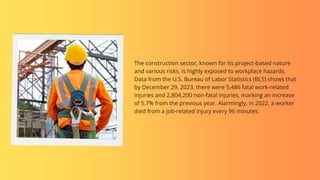
The construction sector, known for its project-based nature
and various risks, is highly exposed to workplace hazards.
Data from the U.S. Bureau of Labor Statistics (BLS) shows that
by December 29, 2023, there were 5,486 fatal work-related
injuries and 2,804,200 non-fatal injuries, marking an increase
of 5.7% from the previous year. Alarmingly, in 2022, a worker
died from a job-related injury every 96 minutes.
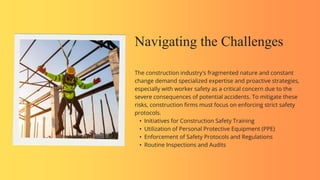
The construction industry's fragmented nature and constant
change demand specialized expertise and proactive strategies,
especially with worker safety as a critical concern due to the
severe consequences of potential accidents. To mitigate these
risks, construction firms must focus on enforcing strict safety
protocols.
• Initiatives for Construction Safety Training
• Utilization of Personal Protective Equipment (PPE)
• Enforcement of Safety Protocols and Regulations
• Routine Inspections and Audits
Navigating the Challenges
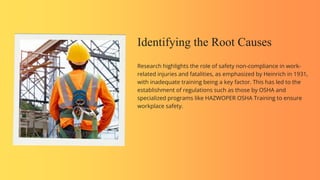
Research highlights the role of safety non-compliance in work-
related injuries and fatalities, as emphasized by Heinrich in 1931,
with inadequate training being a key factor. This has led to the
establishment of regulations such as those by OSHA and
specialized programs like HAZWOPER OSHA Training to ensure
workplace safety.
Identifying the Root Causes
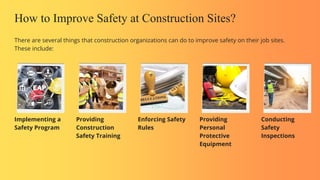
How to Improve Safety at Construction Sites?
There are several things that construction organizations can do to improve safety on their job sites.
These include:
Implementing a
Safety Program
Providing
Construction
Safety Training
Enforcing Safety
Rules
Providing
Personal
Protective
Equipment
Conducting
Safety
Inspections
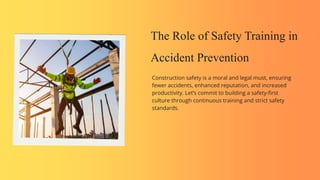
The Role of Safety Training in
Accident Prevention
Construction safety is a moral and legal must, ensuring
fewer accidents, enhanced reputation, and increased
productivity. Let’s commit to building a safety-first
culture through continuous training and strict safety
standards.
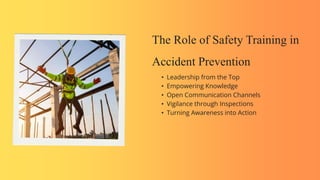
The Role of Safety Training in
Accident Prevention
• Leadership from the Top
• Empowering Knowledge
• Open Communication Channels
• Vigilance through Inspections
• Turning Awareness into Action
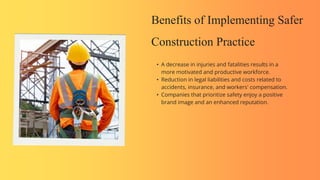
Benefits of Implementing Safer
Construction Practice
• A decrease in injuries and fatalities results in a
more motivated and productive workforce.
• Reduction in legal liabilities and costs related to
accidents, insurance, and workers' compensation.
• Companies that prioritize safety enjoy a positive
brand image and an enhanced reputation.
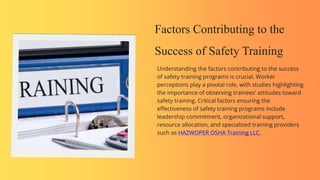
Factors Contributing to the
Success of Safety Training
Understanding the factors contributing to the success
of safety training programs is crucial. Worker
perceptions play a pivotal role, with studies highlighting
the importance of observing trainees' attitudes toward
safety training. Critical factors ensuring the
effectiveness of safety training programs include
leadership commitment, organizational support,
resource allocation, and specialized training providers
such as HAZWOPER OSHA Training LLC.
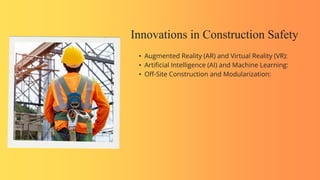
Innovations in Construction Safety
• Augmented Reality (AR) and Virtual Reality (VR):
• Artificial Intelligence (AI) and Machine Learning:
• Off-Site Construction and Modularization:
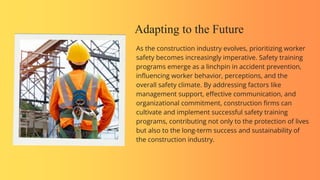
Adapting to the Future
As the construction industry evolves, prioritizing worker
safety becomes increasingly imperative. Safety training
programs emerge as a linchpin in accident prevention,
influencing worker behavior, perceptions, and the
overall safety climate. By addressing factors like
management support, effective communication, and
organizational commitment, construction firms can
cultivate and implement successful safety training
programs, contributing not only to the protection of lives
but also to the long-term success and sustainability of
the construction industry.
Our Contact
1-866-429-6742
https://hazwoper-osha.com/
info@HAZWOPER-OSHA.com
11901 Santa Monica Blvd., Suite # 414
Los Angeles, CA 90025

Prioritizing Worker Safety in a Growing Construction Industry

  • 1.
    Prioritizing Worker Safety ina Growing Construction Industry
  • 2.
    The construction sector,known for its project-based nature and various risks, is highly exposed to workplace hazards. Data from the U.S. Bureau of Labor Statistics (BLS) shows that by December 29, 2023, there were 5,486 fatal work-related injuries and 2,804,200 non-fatal injuries, marking an increase of 5.7% from the previous year. Alarmingly, in 2022, a worker died from a job-related injury every 96 minutes.
  • 3.
    The construction industry'sfragmented nature and constant change demand specialized expertise and proactive strategies, especially with worker safety as a critical concern due to the severe consequences of potential accidents. To mitigate these risks, construction firms must focus on enforcing strict safety protocols. • Initiatives for Construction Safety Training • Utilization of Personal Protective Equipment (PPE) • Enforcement of Safety Protocols and Regulations • Routine Inspections and Audits Navigating the Challenges
  • 4.
    Research highlights therole of safety non-compliance in work- related injuries and fatalities, as emphasized by Heinrich in 1931, with inadequate training being a key factor. This has led to the establishment of regulations such as those by OSHA and specialized programs like HAZWOPER OSHA Training to ensure workplace safety. Identifying the Root Causes
  • 5.
    How to ImproveSafety at Construction Sites? There are several things that construction organizations can do to improve safety on their job sites. These include: Implementing a Safety Program Providing Construction Safety Training Enforcing Safety Rules Providing Personal Protective Equipment Conducting Safety Inspections
  • 6.
    The Role ofSafety Training in Accident Prevention Construction safety is a moral and legal must, ensuring fewer accidents, enhanced reputation, and increased productivity. Let’s commit to building a safety-first culture through continuous training and strict safety standards.
  • 7.
    The Role ofSafety Training in Accident Prevention • Leadership from the Top • Empowering Knowledge • Open Communication Channels • Vigilance through Inspections • Turning Awareness into Action
  • 8.
    Benefits of ImplementingSafer Construction Practice • A decrease in injuries and fatalities results in a more motivated and productive workforce. • Reduction in legal liabilities and costs related to accidents, insurance, and workers' compensation. • Companies that prioritize safety enjoy a positive brand image and an enhanced reputation.
  • 9.
    Factors Contributing tothe Success of Safety Training Understanding the factors contributing to the success of safety training programs is crucial. Worker perceptions play a pivotal role, with studies highlighting the importance of observing trainees' attitudes toward safety training. Critical factors ensuring the effectiveness of safety training programs include leadership commitment, organizational support, resource allocation, and specialized training providers such as HAZWOPER OSHA Training LLC.
  • 10.
    Innovations in ConstructionSafety • Augmented Reality (AR) and Virtual Reality (VR): • Artificial Intelligence (AI) and Machine Learning: • Off-Site Construction and Modularization:
  • 11.
    Adapting to theFuture As the construction industry evolves, prioritizing worker safety becomes increasingly imperative. Safety training programs emerge as a linchpin in accident prevention, influencing worker behavior, perceptions, and the overall safety climate. By addressing factors like management support, effective communication, and organizational commitment, construction firms can cultivate and implement successful safety training programs, contributing not only to the protection of lives but also to the long-term success and sustainability of the construction industry.
  • 12.