Download as PDF, PPTX
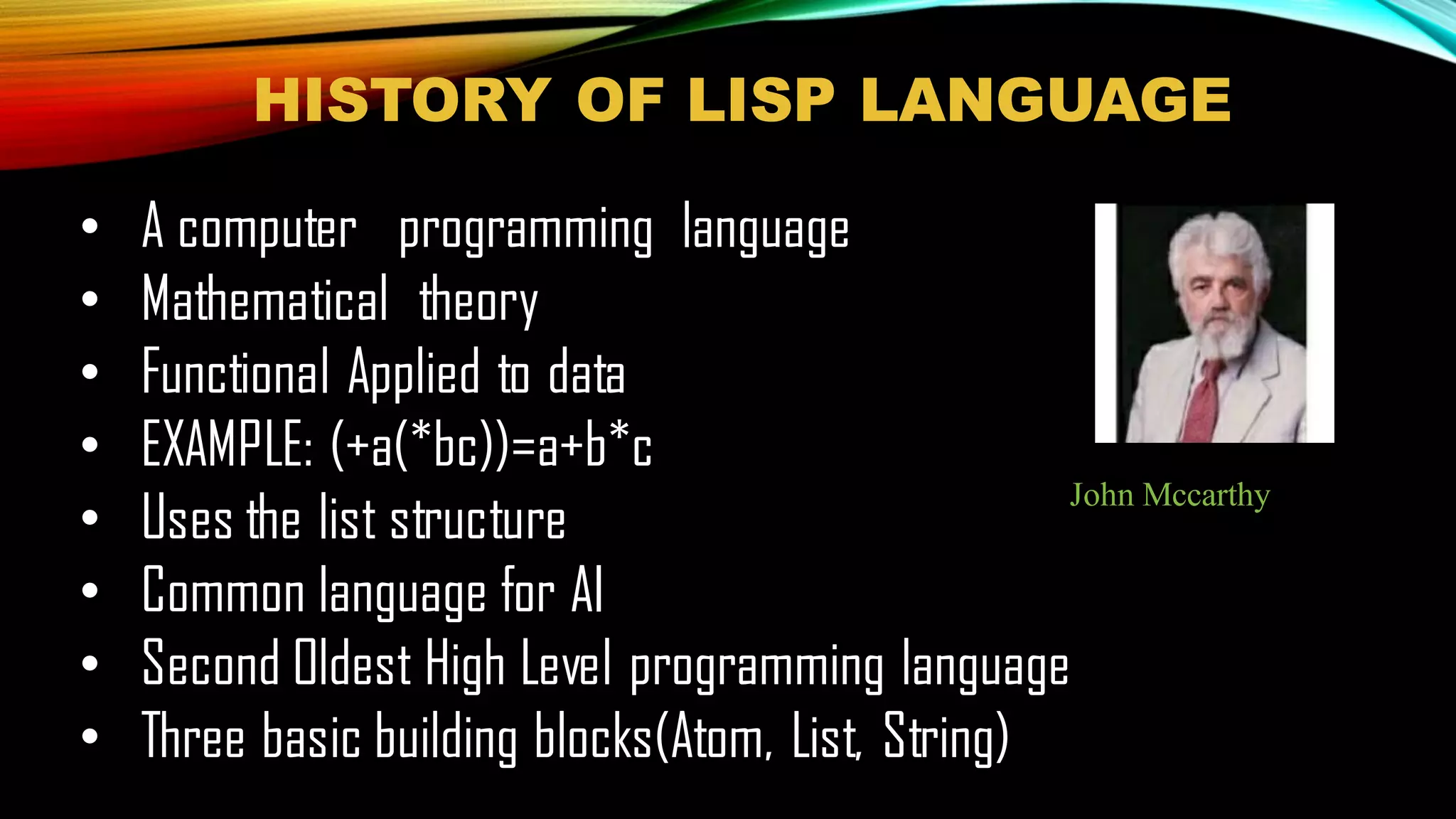
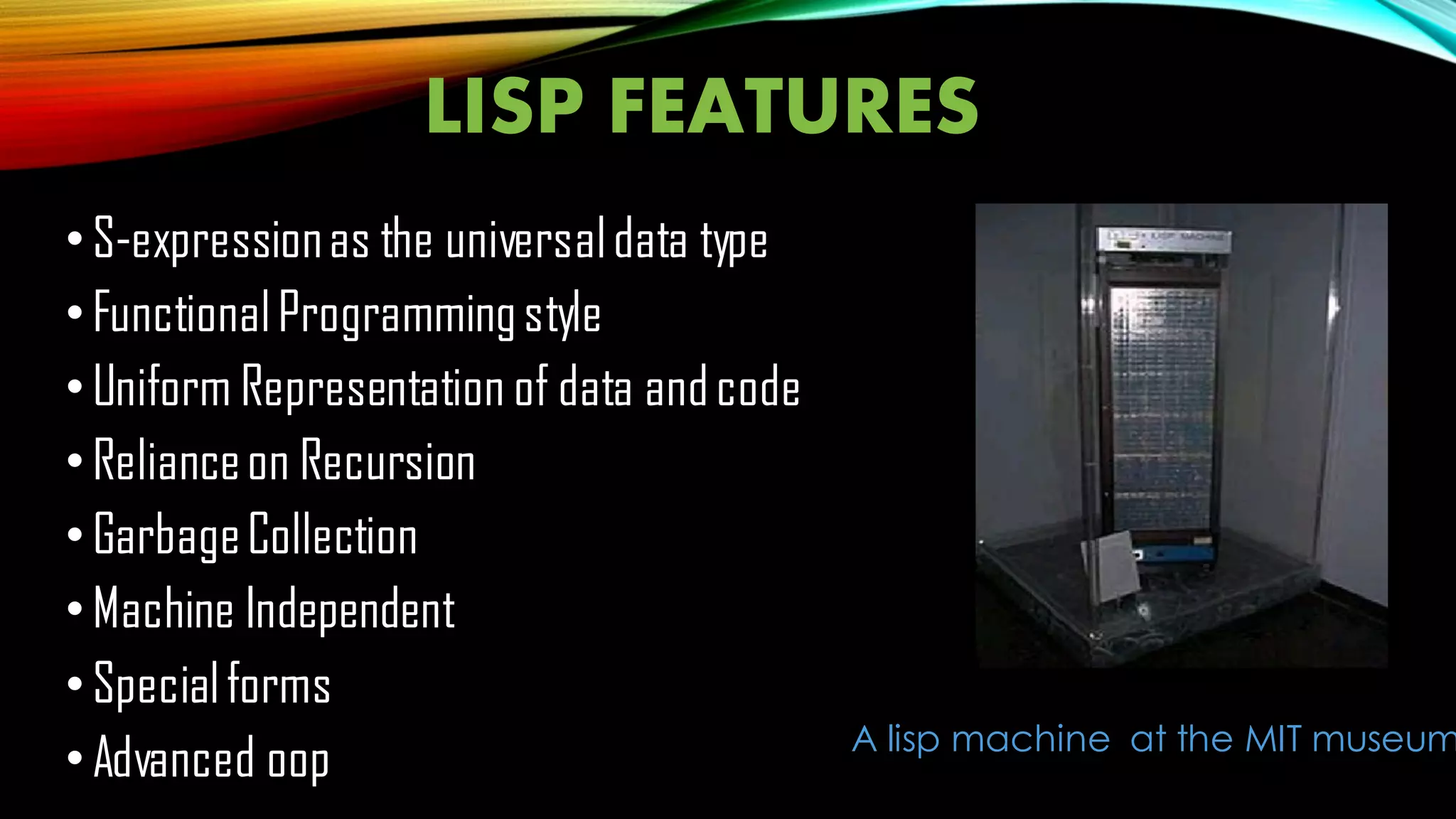
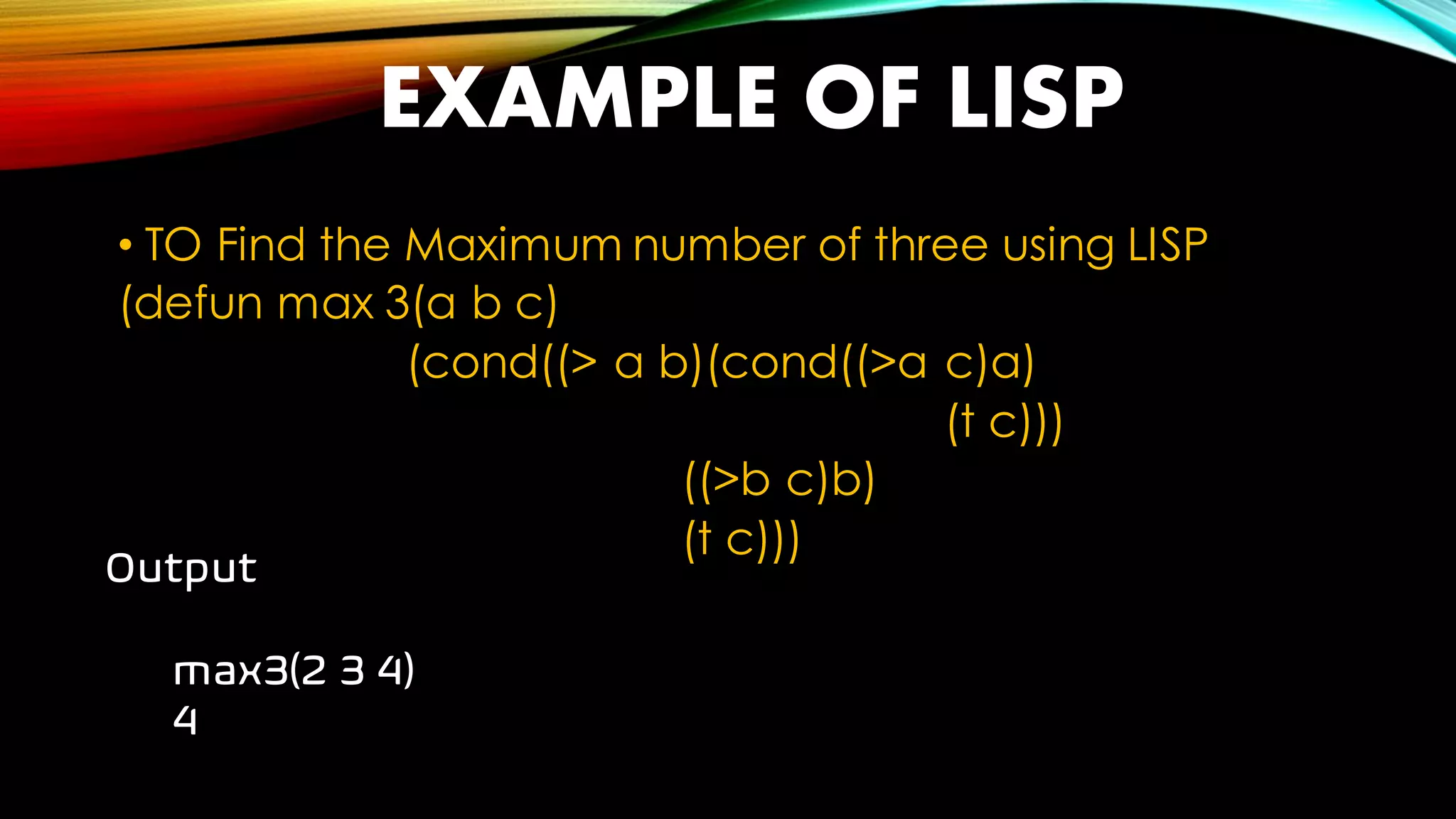
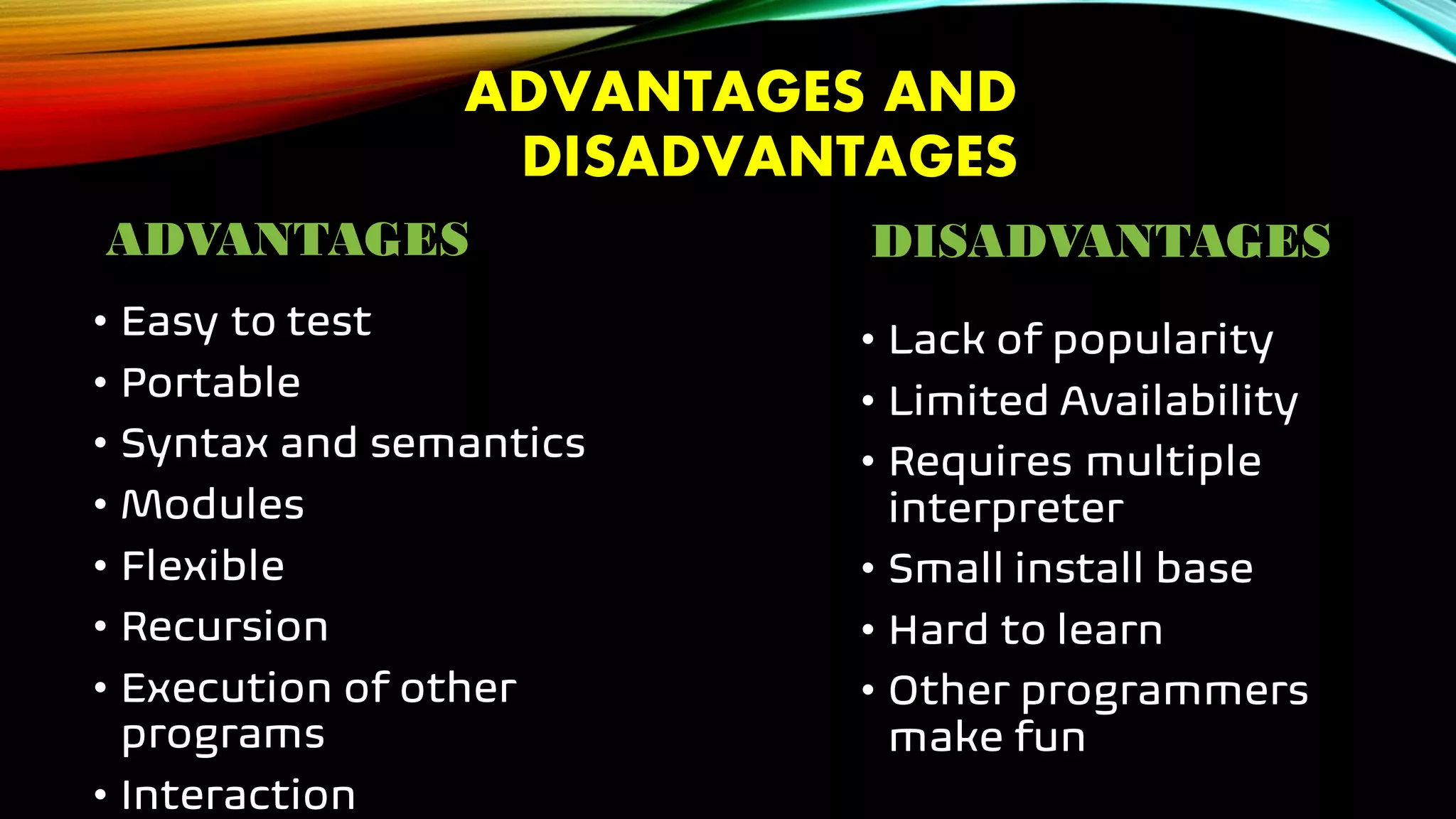
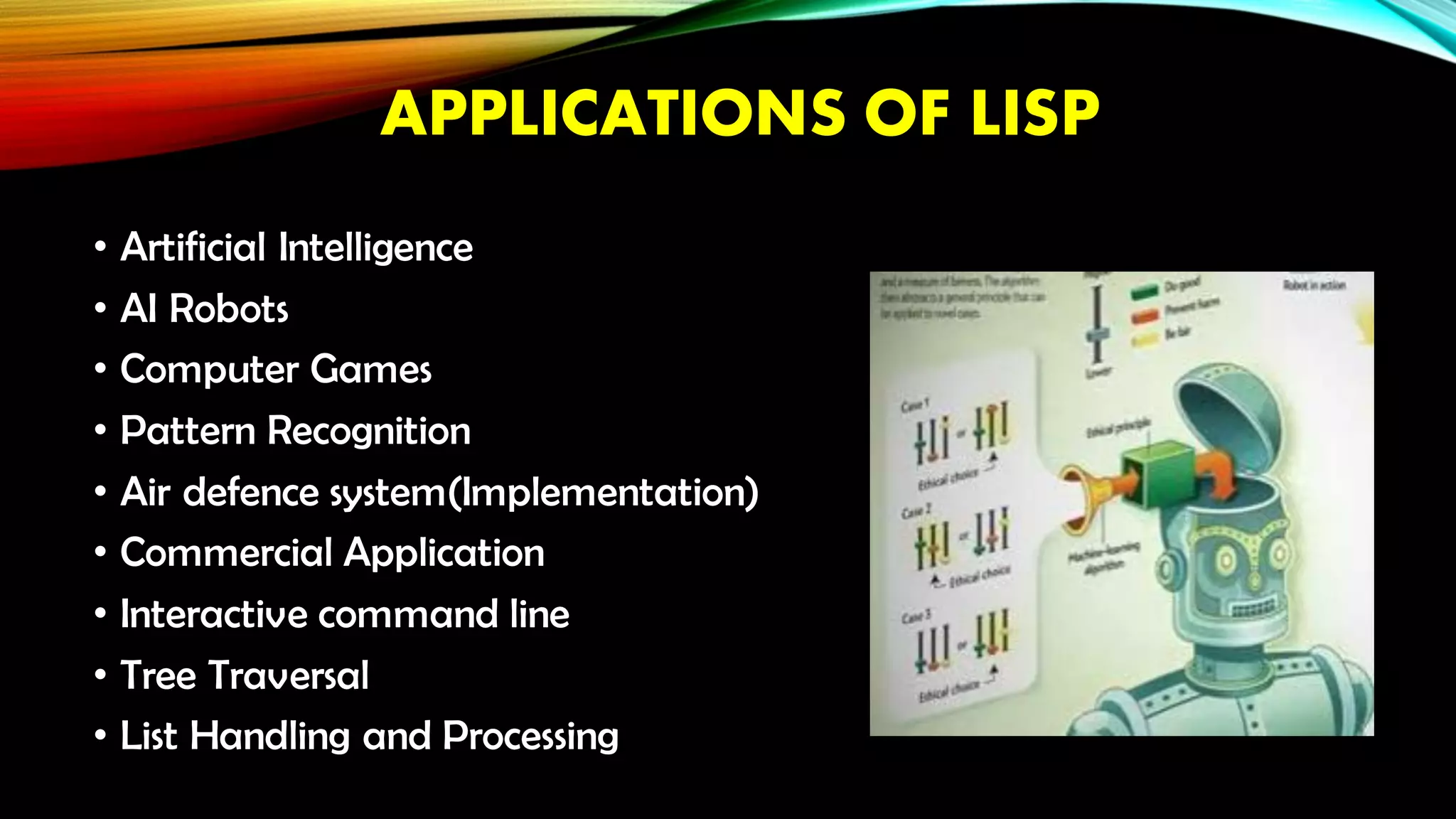

The document discusses the history and features of the Lisp programming language, created by John McCarthy, highlighting its foundations in functional programming and its use of list structures. It outlines the advantages, such as portability and ease of testing, as well as disadvantages, including limited popularity and difficulty of learning. Additionally, it mentions various applications of Lisp in fields like artificial intelligence, computer games, and air defense systems.


![[Question Paper] Object Oriented Programming With C++ (Revised Course) [April...](https://cdn.slidesharecdn.com/ss_thumbnails/oop-qprevisedcourseapr-2015-170717110222-thumbnail.jpg?width=640&height=640&fit=bounds)
![[Question Paper] Object Oriented Programming With C++ (Revised Course) [Janua...](https://cdn.slidesharecdn.com/ss_thumbnails/oop-qprevisedcoursejan-2017-170717110226-thumbnail.jpg?width=640&height=640&fit=bounds)
![[Question Paper] C++ and Java (Old Course) [June / 2014]](https://cdn.slidesharecdn.com/ss_thumbnails/cppj-qp-old-course-june-2014-170802123727-thumbnail.jpg?width=640&height=640&fit=bounds)


![Internet Technologies (October – 2016) [Question Paper | IDOL: Revised Course]](https://cdn.slidesharecdn.com/ss_thumbnails/idol-it-oct-2016-180708053046-thumbnail.jpg?width=640&height=640&fit=bounds)

![[Question Paper] Computer Graphics (Old Course) [September / 2013]](https://cdn.slidesharecdn.com/ss_thumbnails/cg-qpoldcoursesep-2013-170714203207-thumbnail.jpg?width=640&height=640&fit=bounds)


