Mrs. S. DEIVAMANI
Assistant Professor
Department of Management Science - BBA
Sri Ramakrishna College of Arts and Science
Coimbatore - 641 006
Tamil Nadu, India
23BM101 – MANAGEMENT PROCESS
UNIT - 1
Introduction To Management
1
MANAGEMENT: DEFINITION
Sri Ramakrishna College of Arts and Science 2
According to Mary Parker Follet, “ Management is an art of
getting things done though people”.
According to Harold Koontz, "Management is the art of getting
things done through and with people in formally organized
groups".
According to Peter Drucker, "Management is a multi-purpose
organ that manages business and manages managers and manages
workers and work".
• It is a Universal Activity
• It is goal oriented
• It is an Intellectual activity
• It is a process
• Management is both art and science
• It is a social process:
• It is an ongoing activity
• It is intangible
NATURE OF MANAGEMENT:
Sri Ramakrishna College of Arts and Science 3
Scope Of Management
Sri Ramakrishna College of Arts and Science 4
Scope of Management
• Financial Management
• Marketing Management
• Personnel Management/HR
Management
• Production Management
• Office Management
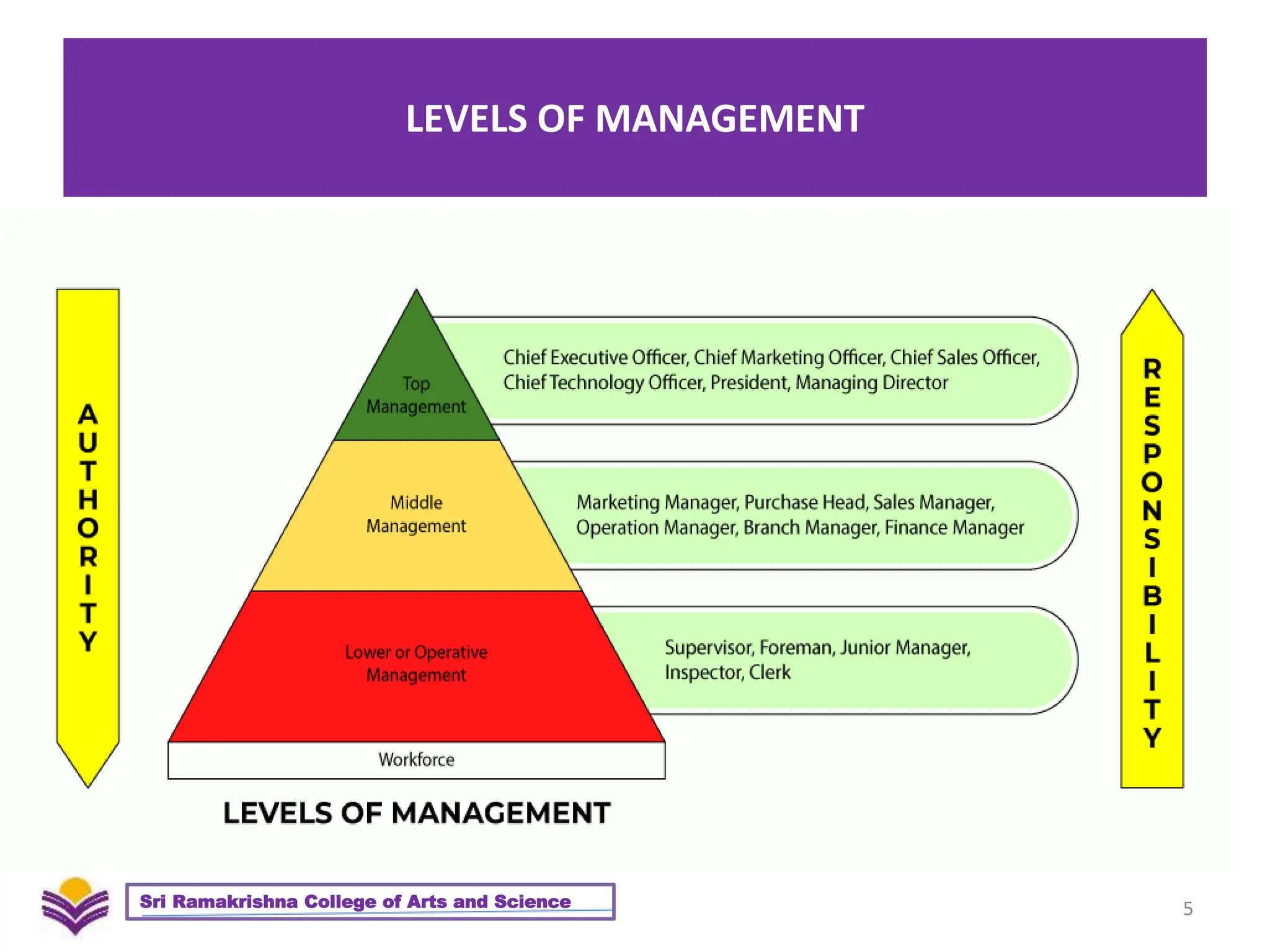
LEVELS OF MANAGEMENT
Sri Ramakrishna College of Arts and Science 5
SKILLS OF MANAGEMENT/ MANAGER
Sri Ramakrishna College of Arts and Science 6
Top level -
Conceptual
Skills
Middle level -
Human Skills
Low level - Technical Skill
ROLES OF MANAGER
Sri Ramakrishna College of Arts and Science 7
FUNCTIONS OF MANAGEMENT / MANAGEMENT PROCESS /
POSDCO
Sri Ramakrishna College of Arts and Science 8
Functions
• Planning
• Organising
• Staffing
• Directing
• Controlling
• Coordinating
Qualities of a Good manager
Sri Ramakrishna College of Arts and Science 9
Good Education
Technical
Knowledge
Personality
Communication
skills
Honesty
Positive thinking
Control
Management
Motivation
Guide
Leadership qualities
Coordinate
Decision making
(planning,
forecasting)
Innovative
Good analysis
Risk taking
• I. The Classical theory of management
• a) Taylor’s Scientific Management
• b) Weber’s Bureaucratic Management
• c) Fayol’s Administrative Management
• II. Neo-Classical Theory/ Behavioural Theory
– Human Relations Theory
– Behavioral Science Approach
• III. The Modern Management Theories
• a) Quantitative Approach
• b) System Approach
• c) Contingency Approach
APPROACHES TO MANAGEMENT/ MANAGEMENT THEORIES:
Sri Ramakrishna College of Arts and Science 10
MANAGEMENT THEORIES
Sri Ramakrishna College of Arts and Science 11
I CLASSICAL THEORY
i) SCIENTIFIC MANAGEMENT
Frederick W. Taylor
Frank Gilbreth
Henry Laurence Gantt
ii) BEURAUCRATIC
MANAGEMENT
Max Weber
iii)ADMINISTRATIVE
MANAGEMENT
Hendry Fayol
• Time and Motion Study
• Science, but not Rule of the Thumb
• Differential Payment
• Group Harmony
• Cooperation Between Workers and Management
• Methods Study
• Scientific Selection and Training
• Standardisation
• Separation of Planning from Execution
Frederick W. Taylor’s Scientific Management
Sri Ramakrishna College of Arts and Science 12
Max Weber Bureaucratic Management
Sri Ramakrishna College of Arts and Science 13
Hendry Fayol 14 Principles
Sri Ramakrishna College of Arts and Science 14
MANAGEMENT THEORIES
Sri Ramakrishna College of Arts and Science 15
II NEO CLASSICAL THEORY/
BEHAVIOURAL THEORY
i)Human relations
theory
ii)Behavioural science
theory
MANAGEMENT THEORIES
Sri Ramakrishna College of Arts and Science 16
III MODERN
MANAGEMENT THEORY
i)Quantitative
theory
ii) Systems
theory
iii)Contingency
theory
Thank you

Principles of Management.pptx

  • 1.
    Mrs. S. DEIVAMANI AssistantProfessor Department of Management Science - BBA Sri Ramakrishna College of Arts and Science Coimbatore - 641 006 Tamil Nadu, India 23BM101 – MANAGEMENT PROCESS UNIT - 1 Introduction To Management 1
  • 2.
    MANAGEMENT: DEFINITION Sri RamakrishnaCollege of Arts and Science 2 According to Mary Parker Follet, “ Management is an art of getting things done though people”. According to Harold Koontz, "Management is the art of getting things done through and with people in formally organized groups". According to Peter Drucker, "Management is a multi-purpose organ that manages business and manages managers and manages workers and work".
  • 3.
    • It isa Universal Activity • It is goal oriented • It is an Intellectual activity • It is a process • Management is both art and science • It is a social process: • It is an ongoing activity • It is intangible NATURE OF MANAGEMENT: Sri Ramakrishna College of Arts and Science 3
  • 4.
    Scope Of Management SriRamakrishna College of Arts and Science 4 Scope of Management • Financial Management • Marketing Management • Personnel Management/HR Management • Production Management • Office Management
  • 5.
    LEVELS OF MANAGEMENT SriRamakrishna College of Arts and Science 5
  • 6.
    SKILLS OF MANAGEMENT/MANAGER Sri Ramakrishna College of Arts and Science 6 Top level - Conceptual Skills Middle level - Human Skills Low level - Technical Skill
  • 7.
    ROLES OF MANAGER SriRamakrishna College of Arts and Science 7
  • 8.
    FUNCTIONS OF MANAGEMENT/ MANAGEMENT PROCESS / POSDCO Sri Ramakrishna College of Arts and Science 8 Functions • Planning • Organising • Staffing • Directing • Controlling • Coordinating
  • 9.
    Qualities of aGood manager Sri Ramakrishna College of Arts and Science 9 Good Education Technical Knowledge Personality Communication skills Honesty Positive thinking Control Management Motivation Guide Leadership qualities Coordinate Decision making (planning, forecasting) Innovative Good analysis Risk taking
  • 10.
    • I. TheClassical theory of management • a) Taylor’s Scientific Management • b) Weber’s Bureaucratic Management • c) Fayol’s Administrative Management • II. Neo-Classical Theory/ Behavioural Theory – Human Relations Theory – Behavioral Science Approach • III. The Modern Management Theories • a) Quantitative Approach • b) System Approach • c) Contingency Approach APPROACHES TO MANAGEMENT/ MANAGEMENT THEORIES: Sri Ramakrishna College of Arts and Science 10
  • 11.
    MANAGEMENT THEORIES Sri RamakrishnaCollege of Arts and Science 11 I CLASSICAL THEORY i) SCIENTIFIC MANAGEMENT Frederick W. Taylor Frank Gilbreth Henry Laurence Gantt ii) BEURAUCRATIC MANAGEMENT Max Weber iii)ADMINISTRATIVE MANAGEMENT Hendry Fayol
  • 12.
    • Time andMotion Study • Science, but not Rule of the Thumb • Differential Payment • Group Harmony • Cooperation Between Workers and Management • Methods Study • Scientific Selection and Training • Standardisation • Separation of Planning from Execution Frederick W. Taylor’s Scientific Management Sri Ramakrishna College of Arts and Science 12
  • 13.
    Max Weber BureaucraticManagement Sri Ramakrishna College of Arts and Science 13
  • 14.
    Hendry Fayol 14Principles Sri Ramakrishna College of Arts and Science 14
  • 15.
    MANAGEMENT THEORIES Sri RamakrishnaCollege of Arts and Science 15 II NEO CLASSICAL THEORY/ BEHAVIOURAL THEORY i)Human relations theory ii)Behavioural science theory
  • 16.
    MANAGEMENT THEORIES Sri RamakrishnaCollege of Arts and Science 16 III MODERN MANAGEMENT THEORY i)Quantitative theory ii) Systems theory iii)Contingency theory
  • 17.