LANDSCAPE DESIGN
Principles of Landscaping
Name:Tafshirul Alam Mahi
Roll : 01
Batch: 1st
Semester: 10th
Subject: Landscape Design
Department of Architecture
World University of Bangladesh
PRINCIPLESOFLANDSCAPE DESIGN
There are several basic principles of landscape design that
reoccur across good designs..
8 basic principles of landscape design are prominent,
These are mentioned bellow:
2
Unity
Balance
Contrast
Color
Repetition
Proportion
Focalization
Transition
UNITY
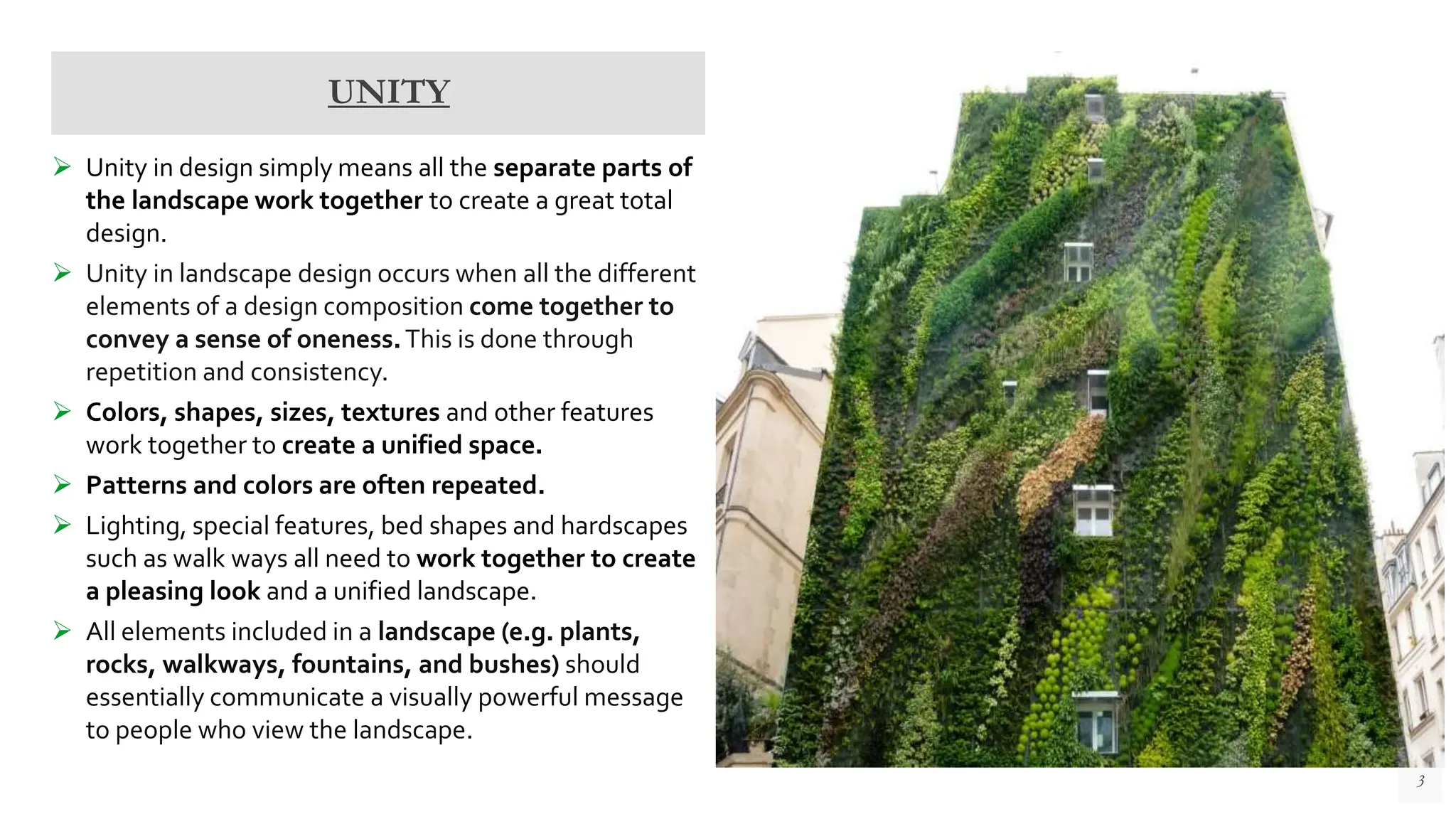
 Unity in design simply means all the separate parts of
the landscape work together to create a great total
design.
 Unity in landscape design occurs when all the different
elements of a design composition come together to
convey a sense of oneness.This is done through
repetition and consistency.
 Colors, shapes, sizes, textures and other features
work together to create a unified space.
 Patterns and colors are often repeated.
 Lighting, special features, bed shapes and hardscapes
such as walk ways all need to work together to create
a pleasing look and a unified landscape.
 All elements included in a landscape (e.g. plants,
rocks, walkways, fountains, and bushes) should
essentially communicate a visually powerful message
to people who view the landscape.
3
4
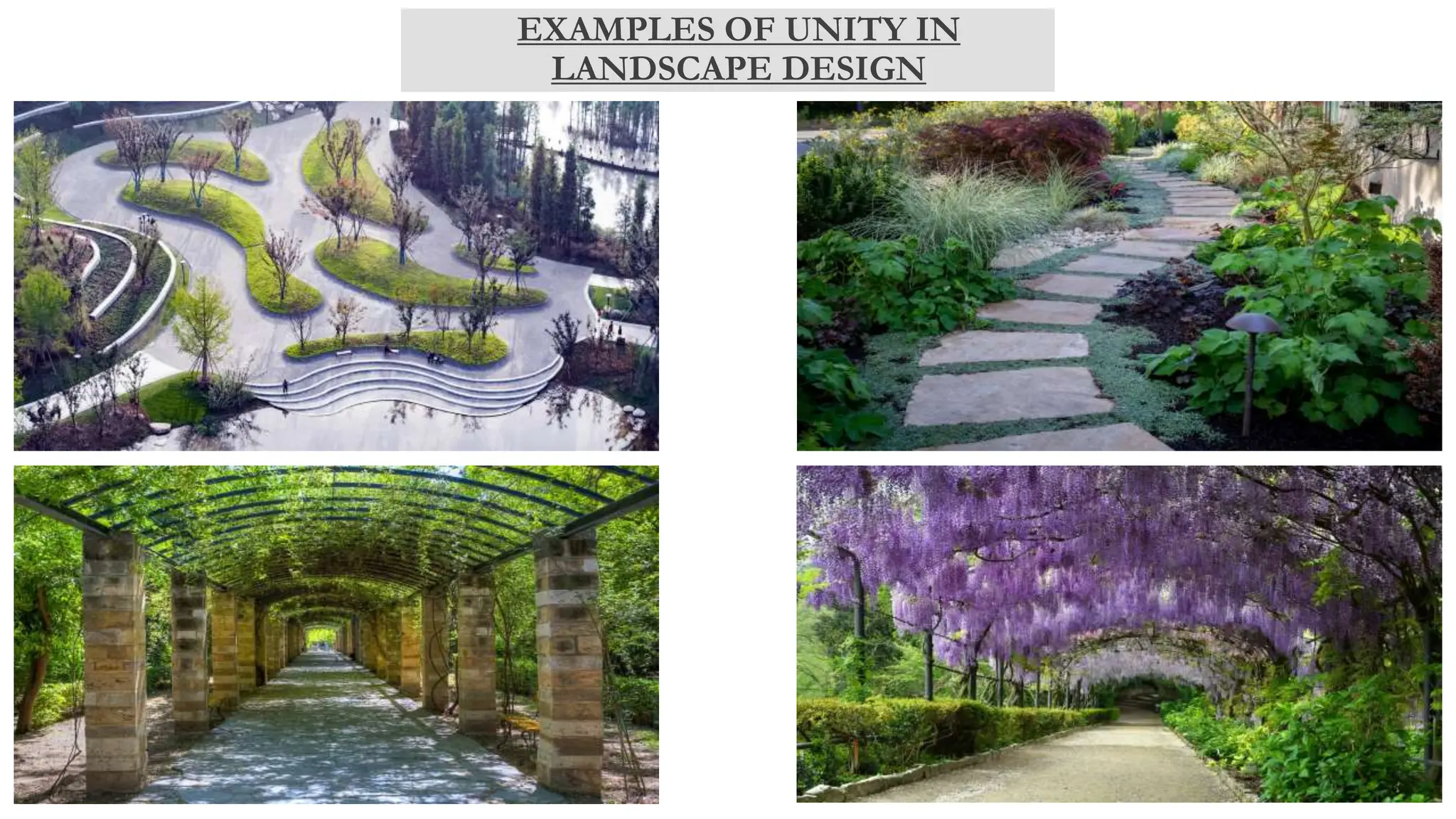
EXAMPLES OF UNITY IN
LANDSCAPE DESIGN
IMPORTANCE OF UNITY IN
LANDSCAPE DESIGN
 It creates a sense of place. A unified landscape has a
distinct identity that sets it apart from its surroundings.
 It makes the landscape more readable. When all the
elements of a landscape are working together, it's
easier for people to understand how the space is
meant to be used.This can be important for
wayfinding, as well as for creating a sense of safety
and security.
 It enhances the aesthetic appeal. A unified landscape
is simply more pleasing to the eye.The repetition of
certain elements, such as plant textures or paving
materials, can create a sense of rhythm and pattern
that is inherently calming and beautiful.
 It promotes sustainability. By using native plants and
materials that are adapted to the local climate,
landscape architects can create landscapes that are
more resilient and require less maintenance.
5
THANK YOU
All References Are Mentioned
Cedreo.com
Richardstbs.com
Warelandscaping.com
Designoneinc.com
Canr.msu.edu
Gardendesign.com
Architonic.com

Principles of Landscape _ Unity - MaHi.pptx

  • 1.
    LANDSCAPE DESIGN Principles ofLandscaping Name:Tafshirul Alam Mahi Roll : 01 Batch: 1st Semester: 10th Subject: Landscape Design Department of Architecture World University of Bangladesh
  • 2.
    PRINCIPLESOFLANDSCAPE DESIGN There areseveral basic principles of landscape design that reoccur across good designs.. 8 basic principles of landscape design are prominent, These are mentioned bellow: 2 Unity Balance Contrast Color Repetition Proportion Focalization Transition
  • 3.
    UNITY  Unity indesign simply means all the separate parts of the landscape work together to create a great total design.  Unity in landscape design occurs when all the different elements of a design composition come together to convey a sense of oneness.This is done through repetition and consistency.  Colors, shapes, sizes, textures and other features work together to create a unified space.  Patterns and colors are often repeated.  Lighting, special features, bed shapes and hardscapes such as walk ways all need to work together to create a pleasing look and a unified landscape.  All elements included in a landscape (e.g. plants, rocks, walkways, fountains, and bushes) should essentially communicate a visually powerful message to people who view the landscape. 3
  • 4.
    4 EXAMPLES OF UNITYIN LANDSCAPE DESIGN
  • 5.
    IMPORTANCE OF UNITYIN LANDSCAPE DESIGN  It creates a sense of place. A unified landscape has a distinct identity that sets it apart from its surroundings.  It makes the landscape more readable. When all the elements of a landscape are working together, it's easier for people to understand how the space is meant to be used.This can be important for wayfinding, as well as for creating a sense of safety and security.  It enhances the aesthetic appeal. A unified landscape is simply more pleasing to the eye.The repetition of certain elements, such as plant textures or paving materials, can create a sense of rhythm and pattern that is inherently calming and beautiful.  It promotes sustainability. By using native plants and materials that are adapted to the local climate, landscape architects can create landscapes that are more resilient and require less maintenance. 5
  • 6.
    THANK YOU All ReferencesAre Mentioned Cedreo.com Richardstbs.com Warelandscaping.com Designoneinc.com Canr.msu.edu Gardendesign.com Architonic.com