Primary Research
The image consists of a male character in the
dark- most likely in the night time walking on
his own; it reflects the male protagonist of the
film. In film noir the protagonist is usually
demonstrated as a lonesome detective or a
social alienated individual. This is
demonstrated through this image.
A typical film noir technique is to shoot in
black and white; this is made apparent in this
image. From this image we can see that the
light is being projected from the back and
shining forward onto the character outlining
his figure in white. The sharp edge of the
lighting and contrast of white against the
black, anchors the nihilism of the character
with his surroundings.
The image involves a close up of a
young woman standing in the
doorway.
Soft lighting is used conservatively
through film noir and is often used
to glamorise the femme fatale.
This is anchored through the use of
the female’s simple make up,
costume and soft hair. Highlighting
is present within this image across
the female’s eyes. This is commonly
used with female characters, which
romanticises the character.
The background of the image is
blurred so the main focus is of the
woman in the door.
By making the female figure a darker silhouette, it
appears she is the main focus of the scene which creates
an unusual twist for film noir. This is an element of the
image that really intrigues me. Similarly, the smoke
which slightly covers the traditional protagonist has the
same effect on me.
Presented in this image is two
silhouetted figures-one man, one
woman. It appears that the man is
facing the woman with her back to
the camera. At this point in time,
the female figure is darker than the
male, illustrating the focus more so
on her as the male character
appears to be in the foreground
and of a lighter shade. The smoke
within the image also slightly
covers the male figure furthering
anchoring the importance of the
female.
The image has been taken in a high
angle shot, this demonstrates the
power of the female figure against
the male.
The background does not anchor
the situation created by the
characters. Instead, it creates a
mysterious and suspicious feeling
about what is going on in the
image.
Within this image, a two shot of a
man and woman is present in the
traditional black and white
scheme. The female figure is
holding a gun against a man by
his car- this illustrates a gender
swap as the woman holds more
power over him.
The female figure is barely
noticeable, creating the effect
that she will easily slip away back
into the night. This is
demonstrated through the pitch
black silhouette with only the
light and smoke outlining parts of
her body. However, the gun is
easily shown in the light creating
dramatic irony despite not being
able to see the female’s face.
On the other hand, the costume of the male character is
illustrated as being scruffy (shown by the undone
button, loosened tie and beard)-the opposite of the
female figure who appears to be neat and proper-this
further anchors the importance of each character and
the hierarchy of the woman. However, the car in the
background reinforces the situation between the
characters but it does not reinforce the man’s position.
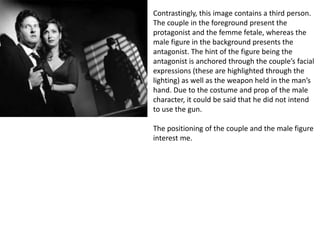
Contrastingly, this image contains a third person.
The couple in the foreground present the
protagonist and the femme fetale, whereas the
male figure in the background presents the
antagonist. The hint of the figure being the
antagonist is anchored through the couple’s facial
expressions (these are highlighted through the
lighting) as well as the weapon held in the man’s
hand. Due to the costume and prop of the male
character, it could be said that he did not intend
to use the gun.
The positioning of the couple and the male figure
interest me.

Primary research

  • 1.
  • 2.
    The image consistsof a male character in the dark- most likely in the night time walking on his own; it reflects the male protagonist of the film. In film noir the protagonist is usually demonstrated as a lonesome detective or a social alienated individual. This is demonstrated through this image. A typical film noir technique is to shoot in black and white; this is made apparent in this image. From this image we can see that the light is being projected from the back and shining forward onto the character outlining his figure in white. The sharp edge of the lighting and contrast of white against the black, anchors the nihilism of the character with his surroundings.
  • 3.
    The image involvesa close up of a young woman standing in the doorway. Soft lighting is used conservatively through film noir and is often used to glamorise the femme fatale. This is anchored through the use of the female’s simple make up, costume and soft hair. Highlighting is present within this image across the female’s eyes. This is commonly used with female characters, which romanticises the character. The background of the image is blurred so the main focus is of the woman in the door.
  • 4.
    By making thefemale figure a darker silhouette, it appears she is the main focus of the scene which creates an unusual twist for film noir. This is an element of the image that really intrigues me. Similarly, the smoke which slightly covers the traditional protagonist has the same effect on me. Presented in this image is two silhouetted figures-one man, one woman. It appears that the man is facing the woman with her back to the camera. At this point in time, the female figure is darker than the male, illustrating the focus more so on her as the male character appears to be in the foreground and of a lighter shade. The smoke within the image also slightly covers the male figure furthering anchoring the importance of the female. The image has been taken in a high angle shot, this demonstrates the power of the female figure against the male. The background does not anchor the situation created by the characters. Instead, it creates a mysterious and suspicious feeling about what is going on in the image.
  • 5.
    Within this image,a two shot of a man and woman is present in the traditional black and white scheme. The female figure is holding a gun against a man by his car- this illustrates a gender swap as the woman holds more power over him. The female figure is barely noticeable, creating the effect that she will easily slip away back into the night. This is demonstrated through the pitch black silhouette with only the light and smoke outlining parts of her body. However, the gun is easily shown in the light creating dramatic irony despite not being able to see the female’s face. On the other hand, the costume of the male character is illustrated as being scruffy (shown by the undone button, loosened tie and beard)-the opposite of the female figure who appears to be neat and proper-this further anchors the importance of each character and the hierarchy of the woman. However, the car in the background reinforces the situation between the characters but it does not reinforce the man’s position.
  • 6.
    Contrastingly, this imagecontains a third person. The couple in the foreground present the protagonist and the femme fetale, whereas the male figure in the background presents the antagonist. The hint of the figure being the antagonist is anchored through the couple’s facial expressions (these are highlighted through the lighting) as well as the weapon held in the man’s hand. Due to the costume and prop of the male character, it could be said that he did not intend to use the gun. The positioning of the couple and the male figure interest me.