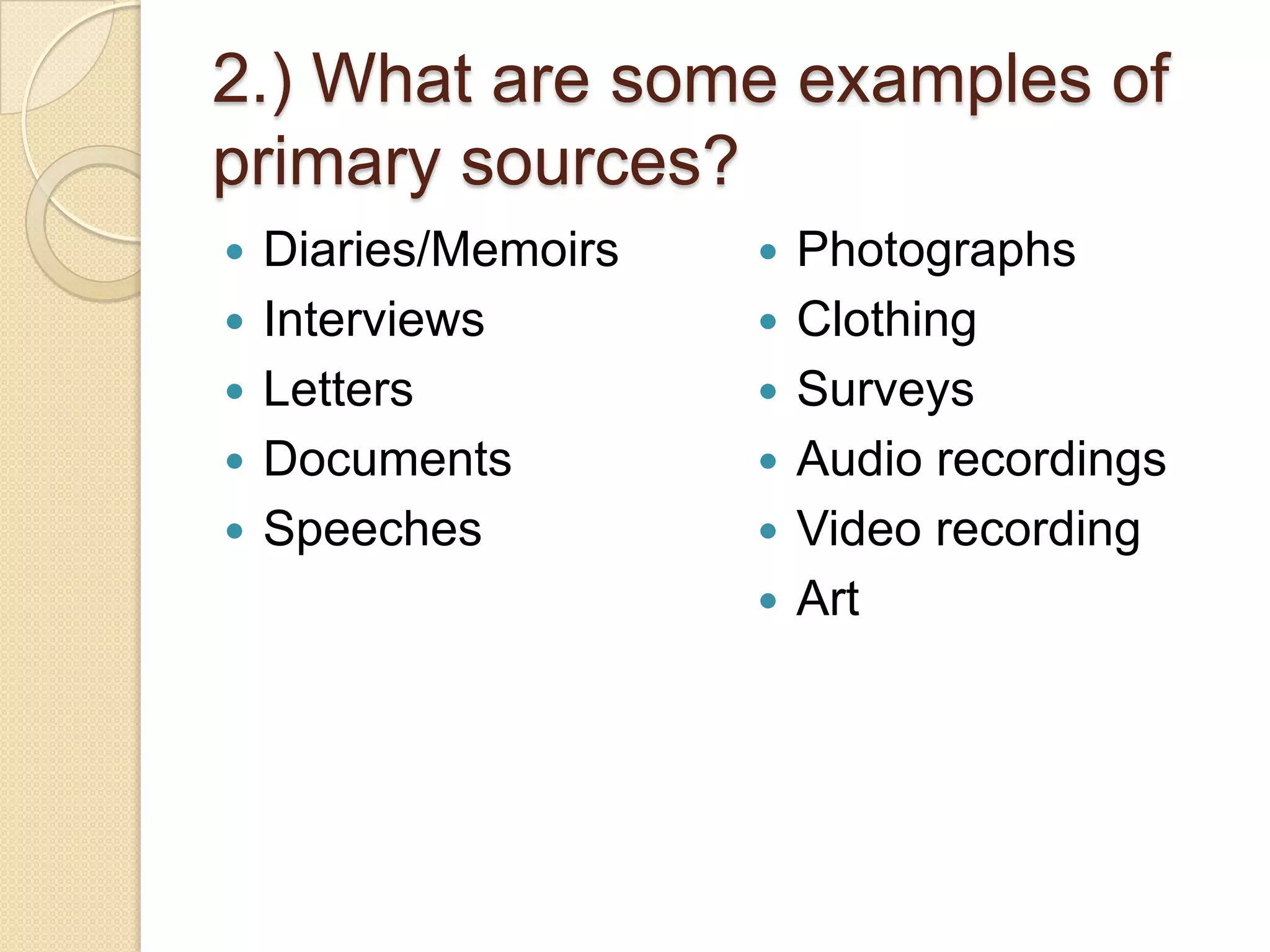
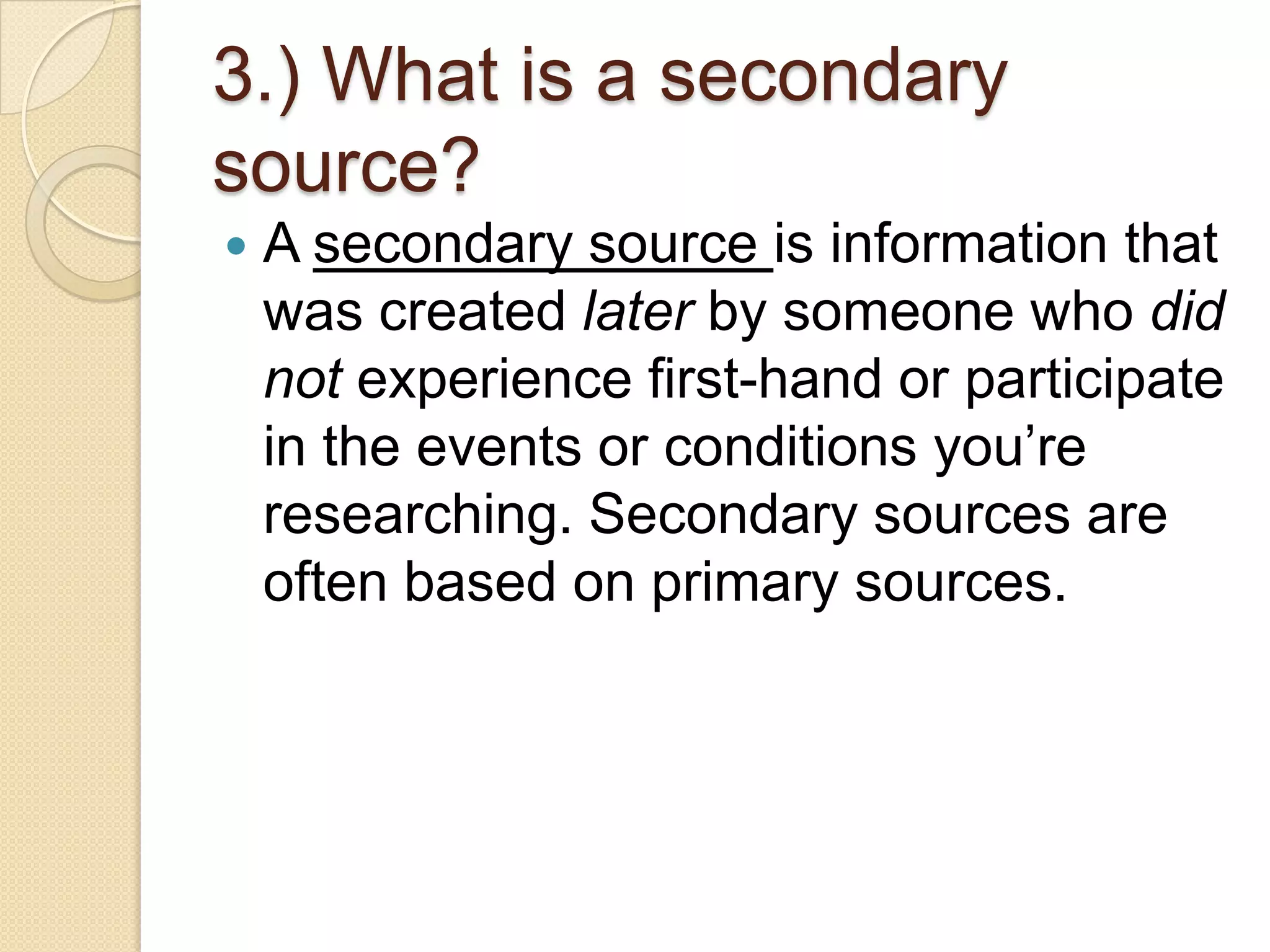
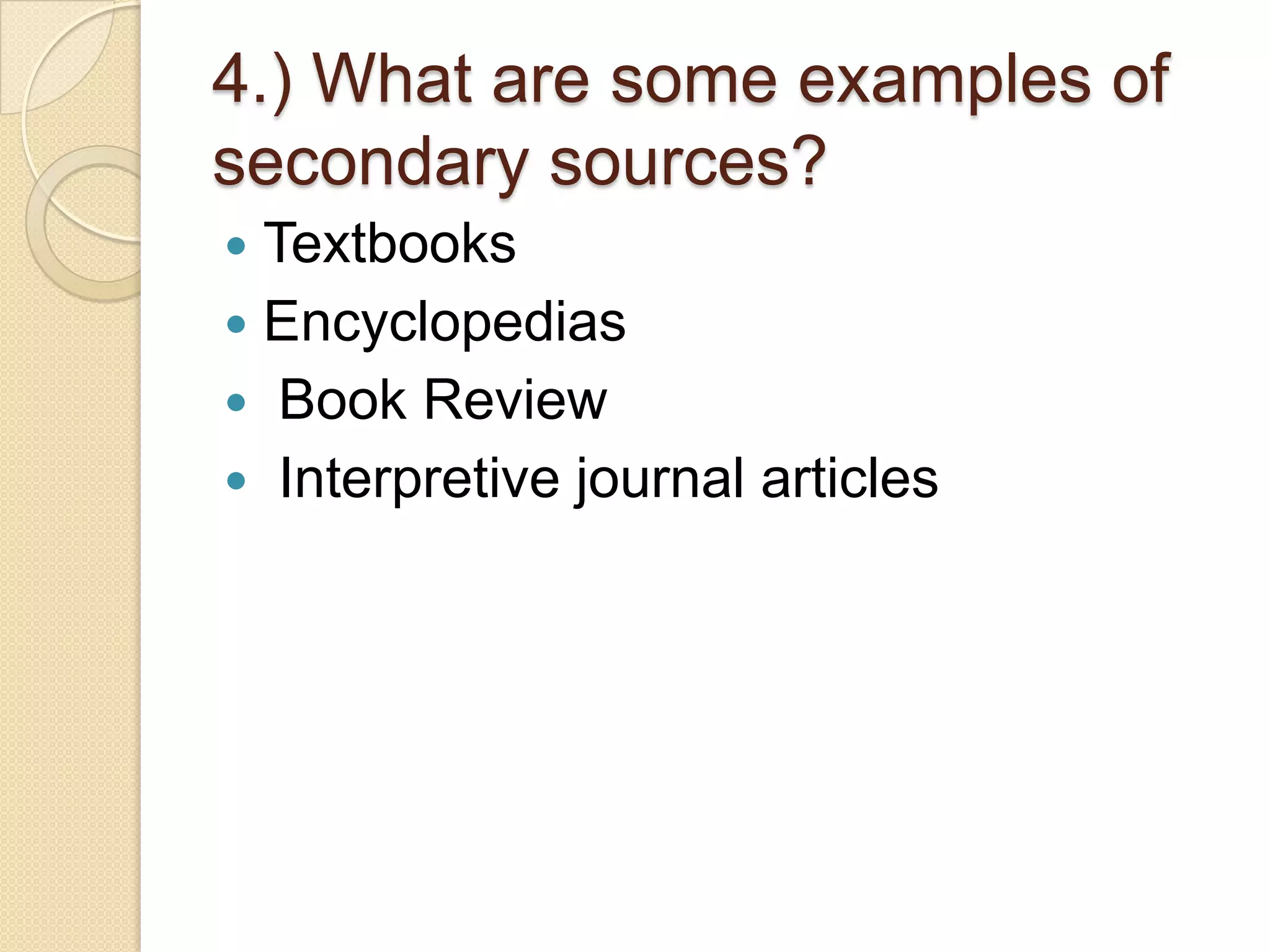
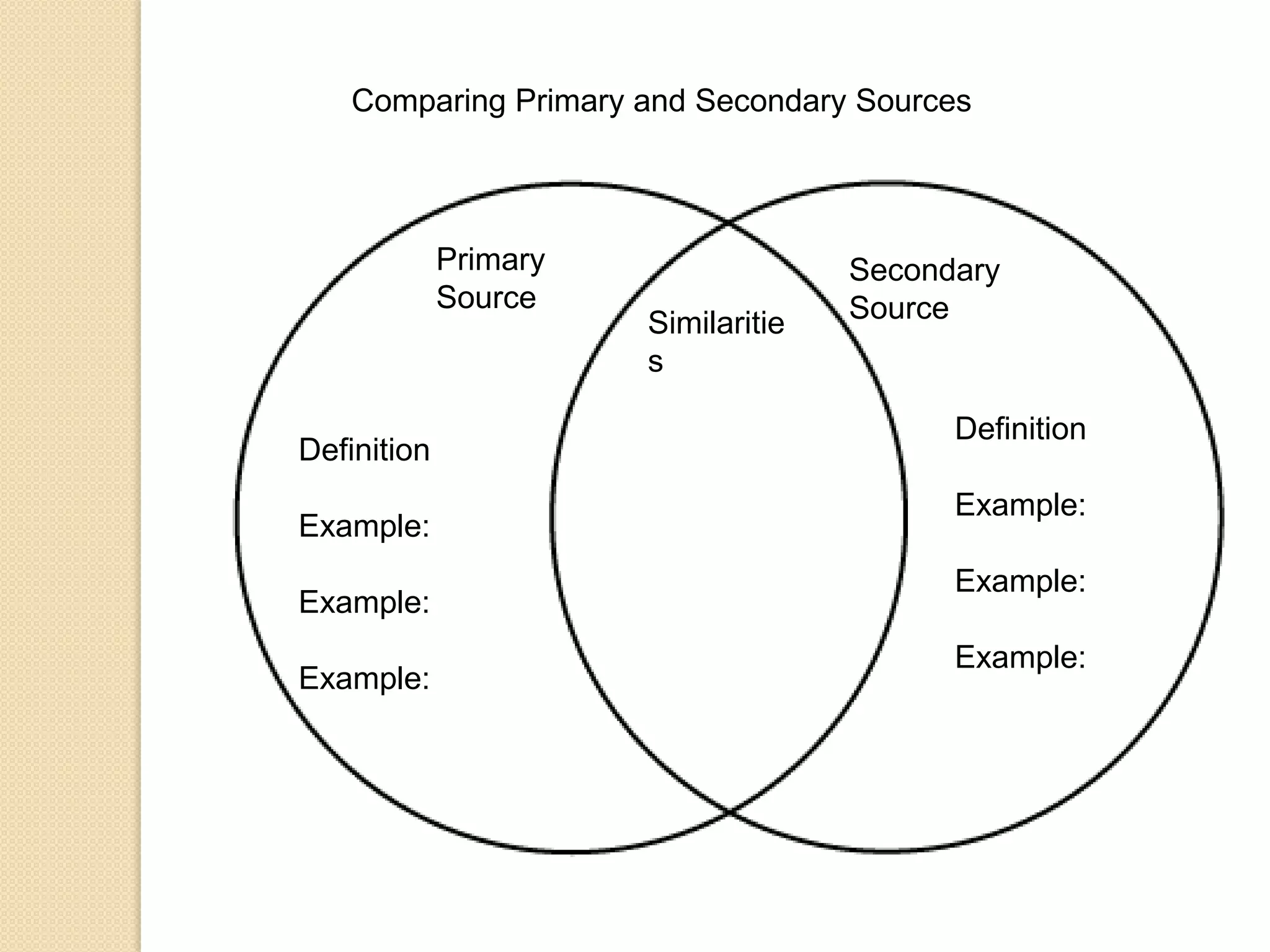
This document defines and provides examples of primary and secondary sources. Primary sources provide first-hand accounts or direct evidence about an event, such as diaries, interviews, photographs, and audio/video recordings. Secondary sources are created later and interpret or analyze primary sources, like textbooks, encyclopedias, and journal articles. The key difference is that primary sources are eyewitness accounts and secondary sources are one step removed from the event.




![Revised evidence file rubric[1]](https://cdn.slidesharecdn.com/ss_thumbnails/revisedevidencefilerubric1-130412200508-phpapp01-thumbnail.jpg?width=640&height=640&fit=bounds)


