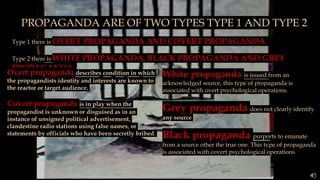
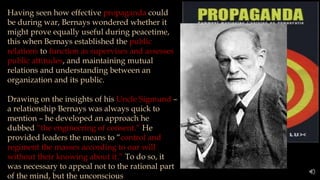
This document provides an overview of psychological warfare and propaganda. It discusses how psychological warfare involves using propaganda and other psychological operations to influence opinions and attitudes of opposing groups. Throughout history, strategists have recognized the value of persuasion in conflict. During World Wars I and II, the US excelled at psychological warfare through strategic propaganda messages that led to widespread surrenders. Propaganda consists of planned mass communication designed to influence a group for a specific purpose. There are different types of propaganda including overt, covert, white, black, and grey. Edward Bernays is considered the father of public relations and saw how propaganda could be used for peacetime purposes to "engineer consent" without people realizing it. His publicity campaigns were very effective






![Movie-Collection-Database.pptx[2].pptx for biotech](https://cdn.slidesharecdn.com/ss_thumbnails/movie-collection-database-260110184349-6042841d-thumbnail.jpg?width=640&height=640&fit=bounds)

